
Reviewed · EVEREST BASE CAMP TREKS
Everest Base Camp With Chola Pass via Gokyo Lakes
Cho La and turquoise lakes, then Everest Base Camp. This route is interesting because you get the big Everest goal, then you spend days in the Gokyo Valley where the lakes are the stars. I also like that you cross Cho La Pass at altitude with a clear plan for glacier-traverse caution and timing.
The big drawback is that this is not a flat hike, and some days explicitly call out thin air, steep slopes, icy rock, and a long, demanding pass crossing. If you are not used to big altitude days and cold starts, you will feel it.
In This Review
- Key things I’d clock before you go
- Everest Base Camp via Gokyo Lakes and Cho La Pass, what makes it special
- Kathmandu warmup, temple time before Lukla time
- Lukla flight and the first trekking days, from Phakding to Namche
- Namche acclimatization days, where sunrise matters
- From Khumjung hill to Phortse Thanga and Machhermo
- Gokyo Valley, turquoise lakes and Cho Oyu’s neighborhood
- Gokyo Ri to Thagnak, building legs and timing
- Crossing Cho La Pass, what to expect and how to stay safe
- Dzongla to Lobuche, then Gorak Shep and Everest Base Camp
- Kala Patthar pre-dawn timing and the long descent back to Namche
- Price and value, is $1,797 worth it for this route?
- Who should book this Everest Base Camp trek with Cho La Pass
- Should you book Everest Base Camp with Chola Pass via Gokyo Lakes?
- FAQ
- What time does the experience start?
- How long is the trek?
- Are airport transfers included in Kathmandu?
- Are domestic flights included?
- Do I get a guide and porter support?
- What type of lodging is included during the trek?
- Are permits included?
- What meals are included?
- What is not included in the price?
- Can I cancel for a full refund?
Key things I’d clock before you go
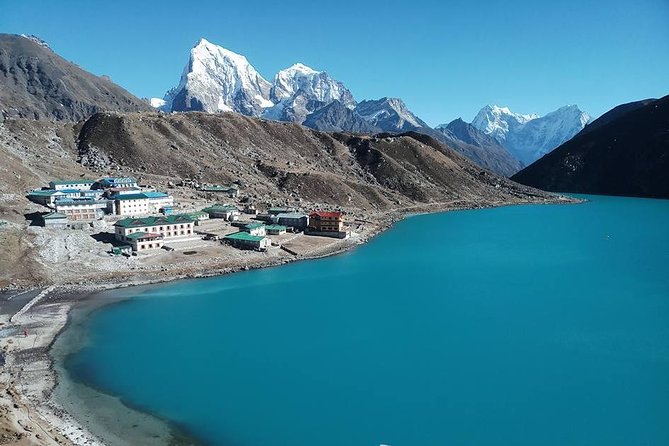
- Gokyo Valley turquoise lake chain: multiple stops at different lakes, plus optional viewpoints like Gokyo Ri and the 5th lake area.
- Cho La Pass day is the stress test: steep, with glacier traverse on the eastern side and slippery ice rock risk.
- Kala Patthar is built in: pre-dawn timing for 360 degree views, so you are not guessing when to go.
- Everest Base Camp is Sherpa-led: the route can be misleading at high altitude, and following your lead matters.
- Private group format: your group is the only one on this tour, with an experienced licensed guide and porter support.
- Logistics include flights and permits: Kathmandu-Lukla round-trip, TIMS, and National Park permits are handled, so your days stay focused on trekking.
Everest Base Camp via Gokyo Lakes and Cho La Pass, what makes it special
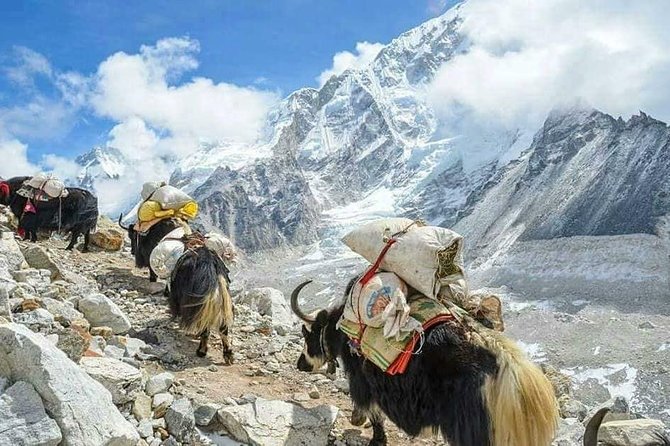
This trek earns its hype because it mixes two types of Everest country. You get the classic destination feeling at Everest Base Camp and Kala Patthar, but you also get days that feel like a separate trip inside the trip, centered on the Gokyo lakes and views of Cho Oyu and the surrounding 8000-meter peaks.
What I like is the pacing of the scenery. You are not just walking toward Everest, you are living in a high-altitude setting where lakes, glaciers, prayer flags, and monasteries show up repeatedly. And because the itinerary includes acclimatization days in the middle, you are not rushed straight from Namche into the pass.
The other smart thing is how the route is planned around viewpoints. Gokyo Ri is offered if the weather is good, Kala Patthar is scheduled with an early departure mindset, and Everest Base Camp is approached with the thin-air reality spelled out.
More Everest Base Camp treks:
- Everest Base Camp Trek – 14 Days
★ 5.0 · 1,499 reviews - Everest Base Camp Trek
★ 5.0 · 842 reviews - Everest Base Camp Helicopter Tour landing at Everest View Hotel
★ 5.0 · 668 reviews
Kathmandu warmup, temple time before Lukla time
Your trip starts in Kathmandu with a pickup and transfer to your hotel. Then you go right into Kathmandu Valley sights, including the Boudhanath Stupa and Pashupatinath Temple on the listed program, with other major stops like Swayambhunath and Patan also named in the detailed notes.
This matters more than it sounds. After a long-haul flight, you want low-effort culture that helps you settle into Nepalese rhythm. Stupas and temples also give you an instant sense of what surrounds the mountains culturally, not just visually.
If you are the type who likes order, this first couple of days is that. You have an organized sightseeing day, then you shift to the practical reality of your trek: early flights, trail days, and high-altitude schedules.
Lukla flight and the first trekking days, from Phakding to Namche
The first big jump is the early flight to Lukla, where you meet the trekking crew and start the hike. From Lukla you walk to Phakding, with Cheplung Village on the way and a chance for a view of Mt. Khumbila, described as sacred and never summited.
Phakding is your first night test. It is not yet the hardest terrain, but it is a real taste of how daily trekking will feel: steady walking, breathing adjustment, and the way cold air can sneak into your pace even when the climb is not brutal yet.
Then day four moves you into Namche Bazaar, climbing on a steep trail and entering Sagarmatha National Park along the way. You cross suspension bridges, and you track the Dudh Koshi and Bhote Koshi rivers as they run through the valley. Namche is where the trek starts to feel like a high-altitude town, not just a trail.
Namche acclimatization days, where sunrise matters
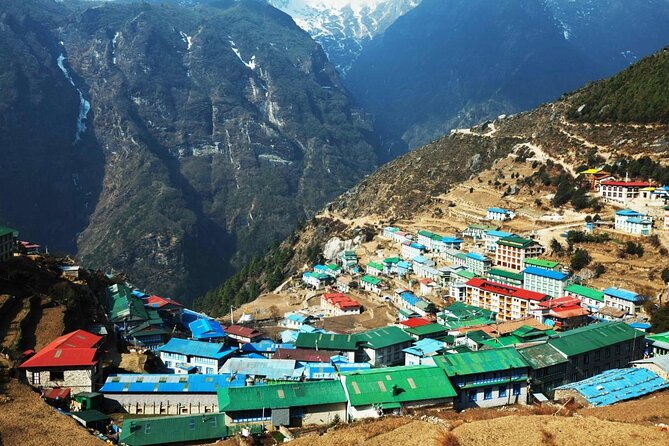
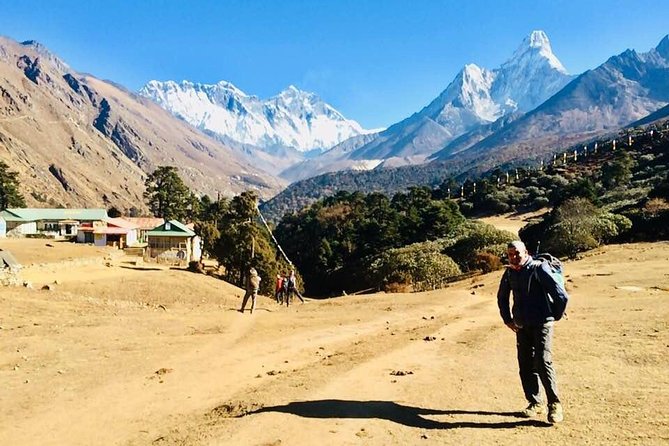
You get an acclimatization day in Namche with a hike toward Sagarmatha National Park and a sunrise viewing option. The plan explicitly lists views stretching to Everest, Lhotse, Nuptse, Ama Dablam, Thamserku, Kongde, and more when conditions are right.
This is one of the most valuable parts of the whole route. Sunrise views are not the only point. The bigger win is giving your body time to adjust before the higher elevations and the pass day. It also helps you learn how your breathing feels on effort, long before you are dealing with glacier terrain.
You also have an optional day hike to Khumjung mentioned in the notes. That gives you a choice: if you want more time on your feet, you can add it, and if you want to rest and conserve energy, you can keep it lighter.
More Gokyo Lakes treks:
- Gokyo to Everest Base Camp Trek
★ 5.0 · 113 reviews - Everest Base Camp – Cho La Pass – Gokyo Trek
★ 5.0 · 65 reviews - Everest Gokyo Valley Trek – 12 days
★ 5.0 · 27 reviews - Landing Private Helicopter at Everest base camp & Gokyo for photo
★ 5.0 · 20 reviews
From Khumjung hill to Phortse Thanga and Machhermo
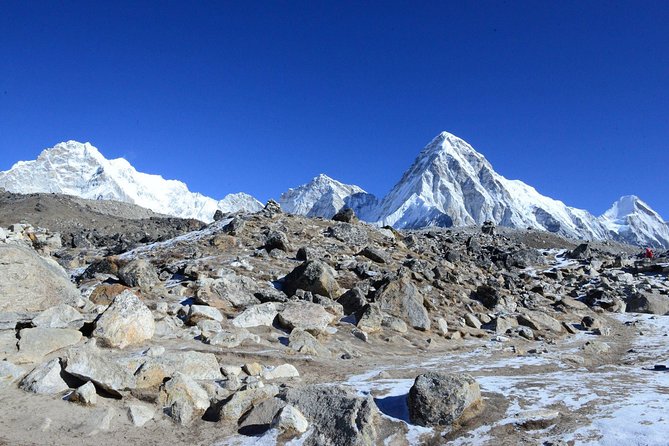
After Namche, you climb the Khumjung hill and descend into a broad valley toward the Dudh Koshi, then turn north. The route includes flexible trail choice, with your guide selecting between two options. That flexibility is not a throwaway detail. When terrain changes or conditions make one line safer, having a guide choose the best option can save your energy.
You also visit Mohang, described as the birthplace of the re-incarnated Lama connected to Rongbuk Monastery traditions. It is a reminder that the trail is layered with meaning, not just elevation gain.
On the way to Machhermo, the itinerary takes you through rhododendron forest, past a waterfall, and through villages like Dhole, Labarma, and Luza, with chortens noted along the route. This is also a day where you walk alongside the Dudh Koshi River again, so you get that steady, familiar river context as the trekking height increases.
Gokyo Valley, turquoise lakes and Cho Oyu’s neighborhood
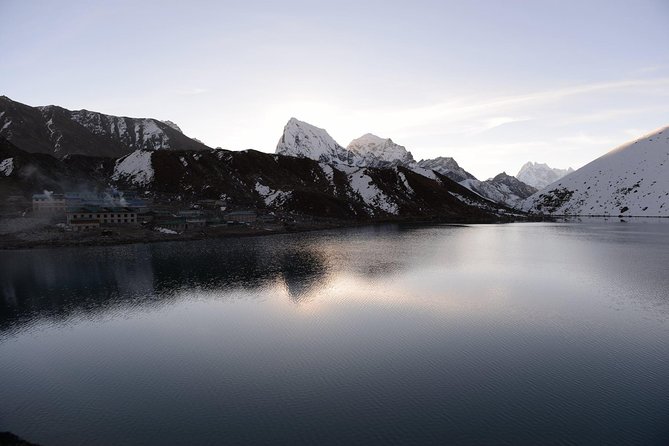
Then the trek turns into something special. You climb toward Gokyo and the Ngazumpa Glacier area, passing Longpongo and other lakes, including Taboche Tsho with its shimmering turquoise color as described.
A standout detail is how the lakes are sequenced. You are not just reaching one lake and moving on. The plan moves you from the first lake at around 4690 meters, to a second lake, then onward toward a third lake where Gokyo village sits. Cho Oyu shows up in the background repeatedly, so even when you are tired, you keep getting that big-peak framing.
Another fact worth noting is the mention of Phangkha, where an avalanche in 1995 is recorded in the description. You do not have to focus on tragedy, but you should respect weather and risk signals. This pass and glacier country is active country.
After reaching Gokyo, you also have an acclimatization rhythm day. That day offers optional hiking to the 5th lake route, and even an option to climb Gokyo Ri for panoramic mountain views when conditions are good. The viewpoint is described as giving views of Cho Oyu, Gyachung Kang, Everest, Lhotse, Nuptse, Makalu, and more.
Gokyo Ri to Thagnak, building legs and timing
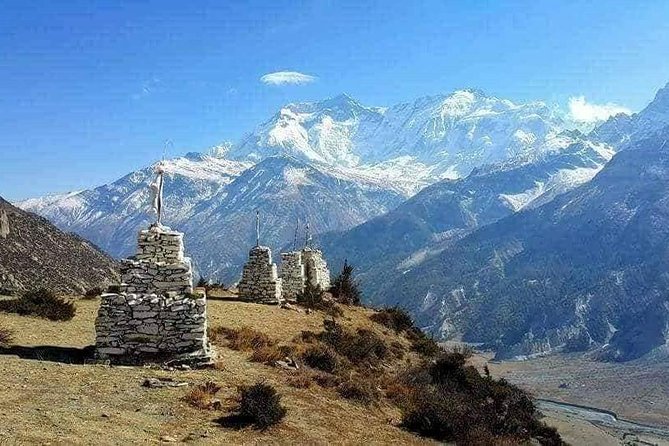
If you skipped Gokyo Ri on the prior day, the plan brings it back as an option on the way to Thagnak. The Gokyo Ri climb is described as steep, taking about 3 to 4 hours, with Gokyo village and the broad Nogzumpa Glacier in view.
Then the route shifts into glacier-country walking toward Thagnak. It includes trekking through the Ngazumpa Glacier area and traversing to the mountain on the other side before meandering into Thagnak. The itinerary also calls this a short hike with an afternoon of rest, which is exactly what you want right before the hardest day.
I like that the plan builds in that recovery time. It acknowledges that your next day includes pass terrain and careful footwork.
Crossing Cho La Pass, what to expect and how to stay safe
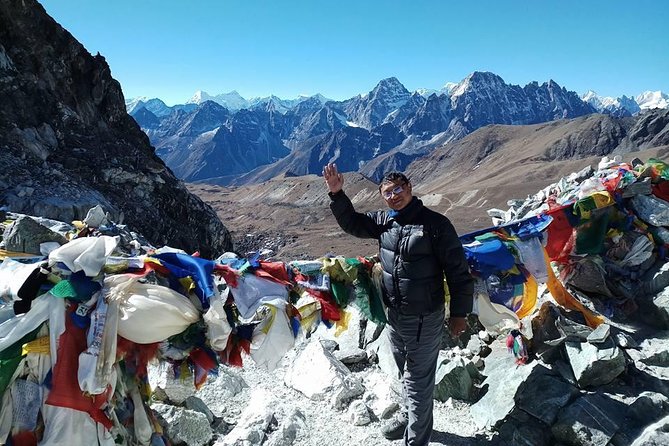
This is the day that makes this trek feel like a real mountain expedition, not just a scenic trek.
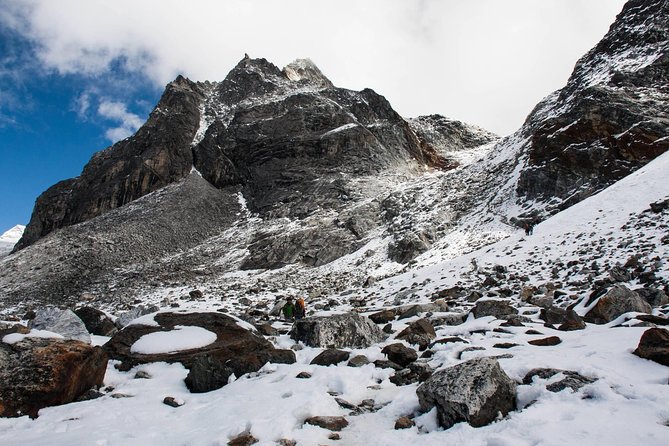
The plan says Cho La Pass is not itself difficult, but it is steep and involves a glacier traverse on the eastern side. It also specifically warns about rocks glazed by ice, with slippery trail risk. You hike from Phedi through a ravine and rocky terrain, then trek through the side of a frozen lake before reaching the top decorated with prayer flags.
You also pass crevasses before reaching Dzongla. That matters for your expectations. You are not just looking at photos, you are walking a route that requires focus and good group habits.
So here is the practical advice that comes directly from the plan’s emphasis: take your time, keep your footing deliberate, and follow what your guide says about pacing and spacing. This is one of those days where rushing makes no sense, because the consequences of slipping are real.
Dzongla to Lobuche, then Gorak Shep and Everest Base Camp
After Cho La, you get a shorter trek day to Lobuche. The plan describes a climb down from Dzongla, a grassy trail, and walking through a wide river bed while enjoying views of Lobuche Peak.
This rest time is strategic. The next section is where you handle the thin-air grind and reach Everest Base Camp.
Day thirteen routes you from Lobuche to Gorak Shep, with Everest Base Camp at the end. You pass through rocky dunes, moraine, and streams, and you are warned that the path from here can be misleading. That is why the plan stresses following your lead Sherpa.
When you arrive at Everest Base Camp, you see mountaineers’ tents set against gray surroundings, and you get views of Nuptse, Khumbuste, and Pumori. If you care about the realism of the place, the memorials and the details of route navigation add weight. It is not just a viewpoint, it is an active base area, full of the colors of expedition life.
Gorak Shep overnight sets you up for the last major viewpoint push.
Kala Patthar pre-dawn timing and the long descent back to Namche
Your schedule then focuses on Kala Patthar, with an early morning start from Gorak Shep in pre-dawn darkness. The plan calls out cold temperatures from minus 10 to minus 14 degrees Celsius and the possibility of chilly winds. This is one of the most honest parts of the itinerary, because it prepares you for how cold you will feel before you even start the climb back.
Kala Patthar is described as giving 360 degree up-close and formidable views of Mt. Everest. You take pictures, then return downhill toward the villages, with the plan stating an overnight in Lobuche.
One detail I appreciate is the built-in flexibility. The notes describe that for some participants, Everest Base Camp is visited on day thirteen, while for others it can be coordinated on day fourteen based on timing. That tells you the operator expects different pacing within the group, not one fixed script.
Then you head down. The route goes from Pheriche to Namche Bazaar through rhododendron and juniper trees, crosses a Dudh Koshi river bridge lined with prayer flags, and follows the Dudh Koshi gorge through pine forests. The plan even includes potential sightings like colorful pheasants and mountain goats.
Your final trekking days include a steep descent out of Namche to Lukla, walking cautiously over rocky terrain and crossing fast-flowing suspension bridges. Then it is the Lukla to Kathmandu flight, with a transfer to your hotel, and even a cultural dinner noted as part of the plan.
Price and value, is $1,797 worth it for this route?
At $1,797 per person for roughly 18 days, the value comes from what is included, not just the trek itself.
You get airport pickups and drops in a private vehicle, a 3-star hotel in Kathmandu with breakfast, and teahouse lodging during the trek with breakfast, lunch, and dinner. You also get domestic flights Kathmandu-Lukla-Kathmandu, plus private ground transportation for the Kathmandu part.
On the support side, you get an experienced English-speaking government-licensed trekking guide and porter service with a porter ratio of 2 trekkers to 1 porter. You also get paperwork and permits including National Park Permit and TIMS, along with a medical kit carried by your trek leader.
That package matters for a route like this. When flights, permits, guide, and porter coordination are handled, you can focus on the hard parts: altitude, pass timing, and trail navigation. You are not trying to stitch together logistics while also managing energy.
What is not included is also clear: your Nepal visa fee, travel and rescue insurance, tips, beverages, and any extra Kathmandu nights if flights get moved or your schedule changes. If you plan around the possibility of flight delays, you protect the value you paid for.
Who should book this Everest Base Camp trek with Cho La Pass
This trek is best for people who have solid hiking experience and can handle steep, high-altitude days. The notes call for moderate physical fitness, but the itinerary itself is specific about difficulty on Cho La Pass and about thin air during the Everest Base Camp day.
It also helps if you like variety. If you only care about Everest views, you will still be happy with Kala Patthar and the Base Camp stop. But if you enjoy a multi-day story that includes turquoise lakes, glacier routes, and viewpoint days like Gokyo Ri, this one fits the bill.
If you are traveling as a private group, this format can also be a good match. You get one team, one guide, and porter support structured as 2 trekkers to 1 porter, with your group being the only participants.
One more thing to watch: cold. The plan gives you an explicit temperature range around Kala Patthar mornings. If cold mornings make you miserable, plan your mindset accordingly.
Should you book Everest Base Camp with Chola Pass via Gokyo Lakes?
Yes, you should consider booking if you want more than a single Everest summit moment. This route is built for people who want Gokyo’s lake days plus the major Everest viewpoints, and who are willing to respect the one true technical-feeling challenge day, Cho La Pass.
I would not book if you are hoping for an easy walk, or if you are not ready for pre-dawn cold and steep passes. This is the kind of trek where pacing and attention are part of success.
If you do book, use the plan’s structure as your friend. Follow your guide’s choices on flexible trail days, take the acclimatization seriously in Namche and Gokyo, and on Everest Base Camp day, trust the guidance about sticking with your lead Sherpa when the path might feel confusing at altitude.
FAQ
What time does the experience start?
The meeting point start time is listed as 5:30 am.
How long is the trek?
The duration is listed as 18 days (approx.).
Are airport transfers included in Kathmandu?
Yes. The tour includes airport pickups and drops in a private vehicle.
Are domestic flights included?
Yes. Domestic flights Kathmandu to Lukla and Lukla back to Kathmandu are included.
Do I get a guide and porter support?
Yes. An experienced English-speaking, government-licensed trekking guide is included, and porter service is included with a ratio of 2 trekkers to 1 porter.
What type of lodging is included during the trek?
Teahouse accommodation is included, with breakfast, lunch, and dinner during the trekking days.
Are permits included?
Yes. The plan includes National Park Permit and TIMS, along with all necessary paperwork.
What meals are included?
During the trek, teahouse meals include breakfast, lunch, and dinner. In Kathmandu, there is hotel accommodation with breakfast, and Kathmandu includes a dinner on day 17.
What is not included in the price?
Not included are the Nepalese visa fee, travel and rescue insurance, tips, beverages, entrance fees for sightseeing, and international flights. Extra nights in Kathmandu are also not included if needed.
Can I cancel for a full refund?
Free cancellation is offered, with a full refund if you cancel at least 24 hours before the experience’s start time.
Latest additions near Kathmandu
- White Water River Rafting – 1 Day★ 4.3 · 3 reviews
- Traditional Momo Making Class★ 5.0 · 10 reviews
- Kathmandu to Pokhara Premium sofa bus ticket★ 4.0 · 17 reviews
- Ghorepani Poon Hill Trek★ 5.0 · 16 reviews
- Amazing 1 Day Trekking Experience in Kathmandu Nepal★ 5.0 · 24 reviews
- Ghorepani Poonhill Trek★ 5.0 · 5 reviews
- Walking tour of real Kathmandu through back streets.★ 5.0 · 3 reviews
- Wildlife Adventure in Chitwan Nepal★ 4.0 · 4 reviews
Everest Base Camp Treks, compared.
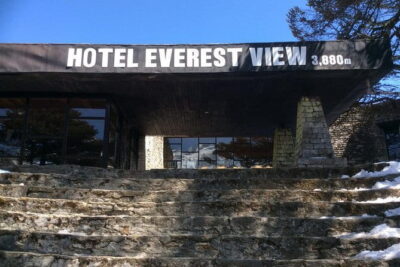
Everest Base Camp Helicopter Tour landing at Everest View Hotel
Read our review →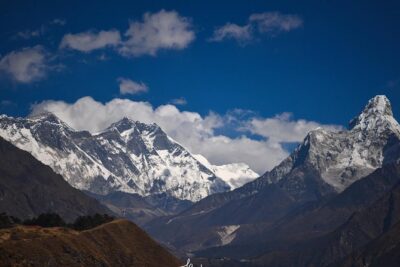
Everest Base Camp Helicopter Tour landing at Hotel Everest View
Read our review →
Browse the lists this tour appears in