
Reviewed · EVEREST BASE CAMP TREKS
Everest Base Camp Trek with Helicopter Return -11 Days
Everest Base Camp in 11 days? That is the hook. This plan keeps the classic Everest route, with acclimatization in Namche Bazaar and Dingboche, plus the big viewpoint of Kalapatthar, then trades extra trekking days for a helicopter ride back to Kathmandu.
Two things I like a lot: first, the helicopter return from Gorakshep is a huge value for anyone trying to reduce exhaustion and time on the mountain. Second, the people running this trip earn strong praise for planning and safety, with lead guides like Prakash Adhikari and Dikpal often highlighted for being supportive and careful on route, and the owner, Bhagwat Simkhada, getting credit for fast responses and problem-solving when conditions get messy.
One key drawback to consider is weather dependence. Flights to Lukla and the helicopter are both tied to conditions, and the operator flags that the experience requires good weather, so you should expect date adjustments if Mother Nature says no.
In This Review
- Quick hits that matter before you go
- Why this 11-day Everest Base Camp trek feels different
- Kathmandu arrival: private pickup and a comfortable landing zone
- Day 2: the Lukla flight and your first walk to Phakding
- Namche Bazaar: the climb, then the acclimatization day that actually helps
- Tengboche to Dingboche: monastery views and steep trail work
- Dingboche acclimatization day, then the push toward Lobuche
- Everest Base Camp and Gorakshep: the day of big altitude
- Kalapatthar at 5,545m, then helicopter back to Kathmandu
- Lodges, meals, and what you pay extra for
- Guides and porters: the safety-first vibe you want at altitude
- Price and logistics: why $3,500 can make sense for this exact format
- Who should book this trek, and who should reconsider
- Should you book Everest Base Camp with helicopter return?
- FAQ
- Do I get picked up from the airport?
- How long is the trek?
- What time does the experience start?
- How much does it cost?
- Are meals included during the trekking days?
- Is there a hotel stay in Kathmandu?
- Does the tour include the helicopter return?
- Are permits included?
- What is not included in the package?
- What if weather affects the trip?
Quick hits that matter before you go
- 11-day fast track: Everest Base Camp and Kalapatthar without the usual longer on-foot schedule
- Real acclimatization beats: Namche Bazaar and Dingboche build you up for higher altitude
- Tengboche monastery stop: a major spiritual landmark in the Everest region at around 3,860m
- Kalapatthar viewpoint at 5,545m: famous for big Everest views and photo-worthy moments
- Porter support set up: one porter for every two clients, so you can travel lighter
- Sharing helicopter return: included from Gorakshep to Kathmandu, weather permitting
Why this 11-day Everest Base Camp trek feels different
Most Everest Base Camp treks stretch into 14 to 15 days because you need time to walk, rest, and adjust to altitude. This version compresses that schedule, finishing in about 11 days thanks to the helicopter return after Kalapatthar.
Here is the trade-off you should understand. You still climb to very high points. Kalapatthar sits at 5,545m, and Everest Base Camp and the surrounding area are also high altitude. So this is not an easy “shortcut.” It is more like cutting the “extra days” you would normally spend walking back, which can help if you have limited vacation time or you want to reduce the wear-and-tear of a longer trek.
The itinerary also keeps acclimatization days built in. That matters because rushing altitude is how people get in trouble. You get a dedicated day around Namche Bazaar and another around Dingboche, which gives your body a better chance to handle the step up toward higher villages.
More Treks in Kathmandu
- Everest Base Camp Trek – 14 Days
★ 5.0 · 1,499 reviews - Everest Base Camp Trek
★ 5.0 · 842 reviews - Everest Base Camp Trekking
★ 5.0 · 485 reviews
Kathmandu arrival: private pickup and a comfortable landing zone
Your trip starts at Tribhuvan Airport in Kathmandu, with a private vehicle pickup and a transfer to your hotel. You get two nights in a 3-star hotel with breakfast, which is a practical buffer. After a long flight, sleep and food quality can make a real difference before your first mountain day.
You also get a few helpful extras that people often ignore until they need them. A duffle bag is provided for the trek and then returned after the trek. Company t-shirts show up as well, which is handy for easy layers and identification in group logistics.
And on the cultural side, you finish with a last-night farewell dinner at an authentic Nepalese restaurant, including cultural performance. That is not just “nice to have.” It gives you a proper send-off after ten hard days of altitude and weather changes.
Day 2: the Lukla flight and your first walk to Phakding
Day 2 is where Everest starts to feel real. You fly from Kathmandu to Lukla, at about 2,860m. The plan also notes an alternate route to Lukla via Ramachap, which is useful because flights here can depend on conditions.
Then you trek to Phakding, around 2,610m, for about 3 to 4 hours. This is a gentle-ish start compared to later mountain days. It is long enough to loosen your legs and get your pack dialed in, but not so intense that you feel wrecked before acclimatization really begins.
Practical tip: keep your first day walking pace calm. You are already at altitude, and your goal is to arrive at the tea house feeling like you could do more, not like you are starting the trek behind schedule.
Namche Bazaar: the climb, then the acclimatization day that actually helps
Day 3 hikes from Phakding to Namche Bazaar, around 3,446m, for roughly 6 to 7 hours. This is the step up where you can feel altitude more clearly. You are working, but the route is the kind of hiking where your breathing tells you whether you are going too fast.
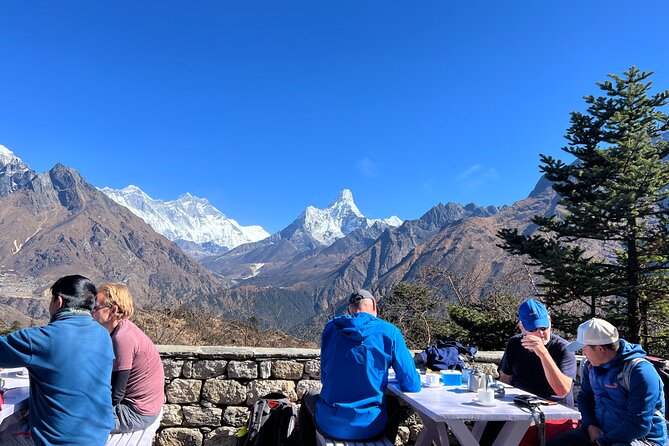
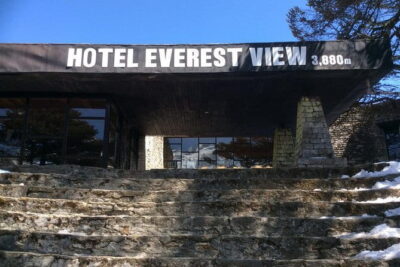
Then you have a proper acclimatization day in Namche. The day includes visits to Khumjung Village and the Hotel Everest View area, around 3,880m. That is a smart choice. You get movement at a higher altitude without the pressure of committing to a bigger climb that same day.
Why this matters for you: those extra hours spent adjusting often translate into steadier hiking for the next stretch. It can also make the later steeper days feel more manageable.
More Everest Base Camp treks:
- Everest Base Camp Helicopter Tour landing at Everest View Hotel
★ 5.0 · 668 reviews - Everest Base Camp Trekking – 13 Day
★ 5.0 · 365 reviews - Everest Base Camp Trek
★ 5.0 · 350 reviews - Everest Base Camp Trek -14 Days
★ 5.0 · 321 reviews
Tengboche to Dingboche: monastery views and steep trail work
On Day 5, you hike from Namche to Tengboche, around 3,860m, for about 5 to 6 hours. Tengboche is famous for its monastery, described as the largest in the Everest region. Even if you are not a religious travel person, it is a meaningful pause point with mountain views and a sense of place that feels distinctly Khumbu.
Day 6 is the next big step: Tengboche to Dingboche at about 4,360m, again around 5 to 6 hours. This section is noted as relatively steep. The good news is that it runs through rhododendron and juniper forests, so it is not just grind and dust.
The “steep but pretty” mix is something you should plan for. Bring layers you can adjust quickly, because forest shade can feel colder than open slopes later.
Dingboche acclimatization day, then the push toward Lobuche
Day 7 is another acclimatization day, this time in Dingboche at about 4,360m. You get the chance to rest your body and keep your hiking momentum sensible.
Then Day 8 goes from Dingboche to Lobuche, around 4,910m, for approximately 5 to 6 hours. This is where the route starts feeling higher and more exposed, even if the day itself is not described as technically difficult. At this point, your biggest enemy is often fatigue plus altitude.
Tip that helps most people: drink water early and often, even when you do not feel like it. In high altitude trekking, you can get behind on hydration without realizing it, and it makes every climb feel harder.
Everest Base Camp and Gorakshep: the day of big altitude
Day 9 is a long one. You trek from Lobuche to Everest Base Camp at around 5,360m, then continue to Gorakshep at about 5,160m, with a total walking time of about 6 to 7 hours.
This day is special for one clear reason: it connects the idea of Everest with the reality of standing near the base camp area. The emotional payoff is the obvious part. The practical part is that you are already high when you arrive, so you should plan your effort like you are walking on thinner air.
What you should expect from your daily routine: tea houses and lodge stops with lunch, dinner, and breakfast included during the trek. Coffee and tea are not included, and bottled water is also not included, so budget and pack accordingly for drinks and small comforts.
Kalapatthar at 5,545m, then helicopter back to Kathmandu
Day 10 is a two-part finale. First, you hike from Gorakshep to Kalapatthar at 5,545m for about 3 to 4 hours. Then you fly back to Kathmandu by helicopter from Gorakshep. Dinner and breakfast are included that day (listed as B/D).
Kalapatthar is described as the best and most famous viewpoint in the world, and it is also the part most people remember later. It is hard to explain the feeling of reaching a high viewpoint without using superlatives. But you can think of it this way: the hike is shorter than most of your other days, while the altitude is serious. That combo often makes for focused, emotional payoff.
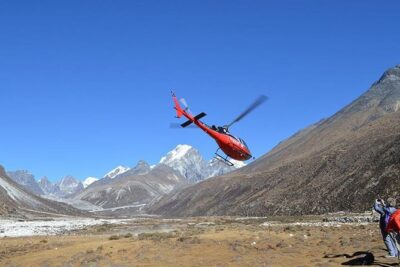
Helicopter return details you should know: it is included and shared with other trekkers. It is weather dependent, so it is not something to count on like a guaranteed elevator ride. Still, when it runs, it is a big relief. You remove the long, slow descent that would normally eat days after a high-altitude finish.
Lodges, meals, and what you pay extra for
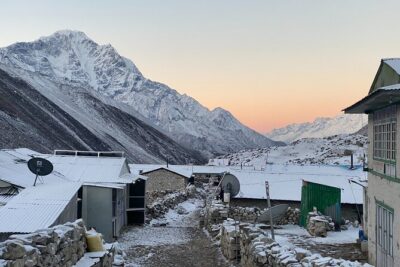
This trek uses lodges and tea houses throughout the route. You get lunch, dinner, and breakfast during the trekking days, which is a major convenience. It means you do not spend time hunting for meals, and you can stay consistent with your energy.
What is not included: bottled water, and coffee and tea. Hot showers and battery recharging are listed as personal expenses too. This matters for your packing plan. If you want more water comfort, do not assume bottled water is handled.
Also plan for tips. Tips for the guide and porter are not included. That is standard in Nepal trekking, but it is better to budget for it early rather than “figure it out later.”
Guides and porters: the safety-first vibe you want at altitude
One of the most consistent themes in the trip’s reputation is how much attention is paid to safety and planning. Guides like Prakash Adhikari and Dikpal are mentioned as supportive, careful, and practical, with a clear focus on getting you up and back safely.
You also travel with porter support: the plan states one porter for two clients. That ratio matters. It usually means you can travel with a lighter day pack, leaving the heavier load work to someone who knows the trail rhythm.
On top of that, the trip includes travel and rescue arrangements, plus medical supplies such as a first aid kit. That does not make mountains risk-free, but it does signal the operator is thinking beyond just “show up and hope.”
Price and logistics: why $3,500 can make sense for this exact format
At $3,500 per person for an 11-day Everest Base Camp trek with helicopter return, the price is not “cheap.” But you are paying for specific, expensive pieces that change the trip equation.
Here is what is included that usually costs money in a do-it-yourself plan:
- flights from Kathmandu to Lukla (and via Ramachap to Lukla when needed)
- two nights in Kathmandu at a 3-star hotel with breakfast
- lodge accommodations during the trek
- a full meal set during trekking (lunch, dinner, breakfast)
- permits and Khumbu valley fees via the TIMS and fee process
- the helicopter ride from Gorakshep back to Kathmandu (shared)
- transfer from the airport by private vehicle
- experienced guide and porter support (1 porter for 2 clients)
- last-night farewell dinner with cultural performance
The helicopter return alone is a major “value lever” because it can reduce the number of days you would otherwise be spending on foot after reaching the high points. You also reduce the time you need to be in the mountains, which is often a big deal if you have limited vacation windows.
One small caution from the available information: if you are going solo or if your group number is odd, there may be extra fees. If that applies to you, ask before you book so there are no surprises.
Who should book this trek, and who should reconsider
This trek is positioned for travelers with moderate physical fitness, and that makes sense given the walking hours and the high altitude climb to Kalapatthar at 5,545m. If you handle steep uphill days, can walk 5 to 7 hours at altitude, and are comfortable with cold mornings, you will likely enjoy the pacing.
It is especially well suited for you if:
- you want the classic Everest Base Camp experience and Kalapatthar without a longer 14 to 15 day trekking schedule
- you value a structured acclimatization plan with Namche Bazaar and Dingboche built in
- you want to reduce “post-finish” trekking fatigue via the included helicopter return
It may be a harder fit if:
- you are deeply worried about flights and helicopter timing tied to weather (because the trip requires good weather)
- you want full control over your schedule, since helicopter and Lukla connections can shift with conditions
Should you book Everest Base Camp with helicopter return?
I would book this style of trek if your priority is a real Everest route, solid acclimatization days, and a faster finish back to Kathmandu without giving up Kalapatthar. The combination of included Kathmandu hotel nights, trekking meals, permit coverage, and a helicopter ride is the heart of the value.
Before you commit, I suggest two simple checks. First, confirm you are comfortable with the high-altitude end of the trek, not just the “11-day” headline. Second, ask your operator how they handle weather days, since both Lukla flights and the helicopter depend on conditions. If you do that homework, you can focus on what actually matters: pacing yourself through Namche and Dingboche, enjoying Tengboche and its monastery setting, and earning those Kalapatthar views.
FAQ
Do I get picked up from the airport?
Yes. The package includes pickup from Tribhuvan Airport and transfer to your Kathmandu hotel by private vehicle.
How long is the trek?
It runs for about 11 days.
What time does the experience start?
The start time is listed as 6:00 am at Tribhuvan Airport in Kathmandu.
How much does it cost?
The price is $3,500 per person.
Are meals included during the trekking days?
Yes. Lunch, dinner, and breakfast are included during the trek.
Is there a hotel stay in Kathmandu?
Yes. You get two nights in a 3-star Kathmandu hotel with breakfast.
Does the tour include the helicopter return?
Yes. The plan includes a shared helicopter flight from Gorekshep (Gorakshep) back to Kathmandu.
Are permits included?
Yes. TIMS permit and Khumbu valley fees are included, along with the necessary paper work.
What is not included in the package?
Bottled water, coffee and/or tea, travel and rescue insurance, and personal expenses like phone calls, laundry, bar bills, battery recharge, and hot shower are not included. Tips for the guide and porter are also not included.
What if weather affects the trip?
The experience requires good weather. If it is canceled due to poor weather, you will be offered a different date or a full refund.
More Helicopter Tours in Kathmandu
- Everest Base Camp Helicopter Tour landing at Hotel Everest View
★ 5.0 · 218 reviews - Everest Base Camp Trek with Helicopter Return from Gorakshep to Lukla
★ 5.0 · 161 reviews - Everest Base Camp helicopter tour with landing
★ 5.0 · 61 reviews - Everest Base Camp Helicopter Tour with Hotel Everest View Landing
★ 5.0 · 52 reviews
Latest additions near Kathmandu
- White Water River Rafting – 1 Day★ 4.3 · 3 reviews
- Traditional Momo Making Class★ 5.0 · 10 reviews
- Kathmandu to Pokhara Premium sofa bus ticket★ 4.0 · 17 reviews
- Amazing 1 Day Trekking Experience in Kathmandu Nepal★ 5.0 · 24 reviews
- Ghorepani Poonhill Trek★ 5.0 · 5 reviews
- Ghorepani Poon Hill Trek★ 5.0 · 16 reviews
- Walking tour of real Kathmandu through back streets.★ 5.0 · 3 reviews
- Wildlife Adventure in Chitwan Nepal★ 4.0 · 4 reviews
Everest Base Camp Treks, compared.
Everest Base Camp Helicopter Tour landing at Everest View Hotel
Read our review →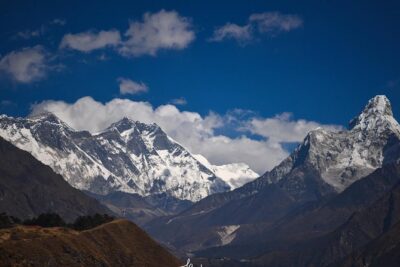
Everest Base Camp Helicopter Tour landing at Hotel Everest View
Read our review →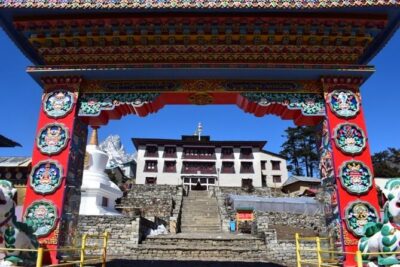
Browse the lists this tour appears in