Reviewed · TREKS IN KATHMANDU
Millennium Homestay Trek
Millennium Cave meets real village life. This trek pairs homestay stays in 30+ villages with direct community time, plus a memorable walk to Millennium Cave with waterfalls. I also like that the food stays Nepali and home-style, not buffet tourism, but the one drawback is that meals can feel repetitive on consecutive homestay nights.
Because the group maxes out at 10 people, your guide can actually manage the pace, and you often hear praise for guides like Raj Kumar and Chandra, or Kumar, plus the smooth planning led by staff such as Ajay. If you prefer highly polished comfort every minute, this is the wrong fit. If you want lower-key cultural trekking, it is a strong match.
In This Review
- Key highlights before you read the full story
- Why this trek feels different from big-name routes
- Price and value: what $1,500 is really paying for
- Getting started in Kathmandu, then transitioning to Pokhara
- Kathmandu heritage days: Durbar Square and Swoyambhu Mahachaitya
- Pokhara lakeside: the calm day that makes the trek work
- Khairenitar Bazar and your first homestay night
- Shaman show day: PyuriDobhan, holy rivers, and evening prayers
- Gurunghe Hill and ethnic variety on the walking days
- Millennium Cave day: waterfalls underground, then uphill relief
- Rangrung Newari night: food, village centers, and a quieter pace
- Tibetan camp visit, then back to Pokhara and Kathmandu
- Final day flow: airport drop and timing buffer
- Trail level and what it means for you
- My book-or-skip advice
- FAQ
- What time and where does the tour start?
- Is pickup and airport drop included?
- How many people are in the group?
- How long is the Millennium Homestay Trek?
- What is included for sightseeing and activities?
- What is the cancellation deadline?
Key highlights before you read the full story
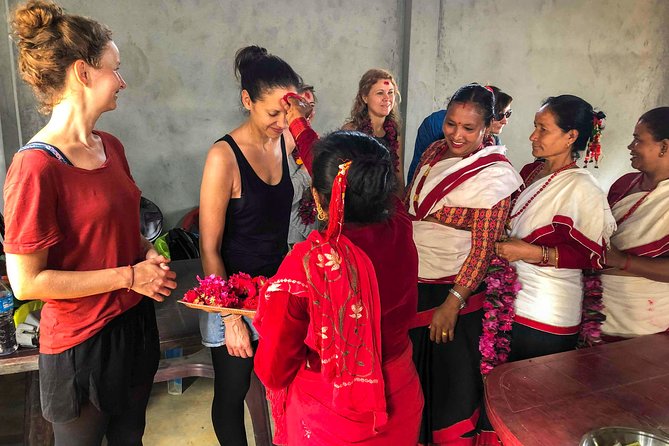
- Small group trekking with a max of 10 people, so you are not lost in the crowd
- Millennium Cave day that combines cave waterfalls and a climb that rewards you with wide views
- 30+ colorful villages and contact with multiple ethnic groups in a small trekking area
- Homestay meals that feel local, usually Nepali cuisine prepared by your hosts
- Shaman show and evening prayers at a holy confluence area tied to three sacred rivers
- Tibetan camp visit to see refugee community life after the Chinese invasion of Tibet
Why this trek feels different from big-name routes
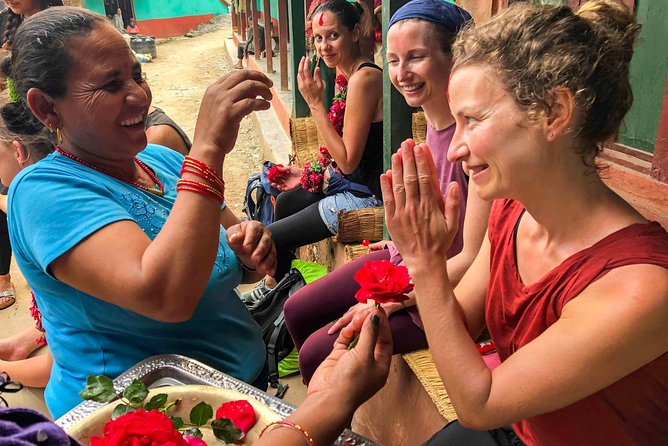
The Millennium Homestay Trek is built around people, not checklists. You spend real time in villages, stay with homestay families, and eat what the household serves, day after day, with a focus on Nepali cooking instead of tourist menus.
I like that the route is framed as off the beaten path and off-limits to typical crowds. One practical result: you are more likely to meet households as neighbors than as a photo-op stop, and you get chances for simple conversation, tea, and everyday cultural moments.
The other thing to know is that this is not a high-altitude grind. Reviews mention the trekking stays lower than the big base-camp treks, with some guests estimating it does not go higher than about 6,500 ft. That tends to make the experience more accessible, while still giving you mountain air and real hill trekking effort.
More Treks in Kathmandu
- Everest Base Camp Trek – 14 Days
★ 5.0 · 1,499 reviews - Everest Base Camp Trek
★ 5.0 · 842 reviews - Everest Base Camp Trekking
★ 5.0 · 485 reviews
Price and value: what $1,500 is really paying for
$1,500 per person sounds steep until you break down what is included and what you are getting. You are not only buying trail time. You are also paying for transfers within Nepal, guided city and heritage stops, admission tickets for multiple listed experiences, and a chain of homestays that put you inside village routines.
You also get a small-group structure. Max 10 travelers is not just a comfort perk. It is what keeps the logistics working on foot, with fewer moving parts for guides and hosts.
Is it a budget trip? No. But it aims at value through access: homestay beds, local meals, community programs like a welcome event, and special cultural activities such as the shaman show. If you want a trek that feels quieter and more personal than common Nepal itineraries, this pricing can make sense.
Getting started in Kathmandu, then transitioning to Pokhara
Your tour begins at Tribhuvan International Airport, Kathmandu, with a stated start time of 6:15 am. If you have ever arrived in a new country half-awake, you will appreciate having a representative greet you and handle the first transfer to your hotel.
Kathmandu days here are not just speed-walk sightseeing. You start at Kathmandu Durbar Square, with an included admission ticket, then later you go to Swoyambhu Mahachaitya, also with an included admission ticket. That combination matters. It gives you a foundation of Newar-era sacred places before you head out of the city rhythm.
After Kathmandu, you drive about 6 to 7 hours to Pokhara. This is a smart buffer. You get time to stroll lakeside and settle in for the trek, instead of jumping straight from airports to hiking boots.
Kathmandu heritage days: Durbar Square and Swoyambhu Mahachaitya
At Kathmandu Durbar Square, you are stepping into the kind of place where the stones feel like they remember everything. You do not need an encyclopedic guidebook mood here. The value is in seeing a major heritage area up close on day one, with a formal start that keeps you oriented.
Later, Swoyambhu Mahachaitya adds a different layer to Kathmandu. The tour frames Kathmandu Valley as a place with UNESCO-listed heritage sites, and Swoyambhu is the big spiritual anchor in the western part of the valley. You also get a long Kathmandu block, so you are not just doing one quick stop before leaving.
A practical consideration: both heritage sites involve walking on uneven areas and stairs. If your mobility is limited, plan to pace yourself and tell your guide early. The tour is described as possible for most travelers, but your comfort will still depend on how you manage stairs and long viewing.
Another way to spend the time in Nepal:
- Private Kathmandu Sightseeing Tour | UNESCO World Heritage sites
★ 5.0 · 756 reviews - Kathmandu: 7 UNESCO Sites with Lunch
★ 4.8 · 744 reviews - Everest Base Camp Helicopter Tour landing at Everest View Hotel
★ 5.0 · 668 reviews - Half day cooking class in Thamel kathmandu
★ 5.0 · 607 reviews
Pokhara lakeside: the calm day that makes the trek work
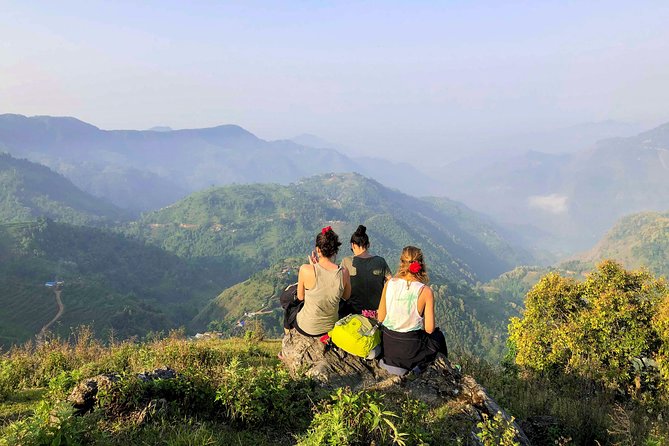
Pokhara is where you reset. The itinerary includes lakeside time and then a sightseeing day at Pokhara Museum, again with an included admission ticket. It is a useful rhythm for a homestay trek, because you arrive tired and you leave less jet-lagged.
You also get the best kind of tourist-day tradeoff: not a shopping marathon, more like a chance to watch the lake, take in mountain views, and prepare mentally for village walking days.
One thing I appreciate is that the schedule builds in practical time. A 10 or 11 day trek with no breathing space can turn everyone crabby. Here, you get a Pokhara night before trekking and then a return drive later, so the trek has a beginning and ending that feel human.
Khairenitar Bazar and your first homestay night
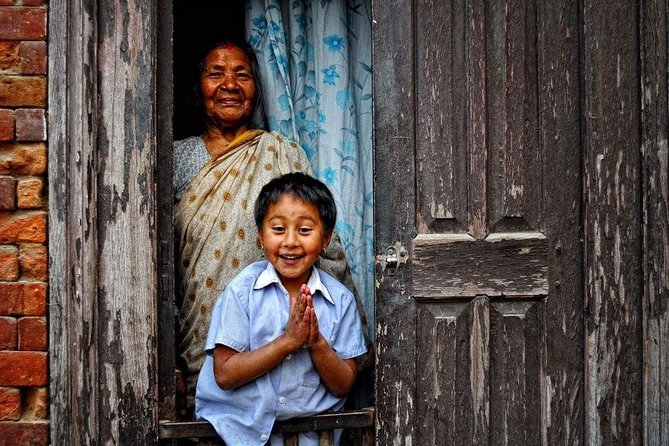
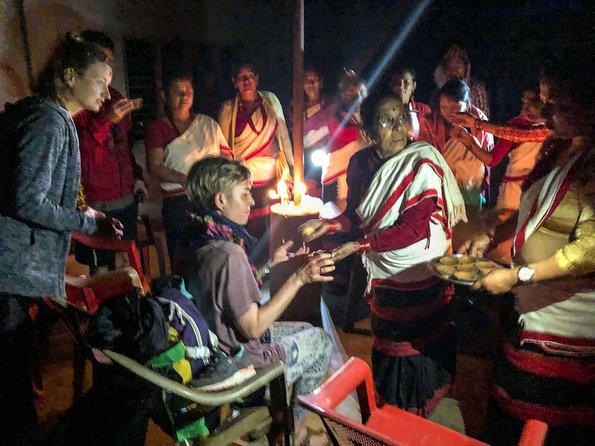
The trekking phase begins after you reach Khairenitaar (about 28 km from where the drive takes you). From there, you start walking toward Bankewa, and you spend the first night in a homestay. The itinerary includes a short stop around Udendhunga, plus a welcome program arranged by the village community.
This first homestay night is not just a place to sleep. It is a culture switch. Your body is doing hiking work, but your day ends with normal household life, not a hotel routine.
If you like learning by doing, pay attention to the small interactions: greetings, how people talk about daily work, and what is served for dinner. Those details are often what make the whole trek feel genuine later.
Shaman show day: PyuriDobhan, holy rivers, and evening prayers
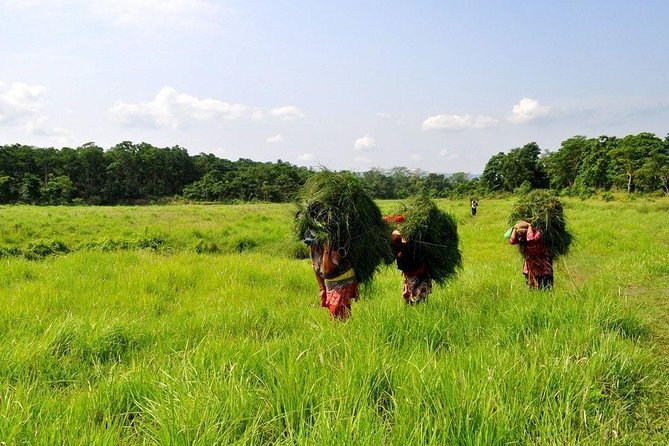
This part of the trek leans into ritual. After breakfast and the walking segment, you head slowly toward PyuriDobhan, described as a holy place where three sacred rivers meet. The walking days here are not only about reaching a point on a map. They include cultural stops and evening programs.
In the evening, the itinerary includes a shaman show and then evening prayers, with the experience tied to insights from the shaman. Even if you are not sure what you believe, this can still be meaningful, because you are seeing how community spiritual life shapes daily culture.
The hiking itself is described as mostly walking down or flat, passing stone paths and crossing a bridge. There is also time to stop for lunch along the way.
One drawback to plan for: if you are sensitive to late-night ceremonies, keep an eye on timing. Evening prayers and shows can run longer than expected in rural settings, and homestay rooms may not be quiet in the way a city hotel is.
Gurunghe Hill and ethnic variety on the walking days
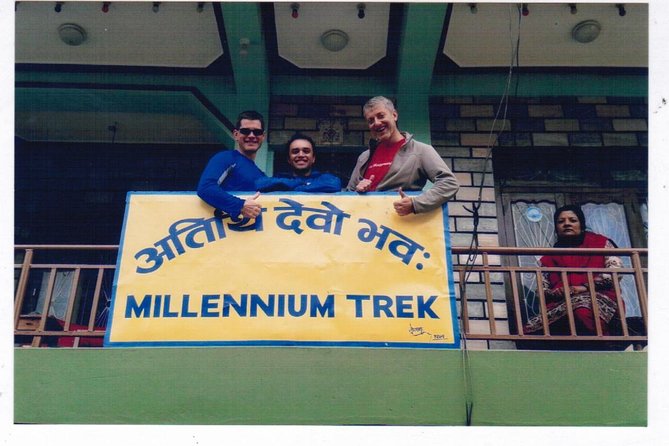
On Gurunghe Hill, your day starts with local breakfast and continues with climbing and village-to-village trekking. The itinerary specifically mentions passing through cultural aspects of major ethnic groups, including Gurung village of Lamagaon, then later heading down toward Gharedi, described as one of the larger villages in the region.
This day matters because it shows the trekking route is a corridor through community neighborhoods, not isolated wilderness. You are walking through living places, and the culture is not a separate museum block.
Also, this is a day that balances effort with exploration. The itinerary lists activities simply as hiking and exploring culture, which is a clue that it should feel conversational and flexible rather than rushed.
If you want to maximize value, ask your guide simple questions during breaks. How people farm, what changes by season, how families manage school and work. You will not need a perfect vocabulary. Hospitality does the heavy lifting.
Millennium Cave day: waterfalls underground, then uphill relief
This is the “ok, wow” day. After breakfast, you walk down toward Millennium Cave, which the tour describes as a cave with waterfalls. You spend time inside, then continue walking up toward Kalkhu village and finally reach Kolma village for the night.
Caves have two realities: you might get damp, and the walking can be slower than you think. If your group is small, your guide can help pace it so nobody rushes through a setting that deserves a slower eye.
Then comes the climb. The itinerary calls it hard but promises a payoff at a viewpoint with Himalayan views. Even if you only catch partial views through clouds, the relief of reaching a higher vantage point is usually the best feeling on a trekking day.
This is also where homestay life kicks in again. After a physically demanding walk, you will likely appreciate a simple dinner and an early reset more than you expect.
Rangrung Newari night: food, village centers, and a quieter pace
You later walk to Rangrung, passing small villages and focusing on a return to village life near Thulo Hattiya. The itinerary notes that you spend a night in the center of a Newari village with locals.
If you care about food beyond tasting menus, this is one of the main selling points. The tour specifically points to traditional Newari cuisines, which are often different in ingredients, spices, and cooking styles than generic “Nepal set menus.”
One practical detail: one review mentions that accommodations were private and clean. That is not guaranteed for every homestay, but it suggests that at least part of the setup is controlled for comfort.
Also remember the tradeoff. Homestays can be wonderful, but they are still homestays. Expect differences in bathroom setups and room layout. If you are the type who needs hotel standards, check your tolerance for basic rural comforts before booking.
Tibetan camp visit, then back to Pokhara and Kathmandu
The next day includes walking down toward the Kyangdi River, crossing into Lalim village, and then entering a Tibetan camp. The itinerary explains that this camp is one of five Tibetan camps in Nepal, and that Tibetans settled there as refugees right after the Chinese invasion of Tibet.
This day is about observing lifestyle and community. You are not only looking at buildings. You are seeing how a refugee community rebuilds daily routines, traditions, and social structures.
After that, you cross the Seti gorge, observe a rock garden, then drive via the Dulegaunda highway back to Pokhara. The itinerary highlights that this is a day with no more walking left, which is a big deal. It gives your legs time to recover before the final return.
From Pokhara, you drive about 7 to 8 hours back to Kathmandu, passing the Trisuli river and picturesque villages. The drive is long, but it also means your trek ends before you need to stress about navigation.
Final day flow: airport drop and timing buffer
Back in Kathmandu, the tour includes a representative meeting you at the hotel and escorting you to the airport based on your flight schedule. You are told to plan for airport check-in about 3 hours prior to flight time.
That buffer matters more than people think. Nepal flight schedules can shift, and international departures need time for check-in and baggage handling. This tour’s approach reduces last-minute panic.
If you have energy, there is also a mention of farewell time, like lunch or quick coffee, plus souvenir shopping. That is a nice moment to trade stories with your guide and thank your hosts through the organizer.
Trail level and what it means for you
The tour is described as suitable for most travelers. Reviews reinforce that it is not the same brutal altitude story as some famous base-camp treks, with one guest estimating the route stayed under about 6,500 ft.
Still, do not think easy. Some days include climbs through steep mountains, plus long walking hours. The itinerary lists trekking blocks that can run around 5 to 10 hours depending on the day, with homestay transitions and cultural stops.
So here is my practical take: if you can walk for several hours at a time and handle stairs and uneven surfaces, you will likely enjoy this. If you expect mostly flat trail every day, you might find the uphill days tiring.
My book-or-skip advice
You should book this trek if you want:
- Village life and homestays as the core of the trip
- A smaller-group feel, max 10 people
- A route that mixes culture, walking, and specific highlights like Millennium Cave, PyuriDobhan, and a Tibetan camp visit
- Nepali home cooking as part of the experience, not a side dish
You might skip it if you:
- Need constant hotel-style comfort and predictable food variety
- Get cranky with long walking days and evening programs that can run late
- Want a pure scenic hike with minimal community interaction
If you’re on the fence, ask yourself a simple question: do you travel to watch people live, or do you travel to collect landmarks? This tour is built for the first one.
FAQ
What time and where does the tour start?
The tour starts at Tribhuvan International Airport in Kathmandu, with a meeting time of 6:15 am.
Is pickup and airport drop included?
Yes. Pickup is offered, and there is also an airport drop. A representative meets you at your hotel and escorts you based on your flight schedule.
How many people are in the group?
The tour has a maximum group size of 10 travelers.
How long is the Millennium Homestay Trek?
It is listed as 13 days approximately.
What is included for sightseeing and activities?
Admission tickets are included for multiple stops and activities listed in the itinerary, including places like Kathmandu Durbar Square, Swoyambhu Mahachaitya, and several trek and cultural experience days.
What is the cancellation deadline?
You can cancel for a full refund up to 24 hours before the experience start time. If you cancel less than 24 hours before, the amount paid is not refunded.
Latest additions near Kathmandu
- White Water River Rafting – 1 Day★ 4.3 · 3 reviews
- Traditional Momo Making Class★ 5.0 · 10 reviews
- Kathmandu to Pokhara Premium sofa bus ticket★ 4.0 · 17 reviews
- Ghorepani Poon Hill Trek★ 5.0 · 16 reviews
- Amazing 1 Day Trekking Experience in Kathmandu Nepal★ 5.0 · 24 reviews
- Ghorepani Poonhill Trek★ 5.0 · 5 reviews
- Walking tour of real Kathmandu through back streets.★ 5.0 · 3 reviews
- Wildlife Adventure in Chitwan Nepal★ 4.0 · 4 reviews
Treks in Kathmandu, compared.
Nagarkot Sunrise View and Day Hiking from Kathmandu
Read our review →