Reviewed · TREKS IN KATHMANDU
Khopra Ridge Trek
Khopra Ridge feels remote from day one. This is a newer route in the Annapurna region, so the walking stays real and the overnight stops are basic home-stay lodges instead of the glossier, super-developed scene. I like that it keeps you close to the rhythm of local life while still delivering big mountain viewpoints. You also get a proper reset in Pokhara with lake time and classic sights before heading back to Kathmandu.
Two things I really like: first, the views are the point, and they come in stages, from the early Annapurna range panoramas to Kopra Ridge and the high Khayer Lake day. Second, the trip runs with a personal touch from guides like Biru Tamang and Bhoj, who are known for careful handling, flexible pacing, and keeping the group feeling looked after.
One consideration: this is not a comfort-focused trek. You should expect simple rooms, and you will gain significant altitude, including a high day at the Khayer Lake area around 4827m. If you are only comfortable on very cushy beds, this route will feel like hard work.
In This Review
- Key highlights worth knowing before you go
- Getting started in Kathmandu and Pokhara, without rushing
- Swayambhunath and Thamel prep, the practical part people skip
- Nayapul to Ghandruk: warm-up walking and Gurung culture
- Tadapani sunrise and the Annapurna sanctuary contrast
- Leaving the sanctuary trail: Dobato and the quieter path
- Mulde viewpoint and the Chistibung bridge day
- Kopra Ridge at 3870m: wildlife country and peak distance views
- Khayer Lake and temple (4827m): the hardest day you’ll remember
- Paudwar to Tatopani: steep descents, forest shade, then hot springs
- Pokhara recovery: boats, stupa views, and optional museum time
- Returning to Kathmandu and using free time well
- Value, guides, and meals: where the money usually matters
- Basic lodges and home-stay nights: what to expect and how to cope
- Who should book Khopra Ridge, and who should think twice
- Should you book the Khopra Ridge Trek?
- FAQ
- How long is the Khopra Ridge Trek?
- Where does the trek start and end?
- Do I need to be very fit?
- What are the lodges and tea houses like on this route?
- How high does the itinerary go?
- Are meals included?
- What kind of sightseeing is included in Pokhara?
- What happens if weather is bad?
Key highlights worth knowing before you go
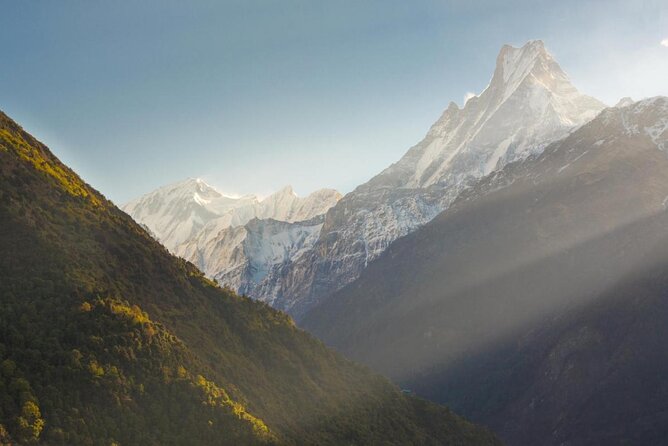
- A quieter Annapurna route with less-developed lodges and more local home-stay feel
- Big viewpoint days including Kopra Ridge and the Khayer Lake climb (temple area)
- Wildlife and photo opportunities above the tree line on the way to Khopra Ridge
- Hot springs at Tatopani for a real recovery night after steep descents
- Pokhara time that actually helps with Fewa Lake boat rides and the World Peace Stupa
- Guides who focus on care and pace, including Biru Tamang and Bhoj, plus porter support
Getting started in Kathmandu and Pokhara, without rushing
Most of your success on Khopra Ridge comes down to how well you start. The first two days in Kathmandu are built around getting your bearings, sorting your gear, and easing into Nepal time instead of sprinting straight to the trail.
On Day 1, you fly in, meet your team in Kathmandu, then head into the Thamel area. The schedule is gentle: tea, shower, and dinner followed by an early night. It is a smart move. Thamel is touristy, yes, but it is also practical. You get your first taste of Nepal logistics, where you can step out and handle little things like snacks and supplies.
Day 2 adds Swayambhunath, a Buddhist stupa and monastery site with history that stretches back over 2000 years. It also gives you a “from here to the valleys” perspective. You will see across the region, and you may spot monkeys near the complex. Then you switch gears to trek prep: double-checking packing, getting ready for cold mornings, and doing a bit of Thamel shopping, which is its own experience.
Then on Day 3, you get the momentum shift. You catch a flight to Pokhara (about 45 minutes) and connect by private transport to the trek start area at Nayapul. After that, you are walking, not waiting.
More Treks in Kathmandu
- Everest Base Camp Trek – 14 Days
★ 5.0 · 1,499 reviews - Everest Base Camp Trek
★ 5.0 · 842 reviews - Everest Base Camp Trekking
★ 5.0 · 485 reviews
Swayambhunath and Thamel prep, the practical part people skip
It is easy to treat Kathmandu sightseeing as filler. Here, it helps your trek more than you might think.
Swayambhunath works as an altitude and orientation warm-up. Even if you never struggle with the climb, you learn what “viewpoint stairs” feel like. You also get a quick read on Nepal’s mix of spiritual sites and everyday life. The early morning vibe at the stupa area tends to be calm, and the surrounding ridges make the region’s shape easier to understand later when you are hiking toward big horizons.
Thamel shopping on Day 2 is also practical. Basic lodges on the trek mean you may need small comfort items ready to go. If your trekking socks, rain layer, or warm hat are missing, Kathmandu is where you can still fix that without adding stress mid-trek. Just keep it realistic. You do not need to buy a whole new wardrobe. You need the essentials that keep you warm and moving.
Nayapul to Ghandruk: warm-up walking and Gurung culture
The trek starts by moving from the Nayapul area toward Ghandruk. You get a typical early-day rhythm: gentle acclimatization walking and gradual settling into your hiking pace. On this day, the walk takes about 5 hours, and the payoff is early cultural context plus mountain drama.
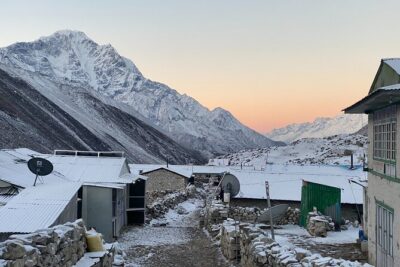
Ghandruk (around 1940m) is known in the region for Gurung culture, and you get a sense of how villages sit along the Annapurna trails. This is where you start seeing how the trek route is supported, with home-stays and tea houses that serve hikers as part of local life.
You also start building the mountain picture. The route is positioned for views of peaks including Annapurna South, Himchuli, Machhapuchhre, and Annapurna 3. Even if clouds roll in at some points, you are learning how the weather here changes. That matters when you reach higher viewpoints later.
Tadapani sunrise and the Annapurna sanctuary contrast
Day 4 keeps you on a section with a more classic feel: rhododendron forest walking with birds and monkeys, then arrival at Tadapani at about 2300m. The hike is around 4 hours.
This is one of the best “settle into the mountains” days. Rhododendron season aside, the forest tone helps you transition from village roads into mountain trails. It is also a great day for photography because you are walking through layers. You look up, you look sideways, and you do not always need perfect weather for interesting shots.
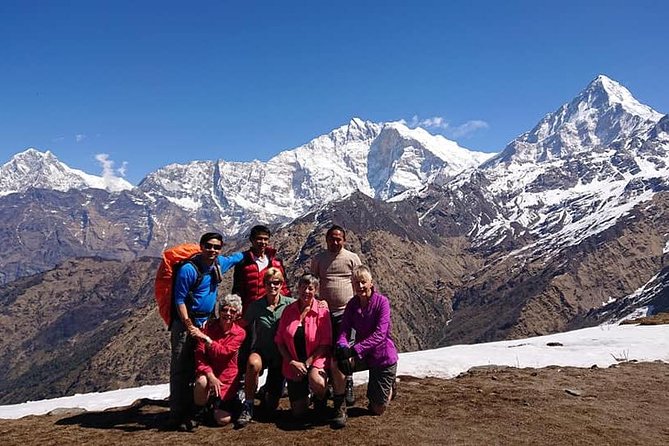
The big advantage here is the range views. Along the way, you can see multiple peaks, including Annapurna II, Annapurna III, Annapurna IV, Annapurna South, Machhapuchhre, and Lamjung Himal. Tadapani is set up for sunrise and sunset views, so your day ends where you actually have time to watch the light change. This is less about rushing to a landmark and more about soaking in how the mountains reveal themselves slowly.
Another way to spend the time in Nepal:
- Private Kathmandu Sightseeing Tour | UNESCO World Heritage sites
★ 5.0 · 756 reviews - Kathmandu: 7 UNESCO Sites with Lunch
★ 4.8 · 744 reviews - Everest Base Camp Helicopter Tour landing at Everest View Hotel
★ 5.0 · 668 reviews - Half day cooking class in Thamel kathmandu
★ 5.0 · 607 reviews
Leaving the sanctuary trail: Dobato and the quieter path
By Day 5, you leave the Annapurna sanctuary trail and shift onto a less travelled route. This is one of the key reasons Khopra Ridge feels different. The walking still has structure, but the scenery feels less “tour group pipeline.”
You move through thick rhododendron forest, then pastures that support local water buffalo. That blend of forest and grazing areas is a reminder you are not in a staged trekking corridor. You climb gradually, and as you emerge above the tree line, the Annapurna range opens up with stronger, cleaner angles.
You stop for lunch around Dobato and spend the night at Dobato camp, about 3400m. This is a higher sleeping day than before, and it sets you up for the way the route continues to build altitude in a step-by-step pattern.
Mulde viewpoint and the Chistibung bridge day
Day 6 starts early. You hike to Mulde viewpoint for panoramic views of both the Annapurna range and the Dhaulagiri range. The idea is simple: go up when the light is best, take photos, then come down to breakfast.
After breakfast, you trek onward to Upper Chistibung around 3000m. You descend through forest and pastures until Deaurili, then cross a suspension bridge. After the bridge, you keep moving with gradual ascent through the forest.
This day is less about one single dramatic moment, and more about how the route connects zones. You go from ridge viewpoints to forest paths and then back toward open areas again. It is a good day for hikers who enjoy variety, and it is also a reminder that suspension bridges are not just for thrill seekers. They are part of the infrastructure that allows these village routes to function.
Kopra Ridge at 3870m: wildlife country and peak distance views
Day 7 is one of the signature days. You start with a steady climb above the tree line and are in a wildlife zone where you may see animals such as Mountain Thar and Danfe pheasant. You go slowly, with frequent pauses, so you can rest when needed and take photos without turning it into a forced march.
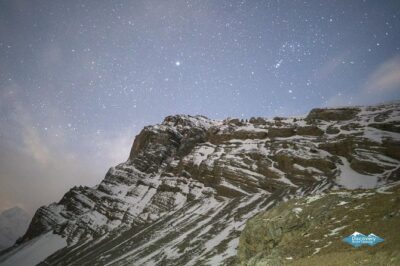
You end at Kopra Ridge, around 3870m, and the views are the star. Annapurna South is close by (about 6km away), and you can also see Fang and Nilgiri to the north. To the west, the Dhaulagiri range sits in the view too.
The hike time listed here is about 3 hours, which might sound easy after earlier days, but at 3870m, “short” still means “serious.” This is where your breathing rhythm matters more than your speed.
Khayer Lake and temple (4827m): the hardest day you’ll remember
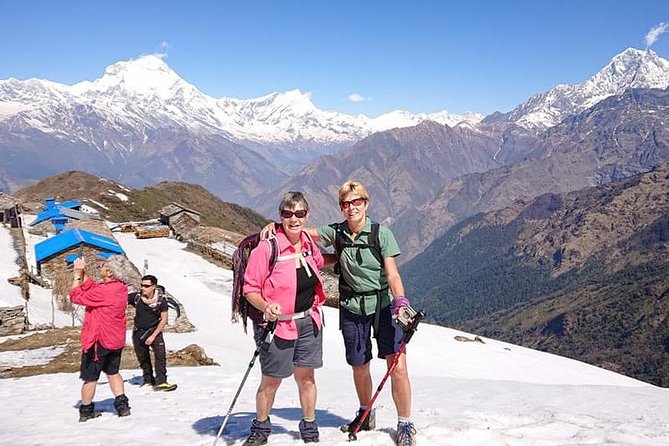
Day 8 is the big altitude push. You stay in Khopra for a second night, then head up to Khayer Lake and the temple area around 4827m.
The walk is about 6 hours. Expect it to feel long because you are moving high, and you are likely dealing with cold and wind depending on weather. The reward is the reason people plan this route in the first place: you climb to a high point where the mountains can look close, layered, and even a bit unreal.
Even if the lake itself is not fully accessible in every condition, the entire day is about the high-mountain payoff. If you are the type who gets anxious about altitude, take the climb slow. This itinerary’s pacing on earlier days is built to help you arrive ready.
Paudwar to Tatopani: steep descents, forest shade, then hot springs
Day 9 brings you back down. You descend along the hillside with steep sections at the start, then follow open ground through buffalo pastures before entering thick oak and rhododendron forest. You end in the village of Paudwar for the night, about 5 hours of walking.
Day 10 continues the descent and adds a fun, practical reward. You walk down through fields toward a small river and a water mill, cross a suspension bridge, then head toward Hillkharka before continuing down to Tatopani at about 1190m. This is where the hot springs live, and it is your recovery night.
The hot springs here are more than a perk. After days of altitude gain and descent, your legs will appreciate warm water and a relaxed evening. Tatopani also gives you a change of scenery, from trekking villages into a more restful hub where you are not constantly negotiating steep trail sections.
Pokhara recovery: boats, stupa views, and optional museum time
Day 11 ends trekking. You travel from Tatopani to Beni by bus, then take a taxi to Pokhara. It is about 4 hours total, and it is a relief day in the best way.
Pokhara is a strong match for this itinerary because it is built for recharging. The city sits around Fewa Lake and offers sightseeing without more hiking. On Day 12, you take boats across the lake and walk up to the World Peace Stupa. The payoff is a broad viewpoint over both the mountains and Pokhara.
Afterward, you walk back down. If your group wants it, there is also the Mountaineering Museum as an extra option. The point of this day is to close your trek story with a relaxed cultural and scenic chapter, not to add another physical challenge.
Returning to Kathmandu and using free time well
On Day 13, you head back to Kathmandu in the early part of the day. You drive from the tourist bus park, return to the city, then have time to rest and shop. This is where you can finally buy those small trekking souvenirs or practical gifts you did not want to carry in your pack.
Day 14 is flexible. Extra days are available at your own cost, though the itinerary frames this as a “best available accommodation and food after trekking” finish. The idea is that the last day should feel comfortable after all the walking.
One more value note: on this trek, you also get access to menu choices for meals while still keeping everything handled for you.
Value, guides, and meals: where the money usually matters
At $1461.49 per person for a roughly 14-day trek, the value is not just the route. It is the support structure around it.
First, this is a private tour/activity, meaning you are not sharing the experience with strangers beyond your own group. Private formats matter on trekking days because your pace and needs can be handled without fighting for time or space.
Second, the price includes all meals on trek. That is a big deal for value because it removes constant decision-making, especially in basic villages where you might otherwise pay more for fewer options. You also get a choice element, since you can choose food from a menu available. That combination, handled meals plus choice, tends to make the trek feel easier than it would if everything was pay-as-you-go.
Third, your guiding team is a clear strength. Names like Biru Tamang and Bhoj come up repeatedly in the provided feedback, along with porter support. The practical takeaway for you: you are less likely to feel lost, rushed, or stuck, because the team’s job is to manage the day-to-day trail flow and keep you comfortable enough to enjoy the views.
Basic lodges and home-stay nights: what to expect and how to cope
This trek is intentionally less developed than some of the more famous Annapurna routes. That means lodges and tea houses can be very basic and may feel more like local home-stays than full-service hotels.
What that means for you:
- Bring patience. The charm comes from simplicity.
- Keep expectations realistic on room size and comfort.
- Plan around cold evenings, because higher sleeping nights like Dobato, Chistibung, and Khopra will feel different from village-level warmth.
This is also why the Pokhara recovery is important. It gives you a chance to wash, rest, and eat in a more comfortable setting before you fly home.
Who should book Khopra Ridge, and who should think twice
This trek fits you if you want:
- A quieter Annapurna experience with less-developed overnight stops
- A viewpoint-heavy itinerary that includes Kopra Ridge and a high Khayer Lake day
- A route with culture time in Kathmandu and a real recovery stop in Pokhara
It might not fit you as well if:
- You need consistently comfortable accommodations
- You want a fully polished lodge circuit with lots of modern conveniences
- You do not feel confident with moderate fitness demands and altitude exposure
If you are a mid-level trekker, willing to slow down, and ready to enjoy simple nights for the sake of big mountain days, this itinerary makes a lot of sense.
Should you book the Khopra Ridge Trek?
If your goal is the Annapurna region’s high views without the most crowded feel, I would lean toward booking. The route builds gradually, and it delivers signature scenes on multiple days, not just one summit-style moment. Add in all trek meals, plus care from guides like Biru Tamang and Bhoj, and you get a trip that is easier on your mind than you might expect for a less-developed path.
But if you hate basic lodging, or you are worried about altitude days like Khayer Lake near 4827m, consider whether another Annapurna trek with gentler highs would feel safer for you.
FAQ
How long is the Khopra Ridge Trek?
The trek is listed as about 14 days (approx.), including Kathmandu and Pokhara portions.
Where does the trek start and end?
The trek journey starts from the Kathmandu-Pokhara side and uses Pokhara as the main hub. The itinerary shows the trek beginning after flying to Pokhara and connecting to Nayapul, then finishing trekking at Tatopani before returning to Pokhara.
Do I need to be very fit?
The trip lists a moderate physical fitness level as the requirement, which usually means you should be comfortable with day hikes and altitude.
What are the lodges and tea houses like on this route?
Lodges and tea houses are described as very basic and more like home-stays, especially on the less developed parts of the Annapurna region.
How high does the itinerary go?
Key high points include Kopra Ridge around 3870m and the Khayer Lake and temple area around 4827m.
Are meals included?
Yes. The price includes all meals on trek, and you can choose food from the menu available.
What kind of sightseeing is included in Pokhara?
You take boats across the lake and visit the World Peace Stupa. There is also an optional Mountaineering Museum visit if the group would like it.
What happens if weather is bad?
The experience requires good weather. If it is canceled due to poor weather, you are offered a different date or a full refund.
Latest additions near Kathmandu
- White Water River Rafting – 1 Day★ 4.3 · 3 reviews
- Traditional Momo Making Class★ 5.0 · 10 reviews
- Kathmandu to Pokhara Premium sofa bus ticket★ 4.0 · 17 reviews
- Ghorepani Poon Hill Trek★ 5.0 · 16 reviews
- Amazing 1 Day Trekking Experience in Kathmandu Nepal★ 5.0 · 24 reviews
- Ghorepani Poonhill Trek★ 5.0 · 5 reviews
- Walking tour of real Kathmandu through back streets.★ 5.0 · 3 reviews
- Wildlife Adventure in Chitwan Nepal★ 4.0 · 4 reviews
Treks in Kathmandu, compared.
Nagarkot Sunrise View and Day Hiking from Kathmandu
Read our review →