Reviewed · TREKS IN KATHMANDU
Khopra Danda Trek
Annapurna, without the crowds. This Khopra Danda trek is a quieter-feeling route through Nepal, with standout ridgeline views of the Annapurna range and the Fishtail area. The one thing to plan for is the physical side, with multiple long, mostly uphill hiking days and early starts.
I also like the way this trip is managed end to end, including an airport pickup and a dedicated trekking guide who checks your gear, explains the plan, and hands you the trek map and documents. If you want a structured trek that still lets you enjoy each village stop, this one fits that goal well.
In This Review
- Why Khopra Danda feels calmer than most Annapurna treks
- What you’re really paying for: value at $1,299
- Day 1 in Kathmandu: arrival, pickup, and a real gear check
- The Pokhara on-ramp: lakeside views and the first mountain cues
- Day 3 to Ghandruk and Tadapani: jeep, then the walk starts for real
- Day 4 toward Dobato: rhododendron and oak, then ridge time
- Day 5 to Khopra Danda: forests, pastures, and jaw-dropping ridge framing
- Day 6 on Khopra ridge: the big climb and the payoff
- Day 7 Khayer Lake: a harder day that feels quieter on arrival
- Day 8 down to Swanta: farms, villages, and Magar culture
- Day 9 Ghorepani: green trails and cultural downtime
- Day 10 Poon Hill sunrise plus the return by jeep
- Day 11 back to Kathmandu: sightseeing, Thamel, and closing touches
- Who this trek is best for (and who should think twice)
- Tips that help you get more out of every day
- Should you book the Khopra Danda Trek?
- FAQ
- What is the duration of the Khopra Danda trek?
- Where does the trip start?
- What time is the trek scheduled to begin?
- What permits and trekking documents are included?
- What is included for accommodation and meals during the trek?
- What travel is included between Kathmandu and Pokhara?
- What is not included in the price?
Why Khopra Danda feels calmer than most Annapurna treks
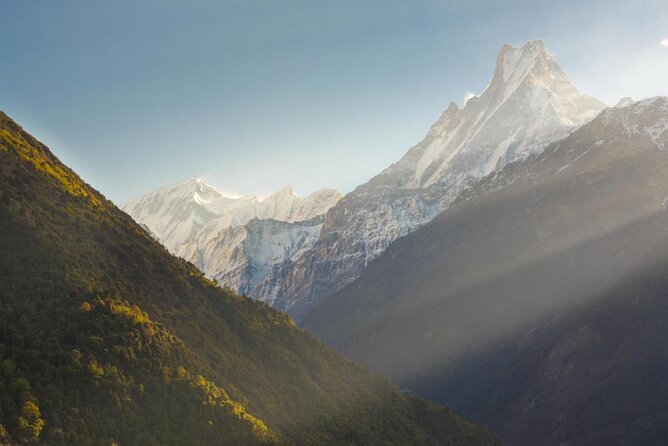
- Less-crowded vibe by design: This route is described as calmer than many other Annapurna treks, and the itinerary leans into smaller village nights rather than constant big-rush crowds.
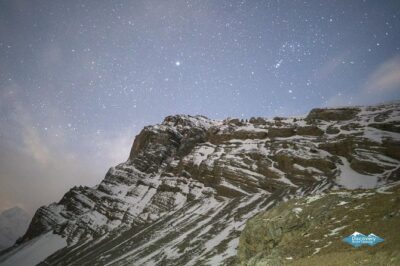
- Khopra Ridge viewpoints that keep coming back: You’re not just visiting one scenic overlook. The ridge keeps paying off, especially as you hike toward and then up to Khopra Danda.
- Wildlife and forest time: You spend a lot of hours walking through rhododendron and oak forests, with chances to spot musk deer, red fox, ghoral, danfe (pheasant), and Himalayan thar.
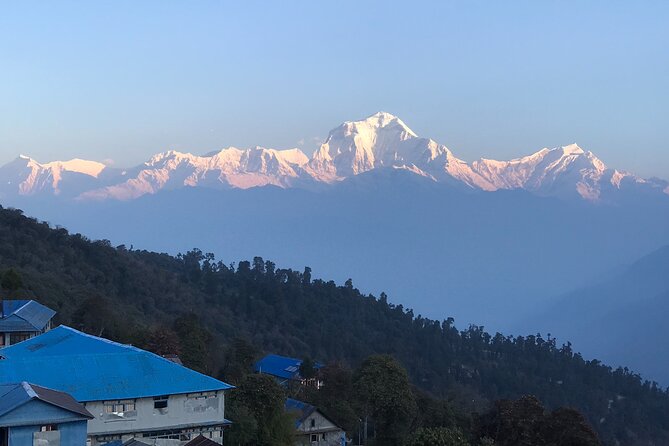
- Big sweeps of the Dhaulagiri and Annapurna worlds: From high points on the Khopra ridge, you get wide views including Dhaulagiri, Damphus Peak, Tukuche Peak, Nilgiri, Annapurna I and South, and even the Kaligandaki Gorge.
- A special add-on day to Khayer Lake: The trek to Holy Khayer Lake gives you a quieter, more reflective Himalayan moment, then you return to Khopra Danda.
What you’re really paying for: value at $1,299
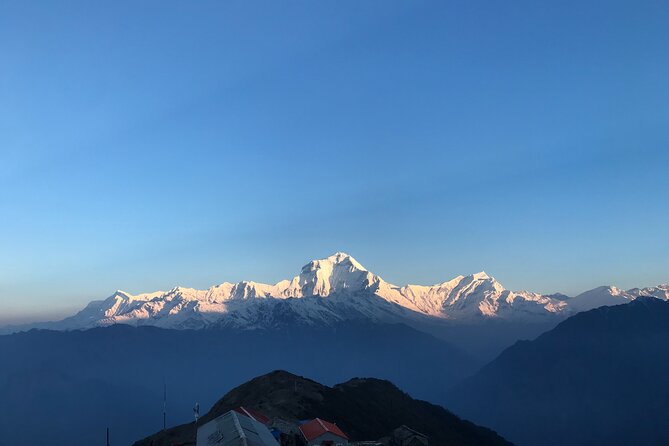
At $1,299 per person for an 11-day trek, the real value is in the “middle work” being handled for you. You get a trekking guide, teahouse or lodge accommodation in the mountains, the Annapurna Conservation Area and TIMs permit, and meals listed across the trip (breakfast multiple days, plus included lunches and dinners). You also get insurance and equipment support for guides and porters, which matters when the weather shifts.
Transport is another big piece of the price. You have a tourist bus between Kathmandu and Pokhara, plus drives on and off the trail (including a private jeep day in the return segment). You’re not buying every moving part separately, which reduces the usual headache of cobbling a trek together.
The “not included” list is also worth scanning. International flights, Nepal visa fees, drinks, and personal expenses sit outside the package. If you expect lots of extra bottled water, soda, beer, or snacks on top of included meals, budget for that up front.
More Treks in Kathmandu
- Everest Base Camp Trek – 14 Days
★ 5.0 · 1,499 reviews - Everest Base Camp Trek
★ 5.0 · 842 reviews - Everest Base Camp Trekking
★ 5.0 · 485 reviews
Day 1 in Kathmandu: arrival, pickup, and a real gear check
Your trek starts the moment you land at Tribhuvan International Airport. Beyond the Limits staff meet you and transfer you to your Kathmandu hotel. The next step is a planning appointment with your guide and team, where you’ll do a proper gear and requirement check.
I like this approach because it sets you up for the hiking days ahead. Many treks start “tomorrow,” but here you get a guided hand with maps and documents before you’re hit with early trail mornings. You also get free evening time in Kathmandu and an overnight sleep in the city.
The Pokhara on-ramp: lakeside views and the first mountain cues
On Day 2, you drive to Pokhara. The schedule calls it about six hours, and Pokhara Lakeside is built into the day. This is a good easing period before the trekking, since you’re not climbing yet, you’re just shifting your body and mind from city pace toward mountain pace.
Practical note: Pokhara is also your “gear comfort zone.” You’ll likely want to top up on anything you forgot (spare layers, blister care, or basic trail snacks), even though the trek kit check happens earlier. If you’re coming in from far away, this is also where you can handle the small travel stuff without feeling rushed.
Day 3 to Ghandruk and Tadapani: jeep, then the walk starts for real
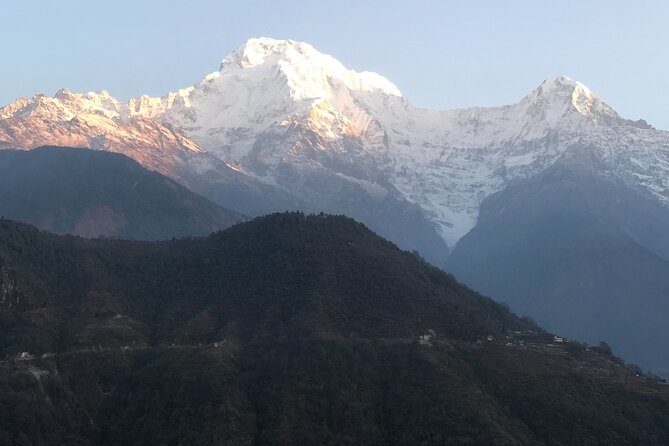
Day 3 has a key detail: a jeep ride to Ghandruk, with an alternative route because of road work on the main Ghandruk road. After getting off the jeep, you walk about 45 minutes to reach Ghandruk village, then have lunch there.
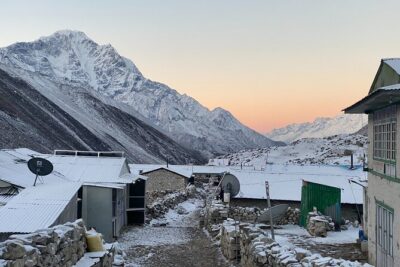
After lunch, you head toward Tadapani, with the trek time listed around three hours, and you sleep at a Tadapani lodge. Tadapani is a solid early stop because it gives you a chance to acclimatize through movement rather than sudden altitude jumps. You’ll also start picking up the rhythm of a tea-house trek, meaning warm meals, simple lodging, and the usual quiet after dinner.
Another way to spend the time in Nepal:
- Private Kathmandu Sightseeing Tour | UNESCO World Heritage sites
★ 5.0 · 756 reviews - Kathmandu: 7 UNESCO Sites with Lunch
★ 4.8 · 744 reviews - Everest Base Camp Helicopter Tour landing at Everest View Hotel
★ 5.0 · 668 reviews - Half day cooking class in Thamel kathmandu
★ 5.0 · 607 reviews
Day 4 toward Dobato: rhododendron and oak, then ridge time
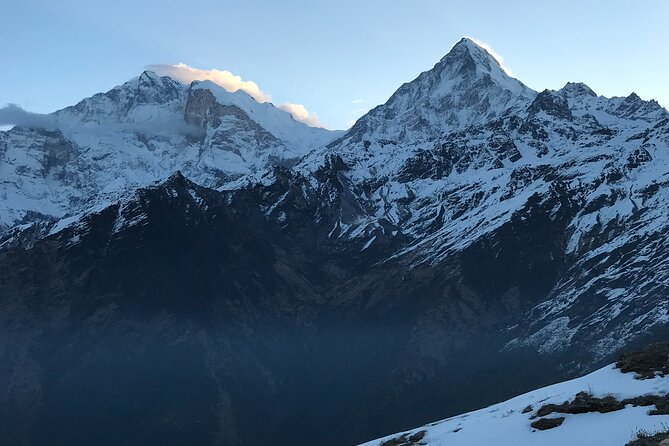
Day 4 is a forest day with a climb layered in. You walk through rhododendron and oak forests for most of the route. The itinerary even calls out wildlife possibilities like musk deer and red fox, which is one of those reminders that you’re hiking in living habitat, not just scenic stages.
After the forests, you ascend to the ridge of Deurali. From there, the trail continues upward on a relatively steep section toward Dobato. The day is listed at around 6 to 7 hours total, and you spend the night at a tea house in Dobato.
The drawback here is obvious: “steep trail” plus a full hiking day means you’ll want good pacing. Start slow, keep your breathing steady, and don’t treat every switchback like it needs to be conquered right now.
Day 5 to Khopra Danda: forests, pastures, and jaw-dropping ridge framing
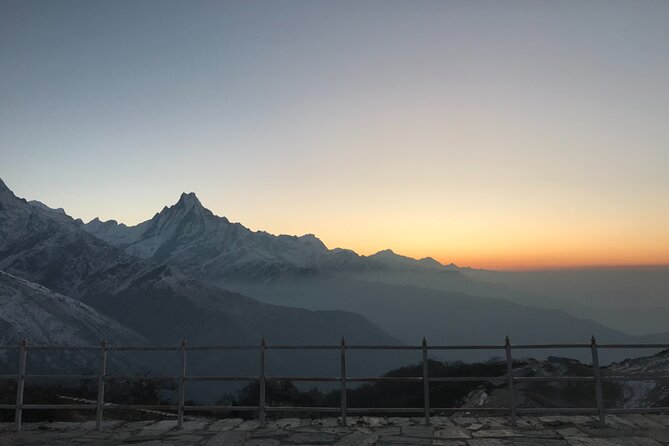
Day 5 begins with a down-and-up rhythm. You walk down and up through the woods, reach Bayli Kharka after about an hour, and then descend through forests to Chistebung pastures. From there, you trek for around two hours and ascend above the timberline to reach Khopra Danda.
The hike includes chances for animal sightings again: musk deer, ghoral, danfe (pheasant), Himalayan thar. And the scenery expectations are high for this day and the next: views of Dhaulagiri, Damphus Peak, Tukuche Peak, Nilgiri, Annapurna I, and Annapurna South are listed, along with a view of the Kaligandaki Gorge, described as the deepest gorge in the world.
You’ll sleep at a tea house near Khopra Danda. This is where the trek starts to feel like a big ridgeline journey rather than a standard Annapurna trail.
Day 6 on Khopra ridge: the big climb and the payoff
Day 6 is listed as whole uphill to Khopra Danda, around four hours. This is a “save some legs” day, because you’ve already walked a full previous stage, then you’re asked to climb again.
The reason it’s worth it is the view logic of this trek. The itinerary repeatedly points back to the same stellar payoff: Khopra ridge gives you wide horizons, including Dhaulagiri and Annapurna in the same thinking space, plus Kaligandaki Gorge. Even if you’ve seen mountains before, there’s something special about how the ridge frames the valleys below.
You’ll spend another night at a tea house, which keeps the experience simple and focused. No rushed hotel transfers, no constant schedule juggling.
Day 7 Khayer Lake: a harder day that feels quieter on arrival
Day 7 adds Holy Khayer Lake. You start with breakfast at your lodge, then ascend toward the lake, with the hike listed as more than five hours one way. The reward is a lake surrounded by mountains, plus panoramic viewpoints from the water area for Annapurna South, Dhaulagiri, Nilgiri, and more.
There’s also a small but helpful practical detail: along the way, there are tea houses, but they open only in peak season. So if you’re going outside peak months, plan on the fact that food stops might not be as dependable as in high season.
After returning to Khopra Danda, you have time to slow down. The plan includes talking with local people, exploring culture and tradition, and then sleeping at a tea house again. For me, this is where the trek stops being only about views and becomes about people and place.
Day 8 down to Swanta: farms, villages, and Magar culture
On Day 8, you descend to Swanta village. The route includes descending about an hour to Upper Chistebung village, then further down through potato and barley farms and villages. The destination is Swanta, where you can spend the rest of the day exploring the village and Magar lifestyle.
This is a meaningful contrast to the earlier ridge hiking. Up high, you’re tracking peaks and horizons. On the descent, you’re tracking fields, paths between homes, and everyday village life. It’s also a good mental shift because you’re not chasing altitude gains, you’re letting your body recover a bit while still moving.
Day 9 Ghorepani: green trails and cultural downtime
Day 9 heads toward Ghorepani through beautiful green forests. The itinerary also notes that you can catch glimpses of the Annapurna range during the trek. When you reach Ghorepani, you have the rest of the day with people of the village, with closer exposure to culture and tradition, and an overnight stay in a tea house.
Even if you’re not a “hang out in villages” person, I recommend using this day to reset. Your legs will thank you. And since you already did Khopra ridge and forest climbing, this slower, cultural pacing feels like a fair trade.
Day 10 Poon Hill sunrise plus the return by jeep
Day 10 starts early because Poon Hill sunrise is the highlight. You hike early to Poon Hill and watch sunrise over a Himalayan lineup. The peaks listed in the schedule are Mt. Annapurna I (8091 m), Annapurna South (7219 m), Annapurna III (7855 m), Machhapuchhre (6993 m), Dhaulagiri (8167 m), Tukuche Peak (6920 m), Nilgiri (6940 m), Varaha Shikhar Annapurna IV (7525 m), Annapurna II (7937 m), and Lamjung Himal (6931 m).
After the sunrise and views, you trek down to Hille. Then you take a private jeep drive to Pokhara via Nayapul. The day still includes mountain background scenery while you travel, then you check into a hotel in Pokhara.
This is one of those days where timing matters more than fitness. You’ll want to be organized for the early wake-up, layered for cold dawn air, and ready for a steep-feeling climb for a short time, then a long downhill after breakfast.
Day 11 back to Kathmandu: sightseeing, Thamel, and closing touches
Day 11 is your wrap-up. You have breakfast in Pokhara, visit a few sightseeing spots, and then drive back to Kathmandu. You’ll have time for shopping handicrafts and souvenirs, plus you can explore cafes, lounges, and bars around Thamel.
The day also includes a farewell dinner in Kathmandu and certificate distribution. Finally, you stay overnight at a hotel.
It’s a nice way to close, because you’re not immediately thrown back into a full travel scramble. You’ve got a proper last evening, and the trek feels finished rather than abruptly cut off.
Who this trek is best for (and who should think twice)
This trek lists a moderate physical fitness level as the target. That usually means you should be comfortable hiking for several hours at a time, handling uphill and downhills, and doing early starts without needing a nap every hour.
It also makes sense if you like a calmer route and you want big Himalaya views without a constant crowd vibe. The itinerary is built around tea-house stays, forests, ridges, and village interaction, so it suits people who enjoy the “walk and live simply” rhythm.
Think twice if you have limited tolerance for steep trail segments or you dislike long hiking days. Day 4 includes steep sections toward Dobato, and Day 7 is a long climb to Khayer Lake. If that sounds like too much, you might want a shorter trek option.
Tips that help you get more out of every day
1) Start slow every morning
The itinerary has multiple long hike days, so your best strategy is to pace from minute one. Save the speed for flat stretches, and let your breathing guide your effort.
2) Pack for real mountain temperature swings
The plan is full of early starts and high points. Even when skies are clear, dawn and shade can be cold. Bring layers that you can add or remove without a big hassle.
3) Expect wildlife moments, not guaranteed animal spotting
The route calls out musk deer, ghoral, danfe, and Himalayan thar possibilities. Great. Still, treat them as bonus sightings, not your main plan.
4) Use village days to reset
Days like Swanta and Ghorepani are built for exploring local life. This is where you recover mentally and physically, so you arrive fresh for sunrise and the long return day.
5) Plan your Khayer Lake day like it matters
A hike listed as more than five hours up means you need water discipline and steady energy. Go in calm, not heroic.
Should you book the Khopra Danda Trek?
If you want a less crowded Annapurna experience, with standout ridge views, forest walking, and a special Khayer Lake day, this trek is a strong match. The pricing feels fair because it bundles the guide, permits, tea-house/lodge accommodation, listed meals, and key transport segments, instead of making you chase each piece on your own.
My advice: book it if you can handle long days and you like the idea of learning the rhythm of tea houses and villages. Skip it if you’re looking for an easy stroll or a trip without steep climbs.
If you do book, go in expecting mountains first, comfort second. Then, when the ridges open up and the panorama hits, you’ll understand why people remember this route for years.
FAQ
What is the duration of the Khopra Danda trek?
The trek is listed as 11 days (approx.).
Where does the trip start?
It starts in Kathmandu. On the arrival day, pickup is offered from Tribhuvan International Airport.
What time is the trek scheduled to begin?
The start time is listed as 6:15 am.
What permits and trekking documents are included?
The package includes the Annapurna Conservation Area permit and TIMs permit.
What is included for accommodation and meals during the trek?
Accommodation in mountain teahouses or lodges is included, and breakfast is included multiple days. Lunch and dinner are also included as listed in the package details.
What travel is included between Kathmandu and Pokhara?
A tourist bus is included to and from Pokhara, plus hotel stays in Pokhara for two nights with bed and breakfast.
What is not included in the price?
International air fare, Nepal visa fees, and all drinks are not included. Personal expenses, and any emergency evacuation or medical costs are also not included.
Latest additions near Kathmandu
- White Water River Rafting – 1 Day★ 4.3 · 3 reviews
- Traditional Momo Making Class★ 5.0 · 10 reviews
- Kathmandu to Pokhara Premium sofa bus ticket★ 4.0 · 17 reviews
- Ghorepani Poon Hill Trek★ 5.0 · 16 reviews
- Amazing 1 Day Trekking Experience in Kathmandu Nepal★ 5.0 · 24 reviews
- Ghorepani Poonhill Trek★ 5.0 · 5 reviews
- Walking tour of real Kathmandu through back streets.★ 5.0 · 3 reviews
- Wildlife Adventure in Chitwan Nepal★ 4.0 · 4 reviews
Treks in Kathmandu, compared.
Nagarkot Sunrise View and Day Hiking from Kathmandu
Read our review →