Reviewed · TREKS IN KATHMANDU
Kanchenjunga South Base Camp Trek – 13 Days
Big mountains, few trekkers, real village life. This Kanchenjunga South Base Camp trek feels special because it mixes a remote Taplejung route with small-group support from Breeze Adventure, including owner Kishwor and guides like Galje who focused on a pace that felt human. I also love the pull of the south wall excursion, where you can stand in the valley and see Kanchenjunga’s main summits laid out on the ridge. One thing to plan for: once you’re past Yamphudin, facilities get basic and you’ll be relying on teahouses, steady walking, and your guide’s timing.
Before the trail ever starts, the trip sets you up the smart way. Day 1 includes a private-vehicle sightseeing loop around Kathmandu for several UNESCO World Heritage sites, then an overnight bus to Ilam. Days 3 through 8 build the day-to-day rhythm gradually, with forest turns, suspension bridges, rhododendrons, and the big payoff approach toward Tseram and Ramche, where a tent night can happen if the area is busy.
Price-wise, it’s not a cheap trek, but it is structured for value if you want permits, guiding, and most meals handled. You’re paying about $2,095.34 per person for a 13-day package that includes conservation permits, guide and porter support, and trek meals, with two hotel nights in Kathmandu. If you hate long drives, or if you need lots of comfort once on-route, this is the wrong style of trip for you.
In This Review
- Key highlights worth getting excited about
- What Kanchenjunga South Base Camp gives you that other treks do not
- From Kathmandu to Ilam, then into Taplejung: the trip’s long setup
- Days 3 to 5: first Kanchenjunga glimpses, rice and millet, and the climb starts to feel real
- Days 6 to 8: Spanish moss, rhododendrons, Tseram, and Ramche’s teahouse-tent decision
- Day 9 and 10: the South Base Camp excursion and returning to Tseram
- Day 11 to 13: the older trade route shortcut, Ilam recovery, and the Kathmandu farewell
- Price, value, and what’s actually included for $2,095.34
- How the days feel: pacing, facilities, and living in teahouses
- Should you book the Kanchenjunga South Base Camp Trek?
- FAQ
- How many days is the Kanchenjunga South Base Camp Trek?
- Where does the trek start and end?
- What is included in the trek package price?
- What meals are included?
- What is not included?
- Is pickup offered?
- What fitness level do I need?
- Is there a limit on group size?
- What is the cancellation rule?
Key highlights worth getting excited about
- Remote feel in Taplejung: a Kanchenjunga trek route that compares to the big-name treks in scenery, without the same crowd pressure
- South Base Camp excursion day: an early start packed with chances to view the southern wall and the ridge summits
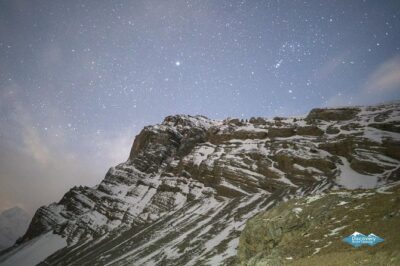
- Teahouse life that can turn into a stars-night: at Ramche, you might sleep in a teahouse, or in a tent if there’s a larger group
- Forest variety with memorable textures: mixed forests, Spanish moss in the trees, and thick rhododendron stretches
- A built-in shortcut option on the way out: Day 11 uses an older trade route to Ranipul to save walking time
- Included conservation permit and taxes: Kanchenjunga Conservation Area Permit is part of the package, not an extra scavenger hunt
What Kanchenjunga South Base Camp gives you that other treks do not
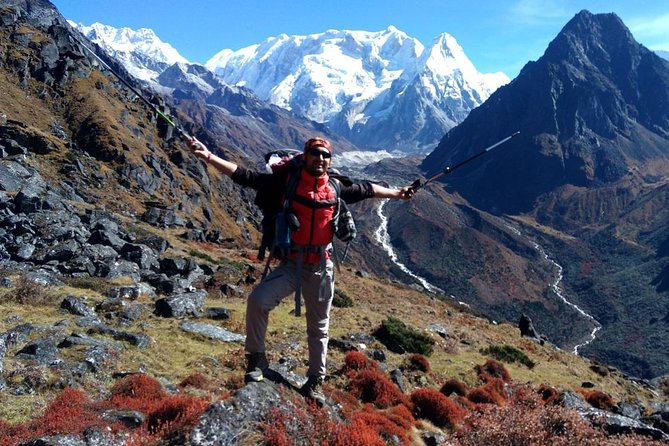
Kanchenjunga is the third-highest mountain in the world at 8,586 meters. On paper, that number sells the mission. In real life, what sells it is the setting: you’re trekking in a remote corner of Nepal, where local Rai, Limbu, and Tibetan communities live their everyday lives, even though each group keeps its own dialects and customs.
I like that the route feels built around connection, not just summit-chasing. You pass agricultural fields and villages early on, then you move into a more rugged pocket of forests and valleys. You’re also trekking in a region known for wildlife, including Himalayan tahr, Himalayan black bear, musk deer, snow leopard, and red panda. You might not see all of that, obviously, but it’s the kind of trek where the natural history adds weight to every hour outdoors. If you’re into birds, the area is also known for birds like snow cock and pheasant.
This is also a trek for people who like atmosphere. The teahouses, the suspension bridges, and the long walks along river valleys create a slower kind of excitement. If you want a schedule that feels too polished, pick another itinerary. If you want an honest mountain journey with fewer trekkers, Kanchenjunga South Base Camp hits the sweet spot.
More Treks in Kathmandu
- Everest Base Camp Trek – 14 Days
★ 5.0 · 1,499 reviews - Everest Base Camp Trek
★ 5.0 · 842 reviews - Everest Base Camp Trekking
★ 5.0 · 485 reviews
From Kathmandu to Ilam, then into Taplejung: the trip’s long setup
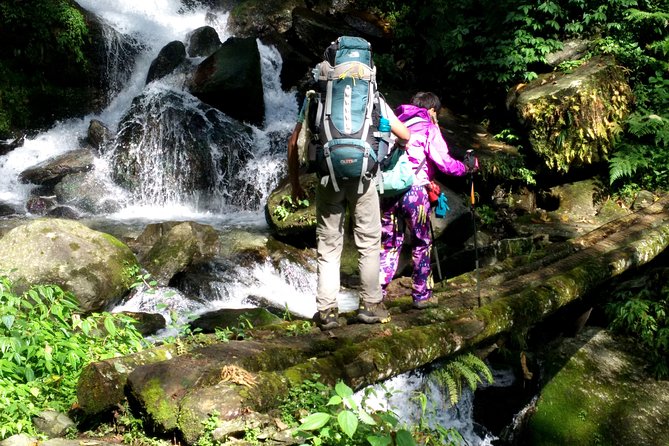
Your adventure starts in Kathmandu, with a meeting at Breeze Adventure Pvt. Ltd in Thamel. The package includes pickup offered, plus a mobile ticket, which is a nice practical touch when you’re juggling flight arrivals and paperwork.
Day 1 is a two-part warm-up. First you do breakfast, then you ride in a private vehicle to sightseeing around Kathmandu tied to UNESCO World Heritage sites. The names of the sites aren’t specified in the trip details, but the point is clear: you’re not jumping straight into trekking mode without context. It’s a chance to get oriented to Nepal’s culture and historic layers.
Later, you head out on an overnight bus to Ilam. That bus ride is part comfort test, part momentum builder. You arrive in Illam with the next day’s long drive waiting, so the biggest tip here is simple: sleep whenever you can and treat the first travel day like a training day.
Day 2 continues the approach. You drive toward Taplejung, passing villages and agricultural fields that make the region feel lived-in rather than staged for tourists. You end with an overnight guest house. This matters because it helps you land in the trekking bubble with fewer surprises. You’re not trying to start hiking while still fully in travel mode.
Days 3 to 5: first Kanchenjunga glimpses, rice and millet, and the climb starts to feel real
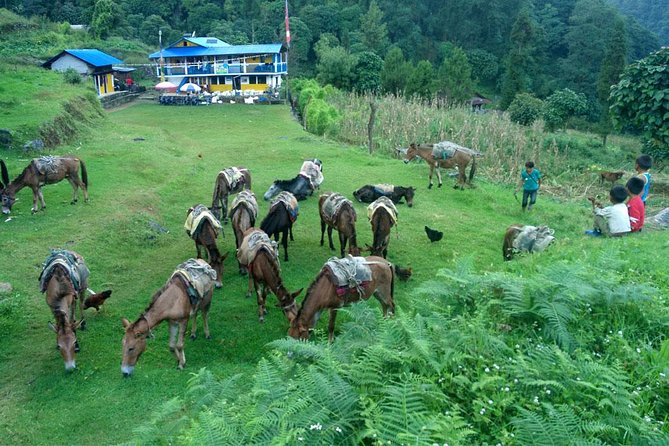
Day 3 is where the trek starts to switch gears. You descend through millet and rice fields, then cross a suspension bridge over the Phewa Khola at about 1,430 meters. Those bridges are more than a photo stop. They force you to slow down, look at the valley, and accept that this trail has a rhythm, not a straight line.
After the bridge, you continue to Sinchebu Bhanjyang at around 2,240 meters. This is a key moment on the route, because you may get early glimpses of Kanchenjunga and Kyabru. Even if the views come and go with cloud, that first sight can change how you walk the next days. It gives your legs a reason.
Then you cross a pass and descend to Khesewa, sleeping in a teahouse.
Day 4 leans into forest trekking and valley sounds. You head into mixed forests on a relatively flat path toward Kabeli Khola, with small waterfalls along the way. Lunch happens at Yangpang, and the payoff here is views of Mt. Jannu. At some point you also tackle a short steep climb toward Pumpe Dada, around 20 minutes uphill. That kind of mini-burn is useful, because it teaches your body how to handle short steep pushes before longer climbs arrive.
Day 5 is mostly uphill along Kabeli Khola. The trail stays friendly at the start, with switchbacks and ridge views beyond the stream. You’ll also pass rocky areas from landslides, which is one of those reminders that this is a real landscape shaped by forces, not just a groomed path. Eventually you cross another suspension bridge and move through small settlements to reach Yamphudin for the night.
The big drawback on these days is that you’ll notice fatigue in the legs even when the trek feels “easy.” That’s normal. The trail is building altitude gradually, and the long travel setup means you’re starting from a mild tired baseline. Hydrate early, eat well at the meals you’re given, and don’t force pace.
Days 6 to 8: Spanish moss, rhododendrons, Tseram, and Ramche’s teahouse-tent decision
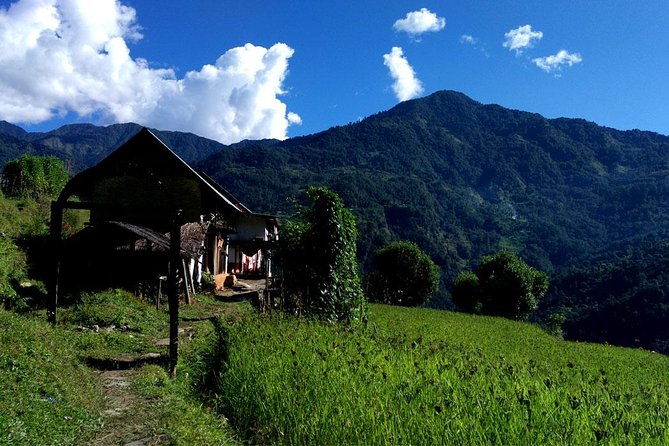
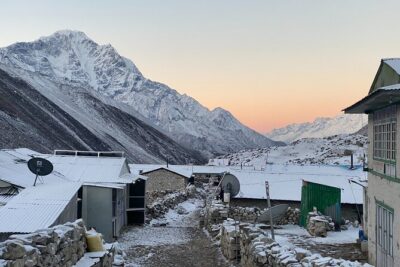
Day 6 changes the tone. Above Yamphudin, facilities are few and far between. That’s why the trip notes that provisions are planned well. Practically, that means you rely more on what’s on hand and what your guide keeps organized.
From Amje Khola, you face a relentless climb on a well-maintained trail. At Chitre, you may see grazing yaks, which is one of those small sights that makes the effort feel grounded. Then the route turns into a striking forest scene, with draping Spanish moss hanging from trees. It’s described like it looks straight out of a movie, and I understand that reaction. When you see moss like that, it’s hard not to feel like the trail is its own world.
After lunch, you keep moving through a mysterious stretch until you break into an opening, cross another suspension bridge, and hike gently uphill to Tortong for the night.
Day 7 brings the rhododendron chapter and the glacial scenery start to register more clearly. You walk gradually to Tseram after breakfast, around 3 to 4 hours, along Simbuwa Khola. Tuplung peak tends to be with you for much of the day, and the Lalung valley setting keeps things scenic in a slow, believable way.
You pass thick rhododendron forest and get a strong sense of the Yalung Glacier. You reach Cheram village for lunch, then hike up to a lake for about 1 to 2 hours. This is another “breath and look” segment. If the weather cooperates, sunset views over the Himalaya can happen from this day’s area, so it’s worth being ready to stay outside a bit longer than you think you need.
Then you head down to Tseram and overnight in a teahouse.
Day 8 is the approach day that feels like a hinge. After breakfast you hike briefly, then ascend to the start of the Yalung Glacier. The trail follows a valley path as you pass Lapsang, then continue to Ramche. Ramche is the last teahouse on this Kanchenjunga South Base Camp trek. It sits on wide ground, and you might sleep in the teahouse or, if there’s a big group, you switch to a tent night. Either way, the practical message is clear: this is your “sleep under the sky” night. Stars can be a highlight, but mainly it’s about being ready for basic comforts and enjoying the open-air feeling.
Another way to spend the time in Nepal:
- Private Kathmandu Sightseeing Tour | UNESCO World Heritage sites
★ 5.0 · 756 reviews - Kathmandu: 7 UNESCO Sites with Lunch
★ 4.8 · 744 reviews - Everest Base Camp Helicopter Tour landing at Everest View Hotel
★ 5.0 · 668 reviews - Half day cooking class in Thamel kathmandu
★ 5.0 · 607 reviews
Day 9 and 10: the South Base Camp excursion and returning to Tseram
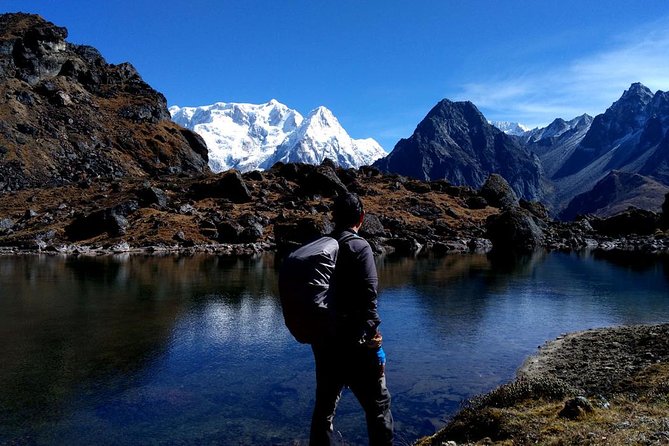
Day 9 is the big special day. After walking all the way up, you get a full excursion around the Kanchenjunga South Base Camp area. The day starts very early with packed lunch, because early hours are when visibility tends to be best, and the terrain is quieter.
You follow the valley around a sweeping curve toward the vast southern wall of Kanchenjunga. Along the ridge, you can see three main summits listed at 8,420 meters, 8,586 meters, and 8,474 meters. That detail matters. It helps you understand what you’re looking at rather than treating the mountain like a single blob of rock. The experience is basically about getting close to those shapes and the way the ridge breaks into the clouds.
Then you keep going toward Oktang, descend onto the glacier, and traverse to a point below (the description cuts off in the details, so I won’t pretend there’s a precise endpoint here). What you can count on is that you’re using a glacier-adjacent route for a close-up feel rather than just viewing from a distance.
Day 10 is the return down the same trail to Tseram. It’s described as long but easy, which is trekking language for “your feet will do most of the work and your brain gets a break.” It’s a good day for steady breathing and good foot care, since downhill fatigue can sneak in faster than you expect.
Day 11 to 13: the older trade route shortcut, Ilam recovery, and the Kathmandu farewell
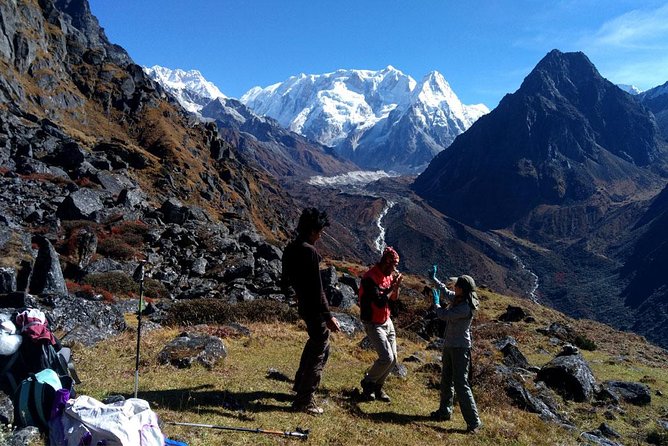
Day 11 is a smart change of scenery and a time-saver. Instead of retracing everything the same way, you follow an ancient trade market route from India to Tibet. The route was used historically for business when there was no road connection between Tibet, Nepal, and India. The trek notes that this trail had fallen out of long-term use but has now been developed to Ranipul to help trekkers move more efficiently.
You walk a little uphill at the beginning, then mostly downhill to Ranipul. The key value here is that you can save several days and skip the long downhill walk to Yamphudin. If you’ve been watching your feet and your energy, that shortcut can feel like a gift.
Day 12 is the “hiking is over” day, which always sounds nice until you realize how much your body is used to moving. You start with a celebratory breakfast in the teahouse, then you drive through rolling terraced hills and quaint villages. You stop for lunch in Taplejung, then continue to Ilam for an overnight hotel.
Day 13 brings you back to Kathmandu with a long drive. You end with a farewell dinner in the evening and overnight in a hotel. It’s the kind of finish that makes the whole thing feel more complete than just arriving and going home quietly.
Price, value, and what’s actually included for $2,095.34
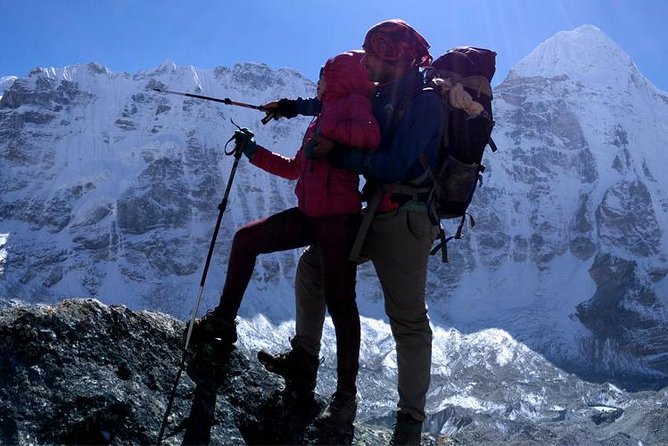
At about $2,095.34 per person, this Kanchenjunga South Base Camp trek isn’t budget trekking. The value comes from what’s included, not from promises of luxury.
Here’s what you get support for:
- Government-authorized experienced guide and porters, plus their insurance, wages, and a first aid kit
- Kanchenjunga Conservation Area Permit and government taxes
- Local guest house accommodation and needed road transportation during the trek
- Hygienic trek meals: breakfast, lunch, and dinner
- Two nights in Kathmandu in 2 to 3 star hotels, with breakfast included
- Transfer services like pickup offered, and a mobile ticket
Not included (so you’re not surprised later):
- International airfare
- Meals in Kathmandu beyond breakfast
- Alcoholic drinks and even items like chocolates, tea, and coffee
- Tips for guide and porter
- Personal insurance, which the trip explicitly says should cover your trek
When I look at value like this, the biggest win is that you’re not trying to manage permits, guiding, and most meals while also worrying about logistics in a remote region. The cost is buying time and reduced stress. You still pay for comfort choices and personal spending, but you don’t pay extra for core trek essentials.
Also, the max group size is 7 travelers. That helps in real life because you’re not fighting for space at teahouses or dealing with a huge pace mismatch.
How the days feel: pacing, facilities, and living in teahouses
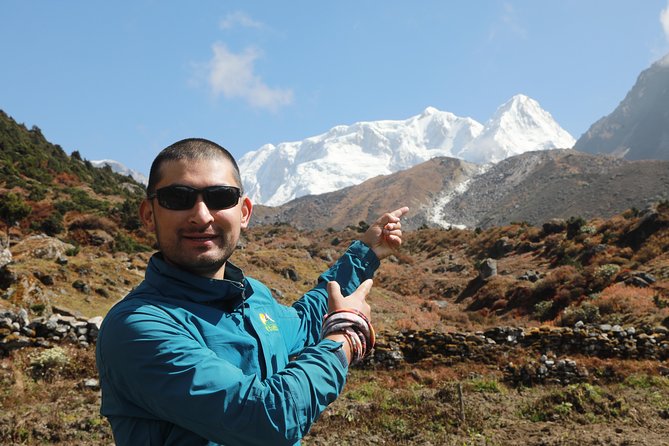
The itinerary is built around steady walking days, plus a couple of travel-heavy segments. Long drives bookend the trekking portion, and the trek itself moves from fields and lower settlements into forests, then toward glacier territory.
Facilities are the biggest “real life” consideration. You sleep in guest houses early on, then teahouses once trekking begins. Above Yamphudin, the trip makes it clear that facilities are few and far between. That’s why the package is set up with planning for provisions.
So what should you expect from teahouse life? You’re eating meals served along the route and sleeping in basic rooms that work for trekking. You should treat these places like rest stations, not vacation resorts. The good part is that the routine keeps you moving forward. And at Ramche, you might even sleep in a tent if there’s a bigger group, which means you’re trading indoor comfort for open air and stars.
Pacing is another key point. In the reviews, guide Galje gets praise for matching a slower pace and making suggestions, which tells me the guidance style matters on a trek like this. Kanchenjunga South Base Camp isn’t just about stamina. It’s also about having someone who can read your energy and adjust day decisions within the trek’s structure.
Should you book the Kanchenjunga South Base Camp Trek?
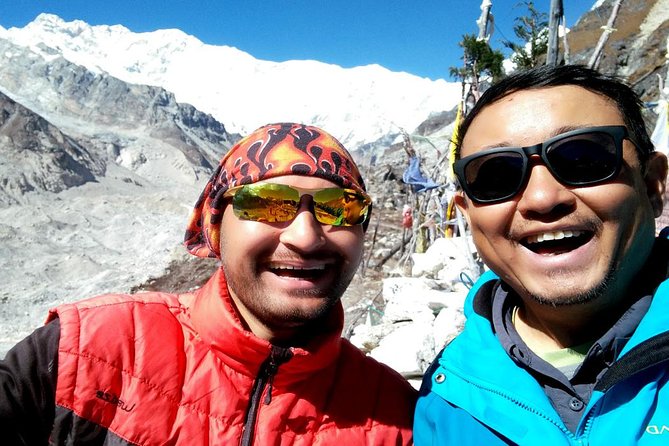
If you want a mountain trek with the scale of a famous route, but you prefer quieter trails and more time with real villages, this one makes sense. I’d book it if you’re comfortable with long walks, you can handle basic teahouse stays, and you want the payoff of the south wall excursion with Kanchenjunga’s main summits.
I would hesitate if you strongly need modern comforts all the way through, or if long drives and basic sleeping arrangements would stress you out. This trek is built for people who enjoy the journey itself: forests, bridges, and valley walks, not just the endpoint.
Also, double-check your personal insurance before you go, and plan for tipping your guide and porters. Those details are not add-ons you can ignore.
If that sounds like you, Kanchenjunga South Base Camp can be the kind of trip that sticks for years.
FAQ
How many days is the Kanchenjunga South Base Camp Trek?
The tour is listed as 13 days (approx.).
Where does the trek start and end?
The meeting point is Breeze Adventure Pvt. Ltd in Thamel Marg, Kathmandu 44600, Nepal. The activity ends back at the meeting point.
What is included in the trek package price?
Included items cover local guest house accommodation and needed road transport during the trek, government-authorized experienced guide and porters, insurance, food, accommodation, wages for guides and porters, a first aid kit, and the Kanchenjunga Conservation Area Permit and government taxes. Two nights in Kathmandu in a 2-3 star hotel are included with breakfast.
What meals are included?
During the trek, breakfast, lunch, and dinner are included. In Kathmandu, only breakfast is included, not other meals.
What is not included?
International airfare is not included, and meals in Kathmandu beyond breakfast are not included. Alcoholic drinks and items like chocolates, tea, and coffee are not included. Tips for the guide and porter and personal insurance are also not included.
Is pickup offered?
Yes, pickup is offered.
What fitness level do I need?
The tour says travelers should have a moderate physical fitness level.
Is there a limit on group size?
Yes. The maximum group size is 7 travelers.
What is the cancellation rule?
You can cancel for free up to 24 hours in advance for a full refund. If you cancel less than 24 hours before the experience starts, the amount paid is not refunded.
Latest additions near Kathmandu
- White Water River Rafting – 1 Day★ 4.3 · 3 reviews
- Traditional Momo Making Class★ 5.0 · 10 reviews
- Kathmandu to Pokhara Premium sofa bus ticket★ 4.0 · 17 reviews
- Ghorepani Poon Hill Trek★ 5.0 · 16 reviews
- Amazing 1 Day Trekking Experience in Kathmandu Nepal★ 5.0 · 24 reviews
- Ghorepani Poonhill Trek★ 5.0 · 5 reviews
- Walking tour of real Kathmandu through back streets.★ 5.0 · 3 reviews
- Wildlife Adventure in Chitwan Nepal★ 4.0 · 4 reviews
Treks in Kathmandu, compared.
Nagarkot Sunrise View and Day Hiking from Kathmandu
Read our review →