Reviewed · TREKS IN KATHMANDU
Everest Three High Passes Trek – 20 Days
Three high passes in 20 days is not a casual plan. You get flights into the Khumbu, a classic Everest approach, and the big bonus of Gokyo Valley with lake days. I especially like the way this route builds in acclimatization days in Namche and Dingboche, which matters when you are sleeping at altitude. One possible drawback is that weather can turn logistics on Lukla side into a waiting game, and the tour notes extra costs if you get stuck beyond the scheduled timing.
What I liked most, though, is how the itinerary mixes big moments with practical variety. You get monastery time at Tengboche, Everest viewpoints like Everest View Hotel, and real pass days like Kongma La, Cho La, and Renjo La. The other strong point is the human support element: you travel with an experienced guide and porters (listed as 1 porter for 2 clients), plus travel and rescue arrangements and a first aid kit. The consideration is simple, the passes are high, long, and cold, and your body will feel it, even if you are fit.
In This Review
- Key highlights I think are worth your attention
- Getting to Khumbu: Kathmandu, Lukla flights, and day one reality
- Sagarmatha National Park days: Namche, Khumjung, and Tengboche monastery time
- Dingboche and Chukung Ri: acclimatization that actually helps
- Kongma La to Everest Base Camp: the long push and the big payoff
- Cho La and the Chola lakes to Gokyo: high altitude lakes day-by-day
- Gokyo Ri to Renjo La: the loop that makes the passes feel like a route
- Returning via Thame, Namche, and Lukla: the legs learn a new job
- Price and value at $2,700: what you are really paying for
- Who this trek suits best, and what fitness needs to mean here
- Should you book this Everest Three High Passes trek?
- FAQ
- What is the duration of the Everest Three High Passes Trek?
- Where does the trek start and what time is the meeting point?
- Does the tour include flights to Lukla?
- What are the three high passes on this trek?
- Which viewpoints and Everest-area stops are part of the trek?
- Do you have acclimatization days during the trek?
- What kind of lodging and meals are included?
- Is there support from a guide and porter?
- What permits or trekking paperwork are included?
- Is the Nepal visa cost included?
Key highlights I think are worth your attention
- Three passes above 5,300 m: Kongma La, Cho La, Renjo La, with intense descents and big views.
- Kala Patthar at sunrise: an early, cold push for close-up Everest angles.
- Gokyo lakes plus Gokyo Ri: day hikes with shifting views over multiple lakes and the Ngozumpa Glacier.
- Sagarmatha National Park immersion: Monjo entrance, visitor center, Khumjung, and Tengboche monastery time.
- A strong support setup: guide, porters, TIMS and permit handling, and rescue planning.
- Private group travel: only your group participates, which usually makes the pace and calls feel smoother.
Getting to Khumbu: Kathmandu, Lukla flights, and day one reality
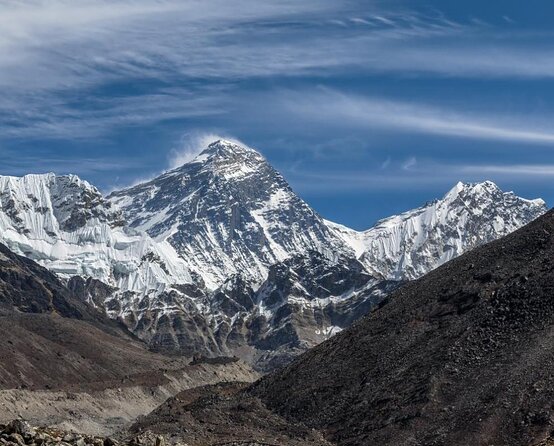
This trek starts with Kathmandu pickup and a couple of nights in a 3-star hotel with breakfast. That small comfort matters because the second half of your trip is mostly tea house life, cold rooms, and legs that feel like they belong to someone else.
Next comes the signature jump into the mountains: a short scenic flight to Lukla. The route notes a flight time under 30 minutes. Even if you have flown before, this one hits different. The plane work and the short runway make it feel like you are stepping straight into the trek, not easing in.
After landing in Lukla, you walk to Phakding on a trail that is described as pleasant and mostly about scenery rather than suffering. It is a good warm-up day, but also a reminder: even “easy” in this region includes steep bits and quick altitude gains.
Practical tip: pack like you will be living out of your day gear. The tour includes a duffle bag that gets returned after the trek, so you can keep heavy items out of your backpack most of the time. That simple choice can save your shoulders on pass days.
More Treks in Kathmandu
- Everest Base Camp Trek – 14 Days
★ 5.0 · 1,499 reviews - Everest Base Camp Trek
★ 5.0 · 842 reviews - Everest Base Camp Trekking
★ 5.0 · 485 reviews
Sagarmatha National Park days: Namche, Khumjung, and Tengboche monastery time
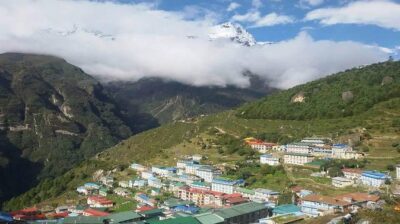
Your trek moves from Phakding to Namche Bazaar via the Dudh Koshi riverside. The day description emphasizes a pleasant forest trail with pine, fir, and rhododendron. You also pass Monjo, described as the entrance area for Sagarmatha National Park. If you have not trekked in Nepal before, this is when the paperwork and the geography both become real.
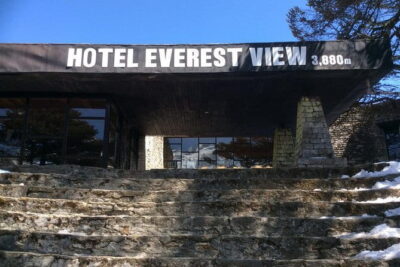
Day four is built around acclimatization, and I like that you do more than just “hang out.” You explore the local lifestyle in Namche, and there is hiking time that includes the walk up to Everest View Hotel. That viewpoint is a great altitude-friendly goal because it is structured, scenic, and lets you gauge how your body reacts before the higher days.
You also visit Khumjung for the monastery and the Hillary School, plus a stop at a visitor center near the Sagarmatha National Park headquarters. This kind of cultural stop is not filler. In a trek this physical, it helps you understand the landscape you are moving through, Sherpa culture, and the context behind Everest history in the region.
Then you head to Tengboche. The route credits Tengboche as home to the largest monastery in the Everest region, inside Sagarmatha National Park. The itinerary says you may see a Buddhist ceremony if you reach in the afternoon. That is one of those small timing wins that can make a day memorable without adding extra distance.
What can feel challenging here is weather and wind. Forest days can still be cold at elevation, and monastery courtyards can be breezy. Bring layers you can adjust quickly.
Dingboche and Chukung Ri: acclimatization that actually helps
By the time you reach Dingboche, the route has already moved you through a chain of villages and valleys, including a day where you descend through birch, conifers, and rhododendron forests, then climb again toward Pangboche and into the Imja Valley area.
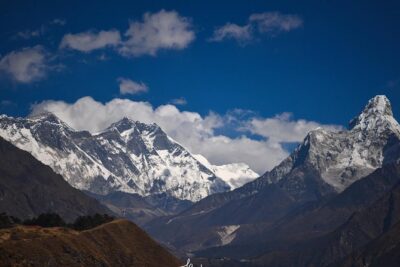
Dingboche is another acclimatization day. The itinerary lists a hike to Nagarjun Hill for views of Makalu, Lhotse, Chalotse, Tawache, and Ama Dablam. That kind of side hike is useful because it tests your lungs without the commitment of a pass day. You are practicing what matters: pacing, stopping before you feel wrecked, and learning how your body recovers on high-ground.
After Dingboche, the trek continues to Chhukung. This section includes moving through glacier moraines and yak herdsman terrain near Bibre, with the itinerary highlighting faces of Ama Dablam and the Amphu Labsa peaks when the weather is clear. Then you climb to Chhukung Ri, described as easy scrambling near the summit. It is not a pass, but it is still steep enough to teach you how to move efficiently when you are already tired.
I think Chhukung Ri is one of the better “value days” on this trek because you get major views and practice for the real passes, without requiring the same level of technical stress.
Kongma La to Everest Base Camp: the long push and the big payoff
Day nine is your first true peak moment on this route: Kongma La Pass (5,535 m). The itinerary notes an early start, and it even gives you two possible trail options around the Nuptse Glacier moraine area. You reach the top with cairns and prayer flags marking the pass.
The hardest part is usually the descent. The route describes a difficult final descent after climbing the moraine, then moving north through Khumbu Glacier to Lobuche. Even when your mind wants to celebrate reaching a pass, your quads may not agree. Plan for careful footing on uneven ground.
Day ten moves along the lateral moraine of the Khumbu Glacier toward Gorakshep, then continues to Everest Base Camp. This is one of the classic days on the Everest circuit, with rocky dunes, moraines, and streams mentioned on the approach. The point is not only “reaching Base Camp.” It is the contrast: you get up close to the Everest region after spending days around villages, then you watch how the terrain changes as you get closer to the glacier edge and the base camp area.
Day eleven is the sunrise day at Kala Patthar (5,545 m). The trek starts early, and the route calls out cold temperatures and trekking in the dark. That is not optional info. If you go unprepared for cold and wind, this will feel more miserable than it should.
The payoff is close-up Everest and other peaks from Kala Patthar, followed by a descent back to Lobuche. This day is why many people do the Three High Passes route instead of just “Everest basics.” It gives you the Everest angle most people chase.
Another way to spend the time in Nepal:
- Private Kathmandu Sightseeing Tour | UNESCO World Heritage sites
★ 5.0 · 756 reviews - Kathmandu: 7 UNESCO Sites with Lunch
★ 4.8 · 744 reviews - Everest Base Camp Helicopter Tour landing at Everest View Hotel
★ 5.0 · 668 reviews - Half day cooking class in Thamel kathmandu
★ 5.0 · 607 reviews
Cho La and the Chola lakes to Gokyo: high altitude lakes day-by-day
After Lobuche, you trek through the Khumbu glacier area, with a trail split and a choice to head right. You see Awi Peak and pass a stupa and tombstones. Then the itinerary starts delivering lakes: Chola Tsho Lake appears nearby, followed by a smaller lake, and you cross the Chola Khola on a bridge before reaching Dzongla.
From Dzongla, you climb toward Cho La Pass (5,420 m). This is not described as gentle. The route says climbing is steep and made worse by boulders, with some scrambling. It also notes the path curves around a crevasse, and the pass top is marked by cairns and prayer flags. If your hiking style is more steady than technical, you’ll want to lean into slow footwork and hand support where needed.
The descent toward Thangnak is described as long, but not difficult. That is a helpful distinction. It means the mental load may be heavy, even if the terrain is manageable.
Day fourteen shifts the mood toward Gokyo. You walk down to Gokyo Valley and cross toward the edge of the Ngozumpa Glacier, noted as the longest glacier in Nepal. The itinerary then says you see the second Gokyo Lake, then the third, and reach Gokyo Village for the night.
This is where the trek gets its signature “wow” for many hikers: the lakes are not just scenery. They are landmarks that help you pace the days and give you something to look forward to besides the next slope.
Gokyo Ri to Renjo La: the loop that makes the passes feel like a route
Day fifteen is a big view day: you climb Gokyo Ri, with optional or additional lake time, including the fourth and fifth lakes. The itinerary mentions Scoundrel’s Viewpoint on the edge of the fifth lake, with views of Cho-Oyu, Gyachung Kang, Everest, Lhotse, Nuptse, Makalu, and the Ngozumpa Glacier.
That is a lot of named peaks in one place, and it is also a reminder: at altitude, visibility turns the entire day into a different experience. If clouds roll in, you still hike, but your rewards change.
Day sixteen brings Renjo La Pass (5,360 m). The route says the day starts early and moves alongside Dudh Pokhari, then you descend toward Renjo La. Views here are said to be similar to Gokyo Ri, with the third Gokyo Lake and Gokyo Village below the gray smear of the Ngozumpa Glacier. Then, the itinerary specifically calls out outstanding views of Everest from the pass.
After Renjo La, you descend via stone staircase and loose scree to the south bank of Angladumba Tsho Lake. This is the kind of descent that rewards good trekking poles and careful pacing. Loose scree can eat time and energy even when it looks straightforward.
Returning via Thame, Namche, and Lukla: the legs learn a new job
On day seventeen you start the descent from the Marulung to Thame route described as traditional for Tibetan traders. It is a nice change after high passes. The route mentions crossing the Bhote Koshi River, descending to Taranga, and then crossing two bridges before reaching Thame. Thame is known for a gompa on a hill to the west, and you get those views as a final cultural marker before the long walking on the return trail.
Day eighteen keeps the pace moving down. The trek crosses several bridges over the fast-flowing Dudh Koshi and tributaries. Then it becomes more level, with open plains and rhododendron and pine forests. The itinerary notes Sherpa villages with prayer stones and prayer flags. Those details are not just scenic decoration. They help you feel the human continuity of this region after days of glacier and rock.
Day eighteen ends at Lukla, finishing the long route. Your reward here is simple: a break, sore legs, and time to think about how high-ground training works in your body.
Day nineteen brings your morning flight back to Kathmandu, scheduled for safety. The route suggests rest in your hotel or souvenir shopping, then a farewell dinner at an authentic Nepalese restaurant with cultural performance.
Day twenty is airport transfer timing, with the tour noting you should go to the airport about three hours before your flight.
Price and value at $2,700: what you are really paying for
At $2,700 per person for a 20-day high-altitude trek, the question is not just cost. It is what is included that would be painful to DIY.
This price covers:
- Kathmandu airport pickup and private vehicle transfer
- Two nights in Kathmandu in a 3-star hotel with breakfast
- Meals during the trekking days (breakfast, lunch, dinner)
- TIMS and Khumbu valley permit and “all necessary paper works”
- Kathmandu to Lukla flights (and Kathmandu or Ramachap to Lukla, as noted)
- Lodges or tea house accommodations during the trek
- An experienced guide, plus porters (listed as 1 porter for 2 clients)
- Travel and rescue arrangements and medical supplies (first aid kit)
- A duffle bag returned after the trek
- Company t-shirts and the farewell dinner with cultural performance
Not included items matter too:
- Nepal visa fee
- International airfare
- Travel and rescue insurance
- Tips for guide and porter
- Any extra nights or extra mountain costs if you get delayed or stuck due to weather or flight timing
- Personal expenses like phone charging, laundry, bottle water, hot showers
My take on value: you are paying for risk management and logistics. In the Everest region, that is not marketing. It is the difference between showing up and actually getting moving, plus having a plan if something goes sideways.
Who this trek suits best, and what fitness needs to mean here
The tour states you should have strong physical fitness. I agree, and I’d interpret that as: you can handle long days with steep stretches, you can climb repeatedly at altitude, and you can descend without killing your knees.
This trek is tough in three ways:
- Altitude: multiple high passes and sleeping at elevation.
- Duration: 20 days means cumulative fatigue.
- Cold and early starts: Kala Patthar is called out for trekking in the dark, with chilly winds possible.
You also need the right hiking mindset. This is not a one-day summit push. It is a steady rhythm: walk, stop, recover, repeat, then do it again on the next pass.
If you like structured challenges, this suits you. If you need luxury comfort or guaranteed easy trails, you will likely struggle. Tea houses are basic. Some nights can feel cold. You will want layers, gloves you can actually use, and shoes with grip for scree and icy-looking patches.
One more detail I value: private group travel. It says only your group participates. That can help you maintain a pace that works for your body, not someone else’s.
Should you book this Everest Three High Passes trek?
Book it if you want the Everest region but you also want a real “high pass loop” with Gokyo lakes and multiple mountain viewpoint days. The combination of Namche acclimatization, Tengboche cultural time, Everest Base Camp plus Kala Patthar, then Gokyo Ri and Renjo La makes this feel like more than a checklist trek.
Consider skipping, or choosing a different route, if you are not ready for cold early mornings, tough descents, and the reality that Lukla flights can shift. Also think hard if you do not want to handle the “extra costs if delayed” possibility that the tour calls out.
If you do book, do one thing that pays off quickly: train for both climbing and descending. Pass days are where people get humbled, and good downhill technique is the difference between finishing feeling proud and finishing feeling wrecked.
FAQ
What is the duration of the Everest Three High Passes Trek?
The trek is listed as 20 days approximately.
Where does the trek start and what time is the meeting point?
The meeting point is Tribhuvan Airport, Kathmandu, Nepal, with a start time of 7:00 am.
Does the tour include flights to Lukla?
Yes. It includes flights from Kathmandu to Lukla, and it also notes Kathmandu or Ramachap to Lukla flights.
What are the three high passes on this trek?
The route includes Kongma La Pass (5,535 m), Cho La Pass (5,420 m), and Renjo La Pass (5,360 m).
Which viewpoints and Everest-area stops are part of the trek?
The itinerary includes Everest Base Camp, Kala Patthar (5,545 m), and also an Everest View Hotel stop.
Do you have acclimatization days during the trek?
Yes. There is an acclimatization day in Namche and another in Dingboche.
What kind of lodging and meals are included?
You get lodges or tea house accommodations during the trek. Meals during trekking include breakfast, lunch, and dinner as listed under included.
Is there support from a guide and porter?
Yes. The tour includes an experienced guide and a porter setup listed as 1 porter for 2 clients.
What permits or trekking paperwork are included?
The tour states it includes TIMS and the Khumbu valley permit, plus all necessary paper works.
Is the Nepal visa cost included?
No. The Nepal visa fee is not included, and you obtain it in Kathmandu airport.
Latest additions near Kathmandu
- Traditional Momo Making Class★ 5.0 · 10 reviews
- White Water River Rafting – 1 Day★ 4.3 · 3 reviews
- Kathmandu to Pokhara Premium sofa bus ticket★ 4.0 · 17 reviews
- Ghorepani Poon Hill Trek★ 5.0 · 16 reviews
- Amazing 1 Day Trekking Experience in Kathmandu Nepal★ 5.0 · 24 reviews
- Ghorepani Poonhill Trek★ 5.0 · 5 reviews
- Walking tour of real Kathmandu through back streets.★ 5.0 · 3 reviews
- Wildlife Adventure in Chitwan Nepal★ 4.0 · 4 reviews
Treks in Kathmandu, compared.
Nagarkot Sunrise View and Day Hiking from Kathmandu
Read our review →