Reviewed · TREKS IN KATHMANDU
Everest Panorama Trek
Everest views, without the base-camp grind.
This Everest Panorama Trek gives you multi-day time in the Everest region with dramatic viewpoints and a gentler climb than the classic base-camp push.
I especially like the day-by-day pacing and the way it builds from Lukla up toward Namche and Tengboche without feeling like a nonstop sprint. I also love the route flavor, with pine forests, the Dudh Koshi suspension bridges, and hilltop monastery scenery that makes every photo stop feel earned.
One consideration is that this trek depends on good weather, and the early flight into Lukla can be the kind of thing that shifts plans if conditions are ugly.
In This Review
- Key highlights to watch for
- Everest Panorama Trek in plain terms
- Why this route feels “easier” than the Everest Base Camp push
- Kathmandu arrival and the 5:00 am reality check
- Day 2: Lukla to Phakding, the first taste of the Everest trail
- Day 3: Pine forest, Dudh Koshi bridges, and Namche’s arrival
- Day 4: Namche to Tengboche, monastery views and Everest close by
- Day 5: Namche to Monjo, steep descents and wildlife spotting chances
- Day 6: the last lower-altitude trek and a crew-style evening
- Day 7 and Day 8: flight back to Kathmandu and a clean finish
- Guides and porters: the part you will remember
- Price and value: what $1,225 buys you here
- Weather, altitude, and the one big planning risk
- Who this trek is best for
- Should you book the Everest Panorama Trek?
- FAQ
- How many days is the Everest Panorama Trek?
- What time does the trip start?
- Where does the trek begin?
- What towns do you stay in overnight?
- What meals are included?
- What is the maximum group size?
- What is the cancellation policy if weather is poor?
Key highlights to watch for
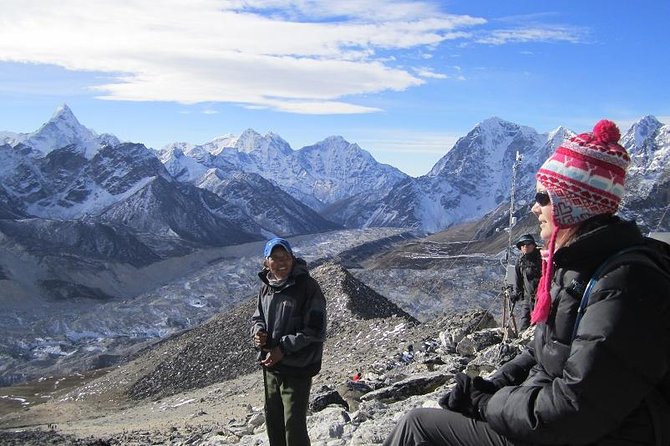
- Panoramic Everest angles from Tengboche, with close views of peaks like Everest-area neighbors
- Dudh Koshi River bridges including the famous Hillary Suspension Bridge
- Sherpa villages and hilltop monasteries rather than a straight-line summit chase
- Small-group feel with a maximum of 15 travelers
- Guides who take care of you, with names like Ramkumar, Anil, Basu, Shree, OM, and Nima showing up across past trips
- A smooth arc through the lower Everest region, ending back in Lukla before flying to Kathmandu
Everest Panorama Trek in plain terms
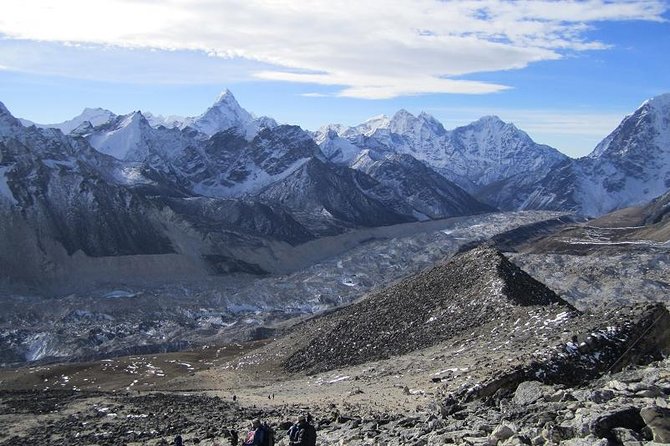
This is one of those rare Everest trips that aims at the views, not just the tick-the-box summit of base camp. You still gain elevation and spend time in the high Himalaya, but the trail choices keep it more manageable for people who want the classic sights without the most punishing version of the route.
The big payoff is how often Everest shows up during the hike, not just at the end. You’ll be walking through Sherpa-country villages, crossing suspension bridges, and visiting monastery areas where the mountain views feel like part of the daily routine, not a once-in-a-lifetime flash.
The trip runs about 8 days, starting with a Kathmandu hotel transfer and then an early start into the trek itself. You’ll trek through Phakding, Namche Bazaar, Tengboche (lodge stay), Monjo, and finish with a night in Lukla before heading back to Kathmandu.
More Treks in Kathmandu
- Everest Base Camp Trek – 14 Days
★ 5.0 · 1,499 reviews - Everest Base Camp Trek
★ 5.0 · 842 reviews - Everest Base Camp Trekking
★ 5.0 · 485 reviews
Why this route feels “easier” than the Everest Base Camp push
The classic Everest Base Camp trek can be brutal because you’re chasing one specific goal at high altitude. This panorama version keeps you in the Everest region longer, with viewpoints staged in a way that helps you enjoy the mountains without stretching your body to its limit for every step.
A practical way to think of it: you’re still working at altitude, but you’re not spending every day driving toward the highest point possible. The itinerary focuses on the same region people dream about, then gives you a more relaxed rhythm along the way.
That matters because the Everest region isn’t just about legs. It’s also about breathing, energy management, and mental calm. A gentler route can help you arrive at viewpoints feeling steady enough to actually look, not just survive.
Kathmandu arrival and the 5:00 am reality check
Day 1 is straightforward. You land at Kathmandu airport, get greeted by a representative holding your name, and then you’re transferred to your hotel. It’s a nice low-stress start, especially if you’re landing after a long flight.
The next morning is when the schedule gets real. The trek activity lists a start time of 5:00 am, and that lines up with the plan for an early flight out to Lukla. If you’re the type who hates rushing, you’ll want to plan for an early night and a quick breakfast.
The good news is the itinerary is set up to move you into the trek efficiently. You’re escorted to the domestic terminal in Kathmandu for the flight, then the hike begins almost immediately after landing.
Day 2: Lukla to Phakding, the first taste of the Everest trail
After the early flight, you start in Lukla (2,800 m / 9,186 ft). This is the gateway stage, and the trail starts by walking through the prosperous village of Lukla before you settle into the rhythm of the trek.
You’ll end in Phakding, a common first-night stop in the Everest region. It’s where you get used to the feel of the trail underfoot and the higher-air “new normal” in your lungs.
The practical advantage of a first day like this is that it gives you momentum without asking too much from day one. You’re not stuck in a steep grind right away, which helps you get your bearings fast.
Meals note: the plan lists breakfast as included on this day.
Another way to spend the time in Nepal:
- Private Kathmandu Sightseeing Tour | UNESCO World Heritage sites
★ 5.0 · 756 reviews - Kathmandu: 7 UNESCO Sites with Lunch
★ 4.8 · 744 reviews - Everest Base Camp Helicopter Tour landing at Everest View Hotel
★ 5.0 · 668 reviews - Half day cooking class in Thamel kathmandu
★ 5.0 · 607 reviews
Day 3: Pine forest, Dudh Koshi bridges, and Namche’s arrival
This is the day where the Everest region starts to feel like a place, not just scenery. The trail moves through a beautiful pine forest and follows the track alongside the Dudh Koshi River, with multiple suspension bridges along the way.
One of them is the famous Hillary Suspension Bridge. Even if you’ve seen it in photos, in person it’s still a real moment, because you’re walking right over the river and the whole valley seems to open around you.
Along the way, you get prospects of Mt. Thamserku (6,618 m). It’s one of those peaks that helps you understand the scale here, because it doesn’t feel like a distant dot. It feels like something you can almost point to from the trail.
You finish in Namche Bazaar, which is where the Everest trekking story really begins for most people. You’ll stay overnight in the area so you can continue upward with better timing.
Meals note: breakfast is included on this day.
Day 4: Namche to Tengboche, monastery views and Everest close by
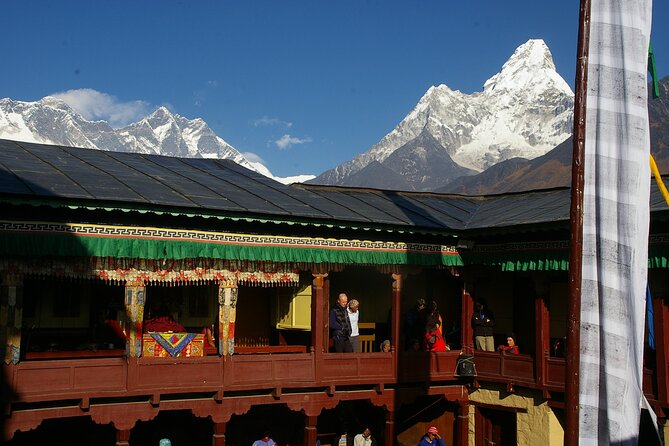
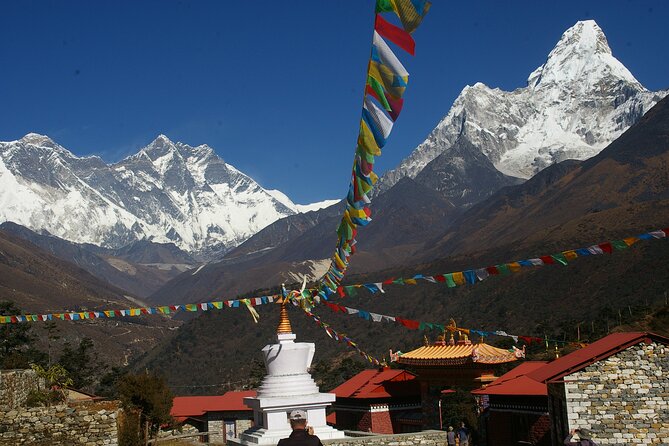
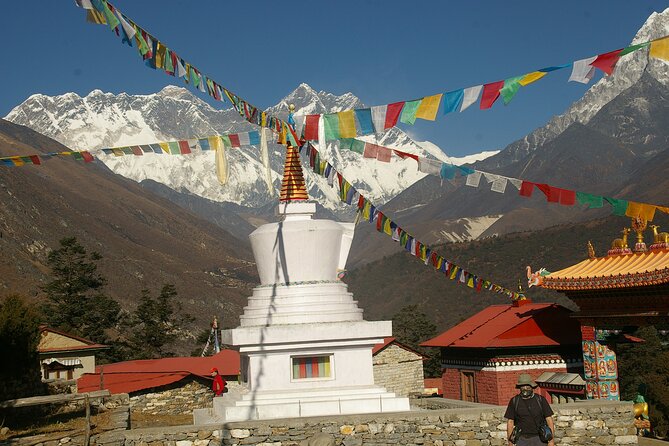
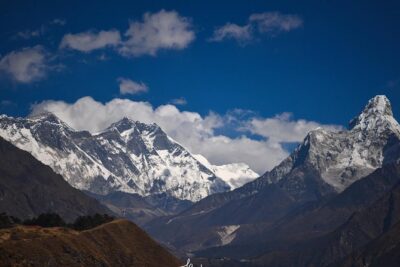
Day 4 is where the trip starts acting like a highlight reel. You head toward Tengboche, and you’re treated to superb views of Mt. Everest, Mt. Nuptse, Mt. Lhotse, and Mt. Ama Dablam, plus close-up views of Thamserku.
That is the core promise of a panorama-style trek. You’re not only walking through the region, you’re getting repeated mountain sighting moments that feel framed by the trail itself. And Tengboche adds a special ingredient, because it’s tied to hilltop monastery scenery.
You also have a relaxed lunch stop mentioned at Phunki Thenga, and then the trail turns slightly tougher through pine forests before you reach Tengboche.
The overnight is at a lodge in Tengboche, which is exactly what you want after a day of moving up and staring at big peaks. You’ll have time to slow down, look around, and enjoy the fact that your work is being rewarded with views.
Meals note: breakfast is included on this day.
Day 5: Namche to Monjo, steep descents and wildlife spotting chances
This day has a different feel. The trail heads along steep wooded slopes beyond Kyangjuma, winding through bends. It’s a good reminder that Everest trekking is not just about going up. The down days can be just as demanding on your legs.
You cross a suspension bridge after a steep descent and reach Monjo, near the confluence of the Dudh Koshi and Bhote Koshi rivers. That confluence detail matters because it helps explain why the river corridor scenery feels so dramatic.
This is also a day where you look for wildlife. The plan specifically mentions keeping an eye out for mountain goats, snow leopards, and colourful pheasants. Realistically, you might not see all of that, but the point is that your walk includes time for scanning, not just watching the ground.
One thoughtful touch in the itinerary: it notes that this route choice helps porters have a less strenuous walk back to Lukla tomorrow. That kind of planning makes a difference, because it tends to mean the whole team moves more comfortably.
Meals note: breakfast is included on this day.
Day 6: the last lower-altitude trek and a crew-style evening
Today is framed as the last walk at lower altitude in the Everest region. Most of the track is described as flat, though you still get some undulating terrain and a mix of open plains, rhododendron, and pine forests.
You’re also looking at Kwangde peak in the distance, which keeps the mountain presence alive even on a flatter-feeling day.
The big emotional advantage here is the timing. This is your last evening in the mountains, and the itinerary notes a chance to spend relaxing moments with the whole crew, since some members may not be returning with you to Kathmandu.
In other words, you get a chance to close the loop with the people who made the trek work, not just leave and jump straight into airport logistics.
Meals note: breakfast is included on this day.
Day 7 and Day 8: flight back to Kathmandu and a clean finish
Day 7 is a fly back to Kathmandu. That’s a useful reset, because after several days of trekking, your body usually wants an easier pace even if you still feel wired with excitement.
Day 8 is listed as Farewell Friend, and paired with the earlier airport transfer, it suggests a trip that tries to feel complete rather than drop you at the start and disappear.
You should also know the trek includes a small-group structure. The tour lists a maximum of 15 travelers, which tends to mean less chaos at meal times and in lodge transitions. It’s one of the quiet value points of this kind of trek.
Guides and porters: the part you will remember
The Everest Panorama Trek works or fails largely through people, and the past trip feedback strongly centers on guides and how they manage the hike day to day.
I like the way the guide experience shows up in real examples. For instance, guides like Ramkumar, Anil, Basu, Shree, OM, Nima, and Gyanashwor Adhikari come up repeatedly, often with comments about help, motivation, and clear communication.
One useful detail from those experiences: Gyanashwor Adhikari is described as a motivator who makes sure you are physically and mentally prepped, and who checks in when someone is feeling ill or low. That matters because altitude stress is not only physical. It’s also confidence and focus.
Another repeated theme is that guides bring more than navigation. OM is noted as patient and communicating clearly, and Nima shows up along with porter Santosh in ways that highlight care and humor. Even photo help is mentioned, which is practical for a trek where you’ll want good shots without breaking the rhythm of the day.
If you care about the human part of travel, this tour is likely to land well.
Price and value: what $1,225 buys you here
At $1,225 per person, this isn’t a budget walk, but it also isn’t just paying for a route map. You’re paying for an end-to-end setup in the Everest region where delays, logistics, and day-to-day decisions can get complicated.
Here’s what makes the value feel more real based on the plan: pickup offered, a mobile ticket, a capped group size (up to 15), and included hospitality elements like lodges overnight along the trail. Meals are also covered in the schedule, with dinner and breakfast listed as included.
And it’s worth saying out loud: with Everest trekking, the cost of a “cheap” tour can sometimes show up later as stress. Here, the structure seems built to reduce those friction points, from the Kathmandu meet-and-transfer to the day-by-day trekking flow.
What you should still budget for is personal spending that is not listed as included, like extra snacks, drinks, and anything you want on top. The itinerary gives you a lot, but it does not list every single meal type or every incidental cost.
Weather, altitude, and the one big planning risk
This tour explicitly says it requires good weather. That means you should be ready for the reality that Himalaya travel is not fully in your control.
Also, even though this trek is gentler than classic base-camp routes, you are still climbing and spending time at elevation. The plan also fits moderate fitness, but “moderate” does not mean “easy.” You’ll be walking multiple days, including days with longer trekking hours and at least one steeper-feeling descent day.
So the best strategy for you is not to guess your toughness. It’s to respect your limits, take the pace seriously, and follow your guide’s guidance on how to manage effort.
Who this trek is best for
This experience fits best if you want Everest region panoramas but you prefer a trail plan that feels more manageable than a fully punishing base-camp style grind.
You’ll likely enjoy it if:
- you want Sherpa villages and hilltop monastery scenery, not just one destination photo
- you appreciate small-group trekking so the experience stays organized
- you care about having guides who will check on you and help keep the group moving
If you want the most extreme altitude goal possible, this might feel more “views-focused” than “summit-focused.” But for many people, that is exactly the right trade.
Should you book the Everest Panorama Trek?
If your dream is Everest, but your reality includes limited time, limited appetite for punishment, or a desire for better rhythm, I’d strongly consider booking this. The route hits major sights, gives you repeated mountain moments, and includes overnights and key meals, which removes some of the daily guessing that can turn trekking into a headache.
I’d hesitate only if you know you hate early mornings and flying into rugged mountain air. The schedule includes an early start into Lukla, and the tour requires good weather to run smoothly.
One more decision tip: if guide choice matters to you, look for the names that keep showing up in strong trip feedback, like Ramkumar, Anil, Basu, Shree, OM, Nima, and Gyanashwor Adhikari. Even if you cannot request a specific person, asking how guides are assigned can help you pick with more confidence.
FAQ
How many days is the Everest Panorama Trek?
The trek is listed as 8 days (approx.).
What time does the trip start?
The start time is listed as 5:00 am.
Where does the trek begin?
The trek begins after an early morning flight to Lukla (2,800 m / 9,186 ft).
What towns do you stay in overnight?
Overnights are listed in Phakding, Namche Bazaar, Tengboche (lodge), Monjo, and then Lukla before flying back to Kathmandu.
What meals are included?
Included meals are dinner and breakfast (breakfast is listed as included for multiple days, including six breakfasts in the summary of included items).
What is the maximum group size?
The tour has a maximum of 15 travelers.
What is the cancellation policy if weather is poor?
You can cancel for a full refund up to 24 hours in advance. The tour also requires good weather, and if it’s canceled due to poor weather, you are offered a different date or a full refund.
Latest additions near Kathmandu
- White Water River Rafting – 1 Day★ 4.3 · 3 reviews
- Traditional Momo Making Class★ 5.0 · 10 reviews
- Kathmandu to Pokhara Premium sofa bus ticket★ 4.0 · 17 reviews
- Ghorepani Poon Hill Trek★ 5.0 · 16 reviews
- Amazing 1 Day Trekking Experience in Kathmandu Nepal★ 5.0 · 24 reviews
- Ghorepani Poonhill Trek★ 5.0 · 5 reviews
- Walking tour of real Kathmandu through back streets.★ 5.0 · 3 reviews
- Wildlife Adventure in Chitwan Nepal★ 4.0 · 4 reviews
Treks in Kathmandu, compared.
Nagarkot Sunrise View and Day Hiking from Kathmandu
Read our review →