
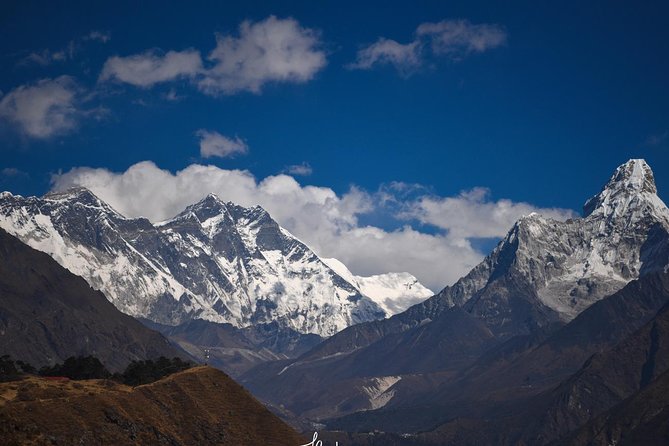
Reviewed · EVEREST BASE CAMP TREKS
Everest Base camp Trekking
Everest starts with a small aircraft in Lukla. This 14-day Everest Base Camp trek strings together classic Khumbu towns, Sherpa villages, Buddhist monasteries, and big Himalayan views, with Everest Base Camp as the punchline. I like that the plan is built around real altitude rhythm, including dedicated rest days in Namche and Dingboche.
Second, I really value the people behind the trip. Nepal Horizon Treks and Expedition runs this with a government license holder, and the vibe in the field sounds steady, not chaotic, from owner support like Dipendra to guides such as Raju and DB, with porter help like Yambo. You get a licensed professional guide and a small group capped at 10.
The one drawback to plan for up front: meals and drinks are not included, even though you’ll have tea-house lodging with a BB plan during the trek.
In This Review
- Key things to know before you trek this Everest Base Camp route
- Everest Base Camp trek: why this route still works
- Kathmandu prep day: pickup, planning, and a welcome dinner
- Day 2 to Phakding: Lukla to your first tea-house night
- Day 3 to Namche Bazaar: the big Sherpa hub comes into view
- Day 4 acclimatization in Namche: rest day that actually matters
- Day 5 to Tengboche: monasteries and a classic Khumbu feel
- Day 6 to Dingboche: higher, thinner, and still only 9 km
- Day 7 acclimatization in Dingboche: your second altitude checkpoint
- Day 8 to Lobuche: pushing toward the high country
- Day 9 to Gorak Shep and Everest Base Camp: the moment you came for
- What I’d watch for on this trek: comfort, gear, and tea-house reality
- Price and value: is $1,340 actually a deal?
- Group size, guides, and how the experience feels in real life
- Who should book this Everest Base Camp trek with Nepal Horizon
- Should you book this Everest Base Camp trek?
- FAQ
- How long is the Everest Base Camp trek?
- Where does the tour start, and do you get pickup?
- What is included in the trek price?
- What is not included?
- Do I need travel insurance?
- What are the main daily trek segments early in the route?
- What gear do you provide?
- How big is the group, and is there an age requirement?
- Can I cancel for a full refund?
- When is the meeting time window?
Key things to know before you trek this Everest Base Camp route
- Kathmandu welcome, then a real briefing: pickup, hotel transfer, and a trek discussion day-one, plus a welcome dinner with cultural shows.
- A day-2 Lukla flight that sets the tone: you start trekking the Khumbu region soon after landing at Lukla.
- Acclimatization days are built in: one in Namche Bazaar and one in Dingboche, so you are not just grinding higher every day.
- Tea-house stays with BB included: comfortable enough for the route, but lunch and dinner usually cost extra.
- Base Camp plus Sagarmatha National Park: you get classic EBC sights alongside national park fees covered in the package.
Everest Base Camp trek: why this route still works
Everest Base Camp trekking has a special pull because it mixes two kinds of rewards. You get the big scenery moments, but you also get daily immersion in Khumbu life, from Sherpa bazaars to Buddhist monasteries and white rivers cutting through valleys.
This itinerary also aims to keep you moving at a human pace. The trail passes through different elevation zones, and that matters because altitude is the real boss fight here, not distance. The trip’s structure, especially the acclimatization stops, is exactly what makes the classic EBC plan feel safer and more enjoyable.
More Treks in Kathmandu
- Everest Base Camp Trek – 14 Days
★ 5.0 · 1,499 reviews - Everest Base Camp Trek
★ 5.0 · 842 reviews - Everest Base Camp Trekking
★ 5.0 · 485 reviews
Kathmandu prep day: pickup, planning, and a welcome dinner
Day 1 is all about getting set. You arrive in Kathmandu (Tribhuvan International Airport), then Nepal Horizon Treks and Expedition transfers you to your hotel with hotel pickup and drop-off included. In the afternoon, there’s a trip discussion with trek management and leaders, which is where you confirm gear, schedule expectations, and the overall flow.
That same day includes a welcome dinner at a typical Nepali restaurant, with cultural shows. It’s a good reset after a long travel day, and it also helps you meet the people you’ll be hiking with before your first early morning.
One extra practical note for your planning: you’re asked to provide your Nepal arrival flight details. That usually means the team can sync airport timing with the early pickup window.
Day 2 to Phakding: Lukla to your first tea-house night
Day 2 kicks off with a flight from Kathmandu to Lukla, then a trek to Phakding. The trek is about 8 km and typically takes 3 to 4 hours, finishing around 2,651 m.
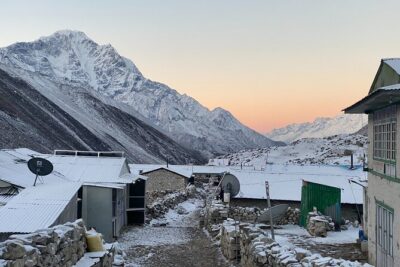
Phakding is a gentle on-ramp. You trade city pace for mountain walking without jumping straight into the highest elevations. I like this part because your body gets to learn the rhythm before it’s asked to handle bigger altitude changes.
Also, this is where your trip logistics start to feel real. You should be ready for an early start. Meeting hours run as early as 4:00 AM to 9:15 AM depending on dates, so build buffer time around pickup and group coordination.
Day 3 to Namche Bazaar: the big Sherpa hub comes into view
Day 3 is Phakding to Namche Bazaar, about 11 km and usually 5 to 6 hours. You finish at roughly 3,438 m.
Namche Bazaar is the kind of place where the trek stops feeling purely rural and starts feeling like a mountain town. Expect Sherpa bazaars and the bustle of daily trade, plus the sense that you are close to the Everest-adjacent world. It’s also where you’ll understand why acclimatization matters so much, because the air feels different right away.
If you are the type who likes to stay mentally busy, Namche is perfect. You can spend your downtime here observing, asking questions, and getting your bearings for what comes next.
More Everest Base Camp treks:
- Everest Base Camp Helicopter Tour landing at Everest View Hotel
★ 5.0 · 668 reviews - Everest Base Camp Trekking – 13 Day
★ 5.0 · 365 reviews - Everest Base Camp Trek
★ 5.0 · 350 reviews - Everest Base Camp Trek -14 Days
★ 5.0 · 321 reviews
Day 4 acclimatization in Namche: rest day that actually matters
Day 4 is an acclimatization day in Namche Bazaar at about 3,440 m.
This is not a throwaway day. It’s there so you can adjust to altitude rather than “hope and push.” Even if you feel fine, your body still needs time to adapt, and a proper rest day keeps the rest of the trek more manageable.
A side benefit is mental. You already walked a full day from Phakding. Now you get breathing room, and that makes the route feel more like a journey and less like a nonstop grind.
Day 5 to Tengboche: monasteries and a classic Khumbu feel
Day 5 treks from Namche to Tengboche. It’s about 10 km and typically 5 to 6 hours, finishing near 3,870 m.
Tengboche is known for Buddhist monastery culture on the EBC route, and this itinerary specifically calls out Buddhist monasteries as part of the experience. If you care about how people live in the mountains, Tengboche is one of those stops where it clicks. You get quiet moments alongside the bigger view moments.
One thing to keep in mind: as altitude climbs, your effort feels steeper even when the distance isn’t huge. The trail may feel “shorter” than it is, because everything takes more out of you.
Day 6 to Dingboche: higher, thinner, and still only 9 km
Day 6 runs Tengboche to Dingboche, about 9 km and 5 to 6 hours, arriving around 4,360 m.
This is a key transition day. You start to spend more time thinking about pacing, breathing, and keeping yourself warm. Dingboche also sits in the higher-elevation pattern of the trek, which is why the next day is another acclimatization stop.
Day 7 acclimatization in Dingboche: your second altitude checkpoint
Day 7 is acclimatization in Dingboche around 4,360 m.
By now, you understand the logic. The trek isn’t just chasing height. It’s trying to keep you functional. When I look at EBC plans, I want to see these midstream checks, because that’s when trekkers often decide whether the rest of the trip feels hard or feels doable.
This second acclimatization day is also a strong sign that the operator is planning for reality, not just a best-case scenario.
Day 8 to Lobuche: pushing toward the high country
Day 8 is Dingboche to Lobuche, about 7 km and usually 5 to 6 hours, arriving near 4,940 m.
The distance drops a bit, but the effort usually does not. That’s normal at altitude. The trail can feel like it’s asking for small, steady steps rather than big strides, and you’ll want to keep your energy for the days ahead.
Lobuche is also a psychological checkpoint. Once you reach this zone, the idea of Everest Base Camp stops being theory and starts becoming a schedule.
Day 9 to Gorak Shep and Everest Base Camp: the moment you came for
Day 9 treks from Lobuche to Gorak Shep at about 5,170 m, and includes a visit to Everest Base Camp, listed at roughly 5,360 m.
This is the core achievement day. You’re at the “high camp” level where the environment feels sharper, colder, and more austere. Even if you are well prepared, the altitude is the star of the show.
Also, this part of the experience connects with what the overview promises: Sagarmatha National Park scenery, rare plants and wildlife, and the sense that you are inside a protected high-altitude world.
What I’d watch for on this trek: comfort, gear, and tea-house reality
Accommodation is tea-house style during the trekking portion, with 10 nights included on a BB plan. The package also includes one sleeping bag and one down jacket rental.
That gear detail matters more than it sounds. Tea-house nights at higher elevations can be cold, and having a sleeping bag and a jacket rental built into the cost means you do not have to solve everything with your own luggage. Still, you should treat this as borrowed gear, so check fit, condition, and whether you feel warm enough for your personal cold tolerance.
A key budgeting point: meals and drinks are not included. So your “real daily spend” is not finished when you pay the tour price. Tea-house menus can vary, and you’ll be buying lunch and dinner for most days.
Price and value: is $1,340 actually a deal?
At $1,340 per person, you are paying for more than just the right route name. The package includes national park fees and local taxes, plus a government licensed professional guide whose food, accommodation, salary, insurance, and equipment are covered during the trekking period.
You also get hotel pickup and drop-off in Kathmandu. That reduces the “hidden stress” cost of landing in a new country and trying to coordinate logistics on the fly.
Where the value can feel less tidy is the parts that are not included: meals and drinks, travel insurance, Nepal visa fees, and tips to guide and staff.
So the best way to think about this price is: you’re buying solid operational support (guide, fees, core lodging nights, and key gear), while you handle personal expenses and insurance on your side. If you already planned for insurance and you know you will budget meals, the price starts to look fair for a classic EBC trek with a small group.
Group size, guides, and how the experience feels in real life
This trek caps at a maximum of 10 travelers, which is a big deal for comfort and coordination. Smaller groups usually mean less waiting, easier pacing, and a better chance to ask questions without getting shuffled.
The people side also shows up in multiple names from trekkers’ stories. Dip or Dipendra (the owner) is repeatedly described as accessible and supportive. Guides named Raju and DB show up as experienced leaders, and porters like Yambo are credited with being accommodating.
I like that pattern because Everest-area trekking rewards the boring stuff: steady organization, quick problem-solving, and guidance that helps you make good choices when you feel tired. When the owner and guide are actively involved, you spend more energy on the trail and less on worrying.
Who should book this Everest Base Camp trek with Nepal Horizon
This is a good match if you want a classic Everest Base Camp plan with acclimatization days, tea-house lodging, and a licensed guide. It also fits you if you prefer a small-group experience and you value Sherpa culture, monastery stops, and Sagarmatha National Park time.
It may not be ideal if you want fully included meals and drinks, because those are explicitly not included. And it is not a casual trek: you need a moderate fitness level and you must have travel insurance that covers medical expenses, including emergency evacuation, with proof shown to the tour leader on day one.
Also note the minimum age is 10 years, so this is usually a family-friendly option only if the kids are genuinely ready for altitude trekking.
Should you book this Everest Base Camp trek?
I’d book it if you want a straightforward EBC route, value acclimatization days, and appreciate that park fees, guide support, and key gear rentals are part of the package. The $1,340 price feels most reasonable when you also handle insurance and meal spending without surprises.
Skip this one if your priority is full board meals included, or if you are not ready to arrange proper travel insurance before day one. For most people who plan ahead and want a well-run EBC experience, this looks like a solid bet.
FAQ
How long is the Everest Base Camp trek?
The trek runs for 14 days approximately.
Where does the tour start, and do you get pickup?
It starts in Kathmandu, Nepal, with hotel pickup and drop-off included.
What is included in the trek price?
Included items are 10 nights of tea-house accommodation with a BB plan, sleeping bag and down jacket rental, national park fees and local taxes, and a government license holder professional guide with their food, accommodation, salary, insurance, and equipment covered during the trekking period.
What is not included?
Meals and drinks, travel insurance, Nepal visa fees, and tips to the guide and staff are not included.
Do I need travel insurance?
Yes. Travel insurance covering medical expenses including emergency evacuation is required, and you must show proof to the tour leader on the first day.
What are the main daily trek segments early in the route?
From the provided schedule: Day 2 Lukla to Phakding is about 8 km for 3 to 4 hours. Day 3 Phakding to Namche is about 11 km for 5 to 6 hours. Day 5 Namche to Tengboche is about 10 km for 5 to 6 hours. Day 6 Tengboche to Dingboche is about 9 km for 5 to 6 hours. Day 8 Dingboche to Lobuche is about 7 km for 5 to 6 hours, and Day 9 includes the move to Gorak Shep and a visit to Everest Base Camp.
What gear do you provide?
The package includes rental of one sleeping bag and one D. jacket.
How big is the group, and is there an age requirement?
The maximum group size is 10 travelers, and the minimum age is 10 years.
Can I cancel for a full refund?
Yes. Free cancellation applies, and you can cancel up to 24 hours in advance for a full refund. If you cancel less than 24 hours before the experience starts, the amount you paid will not be refunded.
When is the meeting time window?
The opening hours show Monday through Sunday from 4:00 AM to 9:15 AM, for the date range listed.
Latest additions near Kathmandu
- White Water River Rafting – 1 Day★ 4.3 · 3 reviews
- Traditional Momo Making Class★ 5.0 · 10 reviews
- Kathmandu to Pokhara Premium sofa bus ticket★ 4.0 · 17 reviews
- Ghorepani Poon Hill Trek★ 5.0 · 16 reviews
- Amazing 1 Day Trekking Experience in Kathmandu Nepal★ 5.0 · 24 reviews
- Ghorepani Poonhill Trek★ 5.0 · 5 reviews
- Walking tour of real Kathmandu through back streets.★ 5.0 · 3 reviews
- Wildlife Adventure in Chitwan Nepal★ 4.0 · 4 reviews
Everest Base Camp Treks, compared.
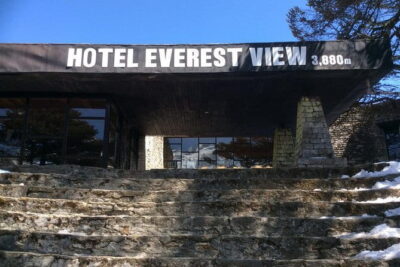
Everest Base Camp Helicopter Tour landing at Everest View Hotel
Read our review →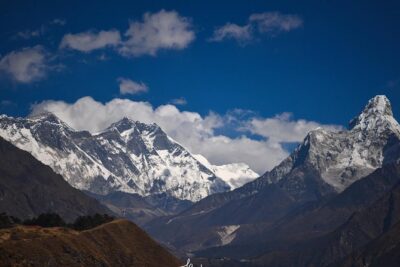
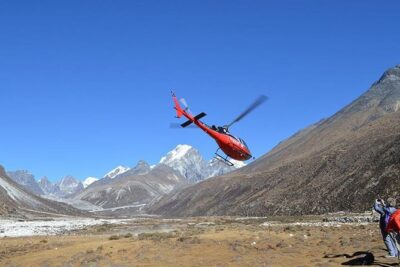
Everest Base Camp Helicopter Tour landing at Hotel Everest View
Read our review →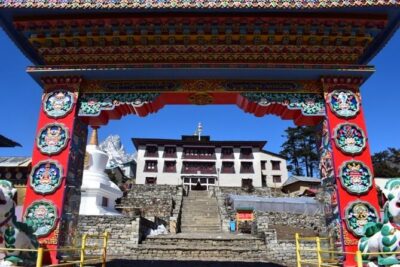
Browse the lists this tour appears in