
Reviewed · EVEREST BASE CAMP TREKS
Everest Base Camp Trekking
Everest Base Camp pulls you in fast. In 15 days you gain altitude, chase summit-level views, and learn the rhythm of the Khumbu region. This trek is famous for a reason, and your route is built around steady pacing so your body gets a fighting chance to adjust. I also like that the package mixes Kathmandu culture with serious high-altitude trekking, so you get real Nepal beyond the mountain photo.
Two things I really like here. First, the support system is strong: a government-licensed, English-speaking guide plus a porter setup (2 trekkers per 1 porter) takes weight off your shoulders. Second, the trek is structured with real acclimatization time, including a high point hike from Dingboche and the classic summit viewpoint at Kala Patthar.
One drawback to plan for: flights in and out of Lukla can be delayed or canceled due to weather. The itinerary suggests adding 2 to 3 buffer days in Kathmandu at the end for this exact reason, because the mountains do not care about schedules.
In This Review
- Key highlights worth your attention
- What makes Everest Base Camp more than a checklist trek
- Kathmandu first: Thamel base, plus major sacred sites
- Day 3 Lukla flight: short hop, big mood change
- Phakding to Namche Bazaar: river crossings and altitude stepping
- Namche acclimatization day: sunrise spotting and a gentle hike option
- Tengboche monastery day: a spiritual stop with real views
- Dingboche: acclimatization that actually gives you altitude practice
- Lobuche to Gorakshep and Everest Base Camp: the long day you remember
- Kala Patthar: sunrise views, high effort, smart timing
- The descent back through Tengboche and Namche
- Getting home: Lukla to Kathmandu, then a farewell dinner
- Price and logistics: what $1,625 buys you (and what it does not)
- Who should book, and who should slow down
- Should you book this Everest Base Camp trek?
- FAQ
- What is the duration and general route for this Everest Base Camp trek?
- How do you travel between Kathmandu and Lukla?
- What kind of accommodation and meals are included?
- Do you include permits and local taxes?
- Is airport pickup and drop included?
- What support do you get on the trail?
- What is not included that I should budget for?
Key highlights worth your attention
- Lukla flights plus guided pacing to help you adjust gradually instead of rushing altitude
- Acclimatization in Dingboche with time to hike for views of Lhotse, Makalu, and Cho Oyu
- Kala Patthar at sunrise for the signature Everest panorama over the Khumbu Glacier
- Teahouse nights with included meals so you can focus on walking and rest
- Private group style (only your group participates), with an English-speaking guide and porter support
- Operator support if weather disrupts flights, based on past experience with delayed departures
What makes Everest Base Camp more than a checklist trek
Everest Base Camp is not just a goal. It is a whole sequence of environments, from city temples to Lukla airstrips, to river valleys, to high desert walking, and finally to the stark drama around the glacier. You are moving every day, but the climb is broken into manageable days, with rest built in where it matters.
The pace is the big “value” of a guided EBC trek like this. You still work hard, but your itinerary includes acclimatization days and altitude-aware hiking, which is the difference between a trip that feels like a battle and one that feels like a challenge you can actually control.
Also, this trek gives you plenty of viewpoint time, not only base camp. You get early-morning Himalayan views days from Namche, plus a key monastery stop at Tengboche, and then the big finale at Kala Patthar. That matters, because on this route the views are often time-of-day dependent, and you want the right lighting when the peaks show themselves.
More Treks in Kathmandu
- Everest Base Camp Trek – 14 Days
★ 5.0 · 1,499 reviews - Everest Base Camp Trek
★ 5.0 · 842 reviews - Everest Base Camp Trekking
★ 5.0 · 485 reviews
Kathmandu first: Thamel base, plus major sacred sites
You start in Kathmandu at about 1,400 m and you get picked up right after arriving at the airport. The hotel base is in Thamel, which is practical. You can walk to gear shops, cafes, and meeting points without turning your day into a long commute.
Your culture day is packed with high-impact, easy-to-understand stops:
- Boudhanath Stupa: huge, iconic, and visually different from the smaller stupas you see elsewhere in Nepal. The history angle about using dew to mix mortar is the kind of detail you only get on-site.
- Pashupatinath Temple: one of the most sacred Hindu shrines in the world, beside the Bagmati River. Even if you keep your distance, the atmosphere tells you what this place means locally.
- Additional Kathmandu sites: your itinerary also lists Patan Durbar Square and Swayambhunath Stupa (the Monkey Temple). These give you a nice spread of Buddhist and Hindu visual culture across the valley.
Practical note: the package says entrance fees for sightseeing are not included. Yet some tickets are marked free in the day-by-day outline. So assume you might pay small fees depending on current rules at the time you go. It is usually not a dealbreaker, but I would keep some cash for it.
Day 3 Lukla flight: short hop, big mood change
The morning flight to Lukla (about 2,804 m) is one of those travel moments that can feel calm or chaotic depending on weather. Once you land, the trek starts immediately in the best way: you walk.
Your first trekking night is Phakding (about 2,610 m). This is where you get used to altitude without the “pain right away” feeling. The route runs along valleys, past villages, and over suspension bridges, so you are never just climbing into blank air. You also pass Cheplung village, and the day includes a view of Mt. Khumbila, described as sacred and unsummited.
Why this day is smart: your body is already adjusting after flying in. Phakding is close enough to help you settle in, but it is still real walking. You will likely feel the “different air” even if the trail feels friendly.
Phakding to Namche Bazaar: river crossings and altitude stepping
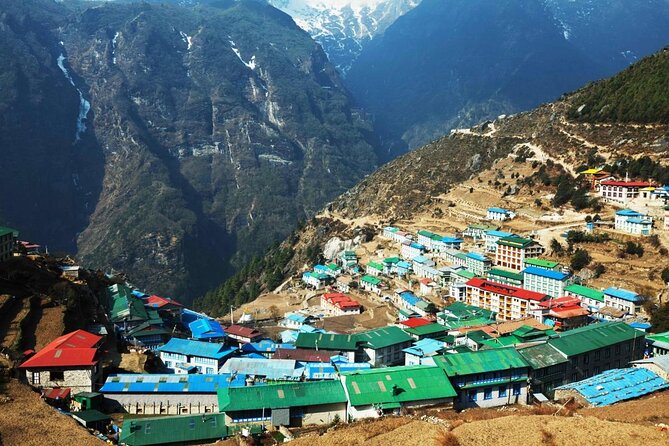
Next comes the climb to Namche Bazaar (about 3,441 m). This is the big “altitude checkpoint” village on most EBC routes, and it also functions like a gear-and-knowledge hub. You cross the Dudh Koshi River, pass Chumoa and Monjo, enter the Everest National Park area, then continue alongside the river system as the trail rises.
The itinerary includes a suspension bridge at Jorsale. Bridges matter on this trek. They break up the walk, and you get small moments to look back and check how you are feeling. If you notice you are breathing hard earlier than expected, use those moments to slow down, not to panic. On an EBC trek, calm steps win.
Namche itself is not only scenic, it is practical. Your plan builds in an acclimatization-friendly rhythm right after.
More Everest Base Camp treks:
- Everest Base Camp Helicopter Tour landing at Everest View Hotel
★ 5.0 · 668 reviews - Everest Base Camp Trekking – 13 Day
★ 5.0 · 365 reviews - Everest Base Camp Trek
★ 5.0 · 350 reviews - Everest Base Camp Trek -14 Days
★ 5.0 · 321 reviews
Namche acclimatization day: sunrise spotting and a gentle hike option
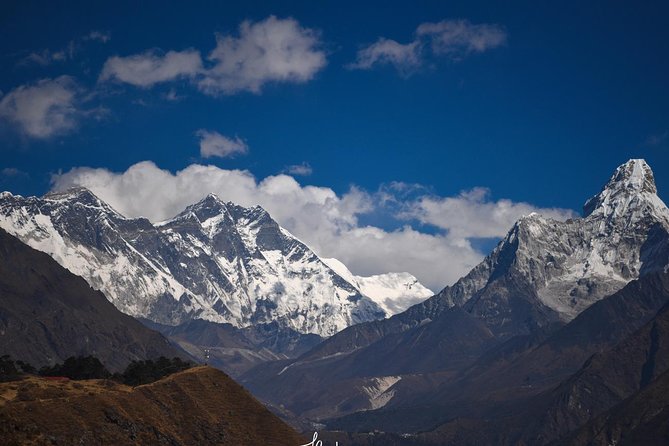
In your Namche day, you explore the town and then hike for sunrise over the Himalayas, with the plan calling out major peaks like Mt. Everest, Lhotse, Nuptse, Ama Dablam, Thamserku, and Kongde. If you feel good, there is also an optional hike toward Khumjung village.
This is a classic pattern: you gain altitude by living in a higher village, then you burn energy with a controlled hike, not a full-send climb. If you are trying to avoid altitude sickness, this is the model you want.
Tengboche monastery day: a spiritual stop with real views
The route continues to Tengboche (about 3,860 m). The itinerary notes that until Phunki it is an easier walk, then the ascent begins. You visit Tengboche Monastery, described as the biggest monastery in the Everest region and located inside Sagarmatha National Park, a UNESCO World Heritage Site.
The monastery timing is useful: it opens at 3:00 pm, and your itinerary suggests you can catch a Buddhist ceremony if you arrive by late afternoon. Even if you do not time it perfectly, you still get the panoramic Himalayan views the area is known for.
This day has an emotional payoff because Tengboche is often where walkers feel the trek “click.” After days of motion, you stop, look out, and understand why people plan their whole year around this route.
Dingboche: acclimatization that actually gives you altitude practice
After trekking through Debuche, crossing the Imja River, and reaching Pangboche and its monastery area, you reach Dingboche (about 4,350 m). The itinerary then includes two Dingboche-related days.
First, you spend a day for acclimatization with time to hike to a hill about four hours behind Dingboche, for views of Lhotse, Makalu, and Cho Oyu. This is the kind of controlled exertion you need: you get high-altitude practice without forcing an overlong push.
You then continue onward to Lobuche (about 4,910 m). This stretch is where the trek starts feeling more serious, because the distances build and the air gets thinner. Still, your plan keeps it organized, with an overnight in Lobuche after walking around 7 hours (about 9 km) and passing the Dughla pass area.
Lobuche to Gorakshep and Everest Base Camp: the long day you remember
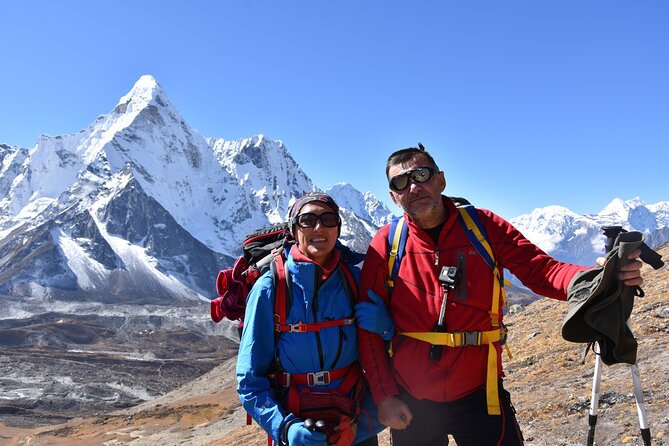
This section is a grind in the right way. You walk from the higher valley into the approach zone for Base Camp.
On your Everest Base Camp day, the plan calls for a long trek from Gorakshep to Base Camp and back, with a total walking day described as nearly 12 hours and 17 km from the earlier point to Gorakshep, then additional walking to Base Camp before returning. The route is focused on Nuptse, Khumbuste, and Pumori views from Gorakshep and then from the Base Camp area.
A practical truth: when you reach a place this symbolic, the details matter less than your pacing. With a guided trek and included meals, you are not spending time figuring out logistics. Your job is to walk, hydrate, and respect your body when the air gets sharp.
Also pay attention to footing. The broader overview mentions tougher sections along the Khumbu glacier. Your itinerary does not give a “danger by day” label, so treat the glacier approaches as a normal reason to take it slow. Good trekking habits matter more than hero moments here.
Kala Patthar: sunrise views, high effort, smart timing
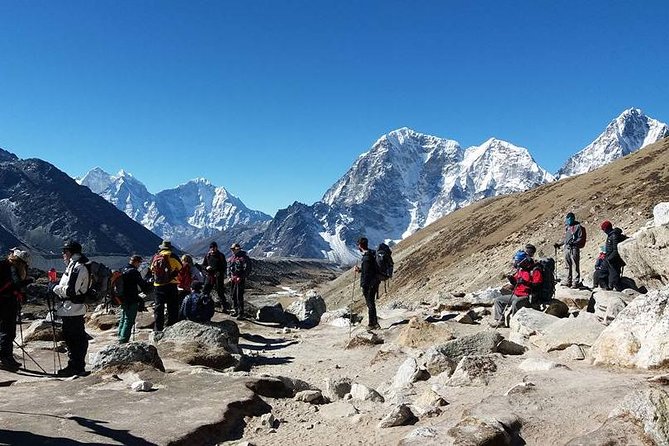
Your biggest viewpoint day is Kala Patthar (about 5,555 m). The plan has an early breakfast, then a climb that takes about three hours to reach the summit viewpoint, followed by time at the top and then descent back to Gorakshep for lunch. After that, you hike down to Pheriche (about 4,200 m) for the night.
Kala Patthar is famous for a reason: it gives a strong view of Everest and surrounding peaks like Lingtren, Khumbutse, and Changtse, plus the broader Khumbu panorama over glacier terrain. This is also a high-effort day where acclimatization from Dingboche shows up as real comfort later.
The value of the “return for lunch” setup is smart. You get the hard part without losing the entire day to altitude. Then you go downhill to recover, which is exactly what you want after pushing up high.
The descent back through Tengboche and Namche
After Kala Patthar, you are not done, but the focus shifts. Your descent follows the familiar areas in reverse: Gorakshep to Pangboche, then onward to Tengboche, and continuing toward Namche Bazaar.
This day is long at about 7 hours. It is also psychologically easier, because you are moving down in altitude. You will still feel tired in your legs, but most people find it mentally lighter.
Your next day completes the trekking loop. You trek back to Lukla (about 2,804 m), with an afternoon free in Lukla afterward. The itinerary even notes that you can wander, relax, and enjoy a hot shower.
That matters. After days of cold and effort, small comforts feel like they count.
Getting home: Lukla to Kathmandu, then a farewell dinner
Your return includes the flight back to Kathmandu and then hotel transfer. You also get a cultural dinner during your Kathmandu stay and a farewell dinner at the end of the trip as listed in what is included.
If your goal is a clean “end-to-end” experience, this helps. You are not juggling how to rebook flights on your own after the trek. And because weather delays do happen, the operator’s ability to arrange alternatives is one of the most praised aspects in past feedback, especially when flights get bumped.
Price and logistics: what $1,625 buys you (and what it does not)
At $1,625 per person for about 15 days, this is not a budget trek. But it is also not just a “guide and walk” situation. The included costs cover:
- Domestic flights Kathmandu to Lukla and back
- Teahouse accommodation during the trek
- Breakfast, lunch, and dinner during the trek (as stated)
- A Kathmandu 3-star hotel with breakfast
- An experienced English-speaking, government-licensed trekking guide
- Porter support (2 trekkers to 1 porter)
- Permits and paperwork (National Park Permit, TIMS) and local taxes
- Airport transfers and private vehicle sightseeing in Kathmandu
Where people often get surprised is the stuff not included. You should budget separately for:
- Visa fee
- Travel and rescue insurance
- Tips for guide and porter and drivers
- Alcohol and personal costs like laundry or battery recharge
- Entrance fees for sightseeing, depending on what applies when you arrive
So the best way to think about value is this: you are paying for altitude logistics, trained support, paperwork, and meal continuity. If you try to DIY those parts, the money can look cheaper at first, then gets eaten by risk, time, and stress. On Everest Base Camp, stress costs real energy.
Who should book, and who should slow down
This trek is aimed at people with moderate physical fitness. That does not mean it is easy. It means the itinerary is paced in a way that can work if you walk regularly, pack sensibly, and keep your effort controlled at altitude.
You are a great fit if you:
- Want a guided experience with permits handled and a licensed guide
- Like structured acclimatization days, not guesswork
- Are okay with teahouse basics and colder conditions at higher elevations
- Want the classic sights: Namche sunrise views, Tengboche monastery, Base Camp, and Kala Patthar
You should think twice or talk with a clinician first if you have medical conditions that make altitude risky. This route goes from roughly 1,400 m in Kathmandu to well above 5,000 m at Kala Patthar, so your body will notice.
Should you book this Everest Base Camp trek?
If you want Everest Base Camp with the important supports handled, this package makes a strong case. The pacing includes real acclimatization, you get major viewpoints that deliver on early starts, and you have porter help plus an English-speaking, government-licensed guide. That is the mix that helps first-timers survive the route with dignity.
I would still book with eyes open about the biggest variable: Lukla weather. Plan buffer time at the end, keep your international connections realistic, and accept that the mountains run the timetable.
If you are ready for hard days, cold mornings, and a summit-level viewpoint payoff, this is the kind of Everest trip that can feel smooth and well managed, not chaotic and improvised.
FAQ
What is the duration and general route for this Everest Base Camp trek?
The trek runs about 15 days. It includes Kathmandu, a Lukla flight to start walking, the hike through Everest region villages, time for acclimatization, visits to Everest Base Camp and Kala Patthar, then return to Lukla and back to Kathmandu.
How do you travel between Kathmandu and Lukla?
The itinerary includes domestic flights from Kathmandu to Lukla and then Lukla back to Kathmandu.
What kind of accommodation and meals are included?
During the trek, you stay in teahouses. Meals during the trek include breakfast, lunch, and dinner as stated in the included details. In Kathmandu, you get a 3-star hotel with breakfast.
Do you include permits and local taxes?
Yes. The package lists necessary paperwork and trekking permits including National Park Permit and TIMS, plus government and local taxes.
Is airport pickup and drop included?
Yes. The package includes pickup and drop from the international airport, plus transfers within Kathmandu for the sightseeing and return to the airport near departure.
What support do you get on the trail?
You get an experienced English-speaking, government-licensed trekking guide, and porter service with a ratio of 2 trekkers to 1 porter.
What is not included that I should budget for?
Not included are the Nepalese visa fee, travel and rescue insurance, entrance fees for sightseeing (as listed), alcoholic drinks, tips for guide and porter and drivers, and various personal costs such as laundry and battery recharge.
Latest additions near Kathmandu
- White Water River Rafting – 1 Day★ 4.3 · 3 reviews
- Traditional Momo Making Class★ 5.0 · 10 reviews
- Kathmandu to Pokhara Premium sofa bus ticket★ 4.0 · 17 reviews
- Ghorepani Poon Hill Trek★ 5.0 · 16 reviews
- Amazing 1 Day Trekking Experience in Kathmandu Nepal★ 5.0 · 24 reviews
- Ghorepani Poonhill Trek★ 5.0 · 5 reviews
- Walking tour of real Kathmandu through back streets.★ 5.0 · 3 reviews
- Wildlife Adventure in Chitwan Nepal★ 4.0 · 4 reviews
Everest Base Camp Treks, compared.
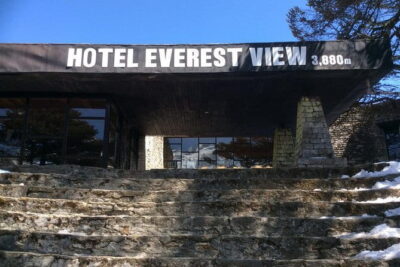
Everest Base Camp Helicopter Tour landing at Everest View Hotel
Read our review →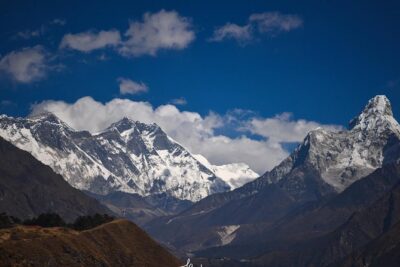
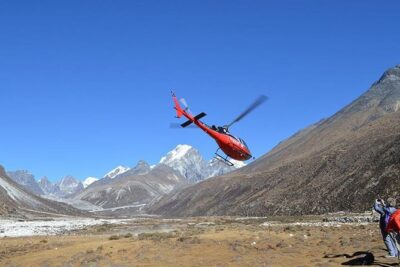
Everest Base Camp Helicopter Tour landing at Hotel Everest View
Read our review →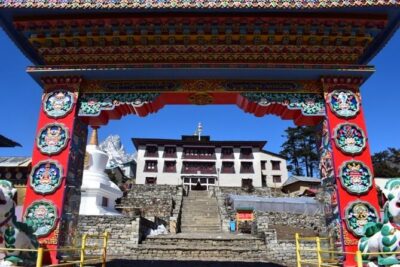
Browse the lists this tour appears in