
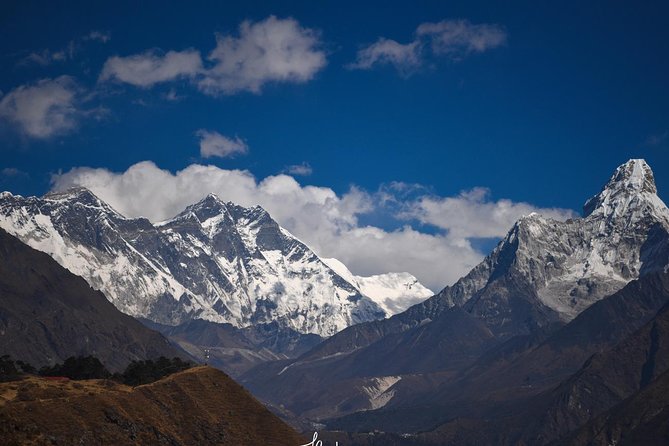
Reviewed · EVEREST BASE CAMP TREKS
Everest Base Camp Trekking
Everest feels close, then it gets high. This trek is built around two altitude payoffs, trekking to Everest Base Camp (5,380 m) and then pushing up to Kalapatthar (5,545 m) for the big panorama when the mountain angles finally cooperate. I also like how the route includes real acclimatization stops in Sherpa country, so you get more than just walking, you get understanding of how people live up here.
The only real caution is that you are sleeping in tea house lodges much of the way, so rooms can be simple, and toilets may be shared or public, not attached.
In This Review
- Key Points You Will Care About
- Why Everest Base Camp Still Feels Like a Real Journey
- Price and Logistics: What the $1,700 Covers (and What It Does Not)
- Day 1 in Kathmandu: Welcome Dinner and Paperwork Out of the Way
- Day 2: Fly to Lukla, Follow the Dudh Koshi, and Start Easy
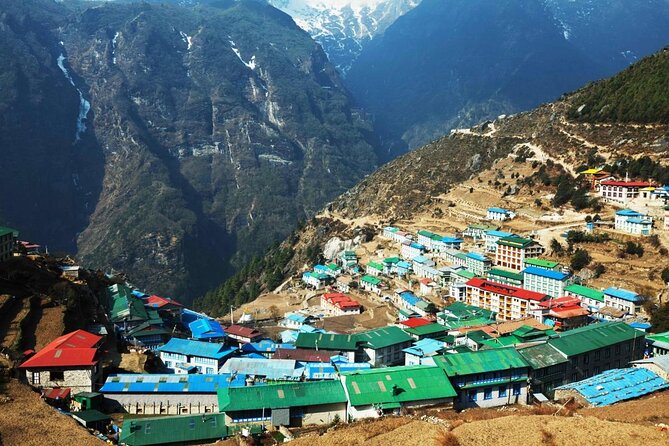
- Day 3: Sagarmatha National Park Registration, Then Namche Bazaar
- Day 4: Acclimatization Day in Namche, Plus Khumjung
- Day 5: Mongla Pass to Tengboche, with the Region’s Biggest Monastery
- Day 6: Alpine Forest to Dingboche, with Nuptse and Cholaste in View
- Day 7: Lobuche via Glacier Country and Memorials for Climbers
- Day 8: Everest Base Camp Day, Gorakshep, and the Khumbu Icefall
- Day 9: Kalapatthar at 5,545 m, When Everest Finally Fits the View
- Day 10 and Day 11: Down to Tyangboche, Then Bridges over Dudh Koshi
- Day 12 and Day 13: Lukla Return, Then Kathmandu and Thamel Time
- Accommodation and Meals: Tea Houses Are Part of the Experience
- Who Should Book This, and Who Should Reconsider
- Should You Book Nepal Guide Treks and Expedition for Everest Base Camp?
Key Points You Will Care About
- Base Camp at 5,380 m, Kalapatthar at 5,545 m: two different viewpoints, with Kalapatthar usually delivering the best Everest sightlines.
- A practical itinerary rhythm: slow pacing, hike higher to acclimatize, then sleep lower.
- Sagarmatha National Park entry and permits included: less paperwork to juggle while you are trying to climb.
- Sherpa culture stops that feel lived-in: Namche Bazaar, Khumjung, monasteries, and school visits.
- Small-group feel (max 15 travelers): easier for guides to manage timing, food, and altitude concerns.
- Flights to Lukla are part of the package: you still need to expect weather delays, but logistics are handled.
Why Everest Base Camp Still Feels Like a Real Journey
Everest Base Camp is not a random “tourist photo stop.” It sits at 5,380 m, and the whole trail slowly changes your body, your breathing, and your sense of time. Early on, you are walking through villages and river valleys. Later, you are in a high-altitude world shaped by glaciers, rock, and wind, where even the small decisions matter, like how slowly you start your climbs.
One thing to understand before you go: from Everest Base Camp itself, Mt. Everest is not always directly visible because Mt. Lhotse sits in front of it. That is why Kalapatthar is such a big deal on this trek. You are essentially doing the “why does Everest look hidden?” puzzle, then hiking to the angle where the view opens up.
You also get more than mountain drama. The trail passes through Sagarmatha (Everest) National Park areas, where you can notice changes in flora and fauna as you gain altitude. It is subtle, but it makes the trek feel like a protected living region, not a single peak you march toward.
More Treks in Kathmandu
- Everest Base Camp Trek – 14 Days
★ 5.0 · 1,499 reviews - Everest Base Camp Trek
★ 5.0 · 842 reviews - Everest Base Camp Trekking
★ 5.0 · 485 reviews
Price and Logistics: What the $1,700 Covers (and What It Does Not)
At $1,700 per person for about 14 days, this is not a budget deal, but it is built like a full-service trekking package. Here is what matters most for value:
- Guides and porters are included, along with staff meals, accommodation, salary, and insurance.
- Your trek days include all meals (breakfast, lunch, dinner), not just “some food.”
- Kathmandu hotel accommodation is included with a three-star option, and you can request upgrades.
- Permits and required government taxes and paperwork are handled.
- Airport pickup and drop are included.
- Kathmandu to Lukla and Lukla to Kathmandu flights are included, which is a big cost factor in this region.
Two small details that make day-to-day life easier: they offer mobile ticket, and they include welcome and farewell dinner, which helps you start and end the trip feeling taken care of.
What is not included is also clear: personal expenses and alcoholic and beverages. So if you like coffee refills, charging your devices all day, or buying extra snacks, you will want cash set aside.
One more practical value point: the team provides first aid kits, so you are not trekking alone in case of minor issues. Still, high altitude is serious. Your guide can help you manage pace, but you own your safety decisions too.
Day 1 in Kathmandu: Welcome Dinner and Paperwork Out of the Way
Your trip starts at Tribhuvan Airport in Kathmandu, with a representative meeting you outside the terminal. They help with check-in at a hotel in central Kathmandu, and you can rest or stop by the Nepal Guide office to get trip info before you head out.
In the evening, you get a welcome dinner. That sounds simple, but it sets the tone. You can confirm gear questions, altitude expectations, and your schedule without trying to do it while jet lag is still doing its thing.
This is also where you adjust your routine. Kathmandu can make you feel like you have time, because you are at a low altitude. I find it helps to treat Day 1 like a slow warm-up, not a sightseeing marathon.
Day 2: Fly to Lukla, Follow the Dudh Koshi, and Start Easy
Day 2 is your big “we are really doing this” moment: an early flight from Kathmandu to Lukla, the classic gateway to the Khumbu region.
After landing, you trek along the left bank of the Dudh Koshi River. The walking starts gradual uphill, and you pass Mani walls, which are prayer stone walls you see throughout the Himalaya. Even if you have seen photos before, seeing them in person gives the trail a sense of place.
You finish at Ghat, then continue onward toward Phakding on the same day. The benefit of this first trekking push is pacing. You are not supposed to sprint. You are building leg rhythm and learning how your lungs respond to slightly higher elevations.
More Everest Base Camp treks:
- Everest Base Camp Helicopter Tour landing at Everest View Hotel
★ 5.0 · 668 reviews - Everest Base Camp Trekking – 13 Day
★ 5.0 · 365 reviews - Everest Base Camp Trek
★ 5.0 · 350 reviews - Everest Base Camp Trek -14 Days
★ 5.0 · 321 reviews
Day 3: Sagarmatha National Park Registration, Then Namche Bazaar
Leaving Phakding, the trail climbs and dips as you move toward Bengar. You also do more up-and-down hiking before reaching the Sagarmatha National Park registration point.
Once you are registered and the entry fee is paid, the climb becomes steadier toward Namche Bazaar, often described as the Sherpa capital. Namche is a hub with shops, lodges, and a very real sense of community life. You do not just pass through, you spend time there.
That matters because Namche is also your early altitude education. If you treat the town like a regular vacation stop, you will feel it. If you treat it like training terrain, you learn fast.
Day 4: Acclimatization Day in Namche, Plus Khumjung
This day is not wasted time. It is the part that helps your body handle the next elevation jumps.
The core idea is hike high, sleep low. You hike up to about Khumjung, gaining around 300 m, and then you return to Namche to sleep. You also visit local monasteries and schools. It is one of those days where your “progress” is not measured in kilometers, but in how you feel the next morning.
When I do this kind of trek, I use acclimatization days to practice discipline: take it slow on every climb, drink consistently, and do not chase exhaustion. The terrain is working against you, even when the trail looks easy.
Day 5: Mongla Pass to Tengboche, with the Region’s Biggest Monastery
After your acclimatization, the trek continues toward Tyangboche. You cross Mongla pass at about 3,975 m, and the route offers mountain views along the way.
Tybangboche is where the trail gives you a cultural anchor: you arrive at the entrance to the largest monastery of the region. This is a good time to stop, slow down, and pay attention. High altitude can make everything feel urgent. A place like this helps reset your pace and your expectations.
Day 6: Alpine Forest to Dingboche, with Nuptse and Cholaste in View
Day 6 moves through lush alpine forest with small village stops along the route. You pass the Khumbila Khola Valley, climb toward a ridgeline, and then head into the direction of Dingboche.
As altitude increases, the views sharpen. You get big sightlines toward Mt. Nuptse and Mt. Cholaste, among others. This is also a day where your breathing becomes a daily topic. If you come in too fast, you will pay for it later.
This is where the value of a steady plan becomes obvious. The itinerary does not just chase distance, it tries to keep you within what you can absorb.
Day 7: Lobuche via Glacier Country and Memorials for Climbers
The path to Lobuche starts involving steep sections, including moving toward the terminal moraine left by the Khumbu Glacier. It can feel tough uphill, but the scenery is the distraction that keeps many people moving.
At the top of the hill, you see numerous memorials for climbers who lost their lives on Everest. It is a sobering moment. I like that it is placed here, after you have already spent days climbing and adjusting, so it lands with weight rather than feeling like random decoration.
You finish in Lobuche, where tomorrow becomes the “EBC is real” day.
Day 8: Everest Base Camp Day, Gorakshep, and the Khumbu Icefall
This is the core day. You start early and go to Gorakshep first. On the way, you see the Khumbu Glacier, and near Gorakshep the trail becomes a bit more difficult.
After you spend time at Gorakshep, you continue slowly to Everest Base Camp. You reach the top of the glacier area, then walk toward where you can see the Khumbu Icefall. Finally, you get to EBC itself.
You are there for a couple of hours, then you descend back to Gorakshep for the night. One practical note: the day is not just about reaching a dot on a map. It is about managing effort both ways. Going out and coming down at high altitude takes similar discipline.
And since the trek includes meals and tea house stays as part of the plan, you are not improvising food timing while also managing altitude fatigue. That makes a real difference.
Day 9: Kalapatthar at 5,545 m, When Everest Finally Fits the View
Today is your highest point: Kalapatthar at 5,545 m. The trek is timed so you can get the all-round view people dream about.
Remember that Everest is often blocked from Base Camp by Lhotse. Kalapatthar changes the angle. From here, you can look out at major peaks including Everest (8,848 m), Mt. Lhotse (8,516 m), Mt. Makalu (8,481 m), and Mt. Cho Oyu (8,201 m), plus other surrounding snow-capped giants.
After the viewpoint time, you head to Pheriche. This is also where you should pay attention to your legs. The climb up is hard, but the transition afterward is usually harder emotionally, because you finally feel like you reached the top, then you start walking down like it is still a normal day.
Day 10 and Day 11: Down to Tyangboche, Then Bridges over Dudh Koshi
Day 10 shifts from big altitude targets to smoother downhill movement. You head down to Pangboche Village, where the trail is easier downhill, then continues with a descent toward the riverside. You cross a bridge over Imja Khola, then climb back up to Tyangboche.
Day 11 is another steep descent, this time to the Dudh Koshi River. You cross a suspension bridge over Dudh Koshi, then continue through places like Phunki Tenga, and pass villages including Tashinga and Sansa before reaching Namche Bazaar again.
The value of these downhill days is not that they are easy. It is that your body gets practice dealing with fatigue. High altitude walking changes how your joints feel, especially on the way down.
One helpful tip that comes up in real trip experience: if you have knee pain on descent, train your hamstrings before the trip. It is a simple, proactive move that can make the return feel way less scary.
Day 12 and Day 13: Lukla Return, Then Kathmandu and Thamel Time
On Day 12, the trek leads from Namche Bazaar to Lukla. It is a dense forest walk with short ups and downs that can feel pleasantly varied. You cross the Bhote Koshi River three times, and then you tackle a final uphill climb around 45 minutes to reach Lukla.
Day 13 is the flight back to Kathmandu. You take an early scenic flight from Lukla to Kathmandu, then you transfer to your hotel. You can rest, or you can spend time in Thamel, the busy street area where you can browse and decompress before your farewell.
That evening, you join the company for a farewell dinner, a nice ritual before you head back home.
One more reality check: Lukla weather can be unpredictable. Delays happen. The best way to handle this emotionally is to plan your mindset, not just your schedule. If there is a delay, an experienced team can help you adjust with timing options.
Accommodation and Meals: Tea Houses Are Part of the Experience
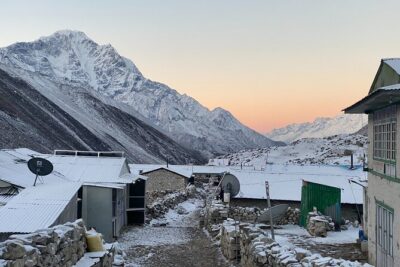
This trek is not a hotel chain tour. You will stay in tea house lodges during trekking days. Rooms are arranged based on the number of travelers, and you can request single, double, triple, or twin sharing. In some cases, you might share a twin room with other trekkers. The program states that security and safety of your belongings are managed.
Toilets can be basic. Attached toilets may not be available in every tea house, so you should expect public toilet use sometimes.
Food is a major part of comfort at altitude. The plan includes all meals, and tea houses serve food in an orderly way. The pattern is: you eat dinner when you reach the lodge, then breakfast the next morning at the same place. Lunch is handled en-route as you move to the next stop.
This matters because at altitude, consistent meal timing can help your body recover. It also helps you avoid the stress of searching for food after a hard climb.
Who Should Book This, and Who Should Reconsider
This is a moderate and adventurous trek. The requirement is that you can walk 5 to 6 hours a day. The trail rises above 5,000 m from sea level, and altitude sickness can happen even if you are fit.
High mountaineering skills are not required, which makes it more accessible. That said, previous trekking experience is a merit, especially for pacing and for knowing how your body reacts over multiple days.
If you want a solo adventure with support, this program has worked for solo trekkers, since it runs with guides and porters rather than expecting you to manage everything alone. If you want a group experience, the maximum group size is 15 travelers, which helps keep things organized.
You should think twice if you cannot commit to walking days and slower pacing. Altitude is not something to negotiate with willpower.
Should You Book Nepal Guide Treks and Expedition for Everest Base Camp?
If you want a classic Everest Base Camp route with strong structure, this can be a good match. The big win for me is that your price covers the hard-to-plan logistics: guide and porters, permits, meals, Kathmandu hotel, and the Kathmandu to Lukla flights.
I also like the way the plan treats acclimatization as real work, not a casual break. The Namche and Khumjung focus helps you arrive at higher days with better chances to feel steady.
Book it if you:
- want a guided trek that handles permits and flights
- are comfortable with tea house lodging and basic facilities
- can walk 5 to 6 hours per day and you are willing to go slow at altitude
Skip it or ask more questions if you:
- expect private luxury lodging every night
- are not willing to manage basic toilet setups
- have no flexibility for flight delays, because Lukla schedules can shift
If you are ready for that mix of mountain intensity and Sherpa country culture, this trek is the kind of trip that stays with you long after the summit feeling fades.
Latest additions near Kathmandu
- White Water River Rafting – 1 Day★ 4.3 · 3 reviews
- Traditional Momo Making Class★ 5.0 · 10 reviews
- Kathmandu to Pokhara Premium sofa bus ticket★ 4.0 · 17 reviews
- Ghorepani Poon Hill Trek★ 5.0 · 16 reviews
- Amazing 1 Day Trekking Experience in Kathmandu Nepal★ 5.0 · 24 reviews
- Ghorepani Poonhill Trek★ 5.0 · 5 reviews
- Walking tour of real Kathmandu through back streets.★ 5.0 · 3 reviews
- Wildlife Adventure in Chitwan Nepal★ 4.0 · 4 reviews
Everest Base Camp Treks, compared.
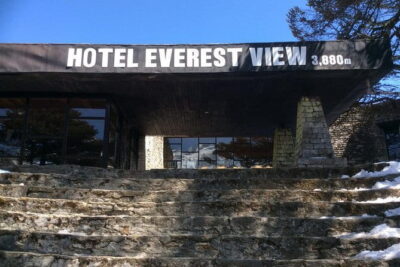
Everest Base Camp Helicopter Tour landing at Everest View Hotel
Read our review →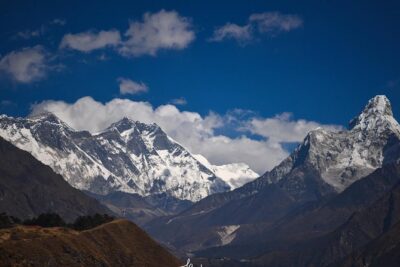
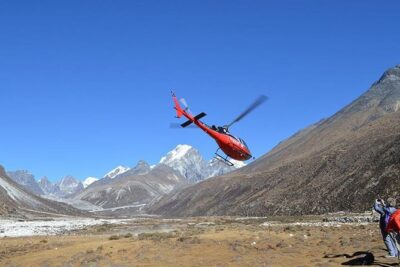
Everest Base Camp Helicopter Tour landing at Hotel Everest View
Read our review →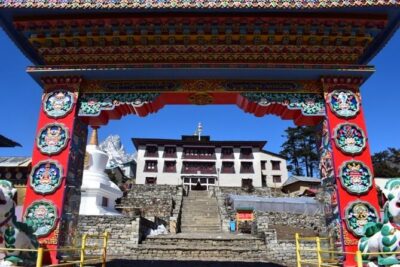
Browse the lists this tour appears in