
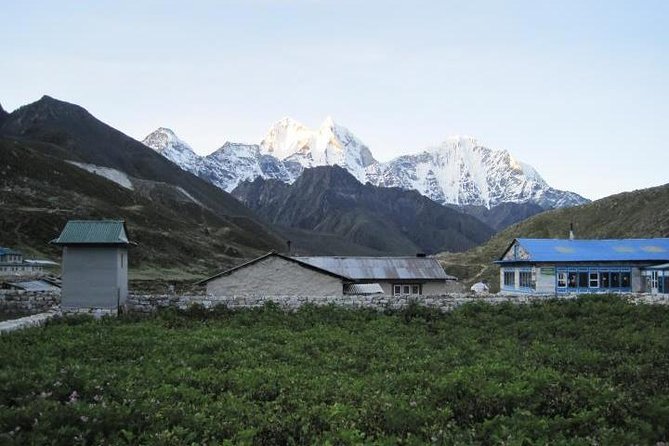
Reviewed · EVEREST BASE CAMP TREKS
Everest Base Camp Trekking 14 days
Everest Base Camp mixes high drama with solid planning. You start with a flight into Lukla, then move through Sherpa towns like Namche and climb toward Everest’s Khumbu Icefall from Gorakshep. It is one of the few treks where you can watch altitude rise day by day, while still getting enough rest to keep you moving safely.
What I like most is the way the logistics are handled for you, so your energy goes to the trail. Government-licensed trek leaders and an experienced porter system (1 porter for 2 people) mean you carry less and spend more time paying attention to the views and village life.
One thing to consider: this is not a comfy hotel trek. Expect basic tea house/lodge rooms on the mountain, shared facilities in some places, and long walking days at thinning air.
In This Review
- Key things I’d zoom in on before you book
- Everest Base Camp: what makes this route so memorable
- Price and logistics: what you’re really paying for
- Your first days in Kathmandu: prep, gear, and meeting the rhythm
- Lukla to Phakding to Namche: easing into altitude without stalling
- Namche acclimatization: Khumjung, Khunde, and the quieter side of Everest
- Namche to Tengboche, then to Dingboche: monasteries and big mountain faces
- Dingboche to Lobuche: the glacier zone feeling starts
- Gorakshep to Everest Base Camp: the day the trek turns into a mission
- Kala Patthar day and the descent to Pheriche
- Pheriche to Tyangboche to Lukla: closing the loop with familiar trails
- Flying back to Kathmandu: dealing with weather without losing your head
- Lodges and meals: where comfort is simple and food is functional
- Altitude and packing: what matters before you step off the plane
- Who should book this trek, and who might reconsider
- Should you book Walk Mountain’s Everest Base Camp trek?
- FAQ
- How long is the Everest Base Camp trek on this option?
- What does the trip include for transportation?
- How long is the flight to Lukla?
- Are meals included during the trek?
- What about meals in Kathmandu?
- Do you provide a sleeping bag and map?
- Is hot water and a shower included?
- What is the porter support ratio?
- Is insurance included?
- Is there free cancellation?
Key things I’d zoom in on before you book
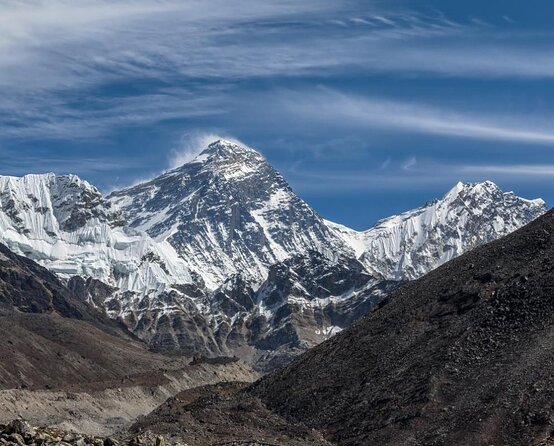
- Lukla flight first, trek second: you trade long road time for a short, scenic jump into the Everest region
- Acclimatization built in: Namche, plus extra time around Dingboche helps you stagger altitude the sensible way
- Sherpa culture stops, not just scenery: Khumjung, Khunde, and monastery visits show you local life, not only peaks
- Base Camp is a full day goal: walk out from Gorakshep and spend time near the Everest area you came for
- Kala Patthar is optional but popular: you get a top south-face viewpoint without needing to climb Everest
Everest Base Camp: what makes this route so memorable
This is the kind of trek that starts with a big moment and keeps stacking them. The Lukla-to-Phakding start puts you in the Khumbu right away. From there you’re climbing into Sagarmatha National Park through places that feel lived-in, with small teahouses, prayer flags, and shopfronts that seem to run on both mountaineering and daily routine.
The big emotional payoff is that you do not just hike past Everest. You work your way up to a staging zone, then walk onward to Everest Base Camp itself, with the Khumbu Icefall in the mix. It is a rare travel day where the destination is the reason you’re there, and you still get days of culture and altitude lessons along the way.
Also, this trek is paced with real acclimatization. You spend extra time in Namche, then again around Dingboche. That matters because the success of this trek is not only fitness, it is how smartly you gain elevation.
More Treks in Kathmandu
- Everest Base Camp Trek – 14 Days
★ 5.0 · 1,499 reviews - Everest Base Camp Trek
★ 5.0 · 842 reviews - Everest Base Camp Trekking
★ 5.0 · 485 reviews
Price and logistics: what you’re really paying for
At $1,440 per person for 14 days, the cost looks straightforward only until you list what is inside it.
You get:
- Airport pickup/drop in Kathmandu
- Kathmandu hotel for 2 nights (breakfast included)
- Welcome and farewell dinners in Kathmandu
- Kathmandu to Lukla and back by flight, including airport taxes
- Tea house or lodge accommodation during the trek, with all meals (breakfast, lunch, dinner)
- A trek leader, English-speaking, plus porter support (including their salary, meals, accommodation, and insurance, and domestic airfare)
- Government taxes and official trekking expenses
- Sleeping bag and a trekking map (sleeping bag is returned after the trip)
What you do not get is also important:
- Nepal visa fee, plus international airfare
- Travel and health insurance, and the program specifically recommends emergency helicopter rescue insurance
- Lunch and dinner in Kathmandu (so budget for those city meals)
- Tips for guide, porter, and driver
- Hot showers and battery charges can cost extra at tea houses
- Bottled water, alcohol, and other drinks during the trek
Value test: if you were to do this independently, the biggest expense categories are usually the same ones you pay for here, flights into Lukla, guiding, porter support, and the day-to-day lodge system. What you’re buying is coordination, safety focus, and meals and lodging that are planned around your itinerary. If that matters to you, the price is fair.
Your first days in Kathmandu: prep, gear, and meeting the rhythm
Day 1 is all Kathmandu setup. You get picked up, move into the hotel, and then get your intro briefing plus time for last-minute shopping. This is a key day even if it feels quiet. Kathmandu days can make or break your comfort because you want your basics ready before you start climbing.
Day 2 is a flight day. You fly from Kathmandu to Lukla, then start trekking to Phakding. The flight is nearly 40 minutes, and it is the moment when the trip shifts from city travel to mountain travel.
A small practical note: the schedule says the start time for meeting points is 6:30 am. Plan for an early morning, because the mountains do not care about your sleep schedule.
Lukla to Phakding to Namche: easing into altitude without stalling
Lukla sits at about 2,800 m (9,184 ft). That is already high. From there, you walk to Phakding (2,652 m / 8,700 ft) in about 3 to 4 hours. The point here is not heroics. It is to get your legs moving and to let your body adjust to elevation while you still have an energy cushion.
On Day 3 you go to Namche Bazaar, around 3,440 m (11,283 ft), taking about 5 to 6 hours via Monjo. Monjo is the entry gateway feel for the region, and it’s your on-ramp into the park’s trekking world.
Namche is not just a waypoint. It is a working Sherpa hub with government offices, ATMs, internet cafes, shops, restaurants, and a colorful market. In other words, it is where you can reset mentally. You can also grab what you need for the next stretch, because you will not feel like you have endless choice once you move deeper.
More Everest Base Camp treks:
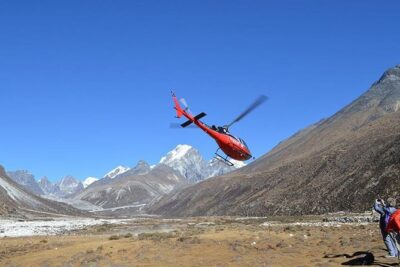
- Everest Base Camp Helicopter Tour landing at Everest View Hotel
★ 5.0 · 668 reviews - Everest Base Camp Trekking – 13 Day
★ 5.0 · 365 reviews - Everest Base Camp Trek
★ 5.0 · 350 reviews - Everest Base Camp Trek -14 Days
★ 5.0 · 321 reviews
Namche acclimatization: Khumjung, Khunde, and the quieter side of Everest
Day 4 is your acclimatization day in Namche. This is where you do purposeful exploration instead of extra mileage.
You visit spots like:
- Everest View Hotel
- Khumjung and Khunde Valley
- Hillary School
- Hillary Museum
These stops matter because they give context. You see how Everest tourism and local life connect through education, community institutions, and daily Sherpa routines. It is also a sanity check day. Instead of pushing forward, you test your pace and breathing, and you learn what effort feels like at Namche altitude.
If you’re the type who hates wasting time, acclimatization days can feel like detours. But on this trek they are strategic. The goal is to arrive at higher villages with your body ready, not just your motivation strong.
Namche to Tengboche, then to Dingboche: monasteries and big mountain faces
Day 5 moves from Namche to Tengboche (around 3,870 m / 12,694 ft) in about 5 to 6 hours. You also explore the oldest Tengboche monastery. This is one of those places where the architecture, prayer flags, and mountain air combine. Even if you are not a culture person, it is a good reset.
Day 6 goes to Dingboche, around 4,360 m (14,300 ft), taking roughly 5 to 6 hours. The walk includes crossing rhododendron forest and getting close views of peaks like Amadablam and Thamsherrku. The point of this day is climbing with your eyes open. When the air is thin, scenery becomes more than decoration.
Day 7 is another acclimatization day, hiking around Chukkung and Dingboche. It is the kind of day that helps you learn your own altitude comfort. You get the benefit of movement without the stress of gaining too fast.
Dingboche to Lobuche: the glacier zone feeling starts
Day 8 takes you to Lobuche (around 4,940 m / 16,207 ft). It is a shorter hike on paper, about 2 to 4 hours, but it can feel longer because you are at higher altitude and the terrain gets more serious. You climb further via the Khumbu Glacier area and you get a panchromatic view of mountain faces.
This is also a great day for disciplined pacing. The biggest altitude mistakes are not only going too fast, it is going too hard, too hungry, too late. If you keep your pace steady and eat properly in the lodge system, you set yourself up for the heavy day ahead.
Gorakshep to Everest Base Camp: the day the trek turns into a mission
Day 9 is the core “go there” day. You trek from Lobuche to Gorakshep (around 5,170 m / 16,961 ft). Then you store luggage, eat lunch, and continue on to Everest Base Camp, with the Khumbu Icefall area nearby.
This is a long day, about 8 to 9 hours total. Expect it to be demanding. You are going to feel the altitude by late afternoon, so your energy management matters.
What you gain here is a direct connection to Everest’s world. You do not need to climb to feel the scale. Standing near the base camp area puts the mountain into human proportions. It makes all the earlier days feel purposeful.
If you’re coming here for the best photos, you also want to realize that the timing of light can be hit or miss with cloud cover. Being mentally ready for that is part of the trek.
Kala Patthar day and the descent to Pheriche
Day 10 is listed as Gorakshep to Kala Patthar (around 5,545 m / 18,192 ft) and down to Pheriche (4,730 m / 15,518 ft). It is about 8 to 9 hours and includes an optional hike to Kala Patthar at around 5,555 m.
Kala Patthar is your best chance for classic views of Everest’s south face. The description also highlights views of Changtse and the West Ridge route, plus Mt. Pumori. That is why people talk about this day like a rite of passage.
The practical side: you are higher than you might expect, and the cold can bite even when the sky is bright. If you choose to do Kala Patthar, start early and pace your breathing. The ascent is usually not a technical issue. It is an endurance and cold-weather issue.
After Kala Patthar, you descend to Pheriche for overnight in a lodge setting. Descending is not always easy on the knees, but it helps your altitude recovery.
Pheriche to Tyangboche to Lukla: closing the loop with familiar trails
Day 11 takes you to Tyangboche (around 3,867 m / 12,684 ft) in about 4 to 5 hours. Day 12 goes back to Lukla (around 2,800 m / 9,186 ft) taking roughly 5 to 6 hours.
This section is where you realize you have been training your mind. The trails start to feel familiar. You pass again through villages and lodge stops you saw earlier. That reduces the uncertainty of route-finding, and it helps you conserve energy for the final flight day.
Flying back to Kathmandu: dealing with weather without losing your head
Day 13 is the return flight to Kathmandu (around 1,300 m / 4,264 ft) and an overnight hotel stay with breakfast.
A real-world note from the trip stories I read: flight days can change due to weather. One account specifically says their flight to Lukla was delayed, and Bishnu arranged the first flight onward so they could keep the trip moving. That is the kind of operational flexibility you want on this route, because you are dealing with an airport that is weather-sensitive.
Day 14 is departure from Kathmandu.
Lodges and meals: where comfort is simple and food is functional
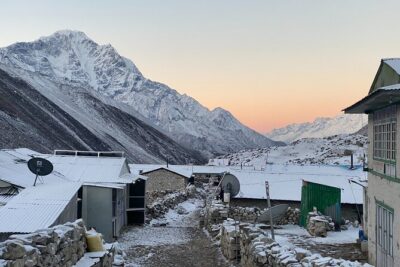
On this trek you stay in local tea houses or lodges. Kathmandu gets a three-star hotel with breakfast, while the trekking portion is basic. Twin share rooms are standard, and in some places you may have private bathroom, while other spots offer shared bathroom access.
Good news: the program mentions 24/7 hot water availability in the lodges, but it may be chargeable in some tea houses. Battery charging and hot shower fees can also cost extra, so it is smart to budget a little cash for those.
Food is three meals a day: breakfast, lunch, dinner. In Kathmandu you get buffet breakfast, and the trekking meals come from available menus in the lodges. The description notes that food is prepared locally, it is organic and delicious, and it is quite healthy, even if it is not fancy.
Practical tip: stick to what your body tolerates. At high altitude, eating light but often helps. You also want to treat hydration seriously. The program mentions water purification pills, and your guide brings first aid resources including altitude support like Diamox if needed.
Altitude and packing: what matters before you step off the plane
Everest Base Camp is a high-altitude trek, even when the trail seems manageable. The route climbs from Lukla into the 3,000 to 5,000 m range quickly, then you spend time above 5,000 m near Gorakshep and Kala Patthar.
So your preparation should be practical:
- Bring a sleeping bag rated to zero degrees F, but note you are supplied a sleeping bag by the office for the trek (returned at the end)
- Use UV-protective sunglasses and plan for wind chill
- Get sun hat or scarf and a warm layer for mornings
- Plan for gloves and a headlamp with spare batteries (daylight disappears fast at altitude)
- Pack trekking poles if you use them, and consider quick-dry layers for easier drying
- Bring thick wool hiking socks and spare boot laces
- Bring small-denomination cash for visa and for small lodge charges you cannot avoid
One more reality check: bottled mineral water, cold drinks, and alcohol are not included. If you want a big taste of soda at 5,000 m, you will pay for it. Most people are happier skipping those luxuries anyway.
Who should book this trek, and who might reconsider
This is best for you if:
- You want a structured acclimatization plan rather than improvising
- You’re comfortable with long walking days and cold mornings
- You want Sherpa culture stops as part of the trek, not just a quick photo stop
- You like having a licensed leader and porter support handling the heavy carrying and logistics
You might reconsider if:
- You need luxury rooms and guaranteed private bathroom space
- You cannot handle basic lodge living
- You’re sensitive to cold and long hiking days, especially if you plan to do Kala Patthar
The group size is capped at 12 people, and that tends to keep things manageable and less chaotic at lodges and viewpoints.
Should you book Walk Mountain’s Everest Base Camp trek?
If your priority is a classic Everest Base Camp journey with meals, lodge beds, flights, and experienced leadership handled, this is a strong choice. The route is paced for altitude with real acclimatization days, and the program supports you with a porter system so you are not dragging yourself through every step.
My recommendation depends on one decision: are you okay with basic mountain lodging and a cold, serious high-altitude day like Kala Patthar? If yes, book it and treat the trek like a mission, not a stroll. If you want hotel comfort above everything else, look for a different style of trek.
FAQ
How long is the Everest Base Camp trek on this option?
The trek runs about 14 days, including flights between Kathmandu and Lukla and time in Kathmandu before departure.
What does the trip include for transportation?
You get airport pickup and drop in Kathmandu, plus flights Kathmandu to Lukla and back with airport taxes.
How long is the flight to Lukla?
The flight is nearly 40 minutes.
Are meals included during the trek?
Yes. During the trek, you get breakfast, lunch, and dinner at your lodge or tea house.
What about meals in Kathmandu?
Breakfast in Kathmandu is included, but lunch and dinner in Kathmandu are not included.
Do you provide a sleeping bag and map?
Yes. A sleeping bag and a trekking map are included, and the sleeping bag is returned after the trip completion.
Is hot water and a shower included?
Tea houses have hot water availability, but hot shower access can be chargeable, and battery charging is available for extra cost or free in some lodges.
What is the porter support ratio?
The program states there is 1 porter for 2 guests, plus the porter’s salary, meals, accommodation, domestic airfare, and insurance are covered.
Is insurance included?
Travel and health insurance are not included. Emergency helicopter rescue insurance is recommended.
Is there free cancellation?
Yes. You can cancel up to 24 hours in advance for a full refund.
Latest additions near Kathmandu
- White Water River Rafting – 1 Day★ 4.3 · 3 reviews
- Traditional Momo Making Class★ 5.0 · 10 reviews
- Kathmandu to Pokhara Premium sofa bus ticket★ 4.0 · 17 reviews
- Ghorepani Poon Hill Trek★ 5.0 · 16 reviews
- Amazing 1 Day Trekking Experience in Kathmandu Nepal★ 5.0 · 24 reviews
- Ghorepani Poonhill Trek★ 5.0 · 5 reviews
- Walking tour of real Kathmandu through back streets.★ 5.0 · 3 reviews
- Wildlife Adventure in Chitwan Nepal★ 4.0 · 4 reviews
Everest Base Camp Treks, compared.
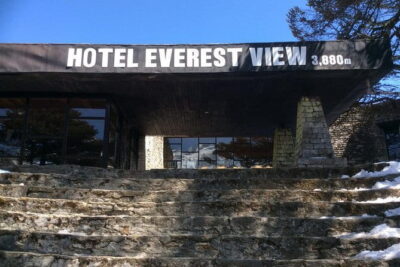
Everest Base Camp Helicopter Tour landing at Everest View Hotel
Read our review →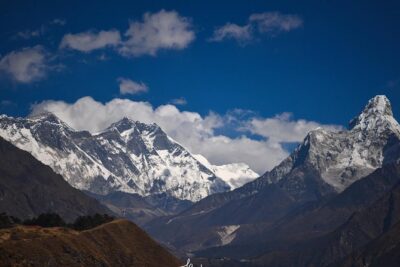
Everest Base Camp Helicopter Tour landing at Hotel Everest View
Read our review →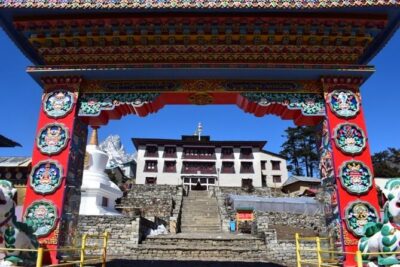
Browse the lists this tour appears in