
Reviewed · EVEREST BASE CAMP TREKS
Everest Base Camp Trek
Everest Base Camp calls fast. One reason is the tight, well-paced rhythm: fly to Lukla, trek to iconic stops, then slowly adjust to altitude before you go for EBC. I also like how the trip is built around real logistics, including a Kathmandu pickup and a private feel so your group keeps control of the pace.
Two big strengths for me are the English-speaking guide plus porter support (one porter for two people), and the attention to acclimatization on days in Namche and Dingboche. One thing to consider before you book: the deal includes some meals in one section, but another section says breakfast, lunch, and dinner are not included, so you should confirm exactly what you will pay for on the mountain.
In This Review
- Key highlights you will feel on this trek
- Price and logistics: what $1,800 buys, and what you must verify
- Day 1 in Kathmandu: Thamel is your easy landing pad
- Day 2: the Lukla flight and the first trek to Phakding
- Days 3 to 4: Monjo, Namche Bazaar, and learning the altitude game
- Day 5: the climb toward Tengboche, plus Danfe sightings
- Days 6 to 7: Dingboche and the Nagarkshang Hill acclimatization
- Day 8: toward Lobuche, Khumbu Glacier country, and colder nights
- Day 9: Everest Base Camp, Gorakshep at night, and the “dream status” feeling
- Day 10: Kalapatthar early, then Pheriche for recovery
- Day 11 to 12: returning through Tengboche and Namche, ending in Lukla Bazaar
- Day 13: back to Kathmandu, plus a farewell dinner
- The crew factor: guides, porters, and real safety culture
- What you are likely to pay extra for on the mountain
- Lodges and meals: manage expectations, then confirm in writing
- Altitude plan and physical fit: the trek is moderate, but it is still serious
- Who should book this Everest Base Camp trek
- Should you book Adventure White Mountain’s Everest Base Camp trek?
- FAQ
- How long is the Everest Base Camp trek?
- Where does the trek start, and what time is listed?
- Are flights to and from Lukla included?
- Do I get pickup in Kathmandu?
- What is not included in the price?
- Is there free cancellation?
Key highlights you will feel on this trek
- Real acclimatization days in Namche Bazaar and Dingboche, not just forced marching
- EBC day plus Kalapatthar included, so you see both the base camp and wider summit views
- Porter help for two trekkers, which matters when the air gets thin
- Sagarmatha National Park entry timing is handled as you reach Monjo and move onward
- A guided return flow that brings you back through Tengboche and Namche before Lukla
Price and logistics: what $1,800 buys, and what you must verify
At $1,800 per person for 13 days (approx.), you are paying for more than walking time. You are paying for the “moving parts” that can break a trek, especially in Nepal: transfers in Kathmandu, flights to Lukla and back to Kathmandu, and day-to-day organization on the route.
The core inclusions listed here are a professional English-speaking trekking guide and one porter for two trekker, plus both-way transport flights to Lukla and back, including a sharing vehicle. You also get a mobile ticket and pickup in Kathmandu, which helps on Day 1 when jet lag can make simple tasks feel like paperwork.
Now the part you should double-check: meals and food are described in two conflicting ways. One section lists breakfast (12), lunch (11), and dinner (11) as included, while another section says food and drinks including breakfast, lunch, and dinner are not included. Also note that accommodation during the trek and national park permit fees are not included. My advice is simple: message the operator and ask for a clear, written breakdown of meals and lodge costs for your exact dates.
More Treks in Kathmandu
- Everest Base Camp Trek – 14 Days
★ 5.0 · 1,499 reviews - Everest Base Camp Trek
★ 5.0 · 842 reviews - Everest Base Camp Trekking
★ 5.0 · 485 reviews
Day 1 in Kathmandu: Thamel is your easy landing pad
You start in Thamel, which is practical after a long journey. The operator arranges a representative to pick you up and transfer you to your hotel, then you can wander on your own if you still have energy. That matters, because the first day sets your comfort level for the rest of the trip.
If you want a quick cultural add-on, you can visit Kathmandu Durbar Square with help managing the plan. This is not a deep dive day. It is more like a good warm-up: see a major heritage site, then go back to Thamel and rest so your lungs and legs get ready for Lukla.
Day 2: the Lukla flight and the first trek to Phakding
Day 2 is where the Everest feeling becomes real. You leave early for Tribhuvan Domestic Airport, fly to Lukla (about 30 minutes), and then start trekking right after landing. Even though the flight is short, the views of mountains, hills, greenery, and lakes make it exciting without exhausting you.
Once you land, you trek to Phakding. Your guide summarizes the trip and you travel with a porter, so you can focus on footing and breathing instead of carrying everything. Phakding also functions as a gentler start, which helps you learn how your body responds to altitude.
Days 3 to 4: Monjo, Namche Bazaar, and learning the altitude game
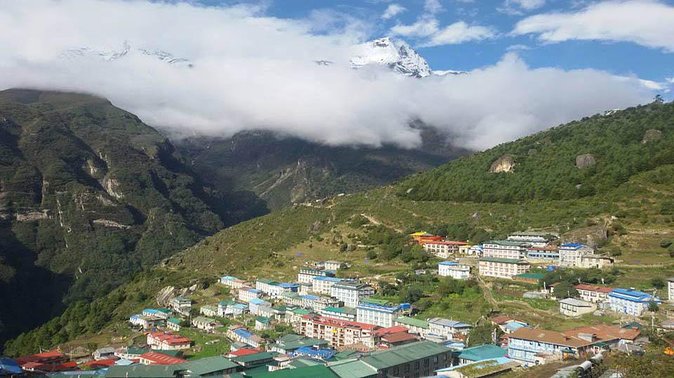
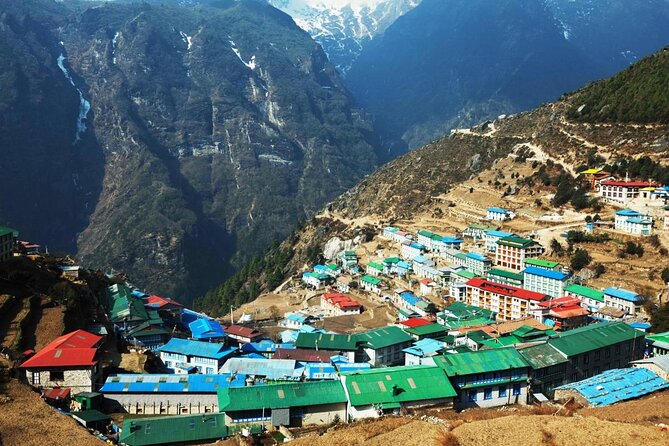
Getting to Namche Bazaar on Day 3 is a classic move. You go through forests and cross into the Sagarmatha National Park zone after reaching Monjo. This is where you start feeling that you are in a protected, high-elevation environment, not just a trail.
When you reach Namche, you get time for moments with locals and an acclimatization-ready day. Then Day 4 is a true rest and adjustment day, not a lazy skip. You explore Namche, and you can visit Sagarmatha National Park, which gives your lungs a break while your eyes keep working.
For me, this kind of acclimatization matters because it is the difference between a trek you enjoy and a trek that turns into a science experiment. If you follow the pace, hydrate well, and keep your effort modest on the rest day, you set yourself up for better days in Tengboche and beyond.
More Everest Base Camp treks:
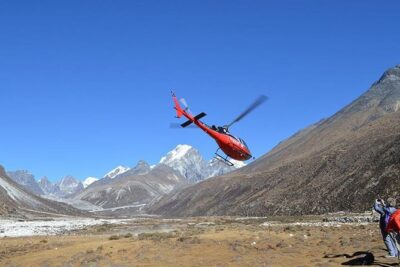
- Everest Base Camp Helicopter Tour landing at Everest View Hotel
★ 5.0 · 668 reviews - Everest Base Camp Trekking – 13 Day
★ 5.0 · 365 reviews - Everest Base Camp Trek
★ 5.0 · 350 reviews - Everest Base Camp Trek -14 Days
★ 5.0 · 321 reviews
Day 5: the climb toward Tengboche, plus Danfe sightings
Day 5 has a “challenge but still beautiful” tone. You climb above the Dudh Koshi River, move toward the path near Tengboche, and follow sections that are bounded by other Himalayan peaks. That combination is the reason many people love EBC routes, the views stay close while your legs do the work.
The trail is also described as passing through green forest, and you may encounter wildlife such as Danfe, the national bird of Nepal. That is a fun reminder that this is an ecological corridor, not just a line on a map.
You end in Tengboche, where the scenery is described as extremely beautiful with hills and forest around it. Night in Tengboche gives you a high point feeling without going all-in on the highest altitude yet.
Days 6 to 7: Dingboche and the Nagarkshang Hill acclimatization
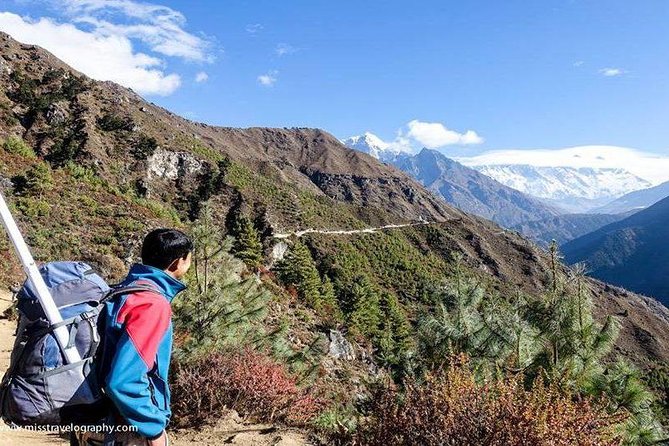
From Tengboche on Day 6, you move toward Dingboche. The route includes rhododendron forests and White Mountains views, plus a cool environment as you gain altitude. This walk is often where the “I can actually do this” mindset shows up for many people, because the scenery is sharp and the journey feels like it is working.
Day 7 is another acclimatization day, focused on Dingboche village and a climb to Nagarkshang hill, then back to the lodge. This is the kind of strategy you want near higher elevations: move gently uphill, then recover. It also helps you break up the mental grind of being at altitude for days in a row.
If you tend to push too hard early, this is where you practice discipline. You do not need to win the hill. You need to arrive feeling steady.
Day 8: toward Lobuche, Khumbu Glacier country, and colder nights
Day 8 shifts the mood. You move toward Khumbu Glacier and walk with views of Tawache and Chotlaste as you head to Lobuche. The description is clear that Lobuche is very cold due to geography, so plan for temperatures dropping and nights feeling harsher.
Lobuche also tends to feel mentally big. You are still not at EBC, but the terrain and air already signal that you are heading into the high-altitude zone. This is a good day to take extra time with your clothing system and keep your sleep routine consistent.
Day 9: Everest Base Camp, Gorakshep at night, and the “dream status” feeling
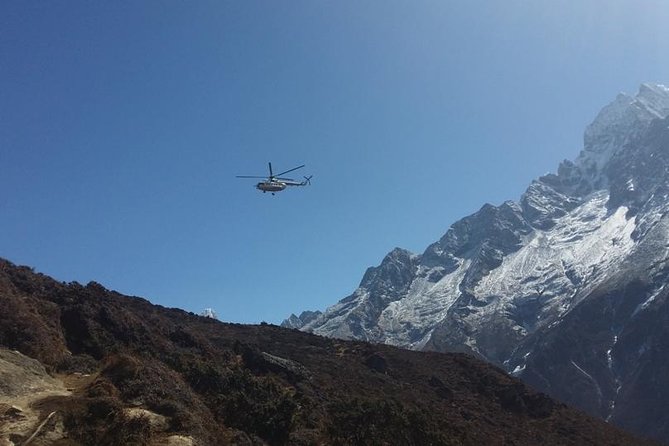
Day 9 is the main event. You head further toward Everest Base Camp, where mountaineers prepare to climb the highest peak in the world, Mt. Everest (8,848). The description uses simple language for a big moment: you will feel the difference being at the base.
At noon you travel toward Gorakshep and spend the night there. Gorakshep is a practical stop for the next day’s climb. The key here is pacing: keep your energy for morning, and don’t waste it on overdoing distances after you reach EBC.
Also remember weather can change fast in this region. A good guide and porter team helps you manage effort and keep plans flexible without drama.
Day 10: Kalapatthar early, then Pheriche for recovery
Day 10 starts early and takes you to Kalapatthar. The description is honest about the feeling, mountains fold around you everywhere. Then you break your day at Pheriche after walking for a few hours.
This is a smart pairing: you get a higher viewpoint experience, then you move to a place where you can recover. Even if you feel great at altitude, you still want to protect sleep and hydration, because the trek keeps moving and the return days matter.
Day 11 to 12: returning through Tengboche and Namche, ending in Lukla Bazaar
Coming back on Day 11 is where your legs learn humility. You return toward Tengboche for a couple of hours, then continue to Namche Bazaar for the night. The mountainous views keep you engaged, but you will feel how altitude can drain energy even when the route is going downhill or gentler.
Day 12 covers a longer distance. You head to Lukla, and once you reach the town you can visit Lukla Bazaar, buy souvenirs, and finally stretch in a more urban setting. This day is emotionally important because it signals the finish line is close.
Day 13: back to Kathmandu, plus a farewell dinner
Your last day is about getting home smoothly. You fly from Lukla back to Kathmandu, about 30 to 35 minutes, and then you have time to roam before the evening farewell dinner hosted by Adventure White Mountain staff.
This is a nice touch because you get closure in the place you arrived. Plus, it gives you a moment to thank your team and confirm you are leaving the experience feeling good, not rushed.
The crew factor: guides, porters, and real safety culture
Everest trekking is not only about views. It is about how you handle risk and uncertainty, especially altitude and weather. This operator states that experienced Sherpa guides and porters keep you safe, and that they have organized hundreds of Everest Base Camp treks to date, which usually means systems are in place.
In the reviews tied to this company, I repeatedly see names like Dipak Sapkota (owner) and guides such as Deepak and Rishi being responsive in Kathmandu, plus guides like Sambhu described as helpful and cheerful, and Dilli described as patient and experienced. That type of consistency is what you want when the trail gets tough or plans change.
Porter support is also a big deal here: one porter for two trekker means you are not dragging every bag onto your back. You still carry personal items, but the load balance helps you move more safely and comfortably.
What you are likely to pay extra for on the mountain
Not everything is included, and knowing what is not covered helps you avoid surprise bills.
Hot shower fees, battery charge, and WiFi tips for the guide and porter are listed as extra. Personal equipment such as jackets, trousers, gloves, and a hat are also not included, so you need to bring or buy your own cold-weather layer system.
Accommodation during the trip and national park permit fees are not included either. That means your overall budget should include lodge stays on the trek and the permits that go with entering the protected areas along the way.
Lodges and meals: manage expectations, then confirm in writing
The day-by-day experience depends on what meals and lodges cost during your dates. Here you have a clear inconsistency: one list includes breakfast, lunch, and dinner counts, while another list says breakfast, lunch, and dinner are not included.
So here is the practical move: ask the operator two direct questions before you pay.
- Which meals are included for my dates, breakfast, lunch, dinner, and how many days?
- What does lodging cost per night on the trek, and is it booked by the operator or arranged by you?
This will keep you from building a budget based on the wrong assumption.
Altitude plan and physical fit: the trek is moderate, but it is still serious
The operator says travelers should have moderate physical fitness. That usually fits a lot of active people, as long as you accept that EBC is not a casual hike. The altitude alone changes everything, even on days that are described as acclimatization days.
The itinerary supports altitude management with rest and adjustment time in Namche Bazaar and Dingboche, plus gentle uphill movement like the climb toward Nagarkshang hill and then return. If you follow those rhythms, and you avoid sprinting early, you will have a better shot at feeling steady.
Who should book this Everest Base Camp trek
This trek is a good fit if you want:
- A private tour feel where only your group participates
- A route that includes acclimatization, Tengboche, Dingboche, Lobuche, and EBC
- Help handling the big logistics, including flights and Kathmandu pickup
- A crew structure with guide and porter support (one porter for two trekker)
It is also a strong option if you value communication and responsiveness, because the operation is described as quick to reply and careful with connections and coordination.
Should you book Adventure White Mountain’s Everest Base Camp trek?
Yes, if you are ready for a real high-altitude trek and you want an organized plan that includes the key acclimatization steps. The combination of Lukla flights, guided route support, porter help, and hitting both EBC and Kalapatthar makes this feel like a well-built “do it right” program.
Before you commit, I strongly recommend one last checklist:
- Confirm exactly which meals are included because the details conflict
- Budget for accommodation during the trek and the national park permit fees since those are not included
- Plan for extras like hot showers, battery charging, and WiFi tips
If you verify those items, you will be set up for the best part of this trip: waking up with big Himalayan views, taking acclimatization seriously, and reaching Everest Base Camp as planned.
FAQ
How long is the Everest Base Camp trek?
It runs about 13 days (approx.).
Where does the trek start, and what time is listed?
It starts in Kathmandu, with a start time listed as 7:15 am.
Are flights to and from Lukla included?
Yes. The price includes both-way flight transport to Lukla and back to Kathmandu, including a sharing vehicle.
Do I get pickup in Kathmandu?
Yes, pickup is offered in Kathmandu.
What is not included in the price?
National park permit fees and accommodation during the trek are not included. Extra items listed include hot shower fees, battery charge, and WiFi tips for the guide and porter. Personal equipment like jackets, trousers, gloves, and a hat are also not included.
Is there free cancellation?
Yes. Cancellation is free up to 24 hours in advance for a full refund. If you cancel within 24 hours, the amount paid is not refunded, and the experience requires good weather, with alternative dates or full refund if it is canceled due to poor weather.
Latest additions near Kathmandu
- White Water River Rafting – 1 Day★ 4.3 · 3 reviews
- Traditional Momo Making Class★ 5.0 · 10 reviews
- Kathmandu to Pokhara Premium sofa bus ticket★ 4.0 · 17 reviews
- Ghorepani Poon Hill Trek★ 5.0 · 16 reviews
- Amazing 1 Day Trekking Experience in Kathmandu Nepal★ 5.0 · 24 reviews
- Ghorepani Poonhill Trek★ 5.0 · 5 reviews
- Walking tour of real Kathmandu through back streets.★ 5.0 · 3 reviews
- Wildlife Adventure in Chitwan Nepal★ 4.0 · 4 reviews
Everest Base Camp Treks, compared.
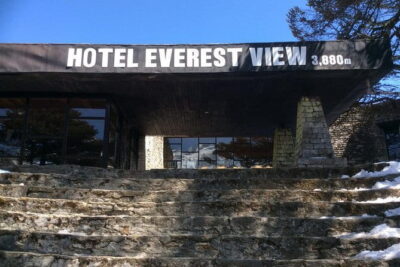
Everest Base Camp Helicopter Tour landing at Everest View Hotel
Read our review →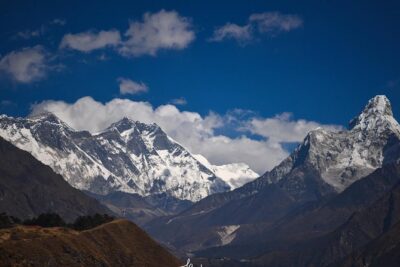
Everest Base Camp Helicopter Tour landing at Hotel Everest View
Read our review →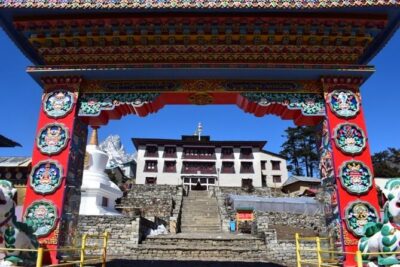
Browse the lists this tour appears in