
Reviewed · EVEREST BASE CAMP TREKS
Everest Base Camp Trek 15 days | Local Guide | Flexible Itinerary
Breath control starts early on this trek. This 15-day Everest Base Camp route is built around classic Sherpa towns, real acclimatization days, and a guided push up to Everest Base Camp and Kala Patthar. You also get a plan shaped for altitude safety, not just ticking off elevations, with a local guide who prioritizes your comfort and pace.
What I like most is how the trip uses timing as a tool. You get proper high-altitude breaks at Namche and Dingboche, plus a stay at Everest View around 3440 meters that gives you room to adjust before you go higher. You’ll also like the practical support baked into the package, including climbing-style basics like hiking poles and a sleeping bag and down jacket, plus English-speaking, licensed guiding.
One consideration: even with a careful schedule, you are still going above 5000 meters. Expect cold, limited conveniences (no hot showers or battery charging), and a need for solid fitness, especially for the Kala Patthar early morning hike.
In This Review
- Key highlights that matter on the trail
- Entering Nepal’s Everest rhythm from Kathmandu
- Getting to Lukla: the flight gateway that sets the tone
- Namche Bazaar and Everest View: acclimatization that you actually feel
- Tengboche Gompa and the climb toward Dingboche
- Dingboche rest and the smart “stay high, move light” day
- Thugla to Everest Base Camp: when the trek turns into a mission
- Kala Patthar (5545 m) early morning: the best kind of suffering
- Descending via Pangboche and the less crowded route
- The final flight and Kathmandu decompression
- Lodges, food, and what the included gear changes for you
- Guide and porter teamwork, and the real names behind it
- Price and value: what $1,890 covers on an Everest trek
- Who should book this Everest Base Camp trek, and who should rethink it
- Should you book the 15-day Everest Base Camp trek with Life Himalaya?
- FAQ
- What is the starting point for the trek?
- Is pickup included?
- How do you travel to the Everest region from Kathmandu?
- What are the included permits?
- What’s the highest point on this itinerary?
- What trekking gear is included?
- What kind of accommodation and food are included?
- Are hot showers and battery charging included?
- Is travel insurance included?
- What is the cancellation rule?
Key highlights that matter on the trail
- Acclimatization days at Everest View and Dingboche to lower your risk and help you feel steadier.
- Lodge trekking with included meals chosen from the lodge menu, so you do not waste time negotiating food.
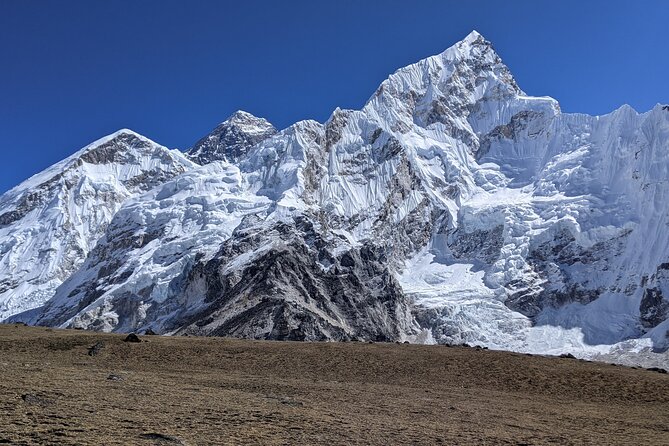
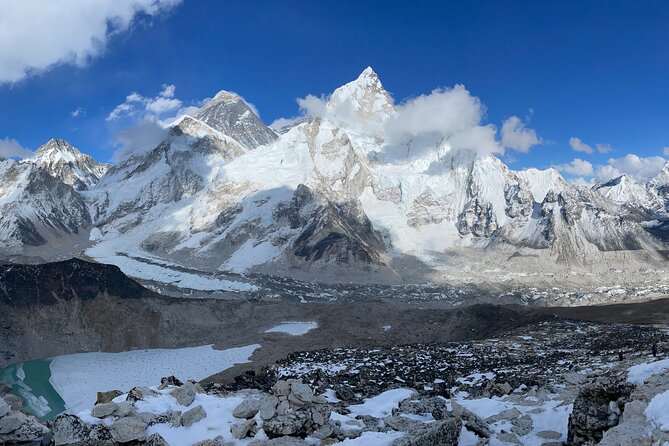
- Kala Patthar (5545 m) early start for big Everest, Lhotse, Nuptse, and surrounding views.
- Tenzing-Hillary flight access via Lukla as the gateway to the Everest region.
- Private group trekking with a guide and porters, so the pace stays yours.
- Achievement certificate and farewell dinner that make the effort feel official and memorable.
Entering Nepal’s Everest rhythm from Kathmandu
Your trip starts in Kathmandu with arrival support, then you settle in for the plan. The big idea here is simple: you do not just land and immediately suffer. You ease into the rhythm of tea houses, steep stairs, and thin air over time.
Even before you hit the mountains, pay attention to the first principle your guide follows: keep your body calm. That means sensible pacing, walking when you have energy, and not treating each day like a race. On an Everest trek, the tempting mistake is to “try to beat the altitude” by walking hard. The better strategy is to walk consistently and let the schedule do its job.
If you’re choosing this trek because you want classic Everest scenery plus safety focus, the structure fits. Your itinerary is designed around multiple elevation steps, with extra time to adapt rather than forcing a straight climb.
More Treks in Kathmandu
- Everest Base Camp Trek – 14 Days
★ 5.0 · 1,499 reviews - Everest Base Camp Trek
★ 5.0 · 842 reviews - Everest Base Camp Trekking
★ 5.0 · 485 reviews
Getting to Lukla: the flight gateway that sets the tone
On day 2, you take an early flight to the Tenzing-Hillary airstrip at Lukla, at about 2810 meters. Lukla is the main entry point for the Everest trekking region, and you can feel that the whole route is built from there.
After you land, your trek transitions into the Sherpa valley world where the days start early and walking is steady. This matters because the Everest region is not one long climb. It’s a sequence of valleys, ridgelines, and altitude changes, and the trip uses that reality.
Practical note: your schedule is weather-sensitive, and the trek requires good conditions. Also, you’re traveling domestically on flight days, so plan to arrive mentally ready for early mornings.
Namche Bazaar and Everest View: acclimatization that you actually feel
Day 3 includes walking through the early trail toward Namche Bazaar, with a stop at the Hillary Bridge area. After breakfast, it’s about five hours of walking to reach Namche. This is a key day because Namche is where you start noticing how altitude changes your effort. Even if you feel fine, you should treat the arrival as a signal to slow down.
Then day 4 takes you up to the Everest View area around 3440 meters, with time set aside for acclimatization. You do not just pass through. The itinerary specifically gives you the option to do short side excursions for adaptation. That kind of breathing room can be the difference between feeling strong later and feeling wiped out too soon.
What I like about this approach is that it makes acclimatization practical, not theoretical. You’re not told to “drink water and hope.” Instead you’re given time at realistic altitude markers before pushing forward.
Tengboche Gompa and the climb toward Dingboche
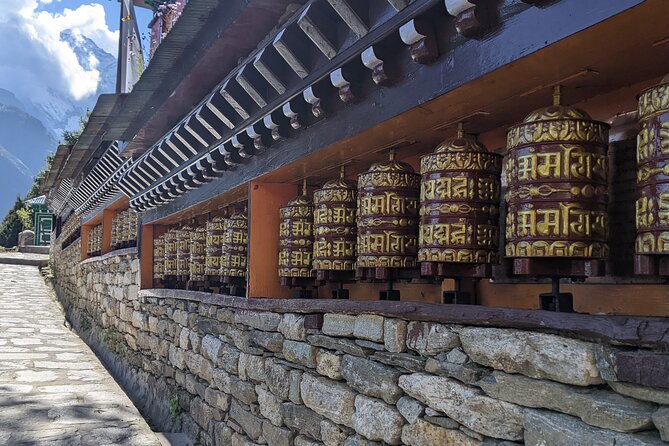
Day 5 targets Tengboche Gompa, taking you uphill from Namche, about five hours above it. This is one of those sections where the trek feels like more than hiking. You’re walking through Sherpa culture and religious landmarks in the middle of serious altitude country. A stop like Tengboche also breaks the monotony of just “up and up,” so your mind has something to hold onto besides fatigue.
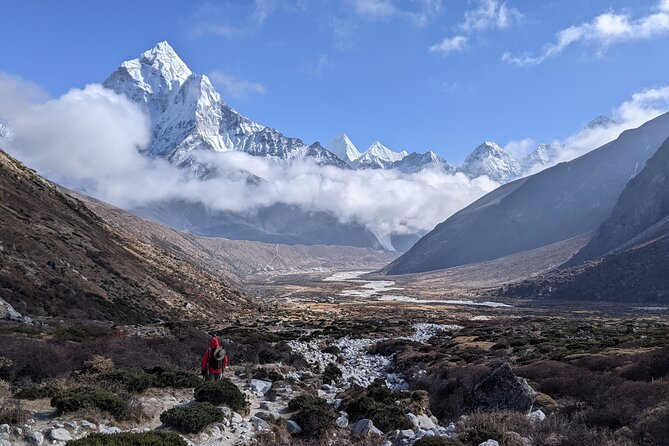
Day 6 continues toward Dingboche, with roughly four to five hours of walking. The route follows along the Imja Khola area, crosses a bridge, then reaches the split toward Orsho and Pheriche before continuing onward. This day matters because it gets you into the higher, thinner-air zone where your body starts to notice sleep, breathing, and hydration in a very direct way.
You can expect gradual altitude stress, not sudden shock. That’s helpful, because it gives your guide a clear baseline for your pacing.
More Everest Base Camp treks:
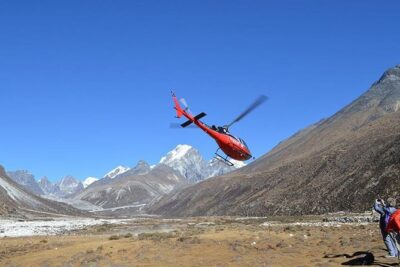
- Everest Base Camp Helicopter Tour landing at Everest View Hotel
★ 5.0 · 668 reviews - Everest Base Camp Trekking – 13 Day
★ 5.0 · 365 reviews - Everest Base Camp Trek
★ 5.0 · 350 reviews - Everest Base Camp Trek -14 Days
★ 5.0 · 321 reviews
Dingboche rest and the smart “stay high, move light” day
Day 7 is an acclimatization day at Dingboche. The plan keeps you active, but not in an exhausting way. Dingboche is there to help you adjust before you move into the final approach zone.
This is one of the most important parts of the itinerary, even though it sounds like a “rest day.” The real value of this day is that you can correct mistakes early. If you pushed too hard earlier, this kind of scheduled pause gives you a chance to recover before the big days.
Thugla to Everest Base Camp: when the trek turns into a mission
Day 8 follows up with another trekking day after rest, with gentle walking toward Thugla, a spot designed for a calmer build into the higher terrain. Even the word “gentle” matters. Your goal is to arrive for the next day feeling steady, not crushed.
Day 9 is your Everest Base Camp day. The long wait ends here, with a trek toward Everest Base Camp at 5364 meters. This is the day people remember, but it also deserves respect. You will likely feel your breathing more than you did at Namche. The best way to handle that is simple: short steps, consistent tempo, and no heroics.
Also, Base Camp is a place. It’s not the mountain. Conditions can shift fast, so you should keep your jacket on and your time at altitude intentional. Your guide’s safety focus helps here because the goal is to enjoy the moment and still descend well.
Kala Patthar (5545 m) early morning: the best kind of suffering
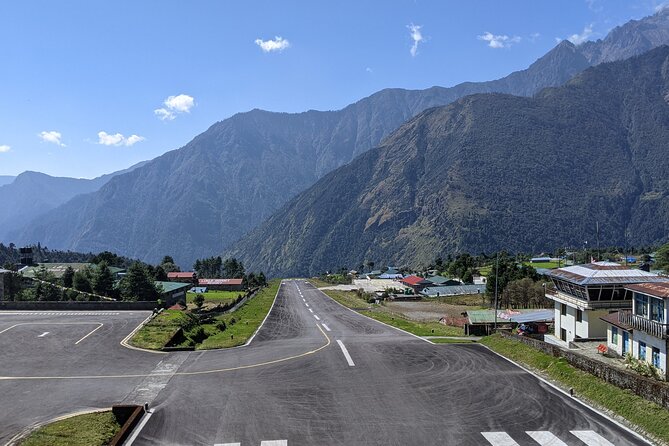
Day 10 is the big altitude push to Kala Patthar, topping at 5545 meters. You start very early, because you want the view at its best. This is the highest point of the trip in the itinerary, and it’s there for a reason.
What you’re hiking for is not just “Everest.” The plan targets spectacular sightlines over Everest plus surrounding peaks like Lhotse and Nuptse. On days like this, the effort feels louder because your legs will start to question you. The trick is to keep your pacing so you do not spiral into panic or exhaustion.
This is also where having a guide who emphasizes comfort and safety becomes real. They can steer you toward the right tempo, remind you to sip water, and help you keep moving even when the air gets thin.
Descending via Pangboche and the less crowded route
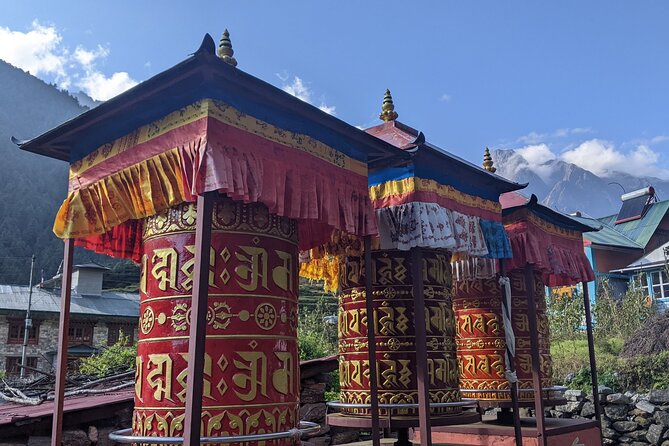
Day 11 moves you down toward Pangboche, then along a new, less crowded route toward Phorste village. The itinerary also notes you’ll pass views of peaks like Amadablam, Thamserku, and you’ll see the Tengboche monastery from the trail.
This is a smart moment in the itinerary because descending can feel easier, but your energy can drop. The mountain does not stop being demanding just because you’re going down. Your guide’s pace management still matters, especially after a high day like Kala Patthar.
Day 12 shifts again, taking you down toward a river area coming from the Gokyo direction, then connecting the trail to Gokyo at Phorste Thanga around 3680 meters, followed by a trek up to Mong Danda. This part of the route sounds like a pivot, and it is. It keeps the overall trip feeling varied instead of repeating the exact same trail forever.
Day 13 brings you back on the earlier route, passing Toktok, Phakding, Ghat, and Cheeplung around 2650 meters. The last push includes trekking up for the final stretch to Lukla, where you finish your Everest Base Camp trek and have the evening there.
The final flight and Kathmandu decompression
Day 14 is an early flight from Lukla back toward Kathmandu. Once you check in, the rest of the day is at leisure, reserved for recovery and a normal human schedule.
Day 15 ends the trip with transfer back to Tribhuvan International Airport based on your departure time.
This closing structure matters. Many treks rush the final day and you end up too tired to enjoy Kathmandu. Here, you get at least a block of downtime to reset.
Lodges, food, and what the included gear changes for you
The itinerary is built around lodge accommodation, described as clean and comfortable. Food is chosen from the lodge menu and stays part of the included support. That matters on Everest because you’re not just buying meals on the spot. Having meals arranged means you spend less energy making decisions, especially when you’re cold and tired.
The equipment list is also unusually practical for a trek of this type:
- Hiking poles
- Sleeping bag and down jacket, to be returned after the trek
Having those items covered reduces the packing stress and the risk of arriving with gear that is not warm enough. If you don’t already have proper cold-weather insulation, this is a big value point.
Two common comfort tradeoffs are clearly stated:
- Hot showers are not included
- Battery charging during the trek is not included
So plan to bring a power plan you can live with. Warm clothing layers and basic hygiene expectations will be part of your reality.
Guide and porter teamwork, and the real names behind it
This trek is guided with an English-speaking, experienced, license holder guide. For groups of five or more, there’s an assistant guide. You also get strong, helpful porters with a stated ratio of 1 porter for 02 people, carrying 20 kg total, described as 10 kg per guest.
From past trek experiences shared with this company, I’ve seen names like Raj, Ram, Rabin, Sagar, Shiba, Suren, Sonam, Jal, Ravin, Ganesh, Vijay, and Teeras attached to guide and porter roles. That tells me something useful: teams are not random. You’re likely to be working with a crew used to moving people through these trail rhythm days.
Just as important, the company emphasizes guest security, safety, satisfaction, and comfort, with an altitude sickness aware itinerary. That doesn’t remove risk, but it does mean the plan is designed around avoiding common altitude mistakes like going too high too fast.
Price and value: what $1,890 covers on an Everest trek
At $1,890 per person, you’re paying for a lot more than “walking with a guide.” The included list is what makes this feel like real value, not just marketing.
Key included items that often cost extra elsewhere:
- Domestic flights Kathmandu to Lukla and return (not international travel)
- All fees and taxes, including Sagarmatha National Park permit, plus TIMS and a local rural area permit
- Private transportation
- Core trek gear: hiking poles, sleeping bag, down jacket
- 13 dinners, plus 14 breakfasts and 12 lunches (as listed)
- Farewell dinner
- Achievement certificate
- Trail map included
What’s not included also matters:
- International flights and visa fee
- Travel insurance covering up to 6000 meters, listed as $200 per person
- Tips for guides, porters, and drivers
- Lunch and dinner in Kathmandu
- Personal snacks and beverages
- Extra nights
- Hot showers and battery charging
To judge value honestly, focus on what you personally would otherwise have to organize: permits, flights, gear sourcing, and meal planning at altitude. This trek packages a lot of that. For many people, the time saved and the reduced stress are worth a big chunk of the price.
Who should book this Everest Base Camp trek, and who should rethink it
This is best for you if:
- You have strong physical fitness, and you’re comfortable with a 15-day itinerary at high altitude
- You want an itinerary that explicitly includes acclimatization days rather than constant ascent
- You prefer lodge trekking with meals arranged from the menu
- You value a local, English-speaking guide focused on safety and pacing
Think twice or ask detailed questions first if:
- You hate early mornings, because Kala Patthar day starts very early
- You need conveniences like hot showers or reliable battery charging, since those are not included
- You’re not ready for a serious altitude challenge above 5000 meters
Also remember: the trek requires good weather. If conditions fail, you may be offered another date or a refund.
Should you book the 15-day Everest Base Camp trek with Life Himalaya?
If your goal is a classic Everest route with a safety-first rhythm, I think this package is a strong fit. The standout value is the structure: multiple acclimatization stops (Namche, Everest View, Dingboche), plus the planned high point day at Kala Patthar. That design reduces the “push too fast” problem that trips up many first-timers.
Add in the practical inclusions, like the domestic flights, permits, and key cold-weather gear, and the price starts to make sense. You are buying coordination, not just motion.
If you can handle cold, limited charging, and the reality of thin air, this is a trek that can feel like a lifetime milestone. And with the overall rating shown as 5 out of 5 from 27 reviews, plus consistent mention of teams going above and beyond, the human side seems well organized too.
FAQ
What is the starting point for the trek?
The meeting point is Tribhuvan Airport, Kathmandu, Nepal.
Is pickup included?
Pickup is offered.
How do you travel to the Everest region from Kathmandu?
You fly from Kathmandu/Ramechap to Lukla and return Lukla to Kathmandu/Ramechap.
What are the included permits?
You get the Sagarmatha National Park Permit, TIMS permit, and a local rural area permit.
What’s the highest point on this itinerary?
The itinerary’s highest point is Kala Patthar at 5545 m.
What trekking gear is included?
The trip includes hiking poles, a sleeping bag, and a down jacket (which are returned after the trek).
What kind of accommodation and food are included?
You stay in lodge accommodation, and food is chosen from the lodge menu and included as listed (breakfast, lunch, and dinner counts are provided).
Are hot showers and battery charging included?
No. Hot showers and battery charging during the trek are not included.
Is travel insurance included?
No. Travel insurance covering up to 6000 m is not included, listed at $200 per person.
What is the cancellation rule?
You can cancel for a full refund if you cancel at least 24 hours in advance. If canceled due to poor weather, you’ll be offered a different date or a full refund.
Latest additions near Kathmandu
- White Water River Rafting – 1 Day★ 4.3 · 3 reviews
- Traditional Momo Making Class★ 5.0 · 10 reviews
- Kathmandu to Pokhara Premium sofa bus ticket★ 4.0 · 17 reviews
- Ghorepani Poon Hill Trek★ 5.0 · 16 reviews
- Amazing 1 Day Trekking Experience in Kathmandu Nepal★ 5.0 · 24 reviews
- Ghorepani Poonhill Trek★ 5.0 · 5 reviews
- Walking tour of real Kathmandu through back streets.★ 5.0 · 3 reviews
- Wildlife Adventure in Chitwan Nepal★ 4.0 · 4 reviews
Everest Base Camp Treks, compared.
Everest Base Camp Helicopter Tour landing at Everest View Hotel
Read our review →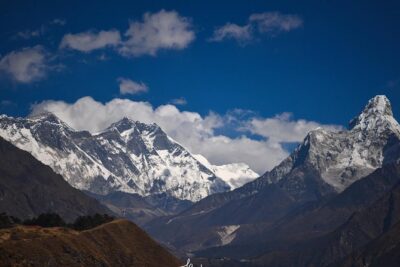
Everest Base Camp Helicopter Tour landing at Hotel Everest View
Read our review →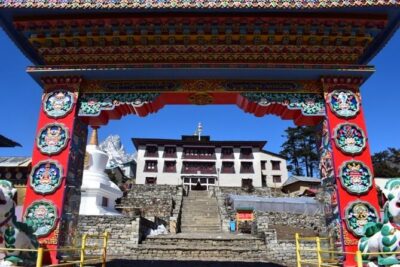
Browse the lists this tour appears in