
Reviewed · EVEREST BASE CAMP TREKS
Everest Base Camp trek 14 days
Everest starts with a short flight and a big mood. This Everest Base Camp trek package is interesting because it removes the usual headache of planning the whole week, from Kathmandu and Lukla flights to permits and lodge stays. I like that sleeping bag and down jacket are provided, and I also like the structure of three meals a day on the trekking portion so you are not constantly hunting for food. One consideration, though: it is still an altitude trek with a moderate fitness requirement, and your budget is not just the trek price since international airfare, travel insurance, and tips are not included.
You also get a small group feel, max 18 people, with an actual support team behind the scenes. From the reviews, I noticed a consistent theme: good coordination and safety-minded guidance, including guides named Suresh, Sobit, and Ram, plus sherpa support like Pasang Sherpa who is mentioned as a summit climber. The main drawback I would plan for is the parts that are not covered, especially travel insurance and extra Kathmandu spending, which can surprise first-time trekkers.
In This Review
- Key highlights I’d prioritize before booking
- What your $1,380 trek package really covers
- Kathmandu arrival day, and why Day 1 is more than just sleep
- The Everest Base Camp route, day by day, with what each stop teaches you
- Day 1: Arrive in Kathmandu
- Day 2: Kathmandu to Lukla, then Lukla to Phakding
- Day 3: Phakding to Namche Bazaar
- Day 4: Acclimatization in Namche Bazaar
- Day 5: Namche Bazaar to Tengboche
- Day 6: Dingboche acclimatization
- Day 7: Trek to Dingboche
- Day 8: Dingboche to Lobuche
- Day 9: Lobuche to Everest Base Camp, then back to Gorakshep
- Day 10: Kalapatthar hike and descent to Periche
- Day 11: Periche to Namche Bazaar
- Day 12: Namche Bazaar to Lukla
- Day 13: Fly back to Kathmandu
- Day 14: Farewell and departure
- Gear and food, what is included and what you should plan for yourself
- Guide support and the small-group advantage
- Altitude reality check, acclimatization days included
- Price and logistics, where the value is real and where it can creep
- The cultural show and farewell dinner: a good ending reset
- Should you book this Everest Base Camp trek?
- FAQ
- How long is the Everest Base Camp trek on this itinerary?
- What flights are included for getting to and from Lukla?
- Are permits included?
- Is a sleeping bag and down jacket provided?
- What meals are included on the trek?
- Where do you stay during the trip?
- Are there acclimatization days?
- What is the maximum group size?
- What is not included in the price?
- Can I cancel and get a refund?
Key highlights I’d prioritize before booking
- Lukla flights and Kathmandu transfers included, so you do not have to coordinate those high-stakes logistics yourself
- Sleeping bag and down jacket included, helpful if you do not already own proper cold-weather gear
- Daily breakfast, lunch, dinner on the trek, which makes long walking days more predictable
- Acclimatization built in, with rest and adjustment days in Namche Bazaar and the Dingboche area
- Permits and TIMS card handled, so you are not chasing paperwork mid-trip
- A cultural show and farewell dinner to close the journey with something fun beyond the mountain
What your $1,380 trek package really covers
At $1,380 per person, the value here comes from what tends to be annoying to organize in real life, especially for first-timers. You are not just buying a route on paper. You are paying for the full chain: airport pickups and departures in Kathmandu, Kathmandu to Lukla flights and the return flight, land transport during the trip, and the lodging plan in both the city and the mountains.
On the trek side, you get standard hotel twin sharing with breakfast in Kathmandu, then trekking lodge accommodations once you are on the trail. You also get three meals a day during the trekking days (breakfast, lunch, dinner), which matters because at higher elevations many menu choices shrink to whatever is available and warm.
The package also includes trekking essentials people often forget to budget. You get the trekking permit and TIMS card, plus first aid medicine items. Your guide is covered with salary, accommodation, meals, and insurance, and there is a government tax official expense included as well. There is even a T-shirt and a trip achievement certificate, a small thing, but it is a nice keepsake after you earn it.
More Treks in Kathmandu
- Everest Base Camp Trek – 14 Days
★ 5.0 · 1,499 reviews - Everest Base Camp Trek
★ 5.0 · 842 reviews - Everest Base Camp Trekking
★ 5.0 · 485 reviews
Kathmandu arrival day, and why Day 1 is more than just sleep
Day 1 is arrival in Kathmandu, and that is exactly what you want before Lukla. The itinerary does not cram extra hiking into day one, which is smart. Kathmandu is where you handle the human tasks, like getting your bearings, confirming gear, and doing a last check on layers, gloves, and warm socks.
You should also treat this day as preparation time for jet lag and the reality that the next day starts with a flight. The tour includes airport pickup and departures, so you can keep your focus on small choices that help later, like packing in a way that lets you grab layers quickly.
If you arrive with minimal trekking experience, this is also where you can ask your guide how to pace the first climbs. In the reviews, the coordination and safety emphasis shows up again and again, with guide names like Suresh and Ram mentioned for smooth handling.
The Everest Base Camp route, day by day, with what each stop teaches you
Below is the flow you will follow across 14 days. I’m going to focus on what each day does for your body and your trip rhythm, not just the hiking time.
Day 1: Arrive in Kathmandu
You land, get settled, and start readying yourself for a cold, high-altitude trek. Your included plan covers Kathmandu lodging (twin sharing, breakfast basis) and transfers.
More Everest Base Camp treks:
- Everest Base Camp Helicopter Tour landing at Everest View Hotel
★ 5.0 · 668 reviews - Everest Base Camp Trekking – 13 Day
★ 5.0 · 365 reviews - Everest Base Camp Trek
★ 5.0 · 350 reviews - Everest Base Camp Trek -14 Days
★ 5.0 · 321 reviews
Day 2: Kathmandu to Lukla, then Lukla to Phakding
You fly from Kathmandu to Lukla, about 40 to 45 minutes, then trek from Lukla to Phakding. The walking time is 3 to 4 hours, with lunch and dinner included, plus breakfast (BLD style).
This is your transition day. You are not racing. You are loosening your legs after the flight and getting your breathing used to the altitude jump.
Day 3: Phakding to Namche Bazaar
A longer push, 5 to 6 hours, up to Namche Bazaar (3,440m / 11,319ft). Meals are included again.
Namche is a key checkpoint because it is where you start feeling the altitude as a real factor, not just a number on your map.
Day 4: Acclimatization in Namche Bazaar
This is not a sightseeing throwaway day. It is your body’s practice run at altitude. You get accommodation and meals, and the goal is adjustment.
If you’ve trekked before, you know the pattern. If not, think of this as learning how your body responds before you climb higher.
Day 5: Namche Bazaar to Tengboche
You hike 6 to 7 hours to Tengboche (3,860m / 12,694ft).
This day is about settling into the trail rhythm. It also gives you the classic Everest region feel: villages, prayer sites, and constant mountain visibility, plus the satisfying sense that you’re really moving toward the Base Camp goal.
Day 6: Dingboche acclimatization
Day 6 is listed as Dingboche with acclimatization, still with full meals included.
This is where pacing becomes everything. You are not just training legs, you are training patience.
Day 7: Trek to Dingboche
Day 7 includes another trek day to Dingboche, listed at 4,410m / 14,300ft, with 5 to 6 hours of hiking and meals.
Even if the exact route segments vary, the point stays the same: you gain elevation gradually and keep adjusting, rather than pushing too hard too fast.
Day 8: Dingboche to Lobuche
You hike to Lobuche (4,910m / 16,207ft) in about 5 hours.
At this stage, every step feels more deliberate. Lodges start feeling simpler. Your best strategy is the boring one, steady pace and warm layers.
Day 9: Lobuche to Everest Base Camp, then back to Gorakshep
This is the big day. You trek to Everest Base Camp, then return to Gorakshep at 5,200m, with meals included.
You’ll get the emotional payoff here, but do not ignore logistics. Base Camp days can feel long because you’re walking, stopping for photos, and soaking in the moment, then still needing the trip back.
Day 10: Kalapatthar hike and descent to Periche
You hike up to Kalapatthar (5,550m / 16,962ft), listed at 2 hours 30 minutes, then trek down to Periche (4,200m / 13,780ft) for about 7 hours.
This day is two parts. First, the summit-like effort of reaching the viewpoint height. Then the long descent, which is hard on knees if you go too fast. Keep it smooth and controlled.
Day 11: Periche to Namche Bazaar
Back to Namche Bazaar (3,441m) in about 6 hours.
This is a recovery day disguised as a trekking day. You feel the altitude less than on the high route, but you still earn it.
Day 12: Namche Bazaar to Lukla
A full push of about 7 hours to Lukla, with meals included.
It’s a long day because the goal is to get to the flight window smoothly.
Day 13: Fly back to Kathmandu
You fly back and only breakfast is listed.
Day 13 is when you finally get to treat yourself to a normal day without crampons and cold wind tactics.
Day 14: Farewell and departure
A final day with the included farewell program already built into the wrap-up vibe. It ends with culture and dinner, which is a nice contrast to all that mountain time.
Gear and food, what is included and what you should plan for yourself
The tour gives you a sleeping bag and down jacket during the trek. That is a huge help for value and comfort, especially if you do not want to rent gear or buy expensive items you will not use again.
What the itinerary guarantees is the regular meal rhythm. During the trekking days you get breakfast, lunch, and dinner. In practice, those meals keep your energy consistent, and the included structure means you do not waste daylight hunting for food.
In Kathmandu, it’s different. Extra meals in the city are not included, so you will want a little money set aside for snacks, coffee stops, and anything you grab on arrival day.
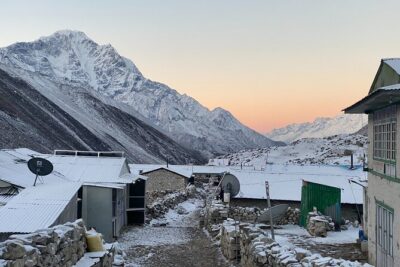
For the lodges, the itinerary says you’ll stay in trekking lodges. That usually means simple rooms, shared spaces, and fewer comforts than a hotel. This package does not promise luxury, but it does promise you are not improvising the sleeping plan.
Guide support and the small-group advantage
This operator runs a maximum group size of 18 travelers, which is big enough to keep it social and small enough to avoid feeling like you are in a slow-moving circus.
The included guide support shows up in the details: your guide’s salary, accommodation, meals, and insurance are covered. That is a signal the company is handling the human side, not just moving people.
From the reviews, I saw repeated praise for how guides handled safety and coordination. Names that came up include Suresh and Sobit, plus Ram in a Kathmandu pairing mentioned in one review. Sherpa support also gets credit, with Pasang Sherpa referenced as having summited Mount Everest. Those names are not just trivia. They suggest you are working with a team that knows the route and respects the job.
One more practical thing: the package includes permits and TIMS card. That means you spend time walking, not chasing documents at the wrong moment.
Altitude reality check, acclimatization days included
This is not a casual hike. The itinerary includes acclimatization in Namche Bazaar and Dingboche, which is the right kind of structure for an Everest Base Camp trek. The schedule also breaks the ascent into manageable blocks, with day-by-day walking times that mostly stay in the 5 to 7 hour range.
Still, you should approach this with respect. The tour notes that travelers should have moderate physical fitness. If you are the kind of person who can handle long stair climbs and steep city walks without feeling destroyed, you are likely a good match.
If you are unsure, think about how you handle elevation closer to home. Can you walk 2 to 3 hours at a steady pace? Do you manage uphill without burning out? The route here gives you acclimatization days, but it does not remove altitude stress.
Price and logistics, where the value is real and where it can creep
Let’s be honest about cost. The trek price covers a lot: flights to Lukla and back, Kathmandu transfers, lodging, meals on the trek days, permits, and key gear like the sleeping bag and down jacket. That’s what makes the package easier to trust if you are trying to avoid surprise expenses.
But it does not cover some common add-ons. Not included are:
- Clients international air ticket
- Travel insurance
- Tips for the trekking crew
- Extra meals in Kathmandu and personal expenses like bar bills
- Tour entrance fees
So your total budget depends on you. If you already have cold-weather gear and you have travel insurance, your out-of-pocket may feel smaller. If you do not, you will feel those gaps.
The cultural show and farewell dinner: a good ending reset
After days of wind, cold air, and mountain focus, the itinerary ends with a special cultural show and farewell dinner. I like this kind of finish because it gives you a social moment at the end, when your brain is finally ready to relax. It also helps you return to Nepal not as a blur of trekking logistics, but as a place with people and traditions.
One review also mentioned pairing the trek with additional Kathmandu sightseeing, including Kathmandu UNESCO areas, which can be a smart way to balance the trip. The trek is the main event, but Kathmandu can add context, and the city days are where you let that context sink in.
Should you book this Everest Base Camp trek?
I’d say book it if you want a guided Everest Base Camp trek with the hard parts handled: Lukla flights, permits (TIMS and trekking permit), lodge accommodations, and daily meals on the trek. The inclusion of a sleeping bag and down jacket is especially useful if you are packing light or avoiding gear shopping.
Skip it or reconsider if any of these are deal breakers for you:
- You do not want to manage your own budget for international airfare, travel insurance, and tips
- You dislike group pacing, even with a max group size of 18
- You expect a soft, low-effort experience. This route still asks for consistent walking and altitude resilience, even with acclimatization days
If you are ready for the real deal, this plan is built to keep the logistics off your mind so you can spend your energy on the trail.
FAQ
How long is the Everest Base Camp trek on this itinerary?
It runs for 14 days, with 13 nights of accommodations planned. The itinerary description is also consistent with a trek window that fits within a 5 to 14 day range depending on the exact schedule, but the listed route is Day 1 through Day 14.
What flights are included for getting to and from Lukla?
The package includes Kathmandu to Lukla flight tickets and the return flight back to Kathmandu. The Lukla flight time is listed as about 40 to 45 minutes.
Are permits included?
Yes. The trekking permit and the TIMS card (Trekking Information Management System) are included.
Is a sleeping bag and down jacket provided?
Yes. The trek includes a sleeping bag and down jacket for use during the trek.
What meals are included on the trek?
You get breakfast, lunch, and dinner on the trekking days as listed in the itinerary. Extra meals in Kathmandu are not included.
Where do you stay during the trip?
In Kathmandu, you stay in a standard hotel in twin sharing with breakfast basis. During the trek, you stay in trekking lodges.
Are there acclimatization days?
Yes. The itinerary includes acclimatization in Namche Bazaar (Day 4) and acclimatization in the Dingboche area (Day 6).
What is the maximum group size?
The group size is capped at a maximum of 18 travelers.
What is not included in the price?
Not included are your international airfare, travel insurance, tips for the trekking crew, extra meals in Kathmandu, personal expenses (including bar bills), and tour entrance fees.
Can I cancel and get a refund?
Yes. It is listed as free cancellation, and you can cancel up to 24 hours in advance for a full refund. If you cancel less than 24 hours before the experience start time, the amount paid is not refunded.
Latest additions near Kathmandu
- White Water River Rafting – 1 Day★ 4.3 · 3 reviews
- Traditional Momo Making Class★ 5.0 · 10 reviews
- Kathmandu to Pokhara Premium sofa bus ticket★ 4.0 · 17 reviews
- Ghorepani Poon Hill Trek★ 5.0 · 16 reviews
- Amazing 1 Day Trekking Experience in Kathmandu Nepal★ 5.0 · 24 reviews
- Ghorepani Poonhill Trek★ 5.0 · 5 reviews
- Walking tour of real Kathmandu through back streets.★ 5.0 · 3 reviews
- Wildlife Adventure in Chitwan Nepal★ 4.0 · 4 reviews
Everest Base Camp Treks, compared.
Everest Base Camp Helicopter Tour landing at Everest View Hotel
Read our review →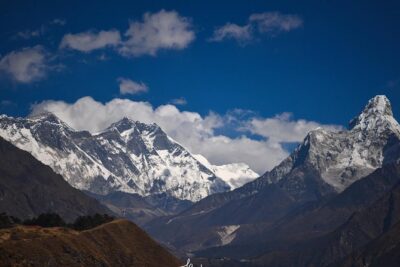
Everest Base Camp Helicopter Tour landing at Hotel Everest View
Read our review →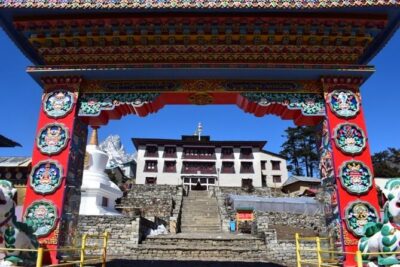
Browse the lists this tour appears in