
Reviewed · EVEREST BASE CAMP TREKS
Everest Base Camp Luxury Lodge Trek
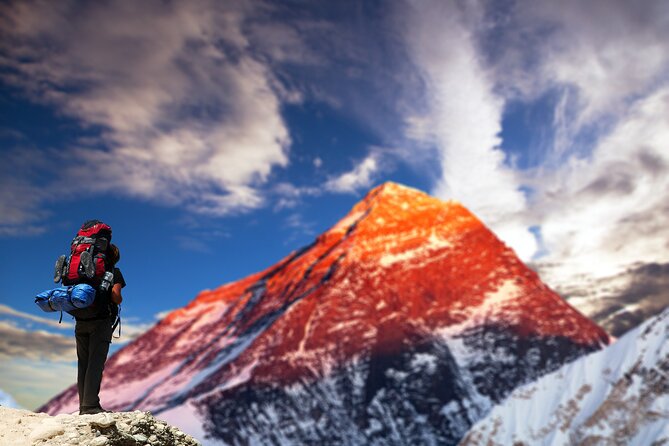
Everest Base Camp here feels different, in a good way. You get lodge comfort on the trail, plus a plan that starts with Kathmandu UNESCO sights before you ever touch the mountain air. The big draw is the mix of Himalayan drama and Sherpa culture, capped by sunrise at Kalapathar for that classic Everest view.
What I like most is how the trip handles the logistics for you. You have airport transfers by air-conditioned private vehicle, a full guided Kathmandu day in comfort, and the Kathmandu to Lukla flight setup via Ramechhap when needed.
My second favorite thing is the human side of it. You trek with an experienced English-speaking guide, and you get porter help at a 2:1 ratio, which matters when you are climbing up high and still want energy to enjoy the scenery.
One consideration: this is still an altitude trek, not a stroll. You’ll go up to the Everest region and do days around 5,364m at Base Camp and a sunrise hike to Kalapathar, so you will want solid fitness and real altitude common sense.
In This Review
- Key highlights at a glance
- From Kathmandu temples to the Khumbu, a route with rhythm
- Kathmandu UNESCO day 2: a calm start before the climb
- Days 1 and 3: permits, documents, and the Lukla jump
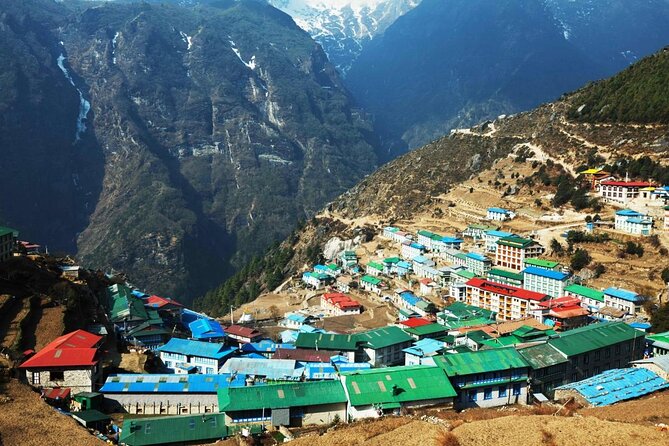
- Phakding to Namche Bazaar: your first real altitude upgrade
- Acclimatization day in Namche: choose your pace, keep your legs fresh
- Namche to Tengboche: forest walking and monastery awe
- Tengboche to Dingboche: rhododendron trails and Sherpa villages
- Dingboche rest day: the ridge hike that pays off later
- Dingboche to Lobuche: pass memorials and keep the effort steady
- Lobuche to Gorakshep to Everest Base Camp: the glacier zone and first Everest sight
- The Kalapathar sunrise push: when the schedule stops being theory
- Return to Namche and Lukla: celebrations and the quieter beauty
- What luxury lodge trekking means in real life
- Price and logistics: what $3,840 buys, and what you still handle
- Guides, communication, and why planning time matters
- Who this trek fits best, and who should rethink it
- Should you book the Everest Base Camp Luxury Lodge Trek?
- FAQ
- What airports are transfers included for?
- Are flights to Lukla included?
- What if Lukla flights are not available?
- What permits are included?
- What does the trek include for meals and lodging?
- Do I need my own trekking gear?
- How does porter support work?
- What language will my guide speak?
- What is not included in the price?
Key highlights at a glance
- Luxury lodge approach on the Everest Base Camp trail, instead of the bare-bones version
- Kalapathar sunrise day with a steady pace plan to see Everest clearly in early light
- Kathmandu UNESCO day before the trek, built around Durbar Square, Pashupatinath, Swayambhunath, and Boudhanath
- Support system that reduces your load, with porter staffing at 2:1
- Sagarmatha National Park time on the route, plus Tengboche Monastery and Sherpa villages
- Season-aware Lukla transport, using Ramechhap flights in April, May, October, and November
From Kathmandu temples to the Khumbu, a route with rhythm
This trek has a nice pace to it, because it does not throw you straight into altitude stress. You start in Kathmandu with a guided UNESCO circuit, then you fly to Lukla, begin with a gentler day toward Phakding, and gradually climb in stages that line up with how acclimatization actually works.
The itinerary is also built around real moments. You get monastery stops and Sherpa village life, not just trekking checkpoints. And you get two big viewpoint experiences, first when you reach the Everest Base Camp area through Gorakshep, and then again at Kalapathar with the sunrise plan.
More Treks in Kathmandu
- Everest Base Camp Trek – 14 Days
★ 5.0 · 1,499 reviews - Everest Base Camp Trek
★ 5.0 · 842 reviews - Everest Base Camp Trekking
★ 5.0 · 485 reviews
Kathmandu UNESCO day 2: a calm start before the climb
If you are arriving from overseas, Kathmandu can feel chaotic. The tour handles that by putting your first full day to good use with a guided run of major UNESCO sites, moving at a human pace rather than a checklist sprint.
Here’s what that Kathmandu day looks like in spirit:
- Bhaktapur Durbar Square: traditional Nepali architecture, temples and courtyards, plus the well-known Palace of 55 Windows. It’s a great place to stretch your legs and spot the craft details you will not see from a bus window.
- Pashupatinath Temple: a Hindu pilgrimage site along the Bagmati River, with elaborate carvings and many shrines in the compound. The main temple is off-limits to non-Hindus, but you can still observe the broader complex from outside the restricted area.
- Boudhanath Stupa: one of the largest Buddhist stupas in the world, marked by prayer flags and lots of small shops selling religious items.
By the afternoon, you also do a pre-trip group discussion and start trek preparations. This matters because the next days ask your body to adapt quickly, so clarity about what to expect is a real comfort.
Days 1 and 3: permits, documents, and the Lukla jump
Your first day is designed around paperwork and confidence. On arrival, the team escorts you to your hotel, handles necessary documents, manages permits, and arranges trek tickets. Then you get a welcome dinner and meet your guide, which is a simple but effective way to reduce first-day uncertainty.
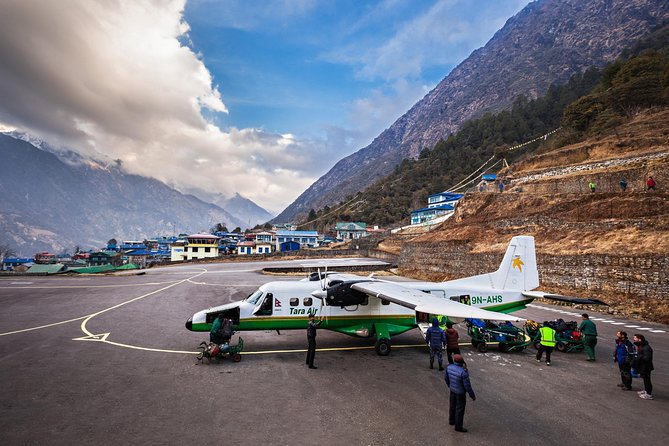
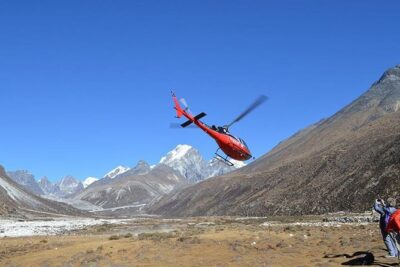
A small detail that can save you stress: for some seasons, flights to Lukla leave from Ramechhap because direct options are not available during April, May, October, and November. Helicopter service is listed as an additional USD 300 if you need that alternative. If you hate last-minute surprises, this is a big plus.
Then comes Day 3, the start of the trek itself. You fly to Lukla early, trek toward Dudhkoshi Ghat, pass through Chaurikharkha village, and reach Phakding at about 2,652m. The first big feeling is the view. You are also walking enough that you start to feel acclimatization happening, without being hammered right away.
You’ll sleep at a higher-end option, listed as Sherpa Shangrila Resort or a similar upscale hotel, which helps you settle before the climb toward Namche.
Phakding to Namche Bazaar: your first real altitude upgrade
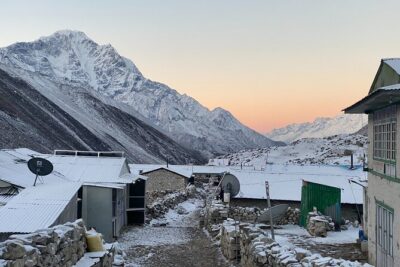
Day 4 climbs toward Namche Bazaar, roughly 7 hours of trekking. The route goes through pine forest and along the Dudh Koshi riverbank, with the Hillary Suspension Bridge as a famous crossing point.
Two things make this day worth it:
- You are entering Sagarmatha National Park around this stage, and the trail atmosphere shifts.
- You crest into the Namche area, with those big Himalayan panoramas starting to show themselves more often.
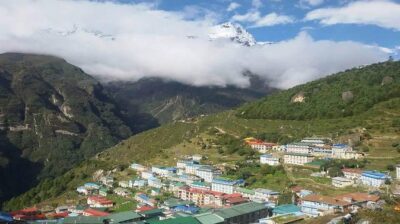
Namche is often described as the mini hub of the Everest region for a reason. You get a village feel with services, viewpoints, and chances to slow down.
Potential drawback: this is a steady uphill. Even if the distance is manageable, the grade can feel sharp. If you want an easy win, take your breaks seriously. Walk slower than you think you need to.
More Everest Base Camp treks:
- Everest Base Camp Helicopter Tour landing at Everest View Hotel
★ 5.0 · 668 reviews - Everest Base Camp Trekking – 13 Day
★ 5.0 · 365 reviews - Everest Base Camp Trek
★ 5.0 · 350 reviews - Everest Base Camp Trek -14 Days
★ 5.0 · 321 reviews
Acclimatization day in Namche: choose your pace, keep your legs fresh
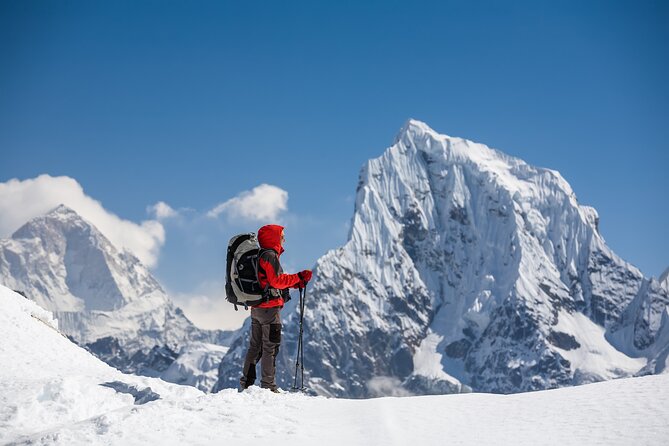
Day 5 gives you a key luxury of timing: you are not forced to climb higher just because you can. Instead, you have options:
- a short hike with sunrise views over peaks like Mt. Everest, Lhotse, AmaDablam, and Thamserku
- a day hike to Khumjung for the Edmund Hillary School and a monastery area known in local lore
The point is altitude management with flexibility. This is the day you can listen to your body. If you feel fine, you explore. If you feel off, you keep it gentle and focus on hydration and sleep.
You stay again in the Namche area, listed as Namche Hotel or a similar option.
Namche to Tengboche: forest walking and monastery awe
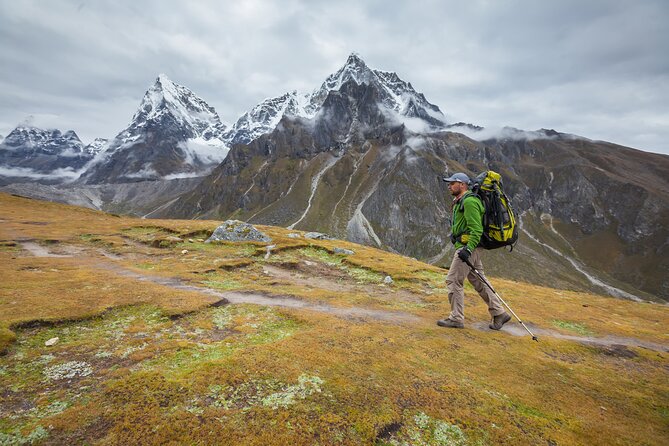
On Day 6, you tackle an uphill push to Tengboche Monastery, described as the largest in the Everest region. The plan is to go steady, which is the smart call at this altitude.
Tengboche is timed because the monastery typically opens at 3:00 PM, and the schedule aims to get you there before or around opening. This is one of those small itinerary details that turns a stop from rushed to meaningful. When you arrive on time, the experience feels more like visiting a spiritual landmark than just ticking a box.
You also get major peak views from the area, including AmaDablam, Thamserku, and Khumbila. Even if clouds roll in later, mornings and late afternoons here can still deliver dramatic lines and scale.
Sleep is at Rivendell Lodge or similar.
Tengboche to Dingboche: rhododendron trails and Sherpa villages
Day 7 takes you through alpine forest with conifers and rhododendron trees, including Nepal’s national flower. You pass Sherpa villages such as Debuche and Pangboche, and you can add a short visit to Pangboche Monastery.
Crossing the Imja and Lobuche rivers and reaching Dingboche at about 4,360m is a turning point. You start seeing agriculture more clearly at this height, with barley, potato, and buckwheat fields mentioned, plus grazing animals nearby. It’s not just rocks and snow. People live here, in a way that feels both tough and organized.
You stay at Good Luck Hotel for the night.
Dingboche rest day: the ridge hike that pays off later
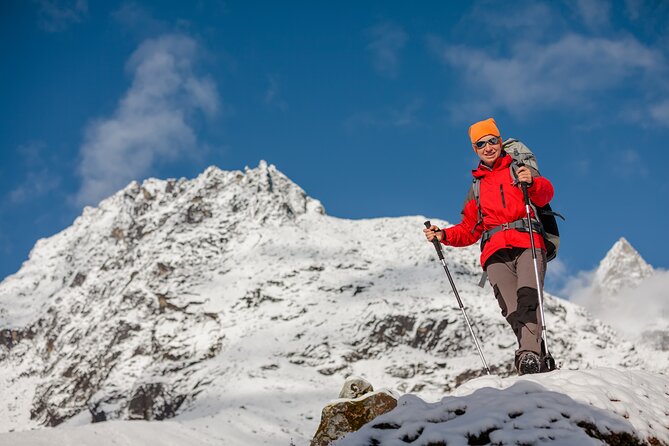
Day 8 is another acclimatization day, and it is not wasted time. You hike up to a ridge behind Dingboche for wide views of Mt. Lhotse, Mt. Makalu, Mt. Cho Oyu, and other peaks like Cholatse and Taboche. You can also see Lobuche West and East and Lhotse over the Khumbu Khola valley.
Then you return to Dingboche for rest. This is a classic approach: move enough to help your body adapt, then give yourself recovery.
If you are the type who wants to keep moving, this is where you practice discipline. The goal is to arrive at higher stages feeling strong, not wiped out.
Dingboche to Lobuche: pass memorials and keep the effort steady
On Day 9, the trek continues toward Lobuche. You do a gentle ascent into Pheriche valley, pass alpine vegetation, and reach Thukla for lunch. Then you push up to Thukla pass, where you find memorial stupas honoring climbers and trekkers who lost their lives.
That moment matters. It adds perspective and turns the day from scenery-only to meaning, without slowing down the schedule too much.
After a few more hours, you arrive in Lobuche and sleep at New EBC Lodge or similar.
Lobuche to Gorakshep to Everest Base Camp: the glacier zone and first Everest sight
Day 10 is the headline day. You start with breakfast in Lobuche, hike to Gorakshep, then shift to day packs and move toward Base Camp.
The itinerary notes you’ll pass the top of the Khumbu Glacier and catch your first glimpse of the Khumbu Icefall. Even if you do not get close to the icefall itself, seeing that glacier landscape changes how you understand the mountain. It is not a backdrop. It is an active, shifting world.
You reach the Base Camp area around 5,364m, and the pace warning is important: keep a steady rate to reduce the risk of Acute Mountain Sickness due to altitude gain. In plain terms, do not race your way upward.
You stay in the Gorakshep area for the night, with lodging listed as a best-available lodge option.
The Kalapathar sunrise push: when the schedule stops being theory
Day 11 focuses on sunrise at Kalapathar. This is one of the best “effort to reward” ratios in the entire Everest region. The trail is moderately steep, and the plan is to keep a comfortable pace.
After sunrise, you return to Gorakshep for lunch and then descend gradually to Pheriche for the night.
Two practical benefits of doing it this way:
- You get the viewpoint when visibility is often best.
- You do not just rush down. The day includes a structured return plan for fatigue control.
The tradeoff is early mornings and cold starts. Dress for wind and temperature changes, not just for what the sun looks like on a hotel deck.
Return to Namche and Lukla: celebrations and the quieter beauty
Day 12 is descent from the high country down to Namche Bazaar. You trek through rhododendron, juniper, and pine forests, cross the Dudh Koshi River, and reach Namche after a few hours. The itinerary notes chances to see wildlife like mountain goats and pheasants.
That night in Namche is a nice reset, listed at Khumbu Lodge.
Day 13 goes from Namche back to Lukla, again crossing familiar bridges and passing Sherpa villages and monasteries. You finish with a mini party for those still in the group plan, then your final night in the Everest region.
Day 14 is Kathmandu. You catch an early flight from Lukla to Kathmandu, then explore at your own pace with your guide available for help with short day trips or shopping. Day 15 is your departure support, with staff checking flight details and escorting you to Tribhuvan International Airport.
What luxury lodge trekking means in real life
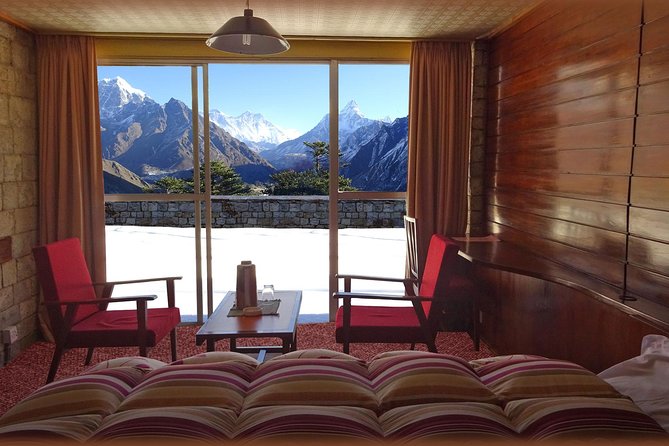
The word luxury can mean different things. On this route, it usually means better lodge comfort where you can actually sleep and not spending every night in the most basic rooms possible.
You start with 3 nights at The Everest Hotel in Kathmandu. Then you get upgraded lodge-style accommodations while trekking, described as good lodges and best available lodge options. Meals are included during the trek in standard restaurants, with meals served as per your choice. The tour also includes seasonal fruits during the trek and a first aid medical kit.
Important reality check: luxury here does not mean spa life. The tour notes that alcohol, hot and cold drinks, and hot water are not included, and hot or cold showers are also not included. So plan to be comfortable with basic mountain amenities.
Price and logistics: what $3,840 buys, and what you still handle
At $3,840 per person, this is not a budget trek. The value comes from stacking multiple costly parts into one package.
What you get for the money:
- Airport pickup and drop by air-conditioned private vehicle
- 3 nights in Kathmandu at The Everest Hotel
- Private vehicle ground transportation inside the Kathmandu area
- A full day guided Kathmandu UNESCO tour
- Trek flights Kathmandu (Ramechhap) to Lukla and back
- Experienced English-speaking guide (language is listed as flexible based on client demand)
- Porter in a 2:1 ratio
- Permits and TIMS, plus local taxes
- Trek package items: a trekking bag or duffel, t-shirt, achievement certificate, and trekking map
- First aid medical kit and seasonal fruits
What is not included, and you should budget for:
- Nepal visa fee
- International airfare and airport taxes
- City tour entry fees and sightseeing fees
- Alcohol, drinks, and personal expenses
- Travel insurance, and this is not optional in practical terms
- Personal gear
- Tips for staff and drivers
If you are deciding based on price, focus on the structure. The private transfers, permits, guide, porter system, and included flights are usually where cheaper trips cut corners. This one is paying to remove friction.
Guides, communication, and why planning time matters
A pattern that comes through is that planning support is a big deal. Pradip Karki is named in multiple accounts as the calm point person for long lead-time planning and patient answers to questions. That kind of communication helps because Everest logistics are not only about the trail. It is also about flights to Lukla, permit timing, and packing decisions.
You may also meet guides such as Nima Sherpa in some groups, and a team member called Mukhiya appears in other accounts. You should treat this as a reminder to ask who will guide your trek and what language support you will get, since the package says guide language is based on client demand.
Who this trek fits best, and who should rethink it
This trek lists moderate physical fitness as a requirement. The schedule includes long walking days at altitude and a sunrise climb to Kalapathar, so moderate fitness is not the same as casual walking fitness.
You’ll likely be a great match if:
- you want Everest views plus lodge comfort
- you prefer a guided plan that includes permits, meals, and porter support
- you value time in Kathmandu temples and cultural sites before altitude
You might reconsider if:
- you are very sensitive to early starts and cold mornings
- you do not have strong altitude tolerance, or you have health concerns you have not cleared with medical professionals
- you want a pure budget adventure, because comfort and logistics drive the cost here
Should you book the Everest Base Camp Luxury Lodge Trek?
I think you should book it if you want Everest Base Camp and Kalapathar with less friction and more comfort between the big hiking days. The added Kathmandu UNESCO day, included permits and TIMS, and the porter support at 2:1 make the experience feel planned instead of improvised.
If you are chasing the absolute cheapest way up, this is not that. Also, do not let the word luxury soften your altitude mindset. Your success will still come down to pacing, hydration, and listening to your body in those higher days.
If you want the classic Everest route, with solid structure and lodge-style comfort, this one is a strong fit. Just make sure you arrange travel insurance with emergency evacuation coverage for altitude above 5,500m, and pack for cold, wind, and changing weather.
FAQ
What airports are transfers included for?
The tour includes airport pickups and drops by air-conditioned private vehicle, and it also accompanies you to Tribhuwan International Airport for departure.
Are flights to Lukla included?
Yes. Flights from Kathmandu (Ramechhap) to Lukla and back are included, with Lukla flight details using Ramechhap in April, May, October, and November.
What if Lukla flights are not available?
Helicopter service is listed as available for an additional USD 300.
What permits are included?
All necessary Permit and TIMS are included.
What does the trek include for meals and lodging?
Three nights in Kathmandu are included at The Everest Hotel. During the trek, meals are included in standard restaurants as per your choice, and you stay in good lodges, listed as the best available lodge during trekking.
Do I need my own trekking gear?
Personal trekking gears are not included, and you’ll want to bring what you need for cold and wind at high altitude.
How does porter support work?
Porter support is included with a ratio of porter to trekkers of 2:1.
What language will my guide speak?
The guide is listed as English or other language speaking based on client’s demand.
What is not included in the price?
Not included are the Nepal entry visa fee, international airfare, city tour entry fees, alcoholic and non-alcoholic drinks, hot water and hot or cold showers, personal expenses, travel insurance, personal gear, and tips for staff and drivers.
Latest additions near Kathmandu
- White Water River Rafting – 1 Day★ 4.3 · 3 reviews
- Traditional Momo Making Class★ 5.0 · 10 reviews
- Kathmandu to Pokhara Premium sofa bus ticket★ 4.0 · 17 reviews
- Ghorepani Poon Hill Trek★ 5.0 · 16 reviews
- Amazing 1 Day Trekking Experience in Kathmandu Nepal★ 5.0 · 24 reviews
- Ghorepani Poonhill Trek★ 5.0 · 5 reviews
- Walking tour of real Kathmandu through back streets.★ 5.0 · 3 reviews
- Wildlife Adventure in Chitwan Nepal★ 4.0 · 4 reviews
Everest Base Camp Treks, compared.
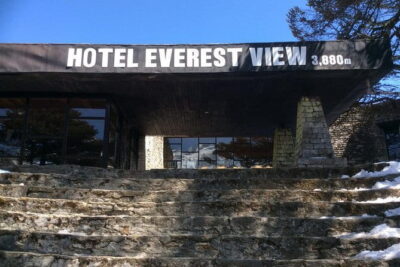
Everest Base Camp Helicopter Tour landing at Everest View Hotel
Read our review →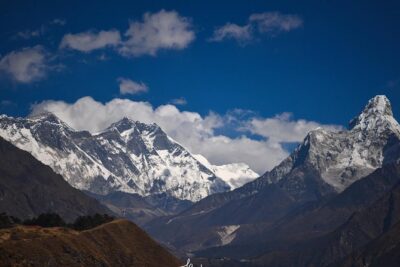
Everest Base Camp Helicopter Tour landing at Hotel Everest View
Read our review →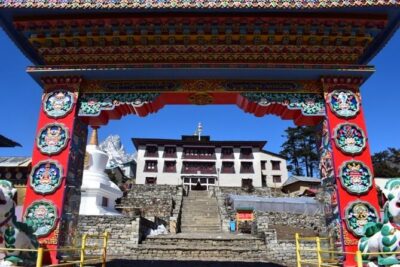
Browse the lists this tour appears in