
Reviewed · EVEREST BASE CAMP TREKS
Everest Base Camp Kalapathar Trek 14 Days
Two weeks, then you’re staring at Everest’s backyard. This 14-day trek pairs big mountain days with real Sherpa villages in the Khumbu Valley, inside Sagarmatha National Park. I like how the pace is planned around acclimatization, not just checklists.
What I really like is the built-in rhythm: Kathmandu culture first, then the Lukla descent to settle your legs, then gradual altitude climbs with rest days where you can breathe. You also get a guide and tea house accommodation on the trail, so you’re not spending your brain on logistics.
One possible drawback to consider: you’re relying on flights to Lukla, and weather can affect schedules in general. If you hate uncertainty or you want a very fixed timetable, this is something to plan for.
In This Review
- The best parts, fast
- Kathmandu start in Thamel, then Swayambhunath for lift-off
- Lukla flight and the Phakding downhill warm-up
- Namche Bazaar acclimatization with real time to adjust
- Tengboche: forest walking, monastery time, and the big-peak view
- Dingboche and Lobuche: prayer flags, exposed walking, and icy territory ahead
- The Everest Base Camp day at Gorak Shep, close to ice and history
- Kalapathar sunrise: the high payoff above 5,545 m
- Return hiking: Pangboche to Namche, then Lukla for the final flight
- Tea houses and included gear, what it means day-to-day
- Price and value at $1,990 per person
- What to expect physically: a moderate fitness plan with high-altitude work
- Who should book this trek, and who might not
- Book it or skip it? My honest take
- FAQ
- How long is the Everest Base Camp Kalapathar trek?
- Where does the trek start?
- What is included in the price?
- Are meals included?
- Are tea house accommodations included?
- Are flights included?
- Is a porter included?
- Do I need permits?
- What fitness level is required?
- What is the cancellation rule?
The best parts, fast
- Kalapathar early-morning climb: a high viewpoint near 5,545 m for close Everest views.
- Everest Base Camp day: time at the icefall-glacier zone with the scale hitting you in person.
- A route that builds altitude slowly: Dingboche and other high stops give your body time.
- Tengboche monastery area: forested walking paired with classic monastery views.
- Tea house lodging included: you can focus on hiking, not booking beds mid-trek.
- Guides like Dhruba, Sagar, Bikram, Anup, and Balaram: the common theme is friendly support and solid field experience.
Kathmandu start in Thamel, then Swayambhunath for lift-off
Your trek begins in Kathmandu, with pickup and a transfer to a hotel in the Thamel area. That matters because you’ll want easy access to gear shops, pharmacies, and a calm place to prep.
On day two, you tour Swayambhunath Temple with a city guide. It’s a good move before the mountains, because it helps you understand Nepal’s spiritual side and the kind of reverence you’ll keep seeing along the trail. The admission ticket for Swayambhunath is not included, so plan for that small cost.
By the afternoon, you’re in prep mode. Think clothes layering, pack organization, and checking that your trekking day essentials are ready to grab fast.
More Treks in Kathmandu
- Everest Base Camp Trek – 14 Days
★ 5.0 · 1,499 reviews - Everest Base Camp Trek
★ 5.0 · 842 reviews - Everest Base Camp Trekking
★ 5.0 · 485 reviews
Lukla flight and the Phakding downhill warm-up
Day three is a quick hop from Kathmandu to Lukla. The flight is about 30 minutes, then your hiking starts right away, heading downhill toward the Dudh Kosi River to reach Phakding.
This is one of the smartest parts of the whole program. The first trail segment is not about achievement. It’s about rhythm: short climbs and descents while you let your body settle into the trekking rhythm.
You’ll also pass Sherpa farm villages along the way. That’s a nice contrast to the later barren moraine and glacier sections, because early on you’re still seeing life, fields, and village routines.
Namche Bazaar acclimatization with real time to adjust
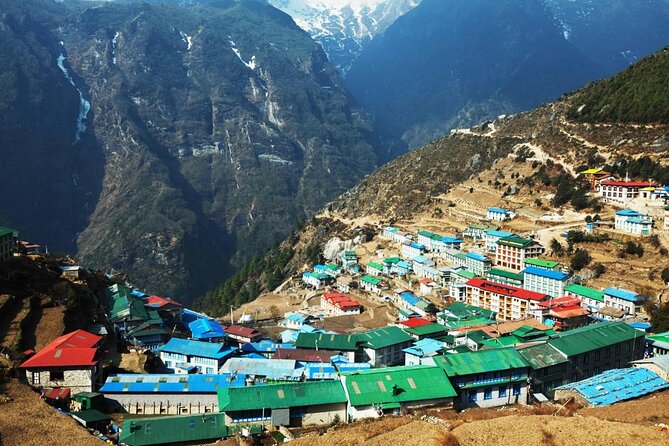
On day four, you follow the river and cross bridges, eventually reaching Monjo and then entering Sagarmatha National Park. After that, you keep hiking to Namche Bazaar at 3,440 m.
Namche is your altitude checkpoint. You don’t just arrive and rush off. You get lodge time to rest and to browse shops and restaurants, which is practical when you need to manage hunger, hydration, and gear needs.
Then day five gives you a classic acclimatization pattern. There’s a short excursion to a viewpoint above Namche, plus time at the park museum focused on the Khumbu area and Sherpa culture and mountaineering history. Even if you’ve studied mountains before, a museum stop like this helps you connect the names you’ll hear on the trail to actual local stories.
One more detail I like: Namche is also where you can keep your day social and normal. There’s a scheduled stop at an Irish Pub in Namche on more than one day, which sounds casual, but it’s also just a warm, simple way to sit down and reset.
Tengboche: forest walking, monastery time, and the big-peak view
The hike to Tengboche is one of those days where the walking gradually leads you into a totally different mood. Forest sections give way to viewpoints where your eyes start collecting peaks in every direction.
Tengboche is known for its views, including Everest and close Amadablam in the surrounding mountain chain. You also get time at the monastery area. The Tengboche monastery admission ticket is not included, so keep some cash or card ready.
This is also a day where the schedule supports your lungs. The walking is substantial, but the day is planned around time on route and time on arrival, not sprinting to the next bed.
More Everest Base Camp treks:
- Everest Base Camp Helicopter Tour landing at Everest View Hotel
★ 5.0 · 668 reviews - Everest Base Camp Trekking – 13 Day
★ 5.0 · 365 reviews - Everest Base Camp Trek
★ 5.0 · 350 reviews - Everest Base Camp Trek -14 Days
★ 5.0 · 321 reviews
Dingboche and Lobuche: prayer flags, exposed walking, and icy territory ahead
Day seven takes you onward, reaching Pangboche first, which is described as the last permanent village on the route toward Everest Base Camp. Then you climb briefly to Dingboche, an exposed area with views of Island Peak and Amadablam.
The key here is that Dingboche is a viewpoint stop, not just a transit point. Even a short climb can feel harder at altitude, but the payoff is better. You’re giving your body a reason to acclimatize while your eyes drink in the scale.
Then day eight pushes further to Lobuche, after passing through Buddhism monuments and prayer flags. You walk via Thugla, with super views of Amadablam, Cholatse, Taboche, and other giant peaks, before continuing to Lobuche.
It’s a shift from “village Khumbu” to “high, bare, weather-driven Khumbu.” Your footing, pacing, and wind protection become more important as you approach the Everest-side glacier zone.
The Everest Base Camp day at Gorak Shep, close to ice and history
Day nine is your main highlight: you reach Everest Base Camp. The program has you go in the morning from Lobuche area, with time at base camp close to the Khumbu Icefall and glacier environment, then return to Gorakshep for overnight.
This day hits different from viewpoint days. Here, you’re not only looking at mountains, you’re standing in the world of expedition logistics and glacial geography. The scale feels almost unreal, because you’re seeing routes and terrain that only exist because glaciers move, seasons shift, and people keep returning.
Later, Gorakshep is where you slow down. The day is short on extras, but long on meaning. Overnight here also sets you up for the next day’s climb.
Kalapathar sunrise: the high payoff above 5,545 m
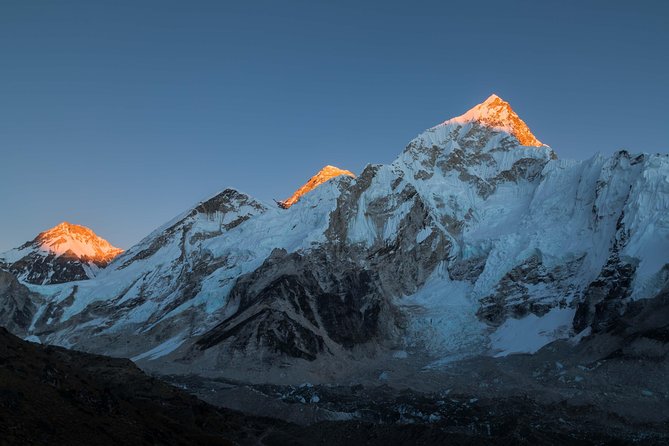
Day ten is the big altitude push: an early climb to Kalapathar, listed at 5,545 m. The goal is views, and you get them, with Everest at close distance and a broader panorama of the surrounding mountains.
The climb is not just about fitness. It’s also about timing. Early start means you’re more likely to catch the visibility window before weather drifts in.
After Kalapathar, you descend to Gorakshep for breakfast, then continue walking toward Thugla and down to Pheriche, through a windy valley with scenic walking. The day continues again later, reaching Pangboche for overnight.
If you love mountain effort days, this is your peak day. If you’re cautious about altitude, it’s also the day where preparation matters most, because you’re going high and back down in one long block.
Return hiking: Pangboche to Namche, then Lukla for the final flight
Day eleven brings the return leg. You walk from Pangboche to Namche, with a return via Thayangboche, plus time around that stop.
Day twelve is a long descent back toward lower altitude. You’re going from Namche Bazaar to Lukla, with an overnight in Lukla.
This section matters because trekking recovery is real. Your legs will feel different after Kalapathar, and the route is designed to get you down gradually. You’re not losing the “mountain story,” but you’re shifting your energy from peak push to steady travel.
Day thirteen finishes the trek with the flight from Lukla back to Kathmandu. You also get transfers and time in Thamel to wrap up the trip and process what you just did. Day fourteen is simply flying home.
Tea houses and included gear, what it means day-to-day
This trek includes tea house accommodation during the hiking days. That’s the common Everest base trekking setup, and it’s why the itinerary works. You have predictable places to sleep each night, and you can spend your energy on hiking rather than searching.
The tour also includes necessary equipment like a sleeping bag and a duffel bag. Even if you already have gear, it’s still useful because it reduces what you must carry through Kathmandu and on flights.
Meals are also part of the package: breakfast (12), lunch (10), and dinner (11) are included. That’s helpful because food quality and access can vary on the trail, and you don’t want to make every meal a decision while you’re adjusting to altitude.
One thing to note: porter is not included if you want one. If you’re the type who likes to travel light, you can handle it without a porter. If you’ve never trekked at altitude and want extra margin, plan ahead for a porter decision.
Price and value at $1,990 per person
At $1,990 per person, this is not a cheap trip. But it is a complete package for a serious route.
Here’s what you’re paying for, based on what’s included:
- All necessary permits for the trek area
- Round trip flights Kathmandu to Lukla and back
- A professional trekking guide
- Tea house accommodation
- Sleeping bag and duffel bag
- Private vehicle transports in Kathmandu
- A basic meal plan across most trek days
The big value piece is that Lukla flights plus permits plus guide plus lodging and the sleeping setup are bundled. Many “cheap” Everest options look good until you price those line items separately.
Is it expensive? Yes. Is it expensive compared to the effort and complexity? For a guided 14-day high-altitude trek with flights and meals included, it can feel fair, especially if you want a low-stress plan from the first day in Kathmandu to your return.
What to expect physically: a moderate fitness plan with high-altitude work
The tour asks for moderate physical fitness. That’s a good sign, but Everest country doesn’t care about your gym membership. You’ll be hiking day after day, often for multiple hours, at elevations that can make steady walking feel harder than you expect.
You’ll climb and descend often, and the biggest altitude moments are the higher village stages plus the Kalapathar early climb. The itinerary uses acclimatization days like Namche, plus viewpoint and rest blocks to help your body adjust.
If you’re someone who gets winded easily, you’ll still be able to do the trek, but you need to treat pacing like a skill. Slow steps, steady breathing, and smart hydration will do more than pushing harder.
Who should book this trek, and who might not
This trek suits you if:
- you want Everest Base Camp and Kalapathar in one trip
- you like a route that gives you rest and acclimatization time
- you want a guided experience with tea house nights and meals handled
- you prefer a small group dynamic, since this is set up as a private tour for your group
You might think twice if:
- you’re sensitive to altitude and want minimal high-elevation exposure
- you strongly dislike any scheduling uncertainty around Lukla flying
- you expect a very lightweight, no-thinking packing experience, since a porter is optional
Book it or skip it? My honest take
I’d book this if you want the classic Everest Base Camp plus Kalapathar storyline, with a schedule built around adjustment days and not pure sprinting. The strong point is that the plan links Kathmandu culture, Sherpa villages, monastery views, and the final high viewpoint push into one coherent 14-day flow.
If you want a trip that feels hands-on, well run, and friendly on the ground, there’s a clear pattern of praised guide support. That matters on a trek this high, because small problems at altitude turn into big ones fast.
If you’re unsure, ask yourself one question: can you hike patiently at altitude for two straight weeks? If the answer is yes, this trek is a strong choice.
FAQ
How long is the Everest Base Camp Kalapathar trek?
The trip is listed as 14 days (approx.).
Where does the trek start?
It starts in Kathmandu, Nepal, with pickup and a hotel transfer in the Thamel area.
What is included in the price?
The tour includes necessary permits, round trip Kathmandu to Lukla flights and back, a professional trekking guide, tea house accommodation during the trek, sleeping bag and duffel bag, private vehicle transport, and a set meal plan (breakfast, lunch, dinner).
Are meals included?
Yes. Breakfast is included 12 times, lunch 10 times, and dinner 11 times.
Are tea house accommodations included?
Yes. Tea house accommodation is included during the trek.
Are flights included?
Yes. Round trip flights Kathmandu to Lukla and back are included.
Is a porter included?
A porter is not included. The tour notes porter if needed, so you would arrange it separately.
Do I need permits?
Yes, and the tour includes necessary permits.
What fitness level is required?
The tour states you should have a moderate physical fitness level.
What is the cancellation rule?
Free cancellation is offered. You can cancel up to 24 hours in advance for a full refund, and refunds are not available if you cancel less than 24 hours before the start time.
Latest additions near Kathmandu
- Traditional Momo Making Class★ 5.0 · 10 reviews
- White Water River Rafting – 1 Day★ 4.3 · 3 reviews
- Kathmandu to Pokhara Premium sofa bus ticket★ 4.0 · 17 reviews
- Ghorepani Poon Hill Trek★ 5.0 · 16 reviews
- Amazing 1 Day Trekking Experience in Kathmandu Nepal★ 5.0 · 24 reviews
- Ghorepani Poonhill Trek★ 5.0 · 5 reviews
- Walking tour of real Kathmandu through back streets.★ 5.0 · 3 reviews
- Wildlife Adventure in Chitwan Nepal★ 4.0 · 4 reviews
Everest Base Camp Treks, compared.
Everest Base Camp Helicopter Tour landing at Everest View Hotel
Read our review →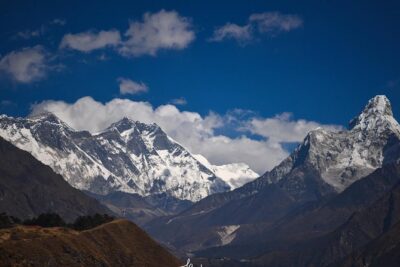
Everest Base Camp Helicopter Tour landing at Hotel Everest View
Read our review →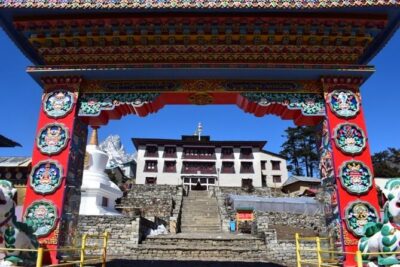
Browse the lists this tour appears in