Reviewed · TREKS IN KATHMANDU
20 Days Private Kanchenjunga Circuit Trek
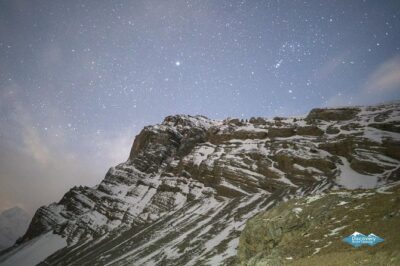
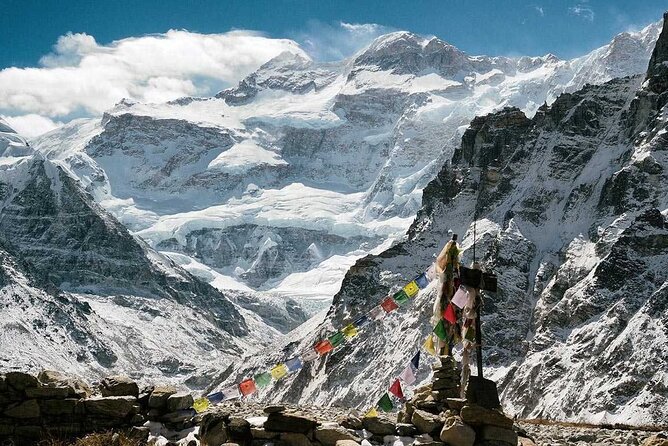
Kanchenjunga feels bigger than the map. This private 20-day trek in Eastern Nepal takes you through the Kanchenjunga Conservation Area, with chances to reach both base camps and high passes like Sele Le and others. I love the payoff of getting to the Pangpema North Base Camp area at about 5,140 meters, where the north face of Kanchenjunga dominates your world.
I also like how the pacing builds in altitude sense. You get acclimatization stops in places like Ghunsa (around 3,475 meters) and Kambachen (around 4,050 meters), not just a straight line upward. The drawback is simple: this is remote and physically demanding, with long travel days and thin-air days, so plan for rough weather and take the acclimatization days seriously.
In This Review
- Key highlights you will actually feel on this trek
- Why the Kanchenjunga Circuit feels different than most Nepal treks
- Kathmandu to Bhadrapur to Ilam to Taplejung: travel days that set your rhythm
- Chirwa to Lelep to Amjilosa: the entry into the conservation area
- Ghunsa and Kambachen: acclimatization that you should not treat as a formality
- Lhonak and Pangpema North Base Camp at 5,140 meters: when the trek turns real
- Sele Le and the high pass route: switching from the north story to the south story
- Torongding to Yamphudin to Fikal: finishing the circuit and easing back down
- Price and what $2,560 really covers on a private circuit
- The practical reality of tea houses, cold nights, and thin air
- Weather, passes, and why your guide matters most on the high days
- Who should book this Kanchenjunga Circuit trek
- Should you book this private Kanchenjunga Circuit trek with Magical Nepal?
- FAQ
- How long is the Kanchenjunga Circuit Trek?
- Where does the tour start and when?
- Is this a private tour?
- What permits and support are included?
- What type of accommodation and meals are included?
- Can I get vegetarian, vegan, or gluten-free meals?
- Are hot and cold drinks included?
- Are service animals allowed?
- What is the cancellation policy for a full refund?
Key highlights you will actually feel on this trek
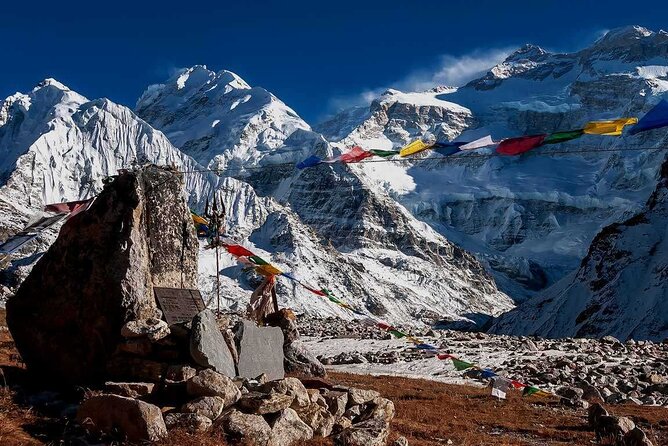
- Pangpema North Base Camp time, at roughly 5,140 meters, with big north-face views
- Two real acclimatization stops (Ghunsa, then Kambachen) before you push higher
- Teahouse trekking comfort, with 19 days of accommodation included while you hike
- A full guide package for 19 days, plus all required trek permits
- A route that connects north and south valleys, including high pass territory like Sele Le
Why the Kanchenjunga Circuit feels different than most Nepal treks
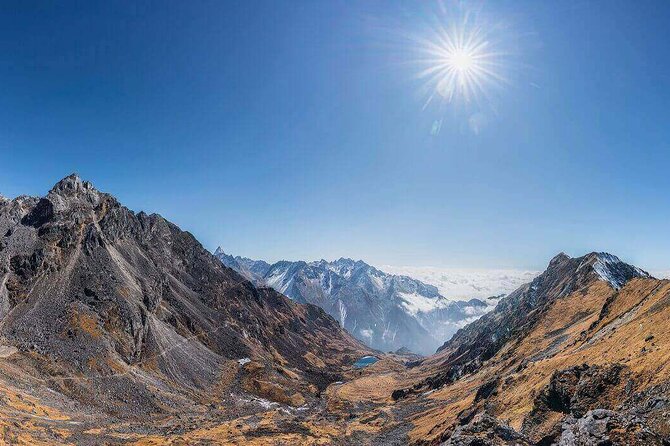
Most Nepal treks give you big scenery fast. The Kanchenjunga Circuit does it differently. You start by moving through regional towns, then gradually step into higher valleys, until the base camps feel less like destinations and more like a system you worked your way into.
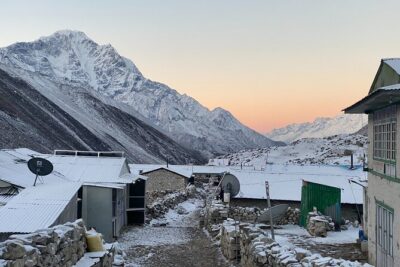
This trek is also about remoteness. The villages are small, tea houses are basic, and that simplicity is part of the charm. You do not come here for fancy hotels or predictable comfort, you come for breathing space, mountain silence, and a circuit route that keeps changing the view.
More Treks in Kathmandu
- Everest Base Camp Trek – 14 Days
★ 5.0 · 1,499 reviews - Everest Base Camp Trek
★ 5.0 · 842 reviews - Everest Base Camp Trekking
★ 5.0 · 485 reviews
Kathmandu to Bhadrapur to Ilam to Taplejung: travel days that set your rhythm
Your journey begins at Tribhuvan Airport in Kathmandu around 10:15 am, with a pickup offered if you need it. On Day 1, you fly from Kathmandu to Bhadrapur in about 45 minutes in the afternoon, then drive roughly 5 hours to Ilam for an overnight.
Day 2 turns into a long road stretch. You travel from Ilam to Taplejung, about 240 km, typically 9 to 12 hours depending on road conditions and traffic. This is where you should treat the day like a warmup. Hydrate, eat early, and accept that bus time in Nepal can feel bumpy and slow.
By Day 3, you are moving into the trekking region. Taplejung sets you up to reach Chirwa, a small place with a few tea houses and lodges built for trekkers. Even though it is not the highest altitude part of the route, it is useful, because it puts you around people who understand trekkers and their routines.
Chirwa to Lelep to Amjilosa: the entry into the conservation area
Day 4 is your deeper step into the Kanchenjunga Conservation Area. You head from Chirwa to Lelep, a route of about 20 km that typically takes 6 to 7 hours. That time gap matters. In mountains, distance on paper is not the story, the terrain is.
Lelep functions as a kind of headquarters area for the conservation region, so it has that practical trekking feel. You get to shift from road fatigue into trail focus. Day 5 continues with a move toward Amjilosa, about 13 km from Lelep, usually 6 to 7 hours.
Amjilosa sits around 2,310 meters. That altitude is not “extreme,” but it is high enough that you start noticing your breathing and appetite. I like this part of the circuit because it is a gentle nudge upward, without pretending you are going to feel like a spring chicken the whole time.
Ghunsa and Kambachen: acclimatization that you should not treat as a formality
Days 6 through 8 become more trekking-centered, even though your daily schedule is still structured around tea house nights. From Amjilosa you move onward toward Gyabla, and then into Ghunsa. Ghunsa sits around 3,475 meters and is a classic rest and acclimatization stop on many Kanchenjunga routes.
Day 8 is an acclimatization day in Ghunsa. This is the kind of day that can feel boring if you crave nonstop progress. But altitude punishes impatience. A rest day here is your chance to slow down, eat well, and adjust to the air, so the higher days are safer and less punishing.
Day 9 takes you toward Kangbachen, following trails that pass alpine meadows, moraines, and the Ghunsa River. Day 10 brings you to Kambachen again as a key acclimatization night, around 4,050 meters. The point is not just “rest,” it is letting your body handle less oxygen before you keep going.
If you only remember one thing from the mid-trek section, make it this: in high-altitude trekking, acclimatization is not optional, it is part of the plan.
Another way to spend the time in Nepal:
- Private Kathmandu Sightseeing Tour | UNESCO World Heritage sites
★ 5.0 · 756 reviews - Kathmandu: 7 UNESCO Sites with Lunch
★ 4.8 · 744 reviews - Everest Base Camp Helicopter Tour landing at Everest View Hotel
★ 5.0 · 668 reviews - Half day cooking class in Thamel kathmandu
★ 5.0 · 607 reviews
Lhonak and Pangpema North Base Camp at 5,140 meters: when the trek turns real
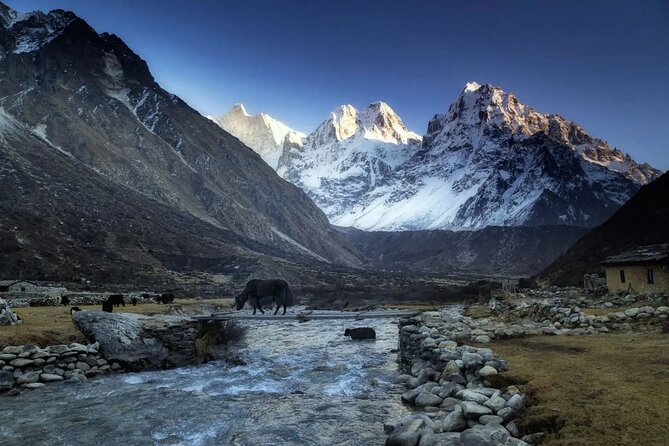
Day 11 moves you to Lhonak, often a stop for trekkers heading toward the base camps. Here, you are in that high-altitude world of views, glaciers, and barren-feeling terrain. You feel like you are closer to the mountains than the mountains feel to you.
Day 12 brings the big moment: Kanchenjunga North Base Camp, also called Pangpema, around 5,140 meters. The north face of Kanchenjunga is the headline. It is the third-highest peak in the world, and up here it stops being a number and becomes a physical presence you can’t ignore.
This is also one of the days where you should be extra realistic with your pace. Do not force it. If you feel slower than you expect, that is normal. Your job is to reach, observe, and move safely, not to win any imaginary race.
Day 13 is a descent back toward Ghunsa, overnight there. Descending can feel easier, but it can also be hard on your knees. Keep steps short and controlled.
Sele Le and the high pass route: switching from the north story to the south story
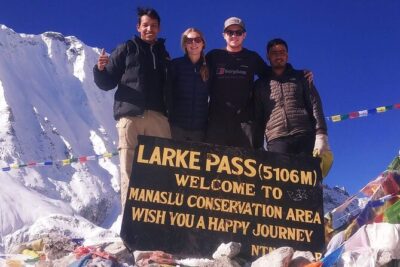
After the north base camp portion, Day 14 takes you toward Sele Le. Sele Le is a high-altitude campsite that acts as a stop as trekkers move between the north and south base camp paths via several high passes, including Sinion La, Mirgin La, and Sinelapche La.
High passes are where the trek’s personality sharpens. Weather can change faster up here, and visibility may come and go. This is also the terrain where your guide’s decision-making matters. If conditions are wet or visibility drops, plans can adjust. That adaptability is part of what you are paying for when you book a private guided circuit.
Day 15 then takes you to Cheram, around 3,870 meters. Cheram is a small village, and it is close enough to the southern base camp area to set up Day 16. It is also the kind of place where you likely feel you are back in a “village rhythm,” even though you are still operating at altitude.
Day 16 is a day trip to Kanchenjunga South Base Camp, then you sleep overnight in Cheram. A day trip sounds simple, but base camp days are usually full-body days. You’ll want to start early, pack what you need, and treat the climb like an exercise in steady effort, not heroics.
Day 17 heads onward through lush forest and along rivers and small settlements. You follow a path that includes Torongding, a small village. This section is your shift away from the highest zones and back toward a more human-scale terrain.
Torongding to Yamphudin to Fikal: finishing the circuit and easing back down
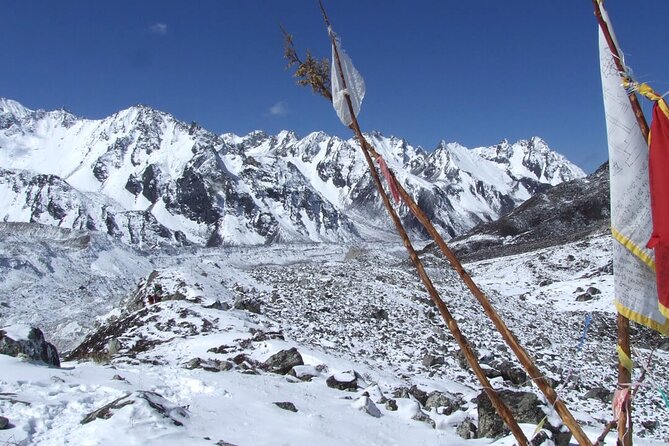
Day 18 includes Yamphudin, a culturally diverse village with residents from Limbu, Sherpa, Rai, and Gurung communities. This is a good moment to slow your thinking and watch people live their day, not just how trekkers pass through. Even in remote regions, culture is not a museum piece.
Day 19 leads you to Fikal. The plan is to drive from Yamphuding to Fikal. That drive is helpful, because by this stage you are likely happy to trade a few hours of steep trail for a simpler road move.
Day 20 brings the end. Fikal to Bhadrapur is about a 2-hour drive, followed by an afternoon flight back to Kathmandu. When you arrive, you get that post-trek letdown in reverse. You feel lighter, then oddly restless, because your body is done with exertion but your mind still wants the mountain.
The tour ends with a goodbye at Tribhuvan International Airport, and your representative drops you to the departure terminal.
Price and what $2,560 really covers on a private circuit
At $2,560 for a roughly 20-day private trek, you are paying for more than walking. You are paying for logistics in a region where routes are remote and timing matters. This price includes a guide for 19 days, all required permits, tea house accommodation for 19 days in the mountain, and meals.
Meals included are specific: breakfast for 20 days, lunch for 19 days, and dinner for 19 days. That matters because you do not want to make daily money decisions at altitude. You also need to know you will have predictable food availability during long trekking stretches.
Transportation is also built in. You have the Kathmandu to Bhadrapur flight and the return, plus public bus or drive segments such as Bhadrapur to Ilam, Ilam to Taplejung, and Yamphuding to Fikal. So even though some riding days are long, you are not left to invent a route from scratch.
The one clear gap is drinks. All hot and cold drinks on the trek are not included. At higher altitudes, prices can creep up and fluids become more important than you expect. Budget for tea, coffee, water refills if needed, and any extra snacks.
If you are comparing costs to cheaper treks, be careful. Cheaper often means fewer meals included, fewer permits handled, and less guiding time. Here, the structure looks closer to a full-service expedition-style trek, just in tea house comfort.
The practical reality of tea houses, cold nights, and thin air
Tea houses are included for 19 days. But tea house can mean many things, so I suggest you treat these nights as “basic comfort,” not hotel comfort. You will likely have a small room, shared dining spaces, and limited warm options. Your warm system is on you.
At altitude, cold hits harder. Layering is the strategy, not one magic jacket. Bring a hat, gloves, and a warm mid-layer you can actually wear while sitting. The circuit’s plan includes multiple high points and base camp days, so plan to get chilly even if days start sunny.
Food is usually easier because meals are included. Still, listen to your appetite. High altitude can reduce it, or make you crave simpler foods. Eat enough to fuel your body, even if you do not feel hungry.
And do not ignore the drinks gap. If you drink less because you are cold, you can pay for it later. You will likely want regular sips throughout the day, not only when you feel thirsty.
Weather, passes, and why your guide matters most on the high days
This trek crosses high pass territory, including Sele Le and passes referenced as Sinion La, Mirgin La, and Sinelapche La. That kind of itinerary lives or dies by conditions. Wind, cloud, and wet snow can change the day’s comfort fast.
That is why the guide’s role is more than route pointing. You need someone who can adjust pacing, manage safety, and handle the small decisions that prevent big problems. Past experiences with this operator highlight that guides like Narayan and Dil are praised for route knowledge and for adjusting plans when wet weather or individual health issues come up.
You should also be aware that this is a private tour. That can be good because your guide can focus on your group’s pace. But it also means your group’s fitness and attitude matter. If someone is struggling, the plan may slow down, shift, or pivot based on the reality on the trail.
Who should book this Kanchenjunga Circuit trek
This is best for you if you want a challenging, remote trek and you are okay with basic tea house living. It suits strong hikers who understand acclimatization and can follow guidance even when it feels slower than you want.
It also fits you if you value structure. With permits, guiding, and meals included, you can spend your mental energy on hydration, pacing, and enjoying the scenery when it appears.
It may not fit if you are looking for an easy vacation pace. Long travel days, high passes, and demanding days to base camp mean you need serious stamina and flexibility. The trek also requires strong physical fitness.
Good news for many people: the tour notes that vegetarian, vegan, and gluten-free options are available on request. Service animals are also allowed, if that applies to your situation.
Should you book this private Kanchenjunga Circuit trek with Magical Nepal?
I think you should book if you want a guided, permit-handled, meal-supported circuit that connects both base camps, with real acclimatization built in. The value is strongest when you look at what you avoid: juggling permits, daily meal hunting, and unclear route timing in a remote region.
You should think twice if you hate cold nights, get frustrated by long bumpy travel days, or are unsure you can handle altitude responsibly. If you are the type who powers through acclimatization days, this itinerary will teach you humility.
If your goal is authentic trekking, big high-mountain views, and a route that feels like a true circuit rather than a point-to-point hike, this one makes sense. Just plan for the basics, respect the altitude rhythm, and trust the guidance on the high days.
FAQ
How long is the Kanchenjunga Circuit Trek?
The trek is about 20 days (approximately). The mountain portion includes tea house accommodation for 19 days.
Where does the tour start and when?
The tour starts at Tribhuvan Airport in Kathmandu, Nepal. The start time listed is 10:15 am.
Is this a private tour?
Yes. It is a private tour or activity, so only your group participates.
What permits and support are included?
The tour includes all required permits for the trek and a guide for 19 days.
What type of accommodation and meals are included?
Tea house accommodation is included for 19 days in the mountain. Meals are also included, with breakfast for 20 days, lunch for 19 days, and dinner for 19 days.
Can I get vegetarian, vegan, or gluten-free meals?
Yes. Vegetarian, vegan, and gluten-free food are available on request.
Are hot and cold drinks included?
No. All hot and cold drinks on the trek are not included.
Are service animals allowed?
Yes. Service animals are allowed on this tour.
What is the cancellation policy for a full refund?
You can cancel for a full refund up to 24 hours in advance of the experience start time. Cancellation within 24 hours is not refunded.
Latest additions near Kathmandu
- White Water River Rafting – 1 Day★ 4.3 · 3 reviews
- Traditional Momo Making Class★ 5.0 · 10 reviews
- Kathmandu to Pokhara Premium sofa bus ticket★ 4.0 · 17 reviews
- Ghorepani Poon Hill Trek★ 5.0 · 16 reviews
- Amazing 1 Day Trekking Experience in Kathmandu Nepal★ 5.0 · 24 reviews
- Ghorepani Poonhill Trek★ 5.0 · 5 reviews
- Walking tour of real Kathmandu through back streets.★ 5.0 · 3 reviews
- Wildlife Adventure in Chitwan Nepal★ 4.0 · 4 reviews
Treks in Kathmandu, compared.
Nagarkot Sunrise View and Day Hiking from Kathmandu
Read our review →