
Reviewed · EVEREST BASE CAMP TREKS
14 days Everest Base Camp Trek
Everest feels close on this 14-day trek. You’ll fly into the Khumbu via Lukla, then work your way toward Kala Patthar for high-altitude sunrise views that most people chase for a lifetime. It’s a classic route through Sherpa villages, rhododendron forests, and the high, quiet “ice desert” zone.
I love the balance of daily effort and built-in breathing room. The plan includes a formal acclimatization day around Dingboche, plus a slower climb to Nangkartshang Hill, so your body gets a chance to adjust. I also like that the trip is run with a government-licensed trekking guide and full-board meals in place, which keeps you focused on hiking instead of logistics.
One consideration is the obvious but important one: altitude. You’ll be going to Everest Base Camp at about 5,316 m and pushing up to 5,545 m at Kala Patthar, and it requires moderate fitness and smart pacing. Also, Lukla flights can be weather sensitive, and the package notes that costs from weather or natural issues are not covered.
In This Review
- Quick hits from this Everest Base Camp trek
- Why this route works for most first-time EBC trekkers
- Day-by-day: Kathmandu to Kala Patthar and back down again
- Day 1: Kathmandu arrival, briefing, and welcome dinner
- Day 2: Kathmandu to Lukla, then trek to Phakding
- Day 3: Phakding to Namche Bazaar via first Everest glimpses
- Day 4: Namche to Everest View Hotel, optional museum time
- Day 5: Namche area up to Tengboche and monastery views
- Day 6: Tengboche to Dingboche through rhododendron country
- Day 7: Dingboche acclimatization day, Nangkartshang Hill and monastery
- Day 8: Dingboche to Lobuche via Thukla Pass memorials
- Day 9: Lobuche to Gorakshep, then Everest Base Camp at dawn
- Day 10: Kala Patthar sunrise push, headlamps included in the plan
- Day 11: Descend from the higher zone back toward Namche
- Day 12: Namche area down to Lukla, with a break in Phakding
- Day 13: Lukla to Kathmandu, time for a hot shower and massage
- Day 14: Kathmandu departure day
- What you’re paying for, and where the value really shows up
- The practical side: altitude, weather, and how to stay smart
- Tea houses, meals, and how to pack for cold mornings
- Who should book this Everest Base Camp trek, and who should pause
- Should you book this one?
- FAQ
- What is the duration and starting point of the Everest Base Camp trek?
- What are the main high points on the route?
- How do you travel from Kathmandu to Lukla?
- Where do you stay during the trek?
- Is a guide included?
- What is included in the price?
- What is not included?
- Is the tour private?
- Can I get a full refund if I cancel?
Quick hits from this Everest Base Camp trek
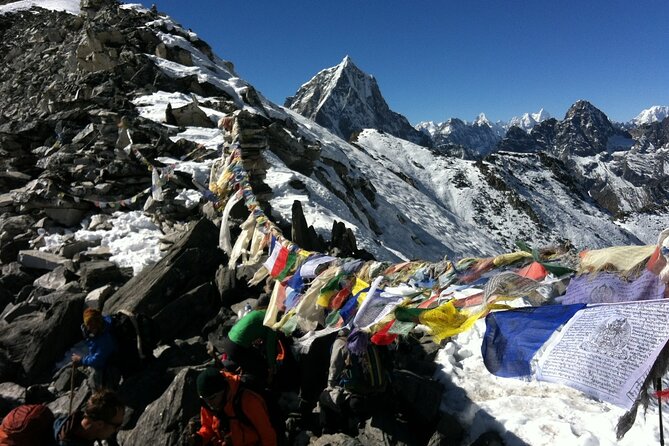
- Kala Patthar at 5,545 m for a pre-dawn push and sunrise views
- Acclimatization built in at Dingboche, plus a climb to Nangkartshang Hill
- Classic Khumbu villages like Namche, Tengboche, Dingboche, and Lobuche on the route
- Government-licensed guide and team support, with gear available on request
- Full-board meals and permits included, so you’re not juggling documents mid-trek
- Tea houses for nights during the trek, which is part of the local experience
Why this route works for most first-time EBC trekkers
Everest Base Camp is not one long grind with no rhythm. This itinerary spaces out big elevation days, and it gives you specific moments to look around and breathe. That matters, because the Khumbu rewards effort with views, but it also punishes sloppy pacing.
You’ll start in Kathmandu with a hotel night and a proper briefing and welcome dinner. Then the trek begins with the Lukla flight, followed by a steady progression through the villages. The route also threads through Sagarmatha National Park, which means you’ll see signage, permits, and a clear sense that you’re walking inside protected Sherpa country, not just a hiking corridor.
Another practical win is the way the trip handles core essentials. The package includes Kathmandu to Lukla roundtrip flights, park permits, and full-board meals during the trek days. That translates into fewer surprises. In the real world, fewer surprises often means you spend more energy on the trail and less on problem-solving.
More Treks in Kathmandu
- Everest Base Camp Trek – 14 Days
★ 5.0 · 1,499 reviews - Everest Base Camp Trek
★ 5.0 · 842 reviews - Everest Base Camp Trekking
★ 5.0 · 485 reviews
Day-by-day: Kathmandu to Kala Patthar and back down again
Day 1: Kathmandu arrival, briefing, and welcome dinner
You land in Kathmandu and get picked up at the airport exit gate, then transferred to a 3-star hotel with breakfast included. The guide visits in the evening for a briefing about what’s next, followed by a warm welcome dinner at a respected local restaurant.
Why it’s special: it gives you a low-stress start before the overnight rhythm shifts. You also get official information from the guide rather than vague tips from the internet.
What to watch: plan an early night. Your flight to Lukla is scheduled for the next morning, so sleep matters.
Day 2: Kathmandu to Lukla, then trek to Phakding
Today starts early with a domestic flight from Kathmandu to Lukla. In peak seasons, you may fly from Ramechhap instead, which includes a 4-hour drive by private vehicle before taking the flight onward. After landing, you’ll have breakfast and then hike directly toward Phakding, passing places like Cheplung and continuing on to Ghat before reaching your overnight stop.
This day is your “transition day,” from city to mountain life. It’s not just scenic, it’s also the first time you’ll feel the day-to-day tempo of the trail and the altitude beginning to work on you.
More Everest Base Camp treks:
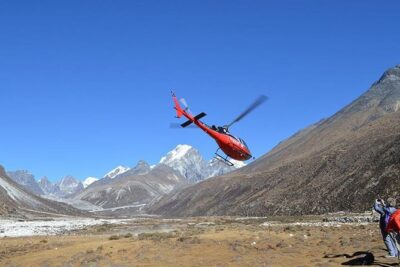
- Everest Base Camp Helicopter Tour landing at Everest View Hotel
★ 5.0 · 668 reviews - Everest Base Camp Trekking – 13 Day
★ 5.0 · 365 reviews - Everest Base Camp Trek
★ 5.0 · 350 reviews - Everest Base Camp Trek -14 Days
★ 5.0 · 321 reviews
Day 3: Phakding to Namche Bazaar via first Everest glimpses
You follow the Dudh Koshi River route, crossing suspension bridges and moving through rocky gorges before reaching Jorsalle and then entering Sagarmatha National Park. The first real Everest sighting usually lands around this stage, once the terrain opens up and the valley starts to show you big geometry.
You’ll finish at Namche Bazaar, a key acclimatization hub and a place to soak in Sherpa village life. The plan includes dinner at a lodge, which keeps you from hunting for food after a long day.
Day 4: Namche to Everest View Hotel, optional museum time
Start with Namche’s market vibe, then hike up to the Everest View Hotel area for big panorama views. From there you get sights of Everest plus other major peaks like Ama Dablam, Lhotse, and Nuptse.
Two options make this day more than just another walk: you can explore the Sagarmatha National Park museum, and you can also use the viewpoint time to take photos and reset your body.
Downside: this is still uphill. Even when the views are great, keep your pace steady.
Day 5: Namche area up to Tengboche and monastery views
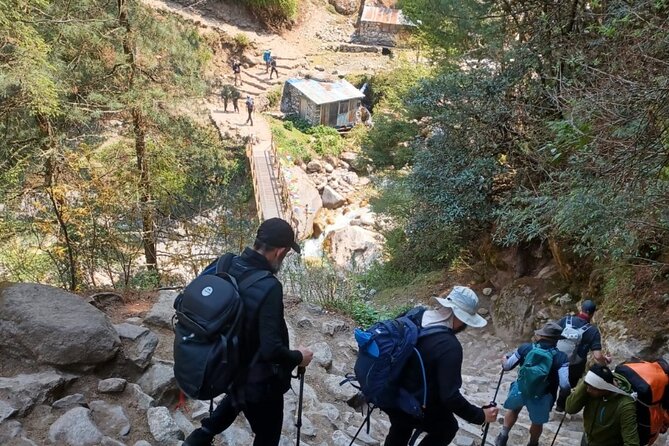
You leave Namche and hike uphill, crossing over the Imja Khola and passing through Phungithanga, a Sherpa village known for prayer wheels. The route continues through rhododendron forests, then flattens near Tengboche and opens out around Tengboche monastery.
The pay-off here is not subtle. You get strong sight lines back to Everest and also peaks like Nuptse, Lhotse, Thamserku, and Ama Dablam.
Practical note: monastery-area stops can mean a lot of photo time. Don’t let it turn into “standing still forever.” Move when you’re warm, stop when you’re cold.
Day 6: Tengboche to Dingboche through rhododendron country
Today’s trek moves through more forested trail, with a descent toward Deboche and crossing rope bridges. You’ll pass Pangboche, marked with Tibetan-inscribed Mani walls, then climb again to Dingboche.
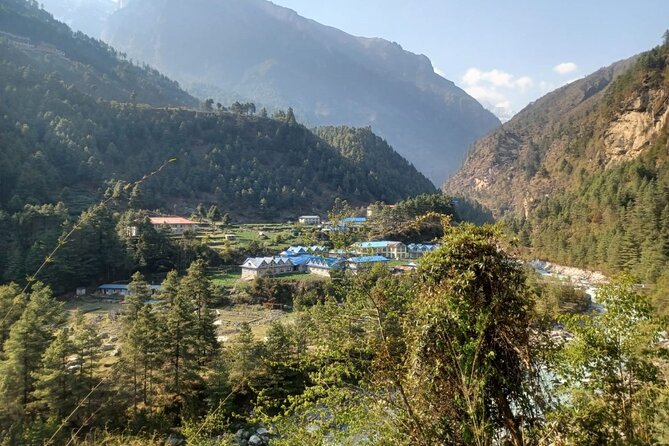
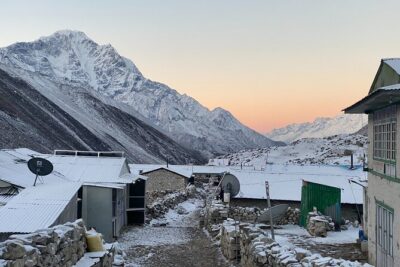
Dingboche’s altitude and setting make it a great “big-picture” village, with mountain views toward Lhotse, Island Peak, and Ama Dablam. Nights here in tea houses are part of the experience, and your schedule gives you time to settle in.
Day 7: Dingboche acclimatization day, Nangkartshang Hill and monastery
This is one of the most important days for how you feel later. You take it slower most of the day, then do a steep climb to Nangkartshang Hill for views of Makalu and Amphu Laptse. You then descend and tour the Nangkartshang monastery.
Why this matters: acclimatization is not optional in the Himalaya. Even when you feel okay, your body needs time to adapt. This day is designed for that.
What to watch: if you push too hard on the acclimatization climb, you can still pay later. Keep it controlled.
Day 8: Dingboche to Lobuche via Thukla Pass memorials
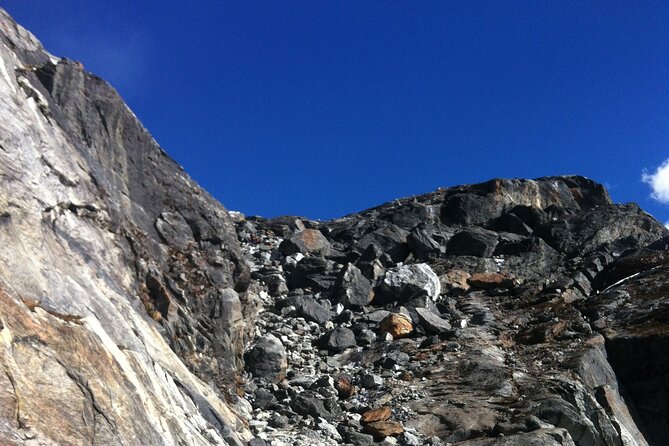
You trek toward Lobuche along a route with strong Khumbu Valley views and Cholatse Peak. The day starts with a short downhill stretch, then an uphill pull to Dughla. After that, you pass Thukla Pass, marked by memorials for climbers who died in the mountains, before continuing on rocky, narrow trail to reach Lobuche for the night.
This is where the terrain starts to feel more stark. The trail can feel thinner and more exposed, and the memorials are a reminder that the mountains demand respect.
Day 9: Lobuche to Gorakshep, then Everest Base Camp at dawn
You start early to reach Gorakshep and then continue toward Everest Base Camp. The route goes north, passing along the southern flank of Lhotse. You’ll cross glacial sections and enter the icy desert zone before reaching Gorakshep.
After breakfast, you hike onward for Everest Base Camp views, including the Khumbu Icefall and surrounding peaks like Nuptse, Pumori, and Khumbutse. The plan emphasizes a dawn start, which is often the best time for light, atmosphere, and a bit of calm.
Practical tip: plan for cold. Even if you’re warm from moving, the time near Base Camp can flip quickly.
Day 10: Kala Patthar sunrise push, headlamps included in the plan
This is the day most people remember. You set off early in the morning with headlamps to reach Kala Patthar, a climb that typically takes 2 to 3 hours. The goal is sunrise over Everest, with strong views of Nuptse, Pumori, and Ama Dablam as the light hits.
After you soak in the views, you descend back. The itinerary notes returning toward Base Camp for a hot meal before moving on, though the overnight stop details beyond that day aren’t fully spelled out in the provided schedule.
What to watch: Kala Patthar is steep and cold. Even if you feel strong, don’t race. The late start stress is real, but the sunrise is worth it.
Day 11: Descend from the higher zone back toward Namche
Today is mostly easier walking than the earlier altitude days, with mostly downhill terrain through conifer and rhododendron forests. You pass back through familiar village names like Dingboche and Tengboche and then reach Namche for your final night.
The mental shift is big on this day. You’re tired, but you’re also moving back toward livable altitude. Use that to your advantage: take photos, slow down at scenic spots, and eat well.
Day 12: Namche area down to Lukla, with a break in Phakding
You cross back over river areas including the Bhote Koshi and Dudh Koshi before reaching Phakding for lunch. Then the route continues along the familiar trail back to Lukla, where you unload and rest at your lodge.
This day is about recovery. If you’ve been saving energy, this is when you can feel it return, like your legs are finally allowed to relax.
Day 13: Lukla to Kathmandu, time for a hot shower and massage
You go early to catch your flight back to Kathmandu, with the itinerary noting about 30 minutes for the flight. After arriving and checking in again, you get time to relax. The plan even suggests a hot shower and a massage to unwind.
This is a good day to rehydrate and to treat yourself. Not because you’re weak, but because you finished something hard.
Day 14: Kathmandu departure day
You pack up and head to the international airport for your return trip. The representative meets you at the hotel for a smooth transfer.
This is also a good moment to ask the guide for other trek or tour ideas. The itinerary frames you as someone they’d like to help again, not just a customer who disappears after the trek.
What you’re paying for, and where the value really shows up
At $1,499 per person, you’re not just paying for hiking scenery. You’re paying for the parts that tend to eat time and confidence when things get complicated.
Here’s what the package includes that usually costs real money on EBC trips:
- Kathmandu to Lukla roundtrip domestic flights including taxes
- All required national park and local entry permits
- Accommodation in Kathmandu at a 3-star category hotel with breakfast
- Tea house lodging on the trek, twin sharing
- Meals on full board as listed in the itinerary
- A government-licensed trekking guide, with meals, accommodation, and insurance
- Down jacket, sleeping bag, and duffel bag on request
The guide factor is worth calling out. In the reviews tied to this operator, people repeatedly praised fast communication and hands-on help from the company owner, Shishir, especially when planning questions came up. Other comments specifically named guides such as Ghaman and Lok for being attentive and focused on the mountain experience.
Value is not only price. It’s how much you have to manage yourself. This package aims to manage the big moving parts so you can manage your breathing and your feet.
The practical side: altitude, weather, and how to stay smart
The itinerary is built around altitude pacing, but your job is still simple and important: walk slower than you want, drink water even when you don’t feel like it, and avoid the urge to prove you’re tough.
Kala Patthar, at about 5,545 m, is the headline. But the earlier high points matter too, especially the shift from forested villages to the colder, drier high terrain around Lobuche and Gorakshep. By the time you hit Base Camp, you’ll feel the temperature and the air working together.
Weather is the other reality. The trek depends on Lukla flights, and the terms note that costs due to natural calamities or weather problems are not covered by the agency. That doesn’t mean you’re doomed, it means you should plan with flexibility in mind. A calm attitude helps. When the sky is stubborn, you wait. When the sky cooperates, you go.
Tea houses, meals, and how to pack for cold mornings
On this trek you’ll sleep in tea houses while traveling between villages like Phakding, Namche Bazaar, Tengboche, Dingboche, and Lobuche. Tea house nights come with a trade-off: you get local simplicity, not luxury. You also get a predictable routine, which is exactly what you want on an altitude trek.
Meals are included as full board in the itinerary. That is a big deal at this altitude. When you’re short on breath, searching for food can be exhausting. Still, you should expect that hot and cold drinks, WiFi, and battery charging are personal extras, not included.
The package also offers down jacket and sleeping bag on request. That’s helpful if you don’t want to buy or lug gear. It also means you should still plan to bring layers you trust. Cold hits fast when you stop moving.
For mornings like Day 10’s Kala Patthar sunrise push, bring your headlamp and keep it simple. The plan notes headlamps for that climb, which is practical since you’ll be walking in low light.
Who should book this Everest Base Camp trek, and who should pause
This trek fits best if you:
- Have moderate physical fitness
- Want a structured route with acclimatization days built in
- Appreciate strong mountain guiding and clear support, including in pre-trip communication
- Prefer tea house nights and full-board meal planning to self-organizing
You might want to think twice if:
- You want a low-altitude trek with minimal exposure to cold and thin air
- You cannot handle early starts and long hiking days
- You’re hoping to avoid any uncertainty around Lukla flights and mountain weather
Because it’s listed as a private tour/activity, it’s also a good fit if you’re traveling as a small group and want your own schedule within the overall plan.
Should you book this one?
If your priority is doing the classic Everest Base Camp route with a clear structure, guide support, and a big sunrise moment at Kala Patthar, this package looks like solid value. The biggest strengths are the handled logistics, the guide-led pace, and the included pieces that matter most up high, like permits, flights, and full-board meals.
If you’re unsure about altitude or you dislike early mornings, be honest with yourself. This trek gives you acclimatization time, but it still climbs to serious elevations. For the right person, that’s exactly the point.
FAQ
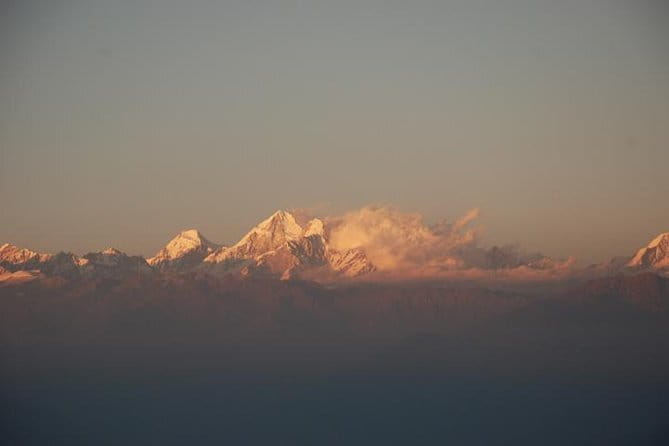
What is the duration and starting point of the Everest Base Camp trek?
The trek is approximately 14 days and starts in Kathmandu, Nepal.
What are the main high points on the route?
Everest Base Camp is at about 5,316 meters, and Kala Patthar is listed at about 5,545 meters.
How do you travel from Kathmandu to Lukla?
You take a domestic flight from Kathmandu to Lukla. In peak seasons, the plan notes you may travel from Ramechhap to Lukla, including a 4-hour drive by private vehicle if needed.
Where do you stay during the trek?
You stay in tea houses on a twin sharing basis during the trek, and you stay in Kathmandu in a 3-star category hotel with breakfast.
Is a guide included?
Yes. The trek includes an experienced, government licensed trekking guide, with meals, accommodation, and insurance.
What is included in the price?
Included items listed are airport transfers on private vehicle as per itinerary, Kathmandu hotel (3-star) with breakfast, Kathmandu-Lukla-Lukla domestic flights with taxes, national park and local entry permits, meals on full board as mentioned, tea house lodging during the trek, and trekking guide support. It also includes down jacket, sleeping bags, and duffel bags on request.
What is not included?
Not included are personal nature expenses, hot and cold drinks, WiFi and internet, battery charging, and tipping for guides and porters.
Is the tour private?
Yes. It is described as a private tour/activity, meaning only your group participates.
Can I get a full refund if I cancel?
You can cancel up to 3 days in advance of the experience for a full refund, with the rule that for a full refund you must cancel at least 3 full days before the experience’s start time.
Latest additions near Kathmandu
- White Water River Rafting – 1 Day★ 4.3 · 3 reviews
- Traditional Momo Making Class★ 5.0 · 10 reviews
- Kathmandu to Pokhara Premium sofa bus ticket★ 4.0 · 17 reviews
- Ghorepani Poon Hill Trek★ 5.0 · 16 reviews
- Amazing 1 Day Trekking Experience in Kathmandu Nepal★ 5.0 · 24 reviews
- Ghorepani Poonhill Trek★ 5.0 · 5 reviews
- Walking tour of real Kathmandu through back streets.★ 5.0 · 3 reviews
- Wildlife Adventure in Chitwan Nepal★ 4.0 · 4 reviews
Everest Base Camp Treks, compared.
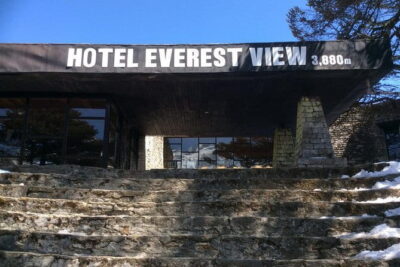
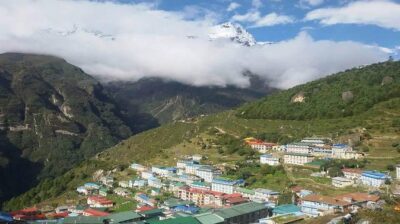
Everest Base Camp Helicopter Tour landing at Everest View Hotel
Read our review →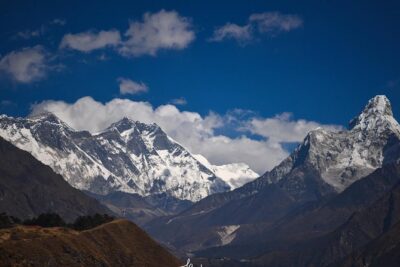
Everest Base Camp Helicopter Tour landing at Hotel Everest View
Read our review →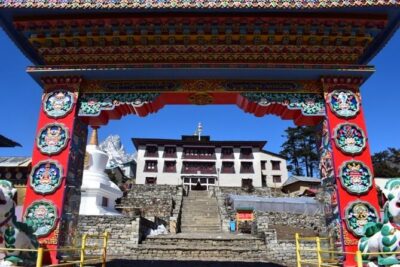
Browse the lists this tour appears in