
Reviewed · ANNAPURNA CIRCUIT TREKS
12 Days Annapurna Circuit Trek from Pokhara
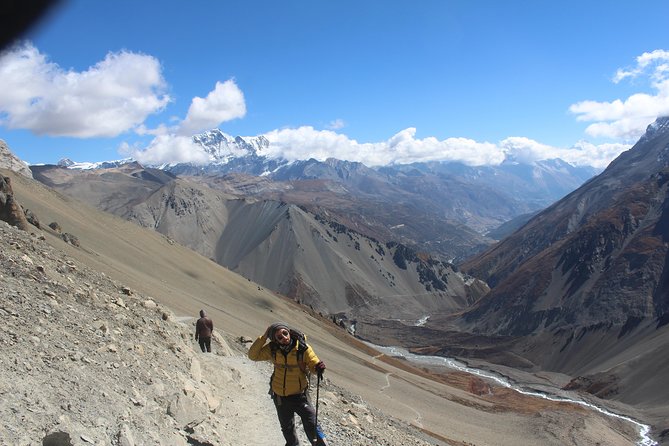
Fast mountain days change you, fast. This 12-day Annapurna Circuit trek from Pokhara is built around real time on the trail and one big milestone: crossing Throng La at 5,416 meters, then dropping to Muktinath. You also get the full circuit feel, from village paths and stone steps to high-altitude views that make the whole region feel human-scale and far from your phone screen.
What I love most is the plan includes a dedicated acclimatization day (Day 7), not just a brute-force climb. I also like that you get an English-speaking trekking guide plus the required permits (TIMS and trekking permit) and guest house accommodation, which keeps the logistics simple when you are already juggling altitude, time, and layers. That combo is great value for people who want the experience to feel organized, not improvised.
One possible drawback to consider: this is a high-pass trek, and you should already be in strong shape before you go. The itinerary includes early starts and long hiking days, and meals and drinks are not included, so your day-to-day costs and energy planning still need attention.
In This Review
- Key highlights worth caring about
- Pokhara to the Circuit: what makes this trek feel like real Nepal
- Your 12 days on the trail, and how the pacing is designed
- Days 1 to 6: Besisahar to Manang, village days with real elevation gain
- Day 1: Besisahar to Nadi (via trek start near Chame Sadak)
- Day 2: Jagat
- Day 3: to Dharapani area (Annapurna Padmaarga)
- Day 4: Chame
- Day 5: Pisang
- Day 6: Manang
- Day 7 acclimatization and Bhojo Gompa: a smart reset before Throng La
- Days 8 to 10: Yak Kharka, Thorong Phedi, and the 5,416 m crossing
- Day 8: Yak Kharka
- Day 9: Thorong Phedi to Thorong La Road (day before)
- Day 10: Thorong La (5,416 m) to Muktinath (3,800 m)
- Day 11 Jomsom village time, then Day 12 back to Pokhara
- Day 11: descend to Jomsom
- Day 12: return to Pokhara, hotel transfer
- Price and logistics: what you really get for $718.77
- Your guide and comfort level: why people trust the support here
- Meals, drinks, and rescue risk: the costs you must plan for
- Who this Annapurna Circuit trek suits best
- Should you book this Annapurna Circuit trek from Pokhara?
- FAQ
- What is included in the tour price?
- Are meals included?
- How high do you go on this trek?
- What is the highest-altitude acclimatization plan?
- What does the itinerary include on the pass day?
- Do you stay in guest houses or camp?
- What kind of transport is used?
- Is this a group tour or private?
- Do I need permits?
- What is the cancellation policy?
Key highlights worth caring about
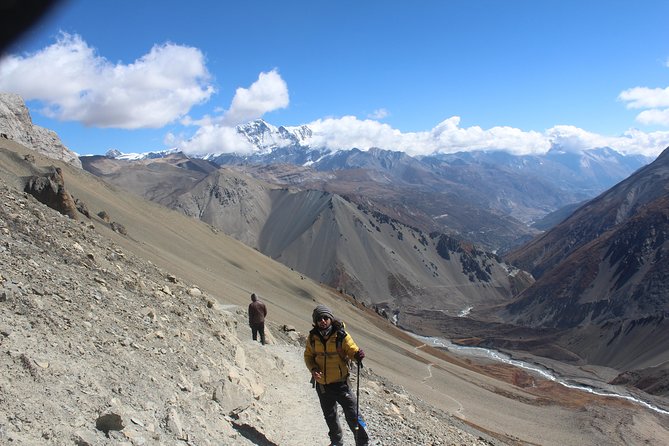
- Throng La (5,416 m) crossing as the centerpiece of the circuit
- Acclimatization on Day 7, plus a short higher-altitude walk and Bhojo Gompa visit
- English-speaking guide support, with experiences from guides like Bikram, Prakash, and Krishna showing up in past feedback
- Permits covered (TIMS and trekking permit), which saves time and paperwork
- Guest house stays across the route, plus sharing buses for getting to and from the trailhead
Pokhara to the Circuit: what makes this trek feel like real Nepal
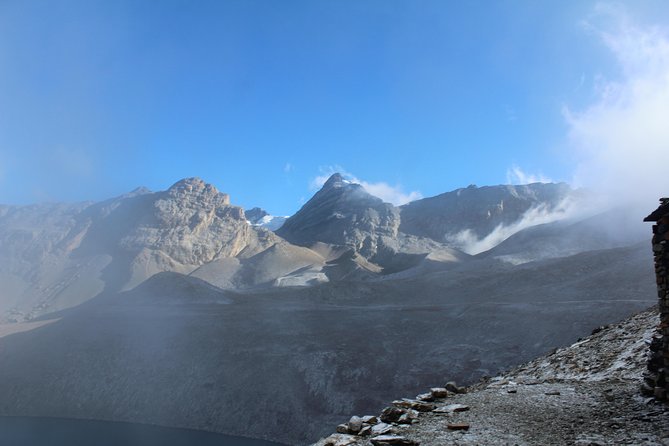
The Annapurna Circuit is famous for a reason: you do not just walk past viewpoints, you move through cultures and elevations. This trek starts in the Pokhara area and works up toward the Annapurna range, ending with a descent toward lower elevations and Muktinath before finishing with Jomsom. You get that classic circuit arc where every few days the air changes, the walking changes, and the views keep widening.
For me, the most compelling part is the way the plan ties together achievement and progress. Reaching Throng La is the headline, but the itinerary is also structured so you are not sprinting from one altitude jump to the next without any breathing room. Day 7 is the proof. You get a short walk to higher altitudes to acclimatize and a cultural stop at Bhojo Gompa, so the day has meaning, not just survival pacing.
Value also comes from what they include. At a stated price of $718.77 per person, you are not just paying for a guide and a route, you are also getting trekking permits (TIMS and permit), guest house lodging, an English-speaking guide, and the transport pieces that can otherwise eat up time and energy. Meals are not included, so you will still need to budget for food, but the big moving parts are handled.
More Treks in Pokhara
- Poon hill Trek 3 days
★ 5.0 · 176 reviews - Trekking in Annapurna/Langtang/Everest/Upper Mustang regions
★ 5.0 · 161 reviews - Pokhara: 4-Day Ghorepani, Poonhill & Ghandruk Mountain Trek
★ 5.0 · 132 reviews
Your 12 days on the trail, and how the pacing is designed
Your trek runs about 12 days total, with the tour ending back in Pokhara. Most days are mid-length hiking sessions, typically around 4 to 7 hours, with one big pass day where the walking adds up.
Here’s the rhythm the itinerary sets up:
- Days 1 to 3: settle into trekking mode and move through the lower valleys toward the main trekking corridor.
- Days 4 to 6: you gain elevation step by step, with Manang becoming your high point staging area.
- Day 7: acclimatization walk plus Bhojo Gompa, giving your body time to adjust.
- Days 8 to 10: build toward the pass, then cross Throng La and descend toward Muktinath.
- Days 11 to 12: lower altitude trekking finishes with Jomsom exploration, then back to Pokhara.
The schedule starts with a practical push. Day 1 includes an early bus drive at 6:15 am to Besisahar, then trekking onward (listed as toward Nadi and on the Chame Sadak segment). That early start matters because mountain days go faster than you think, especially when you are still warming up after travel.
The one thing you should watch is recovery. Even with acclimatization, a pass at 5,416 m is not casual. If you show up with strong fitness and stay sensible about pace, the plan makes sense. If you show up undertrained, the itinerary becomes a stress test.
Days 1 to 6: Besisahar to Manang, village days with real elevation gain
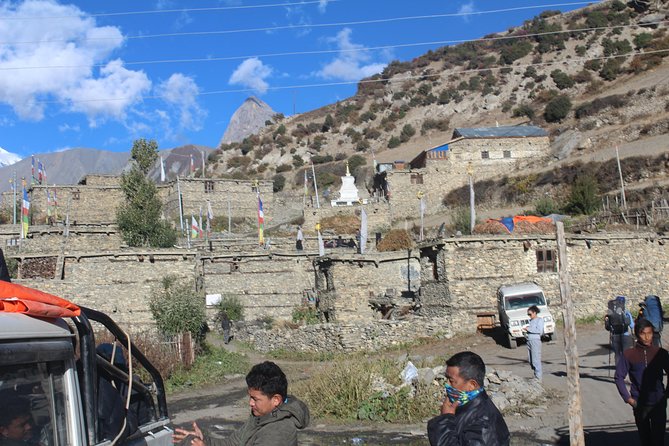
Day 1: Besisahar to Nadi (via trek start near Chame Sadak)
You begin early with a bus drive to Besisahar, then transition into trekking for about 6 hours. This is a great first day because it is long enough to feel like a trek but not so hard that you are thrown into altitude panic immediately. You also get moving while it is still fresh outside.
Potential consideration: early starts can make the first day feel intense. Plan to keep your effort steady, not heroic.
More Annapurna Circuit departures:
- Kathmandu: 9-Day Annapurna Circuit Trek via Thorong La Pass
★ 5.0 · 17 reviews - Kathmandu: 10-Day Annapurna Circuit Trek via Thorong La Pass
★ 5.0 · 10 reviews - Annapurna Circuit Trek with Tilicho Lake
★ 5.0 · 368 reviews - Annapurna Circuit Trek
★ 5.0 · 94 reviews
Day 2: Jagat
Trekking about 5 hours takes you onward to Jagat. This is the kind of day that helps your legs learn the routine. You will likely notice how quickly your breathing changes once you start climbing for real, but your body also gets used to the rhythm.
Day 3: to Dharapani area (Annapurna Padmaarga)
Day 3 is listed as 7 hours to Dharapani area (with the itinerary noting Annapurna Padmaarga). This is a longer walking day, which can be rewarding if you stay disciplined with pace. The itinerary highlights that you pass through villages and enjoy beautiful scenery, which is exactly what makes this circuit feel less like a climb and more like travel.
Day 4: Chame
About 6 hours to Chame, and the itinerary calls out major Himalayan views, including Lamjung Himal and Annapurna II and IV. Days like this are where you start to feel why the region is a magnet for trekkers. You get more open scenery, and the trail often feels like it is staging you for what comes next.
A possible drawback: the bigger views can tempt you to stop more often than you should. Stop for photos, then keep moving.
Day 5: Pisang
This day is about 6 hours to Pisang. You get another village-linked trek day, and the route keeps raising your altitude over time. It is also a day where you can start making your packing decisions, like how many warm layers you actually need when the sun drops.
Day 6: Manang
Another 6 hours brings you to Manang, with emphasis on amazing scenery and snow-capped mountain views. This is also the point where your trek begins to feel more high-alpine. Manang is not just a stop, it becomes your base camp in spirit, the place you breathe easier because you can finally rest and prepare.
If you are prone to overdoing it early, this is where you should slow down. Long days are easier when you are not racing yourself.
Day 7 acclimatization and Bhojo Gompa: a smart reset before Throng La
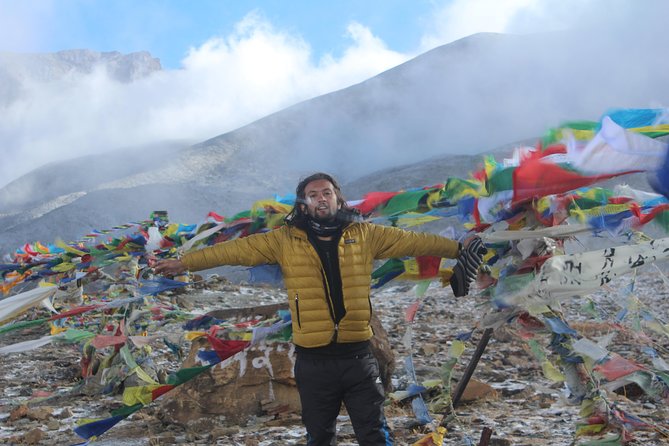
Day 7 is only about 3 hours, and that matters. Instead of stacking another full hike, the itinerary builds in acclimatization by taking a short walk to higher altitudes. The goal is to help your body adjust before the pass day pressure.
You also visit Bhojo Gompa. That blend is underrated. A religious or cultural stop breaks up the physical grind, and it gives you a mental reset. On a high-altitude trek, that kind of pause is not wasted time.
How to use a day like this well:
- Keep the pace gentle during the higher-altitude walk.
- Treat it as practice for the next days, not a new fitness test.
A note on expectations: you are still in a high region. Even on a shorter day, you can feel the altitude. The big win is that this plan does not ignore acclimatization, and that supports a smoother Throng La crossing later.
Days 8 to 10: Yak Kharka, Thorong Phedi, and the 5,416 m crossing
Day 8: Yak Kharka
The trek continues with more incline, and you reach Yak Kharka in about 4 hours. The itinerary calls out more aerial views, which is typical for this part of the circuit. This day often feels like the trail is turning more serious, more exposed. The upside is the views. The tradeoff is you are now closer to the pass environment.
Day 9: Thorong Phedi to Thorong La Road (day before)
Day 9 is about 4 hours, described as reaching a high level just the day before crossing. You get to Thorong Phedi area (listed as Thorong Phedi – Thorong La Road). This is one of those days where your main job is to arrive and set yourself up for an early start.
Practical advice: focus on sleep and hydration. When you are aiming for a pass crossing next day, how you handle tonight can make tomorrow feel easier or harder.
Day 10: Thorong La (5,416 m) to Muktinath (3,800 m)
This is the big day. The itinerary states you start early in the morning to cross Thorong La (5,416 meters), destination of the trek. It then says you descend down to Muktinath (3,800 meters). Total time on the day is listed as about 8 hours.
That early start is crucial for high mountain trekking. It reduces time in colder or potentially harsher conditions later in the day. It also helps you manage energy while the climb is steepest in your body.
What you will likely feel:
- A slow burn on the way up, especially with altitude
- A mental shift once you reach the pass point, because the descent becomes your next task
Why the descent to Muktinath is part of the value: you do not just conquer a high point and stop. The trek turns the accomplishment into relief and forward motion, ending the day lower in elevation than the pass, which is a gift after hours of effort.
Day 11 Jomsom village time, then Day 12 back to Pokhara
Day 11: descend to Jomsom
Day 11 is about 5 hours, descending to Jomsom. The itinerary says you explore Jomsom village and nearby places. After a high pass, a village day can feel like exhale time. It also helps you process what you just did, rather than collapsing straight into logistics.
If you like small-scale travel, this is a good match. Jomsom is not presented as a museum stop, it is framed as a place to walk around and see the town life.
Day 12: return to Pokhara, hotel transfer
You take a morning bus drive back to Pokhara, then transfer to your hotel. Total time is listed as about 8 hours. That means you are not forced into a long last-day scramble. It also gives you a clean end to the trip.
One last practical point: after a demanding trek, your body will still feel it. A hotel transfer at the end is a small but meaningful comfort, especially if you want a proper shower and a real meal.
Price and logistics: what you really get for $718.77
This tour is priced at $718.77 per person, and it includes a lot of the stuff that typically turns a trek into a planning headache.
Included items you should care about:
- Trekking permits: TIMS and trekking permit
- English-speaking trekking guide
- Guest house accommodation
- Transport by sharing bus from and to the trekking point
- Hotel shuttle service in a private car
- Listed as private trip meaning your group is the only group participating
Those are the high-effort pieces. Permits are not optional on the circuit, and they are annoying to sort out on the fly. The guide handles the route flow and day-to-day choices, and guest houses take the burden of finding beds away from you.
The reviews also hint at how the guide experience shapes the trip. Names that appear in past feedback include Bikram, Prakash, and Krishna, with comments pointing to patient guidance and detailed care. That aligns with what you want on a pass trek, especially when weather, pace, and altitude can turn a plan into a moving target.
If you are comparing value, remember what is not included: meals and drinks. So the real cost is the base price plus food along the way. Still, if you want the route run smoothly, this package handles the big moving parts.
Your guide and comfort level: why people trust the support here
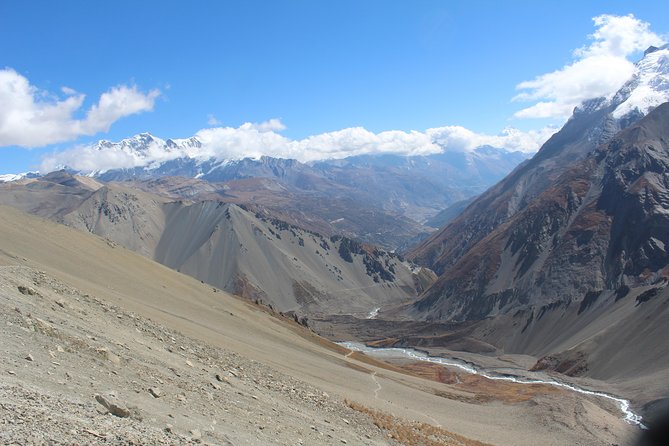
On the Annapurna Circuit, you do not just need a route. You need someone who can read the day, manage timing, and help you make sensible choices around altitude.
Past feedback mentions Bikram as patient and experienced, with more than 20 years in guiding. Another review highlights Prakash as excellent, describing Himalayas and culture and taking care so the group could pass Throng La easily. A separate note credits Krishna and mentions the CAN team, with a group of 6 people completing the trek smoothly.
I take that pattern seriously. A strong guide does two things:
- Keeps you on track for the schedule, especially the day before and day of the pass
- Makes the experience calmer by handling explanations and practical decisions
Add the fact that the itinerary includes a structured acclimatization day, and the overall support system looks designed to reduce stress. That can matter as much as the views when you are hours from the nearest road.
Meals, drinks, and rescue risk: the costs you must plan for
Meals and drinks are not included. That means you should expect to pay for breakfast, lunch, and dinner along the route. It also means you need to think about how you fuel on longer days like Day 3 and the pass day.
Rescue cost in case of emergency is also not included. On high-altitude treks, that is a real consideration, not a scare tactic. If you are serious about safety planning, build this into your thinking before you go.
The itinerary also notes gratitude is optional. Tips are always personal, but it is good to know the framework is flexible.
Who this Annapurna Circuit trek suits best
This trek fits you if:
- You have strong physical fitness, since the itinerary includes 5,416 m terrain and multiple hiking days
- You want a guided experience with English-speaking support
- You prefer guest house accommodation over camping-style trekking
- You like the idea of a circuit that mixes village days, high-altitude staging, and an earned pass crossing
It may not be the right fit if you want a very easy pace. Even though some days are shorter, the pass day is demanding, and the overall schedule includes long walking blocks. If you are still building fitness, you might want a slower plan or more time for acclimatization.
Should you book this Annapurna Circuit trek from Pokhara?
I would book this if you want the classic Annapurna Circuit experience with the big logistics handled. The biggest wins are the included permits, the English-speaking guide, the guest house stays, and the fact that the plan includes a smart acclimatization day before Thorong La. The pass is the point, and the itinerary is structured to help you get there without guessing.
I would hesitate if you are not ready for the altitude and long hiking days, or if you already know you do not want to manage extra costs for meals and drinks. For the right fitness level, though, this is a solid way to get the circuit done with fewer moving parts to worry about.
FAQ
What is included in the tour price?
The tour includes hotel shuttle service in a private car, trekking permits (TIMS and trekking permit), an English-speaking trekking guide, accommodation in guest houses, transport by sharing bus from and to the trekking point, and a private trip.
Are meals included?
No. All meals and drinks are not included.
How high do you go on this trek?
The itinerary includes a crossing of Thorong La at 5,416 meters.
What is the highest-altitude acclimatization plan?
On Day 7, the itinerary includes a short walk to higher altitudes to acclimatize, along with a visit to Bhojo Gompa.
What does the itinerary include on the pass day?
On Day 10, you trek from Thorong Phedi to Thorong La (5,416 m), starting early in the morning, then descend to Muktinath (3,800 m). The day is listed as about 8 hours.
Do you stay in guest houses or camp?
Accommodation is in guest houses.
What kind of transport is used?
You use a sharing bus from and to the trekking point, and you also get a hotel shuttle service in a private car for the transfer in Pokhara.
Is this a group tour or private?
It is listed as a private trip, meaning only your group participates.
Do I need permits?
Yes. The tour includes the trekking permit and TIMS.
What is the cancellation policy?
You can cancel for free up to 24 hours in advance for a full refund. If you cancel less than 24 hours before the start time, you do not get a refund.
More treks out of Pokhara
- From Pokhara: Sarangkot Sunrise Himalayas Tour
★ 4.7 · 218 reviews - From Pokhara: 3-Day Ghorepani Poon Hill Trek with Guide
★ 4.9 · 68 reviews - 3-Day Poon Hill Trek from Pokhara.
★ 5.0 · 45 reviews - From Pokhara: 2 Day 1 Night Ulleri,Ghorepani Poon Hill Trek
★ 4.9 · 33 reviews
Latest additions near Pokhara
- Pokhara: Pokhara Highlights Tour by Bus★ 3.6 · 10 reviews
- Discover Pokhara in Style: Private Vehicle Service with Driver★ 5.0 · 5 reviews
- Pokhara in 5 Hours: Lake, Museum, Cave, Falls & Pagoda Hill★ 4.5 · 16 reviews
- The World Peace Pagoda in Pokhara★ 4.5 · 7 reviews
- 7-Day Trek to Annapurna Base Camp from Pokhara★ 5.0 · 12 reviews
- 4 Day Mardi Himal Base Camp Trek from Pokhara★ 5.0 · 18 reviews
- Unique Easy Hiking to Foxing Hill from Pokhara★ 5.0 · 4 reviews
- World Peace Stupa Day Hike From Pokhara★ 5.0 · 4 reviews
Annapurna Circuit Treks, compared.
Browse the lists this tour appears in