
Reviewed · LANGTANG VALLEY TREKS
Langtang Valley Trek – 8 Days
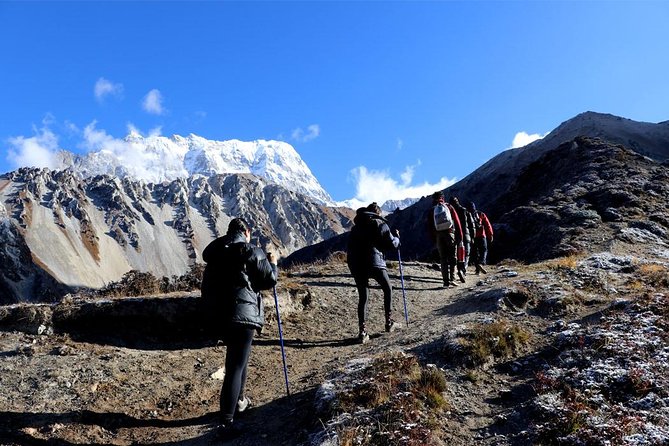
Langtang hits different, even on day one. You get a remote valley feel fast, with Tamang villages and rhododendron-and-bamboo trails that keep things peaceful. I also love the payoff at Kyanjin Gompa, where the views feel close enough to touch. The one drawback to plan around is the bumpy, winding ground transfer into the trek start, so you’ll want a calm stomach on travel day.
This is a high and isolated corner of Nepal, set in Langtang National Park. The valley sits between big Himalayan peaks to the north and slightly lower snowy ridges to the south. And culturally, the Tamang communities here carry strong Tibetan connections in religion, language, and dress.
You should book this if you have moderate fitness and want a trek with steady walking, scenic breaks, and a logical rhythm from village to village. It’s also a private experience, so your group size stays small and your guide can keep things moving at a pace you can handle.
In This Review
- Key highlights to know before you go
- Langtang Valley: Why this trek feels more personal than the usual Himalayan rush
- Getting to Syabrubesi on uneven roads, then easing into the trek on Day 1
- Into Langtang Valley: Day 2’s suspension bridge, river trail, and forest walking
- Langtang village on stone-thatched trails: Day 3’s culture stop with mountain drama
- Kyanjin Gompa: Day 4’s sacred monastery visit and close-up mountain views
- Day 5’s optional summit-style hikes to Kyanjin Ri and Tserko Ri, plus a cheese factory stop
- Trekking back to Lama Hotel on Day 6: same trails, different light
- Day 7 to Syabrubesi: the steep ridge descent and the final Tamang village walk-through
- Day 8 drive back to Kathmandu, plus a chance to enjoy the city
- Price and logistics: what the $1,000 per person gets you, and where you need to think ahead
- Gear, comfort, and altitude checks: staying safe without turning the trek into a medical drama
- Who this Langtang Valley trek is best for
- Should you book Base Camp Adventure’s Langtang Valley Trek?
- FAQ
- What time does the trek start from Kathmandu?
- Where does the trek begin and end?
- What is included in the trek price?
- What is not included?
- What kind of fitness level do I need?
- Is the tour private?
- Can I cancel for a full refund?
Key highlights to know before you go
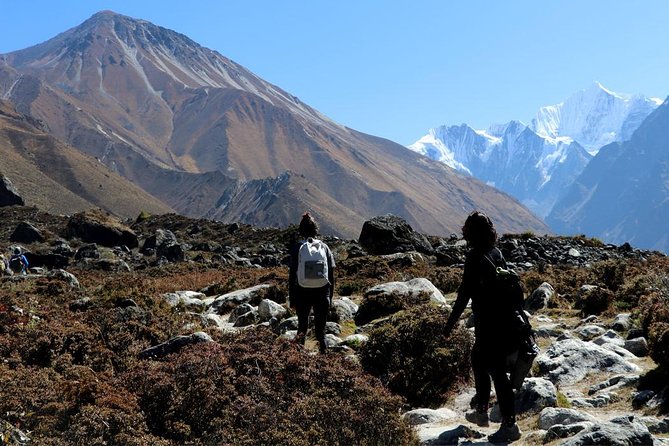
- A real valley trek, not just a walk to a viewpoint: villages, a sacred monastery stop, side hikes, and glacier-area scenery.
- Kyanjin Gompa as the emotional center: you’ll visit an ancient monastery that Tamang locals consider especially sacred.
- Side hikes for big views: optional climbs to Kyanjin Ri (4773m) and Tserko Ri (4984m).
- Comfort extras included: down jacket, sleeping bag, and duffel bag are part of the package.
- Health monitoring built in: the trip includes an oxymeter to check pulse and oxygen saturation.
- Strong on-the-ground support: a licensed English speaking trekking guide plus trekking staff logistics are handled for you.
Langtang Valley: Why this trek feels more personal than the usual Himalayan rush
Langtang Valley is the kind of trekking region that doesn’t need hype. The geography does the work for you. The valley runs between major Himalayan height to the north and snowy peaks to the south, so the walls of mountains keep getting closer as you walk deeper in.
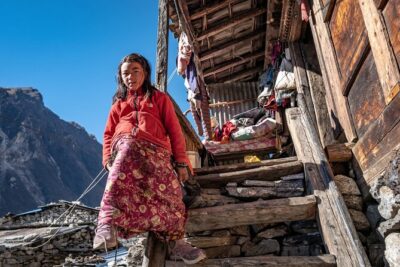
What makes it feel special is the combo of scenery and human scale. You move through Tamang villages where stone thatched houses, yaks, and wild goats show up as part of everyday life, not as a photo prop. This area also has a reputation for strong Tibetan parallels. If you care about culture, you’re not just passing through a landscape, you’re meeting a community with traditions that feel familiar to northern neighbors.
I also like that this trek is framed as a comfortably low elevation experience compared with the ultra-high routes. You still get serious Himalayan views, including famous peaks like Langtang Lirung, but you aren’t forced into the most punishing altitude timelines.
The other quiet win is pacing. The itinerary balances trekking days with a real day-off to explore near Kyanjin Gompa. That matters. It lets you enjoy the place rather than simply check it off.
More Treks in Kathmandu
- Everest Base Camp Trek – 14 Days
★ 5.0 · 1,499 reviews - Everest Base Camp Trek
★ 5.0 · 842 reviews - Everest Base Camp Trekking
★ 5.0 · 485 reviews
Getting to Syabrubesi on uneven roads, then easing into the trek on Day 1
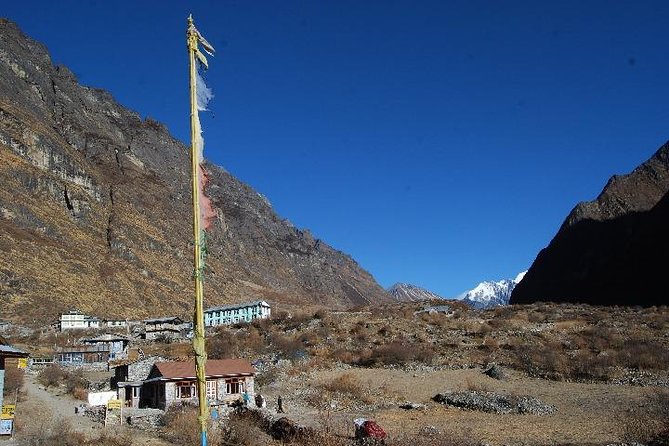
Day 1 is a ground transfer from Kathmandu to Syabru Besi, the trek’s starting point. The roads are described as uneven and windy. Translation: expect bumps, twists, and some motion sickness potential if you are sensitive.
The good news is that the ride is not just a chore. Along the way, you get amazing views of the Langtang and Ganesh Himal ranges. When you arrive in Syabru Besi, you get overnight time in a serene town that acts like a gear-up buffer before your first real climbs.
Why this first day matters: Syabrubesi is where the trekking mindset kicks in. You start to slow down. You begin to notice the rhythm of the valley. And because your trek begins right from there, there’s no extra juggling of logistics after you’re already tired from travel.
Into Langtang Valley: Day 2’s suspension bridge, river trail, and forest walking
On Day 2, you descend toward the Bhote Koshi River and cross a suspension bridge to enter Langtang Valley. That bridge moment is a small but real mental shift. You’re not merely traveling to a destination, you’re stepping into a protected valley system.
Then you follow the Langtang River upstream. The walk is in lush forest, including rhododendron and bamboo. This is the kind of trail that helps your body settle into trekking mode. Your pace becomes easier. Your legs warm up. And you’re not staring at rock the whole time.
You end the day in Lama Hotel. This is also when the big peaks begin to show up more clearly in your daily view. From Lama Hotel, you’re looking out toward Naya Kang (5844m) and Langtang II (5696m). Even if you don’t obsess over numbers, it helps to know you are surrounded by real alpine scale.
What you should watch for: river-side trekking can feel changeable, especially with humidity under forest cover. Bring your energy management skills, small breaks, and steady steps. The day is scenic, but it’s still trekking.
Langtang village on stone-thatched trails: Day 3’s culture stop with mountain drama
Day 3 brings you a gradual ascent to the narrow track leading to Langtang village. This is where the trek becomes more than a scenic corridor. Langtang village is a Tamang village with a strong sense of place.
The best part is how the views connect to the village itself. You get an attractive look toward Langtang Lirung (7227m). Around you, the rhododendron forests and agro fields sit alongside stone thatched houses. Yaks and wild goats are kept as pets, so animal life feels integrated rather than staged.
You’ll spend time exploring the village and your surroundings, then overnight in Langtang village. That extra time is important. One of the easiest ways to enjoy a trek is to give yourself permission to pause and actually look at details: how people use space, how trails connect houses, how daily chores flow alongside the mountain setting.
A possible consideration: Langtang village is a village stop, not a resort. Guesthouses here do what they can. If you like predictable comfort, adjust expectations and focus on the experience and the views.
More Langtang Valley treks:
- Langtang Valley Trek
★ 5.0 · 140 reviews - Langtang Valley Trek
★ 5.0 · 61 reviews - 8 Days Tour in Langtang Valley Trek
★ 5.0 · 45 reviews - Private 8 – Day Langtang Trekking
★ 5.0 · 29 reviews
Kyanjin Gompa: Day 4’s sacred monastery visit and close-up mountain views
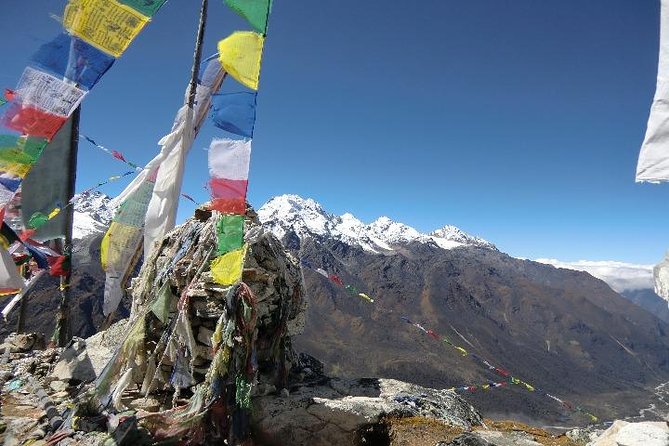
Day 4 takes you alongside the Langtang River to reach Kyanjin Gompa. The day includes a few ascends and descends, and then you arrive at the ancient monastery. In Tamang local tradition, this monastery is considered especially sacred.
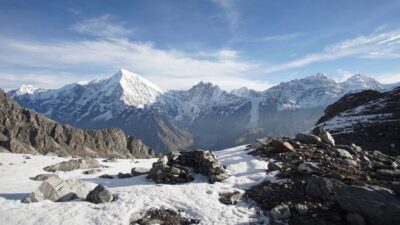
Kyanjin Gompa is also a view platform. You’ll get amazing panoramas of the Langtang range and other snowy peaks, including Dorje Lakpa (6966m) and Langshisa Ri (6560m). The monastery setting gives the views extra meaning. You are not just looking at mountains, you are looking at them from a spiritual and cultural center.
A small itinerary quirk to be aware of: after reaching Kyanjin Gompa, the overnight is listed back in Langtang village. Plan for one more evening of staying in the village rather than in a higher camp setting.
Still, Day 4 is the emotional lift. This is the day most people remember because it blends religion, community, and high-mountain views in one visit.
Day 5’s optional summit-style hikes to Kyanjin Ri and Tserko Ri, plus a cheese factory stop
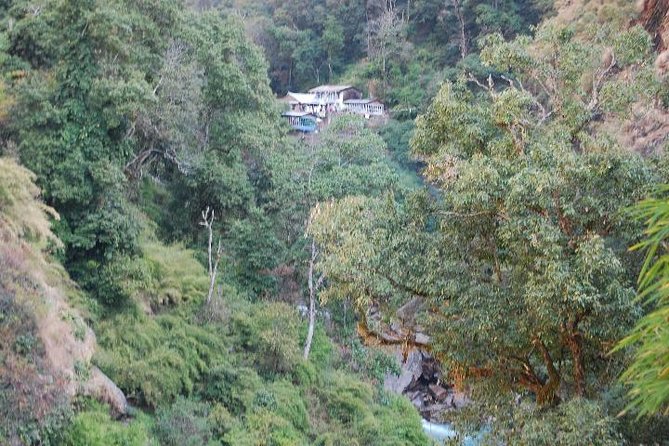
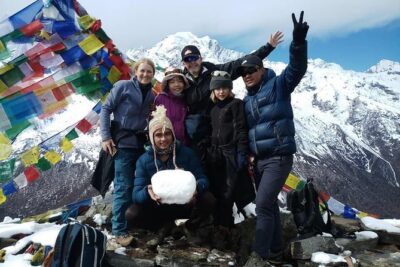
Day 5 is a day off from trekking, focused on exploration around Kyanjin Gompa. You can hike up to Kyanjin Ri (4773m) and Tserko Ri (4984m) for stunning surrounding views. These are not listed as technical climbs, but they are still climbs at altitude, so you’ll want a steady pace and a willingness to take it slow.
If you skip the higher viewpoint hikes, you can still enjoy the area. You can explore the monastery and also the local cheese factory of Kyanjin. That’s a great way to understand how people live here. Food production connects to livestock, seasons, and the practical realities of village life.
Why I think this is such good value: that optional hike turns a rest day into a choice day. You decide how much elevation effort you want, and you still get a meaningful cultural activity either way.
Also, the scenery at this stage is likely to feel more intimate than at higher, longer treks. You’re still in a valley system where peaks frame the sky rather than dominate it from far away.
Trekking back to Lama Hotel on Day 6: same trails, different light
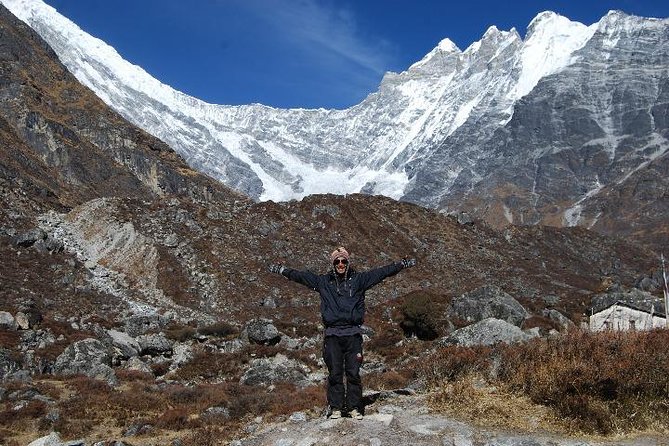
On Day 6, you retrace your way back to Lama Hotel along trails beside the Langtang River. You pass through lush rhododendron forests again and go back by Langtang village and Ghoda Tabela before reaching Lama Hotel for overnight.
This return day is worth treating as a real day, not just repetition. Light changes. Weather changes. Even if the trail line is the same, what you notice can shift. You might see plants you missed, or spot how the valley narrows and opens.
If you’re someone who worries about getting bored on a return trek, here’s the good news: the forest and river corridor keep things interesting. And because you already absorbed the peak-view sections earlier, the quieter scenery can feel even better on the way back.
Day 7 to Syabrubesi: the steep ridge descent and the final Tamang village walk-through
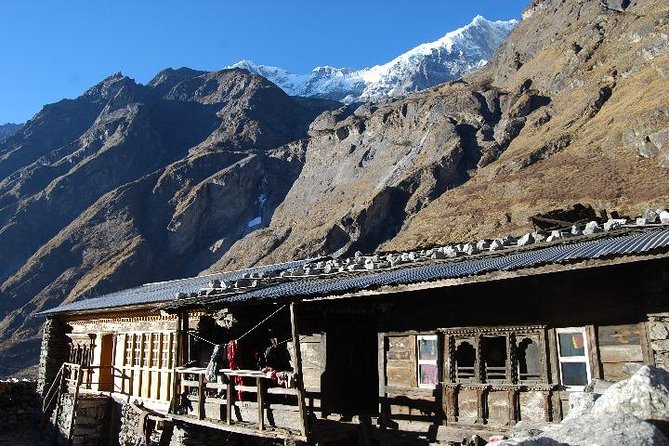
Day 7 moves you toward Syabrubesi by retracing your trail alongside the Langtang River. The day includes a gradual descent, then a steep descent on a ridge above the river to reach Syabrubesi.
That steep section is the one part I’d plan mentally for in advance. Even when the distance is manageable, steep descents can be harder on knees. You’ll do best with controlled steps and frequent micro-breaks, rather than trying to power down.
The rest of the day is about finishing the valley experience. You pass mesmerising views of mountains, green hillsides, and Tamang villages. Then you overnight at a local guesthouse in Syabrubesi.
Why this ending day matters: it’s the moment you see the valley you just walked through from the outside, in reverse. You’re also giving yourself time to recover before the drive back.
Day 8 drive back to Kathmandu, plus a chance to enjoy the city
On Day 8, you drive back to Kathmandu, and along the way you get views of the Trishuli River for much of the journey. The scenery of villages and green hillsides along the route helps the trek feel complete instead of abruptly ending.
After you reach Kathmandu, you’ll be transferred to your hotel. Then you can stroll and explore the city at your own pace.
This is where the included pacing plan pays off. By keeping the trekking days structured and not overly frantic, you’re more likely to enjoy Kathmandu instead of feeling crushed after a long day.
Price and logistics: what the $1,000 per person gets you, and where you need to think ahead
At $1,000 per person for an approximate 8-day trek, this is not a budget-only trip. But it’s also not just paying for walking. A lot is handled for you.
Here’s what’s included:
- Three meals a day (breakfast, lunch, dinner) during the trek
- Best available guest houses, mainly twin sharing
- A local government licensed English speaking trekking guide
- Permits and entry fees (trek permits, National Park entry permit, and entry fees)
- Down jacket, sleeping bag, and duffel bag
- First aid kits, plus an oxymeter to check pulse, oxygen saturation, and heart rate
- Trek staff support, including food, accommodation, salary, insurance, equipment, medicine, and transportation
- Surface bus transfer from and to Kathmandu
What you should compare this against: if you price out a guide, permits, and all the basic trekking kit rentals, the package looks more reasonable. Also, the oxymeter inclusion is a comfort detail, especially for people who get nervous about altitude effects. It doesn’t remove risk, but it adds monitoring.
What is not included:
- Your travel insurance (compulsory)
- International airfare and airport departure tax
- Alcohol, hot and cold drinks, laundry
- Personal trekking equipment
- Any other expenses not listed
My practical advice: treat the included items as part of the value story. The down jacket and sleeping bag mean you can travel lighter. The meals and guesthouses remove day-to-day decision fatigue. Your biggest planning focus becomes your insurance and your personal gear.
Gear, comfort, and altitude checks: staying safe without turning the trek into a medical drama
This trek is set up to keep you comfortable and monitored.
You’re provided:
- Down jacket
- Sleeping bag
- Duffel bag
You also get first aid medical kits and an oxymeter for pulse and oxygen saturation checks. That means someone on your team is paying attention to how you’re doing, not just how fast you walk.
At the same time, you’re responsible for your own personal trekking equipment since it’s not included. That’s one area where people often get caught: they pack like they’re on a casual hike, then realize they still need the basics for multi-day walking.
Fitness wise, the trip asks for moderate physical fitness. That aligns with an itinerary that includes gradual ascents, some descends, optional viewpoint hikes, and one steep descent day.
One more practical note: the tour is described as private, with only your group participating. In real terms, that usually means less waiting around, less confusion at meals, and easier communication with the guide.
Who this Langtang Valley trek is best for
This fits well if you:
- Want a Himalayan trek with culture and community stops, not just peak chasing
- Prefer a valley route with forests, river walking, and village life
- Like the idea of a day off that still offers optional climbs
- Appreciate practical inclusions like meals, permits, and basic gear support
You might want to reconsider if you:
- Have no tolerance for winding, uneven road travel before trekking begins
- Want a fully comfortable hotel-style experience every night
- Are uncomfortable with a steep ridge descent on Day 7
Should you book Base Camp Adventure’s Langtang Valley Trek?
If you want an 8-day trek that balances mountain views with Tamang village life, I’d say this is a strong choice. The value comes from the full package feel: guide and permits handled, meals and guesthouses included, and trekking kit basics covered. The Kyanjin Gompa visit plus the optional hikes to Kyanjin Ri and Tserko Ri give you the kind of variety that keeps days from blending together.
That said, be honest about two things: the bumpy drive to Syabrubesi, and the reality that this is village trekking with guesthouse stays, not a luxury itinerary. If you’re good with that, you’ll likely finish the trek feeling like you saw Langtang as a lived-in valley, not just a checklist of viewpoints.
FAQ
What time does the trek start from Kathmandu?
The meeting start time is 11:15 am, with the experience starting from Kathmandu (44600, Nepal).
Where does the trek begin and end?
The trek begins in Kathmandu and includes a drive to Syabru Besi as the trek start. The activity ends back at the meeting point in Kathmandu.
What is included in the trek price?
The price includes three meals a day during the trek, best available guesthouses (mainly twin sharing), a local government licensed English speaking guide, trekking staff support, permits and entry fees, a down jacket, sleeping bag, and duffel bag, first aid kits, and an oxymeter. It also includes surface bus transfer from and to Kathmandu.
What is not included?
Not included are travel insurance, international airfare and airport departure tax, alcoholic and other drinks, laundry, personal trekking equipment, and any extra expenses not listed in Price Includes.
What kind of fitness level do I need?
The trip is listed as suitable for travelers with moderate physical fitness.
Is the tour private?
Yes. This is a private tour, and only your group will participate.
Can I cancel for a full refund?
Free cancellation is offered. You can cancel up to 24 hours in advance of the experience for a full refund, based on local time.
Latest additions near Kathmandu
- White Water River Rafting – 1 Day★ 4.3 · 3 reviews
- Traditional Momo Making Class★ 5.0 · 10 reviews
- Kathmandu to Pokhara Premium sofa bus ticket★ 4.0 · 17 reviews
- Ghorepani Poon Hill Trek★ 5.0 · 16 reviews
- Amazing 1 Day Trekking Experience in Kathmandu Nepal★ 5.0 · 24 reviews
- Ghorepani Poonhill Trek★ 5.0 · 5 reviews
- Walking tour of real Kathmandu through back streets.★ 5.0 · 3 reviews
- Wildlife Adventure in Chitwan Nepal★ 4.0 · 4 reviews
Langtang Valley Treks, compared.
Trekking in Annapurna/Langtang/Everest/Upper Mustang regions
Read our review →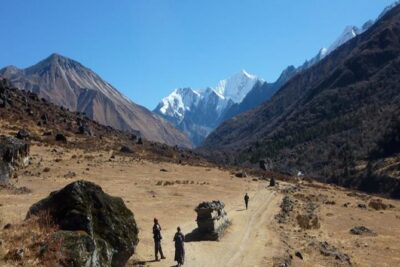
Browse the lists this tour appears in