
Reviewed · LANGTANG VALLEY TREKS
Langtang Valley Trek
The Langtang Valley feels close to big mountains. I like the easy-going, gradual elevation through the glacial basin floor, and I like that you still get a real summit-style day with Kyanjin Ri at 4,773 m. I also like the cultural hit, with a monastery visit at Kyanjin Gompa plus Tamang villages. The main consideration is altitude, since you’ll also go up toward Chorkari Ri at 5,050 m on a long day.
This trek is designed to be approachable from Kathmandu, but it is not a walk in the park. You start with a private vehicle drive to get you into the trekking zone, then you do the main work on a lodge-to-lodge route with a guide and porter included. With a max group size of 15, you get enough structure to stay safe and still feel like you’re traveling with real pace.
At $830 per person, the value comes from what’s packaged: hotel nights in Kathmandu, full board meals during the trek, permits, and a duffle bag system. You trade away a few conveniences though, like hot showers during the trek and WiFi, so pack for simple, mountain living.
In This Review
- Key highlights you should care about
- A trek that starts like a city trip, then turns into the Himalaya
- Your daily rhythm: what each day feels like on the trail
- Day 2: Kathmandu to Syabru Bensi (1,462 m)
- Day 3: Syabru Bensi to Lama Hotel (2,500 m), about 5 hours
- Day 4: Lama Hotel to Langtang Village (3,307 m), about 5 hours
- Day 5: Langtang Village to Kyanjin Ri (4,773 m), then back to Kyanjin Gompa (3,798 m), 7 to 8 hours
- Day 6: Kyanjin Gompa exploration, then up toward Chorkari Ri (5,050 m), about 7 hours
- Day 7: Kyanjin Gompa to Lama Hotel (2,500 m), 5 to 6 hours
- Day 8: Lama Hotel to Syabru Bensi (1,462 m), 5 to 6 hours
- Day 9: Syabru Bensi to Kathmandu by bus
- Day 10: Departure
- Kyanjin Gompa and the monastery stop: where the trail gets human
- The high passes: Kyanjin Ri and Chorkari Ri (and how not to blow it)
- Langtang National Park: nature you can see, not just read about
- Food and lodging: what the included meals really do for you
- Guides and porters: where this trip earns trust
- Price and value: $830 buys structure, not luxury
- Who should book this Langtang Valley Trek, and who should slow down
- Should you book this Langtang Valley Trek?
- FAQ
- What time does the trek start?
- How long is the Langtang Valley Trek?
- What’s included in the trek meals and drinks?
- What kind of accommodations will I have?
- Will I have a guide and porter?
- Are hot showers available during the trek?
- What’s the main transport plan between Kathmandu and Syabru Bensi?
Key highlights you should care about
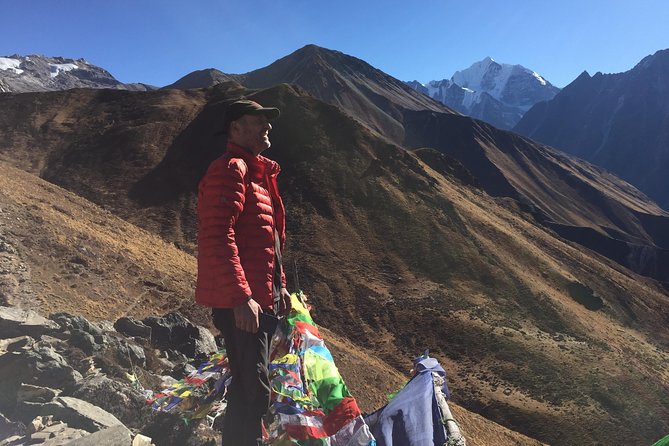
- Glacial-basin valley walking: gradual trail energy with rivers running nearby for a steady rhythm.
- Kyanjin Ri views, with a return to Gompa: a big altitude payoff without skipping the cultural stop.
- Chorkari Ri for the high-altitude workout: 5,050 m is the real test day on this route.
- Langtang National Park access: protected flora and fauna in Nepal’s first Himalayan national park.
- Tamang villages and monastery time: you’ll mix scenery with heritage, not just hiking.
- Small-group support: one English-speaking guide plus one porter for two trekkers.
A trek that starts like a city trip, then turns into the Himalaya
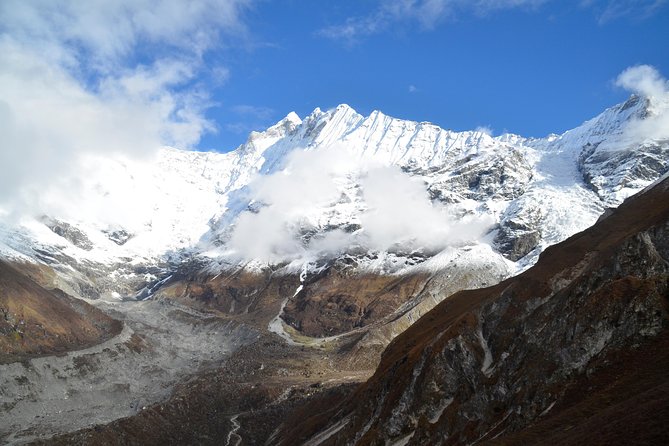
What makes this Langtang Valley Trek special is the timing. You fly into Kathmandu, then within days you’re off the main roads and up into the valley, where glacial-basin terrain shapes the whole walk.
Day 1 is purely arrival in Kathmandu (Tribhuwan International Airport). Day 2 is where the trip gets moving: a 7-hour drive from Kathmandu to Syabru Bensi at 1,462 m. If you’re the type who likes to get acclimated gradually, this is a good start because you’re not jumping into high altitude immediately.
By Day 3, you begin walking at 2,500 m toward Lama Hotel. That matters because the route is planned for steady elevation gain, not random steep shocks.
More Treks in Kathmandu
- Everest Base Camp Trek – 14 Days
★ 5.0 · 1,499 reviews - Everest Base Camp Trek
★ 5.0 · 842 reviews - Everest Base Camp Trekking
★ 5.0 · 485 reviews
Your daily rhythm: what each day feels like on the trail
Here’s the practical shape of the trek, with what each stage is doing for you.
Day 2: Kathmandu to Syabru Bensi (1,462 m)
You’ll spend about 7 hours driving to Syabru Bensi. Expect a long but scenic shift from city traffic to mountain valleys. This day also helps you settle into the schedule because it breaks up the travel time.
Day 3: Syabru Bensi to Lama Hotel (2,500 m), about 5 hours
This is a classic first hiking day, getting you comfortable with the pack and the thinner air. You go from roadside trekking to a rhythm of steady steps, usually easier on the first day than the later passes.
More Langtang Valley treks:
- Langtang Valley Trek
★ 5.0 · 140 reviews - 8 Days Tour in Langtang Valley Trek
★ 5.0 · 45 reviews - Private 8 – Day Langtang Trekking
★ 5.0 · 29 reviews - Langtang Valley Trek
★ 5.0 · 23 reviews
Day 4: Lama Hotel to Langtang Village (3,307 m), about 5 hours
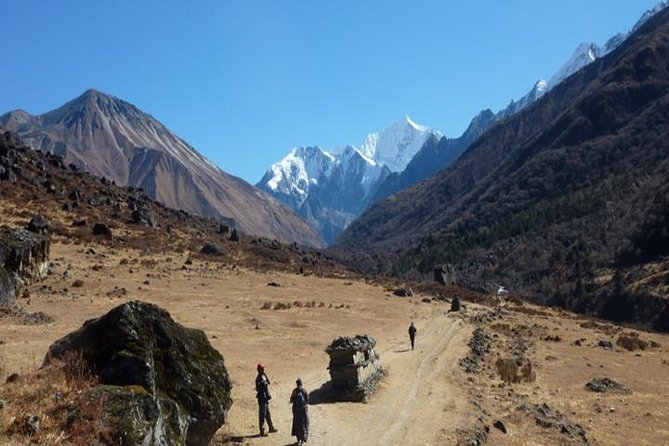
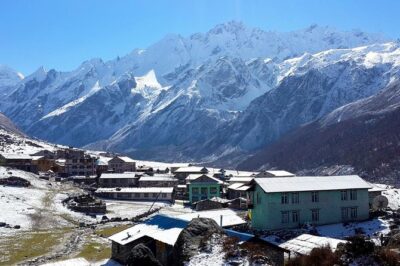
Now the altitude rises. Langtang Village at 3,307 m is your gateway to the higher valley portion, and it’s where the scenery starts to feel more dramatic because the valley opens up around glacial formations.
This is also a good day to pace yourself, because Day 5 is longer and includes a high point.
Day 5: Langtang Village to Kyanjin Ri (4,773 m), then back to Kyanjin Gompa (3,798 m), 7 to 8 hours
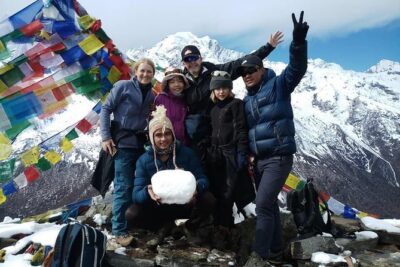
This is your main altitude push. You go up to Kyanjin Ri at 4,773 m, then you return to Kyanjin Gompa at 3,798 m. That up-and-back structure is useful, because it gives you the height moment without ending your day somewhere too exposed.
Plan this day like a careful performance, not a sprint. You’ll likely feel tired from the climb, and the best payoff is pacing early, saving your energy for the final push.
Day 6: Kyanjin Gompa exploration, then up toward Chorkari Ri (5,050 m), about 7 hours
Day 6 is two parts: time at Kyanjin Gompa and a climb toward Chorkari Ri at 5,050 m. Even if you treat the gompa time as a calm interlude, the day still totals a serious effort.
This is the day when you’ll be most aware that altitude is real. If you’re prone to headaches or nausea, you want a slower breathing rhythm and a focus on steady steps over speed.
Day 7: Kyanjin Gompa to Lama Hotel (2,500 m), 5 to 6 hours
This is your recovery day by altitude standards. Going from 3,798 m down to 2,500 m can feel like a huge exhale, even if your legs still remember the climbs.
Use this day to reset your pace, drink extra fluids, and keep your energy stable for the final descent.
Day 8: Lama Hotel to Syabru Bensi (1,462 m), 5 to 6 hours
You drop further back toward the base town. Expect the trail to feel longer even if the elevation work is easier, because you’re walking down and keeping a steady footing.
If you’re like me, you’ll also start noticing the little things that change when you’re almost done, like the way the valley villages feel closer and more human-scale again.
Day 9: Syabru Bensi to Kathmandu by bus
Travel day. You’ll go back to Kathmandu by bus after trekking ends. It’s a long ride after a long trek, so plan a relaxed evening and keep your first Kathmandu meal simple.
Day 10: Departure
Farewell day. If you’re catching a flight soon, keep in mind your trek ended the day before.
Kyanjin Gompa and the monastery stop: where the trail gets human
This itinerary isn’t just about high points. You also get an exploration day at Kyanjin Gompa, including time at an ancient Buddhist monastery.
This matters because it adds meaning to the physical effort. At this altitude, you can feel the valley as a whole system, not just a line on a map. The monastery setting gives you a pause from altitude pressure and lets you see how communities keep spiritual life close to harsh terrain.
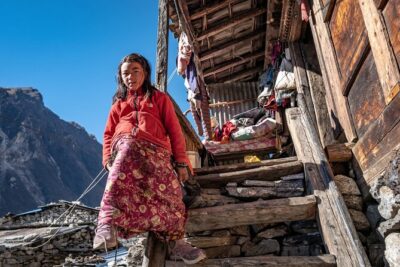
There’s also a cultural thread beyond the gompa: the trek passes welcoming Tamang settlements in the Langtang Valley. That gives you a better sense of who lives in this valley and how daily life adapts to altitude.
The high passes: Kyanjin Ri and Chorkari Ri (and how not to blow it)
Even though the trail is described as an easy route with gradual elevation and rivers gushing by, the numbers change the story.
- Kyanjin Ri: 4,773 m
- Chorkari Ri: 5,050 m
That means you should show up with moderate fitness, yes, but also with a calm, conservative hiking style. The biggest risk in treks like this is not lack of fitness. It’s going too fast on the days that include altitude spikes.
Practical mindset:
- Start slower than you think you need.
- Keep breathing steady, especially on the approach to higher viewpoints.
- Don’t treat the gompa day as easy. Day 6 is still a hard climb.
Also, the itinerary includes returning to lower altitude after the Kyanjin Ri day, and then descending more aggressively later. That structure is helpful because it gives you chances to recover at key points.
Langtang National Park: nature you can see, not just read about
You’ll trek within Langtang National Park, described as Nepal’s first Himalayan national park. That’s not just a label. It means your route crosses protected land where you can encounter protected flora and fauna.
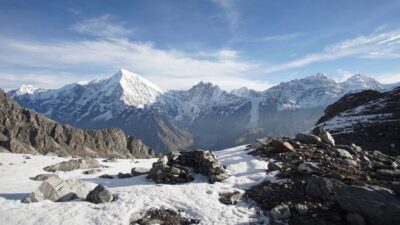
Because the trek is in a glacial valley basin and framed by big peaks, the scenery has a strong geological character. The valley floor walking through glacial territory makes the landforms feel tangible. You’ll also get wide panoramas featuring Mount Langtang Lirung (7,227 m), Ganesh Himal (7,422 m), and other peaks like Dorje Lakpa, based on what the itinerary highlights.
Wildlife spotting is never guaranteed in mountain terrain, but the park setting gives you a better chance of seeing nature where it’s protected rather than disturbed.
Food and lodging: what the included meals really do for you
This trek includes full board meals during the trekking days: breakfast, lunch, and dinner, plus tea or coffee. That’s a real deal at altitude, because it reduces decisions when your brain is tired. It also keeps your energy more consistent, which matters on long days like Kyanjin Ri and Chorkari Ri.
Lodging is described as the best available twin sharing lodge to lodge accommodation. In plain terms, you’re not getting luxury. But you are getting a predictable base each night, which is what you want when the next day starts early.
You may also get to taste yak cheese, one of the Himalayan delicacies the trek calls out. That’s exactly the kind of local food you can remember later, even if you’re too focused on the next climb while you’re eating it.
Two practical comfort notes:
- Hot showers during the trek are not included.
- WiFi internet during the trek is not included.
Plan for “mountain clean,” not spa clean.
Guides and porters: where this trip earns trust
This trip runs with one English-speaking guide and a porter, structured for two trekkers per porter. That staff setup is a big part of why the experience gets strong satisfaction.
From past departures with Nepal Hiking Team, you may meet guides such as Prajwal, Deepak Dhakal, Navaraj, Surya, Santosh, Arun ji, and Asha, with porters named Bhim, Kamal, Sabin, Tulsi, Ganesh, Shankar, and Shankar again in separate crews. You don’t have to hunt for a particular name, but it’s reassuring that the company has staffed crews that are described as patient, attentive, and safety-focused.
Also, communication seems to be a strong point before departure. If you like knowing what’s coming, you’ll probably appreciate that the operator’s office staff and managing director, Ganga, respond quickly while you prepare.
Price and value: $830 buys structure, not luxury
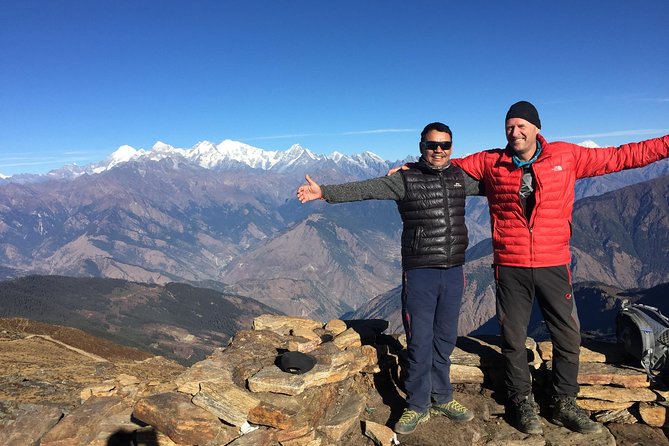
At $830 per person, the biggest value is that the trek is packaged tightly.
Included items that matter in real life:
- Airport pickup and drop off in Kathmandu by private vehicle
- Two nights in Kathmandu at a 3-star category hotel with breakfast
- Full board meals during the trek
- Trekking permits and government taxes
- Guide plus porter support
- Duffle bag system for your trek needs
- First aid medical kit
What you should watch because it affects your budget:
- Lunches and dinners in Kathmandu are not included
- Travel insurance is not included
- Nepal entry visa is not included
- Hot showers during the trek are not included
- Personal trekking equipment is not included
- Tips for trekking staff and driver are not included
- Surface transfer to and from Syabru Bensi is by public bus, not private vehicle
So the value is less about comfort and more about fewer logistics headaches. If you want a clean, guided plan with meals and permits handled, this price can make sense. If you want private transfers everywhere and mountain comforts like hot showers, you’ll feel the tradeoffs.
Who should book this Langtang Valley Trek, and who should slow down
This trek fits best if you:
- Have moderate physical fitness
- Like a structured route with a guide and porter
- Want both scenery and cultural stops like Kyanjin Gompa and Tamang villages
- Can handle high-altitude days up to 5,050 m
You might think twice if:
- You know you struggle at altitude
- You’re uncomfortable with long hiking days, like the 7 to 8 hour Kyanjin Ri push
- You expect hotel-level comfort on the trek itself (hot showers and WiFi are not part of the deal)
It’s also worth noting the group is kept small, max 15 travelers. That makes it easier to move together without feeling like a packed tour bus on a trail.
Should you book this Langtang Valley Trek?
If you want a Himalaya trek that stays close to Kathmandu in planning, mixes high views with monastery time, and doesn’t drown you in logistics, I think this is a solid choice. The itinerary is built around gradual elevation, then tests you with two real altitude days: Kyanjin Ri and Chorkari Ri.
Book it if you’re honest about your altitude readiness and you pack for simple lodging and fewer creature comforts. Skip it if your ideal trip includes frequent hot showers, guaranteed WiFi, or long stretches of zero altitude pressure.
If you do book, you’ll get the best results by hiking slow on the high days and treating the staff as your safety net.
FAQ
What time does the trek start?
The start time is 7:15 am.
How long is the Langtang Valley Trek?
It’s listed as 10 days approximately.
What’s included in the trek meals and drinks?
During the trek you get full board meals, including breakfast, lunch, and dinner, plus tea or coffee.
What kind of accommodations will I have?
In Kathmandu you get two nights at a 3-star category hotel with breakfast. During the trek you use the best available twin sharing lodge to lodge accommodation.
Will I have a guide and porter?
Yes. The trek includes one English-speaking guide and a porter. The group structure is 2 trekkers for 1 porter.
Are hot showers available during the trek?
Hot showers during the trek are not included.
What’s the main transport plan between Kathmandu and Syabru Bensi?
You have airport pickup and drop off by private vehicle in Kathmandu, and surface transfer to and from Syabru Bensi by public bus. The return to Kathmandu is also by bus from Syabru Bensi.
Latest additions near Kathmandu
- White Water River Rafting – 1 Day★ 4.3 · 3 reviews
- Traditional Momo Making Class★ 5.0 · 10 reviews
- Kathmandu to Pokhara Premium sofa bus ticket★ 4.0 · 17 reviews
- Amazing 1 Day Trekking Experience in Kathmandu Nepal★ 5.0 · 24 reviews
- Ghorepani Poonhill Trek★ 5.0 · 5 reviews
- Ghorepani Poon Hill Trek★ 5.0 · 16 reviews
- Walking tour of real Kathmandu through back streets.★ 5.0 · 3 reviews
- Wildlife Adventure in Chitwan Nepal★ 4.0 · 4 reviews
Langtang Valley Treks, compared.
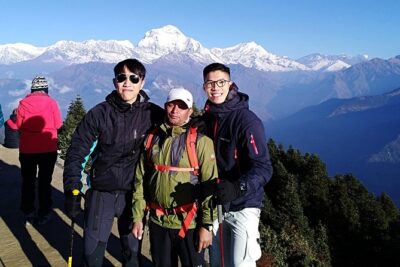
Trekking in Annapurna/Langtang/Everest/Upper Mustang regions
Read our review →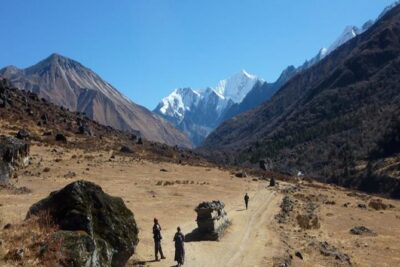
Browse the lists this tour appears in