
Reviewed · LANGTANG VALLEY TREKS
Langtang Panorama Trek
Langtang starts where most people rush past. This 10-day hike gives you big mountain views and classic valley villages, from Syabrubesi up toward Chorkari ri and on to Gosaikunda Lake. What I like most is the mix of rewarding climbs with forests of rhododendron and bamboo groves (yes, red panda habitat), and the fact that the trip is run with a small group feel, plus an English-speaking guide who keeps things organized. One thing to think about: you go high enough to need smart pacing and weather flexibility, and the trek days include several long uphill walks.
If you want a Nepal trek that feels scenic and human, not just altitude for altitude’s sake, this one fits. You’ll pass through quiet spots around Langtang and the Gosainkund area, see monasteries and viewpoints, and land in Kathmandu again with everything arranged for you. A practical note, though: Kathmandu meals and accommodation aren’t included, and you’ll want to plan for what you’ll carry, since a porter is not part of the package.
In This Review
- Key highlights before you lace up
- Why Langtang feels special right out of Kathmandu
- The $755 value question, what’s covered and what isn’t
- Your 10 days, day-by-day from Syabrubesi to Kathmandu
- Day 1: Kathmandu to Syabrubesi by bus (about 7 hours)
- Day 2: Syabrubesi to Lama Hotel (2,480m), about 5.5 hours
- Day 3: Lama Hotel to Langtang Village (3,541m), about 5 hours
- Day 4: Langtang Village to Chorkari ri (5,050m), then back to Kyangjin Gompa
- Day 5: Descend to Lama Hotel (2,480m), about 6 hours
- Day 6: Lama Hotel to Thulo Syabru (2,200m), about 5.5 hours
- Day 7: Thulo Syabru to Cholangpati (3,680m), about 6 hours
- Day 8: Gosaikunda and Lauribina pass (4,600m), then back down to Cholangpati
- Day 9: Trek down to Dhunche (about 4.5 hours)
- Day 10: Drive back to Kathmandu (about 5.5 hours), transfer to your hotel
- Forest-to-lake scenery: why the route feels like more than a hike
- Guide support you can actually use on a tough day
- Altitude reality check: where the trek gets serious
- What you’ll sleep and eat, and why it matters
- Getting to the trail and keeping the group manageable
- Should you book this Langtang Panorama trek?
- FAQ
- What is the duration of the Langtang Panorama Trek?
- Where does the trek start and how do you get there?
- What are the included meals?
- Are drinks included on the mountain?
- What kind of lodging do you get during the trek?
- Is altitude support included?
- What is not included in the price?
- Is there free cancellation?
Key highlights before you lace up
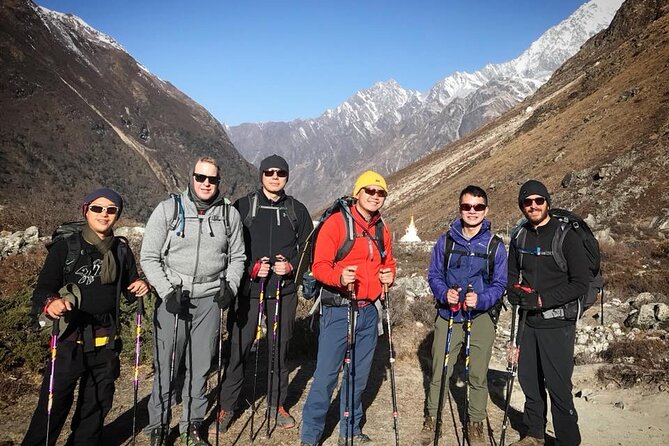
- Rhododendron and bamboo forests on the way up, with real odds of seeing Nepal nature up close
- High points that match the label panorama, including Chorkari ri (5,050m) and Lauribina pass area (4,600m)
- Gosaikunda Lake day, a signature moment of the Langtang-Gosainkund region
- Small-group maximum of 25, plus pickup offered from Kathmandu
- Altitude support included, with a first aid kit and an oxygen (pulse and oxygen saturation) check tool
Why Langtang feels special right out of Kathmandu
Langtang sits north of the Kathmandu valley rim, close enough to reach by road, but far enough to feel like another world the moment the hills start climbing. This trek is built around the popular Langtang Valley plus the Gosainkund area, so you get a strong variety: villages, forest sections, and the big highland skyline that makes people fall in love with the region.
I especially like that the hike is described as moderate and adventurous at the same time. That usually means you’re working, but not doing extreme technical climbing. You still hit real altitude, so it’s not a casual stroll, but the day structure gives you time to keep moving and adjust.
The forests are not just background. You walk through shades of rhododendron (Nepal’s national flower), oaks, magnolia, pines, and firs, plus bamboo groves in some sections. That combination gives the route character. It also makes the trek more than a “look up at mountains” exercise. You’re moving through a living landscape.
More Treks in Kathmandu
- Everest Base Camp Trek – 14 Days
★ 5.0 · 1,499 reviews - Everest Base Camp Trek
★ 5.0 · 842 reviews - Everest Base Camp Trekking
★ 5.0 · 485 reviews
The $755 value question, what’s covered and what isn’t
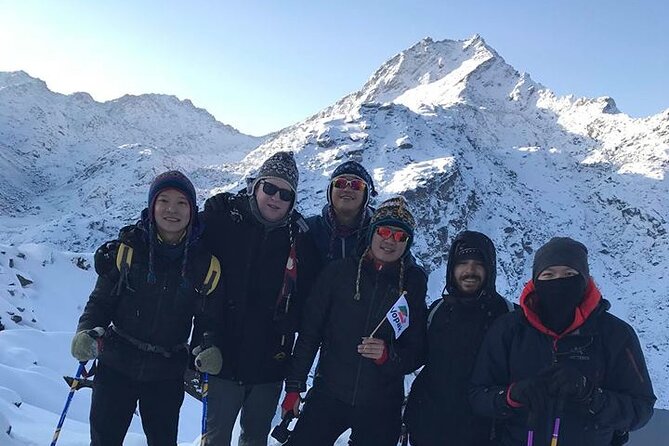
At $755 per person for a trek around 10 days, you’re paying for the coordination part of trekking that can be hard to DIY. Here’s what’s clearly included: ground transport to match the plan, three meals a day during the trekking days, twin sharing private rooms in guest houses, and the trekking guide with English support.
You also get the practical safety and admin pieces: a first aid kit and an oxygen meter to check pulse and oxygen saturation at higher altitude, TIMS registration, and the Langtang National Park entry permits. There’s even a trip map, plus a trekking cap and a certificate.
What you should budget outside the package is equally important. Meals and accommodation in Kathmandu are not included. All kinds of drinks on the mountain are not included, and tips for trekking staff and the driver are expected. A porter is not included too, which means you’ll carry your own load unless you arrange something separately.
So the value comes down to this: if you want the route run end-to-end with permits, guides, and meals handled, the price looks reasonable. If you plan to spend extra money anyway for a porter and a lot of drinks, the package starts to feel less like a bargain.
Your 10 days, day-by-day from Syabrubesi to Kathmandu
Below is what you can expect on the ground, including the elevation feel and why each day matters.
Day 1: Kathmandu to Syabrubesi by bus (about 7 hours)
You start with the long road transfer to Syabrubesi at 1,610m. This matters more than it sounds. Getting out of Kathmandu by bus takes time, but it also means you start your hiking at the trailhead without doing extra complicated staging.
You’ll sleep in a guest house overnight in Syabrubesi. It’s the kind of stop that keeps you from arriving exhausted on day one.
More Langtang Valley treks:
- Langtang Valley Trek
★ 5.0 · 140 reviews - Langtang Valley Trek
★ 5.0 · 61 reviews - 8 Days Tour in Langtang Valley Trek
★ 5.0 · 45 reviews - Private 8 – Day Langtang Trekking
★ 5.0 · 29 reviews
Day 2: Syabrubesi to Lama Hotel (2,480m), about 5.5 hours
This is your first real walking day. You climb to Lama Hotel at 2,480m, and that sets the rhythm: steady uphill, enough progress to feel momentum, not so wild that you’ll feel destroyed early.
This day is also a good time to dial in your gear. With provided sleep systems and jackets available if needed, focus on comfortable boots, quick-dry layers, and how much you’re carrying.
Day 3: Lama Hotel to Langtang Village (3,541m), about 5 hours
Now you’re climbing into the heart of the Langtang Valley experience. Langtang Village sits higher, and at 3,541m you’ll likely feel the air thinner during rest breaks, even if you pace well.
This is also when the valley starts to look like a valley. You’ll see the interplay between settlements and mountain walls, and you’ll start understanding why people call this one of Nepal’s top trekking destinations after Annapurna and Everest regions.
Day 4: Langtang Village to Chorkari ri (5,050m), then back to Kyangjin Gompa
This is a big day on paper: about 7.5 hours total, with an ascent to Chorkari ri at 5,050m, then a return down to Kyangjin Gompa. Expect long effort, and plan to move slowly on the climb. Your goal is steady breathing, not sprinting.
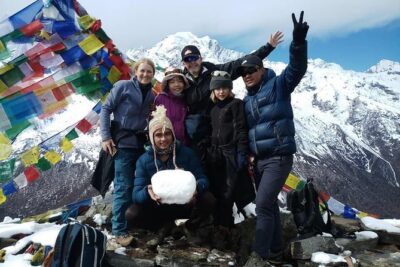
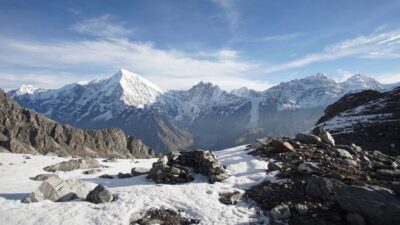
Why it’s worth it: this is where the panorama becomes real. Higher vantage points give you the broad views across the Langtang-Ganesh Himal and Jugal mountain range.
A note on weather and attitude: the higher you go, the more you rely on sky conditions. If visibility is poor, you still get the achievement of making the ascent, but the view bonus changes.
Day 5: Descend to Lama Hotel (2,480m), about 6 hours
After a high day, a long descent is physically different. Your legs take a hit in a new way. Expect steeper sections and slower footwork.
I like a day like this because it gives your body a chance to recover while still keeping you moving. You’ll sleep back at Lama Hotel, which also helps the trip feel structured rather than chaotic.
Day 6: Lama Hotel to Thulo Syabru (2,200m), about 5.5 hours
This is a mid-trip reset. Thulo Syabru sits lower than Lama Hotel, so it’s a chance to regain energy. A 5.5 hour hike at this stage is manageable, and it sets you up for the next set of altitude changes.
This day also helps you remember that Langtang is not just one continuous climb. It’s up, down, and back up, with the route designed to keep you moving without ignoring recovery.
Day 7: Thulo Syabru to Cholangpati (3,680m), about 6 hours
You climb again, and Cholangpati at 3,680m makes the air feel noticeably different. At this stage, your best strategy is consistency: don’t chase speed, chase rhythm.
If you’re using trekking layers, this is where temperature shifts matter. Bring clothing that manages sweat and wind, because the forecast can change fast in higher terrain.
Day 8: Gosaikunda and Lauribina pass (4,600m), then back down to Cholangpati
This is the signature day for many people, and for good reason. You visit Gosaikunda and Lauribina pass around 4,600m, then hike back to Cholangpati for the night, for a long day total around 7.5 hours.
Gosaikunda Lake is the emotional payoff of the journey. It’s a place people come to for the scenery and the highland feel, and you’ll likely have a strong sense of arrival once you reach it.
This day is also a reminder: long days at altitude test you mentally, not just physically. Go slow on the climb, take breaks early before you get too tired, and let your guide’s pace decisions work for you.
Day 9: Trek down to Dhunche (about 4.5 hours)
Dhunche is your exit from the mountains. The walk down at about 4.5 hours gives you a real sense of relief and momentum, plus it keeps travel stress reasonable.
You’ll sleep in a guest house in Dhunche, which positions you for the drive back to Kathmandu the next day.
Day 10: Drive back to Kathmandu (about 5.5 hours), transfer to your hotel
You end with the road ride back, around 5.5 hours by bus, then transfer to your Kathmandu hotel. This is a good final arrangement because it saves you from scrambling for last-minute transport.
In Kathmandu, remember that meals and accommodation are not included in the trek price. Plan for at least one proper post-trek meal, and maybe a shower if your accommodation setup supports it.
Forest-to-lake scenery: why the route feels like more than a hike
A lot of treks are “mountains, then more mountains.” This route adds texture. You’re walking through forests with rhododendron trees, oaks, magnolia, pines, and firs, plus bamboo groves in some sections. That matters because it breaks up the mental monotony.
You also get village life in the mix. Stops like Langtang Village and the other settlements along the way make the trek feel connected to people, not just to geology.
And yes, the red panda note is real. Bamboo groves are listed as a place where the elusive red panda is found. Don’t count on seeing one, but the fact that the habitat is present gives the forest sections extra weight.
Guide support you can actually use on a tough day
The guides and the operator coordination are a standout part of what makes this trek feel smooth.
From what I see in the overall pattern of past group experiences, Babu tends to handle the big-picture organization and responsiveness, while guides like Suresh and Damber have shown up as responsible and reliable. In practical terms, that usually means you’re not just hiking with a random stranger. You’re hiking with someone who understands the route flow, where to pause, and how to handle changes.
There’s also a common theme of flexibility. If weather turns or someone gets injured, you don’t have to assume the only options are full send or cancel. One example that shows up in the trip history is plan adjustment on the fly, such as switching to a worthwhile partial trek when the original plan can’t work. That kind of flexibility is gold at altitude.
Altitude reality check: where the trek gets serious
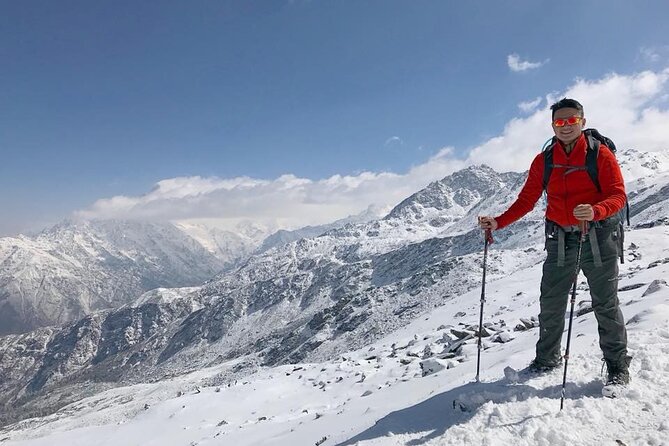
Let’s be honest about the numbers. You go up to:
- Chorkari ri: 5,050m
- Lauribina pass area: 4,600m
That’s high enough to take acclimatization seriously. The route includes down days and return segments, which helps. It’s also built around moderate pacing, not technical rope climbing.
The included oxygen meter and first aid kit are not just box-checking. Having your pulse and oxygen saturation assessed can help you and your guide make safer calls about pace and rest. But you still need to do your part: drink water, eat when you can, and tell your guide if you feel off.
If you have moderate fitness and you can handle long walks, you’re in the right category. If you hate uphill walks or you’re not used to hiking several hours a day, this trek may feel harder than you expected.
What you’ll sleep and eat, and why it matters
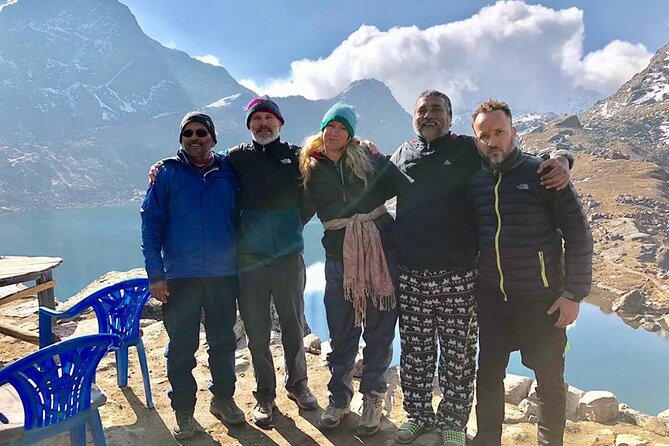
You’ll use guest houses throughout the trek and get a twin sharing private room. That means you get personal space, which is helpful after long hiking days.
Meals are included three times a day during trekking days. That’s a big deal because at altitude you don’t want to be making food decisions while also feeling tired. You’ll know what you’re getting and you can focus on rest and hydration.
Drinks on the mountain are not included, and shower and other personal expenses are extra. So if you rely on lots of tea, bottled water, or other drinks to feel comfortable, plan for it.
Sleep gear is also included in a useful way. You get four-season sleeping bags and down jackets to use for trekking, if necessary. That helps if you’re traveling light or if you didn’t pack proper cold-weather layers.
Getting to the trail and keeping the group manageable
Pickup is offered, and the tour starts with a bus ride from Kathmandu to Syabrubesi. That’s a straightforward way to start, and it reduces the chaos of coordinating transport yourself.
The group size max is 25. You still have the social side of group trekking, but it’s small enough that you’re not lost in a crowd. And since the trek includes a knowledgeable, English-speaking guide, you’re not stuck playing guess-the-plan at every turn.
Should you book this Langtang Panorama trek?
Book it if you want a well-supported moderate trek in a high-mountain region that mixes forests, villages, and a signature lake day. If you like scenery that’s not only peaks, but also rhododendron woods and bamboo sections, this fits your kind of travel.
It’s also a strong choice if you value structure. Permits, national park entry, TIMS, meals during trekking days, and altitude support tools are all included. That removes a lot of friction and keeps your energy for the trail.
I’d think twice if:
- you hate long hiking days with frequent elevation changes
- you’re not comfortable handling high altitude up to 5,050m
- you don’t want to carry your own load, since a porter is not included
- you’re expecting Kathmandu meals and lodging to be covered
If you want a trek where the planning work is handled and you get to focus on moving through Langtang’s forests toward the big views, this one makes a lot of sense.
FAQ
What is the duration of the Langtang Panorama Trek?
It runs for about 10 days.
Where does the trek start and how do you get there?
You start in Kathmandu, then drive by bus to Syabrubesi (about 7 hours). Pickup is offered.
What are the included meals?
During the trekking days, meals are provided three times a day (breakfast, lunch, and dinner).
Are drinks included on the mountain?
No. All kinds of drinks in the mountains (hot, cold, and alcoholic) are not included.
What kind of lodging do you get during the trek?
You stay in guest houses with a twin sharing comfortable and clean private room.
Is altitude support included?
Yes. The package includes a first aid medical kit and an oxygen meter to check pulse, heart rate, and oxygen saturation at higher altitude.
What is not included in the price?
Meals and accommodation in Kathmandu, drinks on the mountain, personal equipment, travel and rescue insurance, extra personal expenses, tips for staff and driver, and a porter are not included.
Is there free cancellation?
Yes, free cancellation is available. You can cancel up to 24 hours in advance for a full refund, and the experience may be rescheduled or refunded if canceled due to poor weather.
Latest additions near Kathmandu
- Traditional Momo Making Class★ 5.0 · 10 reviews
- White Water River Rafting – 1 Day★ 4.3 · 3 reviews
- Kathmandu to Pokhara Premium sofa bus ticket★ 4.0 · 17 reviews
- Ghorepani Poon Hill Trek★ 5.0 · 16 reviews
- Amazing 1 Day Trekking Experience in Kathmandu Nepal★ 5.0 · 24 reviews
- Ghorepani Poonhill Trek★ 5.0 · 5 reviews
- Walking tour of real Kathmandu through back streets.★ 5.0 · 3 reviews
- Wildlife Adventure in Chitwan Nepal★ 4.0 · 4 reviews
Langtang Valley Treks, compared.
Trekking in Annapurna/Langtang/Everest/Upper Mustang regions
Read our review →
Browse the lists this tour appears in