Reviewed · KATHMANDU TOURS
8-Day Guided Sightseeing Motorcycle Tour of Manang with Meals
Gravel roads, real mountains, and proper guiding. This 8-day Manang motorcycle adventure sends you from Kathmandu into Nepal’s higher country, where the roads mix gravel, dirt tracks, and cliffside sections with valleys dropping away below. I like that you ride a light, agile Honda CRF250L, built for variable Himalayan terrain instead of trying to brute-force everything on something too heavy.
Two things I’d call out right away: the support vehicle that travels with you (spare parts plus space for luggage), and the human side of the trip. The tour is run by English-speaking guides and a team that clearly takes care of details, with names like Grace, Udaya, Uda, and Takeshi showing up in the best feedback. That combo matters when you are riding rough roads for days.
One consideration: this is not a casual, paved-road cruise. You’ll want moderate physical fitness, and the whole plan depends on good weather, since the experience can be canceled for poor conditions.
In This Review
- Key highlights to know before you ride
- Kathmandu to Manang: why this route feels different
- Your bike, your pace: Honda CRF250L plus real support
- Day 1 Kathmandu: get your bearings, then sleep and reset
- Day 2 Bandipur: traffic to hilltop calm
- Day 3 Jagat: cliffside roads and waterfalls close by
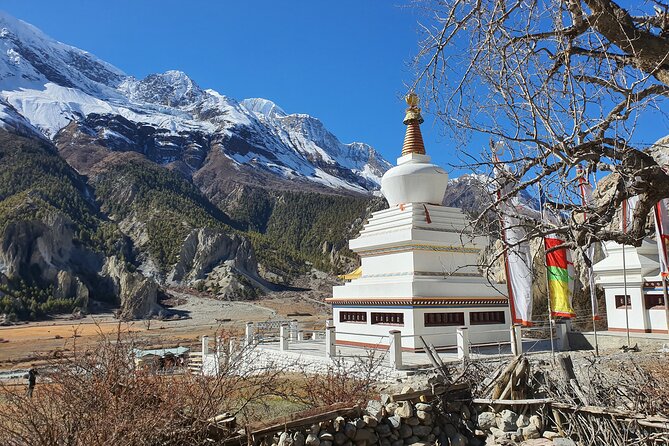
- Day 4 to Manang: higher altitude and big mountain views
- Day 5 Manang and Khangsar: jeep track, glaciers, and about 4000m
- Day 6 Kurintar: back to familiar terrain and a hotel pool stop
- Day 7 Kathmandu: deliver the bike, then enjoy the last city day
- Day 8 Kathmandu: shopping and airport transfer
- Meals and lodging: built for riding days, not just sightseeing
- Guides, group size, and why “organized” feels real here
- Price and value: what you get for $3,468.20
- Who this tour is best for (and who should pass)
- Should you book this Manang motorcycle tour?
- FAQ
- What kind of motorcycle is included?
- Are meals included on this tour?
- Does the tour include airport pickup and transfers?
- How many people are in the group?
- What insurance is included?
- What happens if the tour is canceled due to weather?
Key highlights to know before you ride
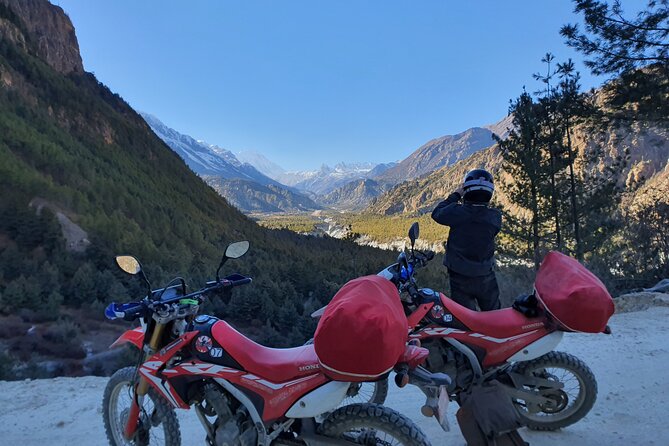
- Honda CRF250L dual sport for lighter handling on gravel, dirt, and uneven surfaces
- Support vehicle with spare parts and luggage space so your ride stays focused on the road
- Manang area exploration, including a jeep track up to remote Khangsar
- Altitude up to about 4000m on Day 5, with glacier and ice-melt lake scenery
- Small group size up to 10 travelers, which keeps the days feeling organized
- Meals and drinks included, with breakfast, lunch, and dinner built into the pace
Kathmandu to Manang: why this route feels different
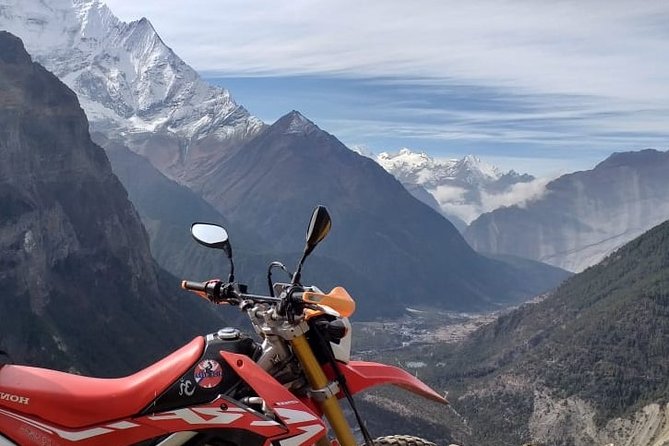
The trip’s big appeal is simple: you don’t just look at the Himalayas from a road. You ride into the mountains, with long stretches of rough track that keep your senses awake. Expect a mix of tight cliffside corridors and open valley runs, depending on the day and the section you hit.
Also, Kathmandu is not treated like a time-waster. Day 1 is mainly about getting you set up, using the airport to hotel pickup so you can start the adventure with less stress. Then you’re moving out on Day 2, which helps you feel like the trip begins immediately instead of after a bunch of admin.
One more thing I like: you get guided transitions between “hurry up” driving days and “slow down” sightseeing time. That pacing matters on routes where the road surface can change quickly.
A few more Kathmandu routes to compare
- Kathmandu: Private City Guided Tour
★ 4.9 · 174 reviews - Full Day Guided Tour in Kathmandu
★ 5.0 · 61 reviews - Kathmandu Guided Tour
★ 5.0 · 59 reviews
Your bike, your pace: Honda CRF250L plus real support
This tour rides Honda CRF250L dual sport bikes, and that choice is practical for this terrain. The bike is light and agile, which helps when you are working around gravel, ruts, and changing traction. In the mountains, where you often cannot pick the cleanest line, a bike that handles well makes a real difference.
What also matters is the logistics layer: there’s a support vehicle with spare parts and room for luggage. That setup can make the daily ride feel calmer, because you are not carrying everything on your bike while also trying to ride aggressively enough to keep up with the group. It also means the operation is designed for mechanical reality, not just good road conditions.
Insurance is practical here too, but read it carefully in your planning. The tour includes third party motorcycle insurance only, so it does not replace the safety net of personal travel insurance. If you ride regularly at home, you still want coverage that makes sense for accidents and medical care.
Day 1 Kathmandu: get your bearings, then sleep and reset
Day 1 starts with pickup from Tribhuvan Airport and transfer to your hotel. Kathmandu can feel chaotic on arrival, so having transportation handled removes one common stress point. Once you’re settled, you can use the time to absorb the city’s mix of temples, stupas, and old stories tied to rival dynasties and spiritual teachers.
A small practical note the itinerary calls out: flights are often overnight. I’d plan an extra day for the journey to Kathmandu so you do not arrive already wiped out. You want your energy for the riding days after.
Day 2 Bandipur: traffic to hilltop calm
On Day 2, you leave Kathmandu’s bustle and point toward the Prithvi highway. The early part includes busy traffic with buses shuttling passengers between major hubs, so your first day includes a rhythm shift from city driving to open-road motion.
Then you veer off toward Bandipur, a hilltop village where you can slow down. This is a good kind of break early in the itinerary because you get a chance to relax after the initial travel grind. You also start seeing how the region’s terrain changes as you climb out of the valleys.
If you hate constant riding without breaks, Day 2 helps because it is not only about going uphill. It gives you a chance to reset your head.
Another way to spend the time in Nepal:
- Everest Base Camp Trek – 14 Days
★ 5.0 · 1,499 reviews - Everest Base Camp Trek
★ 5.0 · 842 reviews - Private Kathmandu Sightseeing Tour | UNESCO World Heritage sites
★ 5.0 · 756 reviews - Kathmandu: 7 UNESCO Sites with Lunch
★ 4.8 · 744 reviews
Day 3 Jagat: cliffside roads and waterfalls close by
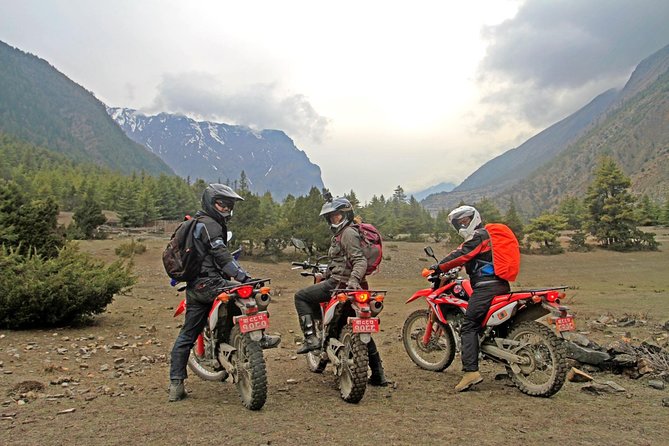
Day 3 turns more serious. You head north on roads cut into cliffsides, where sheer rock faces sit close and the valley drops away beneath you. That is the kind of driving that keeps your attention locked in, because you are constantly judging traction and line choice.
The ride also includes waterfalls and steep drop-offs, which can look dramatic even at slow speed. In this kind of terrain, the views are not separate from the ride, they are part of it.
A drawback to consider: cliffside driving is not just about confidence on a bike. You also need calm decision-making when conditions change, like gravel depth or patches of loose material. If you get tense easily on narrow sections, take a deep breath and trust the pace the guide sets.
Day 4 to Manang: higher altitude and big mountain views
Day 4 is the mental shift day, the one where you realize you are actually going into the mountains. You increase altitude and ride toward Manang, and the scenery starts stacking up fast.
The itinerary highlights views of Mt. Annapurna II and III, plus Pisang Peak and Chulu East. You do not get that kind of perspective from a short hike and a quick stop. From the bike, you keep moving, so your angles and viewpoints change more often than you would walking.
This is also a day where you should be aware of how altitude can affect your breathing and appetite. The tour includes meals and lodging, but how you feel in your body still affects how much you enjoy the day. Keep your effort steady, especially if you are not used to high-elevation riding.
Day 5 Manang and Khangsar: jeep track, glaciers, and about 4000m
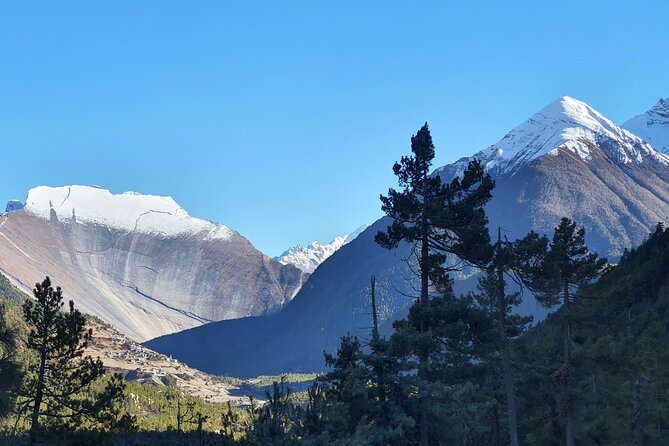
Day 5 is still based in the Manang area, but it’s more exploration and variety than just riding. You explore trails around Manang, including a jeep track to the remote village of Khangsar. That mix is smart, because it lets you see places that would be time-consuming or rough to reach solely on the bikes.
The itinerary sets a maximum altitude of about 4000m, and the sightseeing focus includes glaciers and ice-melt lakes. This is the part of the trip where the mountains stop being a backdrop and start becoming the main event. The snow and ice influence the air and the light, so the scenery feels very different from the lower valleys.
One more consideration: at around 4000m, you may feel more wind, cooler temperatures, and lighter air. That does not mean the day is hard, but it means you should stay patient with your own pace.
Day 6 Kurintar: back to familiar terrain and a hotel pool stop
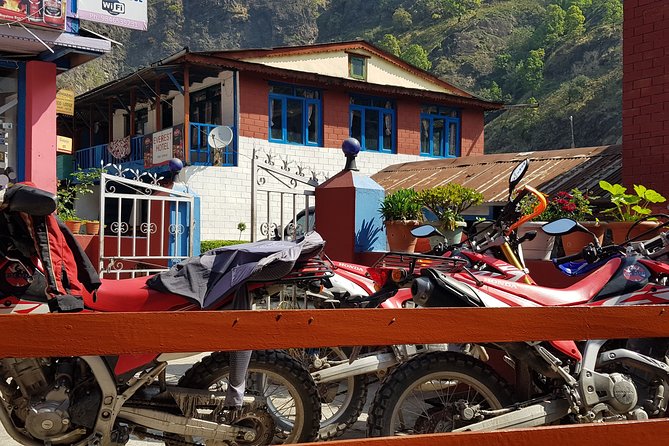
Day 6 is your descent and reset. You ride back down to the Prithvi highway and make a stopover in Kurintar, described as a sub-tropical riverside town. The shift in vegetation and weather feel can be noticeable after higher-altitude days.
Then you ride southward on more familiar terrain toward a hotel with a pool. That’s not a small luxury. After days of gravel and altitude, being able to cool off and stretch without hunting for a shower is a genuine comfort payoff.
If your riding style is intense and you like to push, it can be tempting to go hard on the descent. That’s exactly when traction surprises can happen, so keep your line smooth and your speed controlled.
Day 7 Kathmandu: deliver the bike, then enjoy the last city day
Day 7 brings you back to Kathmandu and time to step off the bike and into regular life. The itinerary frames it as getting your wheels safely home, then using your land legs again. That transition matters because it is not just about arriving, it is about actually recovering.
If you want to make the most of Kathmandu at the end, this is the day to plan what you missed earlier. You’ll likely feel ready for short walks and simple meals, not long strenuous climbs.
Day 8 Kathmandu: shopping and airport transfer
On Day 8, you have time for last-minute sightseeing or shopping. The tour also arranges your transfer back to the airport in time for your onward flight. This is one of those “small” inclusions that prevents last-day stress, because airport timing in any country can go sideways quickly.
Meals and lodging: built for riding days, not just sightseeing
The tour includes breakfasts, lunches, and dinners, plus soft drinks, tea, and coffee. Specifically, the package includes 7 breakfasts, 6 lunches, and 7 dinners, which lines up with an 8-day structure where you still get fed on most days. That’s valuable on long ride days because you are not bargaining with hunger while trying to keep your attention on the road.
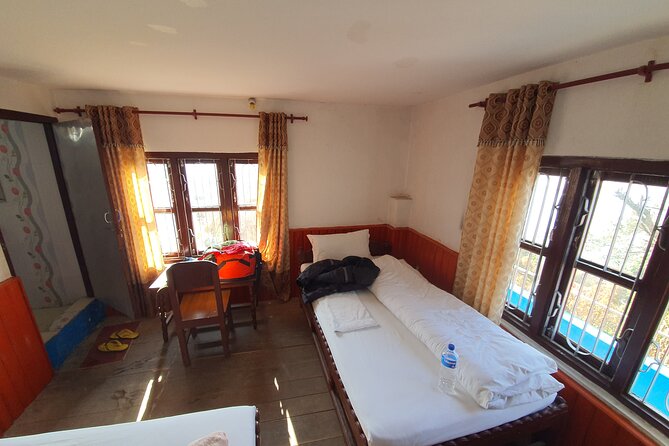
Accommodation is a mixture of handpicked lodges and hotels. I like this setup because it gives variety while still aiming for comfort after a day of moving over rough terrain. The Day 6 note about a pool hotel also tells you the organizers think about recovery, not only scenery.
Remember, alcoholic beverages are not included. If you like to unwind with a drink, budget for it separately.
Guides, group size, and why “organized” feels real here
This tour caps at 10 travelers, and that size keeps communication manageable. On a bike trip, small group dynamics matter, because you need space for slower riders, recovery stops, and regrouping after rough sections.
The best feedback you can take from this operator is about professionalism and friendliness. Names like Grace, Uda (and Udaya), plus Takeshi show up connected to smooth planning and good on-the-ground guidance. When a team is good at coordination, you feel it most on the roughest hours, not the nicest ones.
Also, the tour uses mobile tickets and includes necessary permits. Permits might sound boring, but in mountain regions, paperwork can become the hidden time sink. Having that managed helps the riding days stay on track.
Price and value: what you get for $3,468.20
At $3,468.20 per person, the headline number looks big until you break down what’s wrapped inside. You are paying for the bike (Honda CRF250L), the support vehicle, necessary permits, airport transfers, expert English-speaking guides, accommodation, and a large chunk of meals plus drinks.
You are also getting third party motorcycle insurance tied to the bike. And because the itinerary includes days of gravel and cliffside roads, bike choice and support logistics are not decorative. They are the core of the experience.
What’s not included helps you plan your budget:
- international flights
- personal travel insurance
- international driving permit (IDP)
- alcoholic beverages
In other words, the trip cost is mostly “on the ground” costs. If you already spend on bike rentals, guides, and multi-day lodging with meals at home, this begins to look more like a packaged adventure than a vacation that you still have to assemble yourself.
Who this tour is best for (and who should pass)
This is a strong fit if you want active travel with guided riding into the Manang region and you’re comfortable spending long hours in motion. It’s also a good choice if you appreciate structure, because the ride is planned as a series of connected sections rather than random day trips.
You should think twice if you want paved-road comfort. Most of the riding is gravel or dirt tracks, with some roads carved into cliffsides. That’s not a dealbreaker, but it is a mismatch if you are aiming for a gentle ride and frequent paved stops.
Fitness-wise, the itinerary says moderate physical fitness. That usually means you can handle long travel days and some riding effort without collapsing at the end. It does not mean you need to be an athlete, but you should show up rested.
Should you book this Manang motorcycle tour?
If your idea of a great trip includes riding real mountain roads, not just photographing them, I’d lean yes. The combination of Honda CRF250L bikes, a moving support vehicle, and a small group with professional guides like Grace and Udaya/Uda makes this feel like an adventure that’s been stress-tested.
If you’re sensitive to rough terrain or altitude, or if your schedule cannot absorb weather delays, then consider your risk tolerance. The experience needs good weather, and the tour can be canceled due to poor conditions, with either a different date or a full refund offered.
My best advice: book it if you want a guided riding plan that gets you deep into Manang and keeps the logistics handled. Skip it if you only want easy roads and guaranteed comfort every hour.
FAQ
What kind of motorcycle is included?
The tour includes a Honda CRF 250 L dual sport motorcycle. A support vehicle travels with the group, carrying spare parts and space for luggage.
Are meals included on this tour?
Yes. The package includes breakfast (7), lunch (6), and dinner (7), plus soft drinks, tea, and coffee.
Does the tour include airport pickup and transfers?
Yes. Airport-hotel transfers are included, with pickup arranged from Tribhuvan Airport in Kathmandu.
How many people are in the group?
The tour has a maximum group size of 10 travelers.
What insurance is included?
The tour includes third party motorcycle insurance only. Personal travel insurance is not included.
What happens if the tour is canceled due to weather?
The experience requires good weather. If it’s canceled because of poor weather, you will be offered a different date or a full refund.
Latest additions near Kathmandu
- Traditional Momo Making Class★ 5.0 · 10 reviews
- White Water River Rafting – 1 Day★ 4.3 · 3 reviews
- Kathmandu to Pokhara Premium sofa bus ticket★ 4.0 · 17 reviews
- Ghorepani Poon Hill Trek★ 5.0 · 16 reviews
- Amazing 1 Day Trekking Experience in Kathmandu Nepal★ 5.0 · 24 reviews
- Ghorepani Poonhill Trek★ 5.0 · 5 reviews
- Walking tour of real Kathmandu through back streets.★ 5.0 · 3 reviews
- Wildlife Adventure in Chitwan Nepal★ 4.0 · 4 reviews
Kathmandu Tours, compared.
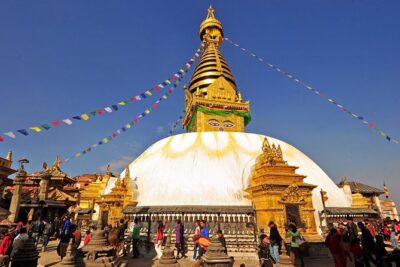
Private Kathmandu Sightseeing Tour | UNESCO World Heritage sites
Read our review →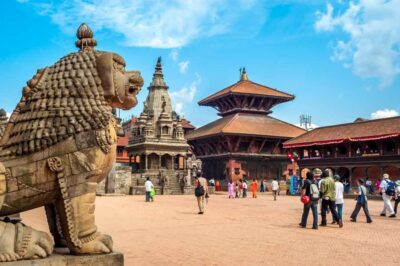
Everest Base Camp Helicopter Tour landing at Everest View Hotel
Read our review →