
Reviewed · HISTORICAL TOURS
Pick 2-Wonders of Kathmandu: A 3-Hour Heritage Hop
Two UNESCO stops, three hours, big Kathmandu energy. I love how this tour lets you pick your two wonders from six UNESCO heritage sites, so you can shape the day around your interests. If you choose the right combo, you might also spot Kumari, the living goddess, and end with wide-open city views from Swayambhunath.
My other favorite part is the way the guide connects what you see to the living culture around the durbar squares and temples, not just dates on a sign. One thing to plan for: monument entrance fees are not included, and you should expect a fair amount of walking and stairs, since big sights are uphill or inside historic complexes.
In This Review
- Key Things I’d Prioritize Before You Go
- How This 3-Hour Heritage Hop Fits a Real Kathmandu Day
- Choosing Your Two UNESCO Wonders Without Regretting It
- Kathmandu Durbar Square and Swayambhunath Monkey Temple: Royal Power Meets Big Views
- Pashupatinath and Boudhanath: Hindu Ritual Intensity and Buddhist Serenity
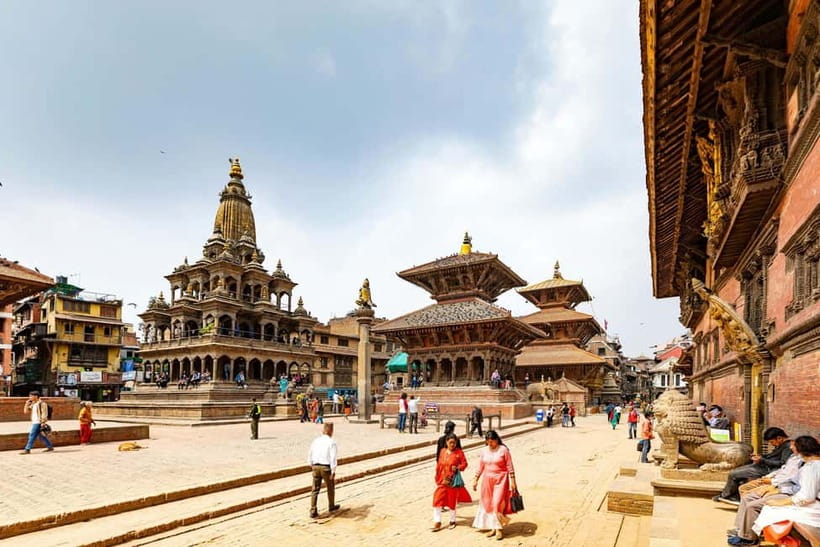
- Patan Durbar Square and Kathmandu Durbar Square: Newari Craft in Red Brick
- Bhaktapur Durbar Square: The Nyatapola Temple and a Bigger Sense of Old City
- What Your Guide Actually Changes in 3 Hours
- Transport, Timing, and Comfort From Thamel
- Price and Value: Why This Feels Cheap, and What to Budget
- Who This Tour Fits Best (And Who Might Prefer Something Else)
- Should You Book Pick 2-Wonders of Kathmandu?
- FAQ
- Which two sites do I visit on this tour?
- How long is the tour?
- Where does pickup happen?
- Is entrance fees included?
- Do I need to pay for a ticket line on my own?
- What language is the guide?
- Is this a private group?
- What should I bring?
- What is not allowed during the tour?
- Is it suitable for wheelchair users?
Key Things I’d Prioritize Before You Go
- Pick your pair first: you choose any two UNESCO sites from six options, so match the route to your mood.
- Kumari and 360 views are real wow-moments: especially if you go for Kathmandu Durbar Square plus Swayambhunath.
- Pashupatinath and Boudhanath are a contrast: one is Hindu ritual focus, the other is Buddhist calm.
- Newari architecture shows up everywhere: durbar squares are packed with palace-style details and craftsmanship.
- Your guide sets the pace: many tours stay flexible, with time to linger where you want.
How This 3-Hour Heritage Hop Fits a Real Kathmandu Day
Kathmandu can swallow your day fast. Traffic, scattered sights, and the mental drain of planning can turn a short trip into a blur. This tour is built for people who want a guided hit of the city’s major heritage sites without burning half a day on logistics.
The setup is also simple in a good way. You start from Thamel, and you get private hotel pickup and drop-off, so you are not trying to coordinate with taxis between stops. You ride in an air-conditioned private vehicle with bottled water, and you have a live guide for the whole 3 hours, in English or Hindi.
The biggest value here is focus. Instead of doing five things in a hurry, you do two places, with explanations that help you notice details. In a city where so much is layered, that time with a guide can save you from wandering around scratching your head.
More History Tours in Kathmandu:
- Private Kathmandu Sightseeing Tour | UNESCO World Heritage sites
★ 5.0 · 756 reviews - UNESCO Seven World Heritage Tour in Kathmandu
★ 5.0 · 253 reviews - Nepal Discovery Tour: Heritage Sites & Scenic Hill Easy Hike
★ 5.0 · 121 reviews
Choosing Your Two UNESCO Wonders Without Regretting It
You get to choose between four popular pairings, and each one has a clear personality. Here is how I’d decide, based on what you want to feel at the end of three hours.
If you want palace power, daily temple tradition, and epic views, go for Kathmandu Durbar Square plus Swayambhunath. If you want religious atmosphere and strong symbolism, pair Pashupatinath with Boudhanath. If you want more Newari art and royal-square architecture in a smaller-feeling city, Patan plus Kathmandu can be a smart combo. If you want the scale of Bhaktapur’s durbar area and the dramatic Nyatapola Temple, Bhaktapur plus another royal square pairing is the move.
A practical note: you choose your preferred option before confirming, so think about your energy level. If you are not a fan of stairs or crowded approach paths, steer toward the option that matches your stamina.
Kathmandu Durbar Square and Swayambhunath Monkey Temple: Royal Power Meets Big Views
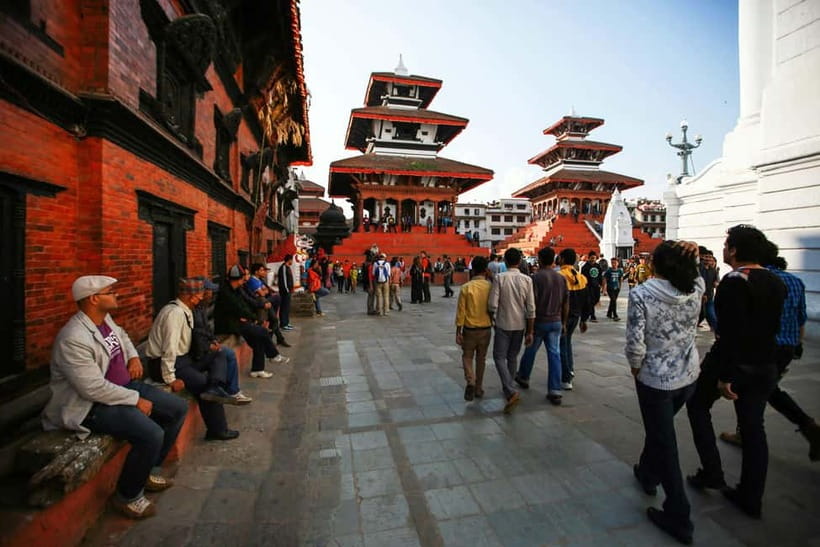
This is the combo I’d pick if you are a first-timer or if you want Kathmandu’s “wow” moments in one compact loop.
Kathmandu Durbar Square is the heart of the old city’s royal world. You will see palaces connected to the Malla and Shah dynasties, including the nine-storied Nautale Durbar. This is not just a pretty square. It is where royal authority, temple life, and city identity overlap in one space. You will also get the rare chance to witness the Kumari tradition, the living goddess who resides in her temple. Even if you have seen photos before, being there in person is different, because the site feels woven into everyday belief.
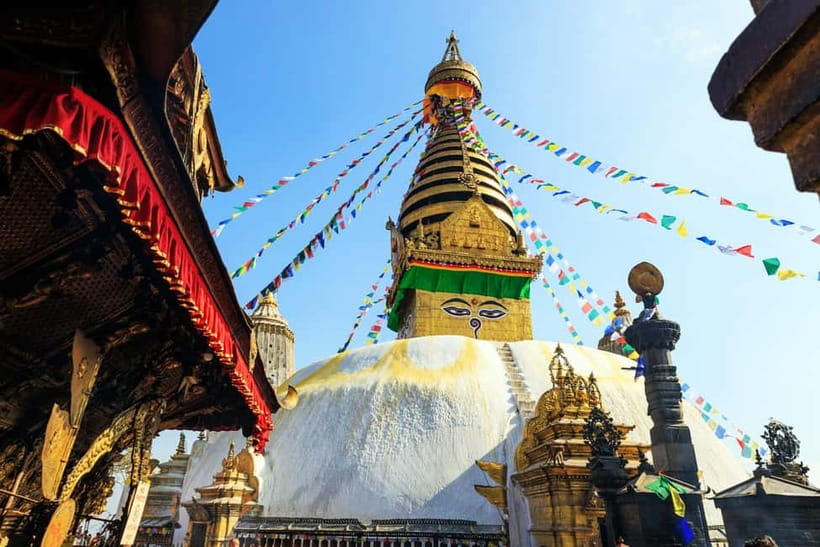
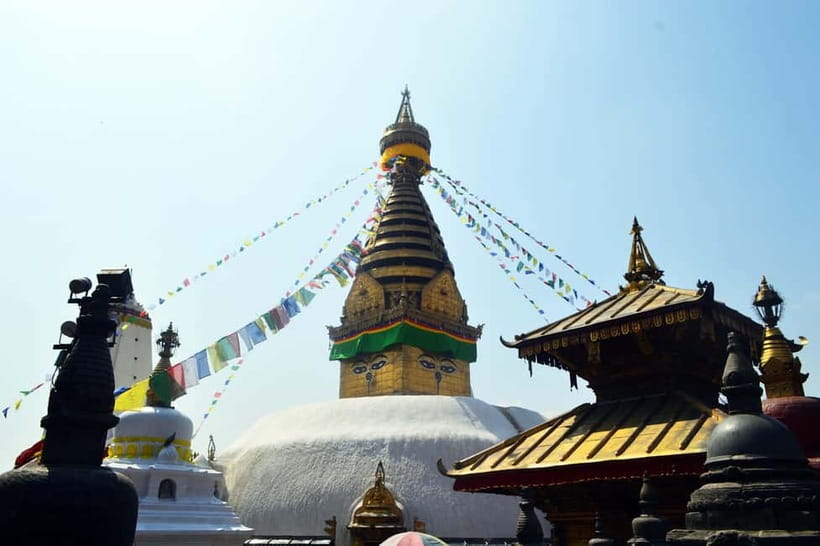
Then you head up to Swayambhunath, also a UNESCO site, commonly called the Monkey Temple. You climb to the hilltop stupa, and you can expect a mix of Mahachaitya visuals, playful monkeys, and wide-open 360-degree views over the Kathmandu Valley. This is a strong ending to a short tour because the view gives you instant context. You start connecting where the city spreads and how the valley wraps around.
The trade-off is that you are trading speed for altitude. Swayambhunath involves uphill movement, and durbar squares can be busy and uneven underfoot. If you want maximum comfort, wear shoes with grip and go slow at the first sign of leg fatigue.
Pashupatinath and Boudhanath: Hindu Ritual Intensity and Buddhist Serenity
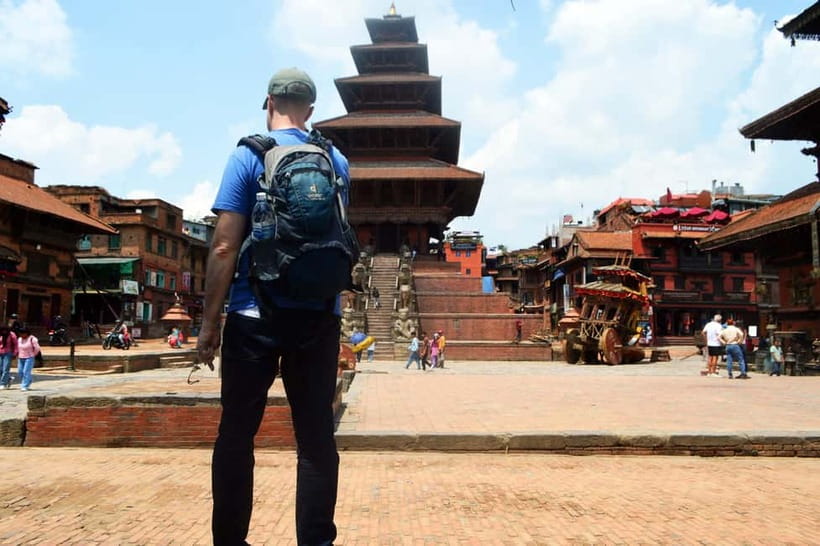
This pairing gives you a clean cultural contrast in a small time window.
Pashupatinath Temple sits by the sacred Bagmati River and is dedicated to Lord Shiva. The guide helps you understand the spiritual meaning behind what you see, and you may even witness traditional cremation rituals along the banks, depending on timing. If that possibility makes you uncomfortable, it helps to know the tour is presented with sensitivity, not as a spectacle. You are there to observe and learn about the rituals and symbols around the temple area.
Then the mood shifts to Boudhanath Stupa. This colossal Buddhist stupa is described as the largest mandala in Nepal and is a UNESCO World Heritage site. It has a serious sense of peace, and it also carries deep history as a major stop on the ancient trade route to Tibet. The stupa is a visual anchor, and it is the kind of place where you can watch pilgrims move around it and feel the rhythm of devotion.
If you pick this option, I recommend mentally switching gears between stops. Pashupatinath asks you to read ritual and meaning in action. Boudhanath asks you to slow down and let the structure of the stupa guide your attention.
Another way to spend the time in Nepal:
- Everest Base Camp Trek – 14 Days
★ 5.0 · 1,499 reviews - Everest Base Camp Trek
★ 5.0 · 842 reviews - Kathmandu: 7 UNESCO Sites with Lunch
★ 4.8 · 744 reviews - Everest Base Camp Helicopter Tour landing at Everest View Hotel
★ 5.0 · 668 reviews
Patan Durbar Square and Kathmandu Durbar Square: Newari Craft in Red Brick
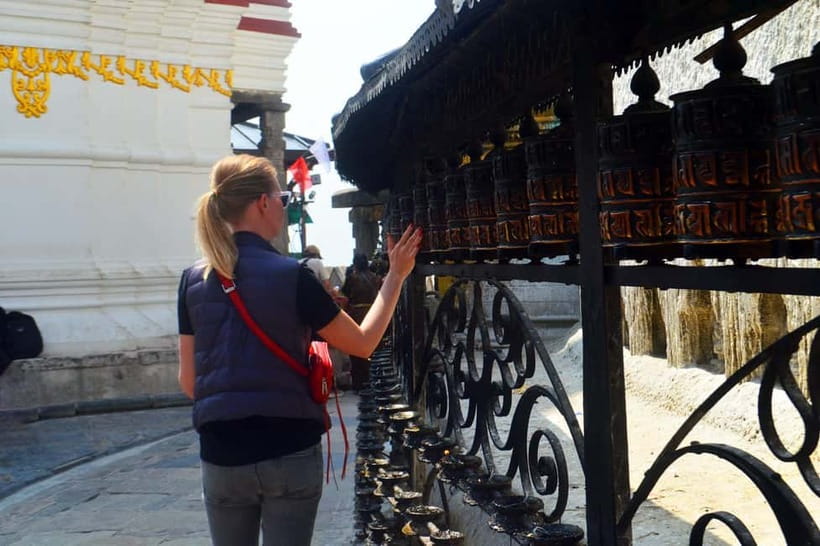
If you love architecture details and want more “how did they build this?” energy, this option fits.
Patan Durbar Square, in Lalitpur, is often described as the artistic heart of the area. You will see Newari architecture through a medieval royal palace complex and a lot of temples and statues packed into the square. One of the visual cues is the red brick pavement, which makes the whole durbar area feel distinctly textured and old-school. Because the space is so dense, a guide matters. With the right explanations, you start noticing patterns, styles, and how the square functions as a cultural stage.
Then you return to Kathmandu Durbar Square, which you already get to understand more deeply through the royal-palace context and the Kumari tradition. Even if you have visited one durbar square before, combining Patan and Kathmandu within a short trip helps you compare styles and see the broader Newari-influenced heritage shared across the valley.
The main consideration with this pairing is time on foot. Durbar squares can be close on a map, but you are still moving between multiple viewpoints, steps, and temple entrances. If you are easily tired, pick a pace with your guide and plan to linger where the architecture grabs you.
Bhaktapur Durbar Square: The Nyatapola Temple and a Bigger Sense of Old City
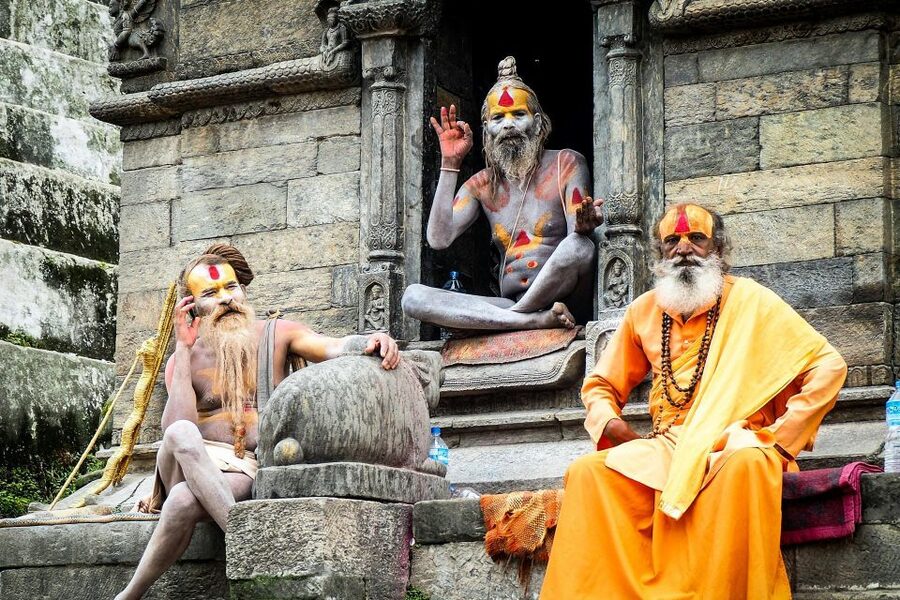
Bhaktapur is the choice for people who want a stronger “ancient city” feeling rather than just a fast stamp of UNESCO.
Bhaktapur Durbar Square is described as the largest durbar square in Nepal, even though Bhaktapur is called the smallest district. UNESCO recognition here covers four smaller squares, so you get multiple pockets of stone, temples, and historic urban layout in one place. You will also want to look for the five-storied Nyatapola Temple, which is listed as Nepal’s tallest.
What I like about this stop within a 3-hour window is the way it compresses “big-city heritage” into one concentrated area. You do not just see one building. You get a sense of how Bhaktapur organized space around worship, craftsmanship, and royal legacy.
The practical downside is that Bhaktapur can feel like a stair-and-courtyard marathon, depending on where the route goes inside the durbar area. Good shoes help. If your knees are not happy, tell your guide early so the walking can be adjusted.
What Your Guide Actually Changes in 3 Hours
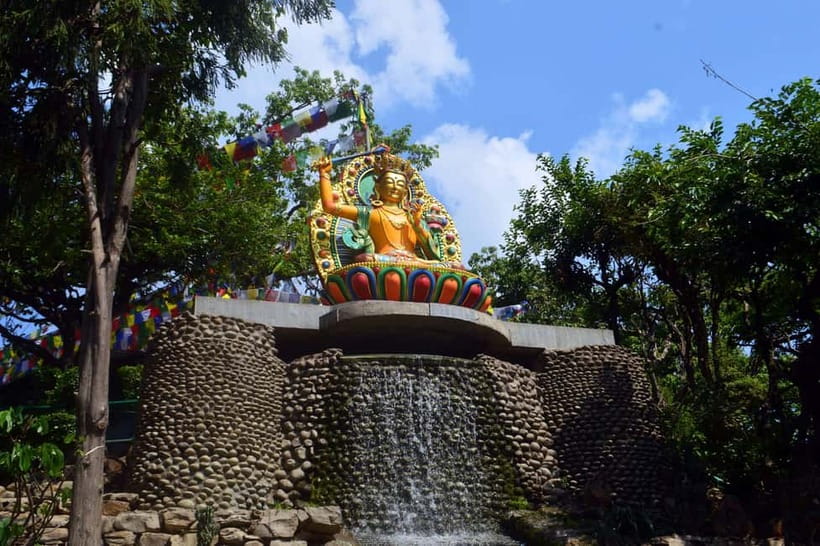
The guide is the difference between seeing two landmarks and understanding why they matter.
In the experiences shared, guides like Nilakantha Acharya and Prakash are praised for explaining what you are looking at, answering questions patiently, and adjusting speed based on your interests. That flexibility is not a luxury in Kathmandu, it is the whole point. When you care about details, you get more time. When you are tired, the guide can keep the day moving without making you feel rushed.
Another detail that shows up in the good experiences is interaction beyond the monuments. One guide example mentioned helping with questions while also adapting the day when jet lag hit, including a stop for coffee. That kind of small, practical care can matter more than you expect when you are balancing travel fatigue with sightseeing.
Also, many guides take your photos. That sounds small, but in a country with busy viewpoints and complicated angles, it saves you from doing camera gymnastics while everyone else crowds the shot.
Transport, Timing, and Comfort From Thamel
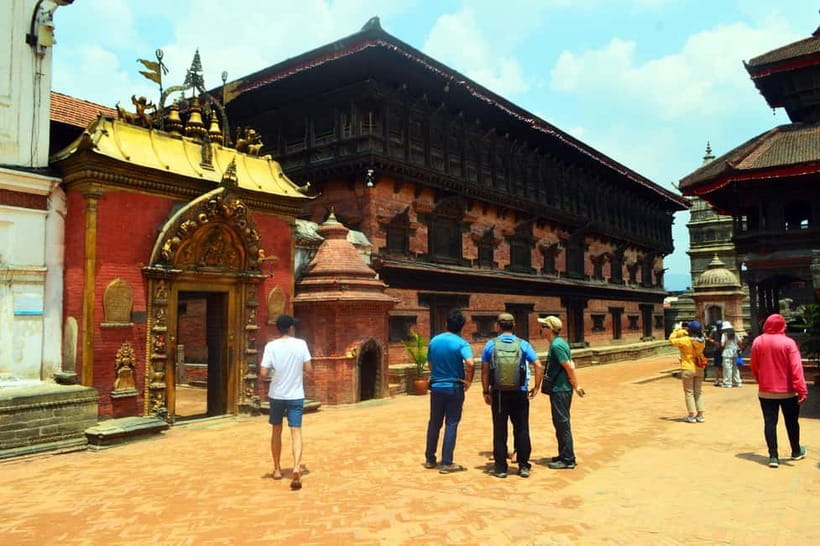
This tour is built to be easy on your schedule. You get private pickup from your hotel area in Kathmandu, with a pickup expectation of waiting about 05 to 10 minutes before the stated time. The tour ends back at Thamel.
Because it is a private vehicle and a private group, you do not feel like you are being herded into a crowd every five minutes. The transport quality is highly rated, and you also have bottled drinking water during the tour.
One more practical boundary: luggage or large bags are not allowed, and alcohol or drugs are not allowed. If you are traveling light, this is simple. If you are used to carrying a day bag everywhere, consider packing down to essentials.
Price and Value: Why This Feels Cheap, and What to Budget
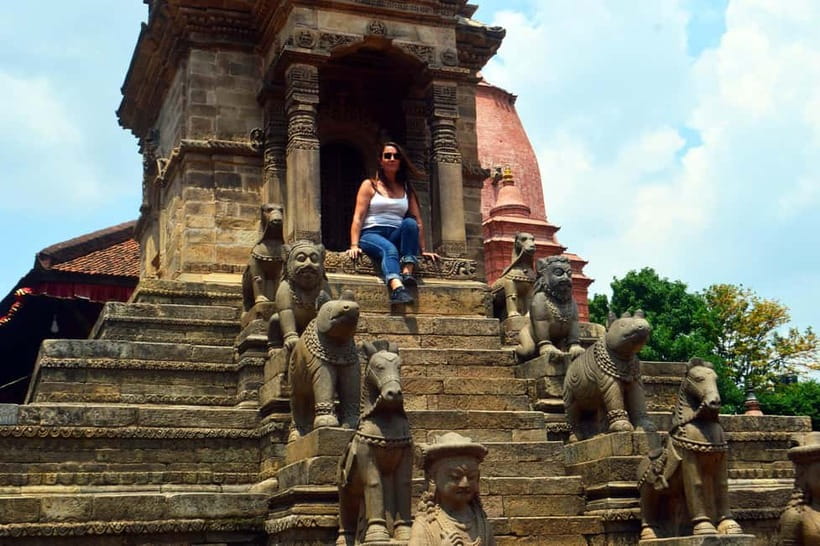
The listed price is $3.94 per person for a 3-hour private-guided heritage hop with pickup, drop-off, an air-conditioned private vehicle, and bottled water. That is unusually low when you factor in the guide time and door-to-door service.
But do not let the low price trick you into thinking it is fully inclusive. Monument entrance fees are not included, and the tour notes say there is an add-on option available. So your true budget is going to be price plus any site fees tied to your selected stops.
To avoid awkward moments, bring cash and your passport, since the activity information specifically asks for both. If you can, confirm entrance-fee add-ons in advance so the day stays smooth.
The best way to think about value is this: you are paying for a guided route that compresses two UNESCO experiences into one organized morning or afternoon, without spending your limited time trying to coordinate between sites.
Who This Tour Fits Best (And Who Might Prefer Something Else)
This tour is a strong match if:
- you have limited time in Kathmandu but want UNESCO heritage highlights
- you like having a guide explain symbols, architecture, and temple traditions
- you want private pickup and drop-off instead of solving transport puzzles
- you want to choose the focus, either Hindu devotion, Buddhist sites, or royal squares with Newari architecture
It may not be the best fit if you:
- use a wheelchair, since it is listed as not suitable for wheelchair users
- need a stroller or are traveling with babies under 1 year
- are over 95 years old and need lower mobility expectations
- cannot do stair-heavy or uneven historic-area walking
- need to bring luggage or large bags (not allowed)
If you fall into the “maybe” category, tell the guide your walking limits early during pickup, so the pacing can be set from the start.
Should You Book Pick 2-Wonders of Kathmandu?
If you are short on time and want two high-impact UNESCO heritage stops with a guide who helps you actually read what you see, I’d book it. The best reason is the structure: private pickup, live guidance, and a focused two-site plan.
Book it especially if:
- Kumari or Swayambhunath views are on your must-see list
- you want a Hindu and Buddhist contrast in one afternoon
- you prefer royal-square architecture and Newari details over doing a long day of distant sights
Skip or upgrade to a different option if:
- you want a slow, deep study of one site, because 3 hours is designed for breadth
- stairs and uneven ground will be a problem for you
- you are not willing to pay additional entrance fees at the sites
For most people, this is the sensible Kathmandu move: pick the two wonders you care about, show up in good shoes, and let the guide turn those stones and temples into something you can understand before you move on.
FAQ
Which two sites do I visit on this tour?
You choose any two of the six available UNESCO heritage site options, and the tour is offered as multiple pair options that combine two sites.
How long is the tour?
It lasts 3 hours.
Where does pickup happen?
Pickup is from Thamel, and private hotel pickup is also included.
Is entrance fees included?
Monument entrance fees are not included, though there is an add-on option available.
Do I need to pay for a ticket line on my own?
The tour includes a skip-the-ticket-line benefit.
What language is the guide?
The live tour guide is available in English and Hindi.
Is this a private group?
Yes, it is a private group.
What should I bring?
You should bring a passport and cash.
What is not allowed during the tour?
Luggage or large bags are not allowed, and alcohol and drugs are not allowed.
Is it suitable for wheelchair users?
No, it is not suitable for wheelchair users.
Latest additions near Kathmandu
- White Water River Rafting – 1 Day★ 4.3 · 3 reviews
- Traditional Momo Making Class★ 5.0 · 10 reviews
- Kathmandu to Pokhara Premium sofa bus ticket★ 4.0 · 17 reviews
- Ghorepani Poon Hill Trek★ 5.0 · 16 reviews
- Amazing 1 Day Trekking Experience in Kathmandu Nepal★ 5.0 · 24 reviews
- Ghorepani Poonhill Trek★ 5.0 · 5 reviews
- Walking tour of real Kathmandu through back streets.★ 5.0 · 3 reviews
- Wildlife Adventure in Chitwan Nepal★ 4.0 · 4 reviews
Historical Tours, compared.
Private Kathmandu Sightseeing Tour | UNESCO World Heritage sites
Read our review →
Full-Day Tibetan Cultural Tour to Tibetan Settlements Pokhara
Read our review →
Nepal Discovery Tour: Heritage Sites & Scenic Hill Easy Hike
Read our review →
Kathmandu Private Sightseeing Tour | UNESCO World Heritage Sites
Read our review →
Afternoon Tibetan Cultural Tour to Tibetan Settlements Pokhara
Read our review →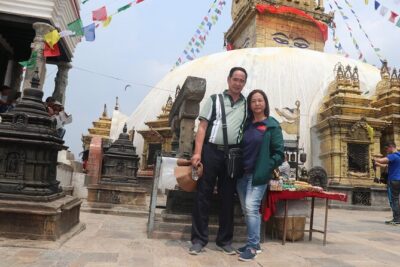

Nagarkot Sunrise & Bhaktapur UNESCO Heritage Private Tour
Read our review →Browse the lists this tour appears in