
Reviewed · UNESCO HERITAGE TOURS
UNESCO Seven World Heritage Tour in Kathmandu
A full day, seven UNESCO stops, one city. This private Kathmandu Valley tour is built for speed without feeling rushed, thanks to a private car and an English-speaking guide who helps you connect Hindu and Buddhist dots. I love that entry tickets for the 7 heritage sites are included, so you focus on temples and carvings instead of ticket lines, and I also like the tight, efficient mix of must-see squares plus standout add-ons like Nyatapola Temple and the hilltop Changu Narayan. The main drawback to plan for is simple: it is a long day with lots of stairs and walking, so bring real shoes and accept that you will not linger everywhere.
What makes the experience work is the order of sights, where short stops still feel meaningful. You get quick hits at Swayambhunath and Amideva Buddha Park, deeper stops in Kathmandu Durbar Square and Patan’s historic core, then a full stretch through Bhaktapur before ending with the heavyweight spiritual sites of Changu Narayan, Pashupatinath, and Boudhanath. I would consider one more thing before booking, this is smart-casual and you should dress for sun and prayer sites, plus keep water in mind because the schedule can move fast.
In This Review
- Key highlights to know before you go
- Kathmandu Valley, Seven UNESCO Stops in One Packed Day
- Price and Value: What $180 Buys You (and Why It Matters)
- Smart-Casual Comfort, Steps, and the Reality of Stairs
- Swayambhunath and Amideva Buddha Park: The Best Start for City Views
- Kathmandu Durbar Square and Kumari Chowk: Royal Power, Living Goddess, Rebuilding
- Patan Durbar Square and Golden Temple: Newari Craft at Human Scale
- Patan Museum: A Useful Break Without Losing Momentum
- Bhaktapur’s UNESCO Core: Nyatapola, Dattatreya, 55 Window Palace, Siddha Pokhari
- Changu Narayan: The Hilltop Temple Stretch You Will Remember
- Pashupatinath and Boudhanath: Two Spiritual Anchors to Close the Loop
- Who Should Book This UNESCO Day Tour
- Should You Book This UNESCO Day Tour?
- FAQ
- How long is the UNESCO Kathmandu Valley tour?
- What is included in the price?
- Is lunch included?
- Do I need to pay admission tickets separately?
- What about tips and gratuities?
- Is pickup and drop-off offered?
- What should I wear?
- Can I cancel for a refund?
Key highlights to know before you go
- Private car, private guide pace control so you can adjust when the streets get slow
- All UNESCO site entry fees included which is one less surprise cost
- Swayambhunath’s 365 stairs plus views over Kathmandu Valley
- Bhaktapur focus inside the UNESCO core, with Nyatapola, 55 Window Palace, and Siddha Pokhari
- Changu Narayan hilltop temple for Licchavi-era carvings and a quieter feel
- A balanced finish with Pashupatinath and Boudhanath for Hindu and Buddhist anchors
Kathmandu Valley, Seven UNESCO Stops in One Packed Day
Kathmandu Valley rewards you when you move efficiently, because the city sprawls and traffic can steal your sightseeing time. This tour is designed for people on a tight schedule who still want the big UNESCO names, and it uses a private vehicle to cut transit between sites.
At the heart of the day is the idea that Kathmandu Valley is not one heritage story. It is Hindu and Buddhist life layered over centuries, with royal squares, pagoda temples, and stupa architecture all talking to each other. Your guide is the translator here, whether you get a specialist named Shanti, Pankaj, Kabita, Sarita, Som, or someone similar, the key is clear explanations and time management so you can see more than just the postcard version.
Do not expect this to feel like a slow stroll. You will get short visits at some stops and longer time blocks at the major spiritual centers. If you are the type who wants to sit and watch life for an hour, you might wish you had more days. If you want a strong first pass that gives you a map of what to explore later, this day works.
More UNESCO Heritage Tours in Kathmandu:
- Private Kathmandu Sightseeing Tour | UNESCO World Heritage sites
★ 5.0 · 756 reviews - Kathmandu: 7 UNESCO Sites with Lunch
★ 4.8 · 744 reviews - Kathmandu: Full Day 7 UNESCO Tour with Lunch – Private/Group
★ 5.0 · 415 reviews
Price and Value: What $180 Buys You (and Why It Matters)
At $180 per person, this tour sits in the practical mid-range for a private day in Kathmandu. The value comes from what is bundled, not just the car and guide. You get hotel pickup and drop-off, a private vehicle, an English-speaking guide, and all required entry fees across the 7 UNESCO sites.
That last part is bigger than it sounds. Paying site by site can add up quickly, and it also interrupts your day with money questions. Here, the plan includes admissions for the heritage stops you came for, which keeps your time focused on carvings, courtyards, and sacred spaces.
Lunch is not included, and tips are not included either, so you still need to budget those. In Bhaktapur, you will have time for lunch on your own, and that is a good setup because you can choose what fits your tastes and energy level.
The schedule is about 12 hours. Some days run early, and you should treat this as an all-day commitment. If you want maximum sightseeing per hour, this price makes sense. If you hate long days, you may regret it even if the sites are incredible.
Smart-Casual Comfort, Steps, and the Reality of Stairs
This is a day tour, so the small practical stuff matters. The stated dress code is smart casual, which is easy enough, but you should also dress like you will be climbing steps and walking dusty paths.
The biggest “get ready” item is footwear. Swayambhunath alone is famous for its 365 stairs, and Bhaktapur’s temple cluster also involves uneven stone surfaces and steps. Bring water, use sun protection, and take breaks when your guide offers them. The tour is paced to keep you comfortable, but physics still wins.
Also, assume that temple sites have rules and rhythms. You will be around prayer, devotees, and sometimes ceremonies. Keep your posture respectful, and follow your guide’s cues on where to stand and how to move.
Swayambhunath and Amideva Buddha Park: The Best Start for City Views
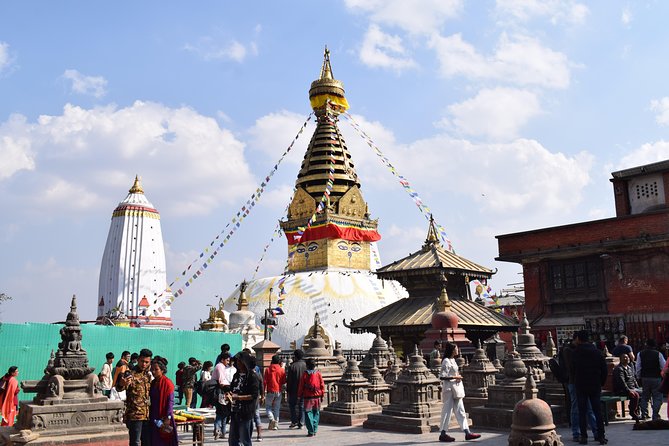
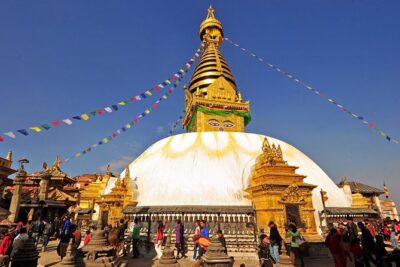
You begin at Swayambhunath Stupa, also called the Monkey Temple. This is one of those Kathmandu landmarks that feels instantly familiar, because it is the kind of place you see in photos and then later realize you were missing the scale. The stupa sits on top of the hill, and yes, it is tied to the 365 stairs myth and the long climb that earns you serious views over the valley.
Up close, you will find more than one religion in one place. You can walk around the stupa, spin prayer wheels, and notice Hindu shrines and deities inside the broader Buddhist setting. For a first-time visitor, this is a fast introduction to why Kathmandu Valley can feel like one giant sacred overlap.
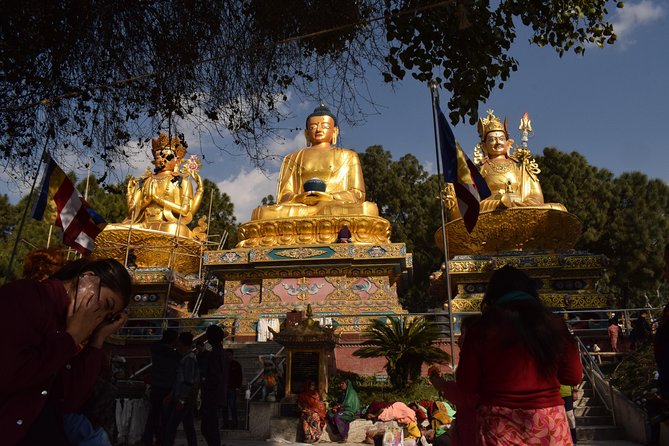
Right after Swayambhunath, the day moves to Amideva Buddha Park. This stop is short, but it is a nice visual reset. You will see three large Buddha statues that stand out from the surrounding hillside atmosphere. It is not the main draw like Swayambhunath, but the timing helps, because it gives you another sacred viewpoint before you head into the city squares.
Time at these early stops is tight, so treat it like a warm-up. You will want your camera ready, and you will also want to pace yourself on those stairs so you do not start the day exhausted.
More History Tours in Kathmandu:
- Nepal Discovery Tour: Heritage Sites & Scenic Hill Easy Hike
★ 5.0 · 121 reviews - Kathmandu Private Sightseeing Tour | UNESCO World Heritage Sites
★ 5.0 · 109 reviews - Kathmandu World Heritage Tour
★ 5.0 · 74 reviews - Nagarkot Sunrise & Bhaktapur UNESCO Heritage Private Tour
★ 5.0 · 66 reviews
Kathmandu Durbar Square and Kumari Chowk: Royal Power, Living Goddess, Rebuilding
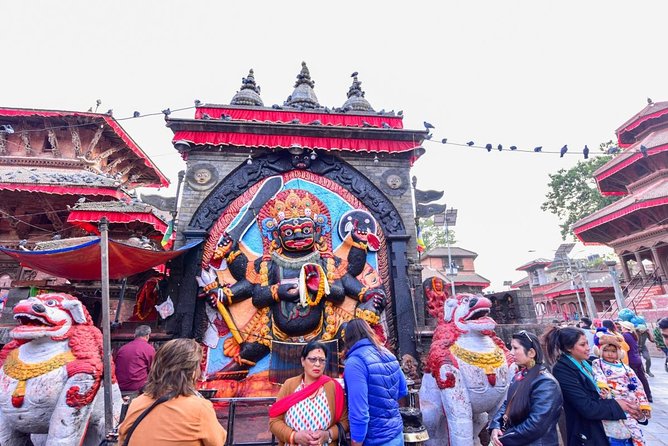
Next you move into the heart of old Kathmandu. Kumari Chowk is where you see the courtyard tied to the living goddess tradition. The Kumari is selected as a living symbol until puberty, after which the role changes. Even if you do not catch the goddess herself, the courtyard setting is a strong cultural moment, because it anchors the mythology in a very physical place.
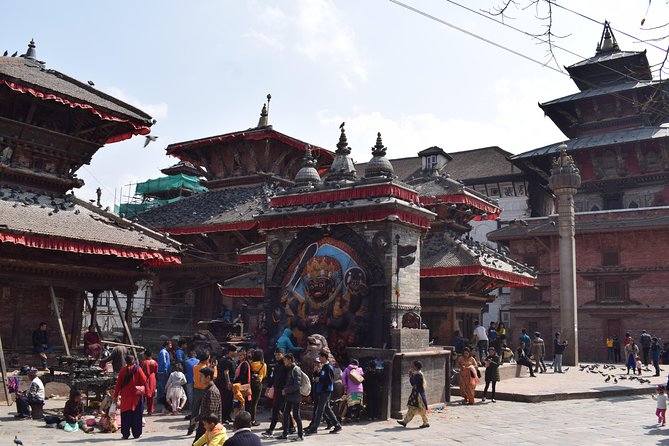
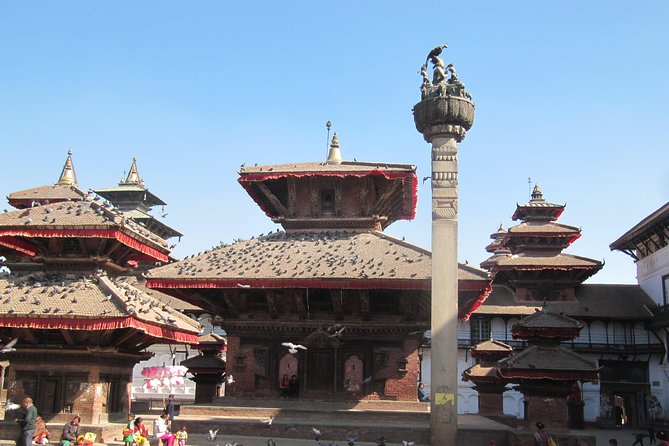
From there, you reach Kathmandu Durbar Square. This is the UNESCO core for royal-era architecture and religious sites, and it has one very real modern element: some areas are in reconstruction while other parts remain explorable. That mix can be a gift. You see how heritage is both preserved and lived, not sealed behind museum glass.
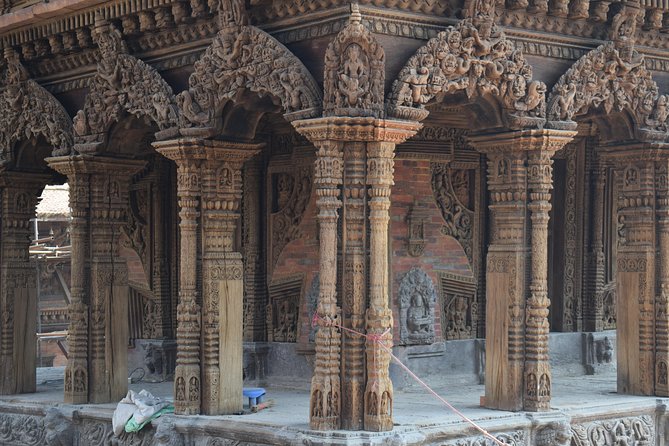
Inside the square area, your guide points out key temples and stone artistry. You may also focus on smaller, iconic structures like the Krishna Temple, described as being made through stones only, along with a cluster of shrines. These short stops inside a bigger complex work well on a one-day schedule, as long as your guide keeps you moving and pointing your attention to what matters.
The drawback here is that Durbar Square can feel crowded, and you will be inside an active historic area. If you prefer quiet, you will not get that today. The trade-off is that you get the full UNESCO Kathmandu core without needing a multi-day base.
Patan Durbar Square and Golden Temple: Newari Craft at Human Scale
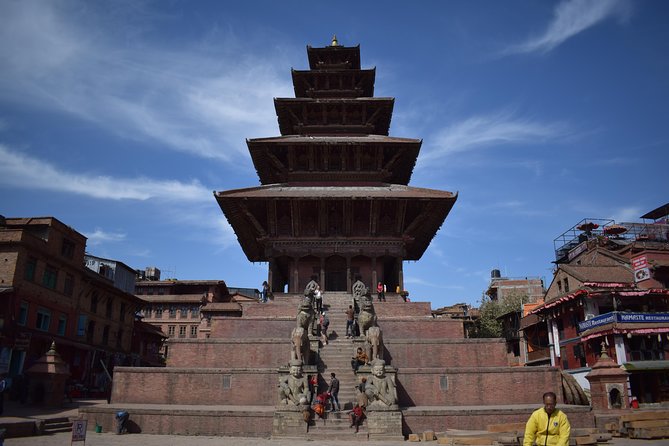
From Kathmandu, you head to the UNESCO site in Patan (Lalitpur), starting with the neighborhood around Patan Durbar Square. Patan is often less chaotic than central Kathmandu, and it rewards careful looking. You see Newari architecture close up, plus the sense of community that grew around these royal courtyards and temple spaces.
One standout stop in this area is Durbar Square (Central) style temple focus and the Golden Temple (Hiranya Varna Mahavihar). The Golden Temple is known as a 12th-century pagoda-style temple with bronze statues and silver and gold elements. The details matter here. Even if you only have 10 minutes, your guide can help you notice what makes the metal work and pagoda form different from other temple types you will see later.
Time is short at some stops, but Patan is the type of place where short visits still leave an impression if you know what to look for. Your guide’s job is to help you see beyond surfaces. That is where the better guides shine, and names like Shanti, Pankaj, and Sarita come up for a reason: they tend to explain the religious and cultural meaning without turning it into a lecture.
If you want to buy souvenirs or browse local handicrafts, Patan is a good place to do it, but keep an eye on the group’s timing so you do not fall behind the schedule.
Patan Museum: A Useful Break Without Losing Momentum
Between temple clusters, you may stop at Patan Museum, located at Keshav Narayan Chowk. For a one-day UNESCO sprint, a museum stop might sound like a distraction, but it can work as a context boost. The museum gives background on tradition and history, and the provided details include material related to historic Japanese civilization.
Think of this as your mental reset button. After multiple courtyards and temples, a bit of context helps you connect symbols, dynasties, and artistic styles. If you are not a museum person, you still benefit from the guide’s framing during the walk-through portion.
If you do not like indoor breaks, you can still treat it as a quick orientation stop. Your guide can help you focus on what is relevant to what you are about to see in Bhaktapur and the hilltop temple later.
Bhaktapur’s UNESCO Core: Nyatapola, Dattatreya, 55 Window Palace, Siddha Pokhari
Bhaktapur is where the day starts to feel more like a slow discovery, even though you still have a tight timeline. The tour moves into Bhaktapur City, often called the City of Devotees, and it is a strong match for people who want old-style houses and intact architectural areas.
You get several highlights that sit inside the broader UNESCO area and its surrounding monuments:
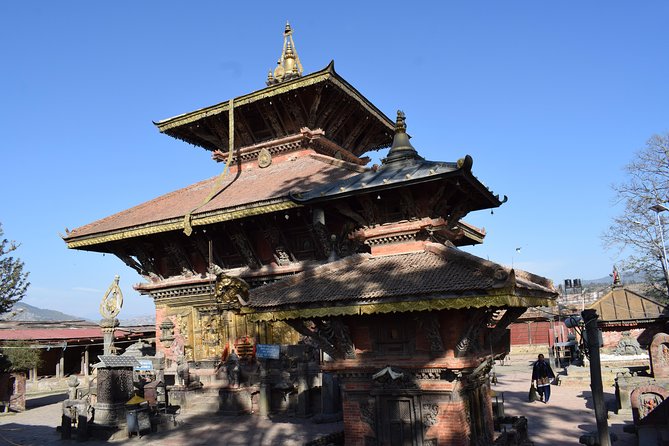
Nyatapola Temple is the big pagoda-style moment. It is a five-leveled temple with intricate sculptural work and a reputation as one of the tallest pagoda-style temples. If you only see one pagoda temple today, this is a very strong candidate.
Then you have Dattatreya Temple at Dattatreya Square, known in part for a legend that it was built using a single stem from a single tree. Even if you view it as a story, the idea adds meaning to the craftsmanship you are looking at.
The 55 Window Palace is another photo-worthy structure. The name is literal, with fifty-five carved windows and ornate architectural beauty that gives you a sense of palace aesthetics and civic pride.
You will also visit Siddha Pokhari, a man-made pond near Bhaktapur’s first town gate. It is described as 171 meters long and three meters deep, and it is a local hangout. This is a welcome change of pace because it is open space, water, and everyday life nearby.
There is also time for lunch in Bhaktapur, but lunch is on your own. This is actually a smart system, because you can choose something quick that matches your energy. If you plan to snack, keep your shoes on and your cash ready, because you will not want to waste time hunting.
The main consideration in Bhaktapur is walking. You will move between multiple monuments that are not connected by long stretches of flat ground. This is where good shoes and water pay off.
Changu Narayan: The Hilltop Temple Stretch You Will Remember
Later in the day, you head to Changu Narayan Temple, a hilltop site and one of the oldest temples in the Kathmandu Valley, linked to the Licchavi period. This stop is a major highlight because it is not just about being old. It is about the stone and wooden carvings and the sense of depth that comes from that long timeline.
Your time allocation here is longer than many earlier stops, around 1 hour, which helps because hilltop sites reward slow looking. The carvings are the kind of detail you will miss if you rush, so having time makes a difference.
This is also one of the better moments for people who want a quieter feel compared to the busy central squares. You are still in a sacred place with visitors, but the setting supports a calmer pace.
Dress and respect still matter. Keep movement careful, follow your guide’s positioning, and take a moment to look beyond the main temple face. The value is in the workmanship.
Pashupatinath and Boudhanath: Two Spiritual Anchors to Close the Loop
The day’s final act is two heavy spiritual centers that make sense after the royal squares and pagoda temples.
First is Pashupatinath Temple, one of Nepal’s largest temple complexes, with more than 500 temples and shrines in the surrounding area. The complex covers 0.64 hectares. This is not a quick stop where you just point and shoot. Your guide’s explanation helps you understand how an enormous complex can still feel coherent, because each shrine and structure has a role in the bigger spiritual system.
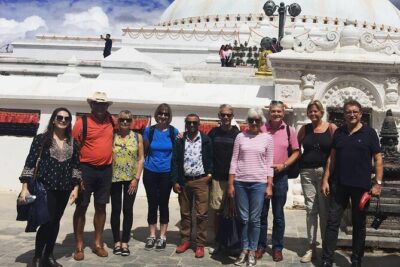
Next comes Boudhanath Stupa, a major Buddhist pilgrimage site. It is described as a mandala form stupa about 36 meters tall, with over 50 gompas built around it. This is your visual reset, because the stupa gives you a clear focal point and a wide spiritual context.
Boudhanath is also a place to slow down a little, even in a packed schedule. The stupa’s scale and surrounding monastic structures offer a different kind of feeling than the dense palace squares earlier in the day.
If you have energy for one last pause, use it here. It is a great way to end the day without feeling like you only collected photos.
Who Should Book This UNESCO Day Tour
This tour is a strong fit if you want all the key UNESCO names in one go, especially if this is your first time in Kathmandu. It also suits travelers who like structure and hate figuring out transport between far-flung sights.
It is also a good choice for people who enjoy learning while walking. In the guide feedback you will hear repeated praise for guides like Shanti, Pankaj, Kabita, Som, and Sarita, often for being friendly and adjusting pace so you do not feel steamrolled.
You might want to rethink booking if you:
- have limited mobility or do not handle stairs well
- dislike long full-day schedules and prefer half-days
- want to spend deep time at one site instead of collecting seven UNESCO highlights
For solo travelers, the private nature is a plus because you are not trapped in a large group shuffle. For couples and small groups, the private car setup makes the day feel more manageable.
Should You Book This UNESCO Day Tour?
I think you should book it if you want a smart first overview of Kathmandu Valley that hits all seven UNESCO heritage stops and does it with private transport, an English-speaking guide, and included UNESCO entry tickets. At $180, the bundled admissions and hotel pickup make it feel practical, not just convenient.
Skip it if the idea of a 12-hour day with lots of walking sounds exhausting, because that is the trade you make for seeing everything in one shot. If you are okay with that trade, you end the day with the clearest possible map of what Kathmandu Valley is, Hindu and Buddhist together, with Bhaktapur and Changu Narayan doing the heavy lifting for “wow” factor.
If you book, do one thing that improves the whole experience, bring comfortable walking shoes and keep your expectations realistic. You are not trying to master Kathmandu in one day. You are trying to leave with the right curiosity, and this tour is built for exactly that.
FAQ
How long is the UNESCO Kathmandu Valley tour?
The tour is listed as approximately 12 hours.
What is included in the price?
It includes a private vehicle, an English-speaking guide, all required entry fees for the 7 heritage sites, and hotel pickup and drop-off.
Is lunch included?
Lunch in Bhaktapur is not included, but you can choose from local places during the stop time.
Do I need to pay admission tickets separately?
No. Admission ticket fees for the 7 heritage sites are included.
What about tips and gratuities?
Tips and gratuities are not included.
Is pickup and drop-off offered?
Yes. Hotel pick up and drop off are included.
What should I wear?
The dress code is smart casual.
Can I cancel for a refund?
Yes. You can cancel up to 24 hours in advance for a full refund. Canceling less than 24 hours before start time is not refundable.
Latest additions near Kathmandu
- White Water River Rafting – 1 Day★ 4.3 · 3 reviews
- Traditional Momo Making Class★ 5.0 · 10 reviews
- Kathmandu to Pokhara Premium sofa bus ticket★ 4.0 · 17 reviews
- Ghorepani Poon Hill Trek★ 5.0 · 16 reviews
- Amazing 1 Day Trekking Experience in Kathmandu Nepal★ 5.0 · 24 reviews
- Ghorepani Poonhill Trek★ 5.0 · 5 reviews
- Walking tour of real Kathmandu through back streets.★ 5.0 · 3 reviews
- Wildlife Adventure in Chitwan Nepal★ 4.0 · 4 reviews
UNESCO Heritage Tours, compared.
Private Kathmandu Sightseeing Tour | UNESCO World Heritage sites
Read our review →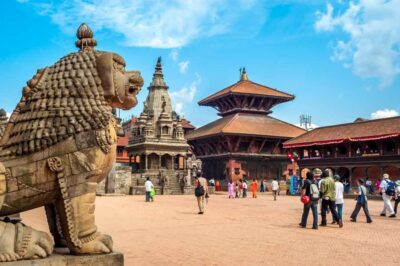
Full Day 7 UNESCO Tour with Lunch – Private/Group
Read our review →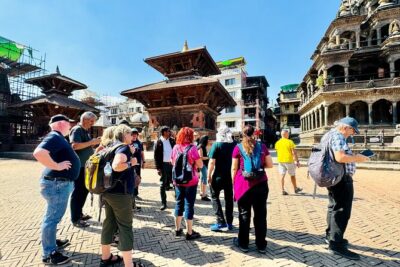
Full Day Top 4 UNESCO Tour with Lunch – Private/Group
Read our review →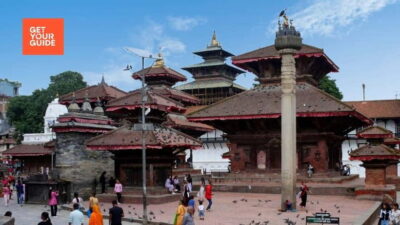
Kathmandu Private Sightseeing Tour | UNESCO World Heritage Sites
Read our review →Full Day 7 UNESCO Tour with Lunch – Private/Group
Read our review →Browse the lists this tour appears in