
Reviewed · MARDI HIMAL TREKS
Mardi Himal Trek 4N-5D
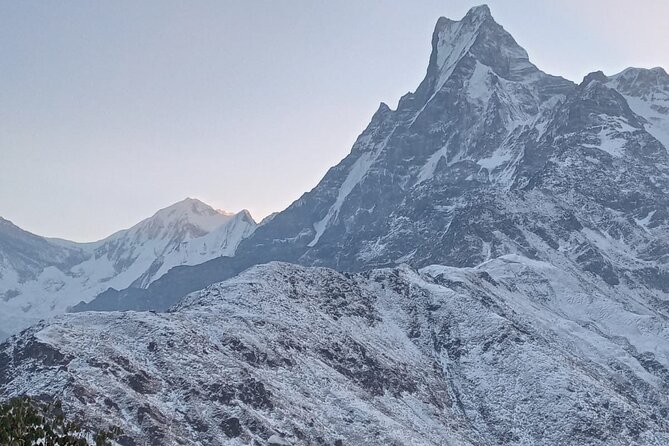
A Himalayan trek without the big-crowd headache. The Mardi Himal route sits off the main Annapurna Base Camp corridor, built around forest paths, village stops, and big snowpeak views of Mardi, Machhapuchhre, Annapurna South, and Hiunchuli. You start from the Pokhara area, climb gradually, and reach a high payoff at Mardi Base Camp.
I especially like the mix of rural culture early on, with hamlets like Dhampus and stops along the way, plus the dramatic scenery shift once you leave the forest. The other standout is that you get real trekking structure, with teahouse nights on the trail and a guide who helps you stay steady on uneven, rocky sections.
One consideration: the trek is not “flat and easy” on the last ascent. Day 4 climbs to 4,500m, and the schedule includes a longer, rockier push plus a steeper forest descent later, so you’ll want solid moderate fitness and good weather.
In This Review
- Key highlights you’ll feel on this trek
- Mardi Himal Trek: a calmer Annapurna-style escape from Pokhara
- Price and what makes $413.33 feel fair
- Day 1: Dhampus, village views, and the climb to Deurali
- Day 2: sunrise prep, rhododendron forests, and the no-teahouse stretch
- Day 3: ridge walking toward Low Camp, Badaldanda, and Middle Camp
- Day 4: Mardi Base Camp at 4,500m and the rocky payoff
- Day 5: forest descent to Lumre, ridge lunch at Kalimati, and a proper send-off in Pokhara
- How guides, teahouses, and meals shape your comfort level
- Altitude, pace, and who this trek suits best
- Should you book this Mardi Himal 4N-5D trek?
- FAQ
- Where do I meet the tour operator in Pokhara?
- Does the package include pickup?
- What permits are included?
- What is the highest altitude on the trek?
- Is teahouse accommodation included?
- How many meals are included?
- Is there a sunrise hike?
- Are there tea houses along the Deurali to Forest Camp stretch?
- What fitness level do I need?
- What happens if the trek can’t run due to weather?
Key highlights you’ll feel on this trek
- Dhampus and Australian Camp pacing: enough village time to start relaxed, then you build altitude step by step
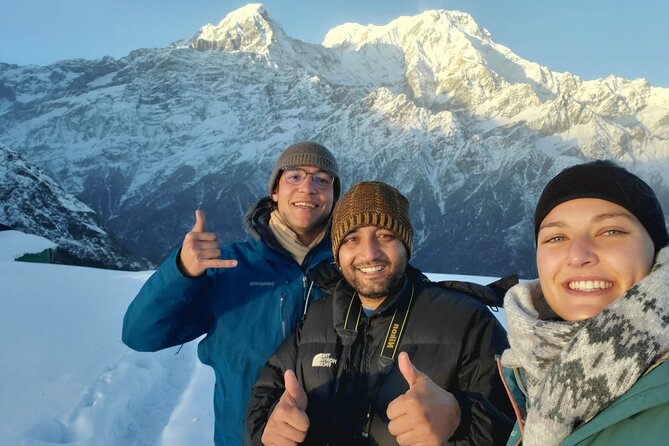
- Sunrise and mountain views from Deurali: early starts in the schedule are designed for good sightlines
- Rhododendron forests plus a rocky summit day: softer hiking early, then a tougher climb to Mardi Base Camp
- Teahouse nights on the route: you’re not hauling everything, and the itinerary counts on basic lodging
- Views toward Fishtail, Machhapuchhre, and Annapurna: multiple days give you fresh photo angles
- Guides praised for support and leadership: strong, patient directing shows up repeatedly in the guide names people mention
Mardi Himal Trek: a calmer Annapurna-style escape from Pokhara
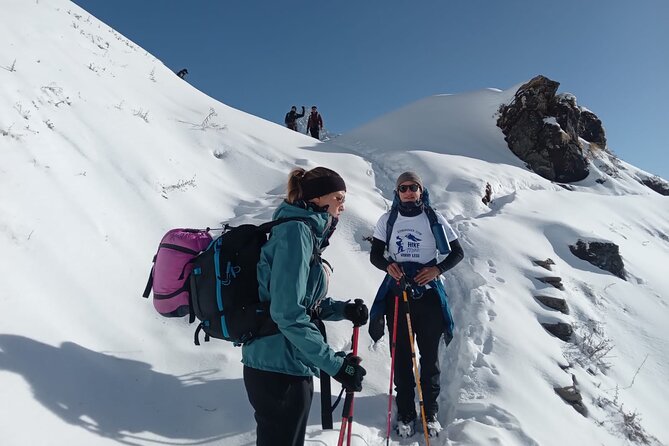
Mardi Himal is a trek for people who want Annapurna-area views but not constant crowds and constant roadside bustle. From Pokhara, you drive to the trailhead area and start with hamlets that feel genuinely local, not just a photo stop with a gift shop. Then the trail does what you hope a good trek does: it changes the whole environment as you gain altitude.
You’ll work through forested ground on winding paths, including rhododendron areas, before the vegetation thins and the mountains start looking more severe. That transition matters. It makes the big viewpoints feel earned, not sudden. And because this trek runs along the base of Mardi Himal and near Machhapuchhre, you keep getting a strong sense of where you are in the Annapurna world.
If you like trekking that feels personal and quiet, this is the kind of itinerary that can deliver that. It’s also short enough that you can do it without spending a week turning your packing cubes into souvenirs.
More Treks in Pokhara
- Poon hill Trek 3 days
★ 5.0 · 176 reviews - Trekking in Annapurna/Langtang/Everest/Upper Mustang regions
★ 5.0 · 161 reviews - Pokhara: 4-Day Ghorepani, Poonhill & Ghandruk Mountain Trek
★ 5.0 · 132 reviews
Price and what makes $413.33 feel fair
At $413.33 per person, the price can look “too good” or “just okay,” depending on what you expect to be covered. Here’s the key: a lot of the hard-to-price items are included.
You’re covered for permits and paperwork (ACAP and TIMS), plus an English-speaking, government-licensed guide, a medical kit carried by the guide, and staff costs like their insurance and food. On top of that, you get teahouse accommodation during the trek, transport associated with the program, and structured meals: 4 breakfasts, 5 lunches, and 4 dinners. There’s also a certificate of trekking completion and a souvenir t-shirt.
For most independent trekkers, permits, a licensed guide, and teahouse lodging add up fast. This package also reduces decision fatigue. Instead of negotiating logistics daily, you follow a set rhythm, which is especially helpful on the days with uneven ground and the one longer, higher climb.
What’s not included is just as important for value. Personal expenses like battery recharge, laundry, showers, and bottle or boiled water are on you. Tips for guide(s), porter(s), and driver(s) are also not included. And travel and rescue insurance is not included, so you’ll want to arrange that yourself.
Day 1: Dhampus, village views, and the climb to Deurali
Day 1 is your setup day, and it’s built for good first-day energy. You start at Banskot around 1,100m, after a short drive from the Pokhara-Baglung highway area. Then you climb for about an hour to Kalikasthan at 1,600m, where you get mountain and village views. After that, the day turns into a series of altitude adjustments, including a descent to Hemjakot (around 1,500m) and then continuing toward Dhampus at about 1,170m.
Dhampus is a Gurung village. That matters because it keeps the trek grounded in daily life, not just “walk, climb, sleep.” You get time for a real lunch in Dhampus before you start ascending again.
In the afternoon, the route climbs to Australian Camp (about 2,100m). From there, the hiking becomes pleasant and gradual, with a stop at Deurali (about 2,142m) after going via Pothana. Deurali is specifically described as a viewpoint, with Fewa Lake visible on the right and mountains around you.
Why this day works:
- You’re not thrown immediately into steep altitude gain.
- You get a meaningful village feel early.
- You end at a viewpoint area, so you’re not stuck in a “dead” campsite.
Possible drawback:
- The day includes multiple altitude changes, so your legs feel it even if it’s not the hardest day on paper.
Day 2: sunrise prep, rhododendron forests, and the no-teahouse stretch
Day 2 starts with an early wake-up for sunrise and mountain views. The schedule is designed so you can look at big peaks in better morning light. After breakfast, you walk along the forest.
One thing I like in this itinerary is the honesty about a key section: the path between Deurali and Forest Camp (about 2,550m) doesn’t have tea houses. That means you should not count on mid-walk rest breaks with snacks or a warm drink. It’s a practical note, and it helps you plan your pace and what you eat earlier.
As you climb, the views open up. You pass through grassland where you can see Mt. Fishtail and Mardi Himal right in front while you’re moving higher. Then rhododendron forests show up again, and you’re also told to be alert for possible wildlife like Himalayan thar, spotted deer, and even snow leopard sightings. Realistically, seeing wildlife is never guaranteed, but the itinerary routes you through habitat where it could happen.
Eventually, you reach Forest Camp where you stop for lunch. After that, you continue for about an hour to Rest Camp for the night.
Why this day stands out:
- Morning views are built in, not added as an optional detour.
- The mix of grassland and rhododendron keeps your day visually interesting.
- You’re warned about the no-teahouse stretch, which reduces the “surprise” factor.
Possible drawback:
- If you rely on frequent tea house breaks for hydration or snacks, you’ll need to adjust expectations for the Deurali to Forest Camp segment.
More Mardi Himal treks:
- Pokhara: 4-Day Mardi Himal Trek
★ 4.9 · 59 reviews - Private Mardi Himal Trek
★ 5.0 · 42 reviews - From Pokhara: 4-Day Mardi Himal Base Camp Trek
★ 4.9 · 31 reviews - Mardi Himal Trek
★ 5.0 · 30 reviews
Day 3: ridge walking toward Low Camp, Badaldanda, and Middle Camp
Day 3 is where the trek starts feeling more like a classic high-mountain hike. You begin with a gentle climb to Low Camp (around 2,990m) for roughly two hours. Then you continue for about an hour to Badaldanda.
Badaldanda is singled out as a place with mountain views, and the trail from there is described as easier to climb. That matters because it gives you a breather before the ridge portion.
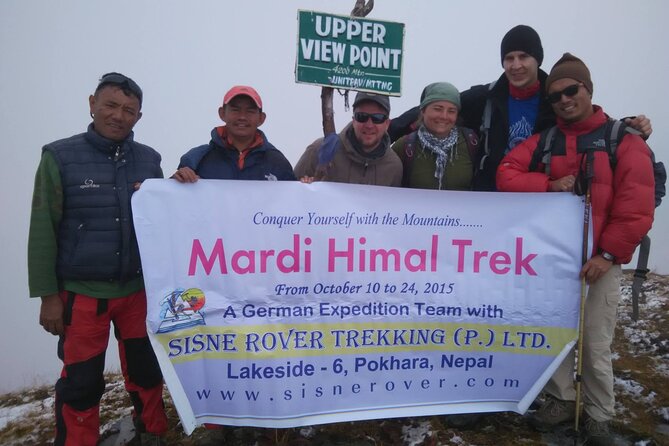
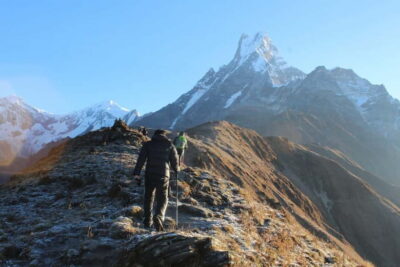
After Badaldanda, the route follows the ridge of Mardi Himal. This is the kind of walking that makes you feel the mountain scale. You’ll be viewing Mardi Himal and Machhapuchhre along the way, which is the whole point of choosing this particular trek instead of a more generic viewpoint loop.
Then the hike enters rhododendron forest again for about an hour and a half, and you reach Middle Camp. As you go forward, the tree line gets more vague, covered with rhododendron bushes rather than dense forest.
There’s also a nature detail I enjoy here: daphne, Nepal’s national bird, is usually seen on the way to High Camp. Your exact encounter is never guaranteed, but the itinerary is attentive to bird life, not just big-sky scenery.
Possible drawback:
- Ridge walking can feel mentally tiring even when it’s not steep. You’ll want steady footing and patience.
Day 4: Mardi Base Camp at 4,500m and the rocky payoff
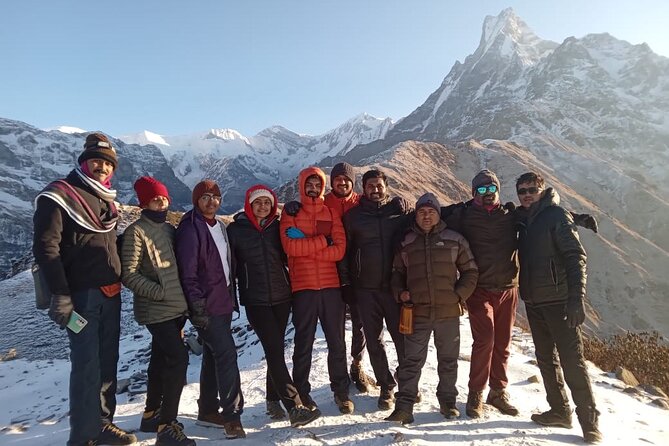
Day 4 is your peak day. You wake up early and hike for about four hours to Mardi Base Camp, described at around 4,500m, the highest point on the trek.
The schedule flags that this is more difficult than previous days. The walk is longer, and the path gets rocky and uneven at points. That’s not a small detail. Rocky ground at higher altitude changes how quickly you fatigue, even if your heart rate isn’t wildly out of line.
When you reach the base camp, the reward is a wide view of snow-capped mountains and natural vegetation. You’re also told you can see many peaks, including Dhaulagiri, Machhapuchhre, Mardi, and more.
Then you retrace your route back to Badaldanda.
Why this day is the heart of the trek:
- It’s the one day that clearly goes for maximum altitude.
- The views you get at 4,500m are the main reason most people choose Mardi Himal over other shorter options.
- The itinerary doesn’t add extra branching complexity. You go up, you explore, then you come back.
Possible drawback:
- Descending after a high point can feel tougher than the climb for some people. Rocky footing plus downhill pacing is the combo to plan for.
Day 5: forest descent to Lumre, ridge lunch at Kalimati, and a proper send-off in Pokhara
Day 5 is all about coming down without feeling rushed. You start with breakfast at Badaldanda, then retrace to Low Camp gradually descending.
From Low Camp, the trail diverts to the east through forest, with a steep descent to Siding. You’ll then reach Kalimati, a small ridge at about 1,700m where you can see mountain views, farm lands, and the valley. Lunch is taken here, which breaks up the long descent and gives your legs a moment to reset.
After lunch, you walk down to Lumre for about an hour, then drive about an hour back to Pokhara. The program also includes a farewell dinner to celebrate and share the trip.
This closing day works because it gives you multiple “different scenery modes”:
- downhill back through Low Camp area,
- a steeper forest section,
- then valley and farms from Kalimati.
Possible drawback:
- That steep forest descent can be hard on knees, especially if your day before ended with rocky footing.
How guides, teahouses, and meals shape your comfort level
This trek is designed around teahouse accommodation, so you’re not sleeping in tents or carrying a heavy camp setup. That alone makes the 4N-5D format feel realistic for people with moderate fitness. You also have a guide who handles key logistics and keeps the group moving safely along the planned route.
What really comes through in the guide stories is support and leadership. Names that come up include Milan, Krishna, Dilaram Poudel, Ram, and Prince Dila Ram. People highlight traits like patience, strong guidance, and knowledge shared along the way. That matters because on a trek like this, your success is often about small choices: when to slow down, where to rest, how to manage uneven steps, and how to handle those moments where altitude makes the simplest slope feel steep.
Meals are included, which helps you avoid the money and planning stress that can pop up on shorter treks. You get 4 breakfasts, 5 lunches, and 4 dinners. Also, there’s a medical kit carried by the guide. That does not replace smart self-care, but it’s a confidence boost for the unexpected.
One more practical note: things like boiled water, bottle water, showers, laundry, and battery recharge are personal expenses. So budget for small add-ons rather than assuming everything costs nothing.
Altitude, pace, and who this trek suits best
The trek is listed for travelers with moderate physical fitness. That’s consistent with the itinerary shape: early days are a mix of walking and gentle to moderate climbs, while Day 4 and some descent segments are harder.
Here’s the altitude storyline you should pay attention to:
- You start around 1,100m.
- You’re around 2,100m to 2,142m by Day 1.
- Day 2 climbs to Forest Camp around 2,550m, then to Rest Camp.
- Day 3 reaches Low Camp around 2,990m and then higher.
- Day 4 hits Mardi Base Camp around 4,500m.
- Day 5 drops back down toward 1,700m at Kalimati.
Because there’s no mention of a gradual multi-day acclimatization plan beyond the stepwise itinerary, pace and rest matter. If you know you’re someone who gets winded easily, you’ll do better if you keep your effort controlled, especially on the rocky and higher parts.
This trek is a great fit if you want:
- Annapurna-area views without a long, grindy schedule,
- a blend of village culture and mountain hiking,
- teahouse nights with a guided plan.
It may feel like too much if you:
- need fully flat hiking every day,
- struggle with steep descents,
- can’t handle a day that climbs to 4,500m.
Should you book this Mardi Himal 4N-5D trek?
I think you should book it if you want a short trek that still delivers real mountains, plus a guide-led experience that removes a lot of planning stress. The price makes sense for what’s included, especially permits, licensed guide support, teahouse lodging, and most meals. The itinerary also gives you multiple view windows, from Deurali and Day 2 sunrise timing to the big Mardi Base Camp push.
Skip it, or ask more questions first, if your main goal is gentle walking only. Day 4 is longer and rockier, and Day 5 includes a steep forest descent. If you can handle those, you’ll likely find the whole package satisfying.
If you’re deciding between trekking options in the Pokhara area, this one is worth serious consideration. It’s built for steady hikers who want quiet-feeling mountain time, not just a checklist of viewpoints.
FAQ
Where do I meet the tour operator in Pokhara?
The ticket redemption point is Sisne Rover Trekking Pvt. Ltd., Center Point, Pokhara 33700, Nepal.
Does the package include pickup?
Yes, pickup is offered.
What permits are included?
The tour includes trekking permits: ACAP and TIMS.
What is the highest altitude on the trek?
Mardi Base Camp is listed at about 4,500m, the highest point on this trek.
Is teahouse accommodation included?
Yes, teahouse accommodation during the trek is included.
How many meals are included?
You get 4 breakfasts, 5 lunches, and 4 dinners.
Is there a sunrise hike?
Yes. Day 2 includes waking up early for sunrise and mountain views.
Are there tea houses along the Deurali to Forest Camp stretch?
No. The path between Deurali and Forest Camp is noted as having no tea houses.
What fitness level do I need?
The tour is suitable for travelers with moderate physical fitness.
What happens if the trek can’t run due to weather?
The experience requires good weather. If it is canceled due to poor weather, you are offered a different date or a full refund.
Latest additions near Pokhara
- Pokhara: Pokhara Highlights Tour by Bus★ 3.6 · 10 reviews
- Discover Pokhara in Style: Private Vehicle Service with Driver★ 5.0 · 5 reviews
- Pokhara in 5 Hours: Lake, Museum, Cave, Falls & Pagoda Hill★ 4.5 · 16 reviews
- 7-Day Trek to Annapurna Base Camp from Pokhara★ 5.0 · 12 reviews
- 4 Day Mardi Himal Base Camp Trek from Pokhara★ 5.0 · 18 reviews
- The World Peace Pagoda in Pokhara★ 4.5 · 7 reviews
- Unique Easy Hiking to Foxing Hill from Pokhara★ 5.0 · 4 reviews
- World Peace Stupa Day Hike From Pokhara★ 5.0 · 4 reviews
Mardi Himal Treks, compared.


Mardi Himal Trek – 8 Days | Hidden Gem of the Annapurnas
Read our review →
Browse the lists this tour appears in