
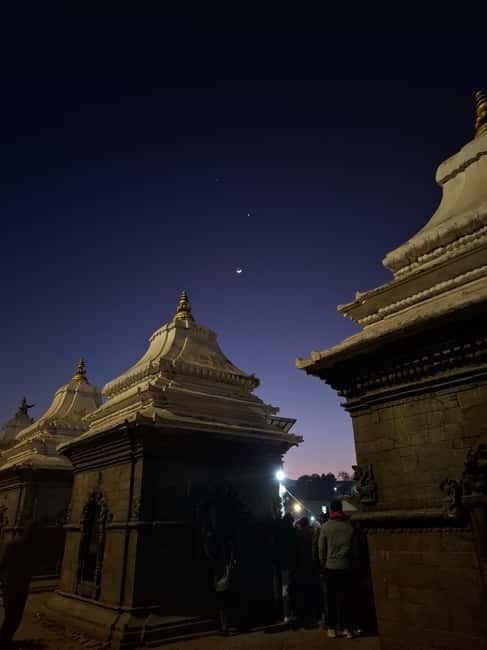
Reviewed · TEMPLE & STUPA TOURS
Katmandu: Pashupatinath Open Cremation & Evening Aarati
Seeing cremation by lamplight feels unreal
This 3-hour Katmandu experience around Pashupatinath turns your evening in Nepal into a front-row lesson on life, death, and devotion, all along the Bagmati River. I love the chance to witness the open cremation rituals at Arya Ghat up close, and I also love how the evening Aarati brings the whole place to life with Shiva chants and oil lamps. One drawback to be honest about, this is a serious religious space, and the cremation part can feel shocking or difficult to watch, especially if you are not ready for that level of reality.
The practical side is solid. You get pickup, round-trip transport in a private air-conditioned vehicle, and time built in so you can reach the Aarati viewing area before 5:30 PM. In one very positive experience I read about, a driver named Bhum Raj Tiwari explained what was happening in strong English, which made a huge difference for understanding the why behind the rituals.
If you go, go prepared: wear modest clothes, plan for walking on uneven ground, and bring a light layer for the outdoor evening. This tour is not a fit if you have mobility limits or back problems, since you’ll be walking to the cremation area and standing for the ceremony.
In This Review
- Key things that make this Pashupatinath experience special
- A Sacred Evening on the Bagmati River
- Price and timing: what $27 buys you in real life
- Getting there: pickup, private air-conditioning, and temple-complex arrival
- Walking toward Arya Ghat: what you’ll see before the Aarati
- Understanding moksha without getting lost in theory
- Pashupatinath Aarati: chants, oil lamps, and Lord Shiva at dusk
- Temple etiquette, clothing, and what to bring for night viewing
- How much explanation will you actually get?
- Comfort, safety, and the one negative that matters
- Who should book this Katmandu Pashupatinath tour, and who should skip
- Should you book this Pashupatinath open cremation and evening Aarati tour?
- FAQ
- How long is the Pashupatinath Open Cremation and Evening Aarati tour?
- What time does the Pashupatinath Aarati ceremony start?
- Where does the tour take place?
- What is included in the price?
- Is a tour guide included?
- Are entry tickets or meals included?
- What should I bring with me?
- Is the tour suitable for children or people with mobility issues?
Key things that make this Pashupatinath experience special
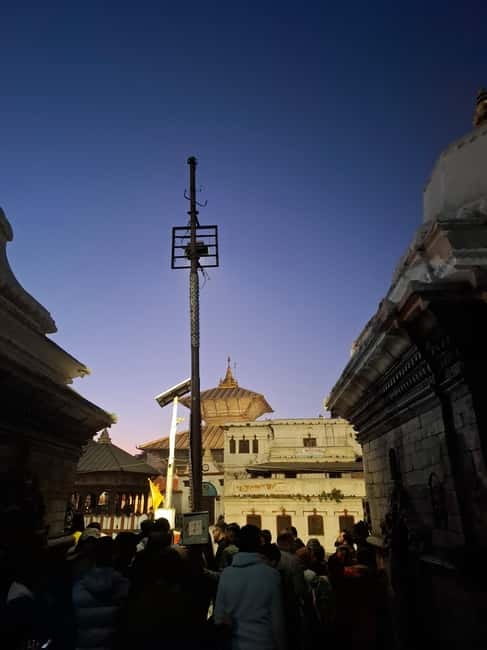
- Arya Ghat open cremations you can observe as evening approaches along the Bagmati River
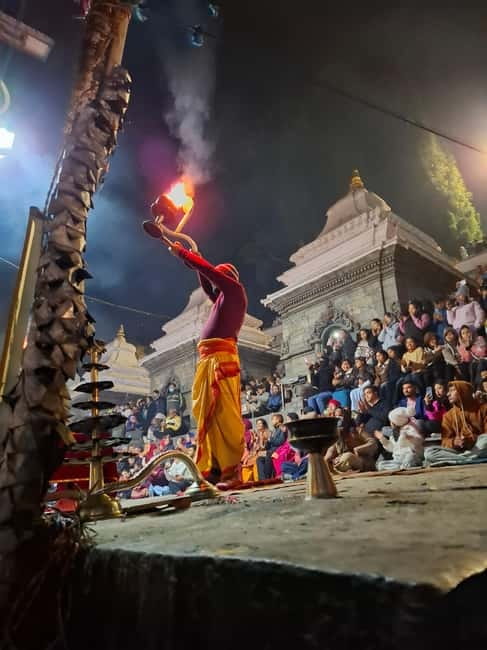
- Pashupatinath Aarati to Lord Shiva with chants, music, and glowing oil lamps
- Moksha explained in practice, where cremation is seen as a path to liberation
- A real religious crowd, including a large audience sitting on stone bleachers
- A short buffer before the ceremony, because the best viewing area matters
A Sacred Evening on the Bagmati River
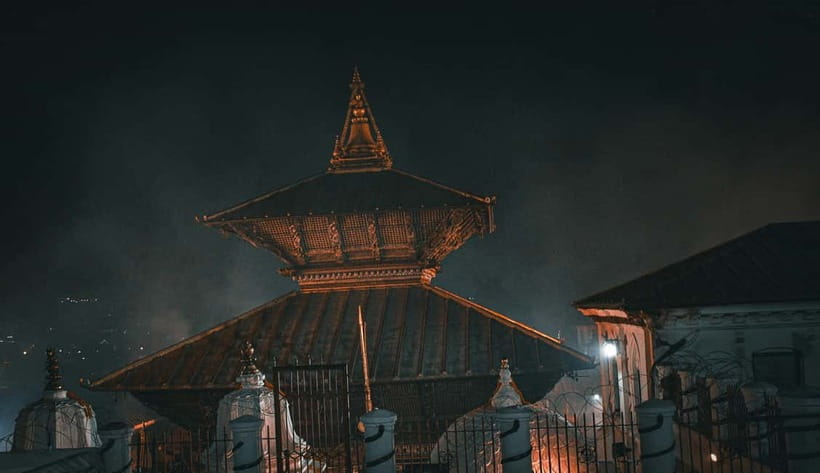
Pashupatinath in Kathmandu is one of those places where religion is not something you only read about. It’s something you watch. You’re on the Bagmati River, and the whole flow of the evening is built around Hindu funeral rites and the worship of Lord Shiva.
The open cremation at Arya Ghat is the hard part and the most important part. You’re not being asked to “tour” death. You’re witnessing a ritual that local families believe helps the departed find liberation, moksha. For many people, it creates a strange mix of emotions, respect and discomfort at the same time.
Then, as the day turns darker, the tone shifts without becoming light or casual. The Pashupatinath Aarati begins, and suddenly the river scene is paired with chanting, music, and lines of oil lamps. One person I saw describe it compared the night setting and the crowd to something like Indiana Jones, and I get the feeling they meant it as a vivid, cinematic kind of awe. Even if you don’t use that comparison, the evening rhythm is hard to forget.
More Temple & Stupa Tours in Kathmandu:
- Kathmandu Spiritual Sites: Bodhnath & Pashupatinath Tour
★ 5.0 · 185 reviews - Kathmandu: Chandragiri Cable Car and Monkey Temple Tour
★ 4.8 · 139 reviews - Monkey Temple – Swayambhunath Tour – Private/Small Group
★ 5.0 · 50 reviews
Price and timing: what $27 buys you in real life
The price is listed at $27 per person for about 3 hours, and the total time can run around 3 to 4 hours depending on traffic and your pickup location. What you’re paying for here is straightforward: private round-trip transport, a driver, and water. It is not priced like a guided walking tour with an expert historian included.
That matters. If you expect a deep cultural lecture from a dedicated tour guide, you might be disappointed. The tour description also says a guide is not included, though one review mentioned a person named Bhum Raj Tiwari providing detailed English explanations. So here’s the practical takeaway: you should plan to do a little self-prep (basic understanding of Shiva worship and the role cremation plays), and then hope your driver or whoever supports you can explain more on the spot.
The timing is also important. The Aarati is scheduled to start around 6:00 PM to 6:30 PM, and you’re advised to reach the Aarati area by 5:30 PM for the best viewing spot. That means you’re not just arriving at the temple whenever. You’re living to a schedule, and the schedule is built around the light, the chanting, and the ritual movement.
Getting there: pickup, private air-conditioning, and temple-complex arrival
Your day starts with pickup from your Kathmandu location. The representative arrives within a 15-minute window of the scheduled time. From there, you ride in a private air-conditioned vehicle to the Pashupatinath temple complex.
Once you arrive, you’re dropped at the main entrance. Then you walk toward Arya Ghat, the open cremation site area. This is one of those tours where the “easy part” is the ride, and the “real tour” begins the moment you step outside.
There’s also a short briefing on do’s and don’ts. You’ll want to take that seriously. This is not the kind of place where you can ignore etiquette and still feel comfortable. Even if you’re just watching, you’re entering active religious space, with people who have come for reasons that are deeply personal.
And one more practical detail: your exact pickup time can vary based on where you’re staying, so don’t schedule other things right before pickup. Give yourself margin. In one less positive experience I read about, the pickup timing and car quality were not what the person expected. That isn’t the norm you should count on, but it is a reminder to set expectations and double-check pickup details.
Walking toward Arya Ghat: what you’ll see before the Aarati
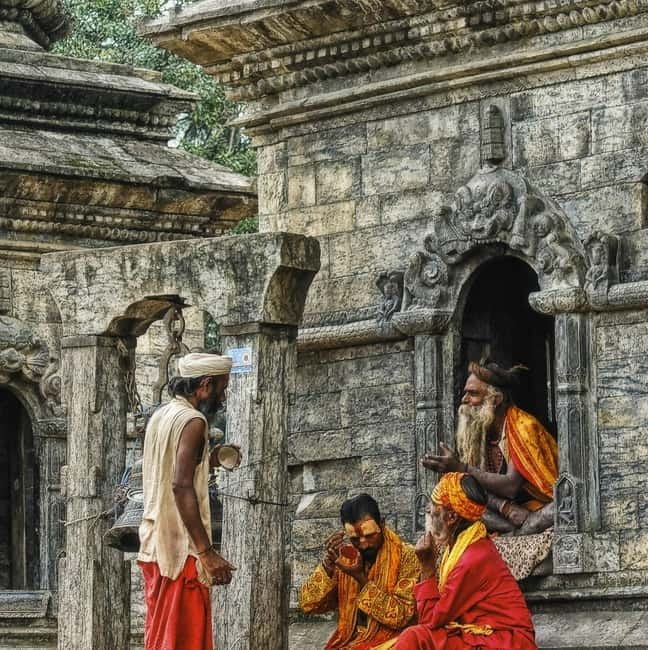
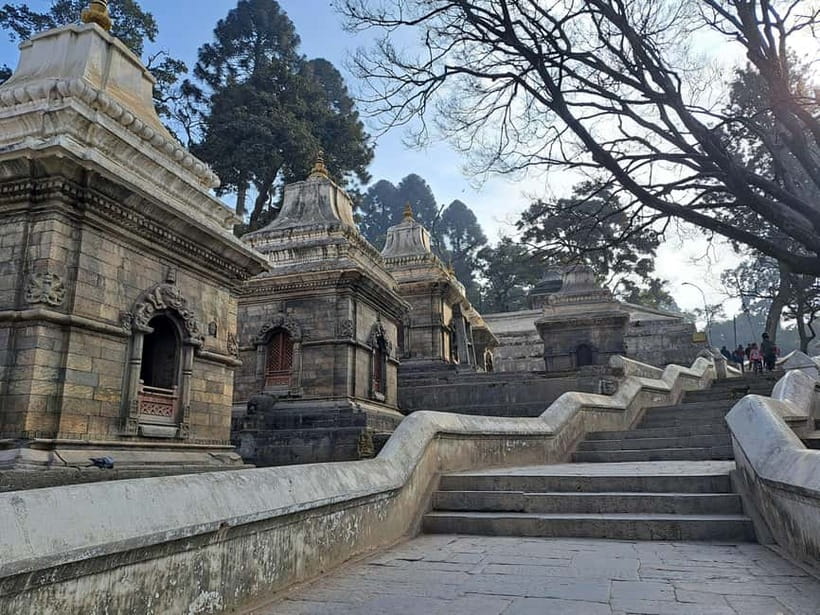
After you’re dropped at the main entrance, you walk toward Arya Ghat. That walk is part of the experience because it gets you into the temple complex flow, then down toward the river edge.
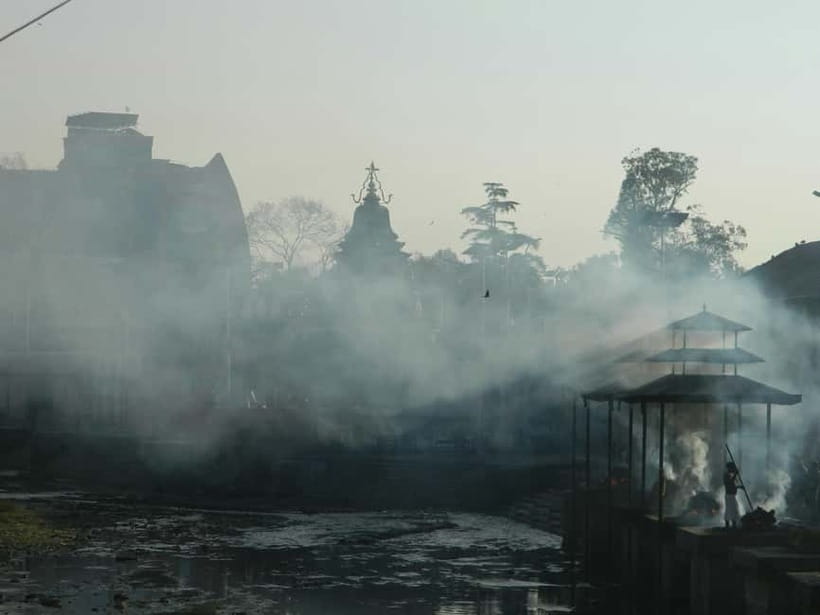
At Arya Ghat, you’ll observe Hindu funeral rites along the Bagmati River. The key belief you’ll hear tied to this place is that cremation here can grant moksha, liberation from the cycle of life and death. Even if you don’t share the belief, it helps you understand why the rituals are treated with such seriousness, and why people gather instead of avoiding what most outsiders would prefer to look away from.
This is also where you need to adjust your mindset. You’re not just filming a spectacle. You’re watching a tradition being performed for the dead and for the living family who must move through their grief with structure and ritual.
A practical note from the setting: the scene is dynamic, and evening adds complexity. One person described the fast-flowing river, burning funeral pyres, and a mass audience on stone bleachers as intensely vivid. If you’re hoping for calm photo moments, you might find that the environment is busy and moving. If you’re hoping for a genuine look at how this works, that same busyness is part of the authenticity.
Another way to spend the time in Nepal:
- Everest Base Camp Trek – 14 Days
★ 5.0 · 1,499 reviews - Everest Base Camp Trek
★ 5.0 · 842 reviews - Private Kathmandu Sightseeing Tour | UNESCO World Heritage sites
★ 5.0 · 756 reviews - Kathmandu: 7 UNESCO Sites with Lunch
★ 4.8 · 744 reviews
Understanding moksha without getting lost in theory
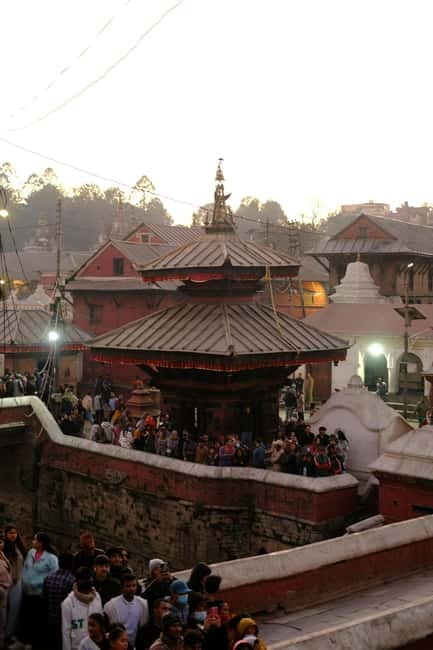
The tour description frames cremation at Pashupatinath as a path to moksha, liberation. That belief turns what outsiders call “death rituals” into something spiritual, purposeful, and forward-looking.
Here’s how I’d think about it as a visitor. Even if you only understand one or two pieces, the ritual’s structure communicates meaning. The act of cremation is not treated as an end with no response. It’s treated as a step. That’s why people come here, why the river matters, and why the temple complex holds such gravity.
If you get explanations from your driver or a supporting person on the trip, pay attention. In one standout account, a person named Bhum Raj Tiwari provided clear English explanations that helped make the practice understandable rather than purely frightening. That kind of explanation turns your experience from gawking to understanding, which is a much better outcome for your own memory and respect level.
If you don’t get much verbal explanation, you can still ground yourself by focusing on the ritual basics you can observe: the preparation, the chanting or spoken cues you might hear, and the way people behave around the ongoing ceremony.
Pashupatinath Aarati: chants, oil lamps, and Lord Shiva at dusk
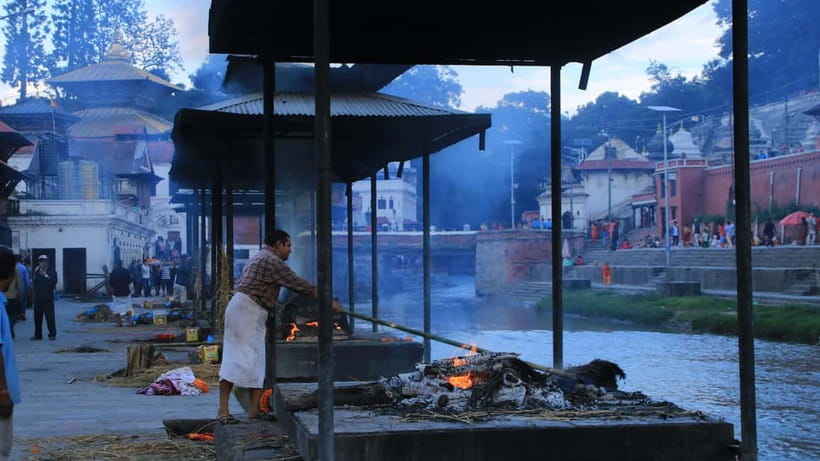
After you watch the cremation area, you’re scheduled to get to the Aarati area well before it starts. The ceremony is set to begin between 6:00 PM and 6:30 PM, and you’re advised to arrive by 5:30 PM to secure a good spot.
When the Pashupatinath Aarati begins, dedicated worship to Lord Shiva takes center stage. You’ll hear devotional songs, rhythmic chanting, and see the glow of oil lamps. The mood can feel like a wave. People are watching with focus, and the ritual movements keep pulling your attention back to the center.
One thing that makes this pairing powerful is that cremation rituals often continue in the background while Aarati happens in the foreground. That creates a direct visual reminder of life and death sharing the same sacred space, at the same time. It’s not comfortable in the western sense of comfort, but it can be deeply meaningful.
From a value perspective, this is why the tour price makes sense for some people. You get transport and a timed arrival that lines up with the moment you can see the full contrast. If you only saw the temple by day, you’d miss this emotional swing. If you only saw the evening Aarati, you’d miss the part that gives the whole night its weight.
Temple etiquette, clothing, and what to bring for night viewing
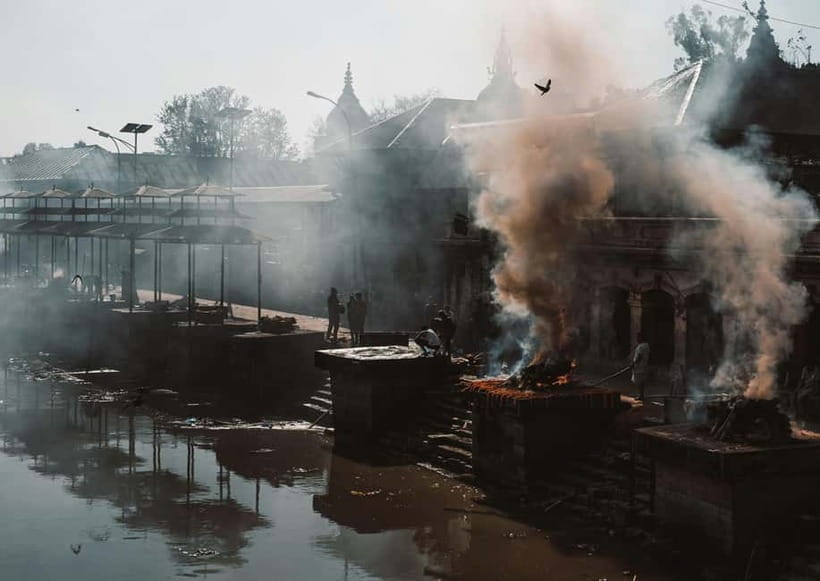
This is an outdoor, walking-based experience. You should dress for modesty since Pashupatinath is a religious site. Bring comfortable clothes and comfortable shoes. You will walk to the cremation area, so flip-flops are not the move.
Also bring:
- Passport or an ID card
- A camera
- Cash
- Comfortable shoes
- A light jacket for evening weather, if needed
A camera is mentioned as something to bring, but think about how you want to use it. In scenes like this, you’ll likely feel the urge to film everything. Instead, I recommend taking fewer photos and standing still for a moment. You’ll understand the ritual better if you let sound and movement register first.
If you have back problems, mobility issues, or any condition that makes walking and standing difficult, you should skip this tour. It is explicitly listed as not suitable for people with mobility impairments, wheelchair users, and those with pre-existing medical conditions, plus children under 9.
How much explanation will you actually get?
This is the one area where you should be a little careful with your expectations.
The tour information says a tour guide is not included, but your driver will provide assistance. At the same time, one verified booking described a specific person, Bhum Raj Tiwari, who spoke excellent English and explained the meanings so Europeans could understand why and how the Hindus perform these rituals.
So you should plan for two possibilities:
- You get helpful support from your driver, including explanations, and it makes the experience easier to interpret
- You mostly get transport and general help, and you rely more on your own reading and observation
If your understanding level matters to you, do a quick mindset check before you go. Ask yourself if you can handle simply observing respectfully, even if the talk is limited. If the answer is no, you might want to look for a version that clearly includes a qualified guide in a consistent way, rather than hoping for it.
Comfort, safety, and the one negative that matters
Most of what you’ve been given points to a straightforward evening plan. Still, one negative report flagged issues that you should take seriously, because comfort and trust matter when you’re far from your usual routines.
In that case, the pickup was late, the vehicle was described as dirty and not truly set up for tourists, and the driver did not speak English. There were also concerns about air-conditioning and seatbelts.
You cannot control everything, but you can protect yourself by doing a few simple things:
- Confirm pickup details and be ready at the meeting point on time
- If English support matters, ask in advance about language for your driver or whoever is assisting
- Keep your expectations focused on what is included, transport plus water, rather than a full guided lecture
Also, if you feel unsure about a vehicle or safety setup, speak up. You’re paying money for the experience, and you deserve basic comfort.
Who should book this Katmandu Pashupatinath tour, and who should skip
This tour makes sense if you want a rare, real look at Nepalese Hindu spiritual life, not just temple photos. It is also a good fit if you like your cultural experiences with strong context, because the evening Aarati to Lord Shiva and the belief in moksha connect directly to what you’re seeing.
It’s not a fit if:
- You are sensitive to graphic rituals or are easily disturbed
- You have mobility impairments, back problems, or pre-existing medical conditions
- You need wheelchair access
- You are traveling with children under 9
If you are comfortable watching and you can hold a respectful, reflective mindset, this experience can feel like a meaningful evening rather than a checklist stop. The contrast between open cremation rites and the Aarati is the whole point, and it lands hardest when you allow yourself to stay present.
Should you book this Pashupatinath open cremation and evening Aarati tour?
Book it if you want one of Kathmandu’s most direct, honest encounters with Hindu ritual, and you’re okay with the fact that this is not a gentle sightseeing stop. You’ll get private transport, water, and a timed arrival that puts you in position for the Aarati ceremony at the right moment, plus time at Pashupatinath to observe the cremation area.
Skip it if you need comfort above all else, or if walking and standing are difficult for you. Also skip if you expect a guaranteed professional guide who will interpret every step for you in English. In the best cases, you might meet someone like Bhum Raj Tiwari who explains clearly. But the tour info also suggests support may be limited to what your driver can provide.
If you do book, do one thing that improves everything: arrive with modest clothing, comfortable shoes, and a calm plan. Then watch the evening unfold, cremation and chanting side by side. It’s intense, it’s real, and it’s exactly the kind of experience that changes how you see religion as something lived, not just performed.
FAQ
How long is the Pashupatinath Open Cremation and Evening Aarati tour?
The duration is listed at about 3 hours, with timing that may run around 3 to 4 hours depending on pickup location and traffic.
What time does the Pashupatinath Aarati ceremony start?
The ceremony is scheduled to start between 6:00 PM and 6:30 PM. You’re advised to arrive at the Aarati area by 5:30 PM for the best viewing spot.
Where does the tour take place?
The tour centers on the Pashupatinath Temple complex in Kathmandu and includes a walk toward Arya Ghat, the open cremation site along the Bagmati River.
What is included in the price?
Included items are an experienced driver, drinking water, and pickup and drop-off.
Is a tour guide included?
A tour guide is listed as not included. Your driver will provide assistance.
Are entry tickets or meals included?
No. Entry tickets and meals are not included.
What should I bring with me?
Bring your passport or ID card, comfortable shoes, modest clothing, a camera, and cash. A light jacket can help for outdoor conditions in the evening.
Is the tour suitable for children or people with mobility issues?
It is not suitable for children under 9 years old, people with back problems, people with mobility impairments, wheelchair users, or those with pre-existing medical conditions.
Latest additions near Kathmandu
- White Water River Rafting – 1 Day★ 4.3 · 3 reviews
- Traditional Momo Making Class★ 5.0 · 10 reviews
- Kathmandu to Pokhara Premium sofa bus ticket★ 4.0 · 17 reviews
- Ghorepani Poon Hill Trek★ 5.0 · 16 reviews
- Amazing 1 Day Trekking Experience in Kathmandu Nepal★ 5.0 · 24 reviews
- Ghorepani Poonhill Trek★ 5.0 · 5 reviews
- Walking tour of real Kathmandu through back streets.★ 5.0 · 3 reviews
- Wildlife Adventure in Chitwan Nepal★ 4.0 · 4 reviews
Temple & Stupa Tours, compared.
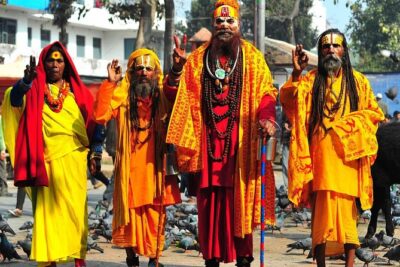
Kathmandu Spiritual Sites: Bodhnath & Pashupatinath Tour
Read our review →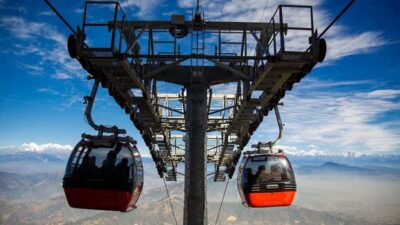
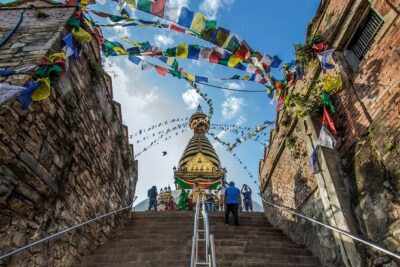
Monkey Temple – Swayambhunath Tour – Private/Small Group
Read our review →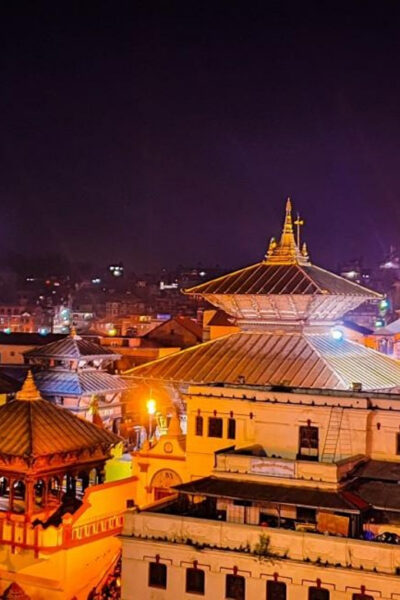
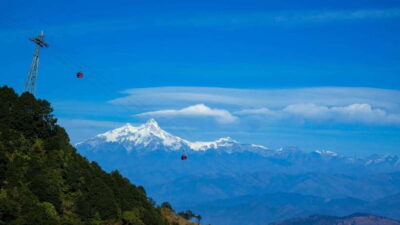
Chandragiri Cable Car & Monkey Temple Tour- Private/Group
Read our review →
Private Chandragiri Cable Car and The Monkey Temple Tour
Read our review →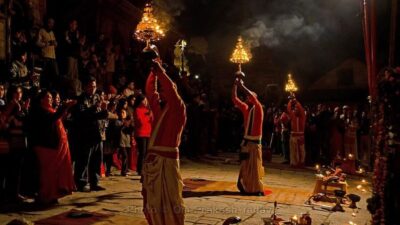
Pashupatinath Temple, Hindu Crematorium and Aarati in-depth Tour
Read our review →Browse the lists this tour appears in