
Reviewed · HISTORICAL TOURS
Kathmandu Cultural Tour – Kathmandu Valley Sightseeing Tour
This tour is a smart hit list for first-timers. I like that it packs UNESCO World Heritage stops into a half-day, with a guide who explains what you are seeing. You get the comfort of a private setup, not a chaotic hop-on crowd.
What I like even more is the pacing: Swayambhunath, Boudhanath, Pashupatinath, then Patan Durbar Square, usually with enough time to actually look. One drawback to keep in mind is that the major entry fees are not included, and Pashupatinath can feel intense because of the cremation rituals by the Bagmati River.
If you want an efficient Kathmandu Valley overview, this private sightseeing day is built for you. I also suggest you confirm the guide plan up front, because I have seen at least one case where a traveler ended up with a driver who did not give the expected guidance and stops did not fully match the plan.
In This Review
- Key highlights to know before you go
- Why this Kathmandu Valley Cultural Tour works for tight schedules
- Pickup, private vehicle, and what you really get for $78
- Swayambhunath Monkey Temple, hilltop views and what to watch for
- Boudhanath Stupa, Tibetan Buddhism’s calm rhythm
- Pashupatinath Temple and the Bagmati River cremation rituals
- Patan Durbar Square, 17th-century architecture and a calm end to the day
- Tips to make the day smoother, shoes, timing, and ticket budgeting
- Who this private Kathmandu Valley day suits best
- Should you book this Kathmandu Valley tour?
Key highlights to know before you go
- Four UNESCO stops in about 5 to 6 hours, ideal when you have limited time in Kathmandu Valley
- Private vehicle and hotel pickup, so you spend less time figuring out transport
- Swayambhunath Monkey Temple combines hilltop views with a living temple atmosphere and famous monkeys
- Boudhanath Stupa is calmer and more Tibetan, with prayer wheels and monk chants as the main soundtrack
- Pashupatinath rites at the Bagmati River are a powerful cultural moment, but not everyone will want to watch
- Patan Durbar Square is a strong final stop, with 17th-century architecture and an easy, walkable finish
Why this Kathmandu Valley Cultural Tour works for tight schedules
When you land in Kathmandu, the biggest problem is time. There is so much to see in the Valley that day plans can turn into a transportation puzzle. This tour is built around the idea of a concentrated cultural loop, so you see several of the best-known sacred sites without running yourself ragged.
The other big win is guidance. A good guide can connect the dots between Hindu and Buddhist traditions, explain why certain places are treated as holy, and help you understand what you are looking at beyond the obvious statues and stonework. If you are visiting Nepal for the first time and you want context fast, this format is a good fit.
The time window matters too. With roughly 5 to 6 hours, you can get meaningful sightseeing done even if you are still adjusting to the altitude, traffic, and daily rhythm of the city.
More History Tours in Kathmandu:
- Private Kathmandu Sightseeing Tour | UNESCO World Heritage sites
★ 5.0 · 756 reviews - UNESCO Seven World Heritage Tour in Kathmandu
★ 5.0 · 253 reviews - Nepal Discovery Tour: Heritage Sites & Scenic Hill Easy Hike
★ 5.0 · 121 reviews
Pickup, private vehicle, and what you really get for $78
This tour costs $78.00 per person and typically runs about 5 to 6 hours. For that price, you get hotel pickup and drop-off, transport by private vehicle, and a driver or guide, plus bottled water (one bottle).
Here is the practical value in that:
- You avoid the hardest part of Kathmandu sightseeing, getting to sites efficiently in traffic.
- You get a private setup, so your route and timing can be managed around your pace.
- You have someone in the car whose job is to coordinate, which matters when you are moving between different neighborhoods and temple zones.
Two things to plan for:
- World Heritage entry fees are not included, and the sites you visit are the type where tickets can add up. If you arrive without budgeting for tickets, the day can feel more expensive than you expected.
- Your experience depends on the level of guidance you receive. In one instance I saw described, a traveler got mainly a driver with limited explanation, and fewer stops than planned. That is not the norm you want, so I recommend you confirm that you are receiving the intended guide service, not just transportation.
Swayambhunath Monkey Temple, hilltop views and what to watch for
Swayambhunath is the first stop for a reason. It sits on a hill, so you get a natural “arrival moment” where the city opens up below you. The walk is short, about 5 minutes to the summit, but it is enough to set you in the right mood before you reach the main stupa area.
This place is an ancient Buddhist stupa surrounded by shrines and temples, and the vibe is spiritual in a very tangible way. You are not just looking at a monument, you are seeing a working religious site where people come to pray and make offerings.
Then there are the monkeys. Swayambhunath is often nicknamed the Monkey Temple, and the playful monkeys are part of the experience’s mythology and daily reality. If you enjoy watching street-level nature and people coexisting with wildlife, you will probably love this stop.
What to consider:
- The experience can be more active than you might expect, so keep small items secured.
- You are on a hill with stairs and uneven temple paths, so comfortable shoes help a lot.
If you are trying to understand Kathmandu’s spiritual layers quickly, starting here is smart. It gives you a strong Buddhist lens before the day shifts toward Tibetan Buddhism and then Hindu sacred sites.
Boudhanath Stupa, Tibetan Buddhism’s calm rhythm
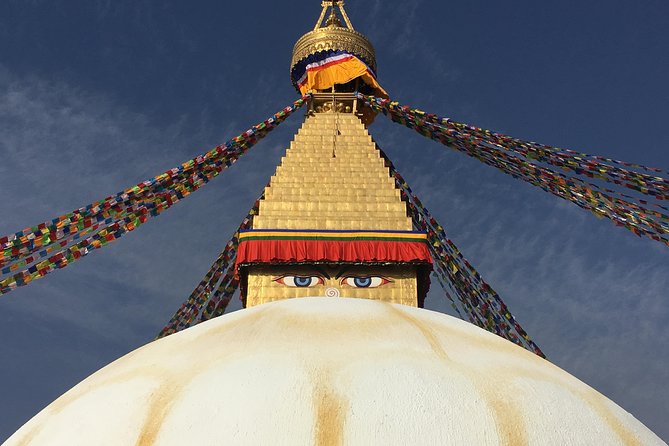
Boudhanath Stupa is a major contrast after Swayambhunath. Where the hilltop can feel more mixed in energy, Boudhanath leans toward calm and ritual. It is described as the largest Tibetan stupa in the world, and the area around it is often called Little Tibet.
This is where you will notice the Tibetan Buddhist practices at work. Monks chant, and prayer wheels spin in a steady rhythm. For many visitors, that repetitive motion and the surrounding community create a mental pause.
It is also a useful way to learn. If you listened carefully in the car, your guide can help you see how Buddhist traditions share core values while expressing them differently. The day becomes a comparison in real time: Buddhist site on a hill with local mythology, then Tibetan Buddhism with prayer rituals.
What I recommend you do here:
- Slow down for the stupa itself, not just the crowd photos.
- Let the chants and prayer wheels be part of your sightseeing, not background noise.
One practical consideration is that this stop lasts about 1 hour. If you want extra time to sit and watch, you might value a slightly earlier start or a guide who can help you prioritize viewpoints.
Another way to spend the time in Nepal:
- Everest Base Camp Trek – 14 Days
★ 5.0 · 1,499 reviews - Everest Base Camp Trek
★ 5.0 · 842 reviews - Kathmandu: 7 UNESCO Sites with Lunch
★ 4.8 · 744 reviews - Everest Base Camp Helicopter Tour landing at Everest View Hotel
★ 5.0 · 668 reviews
Pashupatinath Temple and the Bagmati River cremation rituals
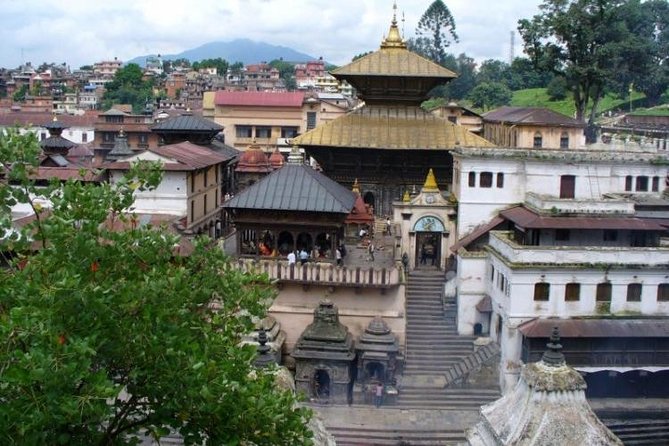
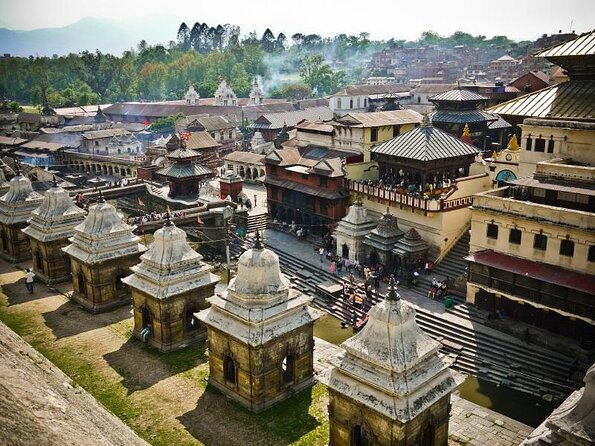
Pashupatinath Temple is a UNESCO World Heritage site and one of the most sacred Hindu places in Nepal. It is famous for cremation rituals, which take place openly along the Bagmati River.
This is the stop that can emotionally split visitors. Some people find it deeply reflective and profoundly spiritual, because death rituals here are part of religious belief and community practice. Others find it intense or unsettling, especially if you are not ready for open ceremonies.
The key practical point: you can choose how much you want to observe. You do not have to force yourself to watch the most intense parts of the ritual. If you want the cultural meaning but prefer distance, you can often step back and focus on the temple setting and the general flow of worship.
If you are the type who likes understanding how faith shows up in daily life, Pashupatinath can be a standout. It is not a museum experience. It is a living religious site, and that is exactly why it can hit hard.
What to consider before you arrive:
- Bring a mindset for respectful viewing.
- If you feel uneasy around human remains or public cremation scenes, plan to limit your attention to areas you feel comfortable with.
Patan Durbar Square, 17th-century architecture and a calm end to the day
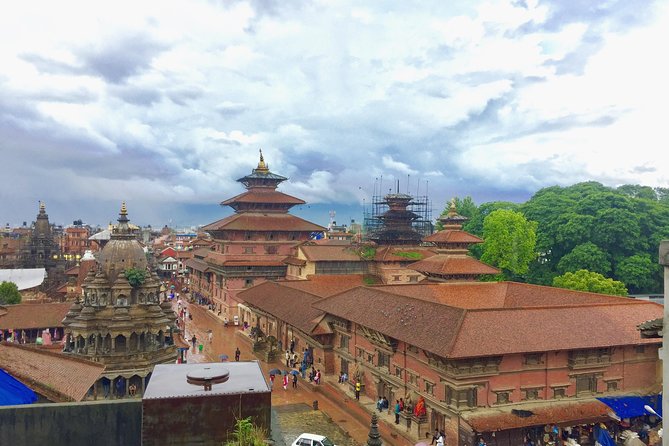
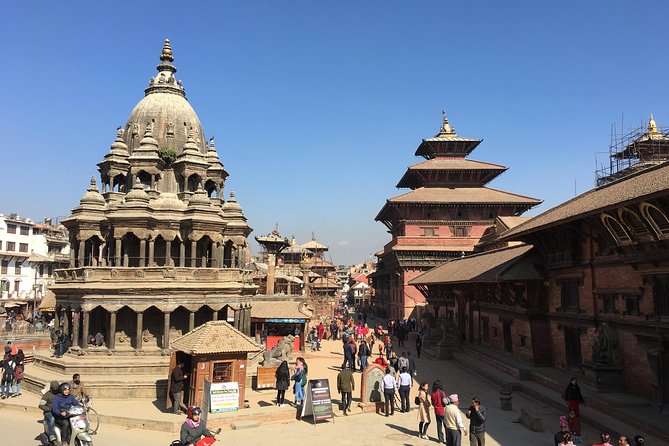
Patan Durbar Square (in Patan, also called Lalitpur) is a strong final stop. It is one of the historic royal squares in the Kathmandu Valley, and it is known for 17th-century architecture.
This site feels different from the stupa-heavy stops earlier in the day. You are in a square, surrounded by stone details, temple structures, and a museum that can add context if you want it. If you like architecture, carvings, and street-level atmosphere, you will have a good time here.
It also works as a decompression moment. After the sacred intensity of the morning and mid-day, Patan lets you wander at a more relaxed pace. Many people find it a nice spot to take a breather and just absorb the textures of the old city.
There is even a simple local idea for your end-of-tour rhythm: try a cup of authentic Patan tea if you find a place that looks clean and busy with locals. It is a small thing, but it makes the day feel complete.
One practical note: this stop is about 2 hours. That is enough time to walk the square and linger without feeling rushed, as long as you do not spend the full time just searching for snacks.
Tips to make the day smoother, shoes, timing, and ticket budgeting
A few practical moves can make a big difference on a half-day cultural route like this.
Plan for entry fees: The tour does not include entry fees to World Heritage sites, and tickets are listed as not included for the stops. Before you go, budget for tickets so you are not surprised at the gates.
Wear comfortable, grippy shoes: You will walk near temple areas and likely deal with stairs or uneven stone paths, especially at Swayambhunath.
Think about how you handle intensity: At Pashupatinath, cremation rituals are part of the site’s reality. If open ceremonies are not your thing, decide ahead of time how you will cope, and give yourself permission to step back.
Bring small, secure essentials: Monkeys at Swayambhunath are part of why that stop is memorable. Keep bags zipped and avoid dangling items. It is not about panic, just simple caution.
Ask about your guide before you set out: One low point I saw described was a mismatch between planned stops and what a traveler actually experienced, including limited guidance. You can reduce the odds of that by confirming that your guide will be actively explaining the sites, not just driving.
Who this private Kathmandu Valley day suits best
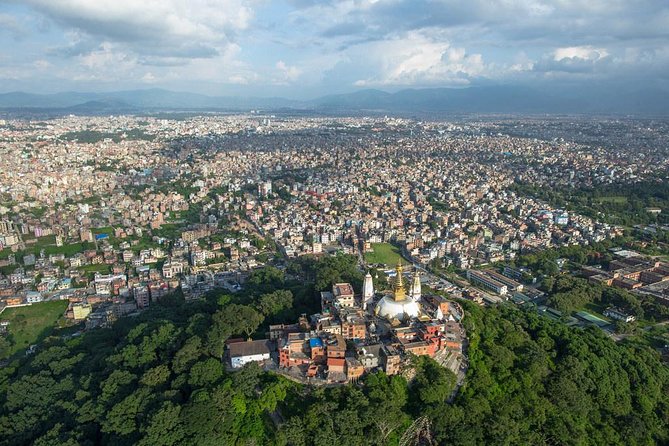
This tour is ideal for first-time visitors who want a concentrated cultural overview. If you have one day to cover major landmarks and you do not want to coordinate buses and taxi lines, the private vehicle plus pickup makes a lot of sense.
It also fits well if you:
- Want both Buddhist and Hindu perspectives in a single day
- Like UNESCO sites and want to see several of them efficiently
- Prefer a structured route with time at each stop
It might not be the best match if you want lots of flexibility to linger for hours at one place or if you are very sensitive to intense ceremonies. You can choose your viewing level at Pashupatinath, but the site is still there and it is still part of the program.
Should you book this Kathmandu Valley tour?
I would book this tour if your goal is a fast, organized sampler of the Kathmandu Valley’s most famous spiritual sites, with the convenience of pickup and a private vehicle. It is priced like a practical day plan, not a luxury half-day, and the inclusion of transport and water helps.
I would be cautious if entry fees surprise you or if you know Pashupatinath rituals would make you uncomfortable. If that sounds like you, I would still consider booking only if you feel confident you can step back from the areas you do not want to watch.
Finally, do one simple thing before you go: confirm you will have the full guide experience you expect, not just a driver. When it clicks, this is a strong half-day route that helps you understand Kathmandu Valley culture without wasting hours figuring out where to start.
Latest additions near Kathmandu
- White Water River Rafting – 1 Day★ 4.3 · 3 reviews
- Traditional Momo Making Class★ 5.0 · 10 reviews
- Kathmandu to Pokhara Premium sofa bus ticket★ 4.0 · 17 reviews
- Ghorepani Poon Hill Trek★ 5.0 · 16 reviews
- Amazing 1 Day Trekking Experience in Kathmandu Nepal★ 5.0 · 24 reviews
- Ghorepani Poonhill Trek★ 5.0 · 5 reviews
- Wildlife Adventure in Chitwan Nepal★ 4.0 · 4 reviews
- Walking tour of real Kathmandu through back streets.★ 5.0 · 3 reviews
Historical Tours, compared.
Private Kathmandu Sightseeing Tour | UNESCO World Heritage sites
Read our review →
Full-Day Tibetan Cultural Tour to Tibetan Settlements Pokhara
Read our review →
Nepal Discovery Tour: Heritage Sites & Scenic Hill Easy Hike
Read our review →
Kathmandu Private Sightseeing Tour | UNESCO World Heritage Sites
Read our review →
Afternoon Tibetan Cultural Tour to Tibetan Settlements Pokhara
Read our review →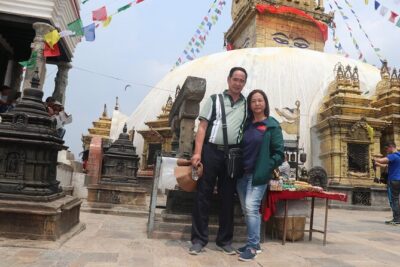
Nagarkot Sunrise & Bhaktapur UNESCO Heritage Private Tour
Read our review →Browse the lists this tour appears in