
Reviewed · EVEREST BASE CAMP TREKS
Everest Base Camp Trek from Lukla
Lukla to Everest Base Camp feels instantly real. You start in the energy of Lukla and earn big payoff from Kala Patthar views, with Sherpa culture woven through every stop like Namche markets and Tengboche monastery. The main thing to weigh is that this is real altitude trekking, with 5-7 hours of walking most days, plus fast weather shifts in the Himalayas.
I also like how the trip gives you structured acclimatization, not just a hope-and-pray pace. You get tea house stays, a porter, and an English-speaking guide, so you can focus on the trail instead of logistics. Just remember the “base camp” day is still strenuous, and tea house comfort stays basic.
In This Review
- Key points worth caring about
- Lukla to the Khumbu Valley: where the trek really starts
- Namche Bazaar: markets, mountain views, and the acclimatization rhythm
- Tengboche Monastery: culture stop with Everest-scale scenery
- Dingboche and the second acclimatization checkpoint
- Lobuche and Gorakshep: where the trail gets harsher
- Everest Base Camp at 5,364 meters: the moment you came for
- Kala Patthar at 5,545 meters: sunrise views that change your whole perspective
- The return loop: how Namche and Lukla give you closure
- Tea houses, meals, and what “basic comfort” really means
- Guides and porters: the support that makes the difference on tough days
- Price and value: is $466 a good deal for an EBC trek from Lukla?
- Weather and packing: the list that keeps you comfortable at altitude
- Who should do this trek from Lukla, and who should think twice
- Should you book this Everest Base Camp trek from Lukla with Peregrine Treks?
- FAQ
- What is the duration of this Everest Base Camp trek from Lukla?
- Where does the trek start?
- What is included in the price?
- What is not included?
- Is the trek guide English-speaking?
- Is acclimatization built into the schedule?
- How much walking should I expect each day?
- What altitude milestones are part of the experience?
- What should I pack for the trek?
Key points worth caring about
- Small group size (up to 10) keeps the trekking pace and trail flow more manageable
- Kala Patthar morning views are the kind of “how is this real?” Everest photo moment
- Acclimatization in Namche and Dingboche helps you gain altitude with less guesswork
- Tengboche Monastery stop gives you a calm, cultural reset with huge mountain backdrops
- Porters and tea houses mean you can carry less and sleep somewhere warm
Lukla to the Khumbu Valley: where the trek really starts
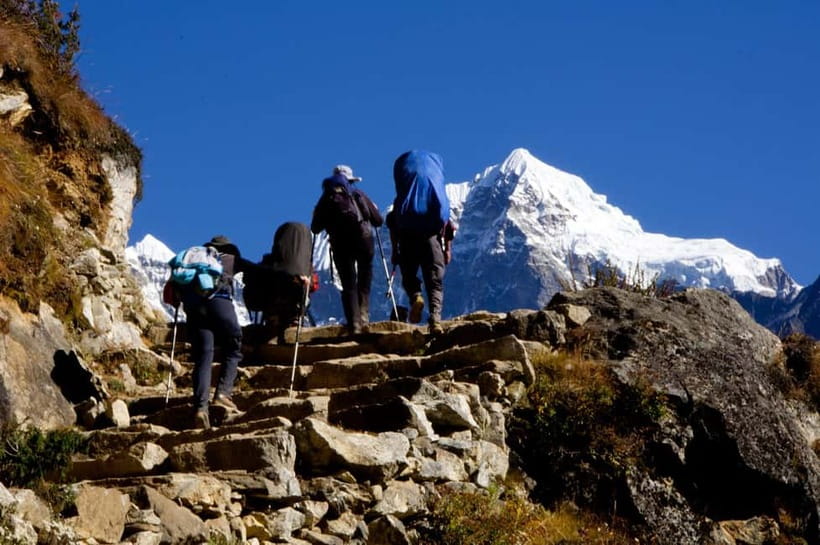
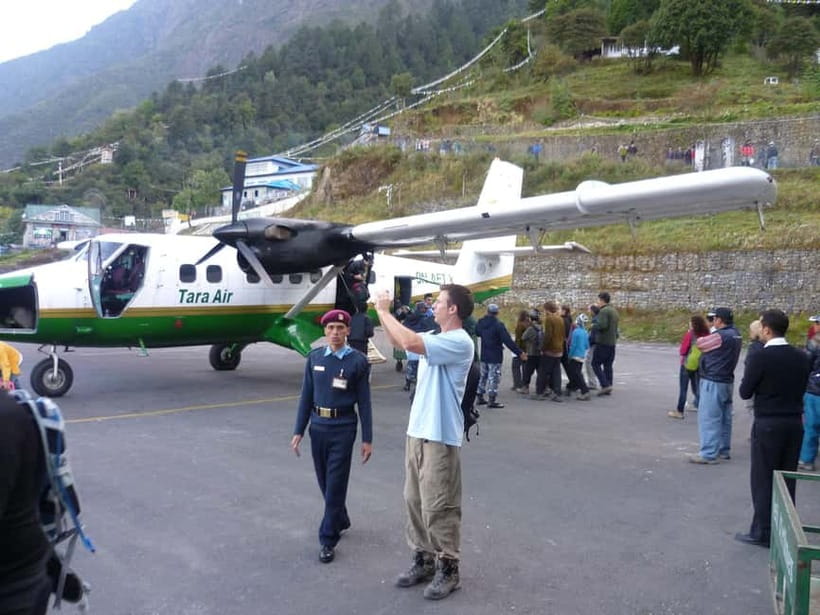
The trek kicks off around Tenzing-Hillary Airport, then moves you to Lukla. Once you’re there, the whole tone changes. Lukla is the launch pad for the Khumbu, and the first trekking day is where your body starts learning the rhythm: steady uphill, short breath breaks, and lots of suspension bridge crossing over the Dudh Koshi River.
Day 1 is to Phakding, and that’s a good warm-up. You’ll spend roughly 8 hours walking on a route that mixes lush forest sections with multiple bridge crossings. Practically speaking, this is where you test your shoes, your water plan, and your layers. If you start too fast, you’ll feel it later, especially once the trail climbs toward Namche.
More Everest Base Camp treks:
- Guaranteed Helicopter Landing Everest Base Camp Kalapathar
★ 5.0 · 3 reviews - From Kathmandu: Everest Base Camp Landing Helicopter Tour
★ 5.0 · 3 reviews - From Kathmandu Budget: 15 Day Everest Base Camp Trek
★ 5.0 · 3 reviews
Namche Bazaar: markets, mountain views, and the acclimatization rhythm
From Phakding, you’ll climb toward Namche Bazaar, the Sherpa capital and the “hub” you’ll keep hearing about. Expect around 8 hours of walking, and then you arrive at a place that feels busy, social, and practical. Namche is where you rest, acclimatize, and do the human stuff: check out the markets and get your bearings among tea houses, lodges, and trekking chatter.
Then you get a full acclimatization day in Namche. That matters. Altitude doesn’t care about your motivation, it cares about oxygen. This extra day lets your body adjust while you explore locally and take in views of mountains like Thamserku and Kongde Ri.
On a trip like this, Namche is also where you learn how to travel smart. You’ll likely notice that people who move carefully and drink consistently tend to feel better. And because ATMs are scarce once you leave Namche, it’s a real advantage to think ahead about cash while you’re there.
Tengboche Monastery: culture stop with Everest-scale scenery
After Namche, the route climbs onward to Tengboche. You’ll head up through rhododendron and pine forests, then arrive in a village that’s known for its spiritual center, the Tengboche Monastery. This stop is special because it slows you down in a good way. Tea houses can feel routine, but monastery time gives the day meaning beyond the next climb.
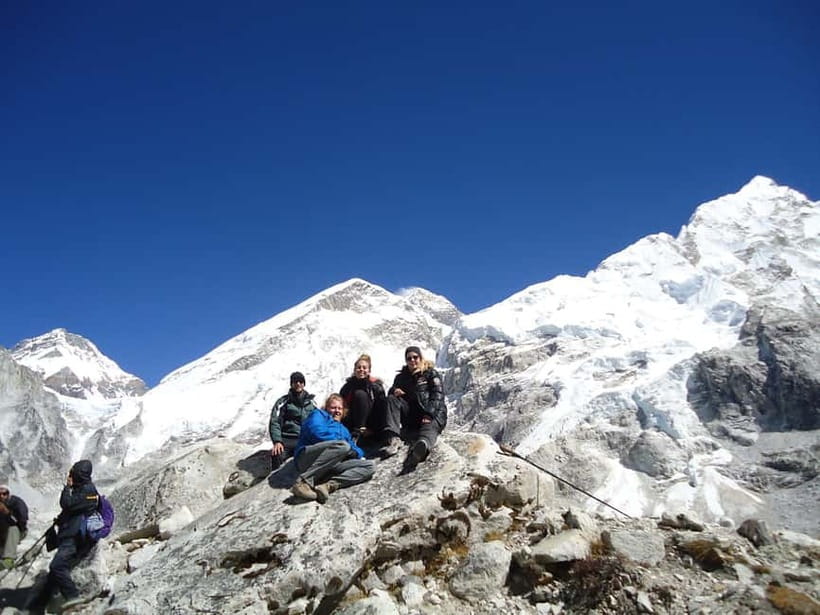
Tengboche is also famous for the view line-up around it. You’re looking at backdrops that can include Ama Dablam, Everest, and Lhotse depending on weather and visibility. The practical takeaway: sunrise and clear mornings can be your friend here, but you still need to be flexible. The Himalayas change quickly, and you should plan for clouds moving in.
It’s a long walking day at roughly 8 hours, so build in patience. Go steady through the forest parts, then don’t rush when you reach Tengboche. Let the monastery and the mountain views land before you mentally sprint ahead.
Dingboche and the second acclimatization checkpoint
From Tengboche, the trek goes to Dingboche, at about 4,410 meters. Dingboche sits in a quieter pocket of the trek, and the air typically feels noticeably thinner than lower villages.
You’ll walk around 8 hours to get there, then many trekkers take an extra acclimatization day. On this route, you get that built in, which is a big deal for anyone who wants a safer pacing strategy. During your Dingboche acclimatization day, you can do short hikes for altitude adjustment while still staying within a manageable effort zone.
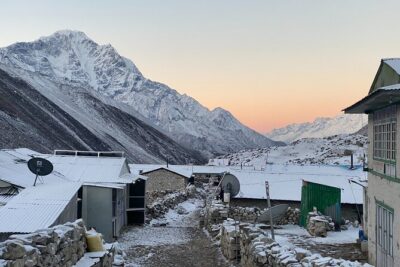
Dingboche also tends to give you big, wide mountain views. The reward here is less about rushing to the next landmark and more about feeling your body respond to careful altitude gain. This is one of the best “work with your pace” parts of the trek.
More of the Everest region:
- Kathmandu: 1-Hour Mount Everest Flight with Private Transfer
★ 4.7 · 98 reviews - Everest Scenic Flight By Buddha Air with Free Hotel Transfer
★ 5.0 · 5 reviews - Everest Base Camp Trek: A short EBC Trek to Iconic Himalaya
★ 5.0 · 3 reviews
Lobuche and Gorakshep: where the trail gets harsher
Next comes Lobuche, another push upward. You’ll be roughly 8 hours walking, and the scenery starts to shift. As altitude rises, you’ll see more barren sections and less forest, and the trail can feel more exposed.
Lobuche is a remote settlement surrounded by towering peaks. It’s not a place you go for comfort. You go because it puts you closer to Everest Base Camp, and it sets up the final approach. This is where your trekking focus tightens: keep moving, keep hydrating, and watch your energy.
From Lobuche you continue to Gorakshep, the last stop before the Everest Base Camp day. Gorakshep is your staging point, and it’s where you’ll sleep before going for the big goal. That night matters. Eat enough, rest enough, and try to avoid going to bed feeling hungry or anxious, because the next day can feel long.
Everest Base Camp at 5,364 meters: the moment you came for
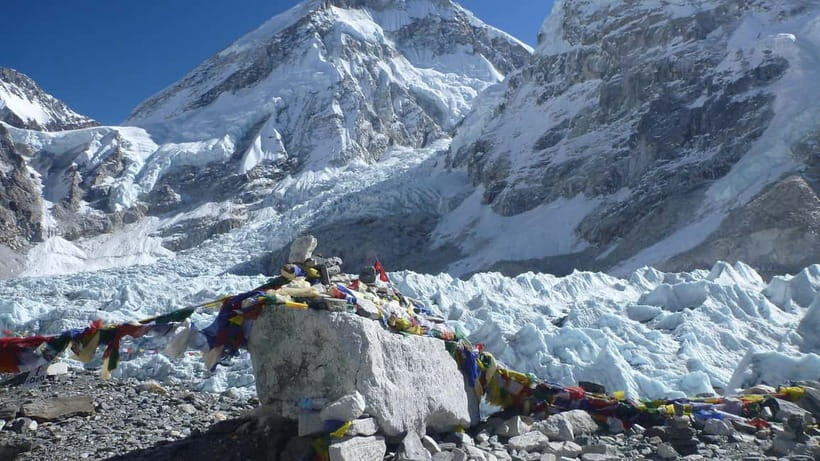
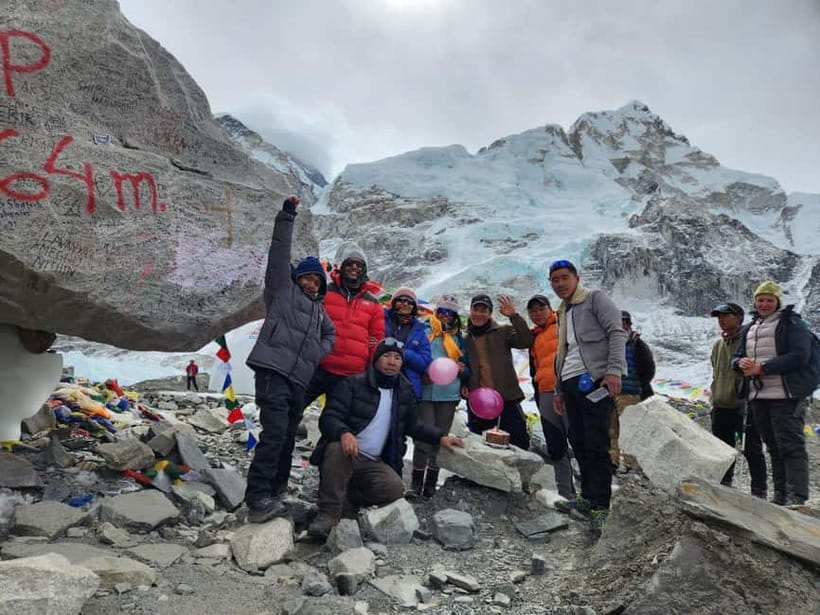
Your Everest Base Camp day comes after Gorakshep. The route is described as Trek from here to Everest Base Camp at 5,364 meters, and the big reward is close-up proximity to the Khumbu Icefall area and the surrounding peaks.
This day has one key truth: it’s not just walking, it’s emotional walking. You’ll likely feel a mix of awe and fatigue. Even if you’ve trained, altitude adds pressure. The practical plan is to move steadily, take breath breaks that actually let you recover, and don’t burn out early because the base camp area is the finish line you want clear in your mind.
Even better, you’re not rushed from place to place. Once you reach the area, you can take your time soaking in views and photos. The whole point is that Everest Base Camp feels like the world’s tallest mountain is right there, not just a dot on the horizon.
Kala Patthar at 5,545 meters: sunrise views that change your whole perspective
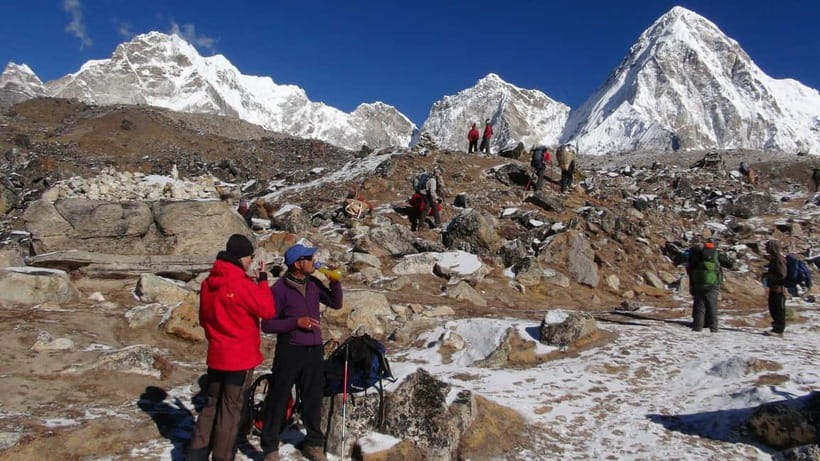
If you want the classic Everest photo moment, the morning hike to Kala Patthar is the move. It’s listed at 5,545 meters, and it’s known as the best vantage point of Everest and the surrounding giants of the Himalayas.
This day is often the highlight because sunrise can turn the peaks into something almost unreal. Golden light brings out edges and texture, and you get a layered view of mountains that look close enough to touch. The tradeoff is effort. You’ll be high, cold, and breathing harder than you want, and you’ll need to be ready with warm layers and gloves.
After Kala Patthar, you trek back to Pheriche for the night. This creates a smart rhythm: you get the big view day, then you shift back into a recovery mode before your long return.
The return loop: how Namche and Lukla give you closure
After the high point, the trek doesn’t end in a straight line. You retrace your steps, which is comforting because the trail is already familiar. Day 10 brings you back toward Namche, and you’ll walk through the villages again, giving you time to process what you just did and to re-notice small details you might have missed on the way up.
Finally, Day 11 brings you to Lukla. From there, the trip closes with the airport connection back to Tenzing-Hillary Airport. The return matters because it helps you avoid that common trap where people rush straight to the next thing without time to feel finished.
Tea houses, meals, and what “basic comfort” really means
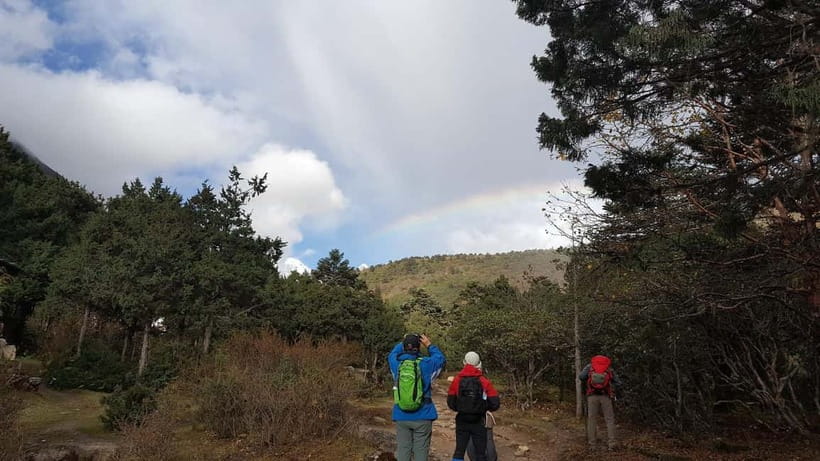
Stays are in tea houses, which is the normal Everest Base Camp trekking setup. “Basic” doesn’t mean you’ll suffer all night. It usually means rooms are simple, blankets can be limited, and bathrooms are typically shared.
What I value in this kind of package is that it includes accommodation, plus a porter, plus an English-speaking guide. That combination helps a lot. In the experience described, meals are part of what the team handles during the trek, and you’ll see a lot of staples like dal bhat mentioned as a key fuel source.
You should still expect that food quality and variety can vary by village. The smart approach is to eat what’s available, avoid overloading your stomach late in the day, and keep hydration consistent.
Guides and porters: the support that makes the difference on tough days
The trip includes a professional English-speaking guide and a porter service. That’s not a luxury on this route, it’s a practical safety and comfort factor. With high-altitude trekking, your goal is to keep your energy for walking. When your load is managed, you often walk better, and that can reduce stress when the weather turns.
In the feedback for this operator, guide names came up, including Tirtha, and team member Pradip for on-the-ground support. People also noted that communication helped, including WhatsApp check-ins during preparation. That kind of responsiveness can make a big difference when you’re dealing with flight timing and day-of trekking readiness.
Price and value: is $466 a good deal for an EBC trek from Lukla?
At $466 per person for 12 days, this is best viewed as a trek package rather than a full trip. The included items you get are the important ones: guide, tea house accommodation, permits and entrance fees, porters, and a first aid kit.
What’s not included is also crucial: flights, travel insurance, visas, and personal spending. Flights into the Everest region can be one of your biggest costs, and without insurance you can be exposed if something unexpected happens at altitude. So the true value question becomes: can you plan your flight and insurance correctly around this package?
If you already have your flight sorted, and you’re willing to invest in proper trekking insurance, the $466 start point looks like solid value because you’re paying for the structure that usually costs time and effort to arrange yourself. For solo travelers who would rather not manage permits, staffing, and village logistics, this kind of package tends to be a good fit.
Weather and packing: the list that keeps you comfortable at altitude
The route walks 5-7 hours daily most days, and weather can shift rapidly. So bring clothing for layering and expect cold. The “what to bring” list here is straightforward, and you’ll feel glad you didn’t skip it:
- Comfortable shoes
- Warm clothing
- Hat
- Camera
- Snacks
- Sunscreen
- Water
Also plan your mental gear. You’re not just dealing with altitude, you’re dealing with cold hands, strong sun at higher elevations, and the fact that you might hit changing cloud cover. Sunscreen matters more than people think once you’re above tree line.
There are also clear rules: alcohol and drugs are not allowed, and littering isn’t allowed. That’s for safety and for protecting the mountain environment you came to see.
Who should do this trek from Lukla, and who should think twice
This is a demanding high-altitude trek. It’s listed as not suitable for pregnant women, people with mobility impairments, and anyone with heart problems. It’s also flagged for people prone to seasickness, which is likely a general sensitivity note related to travel and possible motion or altitude effects.
This trek fits best if you:
- can walk 5-7 hours a day,
- want structured acclimatization built into the schedule,
- care about Sherpa culture stops like Namche Bazaar and Tengboche Monastery, and
- want that Everest finish without trying to DIY every logistics piece.
If you want a gentler pace, fewer altitude jumps, or more frequent rest days, you may want a different trek style. But if your goal is classic Everest Base Camp with key viewpoint days, this route makes sense.
Should you book this Everest Base Camp trek from Lukla with Peregrine Treks?
If you want a well-supported trek with an English-speaking guide, porter help, and a route that prioritizes acclimatization, this is a strong option. The reason is simple: you’re buying time, staffing, and structure at a reasonable base price, while still getting the “real trail” experience through Khumbu villages.
I’d book it if:
- you’re ready for 12 days of walking,
- you can plan flights into Lukla and pay attention to timing,
- you’ll purchase travel insurance that covers high-altitude trekking, and
- you care about both the big views and the Sherpa culture stops.
I’d think twice if you aren’t comfortable with strenuous altitude trekking, or if you need a more accessible route.
FAQ
What is the duration of this Everest Base Camp trek from Lukla?
The trek duration is 12 days.
Where does the trek start?
The meeting point is Tenzing-Hillary Airport, with guidance for picking you up after you share your flight details.
What is included in the price?
Included items are a professional English-speaking guide, tea house accommodation, permits and entrance fees, porter service, a first aid kit, and applicable taxes.
What is not included?
Flights, travel insurance, visa fees, and personal expenses like laundry, beverages, and internet are not included.
Is the trek guide English-speaking?
Yes, the live tour guide is English.
Is acclimatization built into the schedule?
Yes. Acclimatization days are included, including a day in Namche Bazaar and a day in Dingboche.
How much walking should I expect each day?
You’ll be walking about 5-7 hours daily.
What altitude milestones are part of the experience?
Everest Base Camp is at 5,364 meters, and the Kala Patthar viewpoint is listed at 5,545 meters.
What should I pack for the trek?
Bring comfortable shoes, warm clothing, a hat, a camera, snacks, sunscreen, and water.
More Treks in Everest Region
- Everest Base Camp Trek – 14 Days
★ 5.0 · 1,499 reviews - Everest Base Camp Trek
★ 5.0 · 842 reviews - Everest Base Camp Trekking
★ 5.0 · 485 reviews - Nagarkot Sunrise View and Day Hiking from Kathmandu
★ 5.0 · 471 reviews
Latest additions near Everest Region
- Guaranteed Helicopter Landing Everest Base Camp Kalapathar★ 5.0 · 3 reviews
- From Kathmandu: Everest Base Camp Landing Helicopter Tour★ 5.0 · 3 reviews
- From Kathmandu Budget: 15 Day Everest Base Camp Trek★ 5.0 · 3 reviews
- Everest Scenic Flight By Buddha Air with Free Hotel Transfer★ 5.0 · 5 reviews
- Everest Base Camp Trek: A short EBC Trek to Iconic Himalaya★ 5.0 · 3 reviews
- Kathmandu: 1-Hour Mount Everest Flight with Private Transfer★ 4.7 · 98 reviews
Everest Base Camp Treks, compared.
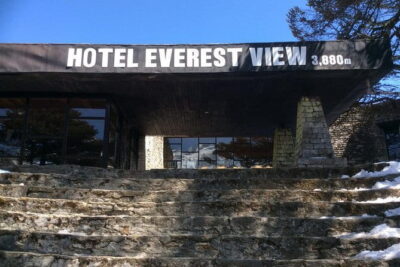
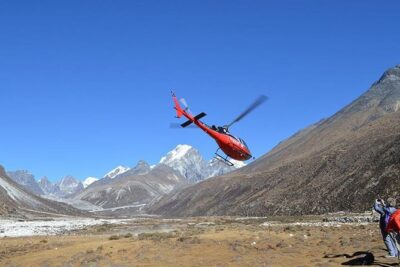
Everest Base Camp Helicopter Tour landing at Everest View Hotel
Read our review →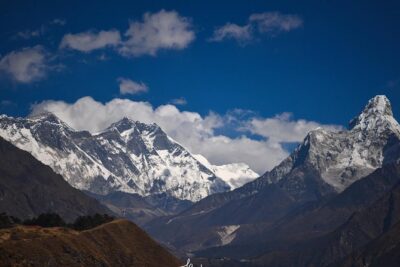
Everest Base Camp Helicopter Tour landing at Hotel Everest View
Read our review →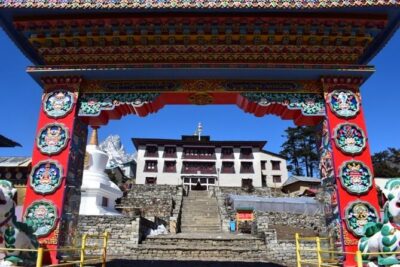
Browse the lists this tour appears in