Reviewed · KATHMANDU TOURS
Spiritual Nepal: Expert insight into Multifaith Journey
Nepal’s sacred sites in one tight route can feel like a living lesson. This 4-hour multifaith tour links two UNESCO icons, Boudhanath and Pashupatinath, with a rare look at how Buddhists and Hindus practice side by side in daily life. You’ll rotate prayer wheels with locals, then shift to the Bagmati River for solemn cremations and the light offering called Aarati.
I love how the pacing stays human. You spend about 2 hours at each site, and the tour is run as a small-group walk, capped at 12 people, with an English-speaking Nepali guide.
One thing to keep in mind: the cultural content can be intense. You’ll see cremation rites along the river, and you may have extra out-of-pocket options like palm reading or alms, which are not included.
In This Review
- Key things I’d mark on your mental map
- A 4-hour multifaith route that starts at Hotel Marshyangdi
- Boudhanath Stupa: prayer wheels, kora steps, and respectful attire
- Pashupatinath Temple: from sadhu life to palm reader questions
- The Bagmati River moment: cremations and Aarati lights
- Why the guide quality is the real value add
- Price and extras: what $150 covers, and what doesn’t
- Who this tour fits best, and how to get the most out of it
- Carbon neutral, child friendly, and a local-impact mindset
- Should you book Spiritual Nepal for your Kathmandu time?
- FAQ
- How long is the Spiritual Nepal tour?
- Where does the tour start and end?
- What UNESCO sites are included?
- Is transportation included?
- Is the tour a small group?
- Are food and drinks included?
- Do I have to pay extra for palm reading or offerings?
- What should I wear?
- What will I see at Pashupatinath?
- Is there a cancellation policy?
Key things I’d mark on your mental map
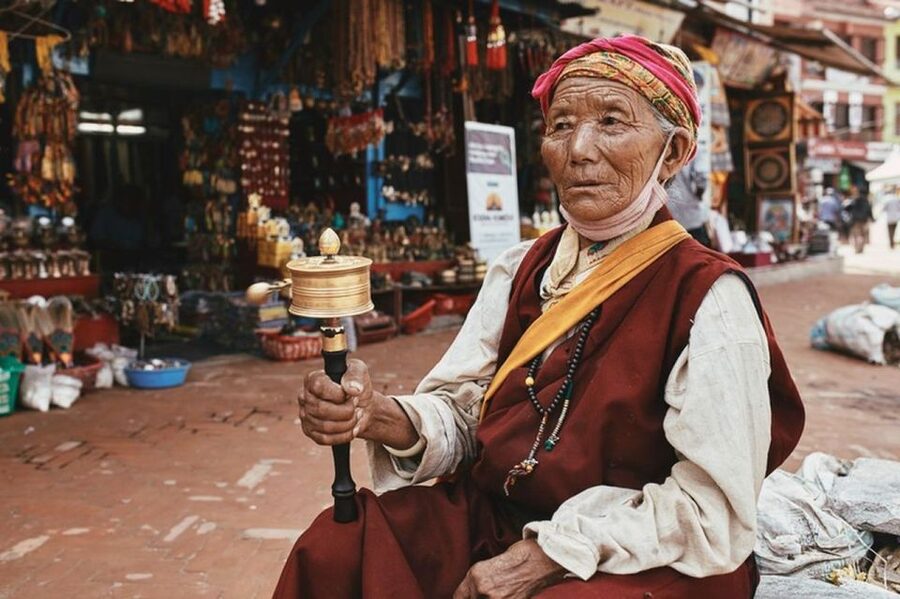
- Boudhanath Stupa + the kora: rotate prayer wheels and walk the circuit with local rhythm
- Pashupatinath Temple focus: sadhu life glimpses and chances to ask questions
- Bagmati River rituals: you’ll witness cremations and the Aarati light offering
- Small-group attention: lots of help navigating crowds and customs, not a rushed cattle line
- Real guide quality shows up in reviews: named guides like Rozit, Bini, Bidhya, and Subash get praise for care and clarity
A 4-hour multifaith route that starts at Hotel Marshyangdi
This tour is built for people who want the big religious landmarks without spending a whole day zig-zagging across Kathmandu. It runs 4 hours, starting at Hotel Marshyangdi and returning there afterward. The structure is simple, two UNESCO stops, two 2-hour windows.
The practical win is the mix of walking and quick repositioning. You’ll do a small amount of walking overall, about 2 km total, and between the sites you’ll either walk around 15 minutes or take a short drive, depending on how things flow on the day.
Price is $150 per person. That’s not cheap, but you are paying for a live English-speaking Nepali guide, entrance fees to both UNESCO sights, and transportation between the meeting point, Boudhanath, and Pashupatinath, then back again. The big non-included items are food and drinks, plus anything you choose to offer or pay for optional interactions.
More from Kathmandu worth a second look:
- Everest Base Camp Trek – 14 Days
★ 5.0 · 1,499 reviews - Everest Base Camp Trek
★ 5.0 · 842 reviews - Private Kathmandu Sightseeing Tour | UNESCO World Heritage sites
★ 5.0 · 756 reviews
Boudhanath Stupa: prayer wheels, kora steps, and respectful attire
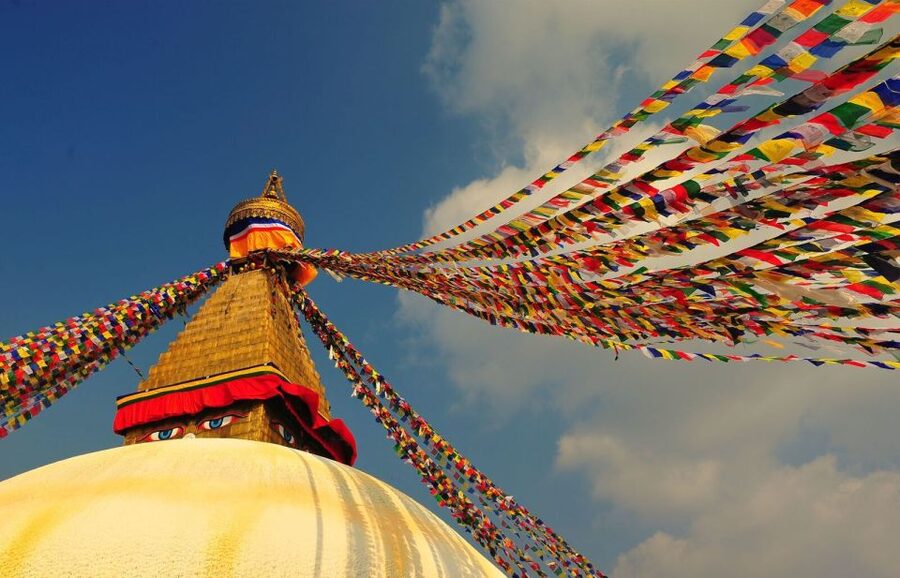
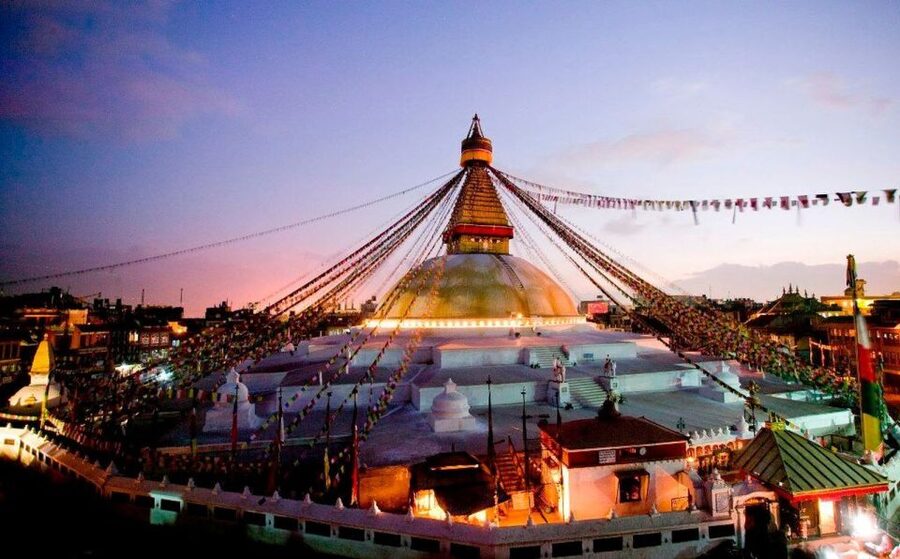
Boudhanath is the first anchor of the day, and it’s easy to see why people call it one of Nepal’s main Buddhist landmarks. You’ll arrive for about 2 hours at the stupa, described as the largest Buddhist stupa in Nepal and a UNESCO Heritage site.
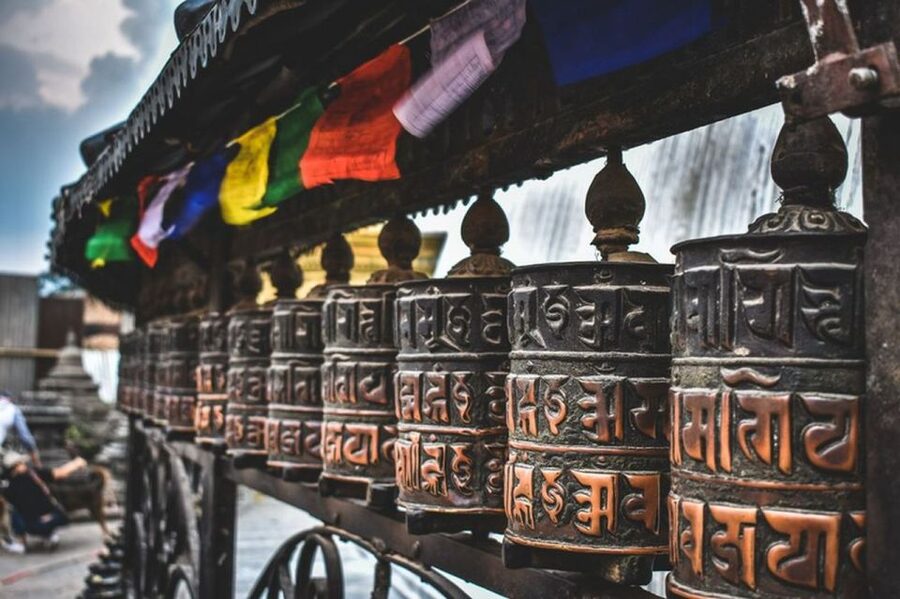
What you’ll actually do matters more than the sticker on the map. You’ll rotate prayer wheels with local Buddhists and join the kora, the walking circuit around the white spherical dome. If you’ve never tried a kora before, it’s one of those activities where you learn by doing, not by theory.
Dress rules are conservative here, and they’re worth taking seriously. Modest clothing is strongly recommended, with shoulders and knees covered. When you visit religious sites, men often need long trousers, and women may be asked to wear a long skirt or sarong.
If you want an added layer of participation, there’s an option to offer butter lamps at Boudhanath. That’s not included in the tour price, so treat it as a personal choice. The local-impact angle is that these small payments support the communities involved.
Pashupatinath Temple: from sadhu life to palm reader questions
After Boudhanath, the tour shifts to the biggest Hindu pilgrimage site in Nepal, Pashupatinath Temple. You’ll spend about 2 hours here, and you’ll likely move through a crowded, layered environment where rituals, worship, and everyday life overlap.
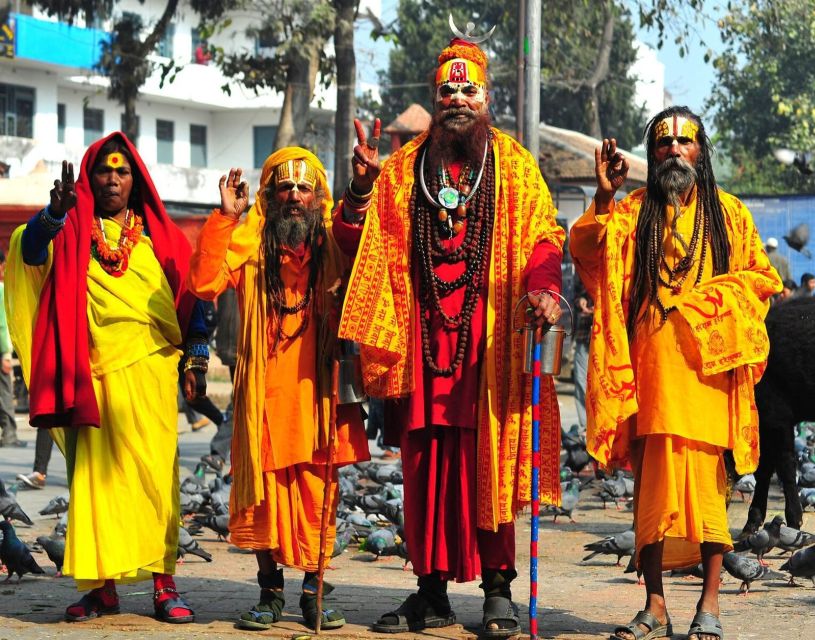
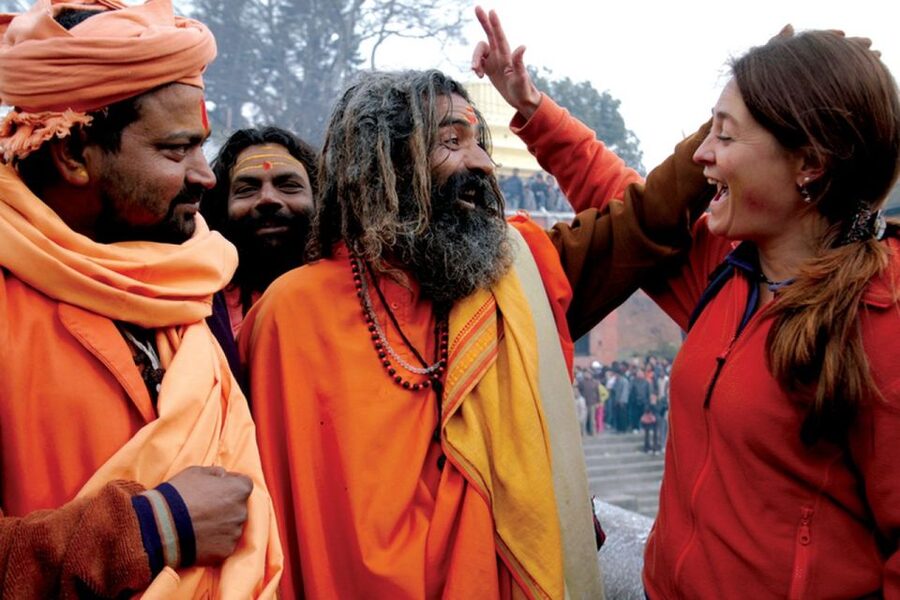
One of the main reasons people pick this tour is the window into sadhu life. You’ll get glimpses of sadhus, and if you wish to know more, you can offer alms as a way to connect. The guide is also there to help you handle the interaction respectfully, so you’re not standing awkwardly while trying to decode what’s appropriate.
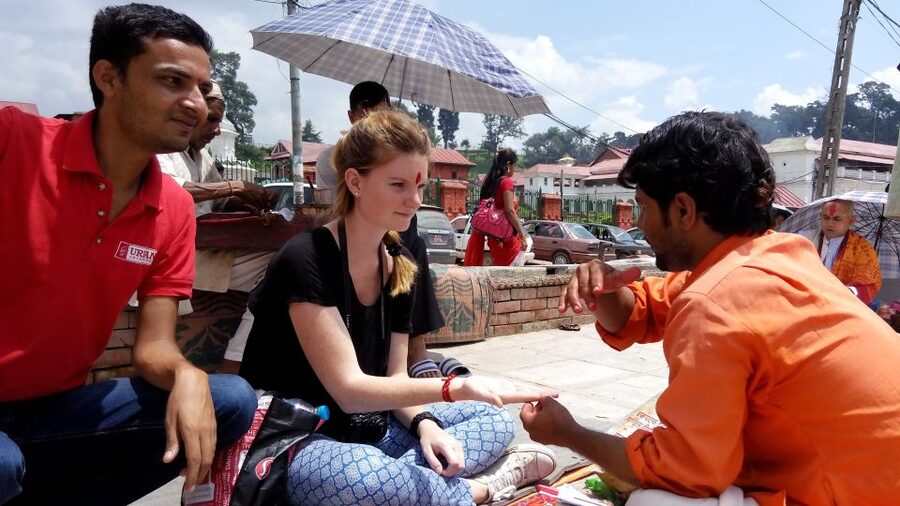
There’s another optional piece you can take up if it interests you: a local palm reader. This is not included, and the palm reading fee is listed as about $7.5 to $9 per person, depending on the session.
Between the two big religious sites, the day can feel like a fast cultural switch. That’s where the guide’s explanations and pace matter. One review praising guide Bini highlights that asking questions was easy and that the guide was able to meet expectations, even when traffic made the day feel a bit tight.
The Bagmati River moment: cremations and Aarati lights
The most emotionally serious part of the experience happens near the Bagmati River. You’ll see cremation ceremonies along the riverbanks, and you’ll also watch Aarati, the ritual where lights are offered as part of worship at Pashupatinath.
This is not the place for casual wandering. When the guides say stay close, they mean it, because the crowd management and ritual etiquette matter. The tour also emphasizes keeping near your guide and group to navigate the busier areas.
On the sensitive side, plan your mindset. You’re seeing real religious practice, not a staged performance. If you’re hoping for something light and purely scenic, this section might feel heavier than you expect.
If you’re thinking about photography, the tour notes that there are optional ways to interact and that the guide can help with real-world negotiation. That’s a signal to treat cameras and questions thoughtfully, and to follow your guide’s lead on where it’s respectful to pause.
Another way to spend the time in Nepal:
- Kathmandu: 7 UNESCO Sites with Lunch
★ 4.8 · 744 reviews - Everest Base Camp Helicopter Tour landing at Everest View Hotel
★ 5.0 · 668 reviews - Half day cooking class in Thamel kathmandu
★ 5.0 · 607 reviews - Everest Base Camp Trekking
★ 5.0 · 485 reviews
Why the guide quality is the real value add
The listed highlights are compelling, but the reviews point to the guide as the deciding factor. Names that show up in high ratings include Rozit, Bini, Bidhya, and Subash. Across those reports, the consistent theme is that the guides explain basics clearly and handle visitors with care.
For example, Rozit earns strong praise for being an excellent guide and for making the sites meaningful. Bini gets credited for being helpful and for supporting questions, and Bidhya is praised for strong knowledge and strong involvement with the group. Subash is highlighted for taking good care of people and explaining things in a way that supports non-experts.
That doesn’t mean every moment will be perfect. One lower rating raised a concern about a guide coughing without covering their mouth. It’s a reminder that human factors happen, even in organized tours, and that you should speak up if you need adjustments for comfort or pacing.
The big takeaway for you: a small group tour with a good guide is the difference between seeing landmarks and actually understanding what you’re looking at.
Price and extras: what $150 covers, and what doesn’t
Here’s the money math that helps you decide if this is worth it for you.
Included:
- English-speaking Nepali guide
- Entrance fees for Boudhanath and Pashupatinath
- Transportation from your hotel meeting point to Boudhanath, then from Pashupatinath back to the endpoint
- The core tour time of 4 hours
Not included:
- Food and drinks
- Alms to sadhus and monks, plus the palm reader’s fee
The “optional but common” costs are spelled out. Butter lamps are offered as an option, palm reading is around $7.5 to $9, and interacting or offering to sadhus is listed at about $7.5. The guide may assist with negotiation for these optional interactions.
To me, this model feels fair. You’re not forced into paying extra, but you’re also not prevented from participating if you want a more personal connection. Just set a budget cushion if you think you’ll do palm reading or alms.
Who this tour fits best, and how to get the most out of it
This is a good fit if you want to understand Nepal as a place where Buddhist and Hindu traditions are both visible in daily space. The format works even if you are not deeply religious. You’ll still learn how people use prayer wheels, how temples function in real life, and why the river rituals carry such weight.
It also fits if you like guided context. The tour isn’t just walking and camera stops, it includes explanation and opportunities to ask questions, including at the sadhu and palm reader moments.
To get the most out of it, do three simple things:
- Dress modestly, and plan covered shoulders and knees
- Keep near your guide during the temple and river sections
- Treat optional interactions as optional, and decide before you’re caught in the moment
Carbon neutral, child friendly, and a local-impact mindset
The operator states the tour is carbon neutral and run by a B Corp certified company committed to using travel as a force for good. That matters most if you care about picking operators who track impact rather than treating sustainability as a slogan.
It’s also child friendly. Children under 6 can join for free. For families, the main variable is how your child handles seeing cremation rites and crowded temple areas.
Finally, there’s a clear “local impact” angle. The tour explicitly frames optional spending like butter lamps, palm reading, and sadhu interactions as support for local communities and readers, and as help for sadhus who otherwise may not have access to tourist money.
Should you book Spiritual Nepal for your Kathmandu time?
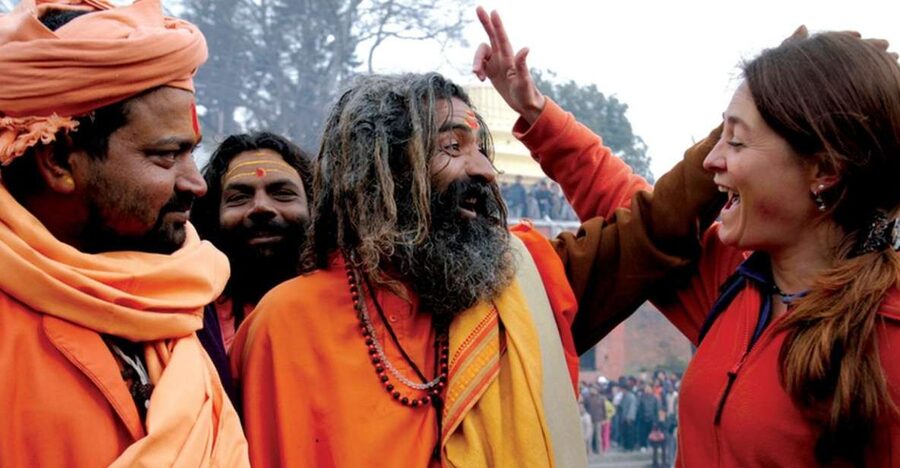
Book this tour if your goal is a focused, guided look at two UNESCO spiritual anchors in one half-day, with real ritual moments like Aarati and cremations. The strongest reason to choose it is guide support in a small group, with multiple named guides praised for clarity and care.
Skip it or choose a different option if you want something purely scenic or if you’re not ready for the emotional weight of cremation ceremonies. Also, if you’re easily bothered by crowded environments, plan to lean on the guide and keep your expectations realistic.
If you can handle a serious spiritual day, this is a solid value: you’re paying for guide time, entrances, and transport, and you get structured access to both Buddhist and Hindu practice without having to figure it out alone.
FAQ
How long is the Spiritual Nepal tour?
It lasts 4 hours total.
Where does the tour start and end?
The tour starts at Hotel Marshyangdi and returns to the same location.
What UNESCO sites are included?
You visit Boudhanath and Pashupatinath, both UNESCO Heritage sights.
Is transportation included?
Yes. Transportation costs from the meeting point to Boudhanath and from Pashupatinath to the endpoint are included.
Is the tour a small group?
Yes. It’s described as a small group walking tour with up to 12 people, and it is also listed as a private group.
Are food and drinks included?
No. Food and drinks are not included.
Do I have to pay extra for palm reading or offerings?
If you choose to do them, yes. Alms to sadhus and monks and the palm reader’s fees are not included.
What should I wear?
Modest clothing is strongly recommended, with shoulders and knees covered. Men often need long trousers, and women may need a long skirt or sarong.
What will I see at Pashupatinath?
You’ll get glimpses of sadhu life, have the chance for optional alms, see cremation ceremonies along the Bagmati River, and watch Aarati.
Is there a cancellation policy?
Free cancellation is listed as available up to 24 hours in advance for a full refund.
Latest additions near Kathmandu
- White Water River Rafting – 1 Day★ 4.3 · 3 reviews
- Traditional Momo Making Class★ 5.0 · 10 reviews
- Kathmandu to Pokhara Premium sofa bus ticket★ 4.0 · 17 reviews
- Ghorepani Poon Hill Trek★ 5.0 · 16 reviews
- Amazing 1 Day Trekking Experience in Kathmandu Nepal★ 5.0 · 24 reviews
- Ghorepani Poonhill Trek★ 5.0 · 5 reviews
- Walking tour of real Kathmandu through back streets.★ 5.0 · 3 reviews
- Wildlife Adventure in Chitwan Nepal★ 4.0 · 4 reviews
Kathmandu Tours, compared.
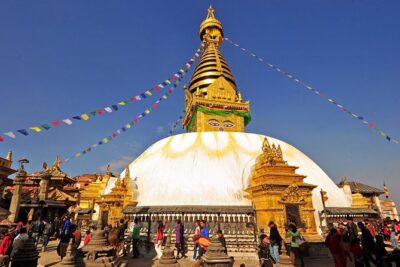
Private Kathmandu Sightseeing Tour | UNESCO World Heritage sites
Read our review →
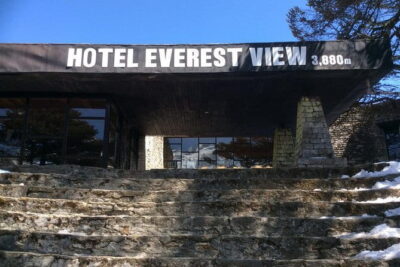
Everest Base Camp Helicopter Tour landing at Everest View Hotel
Read our review →