Reviewed · KATHMANDU TOURS
Small-Group Day Tour of Kathmandu
Four sacred sites, one smooth Kathmandu day. This small-group tour strings together Hindu and Buddhist landmarks, plus royal-era architecture, in a way that helps you understand what you are seeing without getting lost in the city.
I like two things most: door-to-door transfers from Thamel hotels and a small group of no more than 15 that keeps the day efficient. Your guide also helps you move between places without dealing with street hassles, so you can spend your energy on the temples and monuments.
One consideration: the day runs about 6 to 7 hours, so you should be ready for a steady pace and plenty of time standing, walking, and navigating temple areas.
In This Review
- Key things to know before you go
- A smart first-timer route through Kathmandu’s religious map
- Pickup and timing, how the tour keeps the day from unraveling
- Pashupatinath Temple, where the sacred Shiva symbol takes center stage
- Durbar (Central) Square, royal power and 1600s architecture
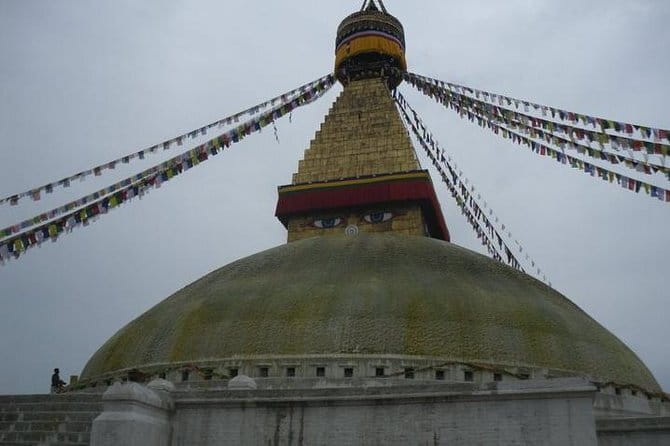
- Boudhanath Stupa, the giant mandala steps and the big eyes
- Swayambhunath Temple, UNESCO history with a view over the city
- What the guide experience feels like in real life
- Tickets, included entry fees, and what you should budget for
- Price and value: why $165 can make sense here
- Who should book this Kathmandu day tour, and who should skip it
- Should you book this Kathmandu day tour?
- FAQ
- What is the duration of the Small-Group Day Tour of Kathmandu?
- Which major attractions are included in the tour?
- Are admission tickets and entry fees included?
- Do you offer hotel pickup and drop-off?
- How large is the group?
- Is transport included?
- What about food during the tour?
- Is there a mobile ticket?
- What times does the tour run?
- Are there any fees that are not included?
Key things to know before you go
- Door-to-door pickup and drop-off: Round-trip transfers from Thamel hotels cut down stress from the start.
- Small group size (max 15): Designed to minimize waiting and keep the schedule workable.
- Four headline sites: Pashupatinath, Durbar Square, Boudhanath, and Swayambhunath.
- Tickets included at each stop: Entry fees are handled for the temples and monastery areas you visit.
- Guides who communicate well: Guides named in feedback, like Raju, Drubha, and Dhruba, are praised for clear English and problem-solving.
- Mobile ticket: You can check in with a mobile option instead of juggling paperwork.
A smart first-timer route through Kathmandu’s religious map
Kathmandu is famous for temples and stupas, but first-time visitors can get stuck doing random hopping. This route feels more like a guided story of Nepal’s spiritual landscape. You start with Pashupatinath, move through royal Kathmandu at Durbar Square, and then shift to the big Buddhist monuments at Boudhanath and Swayambhunath.
What makes this day plan work is the order and the mix. You are not only seeing buildings. You are seeing how two major traditions share the same city, and how different sacred spaces communicate their beliefs through form. Hindu symbolism is front and center at Pashupatinath, then royal power shows up in the stone at Durbar Square, and Buddhist devotion becomes visible through the massing and layout of the stupas.
More from Kathmandu worth a second look:
- Everest Base Camp Trek – 14 Days
★ 5.0 · 1,499 reviews - Everest Base Camp Trek
★ 5.0 · 842 reviews - Private Kathmandu Sightseeing Tour | UNESCO World Heritage sites
★ 5.0 · 756 reviews
Pickup and timing, how the tour keeps the day from unraveling
This tour is set up to be low-friction. You get hotel pickup and drop-off from Thamel, and you travel in a private vehicle with a driver and guide. That matters because Kathmandu traffic and street navigation can turn a simple sightseeing day into a stop-and-start grind, especially if you are trying to coordinate between multiple locations on your own.
The schedule is also built around being practical. The tour runs approximately 6 to 7 hours, with timed blocks at each stop. Each major site has an admission component included, which helps your day move. Instead of losing time in ticket lines or trying to figure out what you need to pay at the last minute, you can focus on walking with your guide and taking in details.
Your group is limited to 15 people, and that is a real quality-of-life detail. Smaller groups usually mean your guide can keep everyone together without long stretches of waiting. It also means you can ask questions and get answers while the group is still fresh on the site.
Pashupatinath Temple, where the sacred Shiva symbol takes center stage
Pashupatinath Temple is often described as the oldest Hindu temple in Kathmandu, and it is treated as a major religious destination. The temple features a richly ornamented pagoda-style setting, and at the heart of it is the sacred linga linked to Lord Shiva.
Even the way the temple is explained helps you read what you are seeing. Local legends are part of the story here, including the idea of Pashupati, the Lord of all Pashus, described as living and non-living beings. The tour framing also notes that the temple’s existence is dated back to 400 BCE, though you should treat that as part of the temple’s long tradition and storytelling rather than a casual fact you can verify on the spot.
Practical way to enjoy this stop: go in ready to observe. Pashupatinath is the kind of place where you notice attention shifts quickly, from architecture to rituals to how people move around the sacred areas. Having a guide makes a difference because you are less likely to miss what is happening around the temple complex.
Time-wise, you get about one hour here. That is enough for a first look and a guided explanation, but it is not a long, slow worship visit. If you want to spend hours in devotional spaces without keeping to a schedule, you may find the pacing brisk. For most first-time visitors, though, it is a strong start that sets the tone for the day.
Durbar (Central) Square, royal power and 1600s architecture
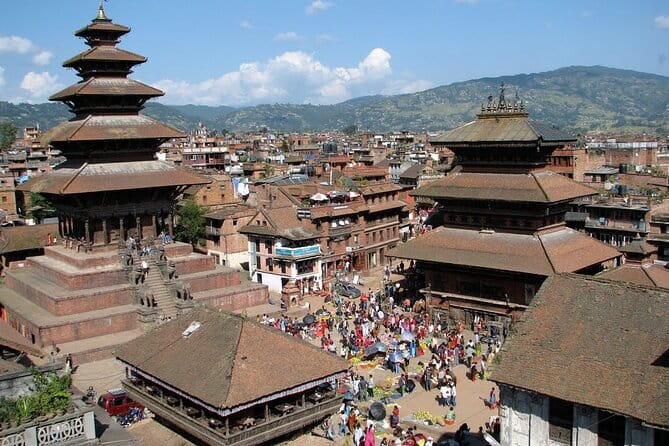
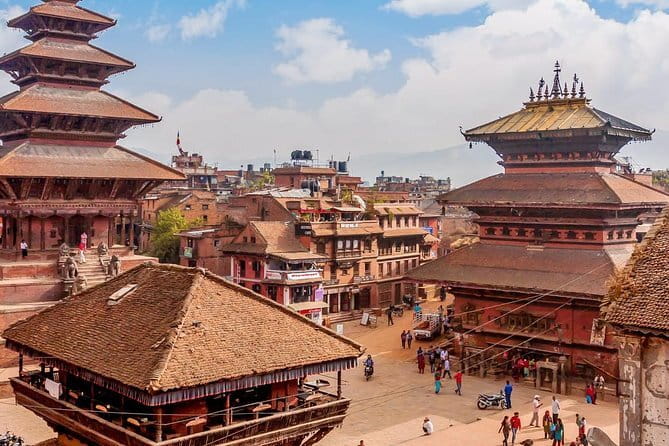
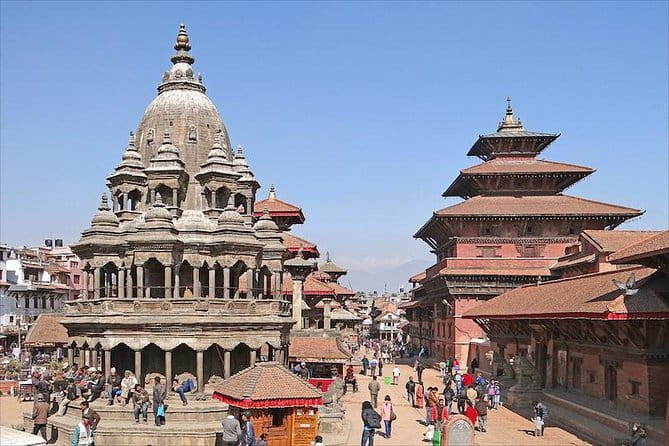
After the temple, the day steps into a different kind of Kathmandu monument. Durbar (Central) Square is the place where Kathmandu’s kings used to be crowned, and it is tied to ancient crossroads history. The story includes earlier settlement connections around the site, and later changes made by the Malla kings.
What you feel at Durbar Square is scale and stone. This is not just one building. It is an environment, where buildings and courtyards create a sense of ceremonial space. The tour also notes that most of the architecture you see today dates from the 1600s, linked to the reign of King Siddhi Narsingh Malla and his son Srinivasa Malla.
Why this stop belongs in a religious day tour: royal centers and religious centers overlap in Kathmandu. Crowning ceremonies, patronage, and sacred art all tie into how rulers shaped public belief. Even if you do not go deep into dynastic dates on your own, you can still walk away with a clearer sense of why these monuments look the way they do.
Your time here is about 1 hour 20 minutes, which is generous enough to slow down and look around without feeling rushed. If you are someone who likes to take photos, this is also one of the better stops in the day because there are more angles and more variety in the built forms.
Another way to spend the time in Nepal:
- Kathmandu: 7 UNESCO Sites with Lunch
★ 4.8 · 744 reviews - Everest Base Camp Helicopter Tour landing at Everest View Hotel
★ 5.0 · 668 reviews - Half day cooking class in Thamel kathmandu
★ 5.0 · 607 reviews - Everest Base Camp Trekking
★ 5.0 · 485 reviews
Boudhanath Stupa, the giant mandala steps and the big eyes
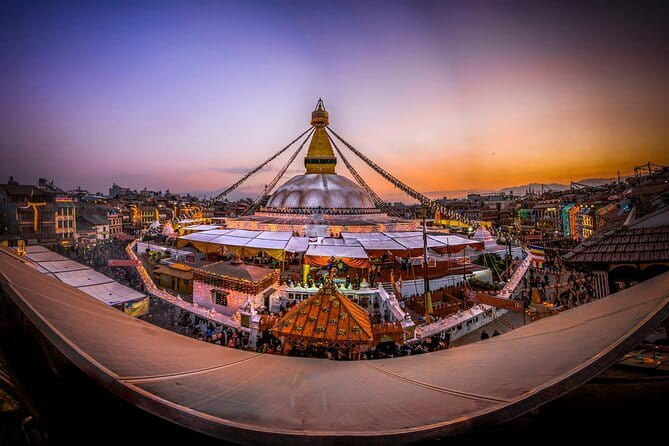
Then you shift into Buddhist space with a stop at Boudhanath Stupa, one of Kathmandu’s most recognizable monuments. The description of Boudhanath centers on scale, and you can see why. It is described as a huge meditative monument, featuring the classic stupa layout, plus the famous eyes that many people associate with Tibetan Buddhism.
The tour framing places the stupa around the 14th century, and it also tells a creation story that connects it with the period after the passing of the Buddha. What matters for your visit is how the structure is explained: a giant dome, a Buddhist pyramid tower on top, and large steps shaped like mandalas beneath it.
That detail helps you look beyond the obvious silhouette. When you understand the stepped design is intentional, you pay closer attention to the geometry and how pilgrims move through the area. It also helps you see Boudhanath as a living worship landscape, not just a photo spot.
You get about one hour here. That is enough to walk in the immediate area, pause, and take in how devotion is expressed around the stupa. If you like Buddhist art and ritual rhythms, you will likely wish you had more time, but for most people this stop hits the sweet spot between depth and schedule.
Swayambhunath Temple, UNESCO history with a view over the city
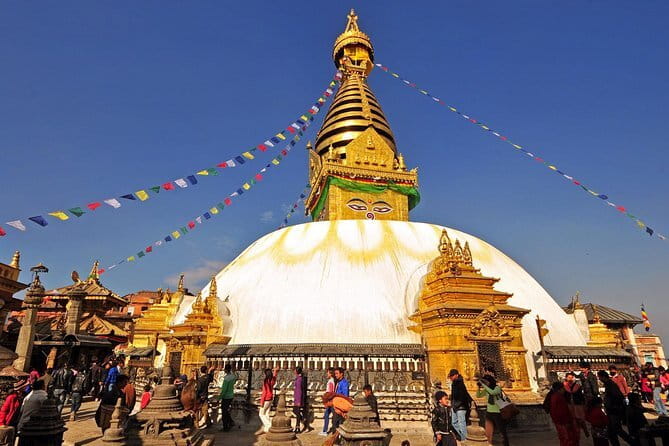
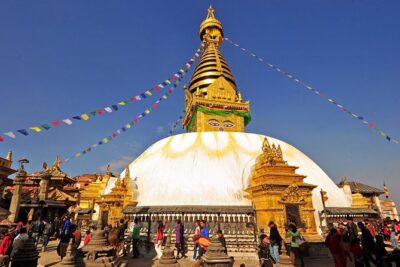
Swayambhunath, also known as Swayambhu, is a UNESCO World Heritage Site and the day’s final major monument. This stop is all about layered time. You get a written timeline of sorts, beginning with the earliest written record of the Great Stupa of Swayambhu in a 5th century stone inscription.
The tour also points out that the stupa has been restored and repaired multiple times. It includes the detail that in 1349 it was damaged by an invading Muslim army and later repaired by King Saktimalle Bhalloka. Then, in 1505, yogin Sangye Gyaltsen added the wheel and spire to the dome. In 1614, the 6th Shamarpa built shrines into the stupa in four cardinal directions. It even mentions a consecration ceremony in 1750 after a major renovation, tied to Kagyu lamas.
That long list sounds like trivia until you stand in front of the monument. Suddenly the stupa looks less like a single snapshot and more like a repaired, reinterpreted structure that has outlasted conflict and change. It is the kind of context that makes your photos more meaningful because you understand what was updated, what survived, and what symbols were added over time.
You also get about 1 hour 10 minutes here. This usually works well for walking up and around the temple complex areas, pausing for views, and listening to your guide’s interpretation. If you are sensitive to stairs, plan for slower movement. The day already includes multiple sites, so keep your energy steady.
What the guide experience feels like in real life
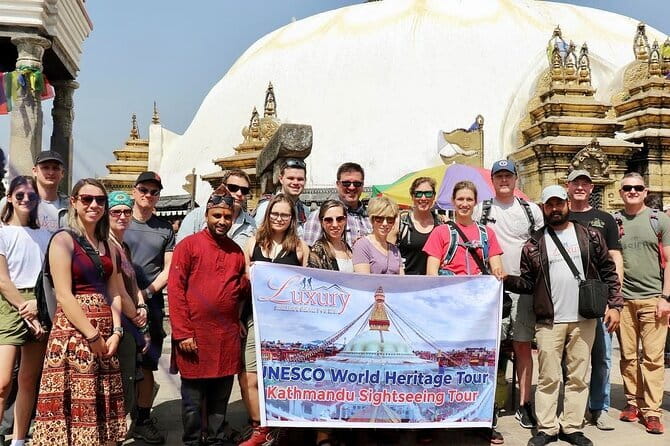
This tour depends on the guide. And the feedback attached to this experience repeatedly highlights that the guides handle both information and practical issues.
For example, Raju comes up in feedback as a guide with very good English and a strong command of history and context. Drubha and Subash show up as a team that responds quickly to issues that pop up during the day. Another guide name, Dhruba, appears with praise for dedication to group needs, including for a small photography group.
That matters because Kathmandu can throw curveballs at any moment, from timing changes to crowd flow inside temple compounds. Having a guide who stays calm and communicates clearly is a big part of why this tour gets high marks.
So when you book, treat the guide as part of the value, not just as a driver with a microphone. Ask questions at the right moments. If you want help connecting Hindu and Buddhist symbols across the day, this is exactly the time to do it.
Tickets, included entry fees, and what you should budget for
The tour includes entry fees for the temple and monastery portions you visit, and it also includes admission tickets at each of the four stops listed. That is a big deal for planning, because it removes one of the most annoying parts of sightseeing in foreign cities: the uncertainty of what is included versus what costs extra.
It also includes local taxes and transport by private vehicle, plus hotel pickup and drop-off. Fuel surcharge is covered too. In other words, the price is not just paying for a seat in a car. You are paying for a guided route with access built into the day.
There are some things explicitly not included. Landing and facility fees are not included, and food and drinks are not included unless specified. So if you want lunch, you will need to plan it separately. This is usually the easiest way to handle it, because it lets you choose where you eat based on your preferences and energy.
Price and value: why $165 can make sense here
At $165 per person for a 6 to 7 hour day, it is not the cheapest way to tour Kathmandu. But it can still feel like good value because several costly headaches are removed.
You are getting:
- Door-to-door transfers in Thamel
- Private vehicle transport
- A driver/guide
- Entry fees and admission tickets for all four major stops
- A small-group format designed to minimize waiting time
For first-time visitors, the real savings are often mental, not just monetary. You avoid spending time figuring out route logistics, figuring out who to pay for what, and losing precious sightseeing hours. If you are short on time in Kathmandu, this kind of guided day is often the most efficient use of your day.
That said, it is still a full day. If you want a slow, independent day, or if you already know how to move around Kathmandu comfortably and prefer to pay as you go, you may feel the price is more than you need. But if you want a confident, structured introduction, the included transport and tickets do justify the cost.
Who should book this Kathmandu day tour, and who should skip it
This tour is a good fit if you:
- Want a clear intro to Kathmandu through four top attractions
- Like your sightseeing structured with a guide
- Prefer a small group under 15 instead of a bigger crowd
- Value having entry fees handled so your day stays on track
- Are staying in or near Thamel and want easy pickup
It may be less ideal if you:
- Want an unstructured day with no set timing
- Are looking for an activity-heavy trip rather than a religion and architecture focused one
- Want extra time at a single site for longer worship or extended photography runs
Should you book this Kathmandu day tour?
I think you should book it if you want the quickest path to understanding Kathmandu’s sacred landscape without spending your first day solving logistics. The biggest strengths are practical: pickup from Thamel, a small group, and the fact that admission tickets and entry fees are included at each stop.
If you are the type who enjoys context as you look, this day plan will likely feel rewarding. And if you are worried about street navigation or ticket confusion, this tour design directly addresses that.
Just go in with realistic expectations for a paced day. You are seeing four major monuments, so you are not getting one ultra-long deep dive at a single location. Still, as an orientation day, it is hard to beat.
FAQ
What is the duration of the Small-Group Day Tour of Kathmandu?
It runs about 6 to 7 hours.
Which major attractions are included in the tour?
You visit Pashupatinath Temple, Durbar (Central) Square, Boudhanath Stupa, and Swayambhunath Temple.
Are admission tickets and entry fees included?
Yes. Admission tickets are included for each stop, and entry fees for the temple and Monastery are included.
Do you offer hotel pickup and drop-off?
Yes. Door-to-door round-trip transfers are offered from Thamel hotels.
How large is the group?
The group size is no more than 15 people.
Is transport included?
Yes. The tour includes transport by private vehicle, with a driver/guide.
What about food during the tour?
Food and drinks are not included unless specified.
Is there a mobile ticket?
Yes. A mobile ticket is part of the experience.
What times does the tour run?
It is listed as available Monday to Saturday, with hours shown as 12:15 AM to 11:45 PM.
Are there any fees that are not included?
Landing and facility fees are not included.
Latest additions near Kathmandu
- White Water River Rafting – 1 Day★ 4.3 · 3 reviews
- Traditional Momo Making Class★ 5.0 · 10 reviews
- Kathmandu to Pokhara Premium sofa bus ticket★ 4.0 · 17 reviews
- Ghorepani Poon Hill Trek★ 5.0 · 16 reviews
- Amazing 1 Day Trekking Experience in Kathmandu Nepal★ 5.0 · 24 reviews
- Ghorepani Poonhill Trek★ 5.0 · 5 reviews
- Walking tour of real Kathmandu through back streets.★ 5.0 · 3 reviews
- Wildlife Adventure in Chitwan Nepal★ 4.0 · 4 reviews
Kathmandu Tours, compared.

Private Kathmandu Sightseeing Tour | UNESCO World Heritage sites
Read our review →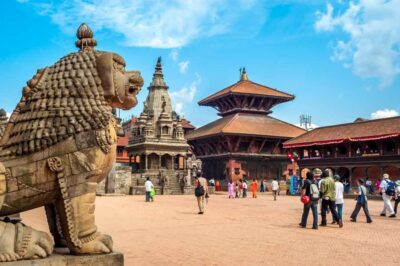
Everest Base Camp Helicopter Tour landing at Everest View Hotel
Read our review →