Reviewed · KATHMANDU TOURS
Private Half Day Budhanilkantha Tour
Budhanilkantha is a strange kind of awe. In just 2 to 3 hours you get a private guide, hotel pickup, and a close look at one of Nepal’s most impressive Hindu sights, the colossal Sleeping Vishnu statue. I love that this is off the main tourist circuit, so your visit feels calmer than the big-ticket attractions. I also like the private setup, which keeps the pace easy and the explanations personal.
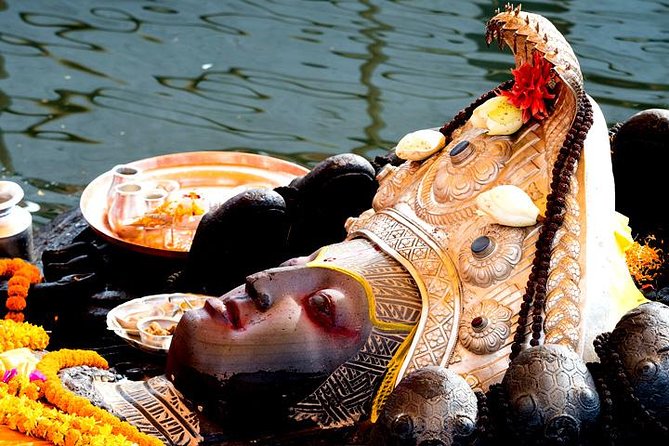
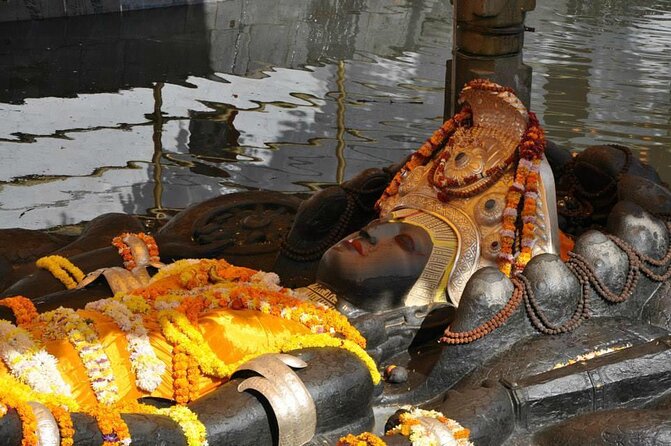
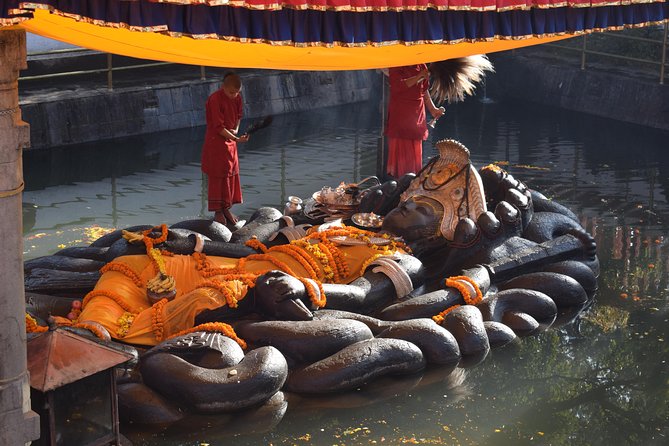
The centerpiece is the 5-meter reclining Vishnu, cut from a single block of black basalt and set in a sacred pond that makes the statue look like it’s floating. A possible drawback to consider is that you’ll be visiting an active, living temple, so you should expect everyday religious sights and rituals to be part of the experience, not a staged photo stop.
If you want Nepali religion and history without a whole day of logistics, this half-day format is a smart move. It leaves you time to plan your afternoon in Kathmandu, with far less effort than trying to manage transport and directions on your own.
In This Review
- Key takeaways
- Why Budhanilkantha feels different from Kathmandu’s big sights
- Hotel pickup that saves you from Kathmandu taxi chaos
- Stop 1: First encounter at Budhanilkanth Temple (about 30 minutes)
- Stop 2: The main Budhanilakantha experience and live pujas (about 1 hour)
- The story behind Sleeping Vishnu: scale, stone, and symbolism
- The village edge of Kathmandu: calmer, more local-feeling
- What your private guide actually changes
- Duration and pacing: why 2 to 3 hours works
- Price and value: $45 per person for a private half-day
- What to wear and how to behave at a Hindu temple
- Who should book this tour, and who might skip it
- Should you book this private half-day Budhanilkantha tour?
- FAQ
- FAQ
- How long is the Private Half Day Budhanilkantha Tour?
- What does the tour price include?
- Do I need to arrange transport to and from the temples?
- Is this tour private or shared with other travelers?
- What should I wear?
- Is free cancellation available?
Key takeaways
- Private guide, private vehicle: you get a focused visit without waiting on other groups
- A 5-meter Sleeping Vishnu: carved from black basalt, reclining on Shesha in a sacred pond setting
- Not a crowded UNESCO scene: this is a working temple with daily pujas
- Off the main circuit: you’ll spend time in a peaceful village edge of Kathmandu
- Admission is included: you pay for the experience, not for surprise add-ons
Why Budhanilkantha feels different from Kathmandu’s big sights
Budhanilkantha (often spelled Budhanilkanth or Budhanilakantha) sits at the foothills area near the Shivapuri hills, just outside the busiest core of Kathmandu. The big win here is that you’re not going where everyone goes first. You trade famous landmarks for a site that local worshippers genuinely return to.
This tour also fits the way most travelers actually move around Kathmandu. You get a half day plan that’s easy to wedge into a busy itinerary. After your visit, you’re free to chase your own ideas, not stuck doing back-to-back stops all day.
A few more Kathmandu routes to compare
- Private Kathmandu Sightseeing Tour | UNESCO World Heritage sites
★ 5.0 · 756 reviews - Kathmandu: Full Day 7 UNESCO Tour with Lunch – Private/Group
★ 5.0 · 415 reviews - Private Bhaktapur and Nagarkot Day Tour From Kathmandu
★ 5.0 · 305 reviews
Hotel pickup that saves you from Kathmandu taxi chaos
The biggest practical advantage is the hotel pickup and drop-off. The tour includes pickup within the Ring Road area, including the Bouddha area. That matters because Kathmandu traffic and taxi bargaining can eat up time fast.
You’ll ride in a private vehicle, so you’re not juggling shared rides, unclear routes, or awkward timing. For a 2 to 3 hour tour, that efficiency is the difference between a relaxed morning and a rushed one.
Also, the tour is set up as a private experience, meaning only your group participates. That usually translates to fewer compromises. Want to linger at the statue for an extra minute? You can ask your guide. Want clearer explanations at the right moment? You can get them.
Stop 1: First encounter at Budhanilkanth Temple (about 30 minutes)
Your visit starts at Budhanilkanth Temple with an easy guided introduction. Expect a short, structured orientation and then time to take in the main stonework.
Here’s what makes this place hit so hard. The highlight is the 5-meter (16.4 ft) statue of Lord Vishnu, reclining on the twisting coils of Shesha, the cosmic serpent. The statue is carved from a single block of black basalt stone. That detail is not just trivia. When you see the scale and the solid stone, you start to understand why people treat the site with such reverence.
The reclining pose is part of the symbolism. It connects to the idea of cosmic order and the primordial ocean. You’ll also notice how the statue sits in a sacred pond setting, where the overall effect is that the figure appears to float. It’s one of those art and faith combinations that makes the explanations matter.
Practical tip: plan for respectful silence and slower movement at key spots. This isn’t an empty viewpoint. People come here to pray and observe their daily routine.
Stop 2: The main Budhanilakantha experience and live pujas (about 1 hour)
The second stop is where the tour leans more into the “living temple” side of Budhanilkantha. You’ll spend about an hour here, with time to see the statue more fully and to understand what makes the site more than a monument.
This is where the guide’s role really pays off. The origin story and legends around how the massive stone statue ended up in the valley are still a mystery. In plain terms, that uncertainty is part of the fascination. You’re not just looking at a cool sculpture. You’re hearing how people explain its presence and how the site became a place of devotion.
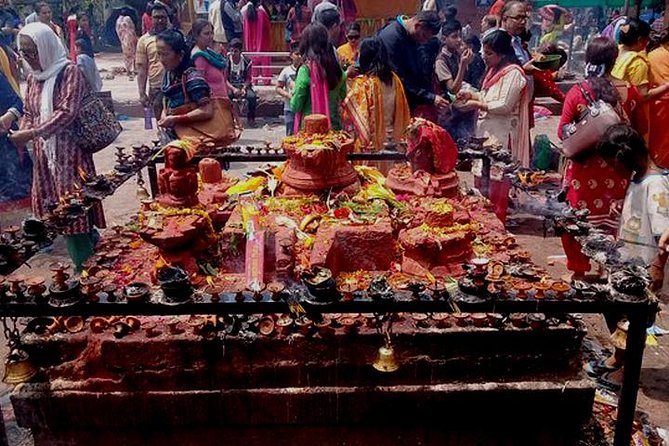
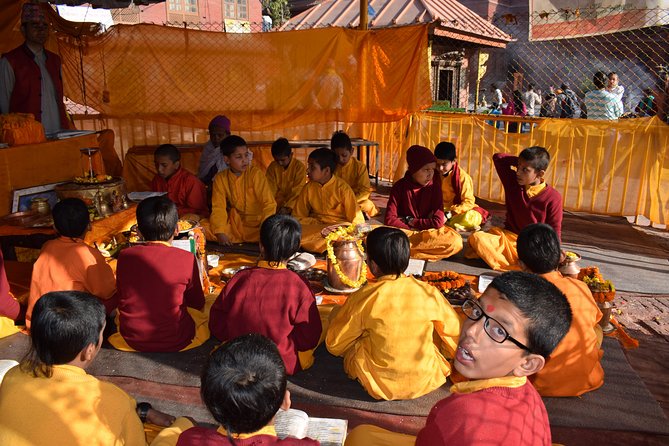
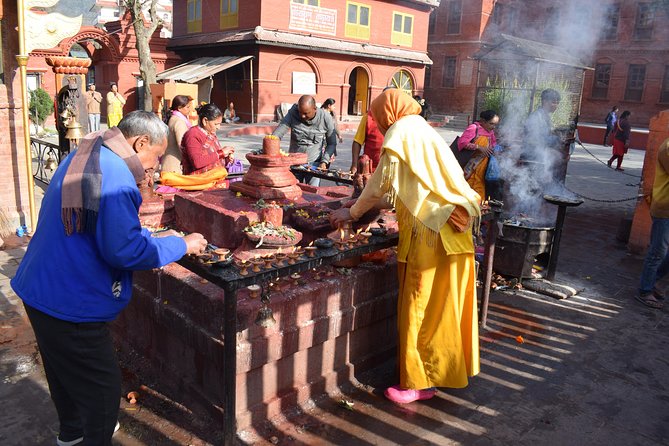
You’ll also witness Hindu pilgrims performing daily pujas (rituals). That is the key difference between this and many “sightseeing” temple visits. The energy here is devotional and grounded. Your guide can connect what you see on the ground to the deeper symbolism you’re hearing.
One more detail that helps you enjoy the second stop: your time is long enough to watch how worshippers move and what they focus on. If you only had a quick photo stop, you’d miss that rhythm.
Another way to spend the time in Nepal:
- Everest Base Camp Trek – 14 Days
★ 5.0 · 1,499 reviews - Everest Base Camp Trek
★ 5.0 · 842 reviews - Kathmandu: 7 UNESCO Sites with Lunch
★ 4.8 · 744 reviews - Everest Base Camp Helicopter Tour landing at Everest View Hotel
★ 5.0 · 668 reviews
The story behind Sleeping Vishnu: scale, stone, and symbolism
If you’re the type who likes your travel with context, you’ll appreciate what this place offers. The statue isn’t only impressive because of size. It’s impressive because of how it combines multiple layers of meaning.
You’ll hear about:
- Vishnu (Narayanan) reclining in a calm, powerful state
- Shesha as the cosmic serpent supporting the divine figure
- The sacred pond imagery that points to the cosmic ocean concept
- The unusual fact that the entire masterpiece is carved from a single block of black stone
Those details matter because they help you see the statue as faith, not just artwork. Once the symbolism clicks, the pond setting and the floating effect stop being a trick of perspective. They become part of the religious language of the place.
And yes, the “how did they move that stone?” question is real. The origin remains one of Nepal’s greatest mysteries, and it’s the kind of question that makes you look closer rather than rushing through.
The village edge of Kathmandu: calmer, more local-feeling
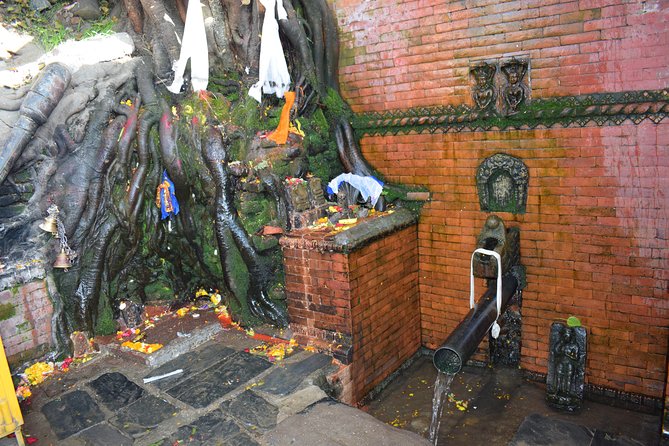
Budhanilkantha is often described as peaceful, and that comes across in how the area feels during the tour. You’re visiting a temple in the foothills zone and village edge area, not in the densest cluster of attractions.
This is a good place to reset your mental camera. If you’ve been bouncing between squares, stupas, and souvenir stalls, the quiet here can feel like a breath of air. You’re still in Kathmandu’s orbit, but the mood is different.
Another benefit of this calmer setting is that you’re less likely to feel swallowed by crowds. This is not a crowded UNESCO-type stop. You’ll experience a site that’s actively used, with people coming for prayer rather than simply ticking a box.
What your private guide actually changes
With a private tour, you get more than directions. You get someone translating the site for you in real time.
The feedback on guides for this tour highlights two practical strengths: early pickup and clear explanations in good English. The guide name Ananta comes up specifically, and the way he explained the significance of the statues made the visit feel more coherent. That matters because Budhanilkantha has symbolism that won’t be obvious at first glance.
A good guide also helps you navigate what to focus on. When you know what you’re looking for, the statue becomes easier to read. You can also avoid the awkward moment of standing in the right place but missing why it’s the right place.
If you care about Nepal beyond headlines, this is exactly the kind of tour where a guide can turn “I saw a statue” into “I understand what it means.”
Duration and pacing: why 2 to 3 hours works
This is a half-day outing, about 2 to 3 hours total. That timeframe is ideal for most schedules because it gives you enough time to do two meaningful pieces:
1) the initial temple visit and introduction to the main carving
2) the longer main stop with more context and time to observe pujas
You’re not stuck in an all-day grind. You can plan a lunch afterward, or you can use the rest of the day for a museum, a market wander, or just downtime.
For families and first-timers, the “easy half-day” format usually feels manageable. The pace is built around a short visit structure rather than a long walking route.
Price and value: $45 per person for a private half-day
At $45 per person, this isn’t a “cheap and cheerful” experience, but it also doesn’t pretend to be a luxury day. You’re paying for three things: private transport, a professional guide, and hotel pickup and drop-off within the specified area.
For me, the value logic is simple:
- If you had to hire a driver and figure out temple logistics yourself, costs and time could climb quickly.
- Admission tickets are included, so you’re not paying extra at the gate.
- You get a structured explanation that makes the statue and symbolism more satisfying than a solo wander.
Also, the fact that it’s booked around a month in advance on average suggests it’s a steady favorite with people who want something cultural and time-efficient. That doesn’t mean you must book early, but it does hint the timing can fill.
If you’re traveling solo, a private tour can feel pricier than a group option. But if you’re trying to maximize meaning per hour, the guide and pickup can make the price feel fair.
What to wear and how to behave at a Hindu temple
The dress code is smart casual. In practice, that means you should dress with respect and keep clothing comfortable for a short temple visit.
At a living worship site, your best move is to keep your volume low, move patiently, and follow your guide’s cues. If people are performing pujas, don’t crowd them or block sightlines. Think of yourself as a respectful observer, not an audience.
Bring the mindset that this is part of local religious life. When you do, you’ll usually get a more meaningful experience and better photo moments too.
Who should book this tour, and who might skip it
This is a great fit if you:
- want Nepali religion and history without long travel days
- prefer smaller, calmer experiences over big crowds
- like guided explanations, especially for symbolism
- have only a half-day window and want it to count
You might skip it if:
- you only want famous, easily recognizable sights and nothing else
- you’re not interested in active temple worship and ritual settings
- you’re looking for a long walking hike rather than a short, structured cultural visit
For many visitors, this works best on a day when you want a cultural anchor. It gives you a story to carry into the rest of your Kathmandu explorations.
Should you book this private half-day Budhanilkantha tour?
I’d book it if you want a focused, respectful temple experience with minimal logistics. The Sleeping Vishnu statue is genuinely impressive, and the private guide angle makes the symbolism and the “how did they do that?” mystery much more rewarding.
One more decision helper: if your Kathmandu schedule is tight, this 2 to 3 hour window is the kind of time management that protects your travel energy. You’ll leave with a strong cultural memory without sacrificing the rest of your day.
If you’re open to seeing a living place of worship as part of your visit, this tour is a smart use of time.
FAQ
FAQ
How long is the Private Half Day Budhanilkantha Tour?
The tour lasts about 2 to 3 hours total.
What does the tour price include?
The tour price includes hotel pickup and drop-off (inside the Ring Road, including the Bouddha area only), transport by private vehicle, a professional guide, local taxes, and admission tickets at the temple stops. Food and drinks are not included.
Do I need to arrange transport to and from the temples?
No. You get hotel pickup and drop-off, and you travel by private vehicle during the tour.
Is this tour private or shared with other travelers?
It is a private tour/activity. Only your group will participate.
What should I wear?
The dress code is smart casual.
Is free cancellation available?
Yes. You can cancel for a full refund up to 24 hours in advance of the experience start time.
Latest additions near Kathmandu
- White Water River Rafting – 1 Day★ 4.3 · 3 reviews
- Traditional Momo Making Class★ 5.0 · 10 reviews
- Kathmandu to Pokhara Premium sofa bus ticket★ 4.0 · 17 reviews
- Ghorepani Poon Hill Trek★ 5.0 · 16 reviews
- Amazing 1 Day Trekking Experience in Kathmandu Nepal★ 5.0 · 24 reviews
- Ghorepani Poonhill Trek★ 5.0 · 5 reviews
- Walking tour of real Kathmandu through back streets.★ 5.0 · 3 reviews
- Wildlife Adventure in Chitwan Nepal★ 4.0 · 4 reviews
Kathmandu Tours, compared.
Private Kathmandu Sightseeing Tour | UNESCO World Heritage sites
Read our review →
Everest Base Camp Helicopter Tour landing at Everest View Hotel
Read our review →