
Reviewed · BHAKTAPUR & PATAN TOURS
Patan and Bhaktapur Boutique Tour
Two UNESCO squares in one long day. This Patan and Bhaktapur Boutique Tour is a focused way to see how Newar craftsmanship and temple life shape everyday Kathmandu Valley culture, while still keeping the pace manageable with a small group (max 10). I especially love the way the stops connect practical details, like water spouts and neighborhood courtyards, to the big wow moments at the royal squares. One thing to consider: you’ll need cash ready for the Durbar Square entrance fee.
The second part I like is the guide-driven storytelling, including specific local references like Asta Matrika figures at Patan Dhoka and the Gaya Baje priest story at Pimbahal. Still, the schedule is full, so if you hate walking or standing in crowds at major squares, plan on slowing your own pace at breaks and wear comfortable shoes.
In This Review
- Key highlights and what makes them worth your day
- Patan Gate to Bhaktapur squares, the smart flow of this day
- Price and logistics: what you really get for $40
- Getting picked up in central Kathmandu and staying comfortable
- Patan Gate and the neighborhood-courtyard story stops
- Golden Temple, water at Manga Hiti, and a calm break inside the Malla-era Patan Museum
- Patan Durbar Square: your main UNESCO stop with temples and palace space
- Bhaktapur Durbar Square and the craft-side momentum
- Taumadhi Square, Nyatapola Temple, and Dattatraya Temple for the “wow then pause” combo
- How the UNESCO entrance fee works, and how to avoid last-minute stress
- Pacing, walking, and what to wear for a 9.5-hour day
- Guides and storytelling: what you can count on
- Who this tour is best for, and who might prefer something else
- Should you book this Patan and Bhaktapur day?
- FAQ
- How much does the Patan and Bhaktapur Boutique Tour cost?
- How long is the tour?
- What’s included in the tour price?
- What entrance fees should I plan for?
- Is lunch included?
- How big is the group?
- Where does the tour start in Kathmandu?
- Is there a minimum age or fitness requirement?
Key highlights and what makes them worth your day
- Small group cap of 10 means you can actually hear your guide and move without constant elbowing.
- Air-conditioned vehicle plus WiFi on board makes the Kathmandu Valley transfer feel less tiring.
- Two UNESCO Durbar Square visits in one day, Patan first then Bhaktapur.
- Patan’s craft and daily-life stops like Pimbahal and Nag Baha Galli, not just temples.
- Bhaktapur’s artisan rhythm at Pottery Square, where you can watch pottery being made.
- Cash-needed UNESCO entry so you can budget without surprises at the gate.
Patan Gate to Bhaktapur squares, the smart flow of this day
This is the kind of day trip that works because it moves with logic, not just geography. You start in the Patan side of the valley, where you can get your bearings in a historic core, then you shift to Bhaktapur for a second major UNESCO cluster of monuments. That rhythm matters because the architecture and symbolism are similar enough that you’ll start spotting patterns, but different enough that you won’t feel like you’re repeating the same thing.
I like how the day doesn’t treat Patan and Bhaktapur as two separate theme parks. Instead, it uses short stops that show how people live around the sacred spaces. Even before you reach the headline squares, you’re picking up context: where pilgrims and traders would rest, how water systems were built for community use, and why certain courtyards matter during special festivals.
More Bhaktapur and Patan visits:
- Private Bhaktapur and Nagarkot Day Tour From Kathmandu
★ 5.0 · 305 reviews - Day Trip to Bhaktapur and Panauti from Kathmandu
★ 5.0 · 184 reviews - Bhaktapur & Patan Durbar Square Day Tours
★ 5.0 · 122 reviews
Price and logistics: what you really get for $40
At $40 per person, the tour is built around value for your time. What you’re paying for isn’t just sightseeing, it’s the practical package: an air-conditioned vehicle, WiFi on board, and a guide who can connect the dots between carvings, temples, and street-level traditions. With Kathmandu traffic and slow crossings, having vehicle transfer + a guided schedule is usually the difference between a smooth day and a chaotic one.
The itinerary also includes time for a lunch break and a coffee stop, but lunch itself is not included. So mentally budget for at least one meal purchase. The good news is that you’ll have built-in pauses, rather than only rushing from one monument to the next.
One cost wrinkle: entrance to the Durbar Squares is not included in the price. You should plan for paying NRP 1000 in cash at the entrance. The tour also recommends a minimum donation of NRP 100 to the Royal Kumari at the site. If you’re hoping to pay with card, be flexible, since the stated payment method is cash.
Getting picked up in central Kathmandu and staying comfortable
This tour is designed for convenience in Kathmandu. It offers pickup from areas around Boudha and Kathmandu Guest House (KGH), and the listed start point is near Kathmandu Guest House Road at Filli Chai. Ending the tour back at the same meeting point means you don’t have to negotiate a second ride at the end when you’re tired.
Because you’re traveling between Patan and Bhaktapur, comfort adds up. The vehicle is air-conditioned, and there’s WiFi on board, which is handy when you want to look up details between stops or just keep the day organized in your phone notes.
Group size is max 10. That’s a key quality factor here. At UNESCO sites, crowds can make listening harder. A smaller group gives your guide room to check in with you, and it helps you spend less time waiting at corners.
Patan Gate and the neighborhood-courtyard story stops
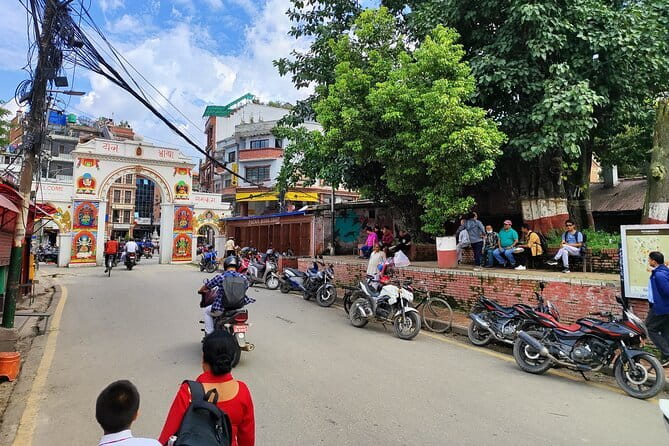
You begin at Patan Dhoka, the historic gate that marks the entrance to the ancient city of Patan. The gate is decorated with paintings of the Asta Matrika, the eight mother goddesses. It’s a strong opener because it teaches you how Patan communicates sacred meaning right at the boundary.
Then you step into smaller courtyard life with stops like Pimbahal. Here, the tour focuses on how ancient tourists, pilgrims, and traders cooked their food, fetched water, and rested. That kind of context changes how you see monuments later. Instead of thinking only about architecture, you start thinking about the people who used these spaces long before Instagram became a thing.
At Nag Baha Galli, you see a serpents’ courtyard tied to the Samyak Mahadan festival, held every five years. Even if you’re not there during the festival, the courtyard explains why certain places feel ceremonial. You can look for symbolism in the design and carvings, and you’ll understand that the courtyard isn’t decoration. It’s part of community ritual space.
What to watch for at these early stops: they tend to be quieter but still active, so keep your eyes up for small carvings and inscriptions. These are the moments where your guide’s details make the biggest difference.
Another way to spend the time in Nepal:
- Everest Base Camp Trek – 14 Days
★ 5.0 · 1,499 reviews - Everest Base Camp Trek
★ 5.0 · 842 reviews - Private Kathmandu Sightseeing Tour | UNESCO World Heritage sites
★ 5.0 · 756 reviews - Kathmandu: 7 UNESCO Sites with Lunch
★ 4.8 · 744 reviews
Golden Temple, water at Manga Hiti, and a calm break inside the Malla-era Patan Museum
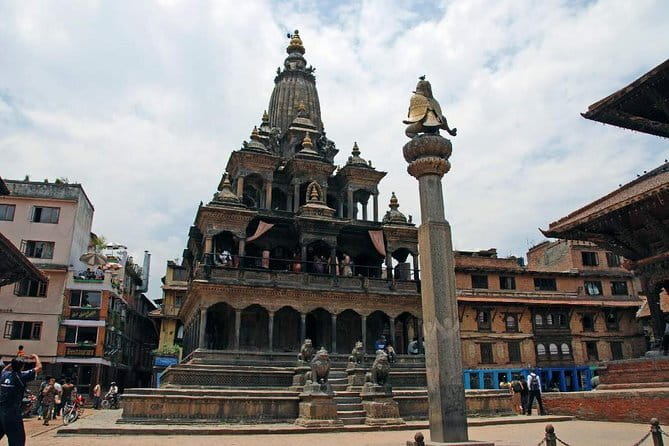
After the neighborhood stops, you hit one of the day’s most visually satisfying religious landmarks: the Golden Temple, known as Hiranya Varna Mahavihar. You’re looking at a three-story pagoda with a gilded roof and intricate carvings. It’s dedicated to Gautam Buddha, and the atmosphere is noticeably different from the street-level courtyards you just walked through.
A practical note: the Golden Temple stop is listed as 30 minutes, and entrance is not included. So use that time wisely. If you want photos, do it early, then spend a few minutes just observing the space, because that’s where the quietness lands.
Next is Manga Hiti, also called Manga Dhara, a historic stone water spout built during the Lichhavi period. The carvings of gods and the detailed design are exactly the kind of detail that you’d miss if you only sprinted between big temples. You’ll appreciate it more if you think of it as infrastructure with art, not just a photo stop.
Then Patan Museum comes in as your structured break. It’s housed in a restored Malla-era palace, and even the building feels like a lesson. The museum is designed to celebrate Nepal’s art, culture, and history, and it’s a good way to regroup before the long UNESCO walk at Patan Durbar Square.
If you’re sensitive to museum lighting or standing for long periods, this is your “slow-down” zone. It’s the part of the day where you can sit, read, and reset your legs.
Patan Durbar Square: your main UNESCO stop with temples and palace space
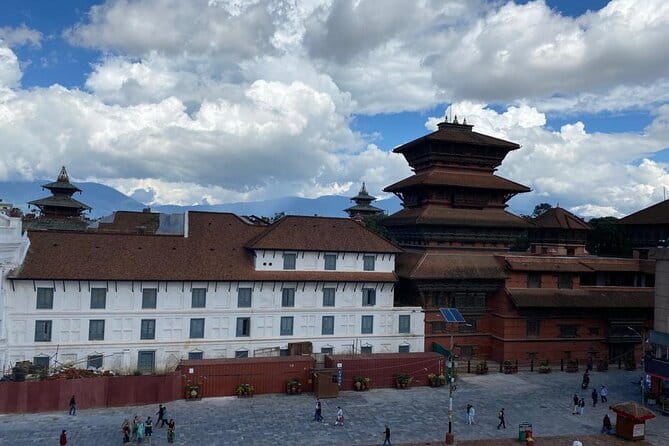
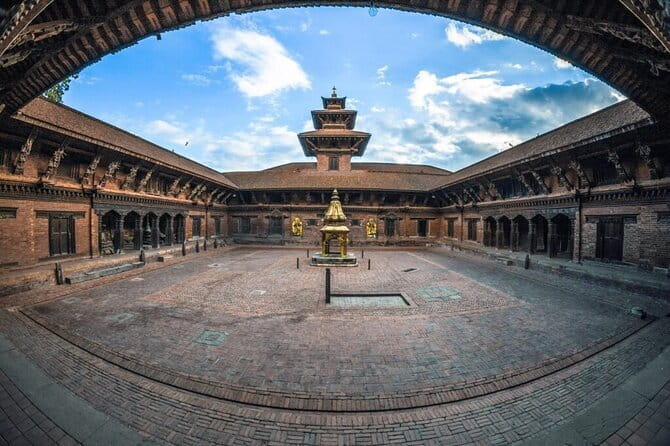
Patan Durbar Square is one of the two UNESCO anchor points on this itinerary. It’s the former royal palace area of the Malla kings and it’s packed with intricately carved temples, courtyards, and peaceful open pockets.
This stop is where your earlier context pays off. If you paid attention at the gate paintings and courtyard traditions, the Durbar Square feels less like a single monument and more like a whole designed world. You’ll see Newar art reflected in the stonework, and you’ll start noticing patterns in how spaces are organized around religious and civic life.
Entrance is not included here, so plan cash ahead. Once you’re inside, it’s mostly a walking and looking day, not a sit-and-read experience. If you want a slower visit, consider choosing a few structures to focus on deeply rather than trying to see everything.
Bhaktapur Durbar Square and the craft-side momentum
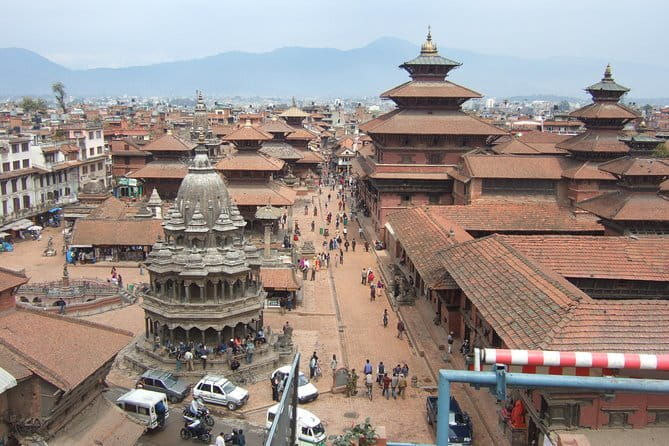
After Patan, the tour moves to Bhaktapur Durbar Square. Like Patan, this is another UNESCO World Heritage Site and it’s known for traditional Newar architecture. This is a big step up in “monument density,” so don’t be surprised if your legs feel it by the middle of the afternoon.
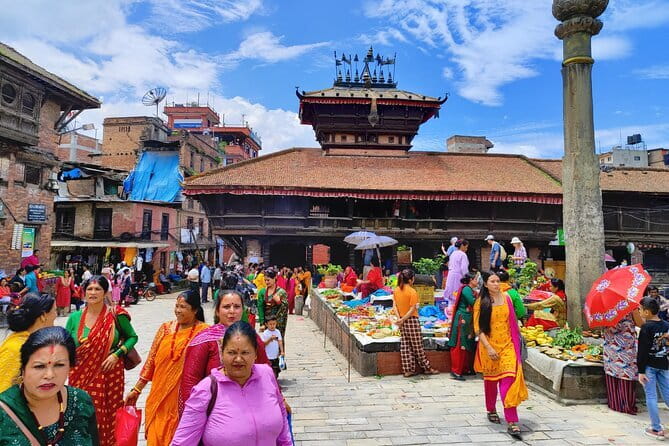
The tour’s design helps here. Bhaktapur’s highlight energy doesn’t stay trapped in one courtyard. You’ll also head toward Pottery Square, where artisans craft pottery and sell handmade pieces. Watching the process adds meaning to the big stone landmarks because it shows how heritage isn’t only preserved in museums. It’s still a living trade.
If you enjoy craft details, this is one of the more enjoyable segments of the day. You can take your time looking at the shapes, textures, and tools, and it gives your body a change of rhythm from temple steep stairs and square-level crowds.
Taumadhi Square, Nyatapola Temple, and Dattatraya Temple for the “wow then pause” combo
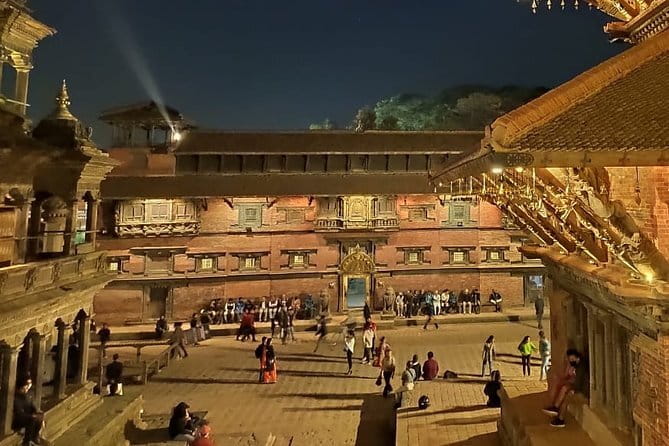
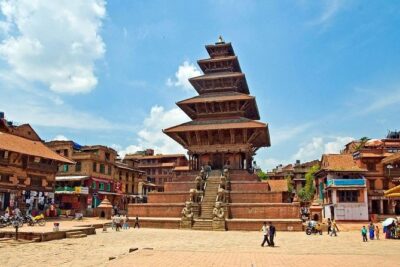
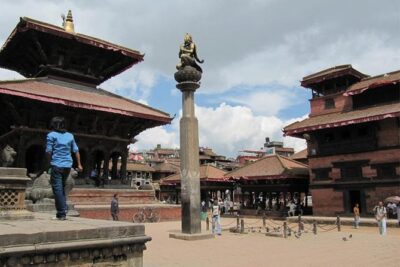
Taumadhi Square is where the day shifts from general exploration into a more dramatic temple sight. You’ll spend time at Nyatapola Temple, a five-story temple dedicated to the goddess Siddhi Lakshmi. The temple is known for its height and beauty, and it’s the kind of structure that rewards slower viewing from different angles.
Next is Dattatraya Temple at Dattatraya Square. This is dedicated to the Hindu god who embodies the unity of Brahma, Vishnu, and Shiva. The square is also famous for the Peacock Window. It’s a strong contrast after Nyatapola, because Dattatraya feels more intricate and detailed at human scale.
What I recommend here: don’t rush. These stops are shorter, but the carvings and window details are where you’ll remember the day later. Your guide can point out things you might not notice on your own.
How the UNESCO entrance fee works, and how to avoid last-minute stress
The Durbar Square entry fee is clearly stated as NRP 1000 and it needs to be paid in cash at the entrance. I strongly suggest you have this ready before you arrive, even if you’re tempted to wait until the last second.
The tour also suggests paying at least NRP 100 donation to the Royal Kumari. If you want a smooth visit, treat this as part of your entrance preparation rather than an afterthought.
Budget tip: if you’re traveling with others, decide early whether you’ll keep the cash in one pocket or split it. This tour has a packed schedule, so anything that prevents standing in a payment line is worth doing.
Pacing, walking, and what to wear for a 9.5-hour day
The stated total duration is about 9 hours 30 minutes, and that includes transportation plus time for lunch and a coffee stop. That’s a long day, even if each site visit is only around 15 to 30 minutes.
The good news is that it’s not all constant climbing. You’ll have short “micro pauses” at gates, courtyards, temples, and museum time. Still, the day is best with moderate physical fitness, and the tour suggests a moderate level of fitness.
Wear shoes you trust on uneven stone. Bring a light layer, since mornings and shade can feel different as you move between squares. And keep water handy. Even if there are historic water features, those aren’t necessarily your practical refill points during a timed tour.
Also, group size is small, but Kathmandu Valley sites can get crowded. If you’re photo-focused, plan to take pictures quickly and then return to listening and observing. That mix makes your tour feel less like a checklist.
Guides and storytelling: what you can count on
The strongest part of this kind of day is the guide. This tour includes a guide, and the best versions of this route lean hard into cultural interpretation, not just facts.
I’ve seen how guides like Shreya Karki can bring Nepal’s culture, history, and traditions into plain language. The difference is that you don’t just hear what a temple is. You hear why people treat it with respect, how symbols connect to community life, and how the carvings relate to belief.
Other guides on this route, like Santosh, have been praised for charm and clear explanations, especially when shaping a multi-site Kathmandu Valley day. So while you can’t control who you get, you can expect the format to be guide-led and story-rich.
If you want the most value, ask one simple question per major stop. Something like: What should I look for first in the carvings, or what do people do here that outsiders might miss. Your guide can tailor answers in real time.
Who this tour is best for, and who might prefer something else
This is a great fit if you want:
- A high-utility day trip with two UNESCO anchor sites and multiple supporting craft and daily-life stops
- Small-group pacing (max 10) so you can ask questions
- A mix of temple sightseeing and neighborhood context, like courtyards and water-spout heritage
It may be less ideal if you:
- Hate walking for a full 9.5 hours
- Want a relaxed day with minimal transitions
- Are traveling with younger kids, since the tour has a minimum age of 9 and children under 9 cannot sit on your lap for insurance reasons
Should you book this Patan and Bhaktapur day?
I’d book it if you’re spending a limited amount of time in Kathmandu and you want more than two Durbar Squares. The combination of Patan’s gate and courtyard details, Golden Temple and Manga Hiti’s craft-and-infrastructure feel, then Bhaktapur’s pottery-making atmosphere and major temple highlights makes the day feel connected.
Skip it only if you want a slow, low-walking cultural stroll. This itinerary is intentionally packed, and it’s best with comfortable shoes, a cash plan for entrance fees, and a willingness to watch, listen, and move.
If you’re ready for an active, story-driven UNESCO day with a small group, this one is a solid value choice.
FAQ
How much does the Patan and Bhaktapur Boutique Tour cost?
The price is $40.00 per person.
How long is the tour?
The duration is approximately 9 hours 30 minutes, including transportation and time for lunch and a coffee stop.
What’s included in the tour price?
Included are an air-conditioned vehicle, WiFi on board, and a guide.
What entrance fees should I plan for?
Entrance to the Durbar Squares is not included. The tour indicates you pay NRP 1000 about US$9 in cash at the entrance, and it recommends paying at least NRP 100 donation to the Royal Kumari.
Is lunch included?
No, lunch is not included.
How big is the group?
The tour has a maximum of 10 travelers.
Where does the tour start in Kathmandu?
The start point is Filli Chai on Kathmandu Guest House Rd (Kathmandu Guest House area).
Is there a minimum age or fitness requirement?
Yes. The tour notes a minimum age of 9 years and recommends moderate physical fitness. Children under 9 cannot sit on your lap for insurance reasons.
Latest additions near Kathmandu
- White Water River Rafting – 1 Day★ 4.3 · 3 reviews
- Traditional Momo Making Class★ 5.0 · 10 reviews
- Kathmandu to Pokhara Premium sofa bus ticket★ 4.0 · 17 reviews
- Ghorepani Poonhill Trek★ 5.0 · 5 reviews
- Ghorepani Poon Hill Trek★ 5.0 · 16 reviews
- Amazing 1 Day Trekking Experience in Kathmandu Nepal★ 5.0 · 24 reviews
- Walking tour of real Kathmandu through back streets.★ 5.0 · 3 reviews
- Wildlife Adventure in Chitwan Nepal★ 4.0 · 4 reviews
Bhaktapur & Patan Tours, compared.
Private Bhaktapur and Nagarkot Day Tour From Kathmandu
Read our review →
Day Trip to Bhaktapur and Panauti from Kathmandu
Read our review →

Nagarkot Sunrise & Bhaktapur UNESCO Heritage Private Tour
Read our review →
Bhaktapur & Nagarkot Day Tour with Lunch – Private/Group
Read our review →
Browse the lists this tour appears in