
Reviewed · BHAKTAPUR & PATAN TOURS
City tour of Bhaktapur and Patan Durbar Square
Temples and palaces, in one smooth day. This private day trip strings together Bhaktapur’s UNESCO Durbar Square and Lalitpur’s Patan Durbar Square, with stops like Patan Museum, Krishna Mandir, Nyatapola Temple, and Dattatreya Square. I especially like the hotel pickup convenience and how the tour uses a guide to turn stone, carvings, and courtyards into a story you can actually follow. One note to plan around: there are entry fees (not included) and some sites were damaged in the 2015 earthquakes.
I also like that the pace is guided but not rigid. In past departures, guides such as Shanti and Kabita have been praised for clear explanations and letting you start and stop as you want. Still, with an 8-hour day and multiple clusters of monuments, you’ll want good walking shoes and a realistic attitude about crowds and stairs.
In This Review
- Key highlights to watch for
- Bhaktapur and Patan in one day: what 8 hours really covers
- Pickup, private transport, and how the day stays easy
- Patan Durbar Square: the royal heart and why the guide matters
- Patan Museum: what you gain from art and artifacts (and what you skip)
- Krishna Mandir in Chayasim Deval: the quick stop that pops
- Bhaktapur Durbar Square: when medieval streets feel real
- 55 Window Palace and Nyatapola Temple: Bhaktapur’s two headline acts
- Dattatreya Square and Nyatpole Temple Square: the bridge between cities
- Dattatreya Temple in Bhaktapur: a heavier pagoda moment
- Price and value: what $110 covers and what to budget for
- Earthquake damage note: how to set expectations without killing the mood
- Best fit: who this tour suits (and who might want a different plan)
- Guides that make the difference: Shanti and Kabita as examples
- Should you book this Bhaktapur and Patan city tour?
- FAQ
- What is included in the tour price?
- How much time should I plan for?
- Is pickup from my hotel included?
- Is this a private tour?
- Are entry fees included?
- Is food and drinks included?
- Do I need to buy tickets for the Patan Durbar Square and Bhaktapur Durbar Square?
- Are there stops with free admission?
- Is there a note about damage from the 2015 earthquakes?
- Is the tour suitable for most people?
Key highlights to watch for
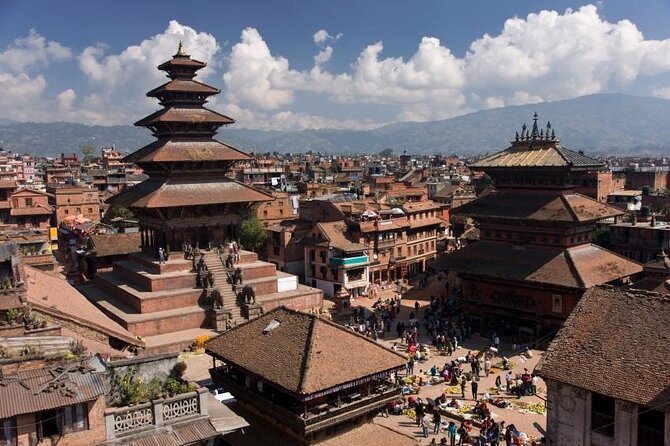
- Bhaktapur Durbar Square feels like a living medieval city, not a museum.
- Patan Durbar Square plus the Patan Museum makes the art and architecture click together.
- Nyatapola Temple gives you a big Nepal pagoda moment in a compact stop.
- 55 Window Palace (Pachpanna Jhyale Durbar) is the iconic Bhaktapur façade photo.
- Stops like Dattatreya Square and Nyatpole Temple Square help you connect the dots between the two cities.
Bhaktapur and Patan in one day: what 8 hours really covers
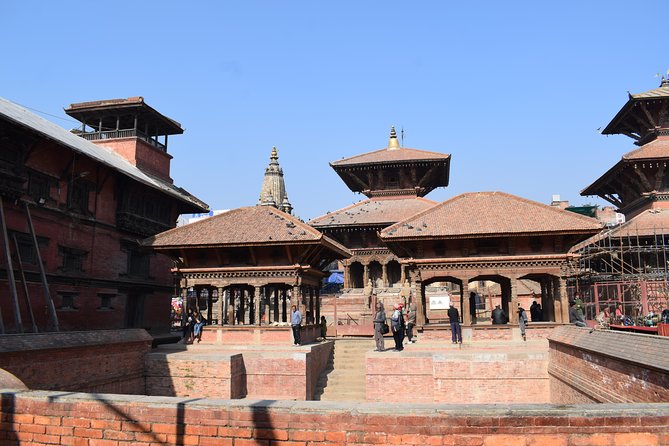
This is an 8-hour outing that links two of the Kathmandu Valley’s former royal cities in one sweep, starting with Lalitpur (Patan) and moving on to Bhaktapur before returning to Kathmandu. That time window matters. You get to see a lot, but you will not get a slow, hours-long wander in each courtyard the way you might if you stayed overnight.
What makes the schedule work is the mix of longer time blocks and short “hit and move” stops. You get around an hour at each Durbar Square and about 15 minutes at Patan Museum, then shorter temple moments at the key architectural must-sees like Krishna Mandir and Nyatapola Temple. It’s a smart balance if you want highlights without losing your legs.
The tour is also set up as a private day trip. That means you are not stuck waiting for a huge bus group to finish one photo spot. If you prefer a calm pace with a guide who can answer questions on the spot, this format fits well.
More City Tours in Kathmandu
- Kathmandu: Private City Guided Tour
★ 4.9 · 174 reviews - Kathmandu City Tours
★ 5.0 · 66 reviews - Kathmandu Valley City Day Tour
★ 5.0 · 40 reviews
Pickup, private transport, and how the day stays easy
The biggest “value” win here is the pickup and drop. You can be collected from your hotel inside the ring road area, including Boudha. For many Kathmandu visitors, that’s the difference between a smooth start and spending your morning negotiating transport.
You ride in a private vehicle, so you avoid awkward shuttling between meet points. The plan is also built around a guide and a single route, which helps when you’re moving between two heritage zones that can feel confusing if you’re on your own.
There’s also a mobile ticket mentioned, which usually means less paper handling on the day. And the operator lists group discounts, so if you are traveling with friends or family, it can be worth checking how pricing changes with group size.
Patan Durbar Square: the royal heart and why the guide matters
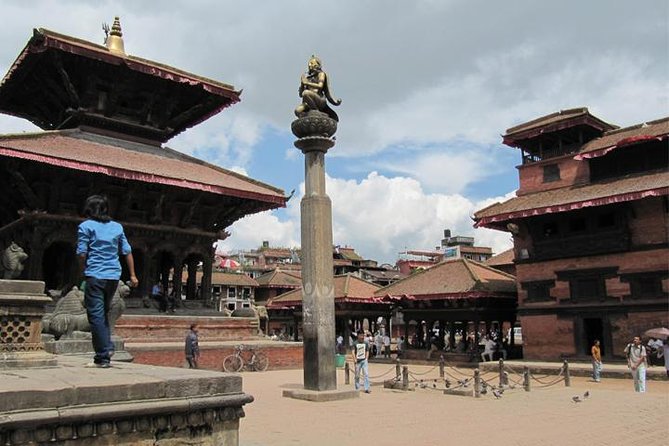
Patan Durbar Square is where the day’s first big wow moment lands. You spend about an hour here, which is enough time to absorb the layout and hit the standout structures without rushing every alley. As you walk in, you’re basically reading a layered palace and temple complex: courtyards, carved stonework, and clusters that were designed for ritual and power.
This is one of those places where a guide makes the difference. Without context, you can end up seeing beautiful carvings but not knowing what you’re looking at. With a good guide, you start noticing patterns: where royal and religious spaces overlap, how the stone craftsmanship communicates status, and which buildings are central to the square’s identity.
An extra plus is that this tour doesn’t just stop at the square. It connects Patan’s monumental exterior to the Patan Museum, so the art you see outside has a reason to exist, beyond good photos.
Practical note: bring time for careful walking. Durbar Squares are heritage complexes with uneven stone and stairs. Even if the tour is structured, you’ll still do a lot of step-and-stop movement.
Patan Museum: what you gain from art and artifacts (and what you skip)
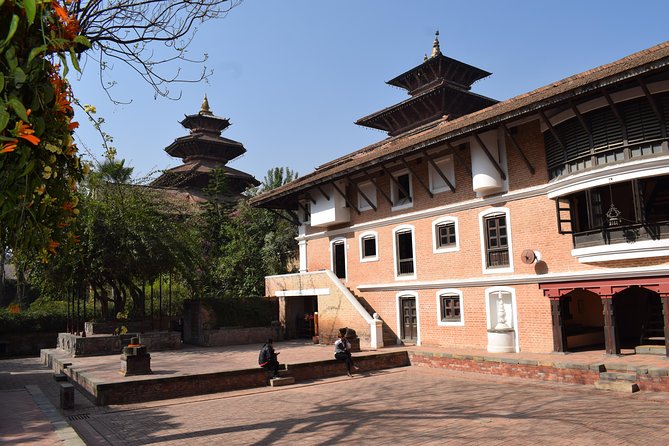
After the square, you get a short visit to the Patan Museum, about 15 minutes. That’s brief, but museums like this can still be a high-impact stop if you know what to look for.
The key value is that the museum is praised as one of the finest ways to understand Newari art in the region. Even in a short time, you can connect what you saw in the Durbar Square carvings and temple elements to preserved artworks and craftsmanship in a more controlled setting.
If you want to maximize this stop, I suggest you go in with a simple mindset: focus on styles and materials, not on trying to read everything. In 15 minutes, your win is learning what to notice next time you see a carved panel or a temple detail.
And remember: museum entry is not included. You’ll want to budget for that admission cost so you’re not scrambling mid-day.
More Bhaktapur and Patan visits:
- Private Bhaktapur and Nagarkot Day Tour From Kathmandu
★ 5.0 · 305 reviews - Day Trip to Bhaktapur and Panauti from Kathmandu
★ 5.0 · 184 reviews - Bhaktapur & Patan Durbar Square Day Tours
★ 5.0 · 122 reviews - Nagarkot Sunrise & Bhaktapur UNESCO Heritage Private Tour
★ 5.0 · 66 reviews
Krishna Mandir in Chayasim Deval: the quick stop that pops
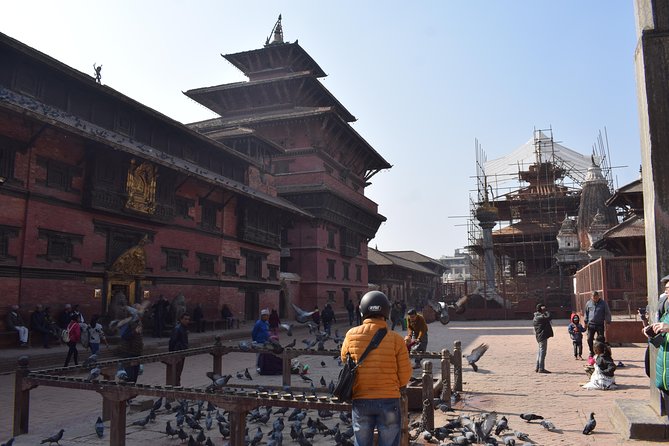
Back inside Patan Durbar Square, the tour includes the Krishna Mandir, also tied to Chayasim Deval. The stop is around 10 minutes, and that’s exactly right for a site like this. You don’t need an hour to appreciate a concentrated architectural moment.
What I like about including this is the “variety factor.” The day isn’t only about broad courtyards and big pagodas. You also get a compact temple visit that reminds you this is a functioning sacred culture, not just a sightseeing circuit.
Admission for this specific temple is listed as free, which is a nice bonus. So you’re not spending time negotiating ticket lines for every single building.
Bhaktapur Durbar Square: when medieval streets feel real
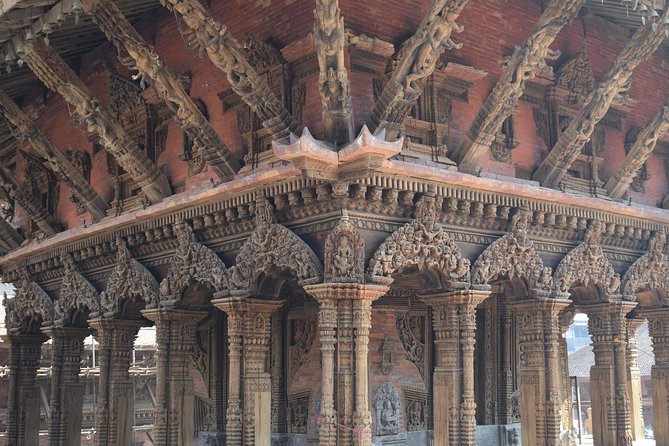
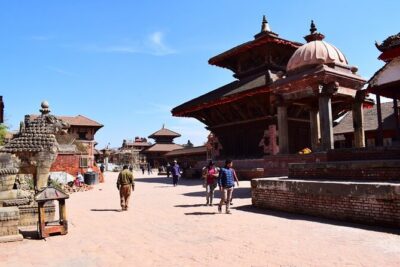
Now the day shifts to Bhaktapur, where you spend about an hour at Bhaktapur Durbar Square. Many people find Bhaktapur hits differently than Patan. Here, the setting feels more like an inhabited medieval city, with lanes and temple clusters that make the whole heritage zone feel lived-in.
Bhaktapur Durbar Square is often considered the largest, grandest, and most beautiful of the three royal cities in the valley. Whether you agree with that exact ranking or not, the scale is clear. You’ll see royal palace spaces, temple groupings, and the sense that this area was designed for ceremonial life.
Like in Patan, a guide is the advantage. The square can look like a scatter of impressive structures if you’re trying to figure it out alone. With a guide, you learn which areas connect to royal power and which buildings were central to religious practice.
Again, entry fees apply here and are not included. So factor that into your expected total day cost.
55 Window Palace and Nyatapola Temple: Bhaktapur’s two headline acts
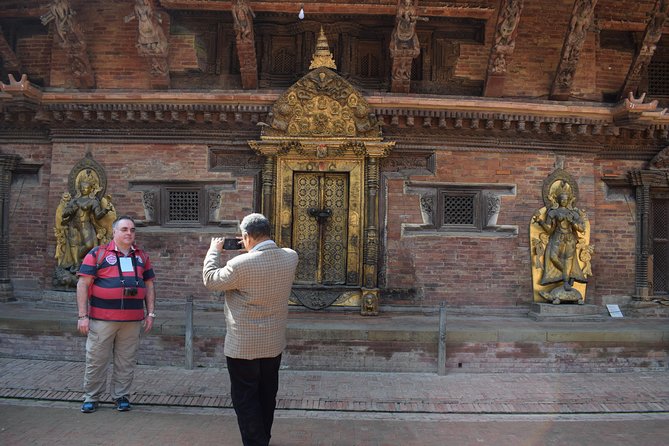
Bhaktapur’s most iconic moments come fast once you’re in the Durbar Square zone.
First up is the 55 Window Palace, known as Pachpanna Jhyale Durbar. This is one of Bhaktapur’s most recognizable façades. The tour gives you about 15 minutes for this stop, and that’s usually enough for photos and for learning what makes the design so memorable.
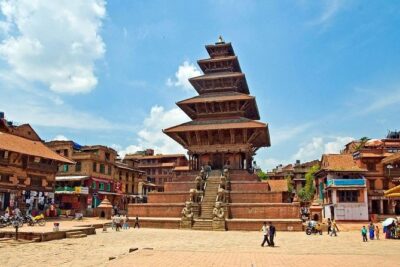
Then you move to Nyatapola Temple, the famous five-story pagoda. The name references the temple’s multi-tier structure, and it’s noted as being the tallest pagoda in Nepal. The stop here is around 10 minutes.
I like that the day pairs these two because they show two sides of Bhaktapur’s architecture. The palace façade shows royal design and stone composition. Nyatapola shows how sacred architecture is built to command attention, even at a distance.
Both of these stops are listed with free admission in the tour details, which is great for value. It means your paid costs can focus on the big entry zones rather than being constantly added at every doorstep.
Dattatreya Square and Nyatpole Temple Square: the bridge between cities
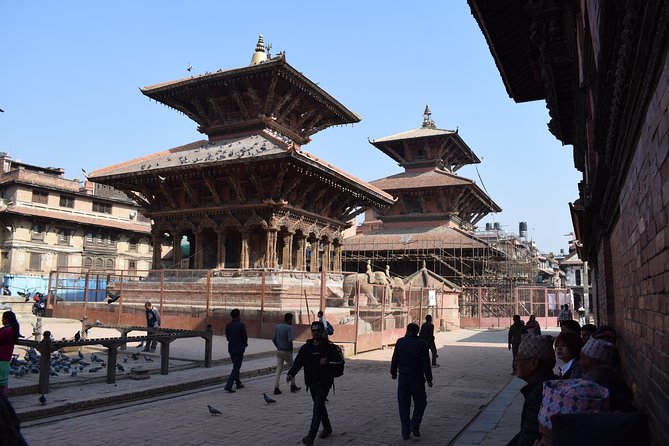
On the way between Patan and Bhaktapur, you’ll pass through Dattatreya Square and Nyatpole Temple Square. These aren’t necessarily the headline destinations like the Durbar Squares, but they matter because they connect the valley’s urban story.
This is where you can slow down for a moment and notice how Newari religious life threads through daily city spaces. Even if you only get a short stop, these places help you understand why the Kathmandu Valley’s monuments are not isolated artworks. They’re part of a broader network of temples, shrines, and community identity.
If you tend to skip “in-between” stops on tours, I’d still recommend paying attention here. They’re often the places where you feel the character of the city beyond the major UNESCO squares.
Dattatreya Temple in Bhaktapur: a heavier pagoda moment
The tour also includes Dattatreya Temple in Bhaktapur’s historic Dattatreya Square. This is a massive 15th-century pagoda, noted as one of the oldest in the valley and a standout example of Newari craftsmanship.
The stop is about 15 minutes, with free admission. That timing works well because a pagoda like this is best appreciated without rushing. You can take a step back, study the structure, and then get close enough to see the stonework details.
Also, Dattatreya shrines have a special pull for many visitors because they connect to wider Hindu traditions centered on Dattatreya. Even if you’re not an expert in the symbolism, the architecture and setting do the teaching.
Price and value: what $110 covers and what to budget for
At $110 per person for an 8-hour private tour, the main value is the combination of professional guide plus private vehicle plus hotel pickup and drop. If you tried to do this on your own, you’d spend time on transport planning and you’d likely give up the interpretive guide that helps the carvings and temple details make sense.
What’s not included is entry fees, listed at about $20 to $30 per person. Food and drinks are also not included. So your realistic “all-in” total will be higher than the base price once you add admissions and whatever you want to eat.
That said, this pricing still often works out well for travelers who want two major UNESCO areas in one day. You’re paying to compress time without compressing understanding.
If you’re traveling solo, the base price can feel high until you add up the cost of a private driver and an informative guide separately. If you’re traveling as a group, the value typically feels even better, especially since group discounts are mentioned.
Earthquake damage note: how to set expectations without killing the mood
The tour notes that some of the sites visited have significant damage from the April and May 2015 earthquakes. That’s not a dealbreaker, but it’s important to understand the context so you don’t arrive expecting every structure to look pristine and unchanged forever.
In practice, what this means for you is attitude. Look at the buildings for the craftsmanship and the scale, and accept that repair and restoration can change surfaces and viewpoints. Even when damage is present, these places still communicate why they matter, and you can still get that sense of time and continuity.
A good guide can also help you notice what was affected and what remains true to the original design intent, so the damage becomes part of the story instead of a frustrating surprise.
Best fit: who this tour suits (and who might want a different plan)
This day trip is best for you if you want a focused hit list of Bhaktapur and Patan’s key UNESCO monuments plus Patan Museum, all while keeping logistics simple. It also works well if you like having a guide to explain what you’re seeing, especially at crowded heritage sites.
Most travelers can participate, but the real limiter isn’t listed as a strict restriction. It’s your own comfort with walking, uneven surfaces, and stairs around temple complexes.
If you’re the type who wants to linger for hours in one square and go deep on one museum, you might find an 8-hour schedule a bit tight. In that case, splitting the cities over two days can make more sense. But if you’re short on time and want the valley’s top sights efficiently, this route is a strong match.
Guides that make the difference: Shanti and Kabita as examples
The reviews highlight guides like Shanti and Kabita for being engaging and helpful, with strong explanations and a charming, human tone. One detail I really like is the flexibility to start and stop as you prefer, rather than feeling locked into a single clock.
That matters because temple photography, bathroom breaks, and small detours happen in real life. If your guide can respond with calm adjustments, you get a better day even when the schedule is full.
Should you book this Bhaktapur and Patan city tour?
I think you should book it if you want two UNESCO heavyweights in one day, plus Patan Museum, and you value a guide to connect the art and architecture. The $110 price is reasonable for a private setup with hotel transfers and a full day in the field, especially once you compare it to piecing together transport plus a guide yourself.
Skip it or consider a different plan if you hate packing too much into one day, or if your priority is slow wandering over curated highlights. Also budget for entry fees and plan for a day with lots of walking and stairs.
If you want a practical, high-reward way to see Bhaktapur and Patan without getting lost in the details, this is a solid choice. Just come with comfortable shoes, a realistic admissions budget, and a willingness to let the guide turn stonework into meaning.
FAQ
What is included in the tour price?
The tour includes a professional guide, transport by private vehicle, and pickup and drop from your hotel inside the ring road, including Boudha. Mobile ticket and private day trip format are also part of the experience.
How much time should I plan for?
Plan for about 8 hours total.
Is pickup from my hotel included?
Yes. Pickup and drop are offered from hotels inside the ring road area, including Boudha.
Is this a private tour?
Yes. It is a private tour/activity, with only your group participating.
Are entry fees included?
No. Admission tickets are not included, and the tour lists an entry fee estimate of around USD 20 to 30 per person.
Is food and drinks included?
No. Food and drinks are not included.
Do I need to buy tickets for the Patan Durbar Square and Bhaktapur Durbar Square?
The tour indicates admission tickets are not included for Patan Durbar Square and Bhaktapur Durbar Square, so you should expect to pay entry fees on-site.
Are there stops with free admission?
Yes. The tour lists free admission for Krishna Mandir (Chayasim Deval), 55 Window Palace, Nyatapola Temple, and Dattatreya Temple.
Is there a note about damage from the 2015 earthquakes?
Yes. The tour notes significant damage to some visited sites due to the earthquakes in April and May 2015.
Is the tour suitable for most people?
The tour notes that most travelers can participate. It involves visiting multiple temple and palace areas, so comfortable walking is important.
Latest additions near Kathmandu
- White Water River Rafting – 1 Day★ 4.3 · 3 reviews
- Traditional Momo Making Class★ 5.0 · 10 reviews
- Kathmandu to Pokhara Premium sofa bus ticket★ 4.0 · 17 reviews
- Ghorepani Poon Hill Trek★ 5.0 · 16 reviews
- Amazing 1 Day Trekking Experience in Kathmandu Nepal★ 5.0 · 24 reviews
- Ghorepani Poonhill Trek★ 5.0 · 5 reviews
- Walking tour of real Kathmandu through back streets.★ 5.0 · 3 reviews
- Wildlife Adventure in Chitwan Nepal★ 4.0 · 4 reviews
Bhaktapur & Patan Tours, compared.
Private Bhaktapur and Nagarkot Day Tour From Kathmandu
Read our review →
Day Trip to Bhaktapur and Panauti from Kathmandu
Read our review →

Nagarkot Sunrise & Bhaktapur UNESCO Heritage Private Tour
Read our review →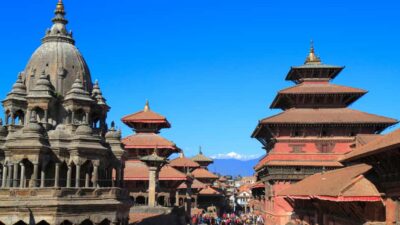

Bhaktapur & Nagarkot Day Tour with Lunch – Private/Group
Read our review →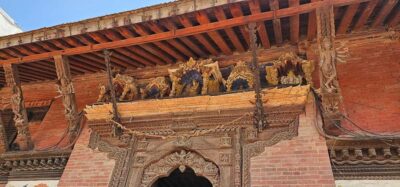
Bhaktapur Old City and Durbar Square Half-Day Tour
Read our review →Browse the lists this tour appears in