Reviewed · KATHMANDU TOURS
Life and spirituality tour of Kathmandu
Kathmandu’s spirituality shows up in everyday habits. I love how this tour connects Hindu and Buddhist practice to real city scenes, and I especially like the calm pace with hotel pickup so you can focus on the sites. One thing to consider is that entrance fees are extra, and parts of the day can involve some walking on old surfaces.
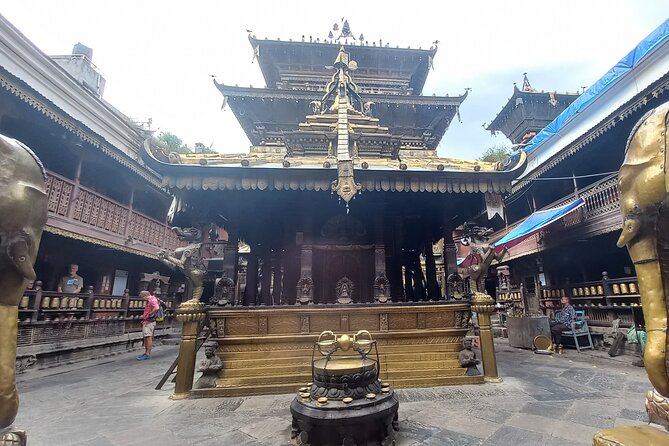
What makes this outing work is the mix of big-name sacred places and human-scale details. You’ll hit Kathmandu Durbar Square and Patan Durbar Square for the craft and courtyard feel, then go to Pashupatinath Temple to see Hindu religious life up close, and finish at Boudhanath Stupa in the Little Tibet area. With an expert guide in an air-conditioned vehicle plus bottled water, it stays comfortable even when the spiritual sites are anything but quiet.
In This Review
- Key highlights you’ll feel fast
- A Kathmandu day built around living Hindu and Buddhist life
- Getting picked up, staying comfortable, and keeping the day smooth
- Kathmandu Durbar Square courtyards: old architecture with a spiritual feel
- Patan Durbar Square: fine art, artisan culture, and living craft
- Pashupatinath Temple: Shiva, ascetics, and the intensity of ritual life
- Boudhanath Stupa: Little Tibet energy and Buddhist devotion in motion
- How long the route really takes, and how to time your day
- Price and value: what $55 covers, and what to budget
- What makes the guides matter here (and who you might get)
- Who this tour suits best
- Should you book the Life and Spirituality Tour of Kathmandu?
- FAQ
- How long is the Life and Spirituality Tour of Kathmandu?
- Is hotel pickup included?
- Is this tour private?
- What’s included in the $55 price?
- What is not included?
- Do I need to pay entrance fees?
- Is the tour wheelchair and stroller accessible?
- What sites are visited on this tour?
- When does the tour run?
- What is the cancellation policy?
Key highlights you’ll feel fast
- Private hotel pickup in Kathmandu means you start and end with less hassle
- Four major stops map out the city’s Hindu and Buddhist connections in one day
- Pashupatinath and Boudhanath show daily devotion, including major ritual traditions
- Wheelchair and stroller accessible to help more visitors join the day
- Durbar Square visits list free admission while other temple tickets are not included
- Guides like Indra, Ripu, Rabi, Raja, and Rudi earn strong praise for clear explanations
A Kathmandu day built around living Hindu and Buddhist life
This is not a checklist tour that sprints from one postcard to the next. The focus is the relationship between spirituality and daily routine. In Kathmandu, faith is not only something you see during ceremonies. It shapes the rhythm of streets, courtyards, markets nearby, and the way people gather at major sacred sites.
I also like that the route feels designed for understanding, not just sightseeing. You start with old Kathmandu’s courtyard-and-temple layout, then shift to Patan’s artisan identity. After that, the day turns toward big spiritual anchors at Pashupatinath and Boudhanath, where visitors can watch devotion in action rather than just read about it later.
One practical payoff: the day is already planned around about 6 to 8 hours, so you can build the rest of your Kathmandu schedule with more confidence. If you only have a short window in town, this route gives you a strong feel for what makes Nepal’s religious life tick.
More from Kathmandu worth a second look:
- Everest Base Camp Trek – 14 Days
★ 5.0 · 1,499 reviews - Everest Base Camp Trek
★ 5.0 · 842 reviews - Private Kathmandu Sightseeing Tour | UNESCO World Heritage sites
★ 5.0 · 756 reviews
Getting picked up, staying comfortable, and keeping the day smooth
The tour includes an air-conditioned vehicle plus bottled water. That sounds basic, but in Kathmandu it matters, especially if your day starts earlier and you want to keep energy for walking, looking, and asking questions. You also have the option for pickup from your hotel in Kathmandu, which takes away the mental load of figuring out transport on the fly.
This is a private tour, so it’s just your group. That tends to make questions easier, because the guide can respond without juggling a bigger crowd. The tour is also listed as wheelchair and stroller accessible, so you are not being forced into a one-size-fits-all style of travel.
Two small notes to plan around: entrance fees are extra, and the schedule includes multiple sites. So even with comfortable transport, you’ll still want to treat this as a full day effort, not a quick half-hour outing.
Kathmandu Durbar Square courtyards: old architecture with a spiritual feel
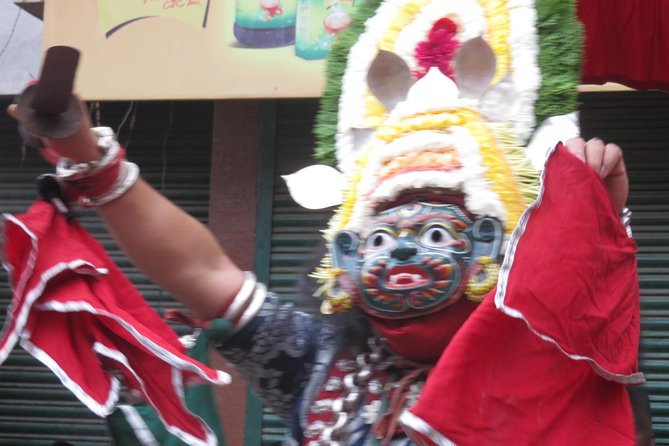
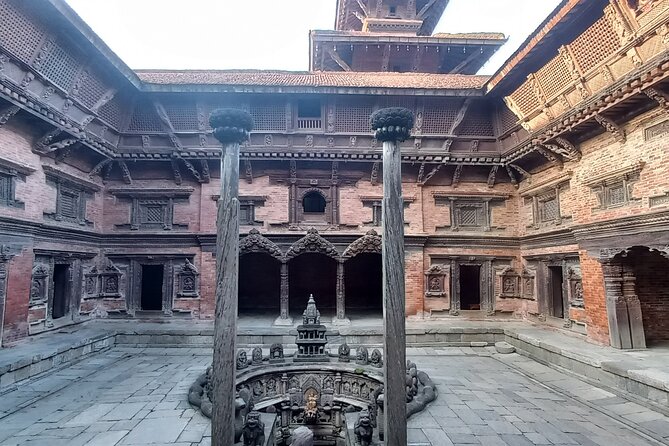
The morning portion starts with walking through old Kathmandu. You’ll explore medieval spiritual and cultural practices in a setting where courtyards and temple spaces are tightly connected. The tour description emphasizes hidden courtyards and Vastu architecture, which is the idea of sacred spatial design tied to how people build, live, and worship.
What I find useful here is the way this stop sets your “lens” for the rest of the day. When you see the courtyard layout, it becomes easier to understand why later sacred sites like Pashupatinath and Boudhanath feel so central to community life. This is the kind of context that makes the major temples more than just dramatic structures. It turns them into living places with an internal logic.
You’ll spend about 2 hours here, and admission is listed as free for this specific stop. Still, remember that your overall entrance-fee situation can change based on what you decide to pay for inside other sites later.
Patan Durbar Square: fine art, artisan culture, and living craft
Next you head to Patan, also known as Lalitpur. Patan has a reputation in the region for fine art and craft, and the tour frames it as a city where those skills still matter today. The description notes that historical craft from Patan made its way across places like India, Tibet, and China, which helps you see Patan as part of a wider cultural network, not an isolated corner.
This stop is also about 2 hours, with admission listed as free. That combination, craft-focused time plus free entry for the Durbar Square visit, is part of why the overall value stays strong, especially if you’re trying to keep spending controlled.
Where this really pays off is if you care about how spirituality and skill intersect. In many South Asian cities, religious life and craftsmanship are linked through temple design, religious objects, and the people who maintain and produce them. Even if you don’t know the technical terms, you can start recognizing how the built environment and local work connect.
Another way to spend the time in Nepal:
- Kathmandu: 7 UNESCO Sites with Lunch
★ 4.8 · 744 reviews - Everest Base Camp Helicopter Tour landing at Everest View Hotel
★ 5.0 · 668 reviews - Half day cooking class in Thamel kathmandu
★ 5.0 · 607 reviews - Everest Base Camp Trekking
★ 5.0 · 485 reviews
Pashupatinath Temple: Shiva, ascetics, and the intensity of ritual life
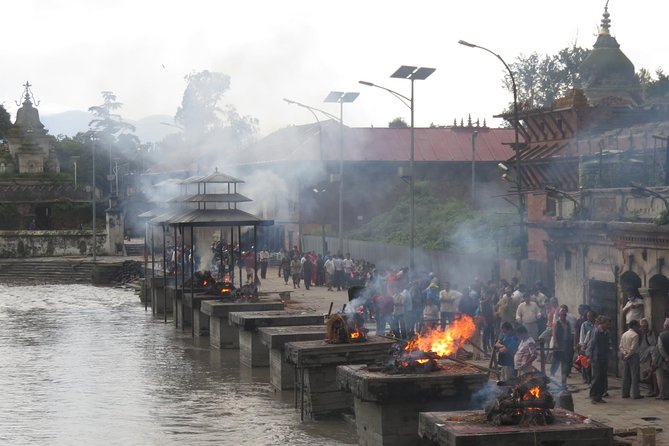
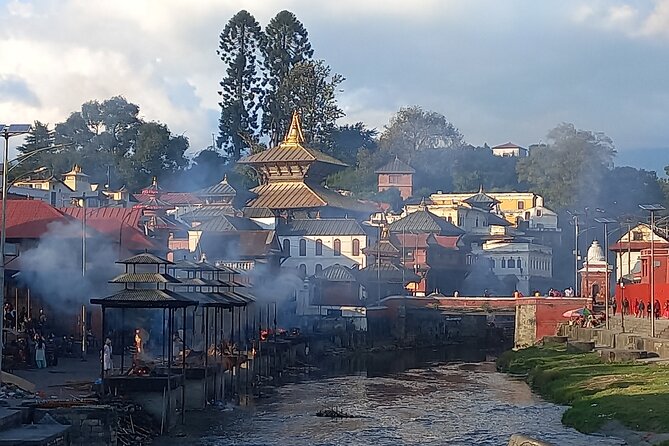
Pashupatinath Temple is the stop where the day shifts from courtyard-and-craft to large-scale religious practice. The tour description is clear about what you can expect to see: Hindu ways of life, Shiva connections, and a temple complex where serious devotion and major life events play out in public.
The most striking element highlighted in the tour notes is the presence of Hindu ascetics, listed as Shadu, plus open cremation activity. You may also see astrologers and devotees during your visit. If you’re the type who likes to understand religious practice by observation, this is the moment that makes the spirituality theme feel real.
This is also where timing matters. You’ll spend about 1 hour at Pashupatinath. That’s enough time to grasp the scope of the complex and understand what your guide is pointing out, but not long enough to become an in-depth ritual observer if you want to linger. So if you’re planning photos or want to focus on specific sights, go in with a calm pace and let the guide manage the flow.
Entrance fees for this stop are not included, so build that into your budget.
Boudhanath Stupa: Little Tibet energy and Buddhist devotion in motion
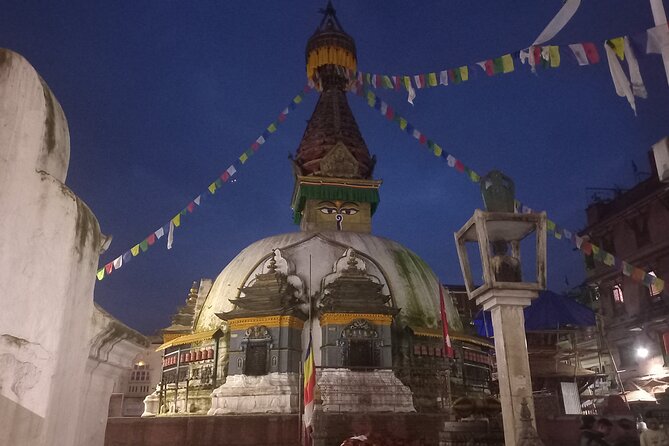
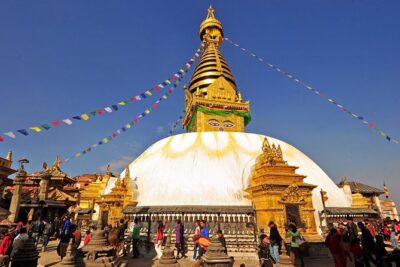
After Pashupatinath, the day moves to Boudhanath Stupa, which the tour calls the Little Tibet of Kathmandu. The big idea here is community devotion. The tour describes Boudhanath as continuously drawing pilgrims, including visitors from Himalayan villages, and mentions about 60 Tibetan Buddhist monasteries in the area.
You’ll spend about 1 hour at Boudhanath. This stop is often the easiest one to “feel” because there’s a rhythm to watching people arrive, gather, and participate in Buddhist practice. If you’re trying to understand how Buddhism operates in public space, Boudhanath gives you a clear visual answer.
It’s also where the guide’s explanations can make your visit stick. Multiple guides in the reviews are praised for connecting Hindu and Buddhist traditions in clear ways. People specifically name guides like Indra, Ripu, and Rabi for explaining complicated concepts in an easy, grounded style. That matters here, because the symbols are meaningful, and you’ll get more out of them with context.
As with Pashupatinath, entrance fees for Boudhanath are not included.
How long the route really takes, and how to time your day
The tour is planned for 6 to 8 hours. You can think of it as two parts: the first half focuses on old city layout and artisan identity, then the second half concentrates on major sacred anchors for Hindu and Buddhist practice.
Because there are multiple stops and drives between them, you should plan a realistic buffer around this outing. If you stack this tour with another timed activity, you risk feeling rushed at the places where you’ll want to slow down and ask questions.
Also note this tour is offered within 9:15 AM to 5:15 PM (Monday through Sunday), and the listed operating window runs from 11/13/2019 to 01/31/2027. If you’re visiting on a tight schedule, pick your start time based on daylight and your own energy level, since temples and monuments can take time to appreciate properly.
Price and value: what $55 covers, and what to budget

At $55 per person, this is priced like a full-day private city experience, not a cheap group bus day. What makes it feel like value is what’s included: an expert guide, an air-conditioned vehicle, bottled water, and hotel pickup in Kathmandu.
What’s not included matters just as much:
- Tips
- Lunch
- All fees and taxes
The itinerary itself lists admission as free for the two Durbar Square stops, but Pashupatinath and Boudhanath are not included. So the best way to judge your total cost is to treat the $55 as the core tour price, then add whatever entrance tickets apply at those temple sites.
Group discounts are mentioned, so if you’re traveling with friends or family, this can become a better deal per person. And since this is private, you’re not splitting attention across a crowd, which often makes the guide’s explanations more useful.
What makes the guides matter here (and who you might get)
This kind of tour succeeds or fails based on explanation. The best feedback patterns in the reviews focus on guides who connect the dots between Hinduism and Buddhism, and who can answer questions without making you feel like you should already know the terminology.
You may meet guides such as Indra, Ripu, Rabi, Raja, or Rudi. Several are praised for clear, calm communication and for helping visitors understand complicated spiritual ideas in ways that actually make sense. That is a big deal at Pashupatinath and Boudhanath, where symbols and ritual actions can look random if nobody provides context.
If you like learning by conversation, this is a tour where questions feel welcome. I’d take advantage of that, especially during the temple stops. Ask what you should be noticing, and use the guide to connect what you see to how people practice every day.
Who this tour suits best
This experience is a smart fit if you:
- want a single-day route that connects Hindu and Buddhist life through real places
- like guides who explain meaning, not just facts
- prefer hotel pickup and a private format over navigating on your own
It’s also a good choice if you care about UNESCO-era sites but don’t want only surface-level temple photos. The Durbar Square portions lean into courtyards and spatial design, and Patan adds the artisan angle. That combination gives you more texture than a route that only hits the biggest landmarks.
It may not be ideal if you want lots of downtime or a slow, open-ended wandering schedule. The plan is structured, and the day moves from stop to stop on purpose.
Should you book the Life and Spirituality Tour of Kathmandu?
If you’re trying to understand Kathmandu beyond monuments, this tour is an easy yes. The route is built around how spirituality shows up in ordinary life, and the inclusion of pickup, an expert guide, and bottled water makes it practical.
I’d book it if you:
- have limited time and want a full arc from old city courtyards to major sacred anchors
- enjoy asking questions during visits
- appreciate a guide who can explain Hindu and Buddhist traditions in plain language
I’d think twice only if you strongly dislike paying extra entrance fees, or if you want a lighter day with no added ticket costs. As long as you budget for site entrances and treat the schedule as a full-day plan, this tour gives you a thoughtful, memorable view of Kathmandu’s spiritual pulse.
FAQ
How long is the Life and Spirituality Tour of Kathmandu?
The tour is scheduled for about 6 to 8 hours.
Is hotel pickup included?
Yes. Pickup from your hotel in Kathmandu is offered.
Is this tour private?
Yes. It is a private tour, and only your group participates.
What’s included in the $55 price?
The tour includes an air-conditioned vehicle, bottled water, and an expert guide.
What is not included?
Not included are tips, lunch, and all fees and taxes.
Do I need to pay entrance fees?
Entrance fees are extra. The tour lists admission ticket free for Kathmandu Durbar Square and Patan Durbar Square, while Pashupatinath Temple and Boudhanath Stupa have admission tickets not included.
Is the tour wheelchair and stroller accessible?
Yes, the tour is listed as wheelchair and stroller accessible.
What sites are visited on this tour?
You visit Kathmandu Durbar Square, Patan Durbar Square, Pashupatinath Temple, and Boudhanath Stupa.
When does the tour run?
It runs Monday through Sunday from 9:15 AM to 5:15 PM, within the listed operating window.
What is the cancellation policy?
You can cancel for free up to 24 hours in advance for a full refund. If you cancel less than 24 hours before the experience starts, you will not receive a refund.
Latest additions near Kathmandu
- White Water River Rafting – 1 Day★ 4.3 · 3 reviews
- Traditional Momo Making Class★ 5.0 · 10 reviews
- Kathmandu to Pokhara Premium sofa bus ticket★ 4.0 · 17 reviews
- Ghorepani Poon Hill Trek★ 5.0 · 16 reviews
- Amazing 1 Day Trekking Experience in Kathmandu Nepal★ 5.0 · 24 reviews
- Ghorepani Poonhill Trek★ 5.0 · 5 reviews
- Walking tour of real Kathmandu through back streets.★ 5.0 · 3 reviews
- Wildlife Adventure in Chitwan Nepal★ 4.0 · 4 reviews
Kathmandu Tours, compared.

Private Kathmandu Sightseeing Tour | UNESCO World Heritage sites
Read our review →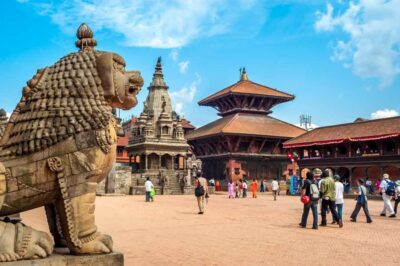

Everest Base Camp Helicopter Tour landing at Everest View Hotel
Read our review →