Reviewed · KATHMANDU TOURS
Full Day Sightseeing Tour of Kathmandu
Seven UNESCO sites in one packed day. This full-day Kathmandu Valley route is a practical way to see living religion and royal-era art, from the hilltop Swayambhunath stupa to the Durbar Squares. You ride with comfortable transport, follow an expert local guide, and hit the big names without turning your day into a logistics puzzle.
I love the tight small group setup, with a maximum of 15 people, which keeps the experience personal. I also like the simple hotel pickup and drop-off, because you avoid negotiating rides between neighborhoods.
One consideration: it is a long day, and entrance fees are not included, so you will want to budget extra before you go.
In This Review
- Key highlights worth waking up for
- Why this Kathmandu Valley tour feels efficient
- The rhythm of a 7-hour day: how it doesn’t feel rushed
- Stop 1: Swayambhunath Monkey Temple, hilltop stupa and viewpoints
- Stop 2: Boudhanath Stupa, Tibetan Buddhism in full scale
- Stop 3: Pashupatinath Temple by the Bagmati River
- Stops 4 and 5: Kathmandu Durbar Square and Patan Durbar Square
- Stop 6: Bhaktapur Durbar Square, medieval charm in one square
- Stop 7: Changu Narayan, old inscriptions and a quieter hilltop
- Guides, pacing, and the “long but worth it” feeling
- Price and value: what $40 really covers
- Entrance fees: budget responsibly for the 7 sites
- Who this tour fits best (and who should rethink)
- Tips to make the day smoother
- Should you book this Kathmandu Valley full-day tour?
- FAQ
- How long is the Kathmandu Valley full-day sightseeing tour?
- What does the tour cost?
- How many people are in the group?
- Are hotel pickup and drop-off included?
- Are entrance fees included in the $40 price?
- What sites are visited during the tour?
- Is food included on the tour?
- Does the tour include transportation and a guide?
- What if the weather is poor?
- Is there free cancellation?
Key highlights worth waking up for
- 7 UNESCO World Heritage Stops in one day, from Swayambhunath to Changu Narayan
- Small group cap of 15 for easier pacing and better questions
- Hotel pickup and drop-off to save energy on a busy Kathmandu day
- A choice of itinerary length (4 highlights or all 7 sites) depending on your time
- Guide value with praised local storytelling, including guide Sumit
- Mobile ticket for a smoother start at the meeting point
Why this Kathmandu Valley tour feels efficient
Kathmandu can be a bit chaotic, especially when you are trying to hop between temple areas, squares, and riverfront spots. This tour’s biggest value is that it compresses the valley’s top sites into one organized day, so you do not waste hours figuring out transport and timing.
I like that it is designed as a shared, small-group experience. You still get the benefit of others being there for context, but you are not stuck in a giant bus crowd where your questions vanish.
The route also matches how people actually experience Kathmandu Valley culture. You move through Buddhist and Hindu sacred spaces, then into royal-era architecture, then out to a quieter hilltop temple near Bhaktapur. It makes the day feel like a story you can follow, not a checklist you have to survive.
More from Kathmandu worth a second look:
- Everest Base Camp Trek – 14 Days
★ 5.0 · 1,499 reviews - Everest Base Camp Trek
★ 5.0 · 842 reviews - Private Kathmandu Sightseeing Tour | UNESCO World Heritage sites
★ 5.0 · 756 reviews
The rhythm of a 7-hour day: how it doesn’t feel rushed
The tour runs about 7 hours and typically keeps each stop around one hour. That timing matters in Kathmandu, where a few extra minutes at each location can snowball fast in traffic or lines.
You will start with pickup, then use the day’s transit to cover distance across the valley cities. You also get bottled water, plus parking and guided transportation included, which keeps your head in the sights instead of the details.
One smart thing to plan for: it is a weather-dependent activity. If conditions are poor, you may be offered a different date or a refund, so keep some flexibility in your schedule.
Stop 1: Swayambhunath Monkey Temple, hilltop stupa and viewpoints
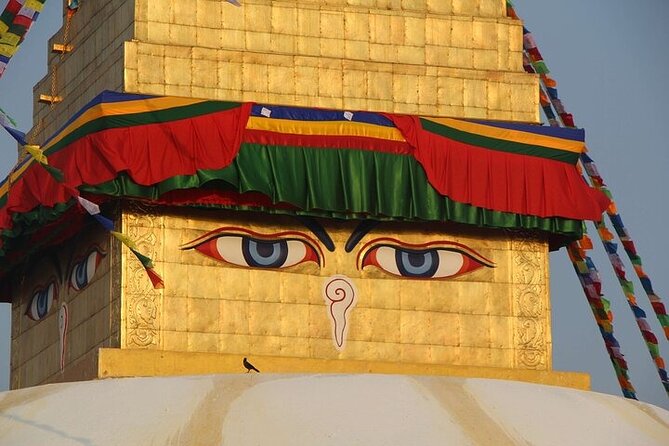
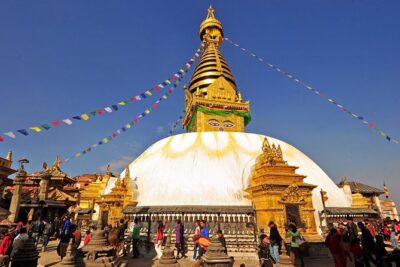
Swayambhunath sits on a small hilltop to the west of Kathmandu Valley, and that location is part of the point. You get a classic stupa scene with a bright white dome and the famous “watchful” eyes, plus wide views over the city.
This is the kind of stop where you will notice how faith lives in the everyday. You will see layers of Buddhist symbolism and everyday movement around the site, not just a museum-like atmosphere.
Practical note: plan for the hill and the walking. If you want photos, go when you can stay calm and take your time. This place rewards slow looking, especially if you like to notice details on stonework and painted surfaces.
Stop 2: Boudhanath Stupa, Tibetan Buddhism in full scale
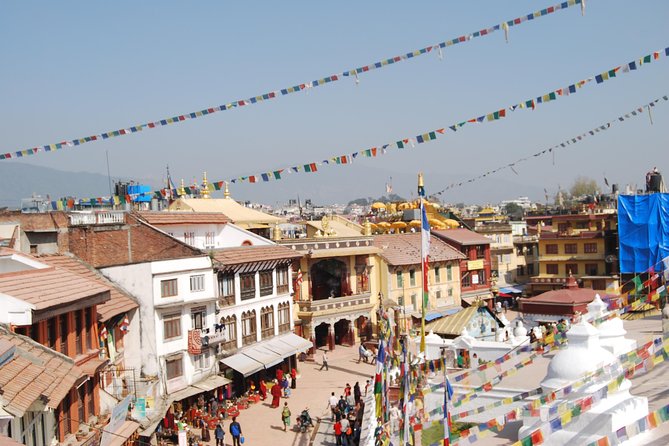
Next comes Boudhanath Stupa, one of Nepal’s most prominent centers for Tibetan Buddhism. The scale here is the headline, with a massive stupa and the mandala design that gives the whole setting a strong visual rhythm.
You will also see colorful prayer flags and lots of reverent movement. It is a good stop for understanding how Kathmandu’s religions overlap in daily life. People come to this space with different reasons, but the atmosphere feels focused.
This is also a great place to pause for a moment before the day shifts into the royal squares and Hindu temple sites. If you are feeling temple fatigue by hour two, this kind of open, iconic stop can reset you.
Another way to spend the time in Nepal:
- Kathmandu: 7 UNESCO Sites with Lunch
★ 4.8 · 744 reviews - Everest Base Camp Helicopter Tour landing at Everest View Hotel
★ 5.0 · 668 reviews - Half day cooking class in Thamel kathmandu
★ 5.0 · 607 reviews - Everest Base Camp Trekking
★ 5.0 · 485 reviews
Stop 3: Pashupatinath Temple by the Bagmati River
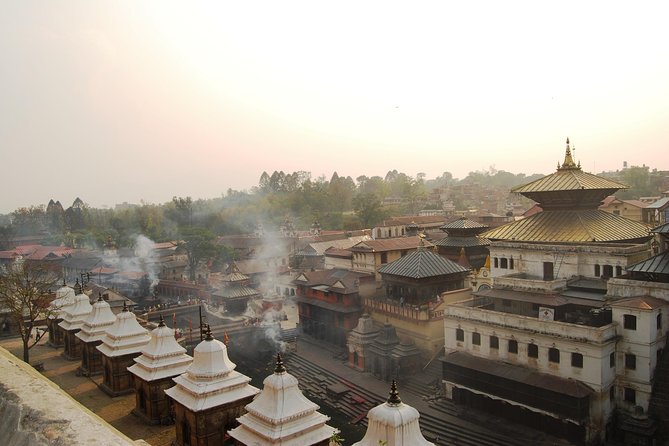
Pashupatinath is Nepal’s most sacred Hindu temple dedicated to Lord Shiva, and it is set on the banks of the Bagmati River. The setting alone helps you understand why this site is so powerful to visitors.
This stop stands out for its architecture and ritual spaces, including the cremation ghats that are part of the riverbank landscape. It is not a “quick photo and move on” location, so treat it with respect and give yourself time to absorb what is happening around you.
Practical tip: dress modestly, and be ready for the fact that you will be sharing the space with worshipers and ceremonies. If you have questions, a good guide makes a big difference here, because they can explain what you are seeing without turning it into a lecture.
Stops 4 and 5: Kathmandu Durbar Square and Patan Durbar Square
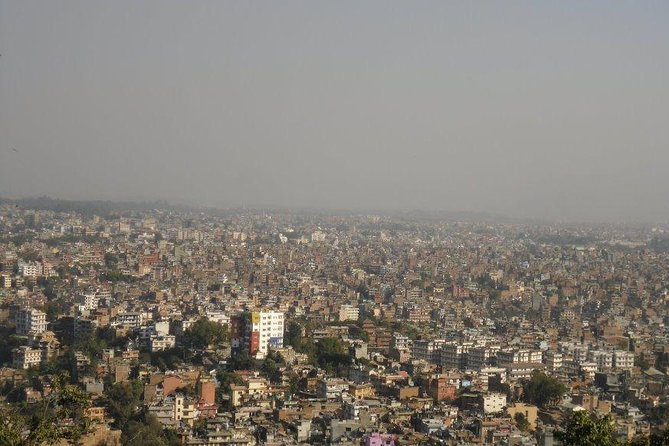
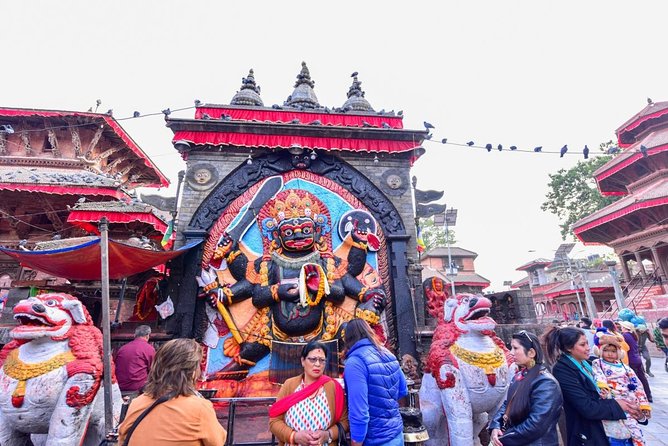
After the riverfront, the day shifts into royal-era Kathmandu. Kathmandu Durbar Square is a historic royal palace complex with striking architecture and intricately carved wooden buildings. It was the ancient seat of the kings, so you get a sense of power and artistry built into the stone and wood.
Then you move to Patan Durbar Square, about 8 kilometers from Kathmandu. Patan is another royal complex, and the Newar architecture and craft details are the main attraction. Think of these squares as two sides of the same coin: related styles, different angles, and enough variation to keep it interesting.
What I like about pairing the squares back-to-back is that you start spotting patterns fast. You begin to recognize carving styles, layout choices, and the way buildings frame courtyards and open spaces. It makes your eye sharper even if you are tired by midday.
Stop 6: Bhaktapur Durbar Square, medieval charm in one square
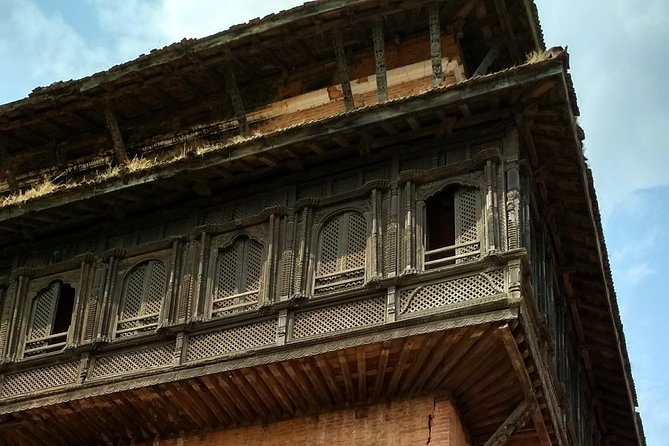
Bhaktapur’s Durbar Square is known for its preserved heritage and that “medieval charm” feeling. It is often a favorite because the density of detail can make the place feel almost like it is holding still while you move through it.
This stop also gives you a different pace from the larger Kathmandu city center. You may find it easier to slow down and look at the relationships between temples, courtyards, and the wider square.
Practical note: you are in for a lot of walking across uneven surfaces. If your knees are sensitive, take small breaks. You will lose less time than you think, because rushing in these squares usually leads to missed details and more fatigue later.
Stop 7: Changu Narayan, old inscriptions and a quieter hilltop
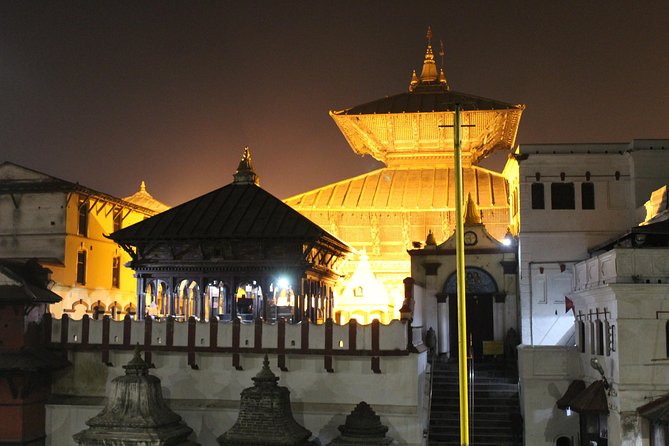
The last stop is Changunarayan (Changu Narayan), on a hilltop near Bhaktapur. This is one of the oldest Hindu temples in Nepal and is known for exquisite stone inscriptions and intricate woodwork.
I like ending here because it feels different from the palace squares. The focus shifts to age and craft, and you get a quieter moment to reflect after the busier urban sites.
This is also a good stop if you want to connect the dots between centuries of Nepal’s artistic traditions. If you enjoy reading and close-looking, the inscriptions and woodwork are the kind of details that reward patience.
Guides, pacing, and the “long but worth it” feeling
The tour’s quality often comes down to the guide. In the experiences shared, Sumit is praised for keeping things clear and making sure you understand what you are seeing at each stop. That matters, because at sites like Pashupatinath and the Durbar Squares, context turns random sights into meaningful ones.
The day is long, yes. But the structure helps. Each stop has a defined time window, so you do not feel stuck waiting around while other people drift. It keeps you moving through the valley’s highlights without turning your schedule into stress.
And because it is a small group, you can usually ask practical questions that help you navigate etiquette, photo boundaries, and what is worth noticing first.
Price and value: what $40 really covers
The base price is $40.00 per person, and it is often booked about 11 days in advance. That matters because you generally want to lock in your day early enough to fit your Kathmandu schedule.
What you get for that price is the setup: hotel pickup and drop-off, bottled water, parking, and transportation. The tour also covers the guide and driver costs, which is part of why the experience tends to run smoothly instead of feeling cobbled together.
What is not included is important: food and drinks, plus entrance fees for most major sites. The tour lists maximum prices that vary by nationality. Based on those maximum rates, the entrance fees could add up quickly, so you should budget extra cash or plan to pay on the day where required.
For a realistic planning mindset:
- Assume entrance fees are extra, not included in the $40
- Keep some cash ready for site entry and purchases at the temples and markets
- If you have limited time, the all seven UNESCO version is the most efficient way to pack them in
Entrance fees: budget responsibly for the 7 sites
Entrance fees are not included, and the tour provides site-specific maximum rates that can differ by nationality. Here is the list of what you may pay at the maximum rates:
- Swayambhunath Temple: up to $1.50
- Bauddhanath Stupa: up to $3.00
- Pashupatinath Temple: up to $7.50
- Kathmandu Durbar Square: up to $7.50
- Patan Durbar Square: up to $7.50
- Bhaktapur Durbar Square: up to $13.50
- Changu Narayan: listed as free in the stop details, though entrance fees can vary by nationality
In other words, the tour is a great deal if you show up ready for the additional temple fees. It is less of a bargain if you were hoping all costs were inside the $40.
Who this tour fits best (and who should rethink)
This is a smart choice if you:
- Want to see major UNESCO sites without managing transport between cities
- Have limited time in Kathmandu and want an organized day
- Prefer a small group over private chaos or big bus crowds
- Like guided context, especially for sacred spaces and architecture
You might rethink it if you:
- Need a very slow pace or want lots of free time to wander independently
- Have trouble with long walking days or uneven ground at multiple sites
- Are hoping for a fully “all-in” price with zero extras
If you are on your first visit to Kathmandu Valley, this kind of day is usually the fastest path to orientation. You learn where the key sites sit and what kinds of stories and details you should look for on your later self-guided days.
Tips to make the day smoother
A few practical things can dramatically improve the experience:
- Wear comfortable shoes, since several stops involve walking and uneven surfaces
- Dress modestly for temple areas and bring a light layer if the weather shifts
- Plan for extra spending for entrance fees since they are not included in the base price
- Bring a small amount of cash, since you may encounter paid entries and purchases
If you like photos, decide quickly at each stop what you want first, then relax. Sacred sites can be active and busy, and rushing usually leads to worse pictures and more stress.
Should you book this Kathmandu Valley full-day tour?
If you want maximum return for your time, I think this tour is worth booking. $40 buys you pickup, transportation, a local guide, and a structured route that hits the valley’s most famous heritage sites in about 7 hours. Add entrance fees on top, and it still often comes out as one of the more efficient ways to get the big UNESCO checklist done.
Book it if you are the type who likes organization but still wants real places, not staged stops. Skip it if you want long, lazy wandering or a fully fixed price with no extras.
If weather is good and your schedule can handle a packed day, this is a strong way to see Kathmandu Valley at full intensity, from stupa eyes to royal palace carvings to that quiet hilltop finish.
FAQ
How long is the Kathmandu Valley full-day sightseeing tour?
It runs for about 7 hours.
What does the tour cost?
The price is $40.00 per person.
How many people are in the group?
The maximum group size is 15 travelers.
Are hotel pickup and drop-off included?
Yes. Hotel pickup and drop-off are included.
Are entrance fees included in the $40 price?
No. Entrance fees are not included, and the tour lists separate amounts for several sites.
What sites are visited during the tour?
The itinerary includes Swaymbhunath, Boudhanath Stupa, Pashupatinath Temple, Kathmandu Durbar Square, Patan Durbar Square, Bhaktapur Durbar Square, and Changunarayan.
Is food included on the tour?
No. Food and drinks are not included.
Does the tour include transportation and a guide?
Yes. The tour includes private transportation if private is booked, and it includes the salary of the guide and driver.
What if the weather is poor?
This experience requires good weather. If it is canceled due to poor weather, you will be offered a different date or a full refund.
Is there free cancellation?
Yes. You can cancel up to 24 hours in advance for a full refund.
Latest additions near Kathmandu
- White Water River Rafting – 1 Day★ 4.3 · 3 reviews
- Traditional Momo Making Class★ 5.0 · 10 reviews
- Kathmandu to Pokhara Premium sofa bus ticket★ 4.0 · 17 reviews
- Ghorepani Poon Hill Trek★ 5.0 · 16 reviews
- Amazing 1 Day Trekking Experience in Kathmandu Nepal★ 5.0 · 24 reviews
- Ghorepani Poonhill Trek★ 5.0 · 5 reviews
- Walking tour of real Kathmandu through back streets.★ 5.0 · 3 reviews
- Wildlife Adventure in Chitwan Nepal★ 4.0 · 4 reviews
Kathmandu Tours, compared.
Private Kathmandu Sightseeing Tour | UNESCO World Heritage sites
Read our review →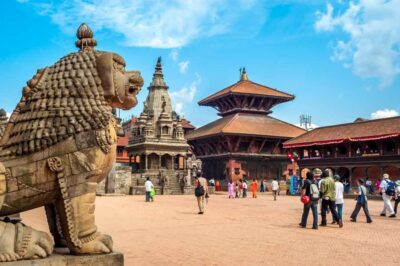
Everest Base Camp Helicopter Tour landing at Everest View Hotel
Read our review →