
Reviewed · PHOTOGRAPHY SESSIONS
Evening Photography Tour of Kathmandu
Evening devotion makes great photos here. I like the way this tour focuses on where to stand and what to notice, instead of just dropping you at famous spots. The guide’s job is to give you the context behind the rituals, so your photos feel meaningful, not random.
I also like that the format is efficient, you cover two major landmarks in about 3 to 4 hours with private transportation from central Kathmandu. One drawback to keep in mind: if you already saw most of these sites during daytime, you may feel the tour is more about ceremonies and atmosphere than brand-new sights.
In This Review
- Key highlights worth planning around
- Why this Kathmandu evening works for photography (Boudhanath + Pashupatinath)
- Price and value: what $102 buys you in real time
- The 3 to 4 hour plan: how the pacing feels in practice
- Stop 1: Boudhanath Stupa, parikrama and butter lamps
- Stop 2: Pashupatinath Temple aarti, chanting, and fire rituals
- Guide impact: when the right explanations save your shots
- What to bring (and what not to expect)
- Logistics that matter more than they sound: pickup, transport, and weather
- Who should book this tour (and who might want a different plan)
- Should you book Evening Photography Tour of Kathmandu?
- FAQ
- How long is the evening photography tour?
- Is pickup and transportation included?
- Which places will we visit?
- Are admission tickets included?
- Do I need to pay for dinner or drinks?
- Is this a private tour or a group tour?
Key highlights worth planning around
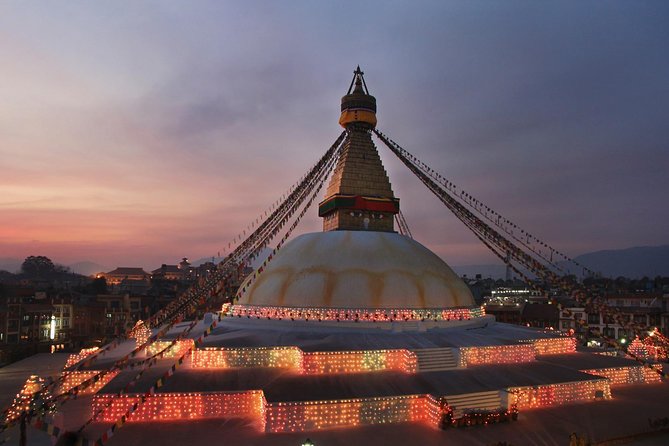
- Boudhanath at dusk: parikrama (circumambulation) around the lit stupa and butter lamps in use
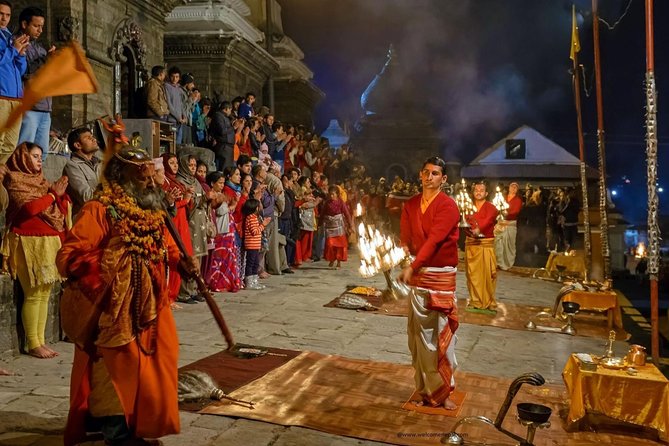
- Pashupatinath after dark: chanting, hymns, and a Hindu aarti ceremony with fire rituals
- Guide context that improves your photos: you learn what is happening and where the action is likely to be
- Private transport from central Kathmandu: easier than trying to time transit yourself
- A half-day schedule: designed for evening light and ceremonies without eating your whole day
- Good weather helps: the experience requires good weather, since evening light and timing matter
Why this Kathmandu evening works for photography (Boudhanath + Pashupatinath)
Kathmandu is full of temples, but evening changes the rules. At Boudhanath, you get the stupa glowing and crowds moving in a steady rhythm. At Pashupatinath, the sound and heat of ritual fire bring a different kind of motion to your frame.
What makes this tour practical for photography is that it treats the landmarks as living places, not museum stops. You are photographing devotees lighting butter lamps, monks and worshippers circling the stupa, and priests performing fire offerings. That means your images tend to capture human scale, not just architecture.
And because it is guided, you are not stuck guessing. Even if you know the big names, you still need help with timing, sightlines, and what to watch for as the ceremony unfolds. That is where this kind of tour earns its keep.
More from Kathmandu worth a second look:
- Everest Base Camp Trek – 14 Days
★ 5.0 · 1,499 reviews - Everest Base Camp Trek
★ 5.0 · 842 reviews - Private Kathmandu Sightseeing Tour | UNESCO World Heritage sites
★ 5.0 · 756 reviews
Price and value: what $102 buys you in real time
At $102 per person for a private half-day, the “value” question is really about tradeoffs.
You are paying for:
- Private transportation from central Kathmandu (so you are not coordinating rides at dusk)
- An English speaking city guide with a licensed background
- Admission ticket(s) included for both stops
- The structure to cover two important religious sites in one session
If you were to DIY this, you might save money on transport and guide fees, but you would likely spend that savings on time, taxis, and guesswork. Evening in Kathmandu is not the time you want to wing your logistics. The tour also matters because it is built around ceremonies, which means timing is part of the product, not an afterthought.
A second value angle is photo quality. The guide is there so you can spend your camera battery and attention on the moments that make good pictures, not on wandering.
The 3 to 4 hour plan: how the pacing feels in practice
This is designed as a half-day evening session, running about 3 to 4 hours. The itinerary keeps the travel component simple, with private pickup and transportation between the two sites.
Stop 1 is Boudhanath Stupa for about 1 hour. Stop 2 is Pashupatinath Temple for about 1 hour. In between, you are traveling, repositioning, and adjusting your camera settings as the light changes.
That pacing is usually a sweet spot. It is long enough to see more than one wave of activity, but not so long that you feel fried or rushed. Still, go in knowing it is intense, in a good way. You are going from Buddhist devotion to Hindu ritual fire, with crowds and movement at both.
Stop 1: Boudhanath Stupa, parikrama and butter lamps
Boudhanath is one of Kathmandu’s most important pilgrimage centers for Tibetan Buddhism. The stupa itself is iconic, but the real photo story is what people do around it.
At this stop, you focus on parikrama, which is the circumambulation around the stupa. Devotees keep moving in a loop, and that steady motion is perfect for photography because it gives your frame direction. You also get the stupa decorated and beautifully lighted up, which helps a lot when the light drops.
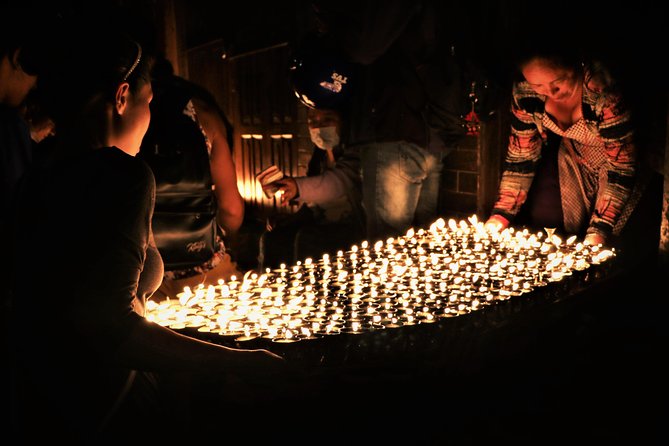
A key ritual moment here is the lighting of butter lamps. Devotees and monks light lamps and pray for the well-being of all sentient beings and world peace. When that happens in your view, it creates a rare combo: warm light sources in the foreground and a recognizable landmark in the background.
One practical drawback: ceremonies and crowds can make it hard to get a perfectly clear angle all the time. The tour’s benefit is that your guide helps you know where to look for moments, so you are not stuck waiting for the “perfect” spot.
Another way to spend the time in Nepal:
- Kathmandu: 7 UNESCO Sites with Lunch
★ 4.8 · 744 reviews - Everest Base Camp Helicopter Tour landing at Everest View Hotel
★ 5.0 · 668 reviews - Half day cooking class in Thamel kathmandu
★ 5.0 · 607 reviews - Everest Base Camp Trekking
★ 5.0 · 485 reviews
Stop 2: Pashupatinath Temple aarti, chanting, and fire rituals
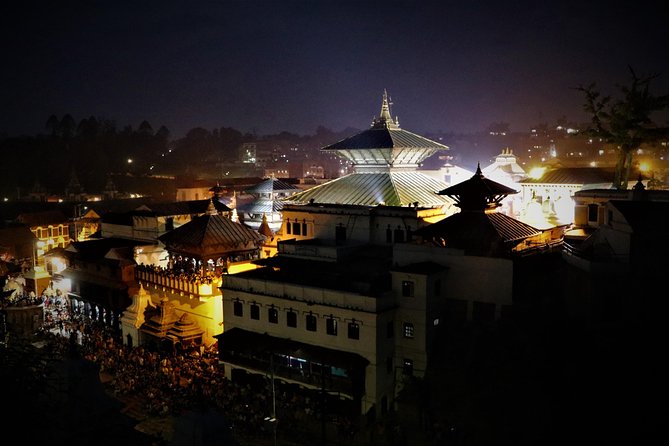
Pashupatinath is a major Hindu shrine dedicated to Lord Shiva. The name itself is meaningful: it means protector of all living beings. In the evening, the atmosphere shifts from temple calm to something far more kinetic.
This stop centers on evening aarti, a sacred ritual where light from a flame is offered to the gods. You can expect chanting and singing, with priests leading the fire offering. Devotees may dance in trance-like states during the ceremony, which can add striking gestures to your photos if you time your shots.
Fire rituals are bright and fast. That is both a blessing and a challenge. The blessing is obvious: you get moving light sources and dramatic contrast. The challenge is camera settings. You may need a steady hand, and you may want to accept that some moments will be partly blocked by people in front of you.
If you want an extra layer of context, the tour also frames what the tradition represents, including the idea that Lord Pashupatinath is known for the Tandav dance. Even if you do not photograph that concept directly, it helps you understand why the ceremony feels so alive.
Guide impact: when the right explanations save your shots
Two guide names show up in the booking feedback: Mr Bikash and Deepa. The consistent theme is not just friendliness. It is that the guide knows what to point out, and that knowledge helps you get better pictures in less time.
Here is what that means for your experience. You do not waste energy asking basic questions like where the action will be or when the ritual transitions. Instead, you can focus on your camera and on capturing the right moment.
The guide also helps with interpretation. Watching butter lamps and aarti is one thing. Understanding what parikrama is, what aarti represents, and why certain gestures happen gives your photos stronger meaning. It is the difference between a good image and a photo you are glad you took.
If you are traveling solo or you have only a short time in Kathmandu, this guide layer can be the difference between seeing the ceremony and actually understanding it.
What to bring (and what not to expect)
The tour is built around the idea that all you need is your camera. That is great if you pack light and want a focused session.
At the same time, check what is not included:
- Dinner is not included
- Bottled water is not included
- Alcoholic beverages are not included
So plan to eat before you go, or bring a small snack if you know you get hungry. Also, bring water because you will likely be standing and moving more than you expect, especially around crowds.
For your camera, evening religious ceremonies are a classic low-light situation. Even without perfect technical control, you can get strong results by preparing for:
- Faster shutter speeds for movement
- Higher ISO if your camera allows it
- Stabilization for steady framing when crowds slow down
And remember, you are photographing real worship. Keep your movements considerate and your spacing respectful. That will also help you avoid getting blocked at the exact moment the flame is offered.
Logistics that matter more than they sound: pickup, transport, and weather
You get pickup offered and private transportation included from central Kathmandu. That sounds like a small detail until you are dealing with evening timing. Private transport saves you time and reduces uncertainty when light is fading and ceremonies have specific rhythms.
The experience also requires good weather. Since the core moments happen outdoors around lit spaces, weather can affect visibility and comfort. If conditions are poor, the tour may be rescheduled or refunded, depending on what the provider offers at that time.
One more practical note: the tour is near public transportation, which can help if you want to get back on your own after the session. But with transport included, you can treat that as a backup, not a plan.
Who should book this tour (and who might want a different plan)
This tour is a great match if:
- You love photography but want less guesswork at major religious sites
- You care about context, not just landmark selfies
- You have limited time in Kathmandu and want two big sites in one evening
- You want private pacing, meaning it is only your group
It may be less ideal if:
- You already visited these specific places in daytime and want something completely new visually
- You prefer long museum-style explanations rather than short, moment-focused visits
- You dislike crowds, since both areas draw devotees and movement is part of the scene
That said, even if you saw the daytime version, the evening rituals change the feel completely. Lighting, sound, and human activity rewrite the look of the same spaces.
Should you book Evening Photography Tour of Kathmandu?
I think this is a smart booking if you want photos with meaning and you value a guide who can direct your attention fast. The combination of Boudhanath parikrama with butter lamps and Pashupatinath evening aarti with fire rituals is exactly the kind of evening contrast that makes a short tour worth it.
Book it if you are realistic about your expectations. This is not a technical workshop. It is a private, guided evening that gets you into the right flow of rituals and gives you context to photograph what matters. If that sounds like your kind of trip, you will likely enjoy it a lot.
FAQ
How long is the evening photography tour?
The tour lasts about 3 to 4 hours.
Is pickup and transportation included?
Yes. Pickup is offered, and private transportation from central Kathmandu is included.
Which places will we visit?
You will visit Boudhanath Stupa and Pashupatinath Temple.
Are admission tickets included?
Yes. Admission tickets are included for both stops.
Do I need to pay for dinner or drinks?
Dinner, bottled water, and alcoholic beverages are not included.
Is this a private tour or a group tour?
It is private. Only your group participates.
Latest additions near Kathmandu
- White Water River Rafting – 1 Day★ 4.3 · 3 reviews
- Traditional Momo Making Class★ 5.0 · 10 reviews
- Kathmandu to Pokhara Premium sofa bus ticket★ 4.0 · 17 reviews
- Ghorepani Poon Hill Trek★ 5.0 · 16 reviews
- Amazing 1 Day Trekking Experience in Kathmandu Nepal★ 5.0 · 24 reviews
- Ghorepani Poonhill Trek★ 5.0 · 5 reviews
- Walking tour of real Kathmandu through back streets.★ 5.0 · 3 reviews
- Wildlife Adventure in Chitwan Nepal★ 4.0 · 4 reviews
Photography Sessions, compared.
Paragliding Tandem Flight from Pokhara with Photos and Video
Read our review →Browse the lists this tour appears in