Reviewed · KATHMANDU TOURS
Discover Ranjana Lipi the Traditional Newari Script
Learning script by hand changes everything. This 3-hour Ranjana Lipi workshop in Kirtipur is a hands on way to understand Newari culture, with bamboo pen practice plus real food and drinks built into the class. I especially like the way the instructors guide your strokes, then you get to take home your work framed, not just a photo.
Two highlights I really like: you practice on canvas paper with traditional tools, and the meal includes the classic Samay Baji platter. One drawback to consider is language, since some instruction may not be in perfect English, so you will rely more on gestures and step by step guidance.
In This Review
- Key takeaways before you book
- Ranjana Lipi practice in Kathmandu: what you are really learning
- Bamboo pen, ink, and canvas paper: the hands on part
- Newari drinks in earthen cups: why it feels part of the culture
- Samay Baji platter: the meal that anchors the afternoon or evening
- Timing and location in Kirtipur: what this means for your day plan
- Price at $42: is it worth it for script practice and a framed memento?
- The small details that make the class feel organized
- What to expect when you show up
- Who this workshop is best for
- Book it or skip it? My take on the decision
- FAQ
- How long is the Ranjana Lipi workshop?
- What are the session times?
- Where do I meet for the workshop?
- What is included in the price?
- Is coffee or tea included?
- How large are the groups?
- What if the weather is bad?
- Is there a mobile ticket?
Key takeaways before you book
- Hands on Ranjana Lipi writing with a bamboo pen, ink, and canvas paper
- Samay Baji lunch and traditional drinks built directly into the workshop flow
- Small group size with a maximum of 15 travelers
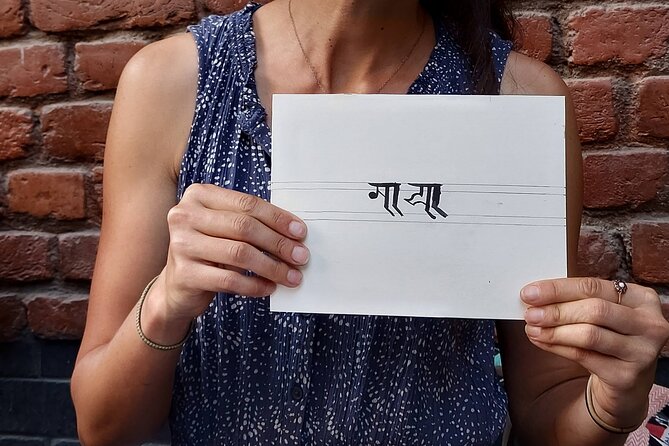
- Framed memento: you take your own Ranjana script home
- Two daily sessions (morning 8 am to 11 am, evening 5 pm to 8 pm)
- Inclusive culture touches like welcome Sagun and tika style hospitality mentioned in the program experience
Ranjana Lipi practice in Kathmandu: what you are really learning
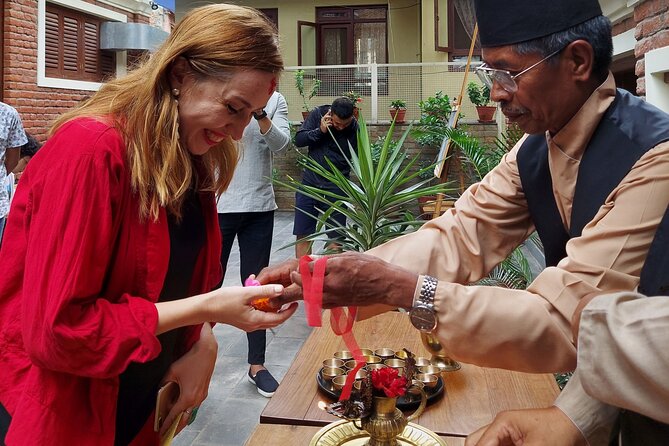
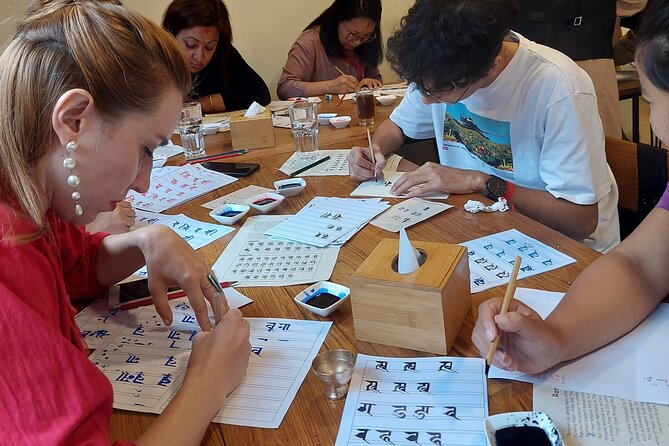
This is not a museum lesson where you watch someone else write. It is a short class where you learn to produce Ranjana Lipi letters using the traditional method, bamboo pen and ink on canvas paper. If you have ever wanted to understand why scripts look the way they do, this workshop gives you that muscle memory fast.
Ranjana Lipi is closely tied to Newari culture, and you will see that connection reinforced throughout the session. In practical terms, you learn how to form strokes correctly and consistently, because the class focuses on rules for letter shapes and how to standardize your writing. That focus matters even if you are a total beginner, because you are not just drawing pretty shapes. You are learning a system.
One of the most interesting things I took from the experience descriptions is how people connect the script to Buddhism and Newari religious art. For example, you may notice references to mantras like Om Mani Padme Hoon written in the Ranjana script in Buddhist scriptures and on thangka paintings. Even if you do not know the meaning right away, seeing that the script shows up in spiritual texts helps it feel real, not random.
More from Kathmandu worth a second look:
- Everest Base Camp Trek – 14 Days
★ 5.0 · 1,499 reviews - Everest Base Camp Trek
★ 5.0 · 842 reviews - Private Kathmandu Sightseeing Tour | UNESCO World Heritage sites
★ 5.0 · 756 reviews
Bamboo pen, ink, and canvas paper: the hands on part
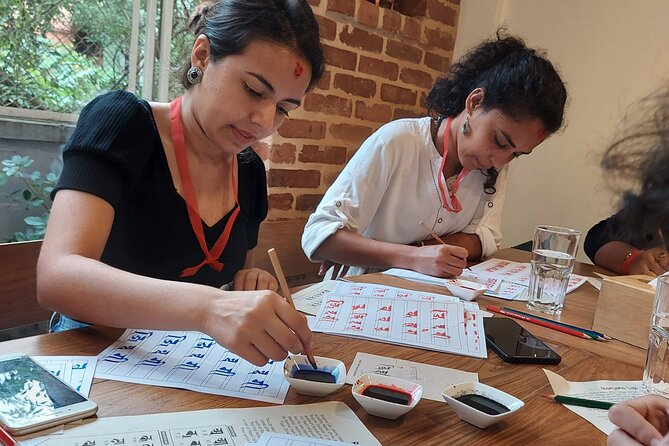
The workshop gives you the core tools: bamboo pens, ink, and paper. That sounds simple, but it is exactly what makes this kind of class work. When you use the same type of writing instrument as your instructor, you start to understand pressure, stroke speed, and how ink behaves on canvas paper.
You practice Ranjana Lipi strokes while following guidance from the instructor. Breaks and meals are woven in, so you do not feel like you are trapped at a desk for three hours. Still, this is a writing class, so expect to spend real time shaping letters and getting your lines cleaner.
A nice detail is that the class uses small, practical steps. Several experiences describe instructors as supportive and focused on guiding every stroke. If you want a structured outcome, like a script you can frame later, this teaching style helps.
Newari drinks in earthen cups: why it feels part of the culture
Between writing rounds, you sip a traditional Newari drink from an earthen cup. That matters more than it sounds. It is one of those small cultural signals that tells you the workshop is not only about the script. It is about how Newari life blends writing, ritual, food, and everyday hospitality.
The workshop also includes welcome snacks called Sagun. Program descriptions mention hospitality touches like tika style welcome and traditional snacks served alongside drinks. Again, those details are not just decoration. They set the tone that you are joining a local tradition for a short window of time.
If you are sensitive to alcohol, pay attention to the options included. The meal and drinks come with alcoholic or non alcoholic choices, so you can keep it comfortable.
Samay Baji platter: the meal that anchors the afternoon or evening
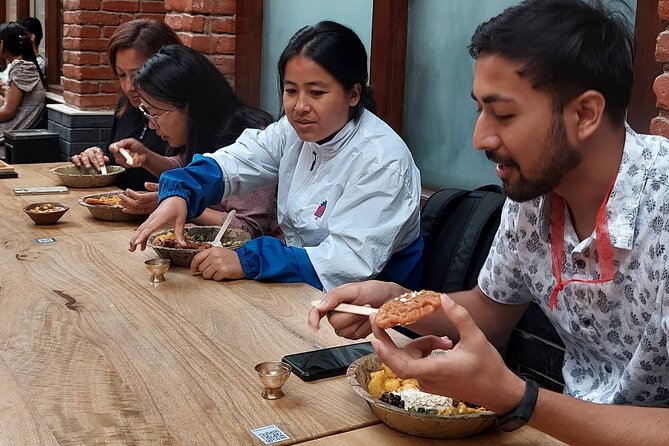
Food is not an afterthought here. Your included lunch is a Newari Samay Baji platter, and the workshop also includes snacks plus a drink. Samay Baji is one of those dishes that feels like more than one meal. It is a spread designed for sharing, and the variety helps you keep energy up while you practice writing.
Your platter includes Samay Baji with an alcoholic or non alcoholic drink. That pairing is useful because workshops run on an uneven rhythm: you write, you pause, you eat, you write again. Having the meal inside the experience keeps you from having to plan around where to eat in Kathmandu that day.
In several experiences, people highlight the food as extremely delicious and one of the reasons they felt fully satisfied. That is a fair expectation here because you do not just receive a snack. You get a platter meant to be a real Newari meal.
Also, you might not get coffee or tea as part of the included items. If you rely on caffeine to focus, plan to buy it separately.
Another way to spend the time in Nepal:
- Kathmandu: 7 UNESCO Sites with Lunch
★ 4.8 · 744 reviews - Everest Base Camp Helicopter Tour landing at Everest View Hotel
★ 5.0 · 668 reviews - Half day cooking class in Thamel kathmandu
★ 5.0 · 607 reviews - Everest Base Camp Trekking
★ 5.0 · 485 reviews
Timing and location in Kirtipur: what this means for your day plan
The experience runs about 3 hours, with two options:
- Morning session: 8 am to 11 am
- Evening session: 5 pm to 8 pm
Your meeting point is Jatra Restaurant, Chithu Rd, Kirtipur 44618, Nepal, and the activity ends back at the same meeting point. The location is described as near public transportation, which helps if you do not want to hire private transport for a short class.
Group size is capped at 15 travelers, which is a big deal in a writing workshop. It usually means instructors can correct your letter forms without you getting lost in a crowd. If you prefer a calmer class environment, this size works well.
One more practical note: confirmation is received at booking, so you should not have to chase details last minute.
Price at $42: is it worth it for script practice and a framed memento?
At $42 per person, the price is easiest to judge by what you actually take away. You are not just attending a talk. You receive materials (bamboo pen, ink, and paper), guided instruction, a meal centered on Samay Baji, welcome snacks, and a drink. On top of that, you get your script framed as a memento.
If you compare this kind of hands on workshop to classes where you only pay for instruction and then still have to add meals and supplies, this package has stronger value. The framed memento also changes how you perceive the workshop, because you leave with something physical you made.
What is not included is also clear. Coffee and tea are not included, and personal expenses and tips are on you. Private transportation is also not included. If you are planning to take taxis or rideshares anyway, you can absorb that cost. If you already travel on public transport, the lack of included transport is less of a concern.
The small details that make the class feel organized
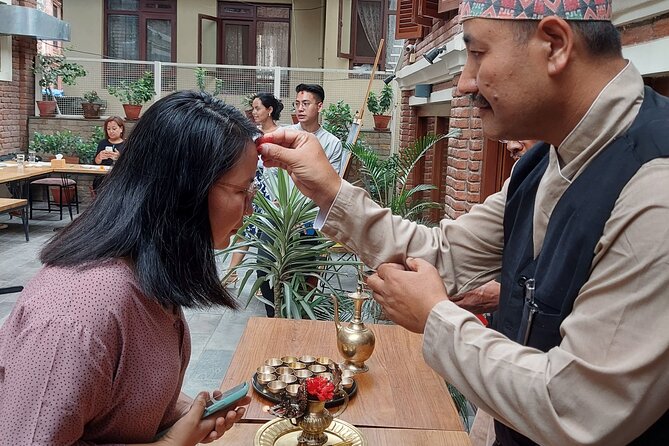
The experience is described as well managed and executed in a way that makes participants happy and satisfied. That is not just a vibe. In a short workshop, timing and pacing matter, because you need enough instruction time to make progress on letters and enough food time to reset.
A few elements show the organization is intentional:
- Welcome snacks and drinks start the session smoothly
- Writing instruction continues with support through every stroke
- Breaks are built into the experience so you do not burn out
- You finish with a finished, framed work rather than a messy draft
In some descriptions, instructors did not speak perfect English. Even with that, the workshop appears to rely on hands on teaching and clear guidance, so you still can follow along. If you know even basic words and you keep your attention on what the instructor demonstrates, you should be fine.
What to expect when you show up
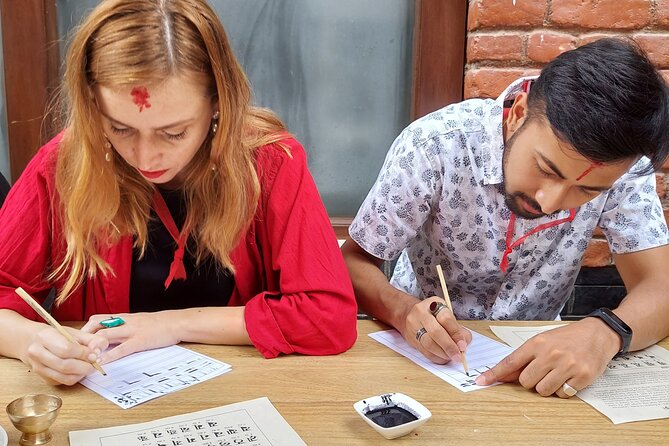
You will start at Jatra Restaurant in Kirtipur. Expect a welcome with traditional snacks, and then you will begin writing practice with the bamboo pen and ink. You should plan to arrive with comfortable clothes and a mindset that your first strokes might not look like your final strokes.
The schedule is short enough that you will not get bored, but long enough for real progress. That is the balance you want in a workshop.
You will also take breaks to eat Newari dishes and drink, including Samay Baji. The meal timing also makes sense because writing can be repetitive. Eating helps you come back with fresh focus for the last portion of the session.
At the end, you leave with your own Ranjana script framed as a memento. That final step is important, because it turns a class into a souvenir with meaning.
Who this workshop is best for
This is a great fit if you want a cultural activity that does not feel like a checklist. You are learning a script used within Newari culture, not just observing it from a distance.
It is especially suitable for:
- Beginners who want hands on learning with instructor support
- People who enjoy writing, art, or calligraphy style activities
- Travelers who want a food and culture experience in one package
- Small groups or families who like shared activities
If you are traveling alone and you worry about not speaking the same language as the instructor, the workshop’s style is still workable. The class is built around demonstrating strokes and correcting with guidance, not on long lectures.
If you strongly dislike alcohol or you prefer to avoid it, choose the non alcoholic options for the included drinks.
Book it or skip it? My take on the decision
You should book this workshop if you want a short, structured way to connect to Newari culture through Ranjana Lipi writing and an actual Newari meal. The combination of tools, instruction, included Samay Baji, and a framed memento makes the $42 price feel more like a package than a simple entry fee.
You might skip it if you only want sightseeing, not making things with your hands. Also consider the language factor. If you need everything explained in fluent English with lots of background lectures, you may find the experience more visual and instructional than talk heavy.
FAQ
How long is the Ranjana Lipi workshop?
It runs for about 3 hours.
What are the session times?
There is a morning session from 8 am to 11 am, and an evening session from 5 pm to 8 pm.
Where do I meet for the workshop?
You meet at Jatra Restaurant on Chithu Rd, Kirtipur 44618, Nepal, and the activity ends back at the meeting point.
What is included in the price?
The price includes a Newari Samay Baji platter with an alcoholic or non alcoholic drink, welcome Sagun snacks with an alcoholic or non alcoholic drink, bamboo pens, ink, and papers, the Ranjana Lipi instructor, and a framed memento of your own Ranjana script.
Is coffee or tea included?
No, coffee and tea are not included.
How large are the groups?
The workshop has a maximum of 15 travelers.
What if the weather is bad?
The experience requires good weather. If it is canceled due to poor weather, you will be offered a different date or a full refund.
Is there a mobile ticket?
Yes, the experience uses a mobile ticket.
If you tell me what time you are in Kathmandu and whether you prefer morning or evening, I can help you choose the better session based on your day plan.
Latest additions near Kathmandu
- White Water River Rafting – 1 Day★ 4.3 · 3 reviews
- Traditional Momo Making Class★ 5.0 · 10 reviews
- Kathmandu to Pokhara Premium sofa bus ticket★ 4.0 · 17 reviews
- Ghorepani Poon Hill Trek★ 5.0 · 16 reviews
- Amazing 1 Day Trekking Experience in Kathmandu Nepal★ 5.0 · 24 reviews
- Ghorepani Poonhill Trek★ 5.0 · 5 reviews
- Walking tour of real Kathmandu through back streets.★ 5.0 · 3 reviews
- Wildlife Adventure in Chitwan Nepal★ 4.0 · 4 reviews
Kathmandu Tours, compared.

Private Kathmandu Sightseeing Tour | UNESCO World Heritage sites
Read our review →
Everest Base Camp Helicopter Tour landing at Everest View Hotel
Read our review →