Reviewed · KATHMANDU TOURS
Cook and Dine with a Local family
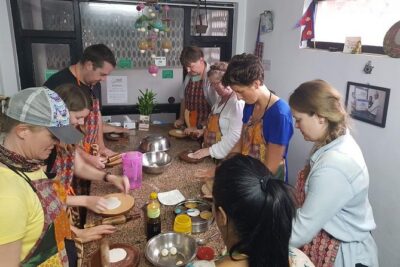
A family dinner in Nepal beats any restaurant meal. This cooking class pairs a market spice run with real time in a local home, all in a small group with English help. I like the mix of hands-on cooking and cultural conversation, not just a quick demo.
One thing to think about: this experience runs only in good weather, so if clouds or rain roll in, the timing can change.
In This Review
- Key highlights you will feel right away
- Why cook with a Kathmandu family, not a restaurant kitchen
- The 3:00 pm market run: spices, ingredients, and how to shop smarter
- Back at the home: learning dal bhat step by step
- Spice learning that actually helps you cook later
- Dinner with the family: more than just the food
- Pickup, private transport, and a small group pace
- Price and what $45 includes in real value
- What to expect from the pace and group dynamic
- Weather and timing: the small details that matter
- Who should book this cooking class, and who might skip it
- Should you book Cook and Dine with a Local family?
- FAQ
- What is included in the Cook and Dine with a Local family experience?
- How long is the experience?
- What time does the tour start in Kathmandu?
- Is pickup offered?
- How many travelers are in the group?
- Is there a mobile ticket?
- Where does the experience start and end?
- What dish will I learn to cook?
- Does the experience run in bad weather?
- What is the cancellation policy?
Key highlights you will feel right away
- Market shopping for spices so you understand what makes Nepali food taste the way it does
- Dal bhat cooking practice with a recipe that is easy to follow
- A home visit with an English-speaking host family that turns dinner into a conversation
- Small group size (up to 4 travelers) for a more personal pace
- Dinner included, plus pickup and private transportation to keep it stress-free
Why cook with a Kathmandu family, not a restaurant kitchen
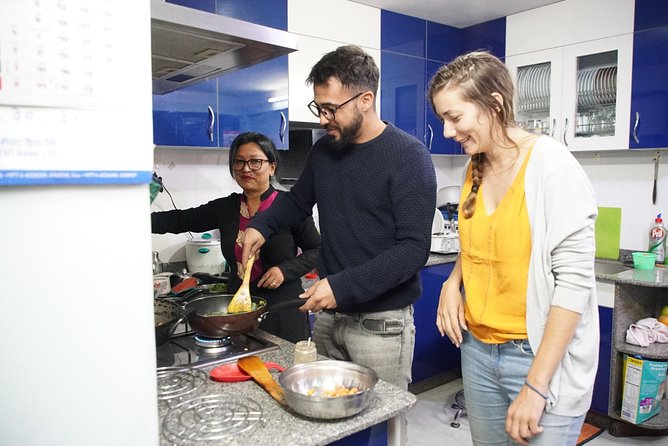
In Kathmandu, food can be everywhere, but a family kitchen teaches something different: how daily choices shape flavor. You are not just learning a dish. You are learning why ingredients are used, how spices are handled, and how a meal fits into everyday life.
I especially like that the class is built around a local family, not a “show kitchen.” You start with the basics, then carry that knowledge into dinner. That makes the food feel earned, and it helps you remember it later when you try cooking at home.
There’s also a social payoff. A host family can explain what something means on their end, not just what it tastes like. If you enjoy asking normal questions like how meals are timed or what spices people reach for most, this is a strong match.
More from Kathmandu worth a second look:
- Everest Base Camp Trek – 14 Days
★ 5.0 · 1,499 reviews - Everest Base Camp Trek
★ 5.0 · 842 reviews - Private Kathmandu Sightseeing Tour | UNESCO World Heritage sites
★ 5.0 · 756 reviews
The 3:00 pm market run: spices, ingredients, and how to shop smarter
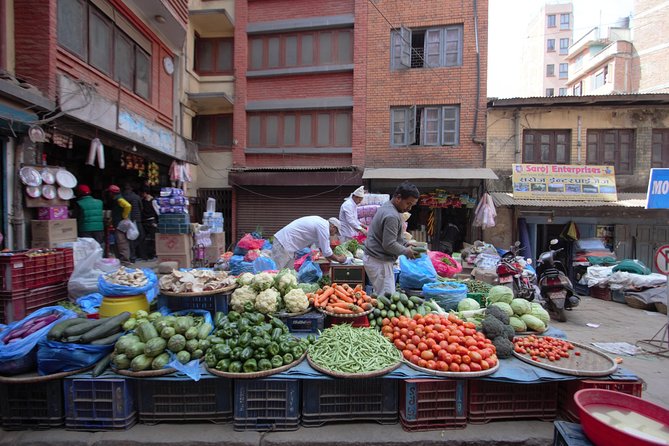
The experience starts at 3:00 pm, and you begin by going to a local market with your host family. This is where the class becomes practical. You see the ingredients up close, and you get a chance to pick what goes into the meal with guidance.
The market stop is not just a photo op. It is the part that makes the cooking stick. When you can connect a jar or spice pile to the dish you will cook later, you learn faster and you waste less effort at home.
Here is what I’d pay attention to during the shopping:
- How spices are described and used (not just their names)
- Any smell differences between dried spices that look similar
- How vegetables are chosen for the meal you will cook
Also, because this is an English-speaking host family, you can ask questions without playing guessing games. That matters if you want real understanding, not just a recipe you will forget.
Back at the home: learning dal bhat step by step
Dal bhat is the classic Nepali meal for a reason. It is comforting, it is versatile, and it teaches fundamentals of seasoning. In this class, you learn how to make it in a home setting, with English-speaking support so you can follow along.
The cooking approach is simple and repeatable: you cut the vegetables, then mix them with a set of spices so the dish becomes full of flavor. The spices called out for the class include turmeric, cumin, ginger, and garlic. You are not memorizing a huge ingredient list. You are building a foundation.
What makes this lesson valuable is the method. When someone shows you how they combine spices and vegetables for a daily meal, you start understanding the logic. You also learn the pacing of cooking at home, which is usually slower and more flexible than restaurant service.
Potential drawback to know: because you are working in a family kitchen environment, the rhythm may feel more relaxed and personal than a professional classroom. If you prefer rigid timing and strict “lesson plans,” you might find the flow less formal. If you like a friendly pace, that’s part of the charm.
Spice learning that actually helps you cook later
Many cooking classes give you instructions. Fewer help you understand how to choose, combine, and adjust. This one does that by giving you the spice shopping step and then tying it to what you cook.
In practical terms, you should walk away with:
- A stronger sense of what turmeric, cumin, ginger, and garlic contribute to flavor
- A mental map for how vegetables and spices work together in dal bhat
- Confidence repeating the recipe steps after you get home
Even if you are not a “spice person,” the class structure nudges you in that direction. You handle ingredients, you hear explanations, and you cook. That trio turns new knowledge into muscle memory.
If your goal is to bring Nepali cooking beyond one restaurant visit, this is a better path than only watching someone cook.
Another way to spend the time in Nepal:
- Kathmandu: 7 UNESCO Sites with Lunch
★ 4.8 · 744 reviews - Everest Base Camp Helicopter Tour landing at Everest View Hotel
★ 5.0 · 668 reviews - Half day cooking class in Thamel kathmandu
★ 5.0 · 607 reviews - Everest Base Camp Trekking
★ 5.0 · 485 reviews
Dinner with the family: more than just the food
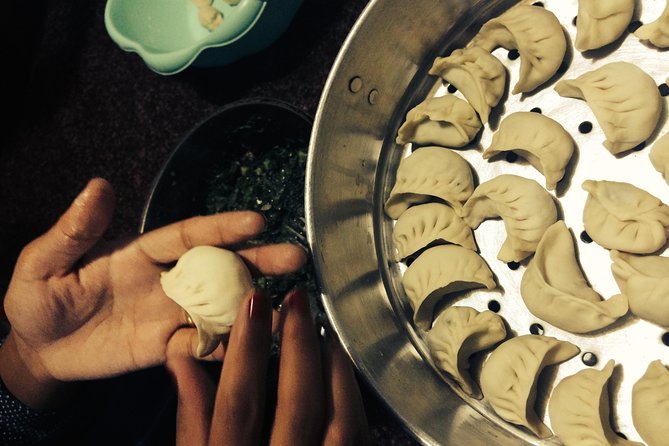
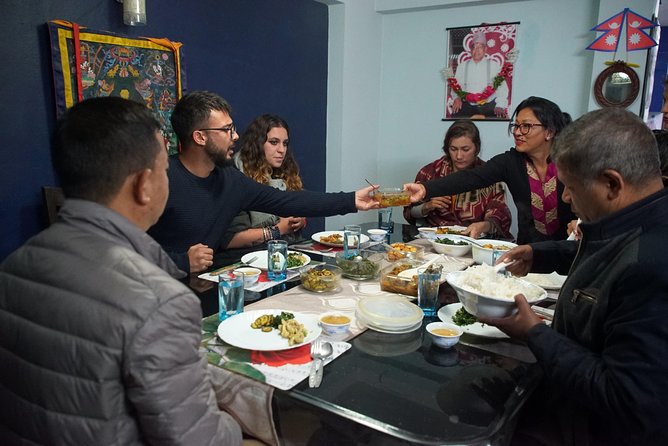
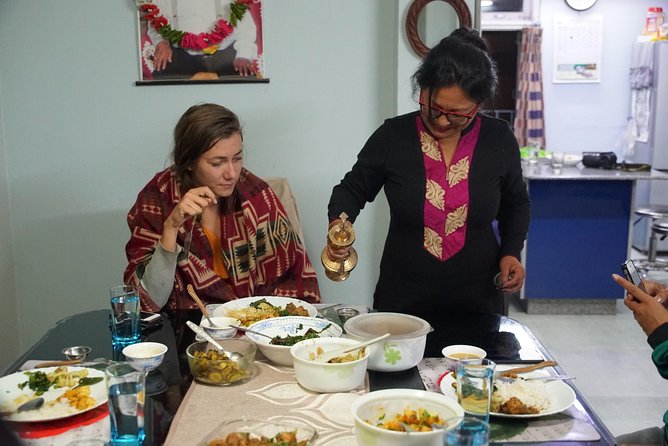
After shopping and cooking, you share the dinner at the family home. That is where the experience becomes truly memorable. Eating together turns the meal into a cultural exchange, not just a checkbox activity.
The class is designed so you can witness daily life and interact with the host family. That means you might find conversation topics come naturally around food, routines, or what everyday meals look like where the family lives. It also helps you see how a home kitchen operates when the goal is feeding people, not entertaining a group.
If you want to get the most out of the dinner portion, ask questions that invite storytelling. Things like:
- How the family uses spices on normal weekdays
- Which parts of the meal feel most “home” to them
- What they serve alongside dal bhat
Because the family provides English-speaking support, you should be able to keep the exchange flowing without special effort.
Pickup, private transport, and a small group pace
Logistics matter in Kathmandu. This experience offers pickup and uses private transportation, which is a big quality-of-life upgrade. You do not have to navigate the city on your own right before a market visit and a cooking session.
The small group size also changes the feel. With a maximum of 4 travelers, you are less likely to be stuck waiting your turn. That usually means more time for questions and more individualized attention in the kitchen.
You start at the meeting point near Royal Mountain Travel on Lal Durbar Marg in Kathmandu, and the activity ends back at the same meeting point. That round-trip setup reduces the stress of figuring out a final drop-off after dinner.
Duration is listed as about 5 hours, so it is long enough to do the market, cook, and eat. It is not so long that it eats your whole evening.
Price and what $45 includes in real value
At $45.00 per person, you are paying for more than a recipe. This price includes:
- Dinner
- Spice shopping at the local market
- English-speaking host family
- Private transportation
When you compare that to typical “cooking class only” options, the value is clearer. Transport plus dinner are usually what push classes into higher costs. Here, those essentials are folded in, so you are not paying twice.
You are also buying something harder to measure: access. Market shopping with a local family, then cooking at a home kitchen, is the kind of experience you cannot easily DIY without local connections.
In other words, the cost feels reasonable for a small-group, full-context evening. If you enjoy authentic cultural interactions and want to learn the “why” behind Nepali flavors, you will likely feel good about the spend.
What to expect from the pace and group dynamic
This is not a fast, high-production class. It is a family-led activity that moves at a human pace. The upside is that the experience can feel friendly and personalized. The downside is that you might not get a strict, timed “lecture” style lesson.
Since the group is capped at four, your host family can adjust attention based on your questions. That is helpful if you are new to cooking spices or if you want to understand substitutions.
If you prefer quiet solo activities, this could feel a bit more social than you like. If you enjoy talking, asking questions, and learning in a warm setting, you’ll probably find it just right.
Weather and timing: the small details that matter
This experience requires good weather. That is not a trivial note. A market stop and a home visit can become unpleasant if rain is heavy, paths are slippery, or visibility is poor.
If you book, I recommend planning to keep your evening flexible in case the schedule shifts. The good news is that if the activity is canceled due to poor weather, you will be offered a different date or a full refund.
Timing-wise, starting at 3:00 pm gives you an afternoon rhythm. You get time to slow down after lunch, then you spend the afternoon shopping and cooking, finishing with dinner in a home setting.
Who should book this cooking class, and who might skip it
I think this class is ideal for:
- Food travelers who want more than a taste, they want process
- People interested in Nepali comfort foods like dal bhat
- Travelers who enjoy market visits and ingredient shopping
- Small-group learners who want time to ask questions
You might consider skipping if:
- You hate markets and prefer purely indoor activities
- You need a very structured, teacher-style class with tight timing
- You are sensitive to changes if weather is bad, since the experience requires good conditions
If your main goal is a cultural evening with real food learning, this fits well.
Should you book Cook and Dine with a Local family?
Yes, if you want a real Kathmandu food story tied to daily life, not just a meal. The strongest reasons to book are the market spice shopping, the dal bhat cooking focus, and the fact that dinner happens in a family home with an English-speaking host family. Add private transportation and a maximum of 4 travelers, and the value feels solid for $45.
I’d book particularly if you plan to cook at home afterward and want the spice logic behind Nepali flavors, not just a single dish. If you are hoping for a formal classroom setting or you dislike social interactions, then look for a more traditional restaurant-style class instead.
FAQ
What is included in the Cook and Dine with a Local family experience?
Dinner, spice shopping at a local market, an English-speaking host family, and private transportation are included.
How long is the experience?
It runs for about 5 hours.
What time does the tour start in Kathmandu?
The start time is 3:00 pm.
Is pickup offered?
Yes, pickup is offered.
How many travelers are in the group?
The experience has a maximum of 4 travelers.
Is there a mobile ticket?
Yes, a mobile ticket is included.
Where does the experience start and end?
It starts at Royal Mountain Travel on Lal Durbar Marg, Kathmandu 44601, Nepal, and it ends back at the meeting point.
What dish will I learn to cook?
The class focuses on Nepali dal bhat, and the recipe includes vegetables mixed with spices such as turmeric, cumin, ginger, and garlic.
Does the experience run in bad weather?
The experience requires good weather. If it is canceled due to poor weather, you will be offered a different date or a full refund.
What is the cancellation policy?
Free cancellation is available. You can cancel up to 24 hours in advance for a full refund, based on local time. If you cancel less than 24 hours before the start, the paid amount is not refunded.
Latest additions near Kathmandu
- Traditional Momo Making Class★ 5.0 · 10 reviews
- White Water River Rafting – 1 Day★ 4.3 · 3 reviews
- Kathmandu to Pokhara Premium sofa bus ticket★ 4.0 · 17 reviews
- Ghorepani Poon Hill Trek★ 5.0 · 16 reviews
- Amazing 1 Day Trekking Experience in Kathmandu Nepal★ 5.0 · 24 reviews
- Ghorepani Poonhill Trek★ 5.0 · 5 reviews
- Walking tour of real Kathmandu through back streets.★ 5.0 · 3 reviews
- Wildlife Adventure in Chitwan Nepal★ 4.0 · 4 reviews
Kathmandu Tours, compared.


Private Kathmandu Sightseeing Tour | UNESCO World Heritage sites
Read our review →
Everest Base Camp Helicopter Tour landing at Everest View Hotel
Read our review →