
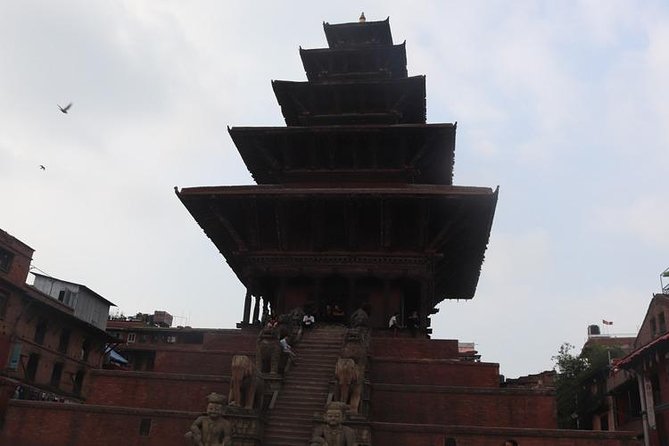
Reviewed · BHAKTAPUR & PATAN TOURS
Bhaktapur and Patan Tour
Two UNESCO squares, one tidy half-day. I love the private guide setup that helps you read the details on the ground, not just stare at stones, and I love how Patan and Bhaktapur fit together in one morning-to-early-afternoon route. You get historical context for the Malla dynasty while you walk through two of Nepal’s most important medieval city centers.
The one thing to plan for is money and pacing. Entrance fees are not included (about 2600 NPR per person), and the tour runs around 6 hours, so you will want to think about timing for a break, since lunch is not included either.
In This Review
- Key Things I’d Watch For on This Patan and Bhaktapur Tour
- Why Patan and Bhaktapur Durbar Squares Still Feel Like Royal Power Centers
- Patan Durbar Square (Lalitpur) and the Ashoka Stupas at the Corners
- Bhaktapur Durbar Square as an Open-Air Museum of Pagodas and Courtyards
- The Guide Quality and Small-Group Format That Makes It Worth the Price
- What You’ll Actually Do During the 9:15 Am Day
- Price and Tickets: The Real Budget Reality
- Who This Tour Suits Best in Kathmandu
- Should You Book This Bhaktapur and Patan Durbar Square Combo?
- FAQ
- What time does the Bhaktapur and Patan tour start?
- How long is the tour?
- Is hotel pickup included?
- Are the entrance fees included in the price?
- Is lunch included?
- How big is the group?
- Can I cancel for free?
Key Things I’d Watch For on This Patan and Bhaktapur Tour
- Private guide, small group (max 12): You still get a personal feel while keeping logistics easy.
- Two UNESCO Durbar Squares in one visit: You avoid the “which city first” headache.
- Patan’s corner stupas tied to Ashoka: A great way to connect layout, religion, and story.
- Bhaktapur as an open-air museum of pagodas and stonework: Lots to see without needing to hunt for it.
- Hotel pickup around 9:15 am: Fewer taxis, less waiting around.
- Mobile ticket: Helpful when you are juggling multiple stops and timings.
Why Patan and Bhaktapur Durbar Squares Still Feel Like Royal Power Centers
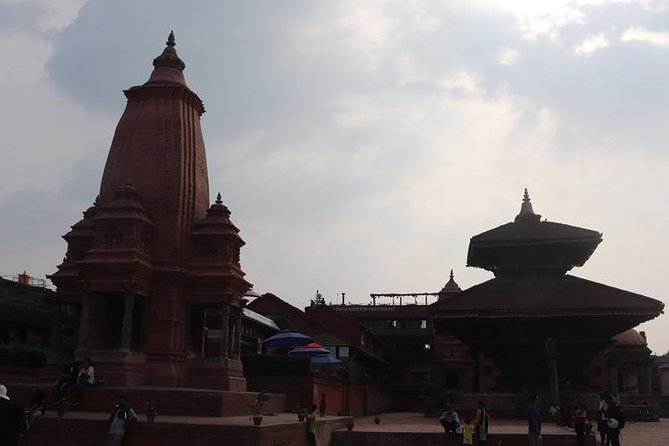
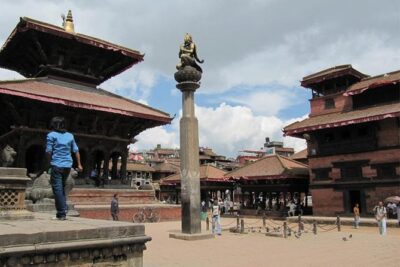
Patan and Bhaktapur are not “just old cities.” They are medieval urban stages where religion, politics, and art all share the same space. The Durbar Squares in both places are surrounded by palaces, temples, courtyards, and monument clusters that were shaped to impress, and they are still readable today if someone helps you spot what mattered.
That is where this tour pays off. With a professional licensed guide, the places stop being a blur of carved wood and stone. You get the why behind what you see, especially the Malla dynasty influence that shaped architecture and symbolism across the valley. Instead of collecting random facts, you start noticing patterns: rooflines that signal temple rank, carved fronts that show patronage, and layouts that reveal how people moved through public and sacred space.
You also get a practical benefit: both squares are UNESCO-listed, so it can be tempting to try to “power-sightsee” them on your own. This route gives you a clean structure for two major sites without the stress of route-planning, ticket-hunting, and figuring out transport between neighborhoods.
The travel reality: 6 hours sounds “short” on paper, but it is enough time to see the core areas properly if you keep your expectations realistic. You will want good shoes, some patience for local sidewalks and stairs, and the willingness to slow down for details your guide points out.
More Bhaktapur and Patan visits:
- Private Bhaktapur and Nagarkot Day Tour From Kathmandu
★ 5.0 · 305 reviews - Day Trip to Bhaktapur and Panauti from Kathmandu
★ 5.0 · 184 reviews - Bhaktapur & Patan Durbar Square Day Tours
★ 5.0 · 122 reviews
Patan Durbar Square (Lalitpur) and the Ashoka Stupas at the Corners
Patan is also called Lalitpur, and it is often described as one of the most established city communities in the Kathmandu Valley. What I like about starting here is that the square has a clear sense of design. It is not a free-for-all; it feels planned around religious and civic life.
One of the most useful details to know is the city’s association with four stupas at the four corners of Patan. These are said to have been built by Emperor Ashoka. Even if you never go deep into the scholarship of the claim, it gives you a framework for what you are seeing. You can look at the square layout and think in terms of directional balance, spiritual geography, and how the city projected Buddhist presence across its edges.
When you are guided through Patan Durbar Square, you are not just looking at monuments. You are learning how the Malla-era artistic language expresses status and devotion at the same time. This is where the private guide format really matters. The group can move at your pace, and your questions can shape what you notice next. Past departures have highlighted guides who adapt their explanations to what visitors show interest in, like focusing more on religion and philosophy at one moment, then switching to architecture and cultural function when it fits your curiosity.
You should also know what not to expect. With admission fees not included, you will still need to budget for entry (and plan for time to pay or show tickets on-site). Also, the Patan portion is about two hours, which is plenty to see the major sights, but not enough to feel like you have “every corner” of Lalitpur covered at a deep-study level.
If you like architecture, rooflines, wood carving, and the way civic and sacred spaces blend, Patan is where you will feel the payoff quickly.
Bhaktapur Durbar Square as an Open-Air Museum of Pagodas and Courtyards
Bhaktapur is famous for its religious and cultural legacy, and it is often described like an open exhibition hall. That is a good phrase to keep in mind while you are there. Bhaktapur does not behave like a single monument you see from one angle. Instead, it is a network of structures: pagoda temples, palace spaces, courtyards, squares, traditional houses, and the kind of stone details that reward slower walking.
Bhaktapur is also known for its craftsmanship and the way everyday city features fit into the historic aesthetic. The city’s reputation includes antique arts, religious monuments, handicrafts, old statues, and a dense mix of landmarks, squares, and temples. You will likely notice water spouts and taps integrated into the urban design. These are small features, but they matter because they show how daily life and ritual space overlapped in a medieval city.
Then there are the pagoda temples, which are the architectural signatures that make Bhaktapur feel instantly recognizable. When you are guided through, you can start reading the “grammar” of their roof forms and the way buildings relate to each other inside the historic core. This is also where Malla dynasty context helps. The point is not memorizing names. The point is understanding how religious power and artistic patronage show up in the layout and building choices.
The practical side: your Bhaktapur time is also about two hours. That makes sense because Bhaktapur is visually dense. You can either rush through and feel overwhelmed, or you can move steadily and focus on the best clusters with your guide’s help. If you are the type who likes to pause, sketch, or take time at doorways and facades, you will probably enjoy Bhaktapur more than you expect.
Drawback to consider: Bhaktapur rewards walking, and Durbar Square areas involve uneven surfaces and steps. You do not need to be an athlete, but you should wear shoes that handle stone and narrow paths comfortably.
The Guide Quality and Small-Group Format That Makes It Worth the Price
At $100 per person for a roughly 6-hour tour, the value is not in the headline duration. It is in the “how” of seeing two major UNESCO-listed centers without the coordination headaches.
You get a private tourist vehicle and a small group departure capped at 12 people. That matters because it keeps the experience manageable. You are not waiting for a huge crowd to regroup. You are also not stuck in a one-size-fits-all script that forces everyone to view at the same speed.
More important than the vehicle is the guide. In past trips, guides named Rajan and Birodh were praised for being helpful and for offering useful insights into philosophy, religion, culture, and the meaning behind important places. Another guide, Raj, was highlighted for providing strong historical and cultural interpretation. You may not get the exact same person each time, but the pattern is clear: the tour is built around interpretation, not just transportation.
One of the most helpful skills a good guide can have is flexibility. A guide who adapts to your interests helps you spend your time where you care most. If you want architecture, you will be pointed toward the right elements. If you care more about religious meaning and how city design connects to belief, that tone can come through too. This is especially useful in Nepal, where symbols show up everywhere, and the difference between “interesting” and “meaningful” is often someone explaining what to look for.
If you prefer independent travel, you can still do this on your own. But paying for a guide here makes sense because Durbar Squares can feel overwhelming without context. You will likely get more out of the same sights simply because the guide helps you connect the dots in real time.
Another way to spend the time in Nepal:
- Everest Base Camp Trek – 14 Days
★ 5.0 · 1,499 reviews - Everest Base Camp Trek
★ 5.0 · 842 reviews - Private Kathmandu Sightseeing Tour | UNESCO World Heritage sites
★ 5.0 · 756 reviews - Kathmandu: 7 UNESCO Sites with Lunch
★ 4.8 · 744 reviews
What You’ll Actually Do During the 9:15 Am Day
The schedule is simple, and that is a strength. Start time is 9:15 am, and pickup is offered from your Kathmandu hotel. If you want a smooth morning, send your hotel details at booking so the pickup is arranged correctly.
Once you start, you visit Patan Durbar Square first, then move on to Bhaktapur Durbar Square. Each place is allotted about two hours. That keeps the day balanced, so you do not fry your brain with only one city, then rush the second.
Here is how to think about the day so you can enjoy it:
- In Patan, focus on the overall city layout and the religious anchors like the corner stupas concept. It helps you “read” the space.
- In Bhaktapur, switch into slower mode. Look for pagoda temples, palaces, and courtyard connections. Bhaktapur rewards staying alert and noticing details.
- Keep an eye on your energy level. Stone courtyards and stairs add up. The tour is not long, but it is active.
Since lunch is not included, I suggest you handle food strategically. If you eat before you go, you might be fine. If you tend to get hungry fast, bring a light snack so you are not trying to solve food mid-route. The data does not promise a stop for meals, so planning around it keeps you from feeling rushed.
Price and Tickets: The Real Budget Reality
The headline price is $100 per person, and that includes a private tourist vehicle, small group departure, and a professional licensed guide. That package is the value engine. You are paying for time, logistics, and expert interpretation.
But you should budget for extras that are not included:
- Entrance fees to visit the heritage sites are not included, around 2600 NPR per person.
- Lunch is not included.
- Tips for the guide and driver are recommended.
If you convert your own currency, treat the entrance fees as a required add-on rather than a surprise. In many cases, that extra amount is the difference between feeling “cheap” and feeling “fair.” Here, the guide and transport are the core of what you are buying, so the entrance fees simply let you enter what the tour is about.
Also, admission ticket details matter. The tour description says admission ticket is not included for each part, so you should plan to pay separately on-site or at the entry point as directed by your guide. A good guide will handle the process smoothly, but you still want to have your budget ready.
Mobile ticket is included, which is a nice convenience. It reduces paper chaos. Just note that mobile ticket does not necessarily mean the heritage entry fees are included. It is more about simplifying your confirmation and access steps for the tour itself.
Who This Tour Suits Best in Kathmandu
This tour is a strong match if you want a guided day that covers two top-tier UNESCO heritage centers without overplanning.
You will likely enjoy it if:
- You want Malla dynasty context and architectural explanations, not just a checklist.
- You prefer small group logistics, capped at 12, with a private vehicle.
- You like a structured route with clear start time and pickup.
- You are spending limited time in Kathmandu and want two major medieval city centers in one go.
It might be less ideal if:
- You want total freedom to wander without structure. The tour works best with a guide-led pace.
- You cannot manage stairs and uneven historic paving, since Durbar Square areas usually involve walking and steps.
- You hate planning around entrance fees and the fact that lunch is not included.
A practical tip: if you are the kind of visitor who loves reading facades, doorways, and rooflines, this tour will feel efficient. If you are only interested in one or two “must-see” spots, you might still enjoy it, but the guided time in between could feel like too much.
Should You Book This Bhaktapur and Patan Durbar Square Combo?
I think you should book it if your priority is getting meaningful context quickly in a short time window. Paying for a private guide, a licensed professional interpreter, and a clean two-city flow is a smart way to avoid the common trap of “seeing a lot” while missing the meaning.
I would book it especially if you want:
- Two UNESCO Durbar Squares without juggling transport between neighborhoods.
- A guide who can explain religion and culture alongside the architecture, including the Malla dynasty angle.
- A small-group day that stays comfortable, with hotel pickup and an early start.
Skip it only if you are traveling with a strict budget for extras, you dislike paying entrance fees on top of the tour price, or you want to build your own route without a guide’s direction.
If your schedule allows it, this is one of those Kathmandu days that makes the valley feel connected, not like two separate sightseeing boxes.
FAQ
What time does the Bhaktapur and Patan tour start?
The tour starts at 9:15 am.
How long is the tour?
It runs for about 6 hours.
Is hotel pickup included?
Pickup is offered, and you are asked to provide your Kathmandu hotel at booking so the pickup can be arranged.
Are the entrance fees included in the price?
No. Entrance fees are not included and are listed as approximately 2600 NPR per person.
Is lunch included?
No, lunch is not included.
How big is the group?
This tour has a maximum of 12 travelers.
Can I cancel for free?
Yes. There is free cancellation, and you can cancel up to 24 hours in advance for a full refund.
Latest additions near Kathmandu
- White Water River Rafting – 1 Day★ 4.3 · 3 reviews
- Traditional Momo Making Class★ 5.0 · 10 reviews
- Kathmandu to Pokhara Premium sofa bus ticket★ 4.0 · 17 reviews
- Ghorepani Poon Hill Trek★ 5.0 · 16 reviews
- Amazing 1 Day Trekking Experience in Kathmandu Nepal★ 5.0 · 24 reviews
- Ghorepani Poonhill Trek★ 5.0 · 5 reviews
- Walking tour of real Kathmandu through back streets.★ 5.0 · 3 reviews
- Wildlife Adventure in Chitwan Nepal★ 4.0 · 4 reviews
Bhaktapur & Patan Tours, compared.
Private Bhaktapur and Nagarkot Day Tour From Kathmandu
Read our review →
Day Trip to Bhaktapur and Panauti from Kathmandu
Read our review →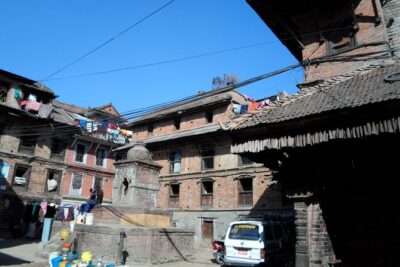

Nagarkot Sunrise & Bhaktapur UNESCO Heritage Private Tour
Read our review →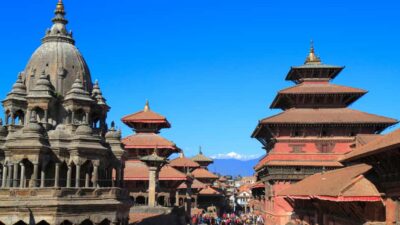

Bhaktapur & Nagarkot Day Tour with Lunch – Private/Group
Read our review →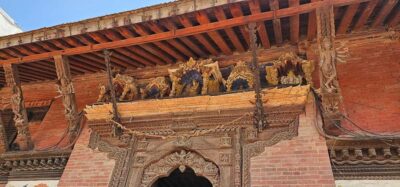
Browse the lists this tour appears in