Reviewed · KATHMANDU TOURS
11 Days Private Nepal and Bhutan Tour
Two countries, one smooth route through mountains. This private 11-day tour links Kathmandu and Paro with Pokhara, Chitwan, then Bhutan’s Thimphu and Punakha, so the contrast clicks quickly. I especially like the private transfers and the full board meals, because your days stay focused on sightseeing instead of seat-finding and ticket wrangling. One consideration: Tiger’s Nest is a serious uphill walk, so you’ll want solid shoes and a steady pace.
What makes this feel truly personal is the way the plan is structured around licensed guides, entrance fees, and full-time escort support. In past departures, names like Surindra and Bashanta have come up in feedback for being flexible and welcoming, and that same vibe is what you should expect when the schedule allows for small adjustments. If you want a trip that blends culture and nature across borders without losing time, this route makes a lot of sense.
In This Review
- Key highlights you should know
- Why this Nepal and Bhutan combo works in 11 days
- Kathmandu arrival day: settling in without losing momentum
- Thimphu culture day: Memorial Chorten, Changangkha Lhakhang, and the Buddha statue
- Punakha and Dochula Pass: paper crafts, meeting nuns, and 108 stupas
- Paro on foot: Dzong, an old wooden bridge, and local town time
- Tiger’s Nest day: how to enjoy the hike and still have energy
- Pokhara arrival: flights, lakeside pacing, and the first sightseeing loop
- Sarangkot sunrise and Shanti Stupa: the morning views that justify the early start
- Chitwan National Park: Tharu village context plus Rapti River sunset time
- Chitwan safari day: canoe, jungle walk, and the wildlife hit list
- Swayambhunath and Kathmandu Durbar Square: closing with heritage and a final city feel
- Price and value: what $4,760 buys you in real terms
- Who should book this tour, and who should skip it
- Should you book this Nepal and Bhutan private tour?
- FAQ
- What kind of tour is this, and is it private?
- Are flights included between Kathmandu, Pokhara, and Chitwan?
- What meals are included?
- What are the main physical demands?
- Is Tiger’s Nest lunch included, and is there an optional recovery activity?
- What safari activities are included in Chitwan?
- How does cancellation work?
Key highlights you should know
- Private, door-to-airport transfers to keep the day-to-day flow smooth
- Tiger’s Nest hike built in as the big Paro moment, with a real cliffside payoff
- Sarangkot sunrise with a clear day chance to see the Annapurna range and Machhapuchre
- Chitwan safari variety including canoe time, jungle walk, plus jeep or elephant safari
- Bhutan culture stops that go beyond temples, including paper craft training and traditional medicine
- Flights that save hours on long Nepal distances (Kathmandu to Pokhara, and Kathmandu back from Chitwan)
Why this Nepal and Bhutan combo works in 11 days
A Nepal-and-Bhutan trip can easily turn into a string of long drives and rushed checklists. Here, the structure is designed to keep movement efficient, using domestic flights for the biggest distance jumps and private transfers for the rest. That matters because it gives you more actual time in places like Paro, Pokhara, and Chitwan, instead of spending the best daylight behind a dashboard.
The other smart move is pacing. You get one major physical day in Paro, then a slower scenic rhythm in Pokhara, then full wildlife focus in Chitwan. Finally you close with Kathmandu heritage sites that help the whole trip feel grounded again, after the Himalayan scenery and Bhutanese religious architecture.
You should also like the theme: learning two cultures back-to-back. In Bhutan, you spend time with everyday institutions tied to arts and health traditions, and in Nepal you get both temples and nature. If your goal is comparison, not just photos, this is a strong format.
A few more Kathmandu routes to compare
- Private Kathmandu Sightseeing Tour | UNESCO World Heritage sites
★ 5.0 · 756 reviews - Kathmandu: Full Day 7 UNESCO Tour with Lunch – Private/Group
★ 5.0 · 415 reviews - Private Bhaktapur and Nagarkot Day Tour From Kathmandu
★ 5.0 · 305 reviews
Kathmandu arrival day: settling in without losing momentum
You land at Tribhuvan International Airport, get welcomed and assisted, and transfer to your Kathmandu hotel. The day is intentionally light, with a welcome drink and a tour briefing, then free time to rest.
I like this approach. Jet lag hits hardest on day one, and Kathmandu can feel intense if you try to start with a full sightseeing sprint. By keeping day one gentle, you set yourself up to enjoy the city instead of just surviving it.
Practical note: the start point is Tribhuvan Airport, and the transfer is private. So if you like the comfort of knowing exactly who is meeting you, this style fits.
Thimphu culture day: Memorial Chorten, Changangkha Lhakhang, and the Buddha statue
Your Bhutan introduction goes through Thimphu in a way that feels like a guided orientation to the country’s spiritual and cultural world. You start with the Memorial Chorten, built in memory of the late 3rd King. It’s a clear opening note: in Bhutan, monuments often function as living religious space, not just sightseeing stops.
Next comes Changangkha Lhakhang, described as the oldest temple in the valley, and it also gives you panoramic views of the surroundings. Then you visit the enclosure where the national animal, takins, are kept, which is a fun switch from pure temple hopping.
The day finishes at a newly built, large Buddha statue with views across the Thimphu valley. If you like photo angles, you’ll appreciate that you’re not just walking through indoor sites. You’re getting viewpoints timed with the natural rhythm of the day.
Possible drawback: Bhutan days can be long, and Thimphu includes walking and viewpoint time. If you prefer minimal walking, plan on taking it slow at temple steps and stairs, and use the option to be driven back to your hotel if that’s offered.
Punakha and Dochula Pass: paper crafts, meeting nuns, and 108 stupas
This is one of the most meaningful days in the whole trip because it mixes craft, learning, and personal human connection. You begin with the Traditional Handmade Paper School of Arts and Crafts, where students learn 13 arts used in Bhutan. That kind of stop helps you understand culture as something made and practiced, not only something photographed.
From there, you move through the Folk Heritage Museum, the National Library, and the Traditional Institute of Medicine. It’s a smart combination because it shows how knowledge is preserved and taught through institutions. Then you drive to Zilukha nunnery to meet the nuns and interact with them, which is often the part people remember long after the last monument photo.
After lunch, you head toward Punakha via Dochula Pass at 3200 meters. If weather allows, you can be treated to spectacular views of Bhutan’s highest mountains. Then you walk around the 108 stupas before continuing into Punakha’s sub-tropical valley.
Two things I’d call out for your expectations:
- Dochula Pass depends on weather. Bring patience, because clear views are not guaranteed.
- The day includes multiple activity styles, from museum-like stops to hillside walking to a nunnery visit. That variety is also why it feels special.
Another way to spend the time in Nepal:
- Everest Base Camp Trek – 14 Days
★ 5.0 · 1,499 reviews - Everest Base Camp Trek
★ 5.0 · 842 reviews - Kathmandu: 7 UNESCO Sites with Lunch
★ 4.8 · 744 reviews - Everest Base Camp Helicopter Tour landing at Everest View Hotel
★ 5.0 · 668 reviews
Paro on foot: Dzong, an old wooden bridge, and local town time
After returning from Thimphu to Paro, you get a slower Paro day focused on atmosphere. You visit Paro Dzong on foot, then cross a wooden bridge that’s still in use and described as the oldest of its kind still operating. After that, you explore old Paro town and browse local handicraft stores.
If you’re lucky, you might witness a traditional archery match. Even if you do not, the town time helps you avoid the feeling that Bhutan is only made of temples. Paro feels like a lived-in place, and that matters.
What I like here is that you’re not cramming Tiger’s Nest and every other site into one day. This day creates breathing room, and it makes the next day feel earned.
Tiger’s Nest day: how to enjoy the hike and still have energy
The Tiger’s Nest monastery, also called Paro Taktsang, is the big Paro moment. You drive to the base for a hike described as about 2 hours uphill, then spend much of the day on this cliffside journey. Lunch is provided at the cafeteria during the hike.
The temple sits on a granite cliff overlooking Paro Valley, which is exactly why the climb is worth it. The views are not optional here. You go uphill for a reason, and you’ll feel the payoff when you reach the temple area.
After you return to the hotel, there is an optional hot stone bath, but it’s at personal expense. I like having an option, because it lets you choose recovery time based on how your legs feel. Then you end with a farewell dinner in town, a nice way to close the Paro chapter.
Consideration: this is the tour’s clearest physical challenge. The schedule assumes moderate physical fitness, and the uphill hike is a real test. If you’re prone to knee pain or you hate steep stairs, bring trekking poles if you have them, take breaks often, and don’t treat it like a race.
Pokhara arrival: flights, lakeside pacing, and the first sightseeing loop
Once you leave Kathmandu, you take a domestic flight to Pokhara, with the trip described as around 30 minutes. After landing, you check into a resort, get a welcome drink and briefing, then enjoy lunch.
Your first guided half-day in Pokhara is a classic mix: Davis Fall, Gupteshwor cave, Tibetan Camp, then boating on Phewa Lake. It’s a smart introduction because it gives you water views right away. And it also mixes built attractions with natural features, so you’re not only in shops or only in temples.
I also like that you get free time in the evening around Lakeside. After a travel-heavy stretch, having your own pacing matters.
Practical note: some stops like caves can be slippery and tight. If you’re sensitive to confined spaces, plan to go slowly and stick to marked areas.
Sarangkot sunrise and Shanti Stupa: the morning views that justify the early start
Day seven starts early for sunrise from Sarangkot, at 1600 meters. On a clear day, you can see the whole Annapurna range along with Machhapuchre, known as Fishtail. That is the kind of view that makes you understand why people keep coming back to this region.
After sunrise, you drive back for breakfast, then head to Peace Stupa, also known as Shanti Stupa. You visit this hilltop point for wide views of Pokhara Valley, including the Annapurna range and Phewa Lake in the background. Then you stop at the Pokhara International Mountain museum before returning to the hotel.
Possible drawback: this is another day where weather rules everything. If clouds roll in, the view payoff can shrink. Still, it’s a nice morning structure, because you get the viewpoint framing even if the horizon is not crisp.
Chitwan National Park: Tharu village context plus Rapti River sunset time
When the tour shifts to Chitwan, it changes gears from viewpoints to wildlife and local life. After breakfast, you fly from Kathmandu to Bharatpur (described as about 20 minutes), then transfer to your resort. You get welcome drink and briefing, lunch, then activities based around Chitwan’s culture and the park.
A key early stop is the nearby ethnic Tharu Village, where you learn about Tharu life and lifestyle. Then you visit the National Park visitor’s center, which helps you place the landscape and wildlife in a bigger conservation context. The day ends with a sunset view tour from the bank of the Rapti River.
I like this setup because it avoids the common problem of arriving at a wildlife park and immediately going straight into safari vehicles without any context. You get cultural grounding first.
Chitwan safari day: canoe, jungle walk, and the wildlife hit list
Your second Chitwan day begins with a wake-up call and breakfast, then you go into the jungle tour. You take a canoe ride along the Rapti River, with time for bird watching. The tour also highlights two rare crocodile species: marsh mugger and fish-eating gharial.
Then comes the jungle walk, which is the kind of activity that can feel more intimate than a vehicle safari. You return for lunch and rest, then go out again for Elephant Safari or Jeep Safari.
The wildlife possibilities in Chitwan are described in a pretty specific way. You can see deer, rhino, wild boar, monkey, leopard, sloth bear, and even the Royal Bengal Tiger if you are lucky, plus smaller mammals living in the area.
Here’s the balanced truth: wildlife sightings are never guaranteed. The upside is that the tour doesn’t rely on only one chance. You have canoe time, walking time, and then two different safari styles, so your odds of seeing something interesting are better.
Swayambhunath and Kathmandu Durbar Square: closing with heritage and a final city feel
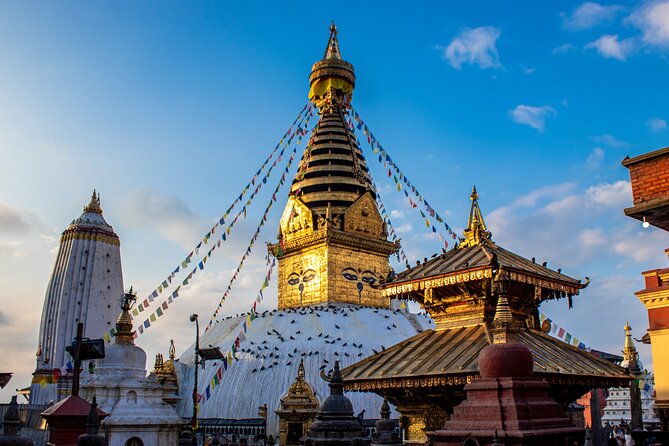
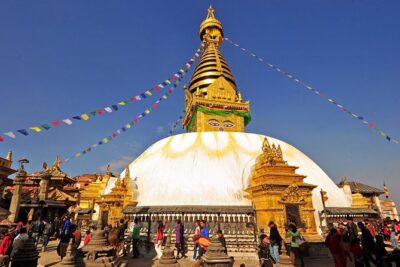
Back in Kathmandu, you fly from Bharatpur airport to Kathmandu, then go to Swayambhunath Stupa, described as over 2000 years old. It’s also known as Monkey Temple due to resident primates. The setting is a classic Kathmandu highlight because it combines spirituality with everyday animal presence.
After that, you visit Kathmandu Durbar Square, with ancient wood carvings and temples. You see Hanuman Dhoka, linked to the Licchavi era and expanded by King Pratap Malla, plus palaces, temples, and courtyards. The tour describes over 50 temples in the complex.
This is a good way to end, because it brings you back to Kathmandu’s human scale after Bhutan’s mountain focus and Chitwan’s nature emphasis. Then day eleven is simple: breakfast, check out, and private transfer to the international airport for your onward flight.
Price and value: what $4,760 buys you in real terms
At $4,760 per person for 11 days, this is not a budget trip. But it also doesn’t feel like you’re paying for fluff. The cost is shaped by several concrete items the tour includes: air ticket sectors for Kathmandu-Pokhara and Chitwan-Kathmandu, and the Nepal domestic flights that save you major travel time.
You also get a lot of built-in comfort and reduced hassle, including private airport-to-airport transfers by private vehicle, licensed English-speaking guides for city tours, entrance fees for sightseeing, and full board meals across the tour. On top of that, you have 3 hotel nights in Kathmandu, 2 nights in Pokhara, and 2 nights in Chitwan, plus jungle package days with jungle activities included.
In practical value terms, you’re paying to remove friction. If you were booking all flights, hotels, guides, and entry fees yourself, you’d spend time and risk gaps in coordination. Here, you’re buying a system that keeps you moving forward day after day.
One more value point: your tour is private, meaning only your group participates. That typically means less waiting around and more flexibility on the ground, especially when there are viewpoint stops, temple steps, and safari scheduling.
Who should book this tour, and who should skip it
This is a strong match for you if you want:
- A balanced mix of culture, religion, and nature across two countries
- Efficient logistics, including domestic flights to reduce long transfers
- A private guide style that makes days feel more personal than crowded tours
It may be less ideal if:
- You dislike uphill hikes or you have knee issues, because Tiger’s Nest is a key physical day
- You need very short travel days with minimal walking, since temple visits and viewpoints include steady steps
Also, your physical fitness is described as moderate. That’s a fair target. I’d treat it as a nudge to prepare for hills, steps, and early mornings.
Should you book this Nepal and Bhutan private tour?
If your goal is a smooth, guided introduction to both countries without turning travel days into a puzzle, I think this is a smart choice. The itinerary structure makes sense, and the included flights plus private transfers help you spend your energy on the experiences that matter most, Tiger’s Nest, Pokhara viewpoints, and Chitwan wildlife time.
My decision checklist for you is simple:
- Are you comfortable with a 2-hour uphill hike?
- Do you like sunrise mornings and hilltop viewpoints?
- Do you want culture stops that include crafts and living institutions, not only monuments?
If you said yes to those, then this is the kind of private tour that can feel like a true two-country story, told in the right order.
FAQ
What kind of tour is this, and is it private?
This is a private Nepal and Bhutan tour, meaning only your group participates. The plan includes private transfers and an English-speaking guide service.
Are flights included between Kathmandu, Pokhara, and Chitwan?
Yes. Air tickets sectors are included for Kathmandu to Pokhara and Chitwan to Kathmandu, and you fly within the route as part of the schedule.
What meals are included?
The tour is full-board. It includes breakfast, lunch, and dinner as part of the package, with meal counts listed in the included section.
What are the main physical demands?
The schedule includes a hike to Tiger’s Nest described as about 2 hours uphill, plus other temple walking and viewpoint time. The tour notes a moderate physical fitness level.
Is Tiger’s Nest lunch included, and is there an optional recovery activity?
Lunch is included during the hike at the cafeteria. There is also an optional hot stone bath after returning, but it is at personal expense.
What safari activities are included in Chitwan?
Chitwan includes a canoe ride along the Rapti River, a jungle walk, and an Elephant Safari or Jeep Safari option. Bird watching and crocodile watching are part of the canoe portion.
How does cancellation work?
You can cancel up to 3 days in advance for a full refund. If you cancel less than 3 full days before the experience starts, the amount you paid is not refunded.
Latest additions near Kathmandu
- Traditional Momo Making Class★ 5.0 · 10 reviews
- White Water River Rafting – 1 Day★ 4.3 · 3 reviews
- Kathmandu to Pokhara Premium sofa bus ticket★ 4.0 · 17 reviews
- Ghorepani Poon Hill Trek★ 5.0 · 16 reviews
- Amazing 1 Day Trekking Experience in Kathmandu Nepal★ 5.0 · 24 reviews
- Ghorepani Poonhill Trek★ 5.0 · 5 reviews
- Walking tour of real Kathmandu through back streets.★ 5.0 · 3 reviews
- Wildlife Adventure in Chitwan Nepal★ 4.0 · 4 reviews
Kathmandu Tours, compared.

Private Kathmandu Sightseeing Tour | UNESCO World Heritage sites
Read our review →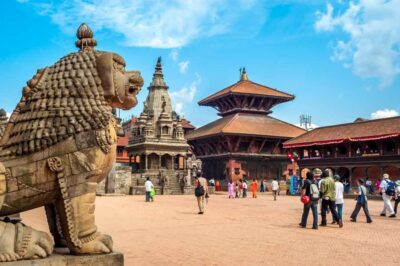
Everest Base Camp Helicopter Tour landing at Everest View Hotel
Read our review →