

Reviewed · KATHMANDU TOURS
1 day with our women empowerment and children development project
A community day in Kathmandu beats the usual sightseeing script fast, and it feels personal from the first minutes. You spend the morning with women leading a Nepali cooking class and then a bead-jewelry workshop, and you carry that skill and the stories with you.
I especially liked the hands-on flow, you are not just watching. The lunch and dinner time are built in, so you get to share everyday moments rather than doing a quick drop-off.
The main drawback to consider is the emotional side. You will be around kids in a school and volunteer setting, so go in with patience, kindness, and realistic expectations about how a day like this moves.
In This Review
- Key things that make this experience work
- A Day Built Around Real People, Not Performances
- From Paknajol to the Main Center: How the Day Moves
- 11:00 AM to 4:00 PM: Cooking Nepali Staples and Making Bead Jewelry
- The Nepali cooking class, led by local women
- Lunch, shared at the table
- Jewelry-making with colorful beads
- The 4:00 PM Walk to the Main Center: A Nice Transition
- 5:00 PM to 8:00 PM: Kids’ Games, Sports, Walking, Dancing, and Dinner
- What to expect during the activity blocks
- How to make this time respectful and fun
- Meeting Tenzing and the People Behind the Program
- Price and Value: What You’re Really Paying For
- Who This Is For, and Who Might Want Another Plan
- Should You Book This Women and Children Project Experience?
- FAQ
- Where does the experience start?
- Where does the experience end?
- How long is this experience?
- What activities are included during the day?
- Is this a private tour or activity?
- Do I get a mobile ticket?
- What time do the children activities start?
- What is the cancellation policy?
Key things that make this experience work
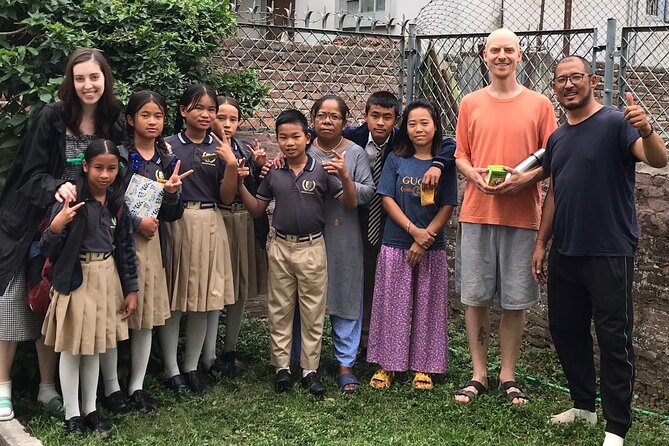
- Women lead the whole morning, from food to jewelry, so you learn through participation, not a lecture
- You make something you can keep, colorful bead jewelry for yourself or as a souvenir
- Meals are included with lunch and dinner, which makes the day feel complete instead of rushed
- Kids are part of the program, with games, sports, dancing, singing, and even painting
- Private group time means your day stays focused on your group, not a huge crowd
- Tenzing runs the day-to-day, and the conversations can make the whole experience click
A Day Built Around Real People, Not Performances
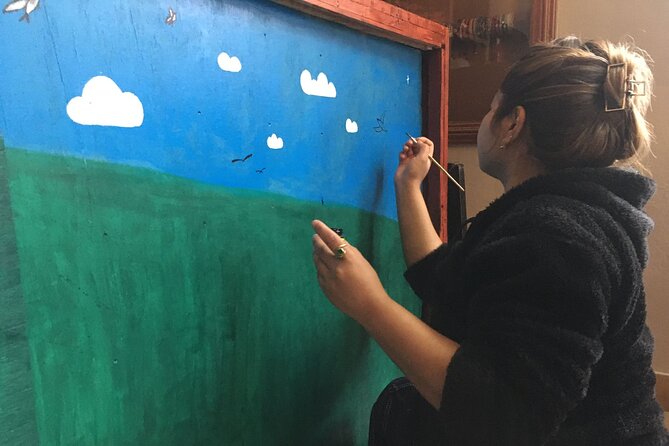
This is the kind of tour that quietly changes your rhythm. Instead of stacking photo stops back-to-back, you settle into a schedule shaped around cooking, craft, and kids’ energy. The whole point is support for children and women from underprivileged communities, and the day is designed so your participation lines up with that mission.
You start with women-led activities, so you are meeting the project where it lives, inside the people doing the work. Then, later, you shift to the children after school. That switch matters. It turns the day from a “cultural activity” into something closer to community time, with laughter, movement, and shared meals.
Is it meaningful? Yes. Is it also practical? Also yes. You get specific skills (cooking and jewelry-making), clear time blocks, and you are not guessing what happens next. If you like travel that feels useful, not just interesting, this fits.
More from Kathmandu worth a second look:
- Everest Base Camp Trek – 14 Days
★ 5.0 · 1,499 reviews - Everest Base Camp Trek
★ 5.0 · 842 reviews - Private Kathmandu Sightseeing Tour | UNESCO World Heritage sites
★ 5.0 · 756 reviews
From Paknajol to the Main Center: How the Day Moves
Your day starts at We Handicraft Paknajol, Kathmandu 44600. That’s a solid meeting area because it is near public transportation and easy to find once you show up. The format is also simple: you get a mobile ticket, and you do not have to worry about printing anything.
The program runs about 8 to 10 hours, with a day plan that runs from late morning into the evening. After lunch, there is a 30-minute walk together to the Human Welfare Committee main center at Manjushree Galli, Kathmandu 44600. That walk is not just a transfer. It’s a chance to shift gears from craft and cooking to the kids’ side of the day.
One practical note: because the Human Welfare Committee is open Monday through Sunday from 10:00 AM to 6:00 PM, it’s clear the organization runs on consistent daily hours. Your scheduled activities fit inside that window, so you should not expect long gaps or unpredictable timing.
11:00 AM to 4:00 PM: Cooking Nepali Staples and Making Bead Jewelry
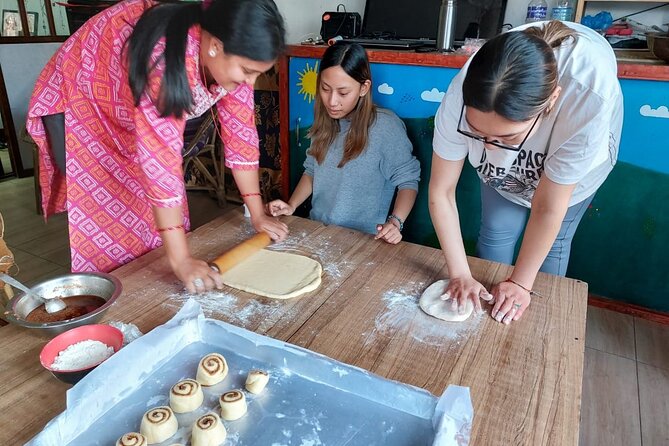
This is the heart of the experience, and it’s also where you get the most “do it yourself” value.
The Nepali cooking class, led by local women
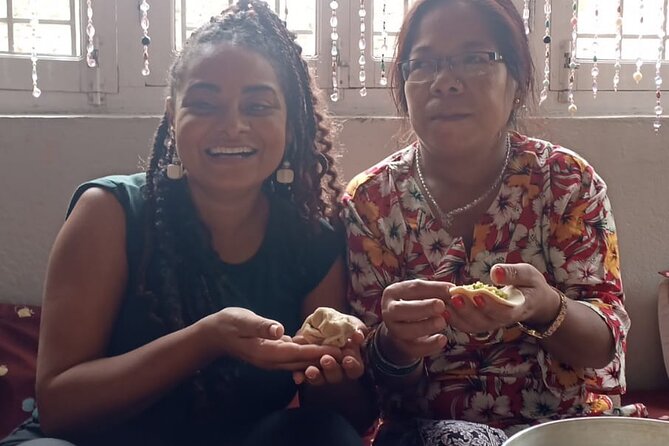
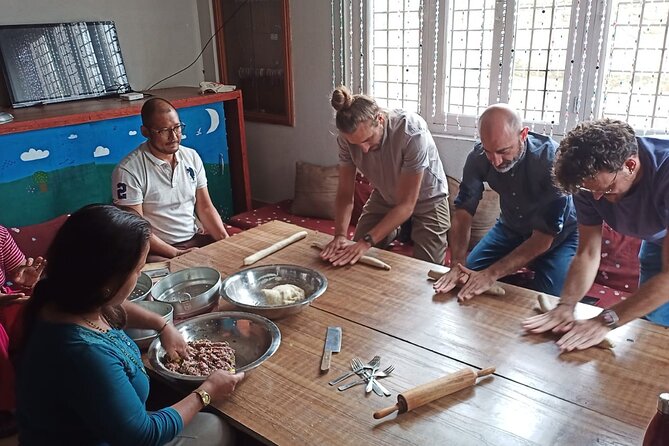
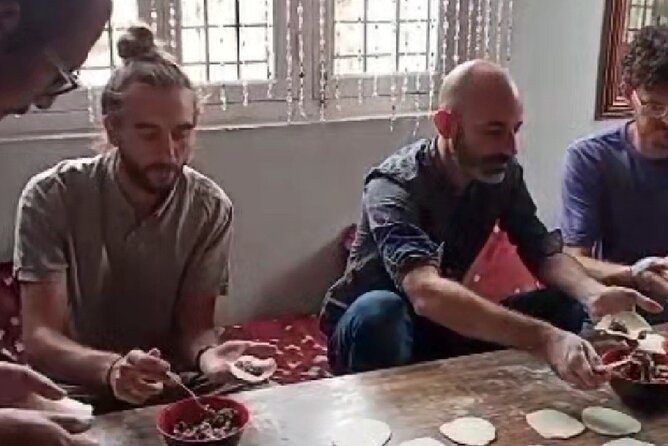
The morning begins with a cooking class led by Nepali women. You will learn how to cook a traditional Nepali dish: Dal Bhat or momo. Either way, the point is the same. You work with the ingredients and steps, you follow along in a real kitchen setting, and you eat what you help make.
For me, this type of class is one of the best ways to understand a place. You are not decoding menus from a distance, you are doing the work. It also sets a respectful tone for the rest of the day. You arrive as a learner, not as someone collecting experiences.
Another way to spend the time in Nepal:
- Kathmandu: 7 UNESCO Sites with Lunch
★ 4.8 · 744 reviews - Everest Base Camp Helicopter Tour landing at Everest View Hotel
★ 5.0 · 668 reviews - Half day cooking class in Thamel kathmandu
★ 5.0 · 607 reviews - Everest Base Camp Trekking
★ 5.0 · 485 reviews
Lunch, shared at the table
Lunch follows right after the cooking class. Sharing lunch matters because it turns the class into a relationship. You are not done after the lesson, you are included in the meal rhythm too.
The itinerary builds lunch as a full block, so you can slow down. If you’ve ever rushed through a destination and felt nothing stuck, this kind of built-in sit-down time helps the day land.
Jewelry-making with colorful beads
After lunch comes jewelry-making using colorful beads, led by the same women who started your day. You make your own jewelry, either for yourself or as a souvenir. That take-home item is more than a trinket. It’s a physical reminder of the people you spent the day learning with.
Hands-on craft also works well for mixed groups because it’s naturally interactive. If you’re not a strong “teacher listens, student watches” type, this helps. If you are, you still get structure. Either way, you end up with something you can hold.
The 4:00 PM Walk to the Main Center: A Nice Transition
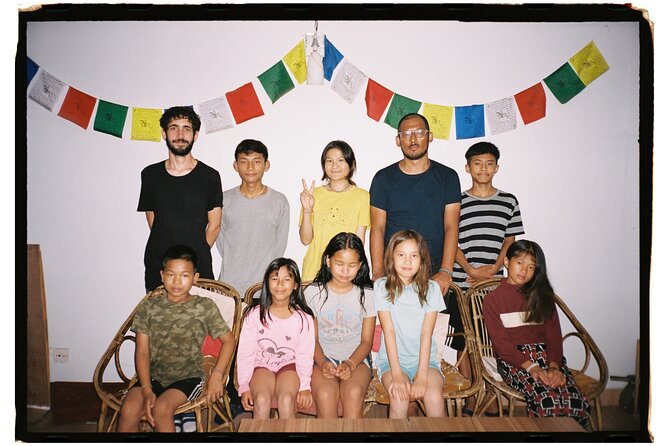
At 4:00 PM, the program includes a walk together to the Human Welfare Committee main center. Expect it to take about 30 minutes.
This transition is worth noticing. The morning is craft and cooking. The afternoon is kids and energy. The walk gives your brain time to reset so you show up with the right mindset. It also makes the logistics feel human-scale, not like you are being herded between locations.
If you plan clothing, this is a good time to think about comfort. You’ll likely be on your feet, moving, and possibly navigating slightly uneven paths.
5:00 PM to 8:00 PM: Kids’ Games, Sports, Walking, Dancing, and Dinner
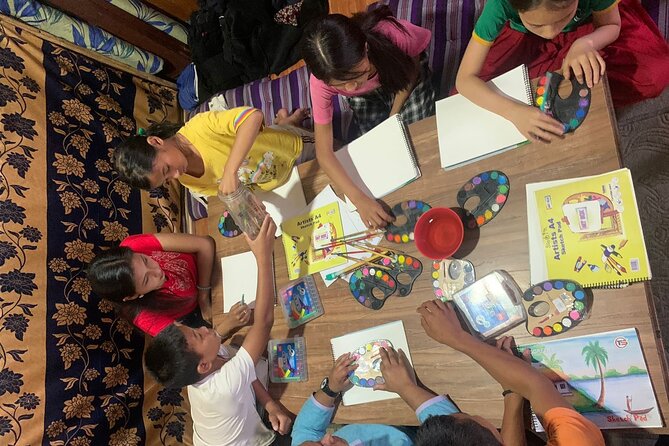
Once the children arrive from school around 4:00 PM, the tone changes in the best way. The program gives you structured time to connect with the kids through games, sports, walks, dancing, singing, and even painting. Then you share dinner with the children.
This is where the day becomes more than “an activity.” Kids respond to presence. When you join in games or movement, you stop being a spectator. You become a participant, and that’s the kind of connection that lasts longer than any photo.
What to expect during the activity blocks
You have an activity window roughly 5:00 PM to 7:00 PM. It can include games, sports, walking, and painting depending on how the group energy is going. The key is that you’re there to play and interact, not to run the show.
Then comes dinner with the children from about 7:00 PM to 8:00 PM, followed by a farewell at 8:00 PM.
How to make this time respectful and fun
Since this is a children-focused setting, your best move is simple: stay calm, stay kind, and follow the lead of the people running the program. If you’re unsure about anything, ask your guide rather than guessing. And if you are considering taking photos, be sure you respect whatever rules the center asks for in the moment.
Meeting Tenzing and the People Behind the Program
One reason this experience earns strong ratings is that it doesn’t feel like a faceless service. There’s a real person at the center of the work: Tenzing. On the day, you have time to talk and connect, and conversation can stretch beyond the “tour script” if the group clicks.
That matters for value. When you understand how the organization thinks and what challenges it faces, your visit shifts from charity theater to honest support. You see the project as a living effort, not just an itinerary.
Even better, the day has cultural context built in. There’s a mention of a Buddhist temple visit during the experience, which fits with Kathmandu’s everyday spiritual landscape. If that stop appears on your day, treat it like part of the community flow, not a checklist stop.
Price and Value: What You’re Really Paying For
The price is $120.13 per person, and the experience lasts about 9 hours on average. That might sound steep if you compare it to a city tour, but the value is different here.
You’re paying for a full day of guided, women-led activities plus time with children and included meals. Cooking a traditional dish, making bead jewelry, and sharing dinner are all time-intensive. You’re also supporting a non-profit organization’s mission directly through participation. The result is a day that feels structured and complete rather than a short “volunteer-style” stop.
Another value signal: the experience is often booked about 79 days in advance on average. That tells you it’s not just a slow, flexible add-on. If you want a specific date, you should book early rather than assuming last-minute availability.
Who This Is For, and Who Might Want Another Plan
This works well for:
- People who like hands-on cultural experiences (cooking and craft)
- Travelers who want to support women empowerment and children development in a straightforward way
- Anyone who prefers small, focused group time over large crowds
It may not be ideal for you if you:
- Want a quiet, low-emotion day. This is cheerful, but it involves children and real community life.
- Are only interested in city landmarks. This is more about people and participation than sightseeing.
If you fit the first list, you’ll likely love how the day balances fun with purpose. If you fit the second, consider a different style of Kathmandu tour.
Should You Book This Women and Children Project Experience?
If you want a Kathmandu day that feels human, practical, and genuinely connected to local effort, I think you should book it. The women-led cooking class and bead-jewelry workshop give you real skills and take-home value, and the later connection with kids makes the day feel complete.
Just go in with the right mindset. Treat it like you’re joining a community program, not running a show. Wear comfortable shoes for the walk, be ready for an active afternoon, and show up open to conversation with Tenzing and the women running the day.
FAQ
Where does the experience start?
It starts at We Handicraft Paknajol, Kathmandu 44600, Nepal.
Where does the experience end?
It ends at Human Welfare Committee, Manjushree Galli, Kathmandu 44600, Nepal.
How long is this experience?
It lasts about 8 to 10 hours, approximately 9 hours.
What activities are included during the day?
You’ll take part in a Nepali cooking class (Dal Bhat or momo), have lunch, do a bead jewelry-making workshop, then join activities with children such as games, sports, walks, dancing, singing, and painting, and you’ll have dinner with the children.
Is this a private tour or activity?
Yes. It is private, and only your group participates.
Do I get a mobile ticket?
Yes. The experience includes a mobile ticket.
What time do the children activities start?
The children return from school around 4:00 PM, and the main activities with children run roughly 5:00 PM to 7:00 PM.
What is the cancellation policy?
You can cancel for free up to 24 hours in advance for a full refund. If you cancel less than 24 hours before the start time, the amount paid is not refunded.
Latest additions near Kathmandu
- White Water River Rafting – 1 Day★ 4.3 · 3 reviews
- Traditional Momo Making Class★ 5.0 · 10 reviews
- Kathmandu to Pokhara Premium sofa bus ticket★ 4.0 · 17 reviews
- Ghorepani Poon Hill Trek★ 5.0 · 16 reviews
- Amazing 1 Day Trekking Experience in Kathmandu Nepal★ 5.0 · 24 reviews
- Ghorepani Poonhill Trek★ 5.0 · 5 reviews
- Walking tour of real Kathmandu through back streets.★ 5.0 · 3 reviews
- Wildlife Adventure in Chitwan Nepal★ 4.0 · 4 reviews
Kathmandu Tours, compared.


Private Kathmandu Sightseeing Tour | UNESCO World Heritage sites
Read our review →

Everest Base Camp Helicopter Tour landing at Everest View Hotel
Read our review →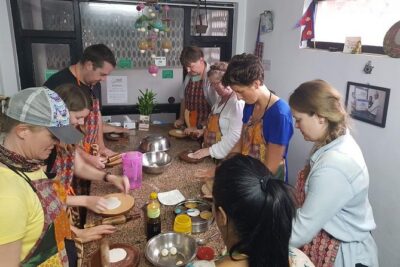

Nagarkot Sunrise View and Day Hiking from Kathmandu
Read our review →Browse the lists this tour appears in