
Reviewed · POON HILL TREKS
Poon Hill Trek
Waking up for sunrise changes your whole day. This is a classic Poon Hill Trek package in Nepal, mixing Kathmandu temple time, Pokhara lake views, and an early climb to one of the easiest places to score big Annapurna mountains. You’ll hike through patchwork valleys, rhododendron and pine forests, and villages where Gurung and Magar culture shapes daily life.
I especially love the unobstructed sunrise viewpoint at Poon Hill, the moment when the Himalayas finally show their full faces. I also like the practical support built into the trip: an English-speaking guide plus porters so you can focus on breathing, walking, and enjoying the tea-house routine. One consideration, even with an easy label, is that early mornings and steady uphill can still feel like work if you’re not used to altitude and hiking pace.
In This Review
- Key Things That Make This Poon Hill Trek Worth Your Time
- The Real Hook: What Poon Hill Does to Your Perspective
- Kathmandu Warm-Up Before You Hike: Temples, Stupas, and Quiet Focus
- Getting to Pokhara the Easy Way: Bus, Lake Views, and Trek Readiness
- Day One on the Trail: Nayapul to Hille and Tikhedhunga
- Ulleri Slopes to Ghorepani: Where Forests and Altitude Start Talking
- The Big Payoff: Poon Hill Sunrise, Ridges, and the Walk to Deurali and Tadapani
- Ghandruk Village Day: Gurung Culture and Mountain-View Time
- Finishing the Loop: Nayapul Return, Pokhara Reset, and Kathmandu Arrival
- Price and Value: What $1,172.27 Covers, and What It Does Not
- Group Size, Guides, and Why the Team Matters on This Route
- What to Pack and How to Keep It Feeling Easy
- Should You Book This Poon Hill Trek with Ace the Himalaya?
- FAQ
- What is the main highlight of the Poon Hill trek?
- Does this trip include Kathmandu sightseeing before trekking?
- How do you get from Kathmandu to Pokhara?
- How are luggage and porters handled during the trek?
- Where do you sleep during the trek?
- Are meals included?
- What trekking permits are included?
- How large is the group?
- What happens if I arrive in Kathmandu after 4 pm?
Key Things That Make This Poon Hill Trek Worth Your Time
- Poon Hill sunrise views: a clear, high-mileage payoff without technical climbing.
- Small-group feel (max 15): easier to manage mornings, timing, and lodge logistics.
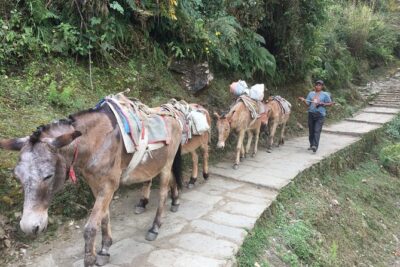
- Guide and porter setup: luggage carried for you, with a porter for every two guests.
- Tea-house route through culture-rich villages: Ghorepani and especially Ghandruk.
- Permits handled for you: Annapurna Conservation Park permits plus TIMS included.
The Real Hook: What Poon Hill Does to Your Perspective
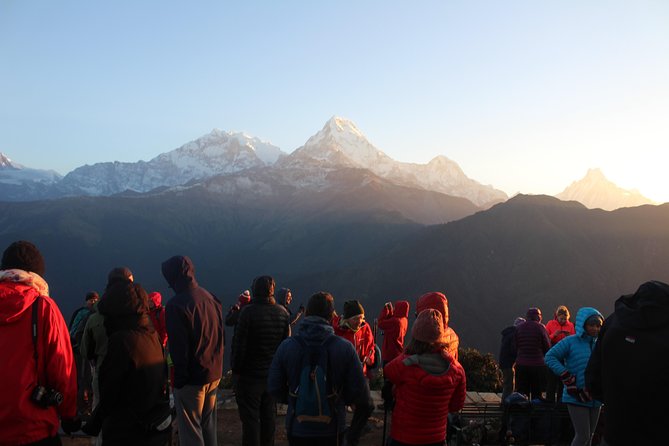
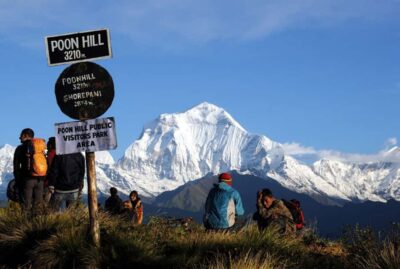
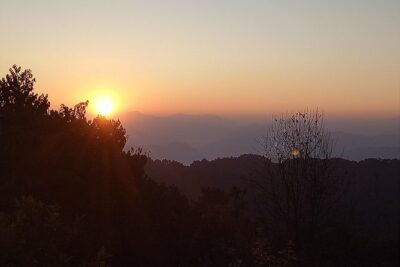
Poon Hill is the trek’s headline, but it works because it’s timed right. You’ll start the hike to the viewpoint very early in the morning, climb up for a short push, and then spend time at the top to catch the sunrise over the high Himalayas. Even on an easy trek, that rhythm matters. It turns the day into one focused goal instead of a long, sloggy grind.
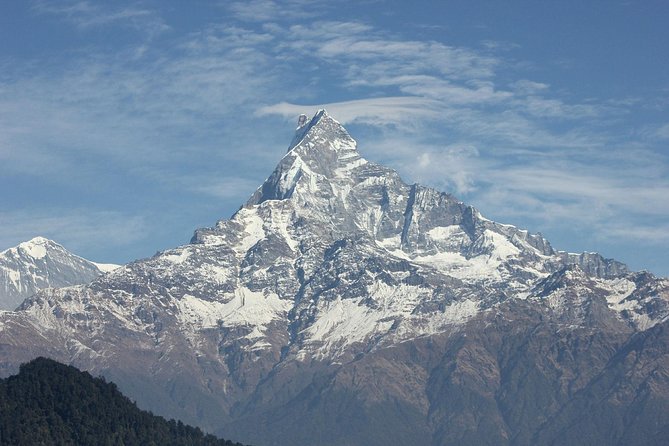
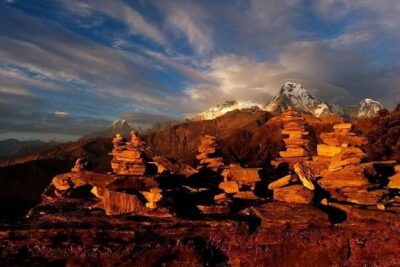
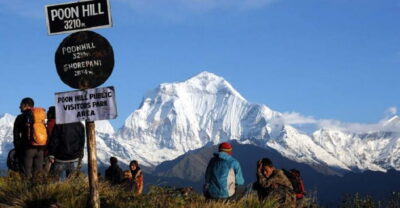
From the viewpoint area, you get the kind of panorama that makes you instantly understand why people come back to the Annapurna region. You’ll also see the peak of Machhapuchhare, the Fish Tail Peak, which dominates the skyline in the Pokhara-to-trek corridor. It’s not just a pretty photo moment. It’s the visual payoff for hiking through forested slopes and village valleys for days.
More Treks in Kathmandu
- Everest Base Camp Trek – 14 Days
★ 5.0 · 1,499 reviews - Everest Base Camp Trek
★ 5.0 · 842 reviews - Everest Base Camp Trekking
★ 5.0 · 485 reviews
Kathmandu Warm-Up Before You Hike: Temples, Stupas, and Quiet Focus
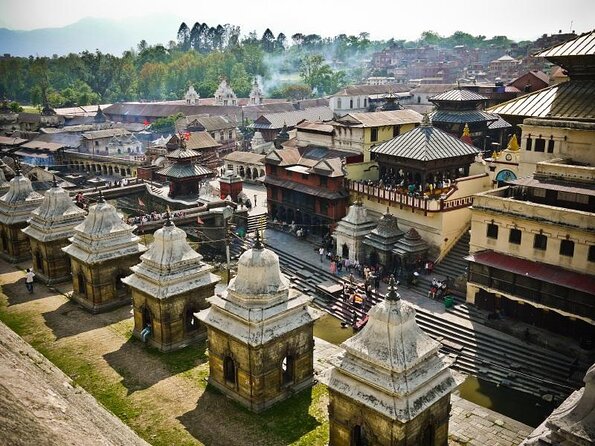
Before you head out of town, you get a guided Kathmandu valley day that’s part sightseeing, part mental reset. First stop is Pashupatinath Temple on the Bagmati River. You won’t be allowed inside since it’s strictly for Hindus, but you can see the temple and daily riverside activity clearly from the eastern bank.
Then you shift to Boudhanath Stupa, one of the holiest Buddhist sites in Kathmandu. The four pairs of Buddha eyes facing the cardinal directions are memorable, and you’ll also see pilgrims walking and spinning prayer wheels. It’s a different pace from the streets, and it helps set your brain to a slower travel mode.
The last temple stop is Bhaktapur Durbar Square, including major highlights like the Nyatapola-style Nyatapola temple complex and the Palace of 55 windows. If you like places where everyday religion and historic architecture overlap, this day clicks. Just remember: it’s city walking. Wear shoes that don’t hate you.
Getting to Pokhara the Easy Way: Bus, Lake Views, and Trek Readiness
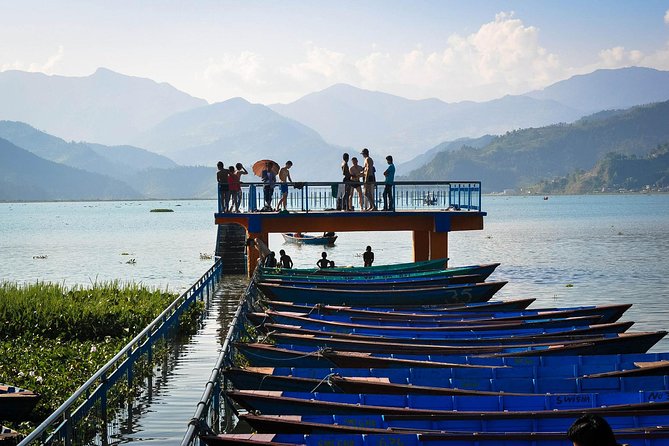
The route to the mountains starts with a transfer to Pokhara. Your trekking staff will pick you up at your hotel around 6:30 am, and you’ll be escorted to the bus station. The bus leaves around 7:30 am for Pokhara, which is a lighter-feeling base than Kathmandu.
Pokhara matters because it’s where your trek turns from travel into work. It’s also where the bigger mountain shapes begin to show. The area is known for panoramic views of Annapurna and Machhapuchhare to the north, plus Dhaulagiri to the west and Lamjung Himal and Manaslu to the east. Even when the weather is only partly cooperative, you’ll feel like you’re arriving.
You get to settle into Pokhara afterward, which is a real advantage for a trek with an early next-day start. This trip also includes a private vehicle between Pokhara and Nayapul, so you aren’t stuck trying to figure local connections while your legs are warming up.
Day One on the Trail: Nayapul to Hille and Tikhedhunga
Your trekking begins at Nayapul. After about an hour drive from Pokhara, you do a short early walk along the banks of the Modi Khola. Then you reach Birethanti at around 1,015 m, where the village has shops and teahouses.
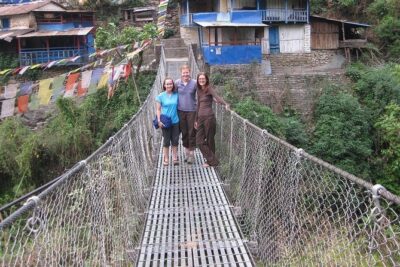
From there, the trail follows the north bank of the Bhurungdi Khola and climbs steadily up the valley side. Today ends in the Tikhedhunga area at 1,570 m, after stopping around Hille at 1,495 m. This day is described as relatively short and easy, and that tracks with the idea of “gear check” hiking.
What’s smart here is the gentle ramp-up. You’re not asked to jump into a steep, breath-busting climb right away. You’re given time to feel how your legs handle packed trails, village steps, and changing air.
More Poon Hill treks:
- 4 Days Poon Hill Trek
★ 5.0 · 94 reviews - Ghorepani(Poonhill Trek)
★ 5.0 · 81 reviews - 4-day Poon Hill Trek
★ 5.0 · 74 reviews - Ghorepani Poon Hill Trek
★ 5.0 · 61 reviews
Ulleri Slopes to Ghorepani: Where Forests and Altitude Start Talking
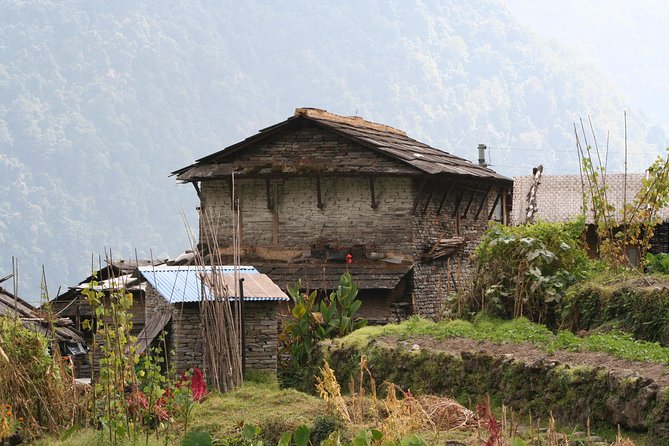
On the next hiking day, you move toward the steep climb to Ulleri at 2,070 m, a Magar village. Even if you’re strong, this is where the trek starts to feel like a trek. Then the route eases into a steady climb through oak and rhododendron forests.
Your walking transitions into a climb toward places like Banthanti at 2,250 m and Nangethanti at 2,460 m, before arriving at Ghorepani at 2,840 m. Ghorepani is a hub town for this region’s tea-house trekking. You’ll likely notice that the lodges become more “trekker-focused” as you get higher.
This is also where the forest texture changes. The overview notes dense rhododendron forests and birds along the way. In practical terms, that usually means cooler air, frequent shade, and a trail that keeps you busy with small turns and short breath breaks. Bring a layer you can manage easily, because trekking temps in the Annapurna foothills can swing.
The Big Payoff: Poon Hill Sunrise, Ridges, and the Walk to Deurali and Tadapani
This is the day you remember. You start very early to hike to Poon Hill, which sits at 3,210 m. The climb is about an hour, then you’re at the viewpoint long enough to settle in and enjoy the sunrise. Afterward, you return to Ghorepani for a hot breakfast, which is exactly what you want after a cold morning.
Then the day shifts from “stand and watch” to “keep moving.” You climb along ridges through pine and rhododendron forests toward Deurali at 2,960 m. After that, you descend to Banthanti and then turn off to Tadapani.
This combination is one reason Poon Hill treks feel so balanced. You get a high-moment morning view, then you still get an afternoon of hiking through scenery and forests. It’s not only a viewpoint hike. It becomes a real route through the Annapurna region’s vertical changes.
Ghandruk Village Day: Gurung Culture and Mountain-View Time
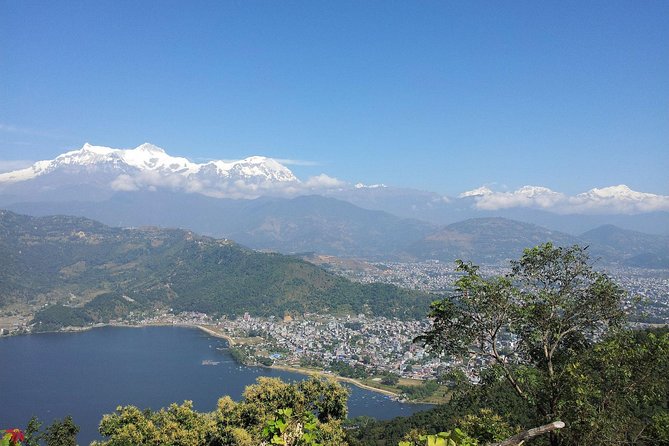
From Tadapani, you descend through forests to Ghandruk, a Gurung village. The altitude and the downhill feel different. Instead of pushing upward all day, you get moments to take in the village layout, watch locals moving through the day, and enjoy the slower pace of the ridge-to-village transfer.
Ghandruk is known for mountain views and also for its reach and connection with the Gurkha community. If you like culture that’s lived day to day rather than staged, this is the part of the trek that lands well. The trip also builds in an afternoon for visits connected to the Annapurna Conservation Office and museums, plus time to explore the village.
One practical note: village time is still time. Wear footwear you can stand in, because you’ll want to walk around. And if you’re the type who likes good photos, this is also where light can be your friend, especially later in the day.
Finishing the Loop: Nayapul Return, Pokhara Reset, and Kathmandu Arrival
Eventually you’re heading back down to the base road network, and that’s handled cleanly here. You’ll trek to Nayapul, then take a short drive back to Pokhara. After you reach Pokhara, the afternoon is free for you to relax and stroll around the lakeside.
Then you transfer back to Kathmandu the next morning. Your final evening includes a farewell dinner at a traditional Nepalese restaurant with cultural performances. That’s a nice closing rhythm: you spend days outdoors, then you get a warm, seated night before flying home.
Price and Value: What $1,172.27 Covers, and What It Does Not
At $1,172.27 per person for roughly 10 days, this trek is priced like a supported Nepal package, not a barebones independent route. The value comes from how many “hard to organize yourself” items are already covered.
Included highlights that matter:
- Airport and hotel pickup/drop-off by private tourist vehicle
- Twin-share rooms in three-star hotels in Kathmandu (3 nights) and Pokhara (2 nights), with breakfast
- Guided Kathmandu valley city tour by private vehicle
- Guesthouse accommodation during the trek, mostly twin-share with occasional dormitory style rooms for 4 nights
- A licensed English-speaking trekking guide
- Porters to carry your luggage (one porter for every two guests)
- Permits for trekking, including Annapurna Conservation Park permits and TIMS
- Most meals: breakfast (9), lunch (6), dinner (6)
- Sightseeing and monument entrance fees in Kathmandu
- A sun hat and Ace the Himalaya duffel/kit bag, yours to keep
- A mobile ticket, if you prefer less paper hassle
What’s not included, and you should plan for it:
- Lunch and dinner in Kathmandu and Pokhara
- Travel insurance covering emergency rescue and evacuation
- International airfare and airport departure tax
- Nepal entry visa
- Alcoholic drinks and other personal purchases
- Personal trekking equipment
- Tips for trekking staff and drivers, which are expected
The biggest “value” angle for me is the porter arrangement plus guide team. Even on an easy trek, hauling your bag while doing repeated uphills can drain your day. With luggage handled, you can keep a steady pace and actually enjoy tea-house stops and village moments without turning every climb into a fight.
Group Size, Guides, and Why the Team Matters on This Route
This trek runs with a maximum group size of 15 travelers. That matters because it makes your mornings less chaotic. It also tends to mean lodge timing and meal logistics feel more human, especially on days built around early starts like Poon Hill sunrise.
Guide support is a standout theme in what people share about this company. Names that come up often in trip stories include Sushanta, Baburam (Babu), Ishwar, Janardan, and Shyam/Shaym, along with porter names like Bipi, Poson/Poshan, Limbhu, RJ, and Gopal. Across those accounts, the praise points to good pacing and helpful communication, which is exactly what you want when altitude, cold mornings, and multiple lodge transitions stack up.
You won’t need guide tricks to admire mountains. But you will appreciate them when the trail splits, weather shifts, or a day feels more strenuous than you expected.
What to Pack and How to Keep It Feeling Easy
The trek is listed as having a moderate fitness level, and “easy” doesn’t mean effortless. Some people find the walking more strenuous than expected. So you’ll want a simple strategy.
My practical advice:
- Plan for early mornings. Even if you love sunrise, your body will feel it.
- Bring a packable warm layer for the pre-dawn climb to Poon Hill. The viewpoint timing can bring cold.
- Use trekking shoes you already trust on uneven village paths and forest steps.
- Expect tea houses. Even with included meals, you may want extra snacks, water, or small purchases along the way.
- Take the day-by-day elevations seriously. You gain height gradually, and the air changes even when the trek is “friendly.”
Should You Book This Poon Hill Trek with Ace the Himalaya?
Book it if you want:
- A supported route with guide, porters, and permits handled
- The classic Annapurna experience without technical climbing
- Sunrise at Poon Hill as a central goal, not a random detour
- Kathmandu culture time plus Pokhara lake base comfort
I’d think twice if:
- You hate early starts, because Poon Hill is built around very early hiking
- You’re trying to keep costs ultra-low, since Kathmandu and Pokhara lunch and dinner are not included
- Your schedule is too tight to handle weather uncertainty, since the experience requires good weather for the trek highlights
If you want the best shot at turning this trek into a smooth, scenic trip rather than a logistics puzzle, this package hits the right notes. Poon Hill sunrise, village walking, and a well-run support system are the reason most people feel it was worth the effort.
FAQ
What is the main highlight of the Poon Hill trek?
The headline is the early hike to Poon Hill for sunrise and wide mountain views over the high Himalayas, with Machhapuchhare noted as a dominating skyline feature.
Does this trip include Kathmandu sightseeing before trekking?
Yes. You’ll do a Kathmandu valley city tour with stops at Pashupatinath Temple, Boudhanath Stupa, and Bhaktapur Durbar Square, plus a farewell dinner in Kathmandu near the end.
How do you get from Kathmandu to Pokhara?
After pickup from your hotel, you’ll be escorted to the bus station and take the tourist bus to Pokhara, which leaves around 7:30 am.
How are luggage and porters handled during the trek?
A trekking guide is included, and you also get porters to carry your luggage. The plan is one porter for every two guests.
Where do you sleep during the trek?
You stay in guesthouses during the trek, mostly in twin-share rooms with occasionally dormitory accommodation. The trek includes 4 nights on guesthouse stays.
Are meals included?
Breakfast is included 9 times. Lunch is included 6 times and dinner is included 6 times. Lunch and dinner in Kathmandu and Pokhara are not included.
What trekking permits are included?
The trip includes Annapurna Conservation Park permits and a TIMS permit for trekking.
How large is the group?
The maximum group size is 15 travelers.
What happens if I arrive in Kathmandu after 4 pm?
If you arrive after 4 pm, an airport representative will handle a trip briefing by the guide. The pre-trip meeting is the briefing time, so you should make sure you ask your questions then.
Latest additions near Kathmandu
- White Water River Rafting – 1 Day★ 4.3 · 3 reviews
- Traditional Momo Making Class★ 5.0 · 10 reviews
- Kathmandu to Pokhara Premium sofa bus ticket★ 4.0 · 17 reviews
- Ghorepani Poon Hill Trek★ 5.0 · 16 reviews
- Amazing 1 Day Trekking Experience in Kathmandu Nepal★ 5.0 · 24 reviews
- Ghorepani Poonhill Trek★ 5.0 · 5 reviews
- Walking tour of real Kathmandu through back streets.★ 5.0 · 3 reviews
- Wildlife Adventure in Chitwan Nepal★ 4.0 · 4 reviews
Poon Hill Treks, compared.
4-Day Ghorepani, Poonhill & Ghandruk Mountain Trek
Read our review →
Browse the lists this tour appears in