
Reviewed · POON HILL TREKS
Poon Hill Trek
First light in the Himalayas feels unreal. I love the Poon Hill sunrise payoff, with Himalayan peaks lighting up from multiple angles, and I love the English-speaking guide plus porter support that keeps the route manageable. One thing to consider is that the days include lots of stairs and steep climbs, so you will want solid walking legs and a steady pace.
This trip works especially well if you want a guided trek without losing comfort. You get private airport transfer in Kathmandu, then a long, scenic drive to Pokhara before the walking starts, with full-board meals during the trekking days and guesthouse stays along the way.
In This Review
- Key highlights that matter
- Why Poon Hill sunrise is worth planning around
- The week-long plan, with trekking built into days 3 to 6
- Kathmandu to Pokhara: a long drive that buys you real altitude momentum
- Ulleri stairs and forest climbs: the days you’ll feel in your legs
- Your first day of stairs and countryside (Hile start)
- The Ulleri Stairs day through magnolia and rhododendron
- Poon Hill sunrise: big peaks, the Kali Gandaki Gorge, then you keep walking
- After sunrise: late breakfast and a change in pace
- Ghorepani to Tadapani: hilly, up and down, still beautiful
- Ghandruk downhill finish and the drive back to Pokhara
- Your guide and porter setup: what the best trips quietly get right
- What your $450 covers, and where extra costs usually show up
- Packing notes that match what is and is not provided
- Weather, effort, and who this trek fits best
- Should you book this Poon Hill Trek with Nepal Trek Hub?
- FAQ
- Where is the meeting point and when does the trip start?
- Is airport pickup included?
- How long is the trek?
- What is included for meals and lodging during the trek?
- What permits are included?
- What happens if weather is bad?
Key highlights that matter
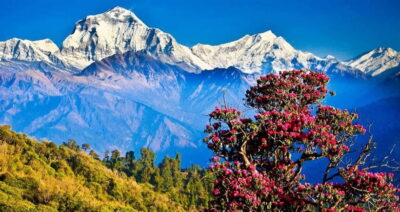
- Poon Hill sunrise view: Dhaulagiri I, Annapurna I, and Manalsu lit up early in the morning
- Eight-thousanders in sight: Dhulagiri and Annapurna viewpoints are a major reason to go
- Stair-heavy Ulleri days: magnolia and rhododendron forests, plus chances to spot wildlife like Nepal grey langur
- Ghorepani to Tadapani terrain: lots of up and down through flowering forests
- Ghandruk finish: a classic downhill wrap-up before the drive back to Pokhara and then Kathmandu
- Escorted with a porter ratio: fluent English guide, and each 2 guests get 1 porter
Why Poon Hill sunrise is worth planning around
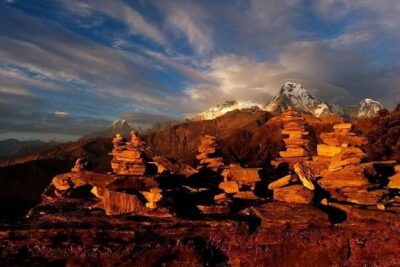
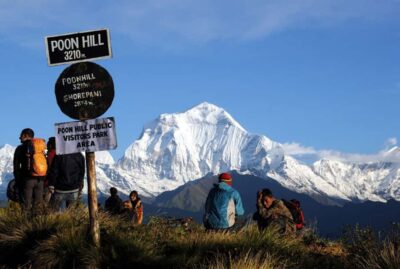
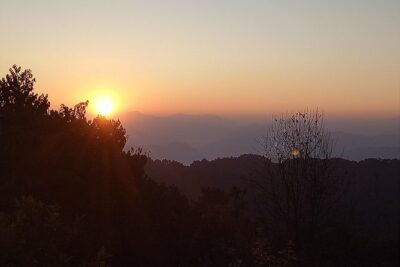
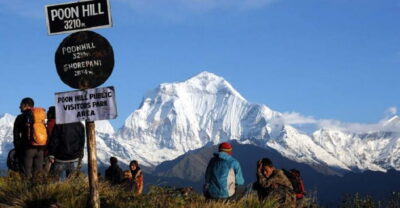
Poon Hill is one of those places where the schedule matters more than the scenery forecast. You are trekking to catch the early glow, the moment when ridgelines turn pink and sharp and the biggest peaks become real instead of just a name on a map. In clear weather, you get a wide 360-degree-style feeling across the Himalayas, including prominent 8000m mountains like Mt Dhulagiri (8167m) and Mt Annapurna (8091m).
What I like about this style of trek is that it is not only about one photo. Yes, sunrise is the star, but the route is built so you keep earning the views. You move through countryside and villages, then you climb into forest, then you crest early for the panorama, then you keep walking through changing terrain as the day warms up.
The practical upside is that the sunrise is not just a random viewpoint stop. The plan sends you from Ghorepani area to the viewpoint early, gives you time for the view, then brings you back for a late breakfast before continuing on the trail. That keeps the day from feeling like an all-nighter sprint.
More Treks in Kathmandu
- Everest Base Camp Trek – 14 Days
★ 5.0 · 1,499 reviews - Everest Base Camp Trek
★ 5.0 · 842 reviews - Everest Base Camp Trekking
★ 5.0 · 485 reviews
The week-long plan, with trekking built into days 3 to 6
Although this is sold as about 7 days, the trekking itself is the real heart of the trip and it lasts roughly 4 days. The extra time is for getting you into position: Kathmandu, the Pokhara transfer, and then the return drives when your hiking days end.
Here is the rhythm you can expect:
- Day 1: arrive, get picked up, transfer to your Kathmandu hotel, then get a trekking briefing
- Day 2: drive Kathmandu to Pokhara (long day, lots of mountain-range scenery along the way)
- Day 3: first trek day starting from the Hile area after driving in, then lots of stairs and village countryside
- Day 4: steep climbing on the famous Ulleri Stairs through forests of magnolia and rhododendron
- Day 5: very early Poon Hill sunrise, then back to the lodge for late breakfast, then continue toward Tadapani
- Day 6: trek down to Ghandruk, then drive to Pokhara to wrap up trekking
- Day 7: drive back to Kathmandu
That structure is smart if you want to avoid rushing. It also means you get at least one full transport day each way, which matters because the Annapurna region is not a hop-on hop-off place. You are paying for time, not just walking.
Kathmandu to Pokhara: a long drive that buys you real altitude momentum
On the Pokhara transfer day, the drive is listed at about 8 to 9 hours. That is a big block of time, but it has two values.
First, you start building the “mountain mindset” before you hike. Even from the road, you can see the mountain range, and arriving in Pokhara makes the trekking feel grounded instead of sudden.
Second, it spaces out your effort. Trekking starts on day 3, after you have already spent time traveling. That is easier for first-timers than jumping straight onto steep trail the moment you land.
A quick reality check: this is still a long road day. If you tend to get uncomfortable in cars, bring what you need for sitting, like a neck pillow or layers, because you will want to arrive ready to sleep and reset for the trail.
Ulleri stairs and forest climbs: the days you’ll feel in your legs
The route highlights two main walking days before and after sunrise day.
More Poon Hill treks:
- 4 Days Poon Hill Trek
★ 5.0 · 94 reviews - Ghorepani(Poonhill Trek)
★ 5.0 · 81 reviews - 4-day Poon Hill Trek
★ 5.0 · 74 reviews - Ghorepani Poon Hill Trek
★ 5.0 · 61 reviews
Your first day of stairs and countryside (Hile start)
After a 3 to 4 hour drive to the trekking starting point in the Hile area, you eat lunch and then start walking. This first trekking day is described as stair-heavy. That can be mentally tough, but it is also the way these trails introduce you to the region.
The good part is that you are not climbing through blank scenery. You pass meadows, jungle, and local villages along the trail. So every bend has something new, and the climbs do not feel like only a workout.
The Ulleri Stairs day through magnolia and rhododendron
Day 4 is the steep climb day, on what is known locally as the Ulleri Stairs. The path of ascent is described as winding through forests of magnolia and rhododendrons. If you go during flowering season, the scents and visuals can be dramatic. This is also where wildlife spotting becomes possible.
One specific nature note included is the Nepal grey langur, which you might see chirping overhead while you move through the treetops. It is the kind of detail that turns an ordinary climb into something memorable.
Practical advice for both Ulleri days: go slower than you think you need to. When stairs stack up, the win is not speed, it is steady breathing. Your guide will set the pace, but your job is to keep it comfortable so you can still enjoy the scenery.
Poon Hill sunrise: big peaks, the Kali Gandaki Gorge, then you keep walking
This is the core “why” of the trek. The day starts early with an excursion to Poon Hill. From there you get a panorama of major Himalayan peaks illuminated by sunrise, specifically Dhaulagiri I, Annapurna I, and Manalsu. You also get a view toward the Kali Gandaki Gorge, described as 6,000m deep.
There is also a geographic spectacle included in the route description: the trans-Himalayan ranges and the visual border of Nepal and Tibet. Even if you cannot name every ridge precisely, it helps to know you are standing in a place where the region feels huge and layered.
After sunrise: late breakfast and a change in pace
Once sunrise is done, the plan brings you back to the lodge for a late breakfast. Then you head back onto the trekking path.
That matters because some sunrise treks turn into a stressful day of minimal food and constant urgency. Here, the late breakfast timing helps you refuel before your next hiking section.
Ghorepani to Tadapani: hilly, up and down, still beautiful
The next leg, Ghorepani to Tadapani, is described as notoriously hilly with lots of up-and-down. That is not a complaint, it is a promise of how the day will feel: you will work your legs, then you will recover just enough, then you will work again.
The reward is dense, flowering forests around you. So while your legs get a workout, your eyes keep getting something fresh.
Ghandruk downhill finish and the drive back to Pokhara
After Tadapani, the itinerary brings you to a downhill day. You trek down to Ghandruk, then drive to Pokhara. This is the natural finish point because Ghandruk is known for being a strong village stop in many Annapurna routes, and it gives you a satisfying ending after the climbs.
Downhill days can be tricky too. They feel easier because the elevation is dropping, but your knees still do the work. If you have any history of knee pain, use trekking poles if you have them, and take downhill slowly.
Once you reach Pokhara on day 6, the trekking is over. Then day 7 is the drive back to Kathmandu. That final stretch is the decompression period, and it is where you will appreciate having your guide and porter team helping you focus on the last walking moments.
Your guide and porter setup: what the best trips quietly get right
This trek is fully escorted with a fluent English-speaking guide (licensed) and a porter ratio of about 1 porter per 2 guests. That is a big deal in real life. It means you are less likely to overload yourself, and it also means your guide can focus on route decisions and pacing instead of juggling everything.
I also think it is a strong sign that many different guides are named in feedback for Nepal Trek Hub. Names like Shree Ram, Nabaraj, Ashish, Abishek, and Bimal come up along with porters like Ashuk, Ashok, and Kul. The pattern is consistent: careful support, check-ins, and flexibility when weather changes.
One of the most useful points you should care about is adaptation. In feedback, guides are praised for adjusting plans based on weather conditions and the needs of the group. For a trek that is dependent on good weather, that skill is what keeps your trip on track.
If you are trekking with kids, this kind of support matters even more. There is an example of a family doing a Poon Hill trek with daughters aged 4 and 8, and Sheeram is named in connection with detailed planning and assistance throughout.
If you are solo, the same thing applies. A solo trek with strong guidance reduces the mental load of navigation and decision-making, especially on the stair-heavy sections and during early sunrise timing.
What your $450 covers, and where extra costs usually show up
The price is listed as $450 per person, and for that number you are not just buying a sunrise ticket. You are getting a lot of the logistics bundled:
Included highlights you should expect:
- Private transportation, including airport transfer by private vehicles in Kathmandu
- Full-board meals (breakfast, lunch, dinner) during the trekking days
- Guesthouse basis trekking accommodation during the trek
- Tourist bus transfer between Pokhara and Kathmandu for guest and guide
- Escorted trek with fluent English guide and porter support
- Annapurna Conservation Area Project permits
- First aid box
- Food and accommodation and salary of Nepali trekking staff
- Insurance for the guide and porter
- Duffle bag if you need it, plus seasonal fruits if possible
Not included costs to budget for:
- Nepal entry visa fee (listed as US$ 40)
- Lunch and dinner in Kathmandu and Pokhara cities
- Battery charges, laundry, phone calls, and hot shower during trekking
- Personal trekking equipment and clothing
- Drinks, snacks outside the included meals, and personal nature expenses
- Travel insurance (listed as mandatory in case of emergency)
- Tips for crew (not compulsory, but highly expected)
Value lens for you: $450 makes sense if you would otherwise have to arrange guide, porters, meals, permits, and the Kathmandu-Pokhara transfers on your own. The trek is also weather-sensitive, so having the operation organized is part of the value, not just the convenience.
One more value note: this is private for your group. That usually improves communication and pacing compared to shared-group tours, especially if you have kids, different speeds, or specific comfort needs.
Packing notes that match what is and is not provided
Because the trek includes guesthouse stays and full-board meals during the trek, you can keep your pack focused. But the list of what is not included is still important:
You should plan to bring your own:
- Personal trekking equipment and clothing
- Anything related to battery charging (since battery charges are not included during trekking)
- Any drinks or bar purchases along the way
- Your personal travel insurance documentation
A smart approach is to pack for cold early mornings, because Poon Hill sunrise means you will be outside early. Even without hard temperature numbers in the plan, I always treat sunrise treks as colder than you expect.
If you are unsure about duffle bag use, the trip notes say a duffle bag is provided if you need it, which can reduce stress when you pack.
Weather, effort, and who this trek fits best
The trip notes are clear that it requires good weather. If the trek is canceled due to poor weather, you will be offered a different date or a full refund. There is also a minimum traveler requirement.
On effort level, it says most travelers can participate and it is suitable for family holiday attendees. That fits with the fact it is a structured, escorted trek with guesthouse nights and porter help.
But do not treat this as flat strolling. You have:
- Stair-heavy hiking on day 3
- Steep climbing on Ulleri Stairs day 4
- A notoriously hilly Ghorepani to Tadapani section on day 5
- A downhill trek day 6 that still requires leg strength
So I’d recommend it to:
- First-time trekkers who want a guided plan and steady support
- Families who want a comfortable rhythm and porter help
- Anyone who specifically wants the Poon Hill sunrise and a full day experience around it, not just a short viewpoint stop
If you have significant knee trouble or mobility limits, you should think hard about stairs and downhill days. You can still ask for pacing adjustments, but the route’s shape is stair and climb.
Should you book this Poon Hill Trek with Nepal Trek Hub?
If your main goal is the sunrise views over big Himalayan peaks, this trek is built for that day. The combination of Poon Hill early panorama, stair-heavy Ulleri sections through rhododendron and magnolia forests, and the village walk feel makes it more than a one-morning event.
I would book if you want:
- A guided, escorted trek with English support
- Strong porter help (1 porter for every 2 guests)
- Full-board meals during trekking days and guesthouse accommodation
- A plan that includes transport into and out of the region smoothly
I would pause if:
- You know you struggle with stairs and steep climbs
- You do not have travel insurance, since it is mandatory
- You are not comfortable with weather-dependent scheduling, even though the operator offers alternatives or refunds if canceled for poor conditions
FAQ
Where is the meeting point and when does the trip start?
The start is Tribhuvan Airport, Kathmandu, Nepal, with a listed start time of 7:15 am.
Is airport pickup included?
Yes. Kathmandu international airport transfer is included by private vehicles, and the itinerary also includes pickup from the airport on the first day.
How long is the trek?
It is listed as 7 days (approx.), with a trek experience described as a 4-day hike.
What is included for meals and lodging during the trek?
Meals on full board are included during trekking days, including breakfast, lunch, and dinner each day. Trekking accommodation is on a guest house basis during the trekking days.
What permits are included?
The trip includes Annapurna conservation area project permits.
What happens if weather is bad?
The experience requires good weather. If it is canceled due to poor weather, you will be offered a different date or a full refund.
Latest additions near Kathmandu
- White Water River Rafting – 1 Day★ 4.3 · 3 reviews
- Traditional Momo Making Class★ 5.0 · 10 reviews
- Kathmandu to Pokhara Premium sofa bus ticket★ 4.0 · 17 reviews
- Ghorepani Poon Hill Trek★ 5.0 · 16 reviews
- Amazing 1 Day Trekking Experience in Kathmandu Nepal★ 5.0 · 24 reviews
- Ghorepani Poonhill Trek★ 5.0 · 5 reviews
- Walking tour of real Kathmandu through back streets.★ 5.0 · 3 reviews
- Wildlife Adventure in Chitwan Nepal★ 4.0 · 4 reviews
Poon Hill Treks, compared.
4-Day Ghorepani, Poonhill & Ghandruk Mountain Trek
Read our review →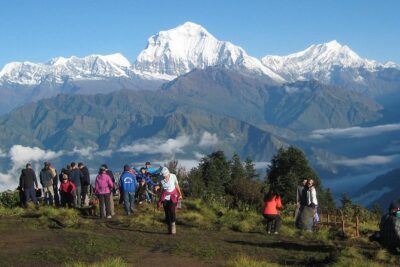
Browse the lists this tour appears in