
Reviewed · UNESCO HERITAGE TOURS
Old Kathmandu Walking Tour, Historic World Heritage Durbar Square
Old streets, living faith, Durbar Square, one morning. I love how this route mixes big name stops with quieter courtyards and side lanes, and I love the way your guide connects Hindu and Buddhist life on the same block at Kathmandu Durbar Square and Kumari Chowk.
The main thing to plan for is the extra entry fees for Kathmandu Durbar Square premises and the Swayambhu Stupa area, which are not included, so you will want a little cash set aside before the walk gets serious.
In This Review
- Key highlights to look for
- Getting oriented in Old Kathmandu without wasting time
- Thambahil (Bikramshila Mahavihar): where Thamel’s name comes from
- Asan Bazaar: the oldest living market in Kathmandu
- Janabaha Dyo and Seto MachhindraNath: compassion in carved icons
- Itum Bahal: courtyards of Tara and the feel of an older Kathmandu
- Kathmandu Durbar Square: palace architecture and the Kumari focus
- Kumari Chowk: the living goddess stop
- Kathesimbu and Dharmakirti Vihara: the Swayambhu replica detour
- Cafe Mitra in Thamel: the practical debrief and last questions
- The guides make the difference, especially for the small moments
- Price and value: what $28 gets you, and what costs extra
- Who this tour is best for
- Timing and practical tips for a smooth morning
- Should you book this Old Kathmandu Walking Tour?
- FAQ
- Where does the Old Kathmandu Walking Tour start?
- What time does the tour begin, and how long is it?
- Do you get pickup if you are staying in Thamel?
- How much does the tour cost?
- Is this a private tour or a group tour?
- What is included in the price?
- What entry fees are not included?
- Which major sites are visited?
- How does cancellation work?
Key highlights to look for
- Private pace with local guidance on a 4 to 5 hour walking route, with only your group.
- Rare stops like Bikramshila Mahavihar (Thambahil) and Itum Bahal that many first-time visitors miss.
- Asan Bazaar for everyday Kathmandu at one of the city’s oldest living markets.
- Seto MachhindraNath shrine details including 108 engraved Avalokitesvara icons.
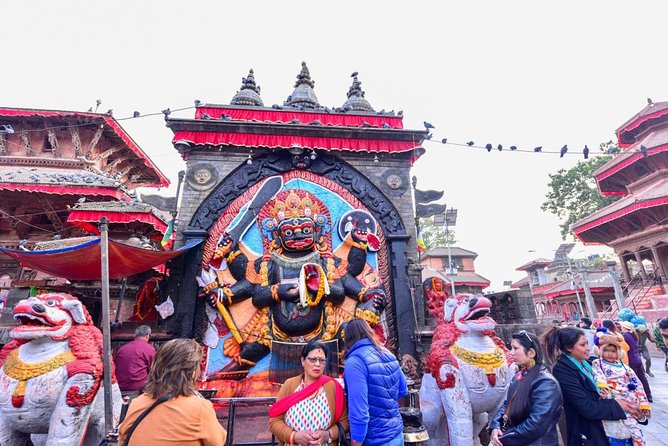
- Kumari Chowk viewing time inside Durbar Square as a major emotional and cultural moment.
- A calm finish with tea at Cafe Mitra in Thamel, plus a chance to ask questions.
Getting oriented in Old Kathmandu without wasting time
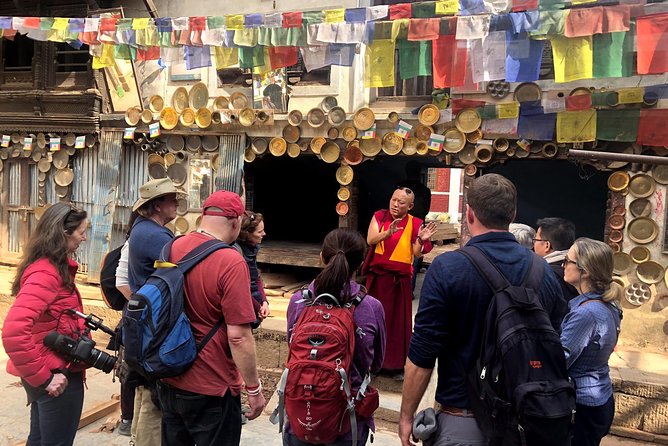
If Kathmandu is new to you, you need two things fast: a sense of direction and a story that makes the streets make sense. This tour starts at Amrit Marg at 9:00 am, and if you are in Thamel it is easy, either meet at the hotel lobby area or get picked up for a short drive to the start point (they note it is about a 20-minute drive).
What I like is the balance. You spend enough time at the major sites to actually understand them, but you also get the shorter stops that explain daily belief and local craftsmanship. For me, that is the best use of a half-day in Kathmandu, especially when you want context and not just photos.
You should also know the tour is designed for walking. That is part of the point, since many of the interesting details sit just off the main roads in courtyards and temple lanes.
More Walking Tours in Kathmandu
- Kathmandu: Food and Drink Walking Tour
★ 4.9 · 292 reviews - Kathmandu Food and Drink Walking Tour
★ 5.0 · 266 reviews - Kathmandu: Food and Drink Walking Tour
★ 4.9 · 119 reviews
Thambahil (Bikramshila Mahavihar): where Thamel’s name comes from
The morning begins at Bikramshila Mahavihar, also known as Thambahil. This is a Buddhist monument associated with the Newar community, and it is often less visited than the headline Hindu and UNESCO stops. The tour’s neat connection here is the naming link, since Thamel is named after this historic site.
Even if you are not a temple-nerd, you will get something from starting this way. It gives you a Kathmandu baseline, not only kings and palaces, but the everyday religious geography that Newars have practiced for centuries.
This stop runs about 15 minutes and the admission ticket is free, so it is a low-stress start while your guide warms you up with context.
Asan Bazaar: the oldest living market in Kathmandu
Next comes Asan, described as one of Kathmandu’s oldest living markets. This is the part of the tour where the city feels practical again. You see people buying and selling daily-use goods, from produce and clothing to items tied to spiritual practice.
I like Asan because it teaches you how to look at the city. Instead of treating temples as isolated attractions, you start to see how belief is woven into commerce, errands, and routine. Your guide can point out what you are actually seeing, so you are not just wandering among stalls and hoping for the best.
The Asan stop is also about 15 minutes with free admission, which makes it a good fit even if you are short on energy. Just wear comfortable shoes, since market areas can feel busy and crowded.
Janabaha Dyo and Seto MachhindraNath: compassion in carved icons
Then you move to Janabaha Dyo, also called the Seto MachhindraNath Temple. This shrine is connected with a local deity for Kathmandu and is known among Tibetan Buddhists through the figure of Avalokitesvara, the god of compassion.
The tour highlights a specific detail that you might otherwise miss: 108 engraved icons of Avalokitesvara, representing major forms. That kind of number matters in Buddhist iconography, and your guide can help you interpret what those icons are saying beyond the surface.
Like the early stops, this one is brief at about 15 minutes and free to enter. Use it to reset your attention. Markets keep your eyes busy, then this temple stop forces you to slow down and look at carving and symbolism.
More UNESCO Heritage Tours in Kathmandu:
- Private Kathmandu Sightseeing Tour | UNESCO World Heritage sites
★ 5.0 · 756 reviews - Kathmandu: 7 UNESCO Sites with Lunch
★ 4.8 · 744 reviews - Kathmandu: Full Day 7 UNESCO Tour with Lunch – Private/Group
★ 5.0 · 415 reviews - Kathmandu: Full Day Top 4 UNESCO Tour with Lunch – Private/Group
★ 5.0 · 269 reviews
Itum Bahal: courtyards of Tara and the feel of an older Kathmandu
After Asan and the temple stop, you reach Itum Bahal. This Buddhist monastic complex is described as having 11th-century roots, and while only part of the original building remains, the surviving sections and courtyards still communicate how these spaces worked.
Your guide will likely point you toward the courtyards connected with the goddess Tara, which adds another layer to the story of Buddhist practice in the Kathmandu Valley. Even in a shorter visit, you can feel the difference between a temple that is built for daily worship and a monastery complex designed for community life.
This stop is about 30 minutes and free. I find the longer timing helpful here because it gives you a bit of breathing room. Courtyards and monastery remnants tend to reward patience.
Kathmandu Durbar Square: palace architecture and the Kumari focus
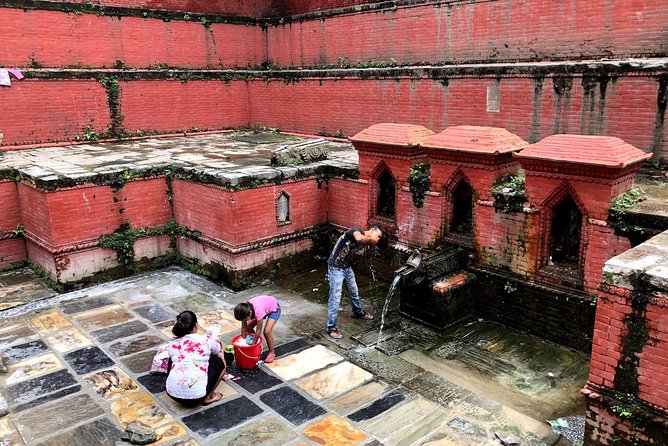
Now for the big one: Kathmandu Durbar Square. This is where the tour delivers its UNESCO World Heritage Site moment. The square is tied to the 17th century palace of Nepal’s kings, and it is surrounded by temples and linked structures, including the Kumari Temple.
Your stop here is about 45 minutes, but entry is not included in the tour price. That is the drawback worth planning for. You are exploring a live, protected heritage zone, so having money ready prevents the tour from feeling like it is held together with awkward waiting.
What to look for inside Durbar Square is not only the big buildings. Try focusing on the details your guide points out: traditional architecture, temple layout, and how people move through the square while worship is happening. The tour timing is long enough to understand the layout, not just pass through.
Kumari Chowk: the living goddess stop
Within Kathmandu Durbar Square is Kumari Chowk, and this is a can’t-miss stop if you care about Nepal’s living traditions. The tour describes it as home of Kumari, the living goddess, inside a three hundred years old artistic building.
The visit is about 20 minutes. If you are lucky, you may be able to see the living goddess, but even when you are not seeing her directly, the setting is powerful and the guide’s explanation helps you understand why.
This is also where the best review moments tend to come from. People remember the stop itself, but they also remember how your guide connects the ritual to the architecture and to the people who keep the tradition going.
Kathesimbu and Dharmakirti Vihara: the Swayambhu replica detour
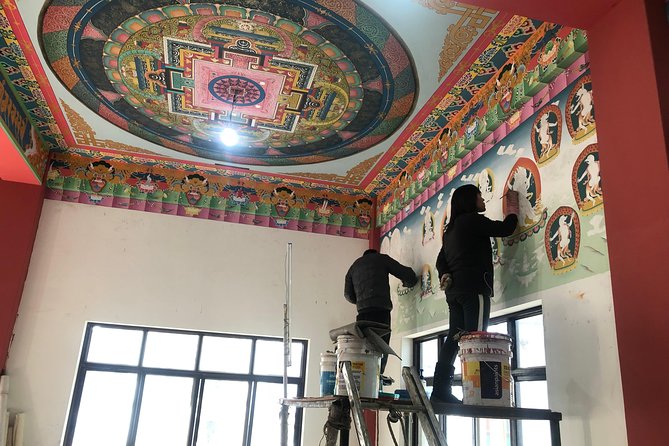
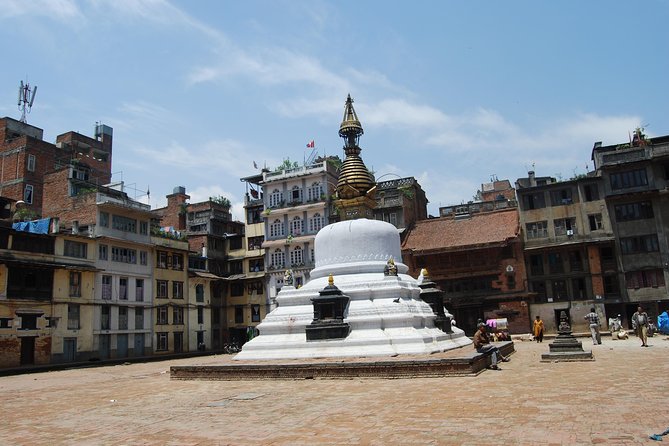
After Durbar Square, the route continues through the old town toward the stupa complex at Kathesimbu, also associated with Dharmakirti Vihara. The key detail from the tour description is that the complex houses a replica of the Swayambhu Stupa.
This stop is one of those “why is this here” moments that turns into a learning payoff. It helps you connect Kathmandu sites to each other, and it gives you a change of pace from the densest Durbar Square area.
Because the tour notes that entry fees are not included for Swayambhu Stupa, it is smart to have funds ready anyway. The replica stop itself may not require the same ticket type, but your guide will tell you what applies on the day.
Cafe Mitra in Thamel: the practical debrief and last questions
The walk ends back in Thamel at Cafe Mitra Thamel Marg. You get about 30 minutes here, and the tour includes coffee and/or tea, with a drink of your choice.
I like this finish because it is not just a dismissal. It is time to ask real questions, and it is also a low-pressure way to decompress after temples and tight streets.
If you are the type who gets overwhelmed by too much information while you are walking, the cafe stop helps. You can digest what you saw and turn confusion into clarity with a simple chat.
The guides make the difference, especially for the small moments
The tour is run by Three Jewels Adventures, and the guiding style is where the strongest praise shows up. In one set of experiences, Mr. Mahesh Shreshtha is mentioned as very experienced, with a route that makes you notice details you would otherwise step past. In another, a guide named Modo is called out as great, with special attention to how worship actually looks and feels in real life.
One review detail that stands out is the chance to meet a Hindu priest at a small temple stop. Even if you are not fluent in the details of priest roles, a short human interaction can change how you understand the whole day. You stop viewing religion as only architecture and start seeing it as living practice.
Price and value: what $28 gets you, and what costs extra
At $28 per person, this is priced for a half-day that still feels substantial. The tour includes private transportation and coffee and/or tea, which matters because it keeps the day from turning into all walking and no relief. It also notes pickup offered and group discounts, plus a mobile ticket.
Now the real money check: entry fees for Kathmandu Durbar Square premises and the Swayambhu Stupa area are not included. So your total cost is going to depend on tickets, and you should plan for that before you go.
Still, the value is strong because you are paying for more than access. You are paying for a guided route through lesser-visited sites like Thambahil and Itum Bahal, plus the headline Durbar Square and Kumari Chowk stop. For a first visit, this kind of routing often beats trying to piece it together by yourself while you are still learning the city.
Who this tour is best for
This tour fits best if you:
- Want a first-or-second-day Kathmandu orientation with both major and lesser stops.
- Like walking, but still want someone to decide the route and explain what you are seeing.
- Care about the intersection of Hindu and Buddhist sacred spaces.
- Are curious about Kumari and want a guided look at the living goddess context, not just a quick photo stop.
It may not be the best fit if you:
- Hate paying site-entry fees on top of the tour price.
- Have limited mobility or struggle with a 4 to 5 hour walking plan.
- Want a deep, museum-style experience at one or two locations only, rather than several stops.
Timing and practical tips for a smooth morning
Start is 9:00 am, and the tour runs about 4 to 5 hours. That is a good chunk of time, so treat it as your main Kathmandu activity for the day, not something you squeeze in between heavy plans.
Here are smart, simple ways to make it easier:
- Bring cash for the Durbar Square and Swayambhu Stupa entry portion since those fees are not included.
- Wear shoes you can walk in for hours, since the “old town” parts are all about foot movement and courtyards.
- Plan for a bit of heat and sun. Even in the shade of temple walls, the streets can feel exposed.
- If you are hoping to see Kumari, arrive in a calm mindset. This stop is timed, but the day’s flow and access can affect what you personally see.
Also, since confirmation happens at booking and the tour is private, you can expect a more personal pace than big group cattle-car tours.
Should you book this Old Kathmandu Walking Tour?
I think it is a great booking when you want a single morning that links the city’s religious map with its everyday life. The route gives you the market side at Asan, the Buddhist Newar monuments at Thambahil and Itum Bahal, the iconic UNESCO moment at Kathmandu Durbar Square, and the emotional highlight at Kumari Chowk, then a relaxed landing at Cafe Mitra.
If you are the kind of traveler who appreciates small details, you will likely love how the guide steers your eyes toward temple courtyards and icon work, not only the obvious structures. And if you are flexible about entry fees, the pricing feels fair for the mix of transport, guidance, and included tea.
If you want, tell me when you are going and what level of walking you are comfortable with, and I can help you decide whether this is the right morning activity or whether you should pair it with a second, slower afternoon plan.
FAQ
Where does the Old Kathmandu Walking Tour start?
The tour starts at Amrit Marg, Kathmandu 44600, Nepal.
What time does the tour begin, and how long is it?
It starts at 9:00 am and runs about 4 to 5 hours.
Do you get pickup if you are staying in Thamel?
Yes. Pickup is offered, and if you are in tourist town Thamel they bring you to the starting point by a short drive.
How much does the tour cost?
The price is $28.00 per person.
Is this a private tour or a group tour?
It is a private tour/activity, meaning only your group participates.
What is included in the price?
The tour includes private transportation and coffee and/or tea.
What entry fees are not included?
Entry fees for Kathmandu Durbar Square premises and the Swayambhu Stupa are not included.
Which major sites are visited?
The tour includes stops at Kathmandu Durbar Square and Kumari Chowk, plus other heritage sites like Thambahil, Asan, and the Seto MachhindraNath Temple.
How does cancellation work?
You can cancel for free up to 24 hours in advance for a full refund.
More History Tours in Kathmandu
- UNESCO Seven World Heritage Tour in Kathmandu
★ 5.0 · 253 reviews - Nepal Discovery Tour: Heritage Sites & Scenic Hill Easy Hike
★ 5.0 · 121 reviews - Kathmandu Private Sightseeing Tour | UNESCO World Heritage Sites
★ 5.0 · 109 reviews - Kathmandu World Heritage Tour
★ 5.0 · 74 reviews
Latest additions near Kathmandu
- White Water River Rafting – 1 Day★ 4.3 · 3 reviews
- Traditional Momo Making Class★ 5.0 · 10 reviews
- Kathmandu to Pokhara Premium sofa bus ticket★ 4.0 · 17 reviews
- Ghorepani Poon Hill Trek★ 5.0 · 16 reviews
- Amazing 1 Day Trekking Experience in Kathmandu Nepal★ 5.0 · 24 reviews
- Ghorepani Poonhill Trek★ 5.0 · 5 reviews
- Walking tour of real Kathmandu through back streets.★ 5.0 · 3 reviews
- Wildlife Adventure in Chitwan Nepal★ 4.0 · 4 reviews
UNESCO Heritage Tours, compared.
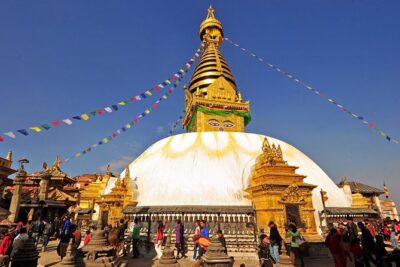
Private Kathmandu Sightseeing Tour | UNESCO World Heritage sites
Read our review →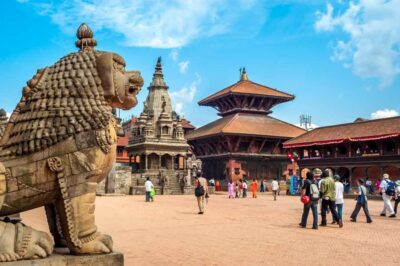
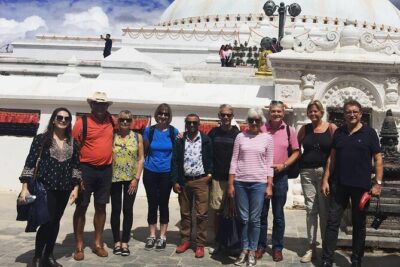
Full Day 7 UNESCO Tour with Lunch – Private/Group
Read our review →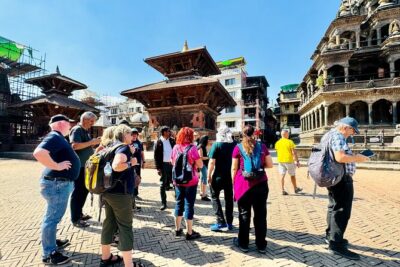
Full Day Top 4 UNESCO Tour with Lunch – Private/Group
Read our review →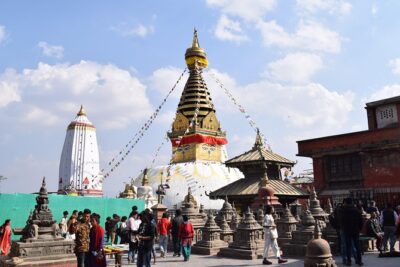
Kathmandu Private Sightseeing Tour | UNESCO World Heritage Sites
Read our review →Browse the lists this tour appears in