
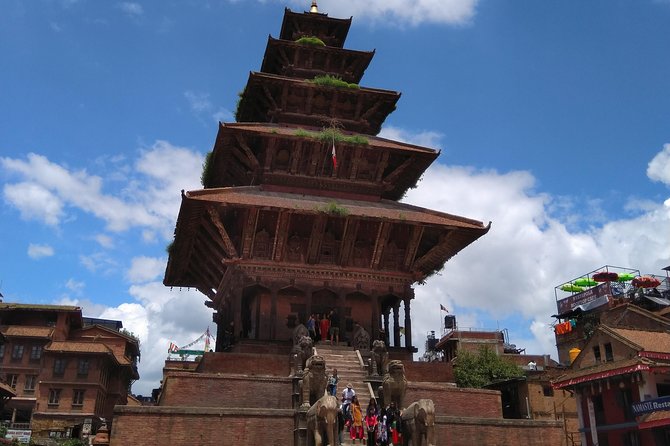
Reviewed · UNESCO HERITAGE TOURS
Kathmandu World Heritage Sites Tour Sightseeing
Four UNESCO stops, one Kathmandu day. This private sightseeing tour strings together the big spiritual landmarks that shaped the city, with a guide to help you read what you are seeing. I like that the schedule covers Hindu and Buddhist worlds in one flow, not as a random list of sights.
I especially love the Pashupatinath Temple stop, where the sacred atmosphere feels real, with Lord Shiva at the center and the Bagmati River nearby. I also really enjoyed Boudhanath Stupa, because it is all prayer, with Mani walls and prayer wheels you can watch as the day goes on.
One thing to consider: you only spend about one hour per UNESCO site, so if you want slow, long wandering, this plan will feel a bit paced.
In This Review
- Key things to know before you go
- The Kathmandu UNESCO route, built for meaning
- Pashupatinath Temple: Shiva, monkeys, and the Bagmati River
- Boudhanath Stupa: Tibetan monasteries, Mani walls, and prayer wheels
- Swayambhunath Temple: the monkey temple plus Buddha scenes and hilltop views
- Kathmandu Durbar Square: Malla and Shah-era art, Kumari, and major temples
- A guide makes the difference, especially for Hindu and Buddhist meaning
- Price and value: what $183 gets you in a long day
- Timing, comfort, and practical tips for a 9:15am start
- Should you book this Kathmandu World Heritage Sites Tour?
- FAQ
- How much does the Kathmandu World Heritage Sites Tour cost?
- How long is the tour?
- What time does the tour start, and where is the meeting point?
- Is pickup offered?
- Which UNESCO sites are included in the sightseeing stops?
- Are admission tickets included?
- What’s included in the tour price?
- What is not included?
- What is the cancellation policy?
Key things to know before you go
- Private guide plus private vehicle: You get a smoother day than shoehorning everything into public transit.
- Four UNESCO sites, one storyline: You’ll connect Hindu and Buddhist meaning across different neighborhoods.
- Monkey temples are not a joke: Plan for photos, but also keep a respectful distance in monkey areas.
- Prayer walls and wheels show up more than once: You’ll see this theme at Boudhanath and Swayambhunath.
- Lunch is included: You can stay focused on sites instead of hunting for food between stops.
The Kathmandu UNESCO route, built for meaning
Kathmandu can feel spiritual in a loud, everyday way. You do not just see temples. You see people using them. That is what makes this tour work. It is a private, half-day style circuit that hits four UNESCO World Heritage Sites linked by history and belief, with a guide who can explain what you are looking at as you go.
The format is also practical. You start at 9:15am, and the tour runs about 6 to 8 hours, with hotel pickup and drop-off in a private vehicle. That matters because Kathmandu traffic and timing can make a self-guided day more stressful than it needs to be.
And at this price point, the value is not just “you get transportation.” The tour also includes lunch and admission tickets for each stop, which can add up quickly when you plan visits on your own.
More UNESCO Heritage Tours in Kathmandu:
- Private Kathmandu Sightseeing Tour | UNESCO World Heritage sites
★ 5.0 · 756 reviews - Kathmandu: 7 UNESCO Sites with Lunch
★ 4.8 · 744 reviews - Kathmandu: Full Day 7 UNESCO Tour with Lunch – Private/Group
★ 5.0 · 415 reviews
Pashupatinath Temple: Shiva, monkeys, and the Bagmati River
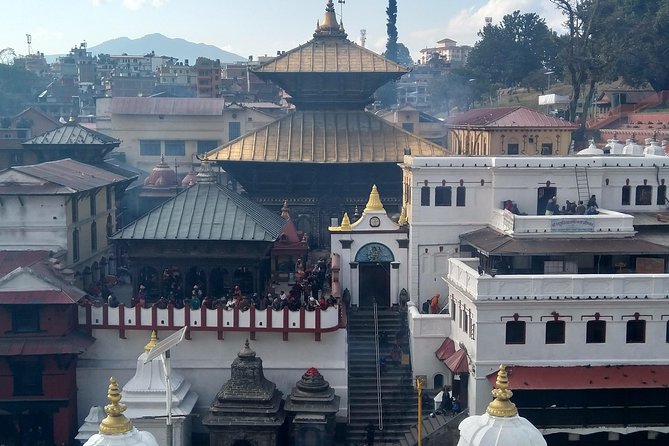
Pashupatinath Temple is where the day starts, and it sets the tone fast. This is the place associated with Lord Shiva, with a Hindu setting filled with gods and devotional meaning. You will notice how the temple complex feels active, even when it is quiet in the ways that matter. The atmosphere is part of the experience, not just the architecture.
You will also see the monkey element here. Pashupatinath is known for monkeys, and it changes how you move around. Keep your belongings secure and be mindful about close-up photo attempts. A guide will help you figure out where people typically stand and how to keep the vibe respectful.
Look toward the Bagmati River, because the river connection is a big part of why Pashupatinath feels so deeply tied to daily ritual and sacred space. Even if you are not tracing every detail of Hindu practice, you can still grasp the setting as a living religious landscape rather than a museum stop.
Possible drawback? If you prefer strictly scenic sightseeing with minimal ceremony, this stop can feel more intense than you expect, because it is a functioning place of worship. I like that honesty, but it is worth knowing.
Boudhanath Stupa: Tibetan monasteries, Mani walls, and prayer wheels
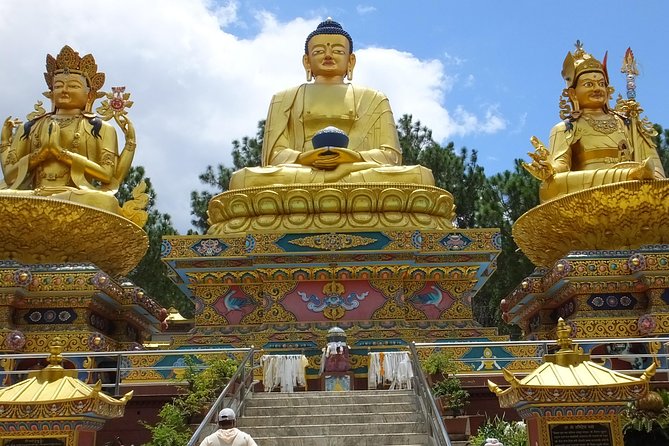
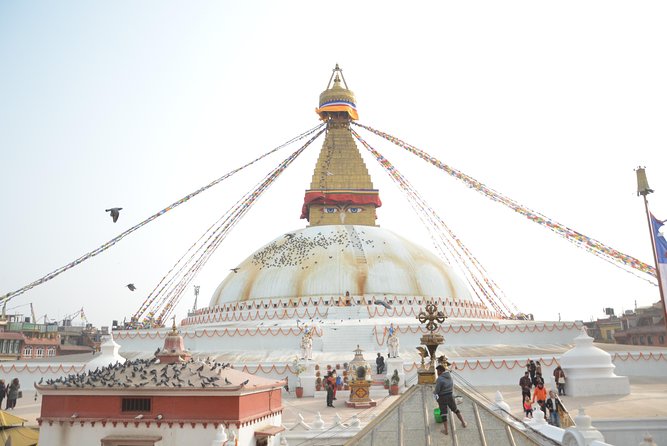
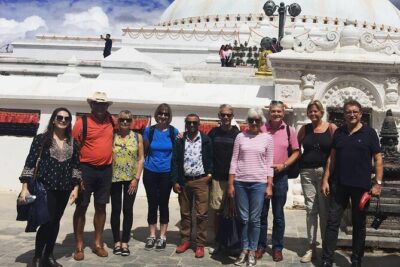
After Pashupatinath, the tour shifts from a Hindu temple focus to Buddhist stupa scale. Boudhanath Stupa is one of the largest stupas in South Asia, and the size matters. Standing near it, you feel the place is meant for attention from far away, then for reverence up close.
Around the stupa, you will see Tibetan monasteries, plus Buddhist-style construction and a surrounding area shaped by devotion. This is also where the tour leans into repetitive, calming details. You will encounter Mani walls and prayer wheels all around the complex. The rhythm of those elements gives you something you can watch without needing to “understand everything” immediately.
The tour also notes Tibetan cuisine as something you can discover in the area. That is a smart add. A stupa is spiritual, but you will still want a real break for taste and energy, and Boudhanath’s neighborhood tends to make that easy.
One practical consideration: this is a popular spiritual stop. It can get busy. With a private guide, you can usually adjust your timing and pacing, but expect movement, lines, and a constant flow of visitors.
Swayambhunath Temple: the monkey temple plus Buddha scenes and hilltop views
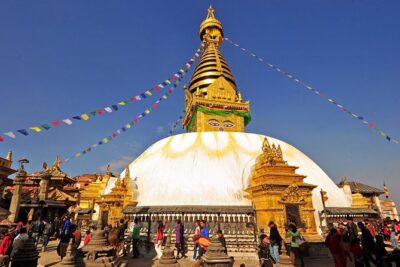
Then you climb into the famous Swayambhunath zone, also known as the monkey temple. This is one of those Kathmandu stops that does two jobs at once. It is Buddhist and also connected to Hindu culture, which is why it is often described as a place that signals unity in diversity.
What I like here is that you do not just get a view. You get imagery and symbolism. The temple area includes carvings showing the life cycle of Buddha, plus various sculptures. The presence of Harati Temple and Saraswati Temple adds a Hindu layer you can spot as you walk, so the site feels like a crossroads rather than a single-faith postcard.
You will also see Mani walls and prayer wheels again, which makes repetition useful. It helps you recognize patterns across traditions, and it gives you a deeper appreciation of how these devotional objects function across different spaces.
And yes, you will have chances to take pictures of monkeys, especially in the areas where visitors naturally pause. Just keep it sensible. Do not try to out-stare the animals. Let them pass. Give them room. It keeps everyone safe and keeps the moment more enjoyable.
The best reward is at the top. You can position yourself for beautiful views of Kathmandu from the hilltop. That view is not just a bonus. It helps you understand the city’s layout, so the day’s stops start to feel connected in your mind.
More History Tours in Kathmandu:
- UNESCO Seven World Heritage Tour in Kathmandu
★ 5.0 · 253 reviews - Nepal Discovery Tour: Heritage Sites & Scenic Hill Easy Hike
★ 5.0 · 121 reviews - Kathmandu Private Sightseeing Tour | UNESCO World Heritage Sites
★ 5.0 · 109 reviews - Kathmandu World Heritage Tour
★ 5.0 · 74 reviews
Kathmandu Durbar Square: Malla and Shah-era art, Kumari, and major temples
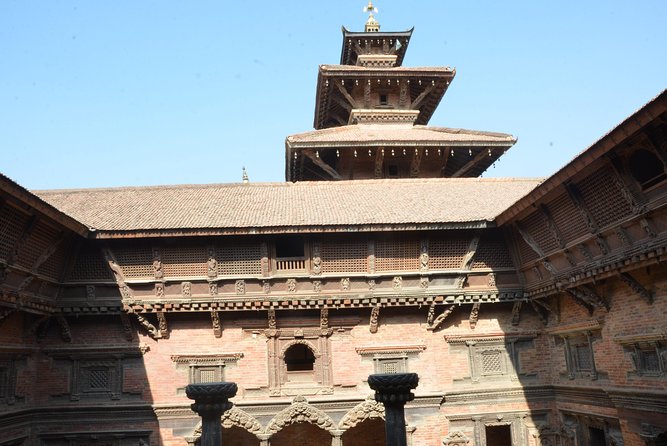
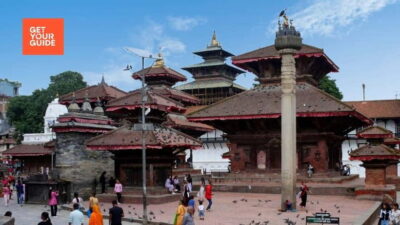
By the time you reach Kathmandu Durbar Square, you are looking at the city’s royal and artistic legacy, not just the devotional landmarks. This UNESCO site is tied to kings and dynasties, including the Malla and Shah periods, roughly from the 12th to the 18th century. You will see that in the craft details and the cluster of temples and monuments.
If you care about handmade art, this is where you will start noticing it. The sculptures and monuments around the square show the visual language of ancient Nepalese culture, and you can feel the planning of the space: temples grouped together, courtyards that guide foot traffic, and focal points that pull your attention from one shrine to another.
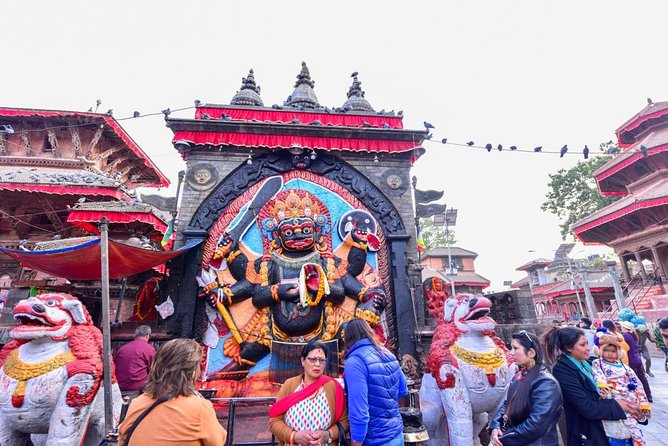
Some of the major attractions you can expect to see include Hanuman Dhoka, Taleju Mandir, Hanuman Temple, the Royal Palace, and the Kal Bhairab temple. That is a lot of names, but your guide’s job here is to translate the layout. Once you have a simple mental map, the square stops feeling like a maze.
You should also know about the reference to the home of sacred Lord Shiva and Parvati, plus the living goddess, Kumari. The tour description highlights Kumari as a key spiritual and cultural element of the square. Even if you do not go into every ritual detail, the presence of Kumari in the narrative tells you this is not just a heritage stop. It is part of living tradition.
The last thing that makes Durbar Square special is the way it can change how you view the day. After temples and stupa symbolism, you shift into a more civic, royal side of Kathmandu. It rounds out your understanding of the city’s spiritual identity.
A guide makes the difference, especially for Hindu and Buddhist meaning
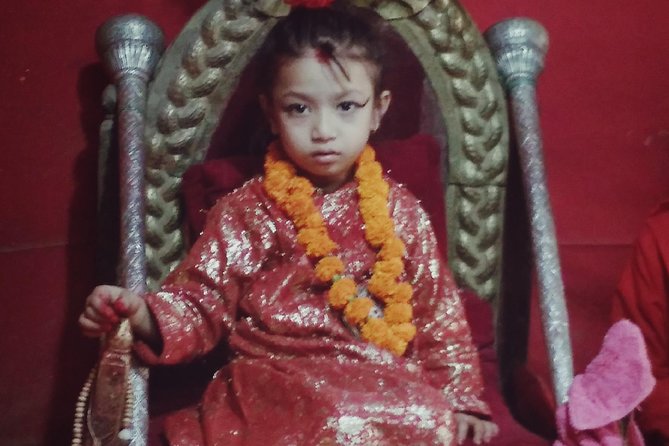
This tour includes an experienced English/Chinese/Hindi speaking guide. That matters because Kathmandu’s religious sites can look similar at a distance, but the meaning and the symbolism shift from place to place. When you have someone to explain what is happening and why it matters, you spend less time guessing and more time noticing.
You will also notice that the tour is built around interpretation, not just photo stops. Each location has a specific angle: Pashupatinath as Lord Shiva and sacred Hindu ambience, Boudhanath as Tibetan Buddhist devotion around a major stupa, Swayambhunath as a mixed Hindu-Buddhist symbolic space with carvings and temples, and Durbar Square as royal-era craftsmanship and key shrines tied to Kumari.
Also, the overall vibe from the tour feedback you can trust here is that the guide is friendly and accommodating, and that people came away saying they loved the places and the views. That kind of guide makes a big difference when you are standing somewhere holy and you want to know how to behave and what to look for.
Price and value: what $183 gets you in a long day
At $183 per person, this tour is priced like a guided, all-in city experience. The key for value is what is included. You get:
- hotel pickup and drop-off in a private vehicle
- a private tour setup (just your group)
- admission tickets for each of the four stops
- lunch
- guide and taxes, plus guide and office service charges
When you compare this to booking guides and entrance fees separately, the math usually becomes less friendly on your own. Plus, the private transportation saves time and reduces stress, especially for a day that moves through multiple parts of Kathmandu.
Is it “cheap”? No. But for a day with four UNESCO World Heritage Sites, a guide, and admission included, it is not overpriced either. You are paying for a structured route that keeps you from losing time figuring out logistics while you are trying to focus on the sights.
One consideration: the schedule is efficient. If you want extra free time at each site, a private tour at this format may feel like you are ticking boxes. That is the trade-off for a well-organized, meaningful half-day.
Timing, comfort, and practical tips for a 9:15am start
You start at 9:15am, which is helpful. Early timing can mean you deal with fewer midday rush moments and more comfortable walking before the day gets heavy.
Each UNESCO stop is listed as about one hour, which is a good average for a guided highlight visit. It is long enough to see key sights and listen to explanations, but short enough that you move steadily. That works best if you like guided pacing.
Wear and bring what makes temple days easier. In many places in Nepal, you will be entering sacred spaces and walking around active religious areas. I recommend comfortable shoes and clothing that helps you feel respectful at shrines.
And about the monkey zones at Pashupatinath and Swayambhunath: keep your phone and camera habits in check. If you are focused on taking pictures, you can forget how close people stand. A guide can help you find a better spot, but you should still watch your step and your surroundings.
Should you book this Kathmandu World Heritage Sites Tour?
I think this is a great pick if you want a guided UNESCO overview that connects Hindu and Buddhist landmarks without turning your day into a logistical headache. It is especially worth it if you appreciate interpretation, because the guide is the engine that makes the sites feel meaningful rather than just famous.
Book it if:
- you want four UNESCO stops in one day
- you like private pacing with pickup and drop-off
- you want admission tickets and lunch handled
- you value a guide who is friendly and practical
Skip it if:
- you want lots of free time to wander without time limits
- you are looking for a mostly scenery-focused day, not a religious and cultural one
- monkey activity would make you uncomfortable, since you will be visiting monkey-associated sites
If you match those preferences, this tour gives you a very efficient way to understand Kathmandu’s spiritual landscape, from Shiva’s sacred setting to stupa devotion to royal-era art at Durbar Square.
FAQ
How much does the Kathmandu World Heritage Sites Tour cost?
The price is $183.00 per person.
How long is the tour?
It runs about 6 to 8 hours.
What time does the tour start, and where is the meeting point?
The start time is 9:15am, and the meeting point is Nepal Big Mountain Travel Co. Pvt. Ltd. on Chaksibari Marg, Kathmandu 44600, Nepal.
Is pickup offered?
Yes. The tour includes hotel pickups and drops in a private vehicle.
Which UNESCO sites are included in the sightseeing stops?
The tour visits Pashupatinath Temple, Boudhanath Stupa, Swayambhunath Temple, and Kathmandu Durbar Square.
Are admission tickets included?
Yes. Admission tickets are included for each stop listed.
What’s included in the tour price?
Included items are an experienced guide (English/Chinese/Hindi speaking), hotel pickup and drop-off, private transportation, guide and taxes and office service charges, and lunch.
What is not included?
Not included are personal expenses, insurance, and tips (tipping is expected). Other services not listed in the itinerary are also not included.
What is the cancellation policy?
You can cancel for a full refund if you cancel up to 24 hours in advance of the experience start time. If you cancel less than 24 hours before, the amount paid is not refunded.
Latest additions near Kathmandu
- White Water River Rafting – 1 Day★ 4.3 · 3 reviews
- Traditional Momo Making Class★ 5.0 · 10 reviews
- Kathmandu to Pokhara Premium sofa bus ticket★ 4.0 · 17 reviews
- Ghorepani Poon Hill Trek★ 5.0 · 16 reviews
- Amazing 1 Day Trekking Experience in Kathmandu Nepal★ 5.0 · 24 reviews
- Ghorepani Poonhill Trek★ 5.0 · 5 reviews
- Walking tour of real Kathmandu through back streets.★ 5.0 · 3 reviews
- Wildlife Adventure in Chitwan Nepal★ 4.0 · 4 reviews
UNESCO Heritage Tours, compared.
Private Kathmandu Sightseeing Tour | UNESCO World Heritage sites
Read our review →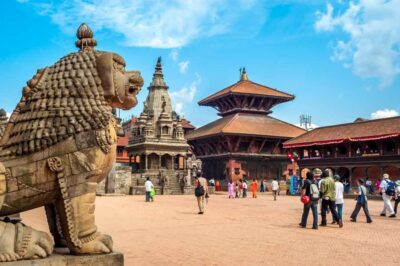
Full Day 7 UNESCO Tour with Lunch – Private/Group
Read our review →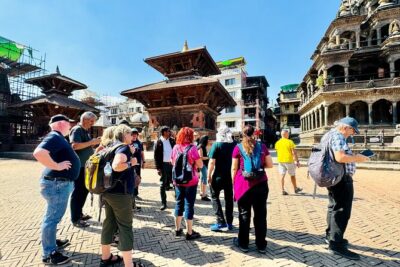
Full Day Top 4 UNESCO Tour with Lunch – Private/Group
Read our review →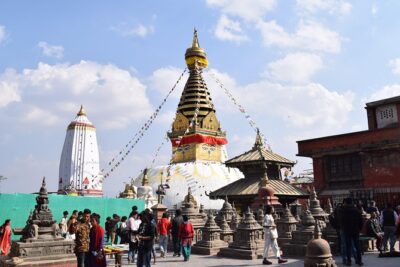
Kathmandu Private Sightseeing Tour | UNESCO World Heritage Sites
Read our review →Browse the lists this tour appears in