
Reviewed · UNESCO HERITAGE TOURS
Kathmandu Bhaktapur Patan Authentic Local Tour +7 UNESCO WH Sites
A day in Kathmandu Valley feels like a time machine. This 3-day local tour ties together three ancient cities and 7 UNESCO World Heritage stops, with craft and food experiences that go past the usual photo stops.
I particularly love the way the schedule is built around living culture, not just monuments. You also get real value from included entrance and environment fees plus private, air-conditioned transport. One possible drawback to plan for is that you will do a lot of walking through old-town lanes and temple areas, so comfy shoes and patience help.
In This Review
- Key highlights worth planning around
- Three Days Through Kathmandu Valley’s UNESCO Core
- Price and Logistics: What $385 Includes, and What It Means for Value
- Day 1 in Bhaktapur: Juju Dhau, Siddha Pokhari, Pottery Square, and Durbar Square
- Juju Dhau live making session (about 2 hours)
- Siddha Pokhari (around 30 minutes)
- Pottery Square via Barahi Agam Ghar (about 1 hour)
- Bhaktapur Durbar Square (about 1 hour, UNESCO)
- Chandeshwori shrine area (Chandeshori temple) and tasting option (30 minutes + optional 1 hour)
- Dattatreya Temple, then Navadurga temple on the outskirts
- Day 2 in Patan: Patan Dhoka, Golden Temple, Patan Durbar Square, and Craft Alleys
- Patan Dhoka, then Pimbahal Stupa and Jagamadu Pond (30 minutes + 1 hour)
- Nagbahal Hiti (Elhānani Hiti) drinking fountain (30 minutes)
- Golden Temple (Hiranya Varna Mahavihar) (about 1 hour)
- Kumbheshwor Temple (about 30 minutes)
- Patan Durbar Square UNESCO, then Golden Fountain (about 1 hour + 1 hour)
- Mahaboudha Temple (about 1 hour)
- Rudravarna Mahavihar, Oku Bahal and woodwork streets (30 minutes + about 1 hour)
- Day 3 in Kathmandu: Kathmandu Durbar Square, Swayambhunath, Bouddhanath, and Pashupatinath
- Kathmandu Durbar Square and the Thamel-to-Asan area walk (about 2 hours)
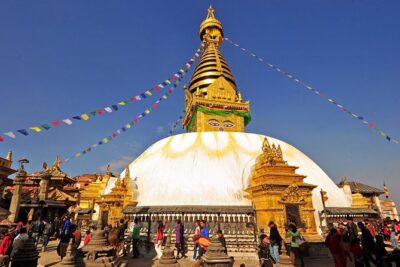
- Swayambhunath (about 1 hour, UNESCO)
- Budhanilkanth Temple (about 30 minutes)
- Bouddhanath Stupa (Buddha Stupa) (about 2 hours, UNESCO)
- Pashupatinath Temple (about 2 hours, UNESCO)
- Optional Thamel time after the tour (5 hours)
- Your Guide Matters: Newar Insider Context From Nirajan, Kamal, and Others
- Temple-Day Reality Check: Walking, Toilets, and What to Wear
- Who This Tour Fits Best (and Who Should Consider Alternatives)
- Should You Book This Kathmandu, Bhaktapur, Patan Tour?
- FAQ
- How long is the tour?
- What time does the tour start?
- Is pickup available?
- How much does it cost?
- What UNESCO-related sites are included?
- What is included in the price?
- What is not included?
- Can I cancel for a full refund?
Key highlights worth planning around
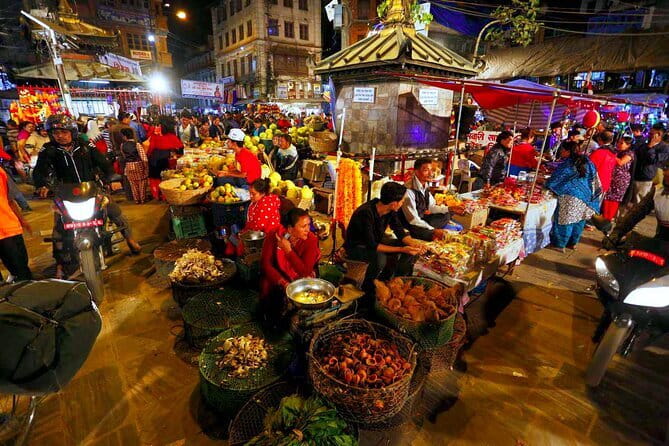
- Juju Dhau live making in Bhaktapur, the kind of food lesson you can actually taste later
- Pottery Square and craft streets where you can watch skills being practiced, not just sold
- All 7 UNESCO sites in the Kathmandu Valley zone spread across three focused days
- Patan’s monastery stops like the Golden Temple and Mahaboudha for a calmer, more spiritual rhythm
- Certified local guidance with Newar insider context, including names like Nirajan and Kamal mentioned in feedback
- Private group experience where your time is shaped around your tour rather than a big bus schedule
Three Days Through Kathmandu Valley’s UNESCO Core
The Kathmandu Valley UNESCO cluster is the big headline here, but the smart part is how this tour strings it together with local neighborhoods in between. Day 1 anchors you in Bhaktapur, Day 2 in Patan, and Day 3 in central Kathmandu, with the UNESCO sites threaded through the old-city fabric rather than treated like separate day trips.
Here’s why that matters for you: UNESCO sites can turn into checklist chaos if you hop between them with no local explanations. This route is designed so you see how the cities connect culturally, especially through Newar traditions, temple architecture, courtyards, and ritual life. You get the famous monuments plus the smaller, practical stops that explain how people actually live around them.
Also, the tour is private (only your group), which usually means fewer waiting games and easier pacing when a street is crowded or a temple line moves slowly. The tour starts at 9:15 am, so you get an earlier start than many people manage on their own.
More UNESCO Heritage Tours in Kathmandu:
- Private Kathmandu Sightseeing Tour | UNESCO World Heritage sites
★ 5.0 · 756 reviews - Kathmandu: 7 UNESCO Sites with Lunch
★ 4.8 · 744 reviews - Kathmandu: Full Day 7 UNESCO Tour with Lunch – Private/Group
★ 5.0 · 415 reviews
Price and Logistics: What $385 Includes, and What It Means for Value
At $385 per person for about 3 days, this is not a budget skim. But it also isn’t paying extra for empty time. The included items do real work for your trip:
- Private transportation in an air-conditioned vehicle
- Entrance fees and environment management fees for the attractions in the itinerary
- A professionally certified local tour leader
- Water bottle per day per person
- All fees and taxes
For me, the value is in the friction it removes. You are covering multiple UNESCO sites across three cities. That usually means tickets, fees, and a lot of coordination if you do it solo. Here, those pieces are bundled, so you can focus on the actual experience: walking, watching, asking questions, and eating what you are guided toward.
What is not included is just as important. Food is not included, and that can be a good thing if you want your guide’s specific suggestions instead of eating whatever is convenient. Accommodation is also not included, so you’ll choose your own hotel base (which affects how easy mornings and evenings feel). And gratuity for service staff is expected.
One more practical point: the tour uses a mobile ticket, and pickup is offered. If you are traveling with limited time or want to avoid the hassle of figuring out local meeting points, that helps.
Day 1 in Bhaktapur: Juju Dhau, Siddha Pokhari, Pottery Square, and Durbar Square
Bhaktapur is the day that feels most like stepping into a living museum, but the tour keeps it from becoming just stone and photos. It starts with an insider food session, then builds up to major squares and temples.
Juju Dhau live making session (about 2 hours)
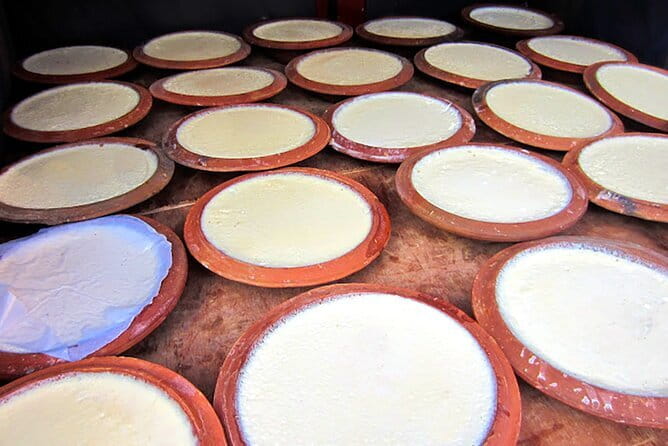
The tour begins with a live Juju Dhau preparation session. Juju Dhau is famous local fare, and this is not a quick tasting kiosk stop. You are watching preparation, and that changes how you experience the town. Instead of just reading about Newar flavors, you get a direct connection to everyday tradition.
Tip for you: if you have dietary restrictions, mention them early. The itinerary does include food time later as optional, so your guide can steer you toward what fits.
More Bhaktapur and Patan visits:
- Private Bhaktapur and Nagarkot Day Tour From Kathmandu
★ 5.0 · 305 reviews - Day Trip to Bhaktapur and Panauti from Kathmandu
★ 5.0 · 184 reviews - Bhaktapur & Patan Durbar Square Day Tours
★ 5.0 · 122 reviews - Nagarkot Sunrise & Bhaktapur UNESCO Heritage Private Tour
★ 5.0 · 66 reviews
Siddha Pokhari (around 30 minutes)
Next is Siddha Pokhari, a historic pond near Bhaktapur Durbar Square. These water features matter in this part of Nepal. They often connect to old religious stories and practical city life. The tour frames it as a starting point for Bhaktapur’s core attractions.
Pottery Square via Barahi Agam Ghar (about 1 hour)
Then you head to Pottery Square, walking via Barahi Agam Ghar. This is one of the most “show, don’t tell” parts of the day. You see active pottery work around the square, and the itinerary is built around watching locals do the craft.
For you, this is where you can slow down. Take time to look at tools, processes, and the rhythm of artisans at work. Even if you don’t buy anything, it helps you understand why these towns became centers of skill and trade.
Bhaktapur Durbar Square (about 1 hour, UNESCO)
Bhaktapur Durbar Square is a UNESCO highlight, recognized in 1979. This is where palace history and temple architecture collide. In a good tour, the explanation helps you notice courtyards, gateways, and the way buildings face each other like a designed stage.
Practical note: Durbar Square can be crowded on peak days. Your private format should reduce waiting, but keep your energy steady and plan for uneven ground.
Chandeshwori shrine area (Chandeshori temple) and tasting option (30 minutes + optional 1 hour)
The itinerary includes a temple stop for Chandeshori/Chandeshwori style worship, described as a three-story pagoda style temple in the Tibukchhen tole area. After that, you have a chance to try local food, with tasting presented as optional.
If you love food, take the tasting time. If you are cautious about new dishes, you can still enjoy the cultural context without overcommitting.
Dattatreya Temple, then Navadurga temple on the outskirts
The day rounds out with Dattatreya Temple (via Khacha Pokhari, with a legend involving King Yaksha Malla) and then Navadurga temple visits. The outskirts stop matters because it shifts your view from center-city monuments to the protective temple idea tied to the city’s boundaries.
That makes the day feel rounded. You do not just see landmarks. You see how the city is imagined to be protected, structured, and maintained.
Day 2 in Patan: Patan Dhoka, Golden Temple, Patan Durbar Square, and Craft Alleys
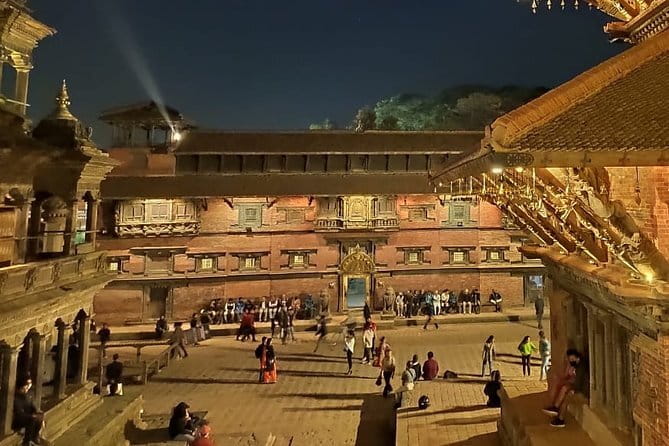
Day 2 slows the pace into a different flavor of old-city life. Patan has its own rhythm, and the tour is built around monasteries, courtyards, and craft areas, with one major UNESCO centerpiece.
Patan Dhoka, then Pimbahal Stupa and Jagamadu Pond (30 minutes + 1 hour)
You start at Patan Dhoka, described as the gateway to Patan, a key entrance marker to the old city. Then the tour moves to Pimbahal Stupa, a Buddhist pilgrimage site, and Jagamadu Pond nearby. These stops help you orient fast: where people gather, where spiritual life happens, and how the city’s physical layout supports both.
Nagbahal Hiti (Elhānani Hiti) drinking fountain (30 minutes)
You then visit Nagbahal Hiti, also known as Elhānani Hiti, an ancient drinking fountain with roots described as dating back to the 8th century. It is still used for cultural events. That makes it feel less like a dead artifact and more like a working piece of tradition.
Golden Temple (Hiranya Varna Mahavihar) (about 1 hour)
Next is the Golden Temple, officially described as Hiranya Varna Mahavihar. The name is explained as a bit of a nickname, since it is not entirely made of gold. The key is the monastery and architecture built in 1409. This stop is a strong example of how the tour balances UNESCO with deeply local religious spaces that are not just big tourist stops.
Kumbheshwor Temple (about 30 minutes)
Then you go to Kumbheshwor Temple, with documentation noted back to the late 14th century. The itinerary mentions named historians who studied the area. In practice, that means your guide will likely connect architecture and history with how people understand the site today.
Patan Durbar Square UNESCO, then Golden Fountain (about 1 hour + 1 hour)
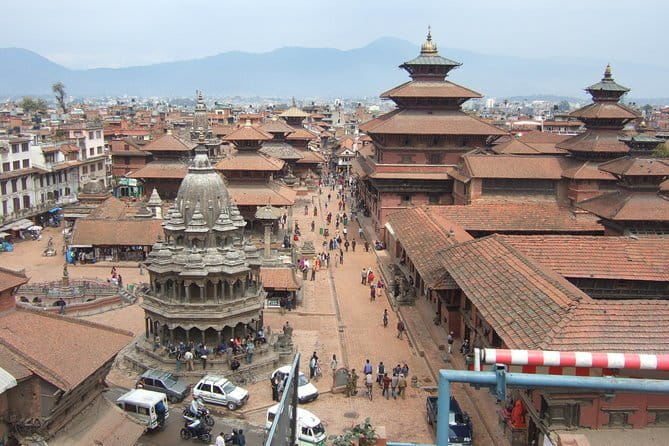
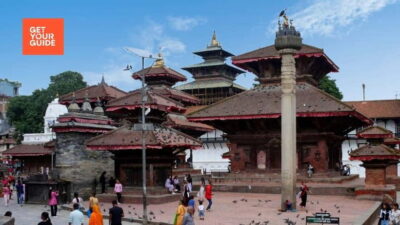
Patan Durbar Square is the day’s major UNESCO anchor. It is described as a dense area of temples and a royal palace space. After that, you visit the Golden Fountain, including a note that an art expert, Gautama Vajracharya, studied it. Even if your focus is photography or architecture, the explanation helps you see the fountain as art and as a designed urban feature.
Mahaboudha Temple (about 1 hour)
Mahaboudha Temple is next, built in the 14th century with clay bricks and terra-cotta art. The itinerary notes it stands out from surrounding pagoda roofs. That contrast helps you notice Patan’s temple variety instead of treating everything as the same style.
Rudravarna Mahavihar, Oku Bahal and woodwork streets (30 minutes + about 1 hour)
Finally you visit Rudravarna Mahavihar, at Oku Bahal, described as having three courtyards. Courtyard monasteries often feel calmer because they are inward-looking. Then you finish by walking old-town alleys where Shilpakar artisan families produce woodwork.
For you, the craft alley time is one of the best ways to wrap Patan. It gives your brain a landing spot before Kathmandu’s big finale.
Day 3 in Kathmandu: Kathmandu Durbar Square, Swayambhunath, Bouddhanath, and Pashupatinath
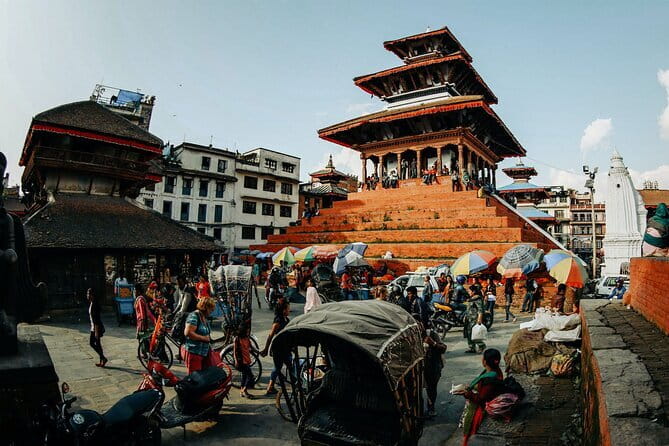
Day 3 is where the tour hits maximum spiritual and architectural variety. You get UNESCO landmarks in a sequence that feels logical: Durbar Square first, then hilltop Swayambhu, then the major stupa at Bouddhanath, then Pashupatinath.
Kathmandu Durbar Square and the Thamel-to-Asan area walk (about 2 hours)
The day starts with a walk through Thamel and narrow lanes near Asan Tole, leading via Kathmandu Durbar Square toward Newroad Gate. This is a practical start because it also orients you to the areas where you might shop later. It also sets context for the UNESCO visit rather than isolating it.
Swayambhunath (about 1 hour, UNESCO)
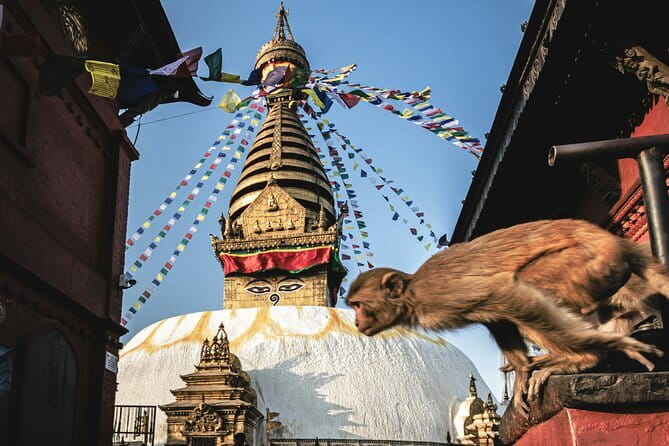
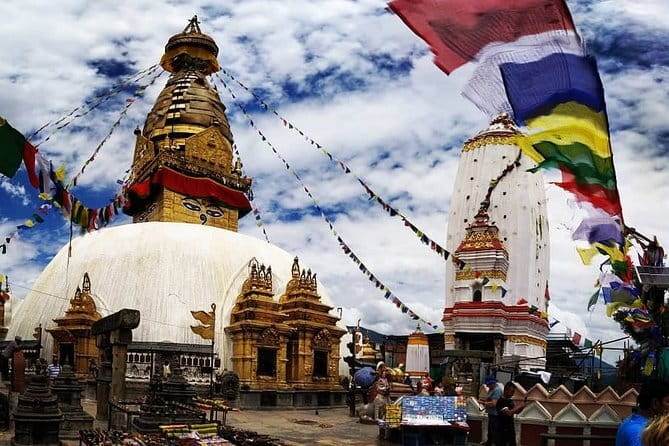
Then you head to Swayambhunath. The stupa is described as one of the architectural marvels of the Kathmandu Valley. The tour timing gives you a focused block, so you can take in views, religious details, and people moving between spaces without sprinting.
Budhanilkanth Temple (about 30 minutes)
Next is Budhanilkanth Temple, also called Jal Narayan Temple. The itinerary frames it as a peaceful corner of the valley, a useful contrast after the more crowded stupa zones. Even if you only spend half an hour, this stop helps keep the day from feeling like nonstop crowds.
Bouddhanath Stupa (Buddha Stupa) (about 2 hours, UNESCO)
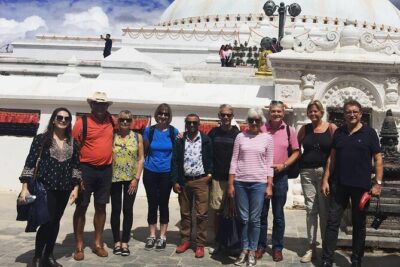
Then you drive to Bouddhanath stupa, described as likely built after AD 600, tied to Tibetan king Songtsen Gampo. This is a long enough visit that you can actually watch daily ritual life, not just take a wide-angle photo and leave.
Pashupatinath Temple (about 2 hours, UNESCO)
Finally, you go to Pashupatinath Temple, on the Bagmati River. It is presented as a place of worship in the eastern outskirts of Kathmandu. This stop can be emotionally intense for many visitors because temples here are active places of faith, not staged sites. The tour’s pacing should help you stay present rather than just rushing through.
Optional Thamel time after the tour (5 hours)
After the tour, you have an option to experience Thamel and Jhamsikhel nightlife, with an escorted VIP line access described for restaurants, pubs, clubs, and streets in the area. The itinerary marks this as not included, which is a clear heads-up. Think of it as a chance to plug into the neighborhood after your main cultural day.
Your Guide Matters: Newar Insider Context From Nirajan, Kamal, and Others
A tour can have the right sights and still feel flat. What makes this one work is that the leader is described as from local Newar communities across Kathmandu, Bhaktapur, or Patan. In the feedback, people singled out guides like Nirajan as originally from Bhaktapur, plus mentions of Kamal and Nabin as part of the guiding team.
Why you should care: in old Nepalese cities, tiny details signal big meaning. A gate can tell you where a city wants foot traffic to flow. A pond can connect to religious story and civic space. A craft square can explain why certain neighborhoods still function the way they do. Local guidance helps you notice those things without needing to research every corner in advance.
The tour also offers touches that make it feel less like a lecture. You are watching Juju Dhau preparation. You are visiting pottery activity around Pottery Square. In Patan, the itinerary includes multiple monastery and fountain stops that naturally invite quiet observation.
And yes, the planning gets praised. People mentioned it as meticulously arranged and genuinely authentic, especially for the way it connects towns and traditions instead of treating them like separate checkboxes.
Temple-Day Reality Check: Walking, Toilets, and What to Wear
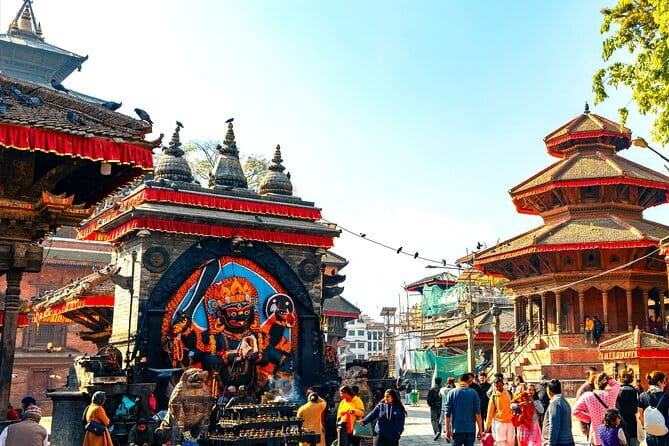
This tour is packed with real sites: Durbar squares, monasteries, and major stupa areas. That means you should plan your body and clothes accordingly.
- Wear comfortable shoes. Old-city lanes and temple approaches can be uneven.
- Bring layers. Morning starts at 9:15 am, and weather can shift through the day.
- Temple areas often require respectful behavior. The itinerary does include long enough stops that you can slow down and follow your guide’s lead.
- Public toilets are available to use, so you are not stuck guessing all day.
If you are someone who likes to photograph everything, give yourself permission to look first and shoot second. The tour timing is set so you can do both, but trying to do only photos can make the spiritual stops feel hurried.
Who This Tour Fits Best (and Who Should Consider Alternatives)
This is ideal for you if you want:
- UNESCO sites in the Kathmandu Valley area with local context
- a balance of big squares and smaller working cultural stops
- hands-on or watch-and-learn moments like Juju Dhau making and pottery activity
- the convenience of private air-conditioned transport and included entrance fees
It may be less ideal if:
- you want a super relaxed pace with lots of free time and no scheduled walking
- you have very limited mobility, since the itinerary includes multiple temple zones and city-lane movement
- you prefer to choose meals entirely on your own, since food is not included (though your guide will likely advise where to eat)
One way to decide fast: if you love craft, food, and the lived texture of old cities, this schedule is built for you. If you only want landmark photos and minimal explanation, you might find you are spending time where you would rather just rest.
Should You Book This Kathmandu, Bhaktapur, Patan Tour?
I would book this tour if you want a “three-city story” and you care about culture in addition to monuments. The biggest reason is that the value is not only the UNESCO count. It is the combination of included fees, private transport, certified local guidance, and practical, local experiences like Juju Dhau and pottery activity.
Before you say yes, check your comfort with a packed walking day. Also decide how you feel about food planning since meals are not included. If you are happy to take suggestions from a local guide, you will likely enjoy the food stops more than if you try to micromanage everything.
If your travel style is thoughtful, curious, and you like being guided through neighborhoods, this one should fit nicely. If your top priority is pure leisure, you might prefer a looser tour with fewer stops.
FAQ
How long is the tour?
The tour runs for 3 days (approx.).
What time does the tour start?
The start time is 9:15 am.
Is pickup available?
Yes, pickup is offered.
How much does it cost?
The price is $385.00 per person.
What UNESCO-related sites are included?
The tour is described as including all 7 UNESCO World Heritage site visits in the Kathmandu Valley region, with UNESCO stops across Kathmandu, Bhaktapur, and Patan.
What is included in the price?
It includes private transportation, an air-conditioned vehicle, all fees and taxes, a professionally certified local tour leader, a bottle of water per day per person, and entrance fees and environment management fees for attractions in the itinerary.
What is not included?
Food, accommodation, and gratuity for service staffs are not included.
Can I cancel for a full refund?
Yes. You can cancel up to 24 hours in advance for a full refund.
Latest additions near Kathmandu
- Traditional Momo Making Class★ 5.0 · 10 reviews
- White Water River Rafting – 1 Day★ 4.3 · 3 reviews
- Kathmandu to Pokhara Premium sofa bus ticket★ 4.0 · 17 reviews
- Ghorepani Poon Hill Trek★ 5.0 · 16 reviews
- Amazing 1 Day Trekking Experience in Kathmandu Nepal★ 5.0 · 24 reviews
- Ghorepani Poonhill Trek★ 5.0 · 5 reviews
- Walking tour of real Kathmandu through back streets.★ 5.0 · 3 reviews
- Wildlife Adventure in Chitwan Nepal★ 4.0 · 4 reviews
UNESCO Heritage Tours, compared.
Private Kathmandu Sightseeing Tour | UNESCO World Heritage sites
Read our review →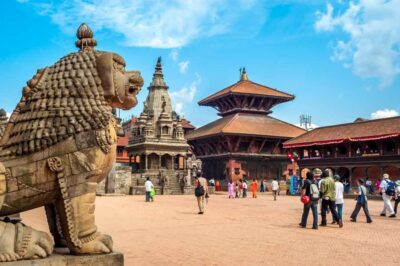
Full Day 7 UNESCO Tour with Lunch – Private/Group
Read our review →
Full Day Top 4 UNESCO Tour with Lunch – Private/Group
Read our review →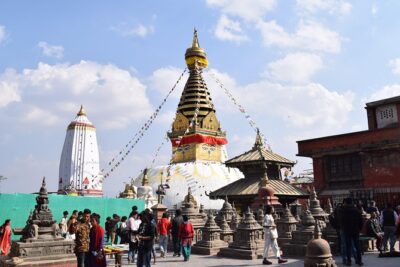
Kathmandu Private Sightseeing Tour | UNESCO World Heritage Sites
Read our review →Browse the lists this tour appears in