
Reviewed · POON HILL TREKS
Ghorepani Poon Hill Trek
Poon Hill gives you Himalayan magic fast. This Ghorepani Poon Hill Trek mixes Annapurna sunrise views with classic village hiking, then tops it off with Kathmandu and Pokhara so you can actually rest your legs. I really liked the small-group feel (max 14), plus the guide and porter setup that keeps the logistics from turning into a second job.
What I also liked is how the trip balances big views with real culture. You get a full day of sightseeing in ancient Kathmandu valley and UNESCO World Heritage sites on day 2, then you drive to Pokhara for a change of pace before the trek work starts.
One consideration: the trek is graded moderate, and weather can turn (cloudy and rainy conditions have happened, but the guides focused on keeping the group safe). If you’re hoping for guaranteed crystal-clear sunrise skies, plan for the fact that mountains can be moody.
In This Review
- Key takeaways before you go
- Why a Poon Hill trek is the smart “Himalaya starter”
- Price and logistics: what you’re really paying for
- Meeting day details: start time matters
- Kathmandu valley day: UN heritage, real streets, no wasted hours
- The drive to Pokhara: time on the road, but a real change of scenery
- Trek day 1 on trail: Nayapul to Tikhedunga (about 4 hours)
- Ghorepani day: forests, villages, and altitude you can feel (day 5)
- Poon Hill day: the early-morning payoff (day 6)
- Ghandruk and the culture shift: big village energy (day 7 and day 8)
- Lodge life and what’s in your pack
- Who this trek suits, and who might want another option
- Should you book this Ghorepani Poon Hill Trek?
- FAQ
- What is the typical daily schedule during the trek?
- Are meals included while trekking?
- What are the lodging arrangements like?
- Is transportation included between Kathmandu and Pokhara?
- What trekking gear is provided?
- What are common additional costs to budget for?
Key takeaways before you go
- Small-group trekking (max 14) means your guide can actually manage the pace and questions on trail.
- Poon Hill sunrise over the Annapurna Himalaya is the headline, and it works well as a shorter Himalayan intro.
- Meals and lodge stays during the trek reduce decision fatigue, especially when you are tired.
- Kathmandu plus Pokhara time helps you recover, not just rush from one bus to another.
- Gear support can include a sleeping bag, down jacket, and a trekking map (returned after the trek).
- Guide and porter attention is built in, with a porter ratio of 1 porter for 2 people.
Why a Poon Hill trek is the smart “Himalaya starter”
If you want Himalayan trekking but you do not want to disappear for weeks, this is one of the best options in Nepal. You hike enough to feel like you truly left the city, but you still keep the clock under control. The route moves through forests, farmland, and villages, which matters because it keeps the days varied instead of repeating the same kind of trail grind.
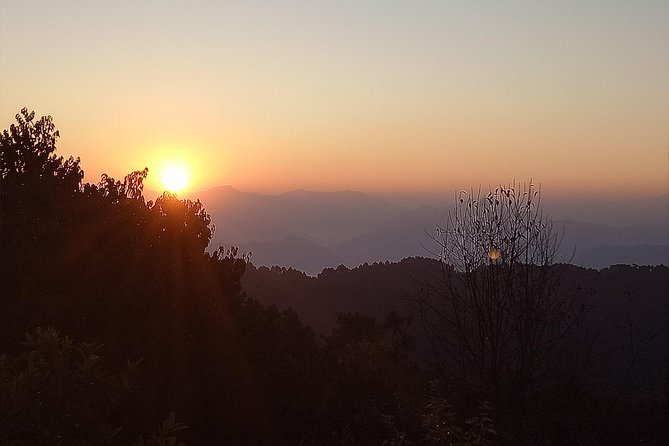
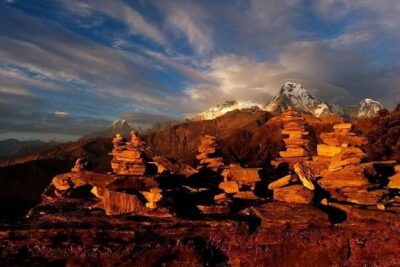
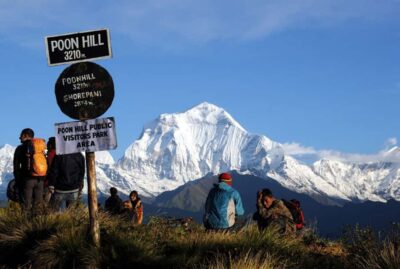
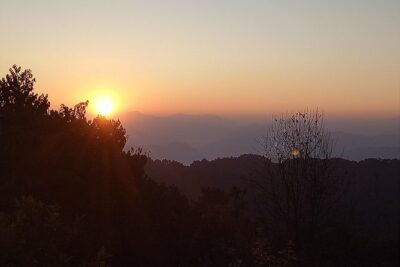
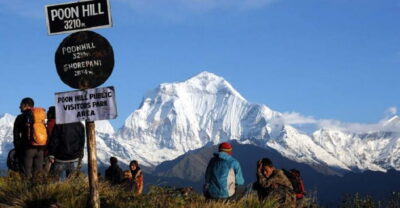
The big payoff is Poon Hill itself, with the sunrise viewpoint designed for early light over the Annapurna region. You get the iconic mountain drama without needing the higher-altitude commitment that many longer treks require.
Another value piece is pacing. The trek days are spread out with clear segments, and you have rest built in by switching between trekking, hotel time, and two long drives (Kathmandu to Pokhara, then back). In practice, that means you can be proud of doing the hike without being wrecked for the rest of the trip.
More Treks in Kathmandu
- Everest Base Camp Trek – 14 Days
★ 5.0 · 1,499 reviews - Everest Base Camp Trek
★ 5.0 · 842 reviews - Everest Base Camp Trekking
★ 5.0 · 485 reviews
Price and logistics: what you’re really paying for
This tour costs $700 per person, which sounds like a lot until you break down what is included. You are paying for the organizing power: hotels and all trek meals, an experienced guide, porter support (1 porter for 2 people), and ground transport between Kathmandu and Pokhara.
Here’s the practical cost picture based on what’s covered:
- Included during the trek: accommodations in lodges or tea houses, and meals (breakfast, lunch, dinner).
- Included in Kathmandu and Pokhara: 3 nights in Kathmandu and 2 nights in Pokhara with breakfast. Lunch and dinner in these cities are not included, so you still budget for meals when you’re off-trail.
- Transport included: airport transfers by private vehicles and Kathmandu-Pokhara-Kathmandu by tourist bus.
- Trekking support: guide and porters, plus emergency helicopter arrangement that your travel insurance would pay for.
- Gear help: a sleeping bag, down jacket, and trekking map if necessary (and they are returned after the trek).
What you should plan to pay for yourself:
- drinks, desserts, tips, personal expenses
- your Nepal visa fee and passport photos required for the visa
- entrance fees and meals (lunch and dinner) while you are in Kathmandu and Pokhara
- your international airfare, plus airport departure tax if applicable
For me, the biggest “value” angle is risk reduction. When the mountain weather turns, you want a team that already has a plan. The reviews linked to this trek repeatedly mention guides staying focused on safety in cloudy or rainy conditions, which is exactly what you want from a guided package.
Meeting day details: start time matters
Your meeting point is Tribhuvan Airport in Kathmandu, with a start time listed as 6:15 am. That early start is not there to be dramatic. It helps keep the whole itinerary on schedule, especially with the Kathmandu sightseeing day later and the drive into Pokhara.
Group size is limited to max 14, so you’re not trekking with a crowd of strangers. That smaller scale also helps in lodge situations, where rooms and meal space can get tight on popular routes.
Another small but helpful thing: pickup is offered, and you get a mobile ticket. Those details usually mean fewer surprises when you arrive tired from travel.
Kathmandu valley day: UN heritage, real streets, no wasted hours
Day 1 is straightforward: you arrive and get transferred to your hotel. Day 2 is a full sightseeing day in the Kathmandu valley area with UNESCO World Heritage sites included.
This matters because it turns the beginning of your trip into something other than just checking in and waiting. Kathmandu sightseeing on day 2 also gives you a buffer. By the time you start trekking on days 4 onward, you’re not arriving cold to Nepal’s rhythm.
Keep your expectations realistic. Kathmandu is a city, so you’ll be walking, navigating crowds, and mixing with local life. The payoff is you get the cultural context of Nepal early, then you can switch modes into mountains.
More Poon Hill treks:
- 4 Days Poon Hill Trek
★ 5.0 · 94 reviews - Ghorepani(Poonhill Trek)
★ 5.0 · 81 reviews - 4-day Poon Hill Trek
★ 5.0 · 74 reviews - Ghorepani Poon Hill Trek
★ 5.0 · 61 reviews
The drive to Pokhara: time on the road, but a real change of scenery
On day 3, you drive from Kathmandu to Pokhara, about 6 hours. The point is not just transit. Pokhara is where your mood shifts. You get a different feel, and you have hotel time in a place known for relaxed evenings.
Day 8 and day 9 also include drives, so you can expect long travel days bookending the trekking portion. If you tend to get cranky on buses, bring earplugs and plan for slow digestion. The route includes multiple road segments, and comfort is about preparation, not willpower.
Trek day 1 on trail: Nayapul to Tikhedunga (about 4 hours)
Day 4 begins with a drive from Pokhara to Nayapul (around 1050m), then your first real hiking day. You trek to Tikhedunga (1577m) for about 4 hours.
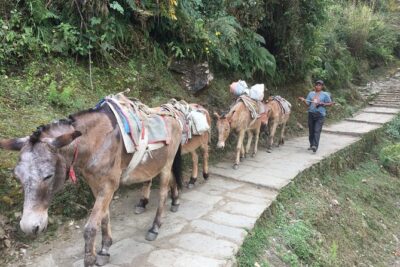
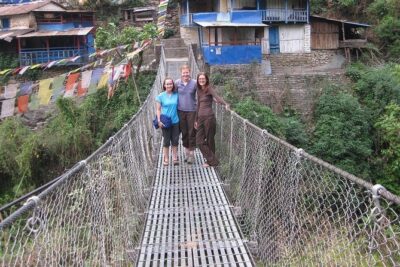
This leg is a good “wake up” day. You start seeing more rural life as the path moves through villages and farmland patterns before the higher scenery takes over. Even if your body is fresh, treat this day as training for the rhythm to come. The goal is to finish feeling like you could do more, not like you need a massage just to blink.
Ghorepani day: forests, villages, and altitude you can feel (day 5)
On day 5 you trek from Tikhedunga up to Ghorepani (about 2675m), roughly 6 hours. This is where the trek starts to feel like a real climb. The route is known for rhododendron forests, and even when blooms are not at peak season, the tree cover helps break up the hike.
Ghorepani itself is a classic base village for Poon Hill trekkers. You’ll spend time there and use it as your staging point for the sunrise push.
What I like about this structure is how it reduces stress. You are not jumping from the city to a steep, intimidating day with no warm-up. You climb in steps, and you have lodge meals to steady your energy.
Poon Hill day: the early-morning payoff (day 6)
Day 6 is the key day in the itinerary. You hike to Poon Hill (3180m) and then trek to Tadapani (2675m), about 6 hours total.
The Poon Hill plan is simple: you aim for the sunrise viewpoint over the Annapurna Himalaya. In clear weather, you get that postcard view. In cloudy or rainy conditions, you might not get the full show, but the guides on this trek have been praised for keeping people safe and making the best use of the weather window. That practical mindset is worth more than a perfect forecast.
After the viewpoint, you continue down to Tadapani. This is the tradeoff: the sunrise moment is bright and memorable, but your body still has to do real work afterward. If you’re the type who likes to stop and take photos every ten minutes, build time into your pacing.
Ghandruk and the culture shift: big village energy (day 7 and day 8)
Day 7 is a shorter trek: Tadapani to Ghandruk (1950m) in about 3 hours. This is one of those legs that feels like you are cruising compared to the earlier climbs.
Ghandruk is known for Gurung village culture. That cultural stop is part of why this trek is more than just hiking to a viewpoint. You’re moving through communities that have lived with these trails for generations, not just walking through a theme park route.
Day 8 then takes you from Ghandruk back to Nayapul and onward by drive to Pokhara. It’s about 4 hours total for the day’s trail and travel mix. You’re finishing the trek here, and it feels good. You go to bed in a proper hotel again, not a tea house.
Lodge life and what’s in your pack
During the trek, you sleep in lodges or tea houses, with accommodations included. Rooms are basic, but that is part of the appeal. You are not paying for luxury, you are paying to keep the essentials handled.
One thing that can lighten your load: the trip includes a sleeping bag and down jacket (returned after the trek), plus a trekking map if necessary. That is a meaningful value point if you are traveling with limited luggage space or you do not want to buy gear for one trip.
For day-to-day comfort, the best advice is still boring but true: pack layers, bring a headlamp or flashlight, and expect mornings to be cold. Sunrise means early starts, and mountains can chill fast.
Who this trek suits, and who might want another option
This trek is described as suitable for all ages, and it’s set up for moderate fitness. That usually means it can work for first-time trekkers who are active, comfortable walking for several hours, and willing to take breaks.
It may not be ideal if you want a silent, solo hiking experience. This route is group-based, and small groups still share trail time, lodges, and meal rhythms. Also, if you need consistent weather guarantees for a perfect sunrise, you should know the mountains do not follow schedules.
For most people, though, it is a strong first Himalayan trek. It gives you real altitude hiking, village scenery, and the famous viewpoint, while still letting you enjoy Nepal’s cities right after the hard work.
Should you book this Ghorepani Poon Hill Trek?
I’d book this if you want an affordable-feeling entry to trekking that still has structure. The combo of guided support, porter help, and included meals lowers the stress that ruins many shorter trips. The Kathmandu and Pokhara days also make it easier to enjoy Nepal as more than a checklist.
Skip it or reconsider if you already know you want a longer, higher-altitude trek, or if you are the kind of traveler who gets upset by early mornings and basic mountain lodging.
If you do book, check your comfort with moderate walking days and keep a little patience for weather. Then you’ll be set up to enjoy the real reason people come here, sunrise over the Annapurna region from Poon Hill, with just enough trekking to feel like you earned it.
FAQ
What is the typical daily schedule during the trek?
The trek follows a day-by-day plan with set hiking segments. You’ll hike in the morning and often reach your next lodge town by late afternoon, then eat and rest before the next day’s climb or descent.
Are meals included while trekking?
Yes. The tour includes breakfast, lunch, and dinner during the trek period, plus breakfast at your hotels in Kathmandu and Pokhara.
What are the lodging arrangements like?
Accommodation is included in lodges or tea houses during the trek. In Kathmandu and Pokhara, the package includes hotels with breakfast for the listed number of nights.
Is transportation included between Kathmandu and Pokhara?
Yes. Airport transfers are handled by private vehicles, and Kathmandu to Pokhara (and back) is included by tourist bus.
What trekking gear is provided?
A sleeping bag and down jacket are included, and a trekking map is provided if necessary. These items are returned after the trek.
What are common additional costs to budget for?
You’ll want to budget for tips, drinks and desserts, your Nepal visa fee, lunch and dinner in Kathmandu and Pokhara (not included), entrance fees on the sightseeing tour, and your travel insurance. International airfare is also not included.
Latest additions near Kathmandu
- White Water River Rafting – 1 Day★ 4.3 · 3 reviews
- Traditional Momo Making Class★ 5.0 · 10 reviews
- Kathmandu to Pokhara Premium sofa bus ticket★ 4.0 · 17 reviews
- Ghorepani Poon Hill Trek★ 5.0 · 16 reviews
- Amazing 1 Day Trekking Experience in Kathmandu Nepal★ 5.0 · 24 reviews
- Ghorepani Poonhill Trek★ 5.0 · 5 reviews
- Walking tour of real Kathmandu through back streets.★ 5.0 · 3 reviews
- Wildlife Adventure in Chitwan Nepal★ 4.0 · 4 reviews
Poon Hill Treks, compared.
4-Day Ghorepani, Poonhill & Ghandruk Mountain Trek
Read our review →
Browse the lists this tour appears in