
Reviewed · TEMPLE & STUPA TOURS
PashupatiNath and BoudhaNath – Private/Small Group
Two faiths, one Kathmandu day. This private small-group tour links Pashupatinath and Boudhanath so you can understand how Hindu and Buddhist life runs side by side in Nepal. I also like the pace, max 5 people, because you are not stuck listening while others rush the photos.
What I really loved is the practical teaching. Your guide walks you through the last rites at Aryaghat and the Hindu Samskaras, then turns to Buddhism with basics like prayers flags and the Four Noble Truths at Boudhanath. Along the way, your guide can handle questions, and I like that the tour can be adjusted for special moments such as the arati ceremony when it is possible.
One drawback to consider: entrance fees are not included. You will need cash for Pashupatinath and Boudhanath, and some stops are short, so plan to ask your guide questions during the time you have.
In This Review
- Key things you’ll notice
- Why Pashupatinath and Boudhanath fit together
- Small-group pacing and a guide who works the questions
- Price and tickets, the real math behind $15
- Getting started at Gaushala Bus Stop and staying oriented
- Stop 1, Pashupatinath: a Hindu temple where access matters
- Stop 2, Aryaghat crematoria: understanding last rites and Shodasha Samskaras
- Stop 3, Mrigasthali Deer Park: a short pause with Shiva’s story
- Stop 4, Gorakhnath Mandir: stories of Guru Gorakhnath on the way to Boudha
- Stop 5, Guhyeshwari Shaktipeeth: the Shaktipeeth concept
- Stop 6, Boudhanath Stupa: Tibetan Buddhism basics without the confusion
- Stop 7, Guru Lhakhang Monastery: Padmasambhava and the Dharma Chakra story
- Stop 8, thanka art at the Boudha Stupa center and healing bowl basics
- What makes this tour work in real life
- Who should book, and who might want to adjust expectations
- Should you book this Kathmandu religious harmony tour?
- FAQ
- What is the duration of the tour?
- How many people are in the group?
- What language is the guide?
- Where does the tour start and end?
- Are entrance fees included?
- Which stops are included in the itinerary?
- Which admissions are marked as included or free?
- Is there a mobile ticket?
- Is service animal access allowed?
- What is the cancellation window?
Key things you’ll notice
- Max 5 people means fewer awkward pauses and more time for questions in sacred areas
- Aryaghat last rites are explained with Shodasha Samskaras, including what you are seeing and why
- Boudhanath basics cover Tibetan Buddhism (Vajrayana) plus simple anchors like Four Noble Truths
- Stops are timed for flow, from temples to a monastery to thanka art in about 3 hours
- Some admissions are included, some are not, so bring a bit of cash for the main sites
Why Pashupatinath and Boudhanath fit together
If you want religion in Kathmandu to make sense fast, this pairing is a smart one. Pashupatinath shows Hindu practices and the circle of life in full view, while Boudhanath is one of the world’s major hubs for Tibetan Buddhism (Vajrayana). Put them together and you start to see religious harmony in daily life, not just in textbooks.
I also like that this tour is not only about big monuments. You get the stories behind them, and you get the meaning behind the rituals, including the Hindu idea of rites of passage and the Buddhist teachings presented in approachable terms. It is a good way to understand why these sites feel alive, even when they are centuries old.
More Temple & Stupa Tours in Kathmandu:
- Kathmandu Spiritual Sites: Bodhnath & Pashupatinath Tour
★ 5.0 · 185 reviews - Kathmandu: Chandragiri Cable Car and Monkey Temple Tour
★ 4.8 · 139 reviews - Monkey Temple – Swayambhunath Tour – Private/Small Group
★ 5.0 · 50 reviews
Small-group pacing and a guide who works the questions
This tour runs with an English-speaking guide and a maximum of 5 travelers, which is exactly the size where people ask real questions. The sites you visit are not passive backdrops. There are ceremonies, symbolism, and rules about who can enter certain areas, so having a guide makes the whole day easier to read.
I have seen how guides like Santosh handle on-the-spot requests, including adjusting the schedule to fit an arati ceremony when that is possible. That matters because sacred sites in Kathmandu do not run on your watch, they run on their own rhythm. A guide who can flex keeps the experience from feeling rushed or awkward.
Price and tickets, the real math behind $15
The listed price is $15.00 per person and the tour includes an English speaking guide. You are also getting the small-group structure, plus features like group discounts and a mobile ticket.
Then you hit the part that many people forget: entrance fees are not included for the two big anchors. You pay in cash at the entrance for Pashupatinath (NRP 1000, about US$9) and Boudhanath (NRP 400, about US$4). That puts the added cost at around $13 per person for the main sites.
So what are you really buying? In about 3 hours you are covering eight stops, including admissions that are marked included for some places (like Mrigasthali Deer Park and part of the Boudha-area arts stop). For most people, the guide plus the structured route is the value, and the cash fee is the trade-off for that focused access and explanation.
Getting started at Gaushala Bus Stop and staying oriented
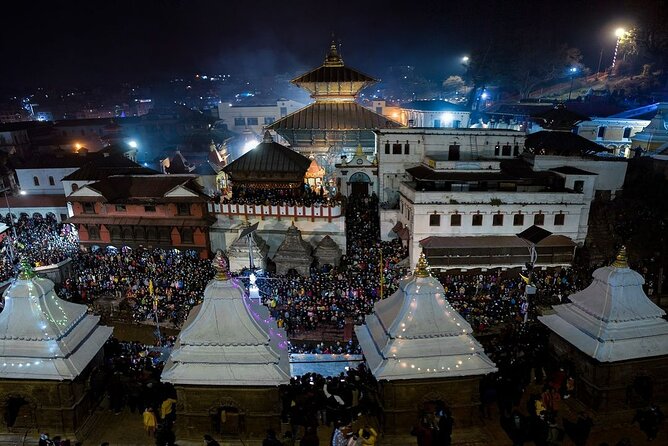
You begin at Gaushala Bus Stop (Ring Rd area). The tour ends at the Boudhanath Gate, and once you wrap up, you are free to explore the Boudha area on your own or head back.
This is one reason I like this format for first-timers. You get a guided loop that gives you bearings, then you can wander streets, prayer flags, and side lanes with better context. Also, the meeting point is near public transportation, which helps you keep your day simple.
A few more Kathmandu routes to compare
- Private Kathmandu Sightseeing Tour | UNESCO World Heritage sites
★ 5.0 · 756 reviews - Kathmandu: Full Day 7 UNESCO Tour with Lunch – Private/Group
★ 5.0 · 415 reviews - Private Bhaktapur and Nagarkot Day Tour From Kathmandu
★ 5.0 · 305 reviews - Kathmandu: Full Day Top 4 UNESCO Tour with Lunch – Private/Group
★ 5.0 · 269 reviews
Stop 1, Pashupatinath: a Hindu temple where access matters
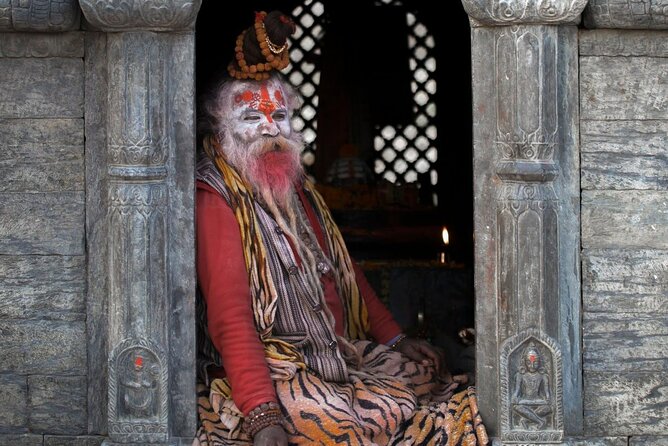
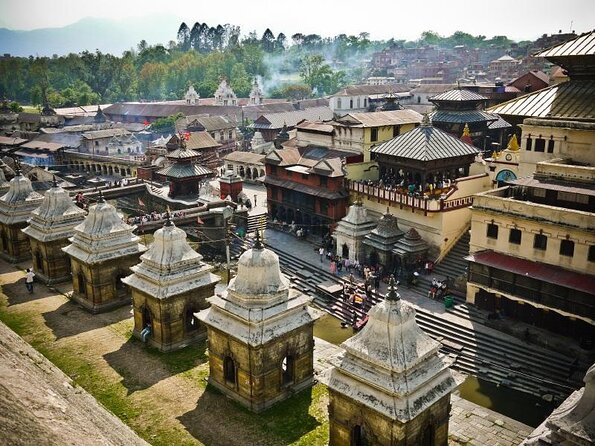
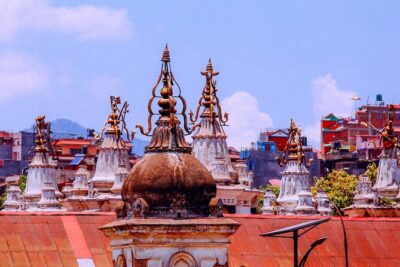
The tour starts at Pashupatinath Temple, described as the oldest Hindu temple of the Kathmandu Valley and a major site for Hindu devotees worldwide. There is an important practical detail: only Hindus are allowed inside the main temple. For everyone else, you approach via viewing areas and then move toward Aryaghat.
This is one of those “your guide makes the difference” moments. If you walk in without context, you may wonder why you cannot go where you thought you could. With the guide, you understand the boundaries as part of the site, not a problem.
You get about 15 minutes here. Admission is not included, so remember the cash fees.
Stop 2, Aryaghat crematoria: understanding last rites and Shodasha Samskaras
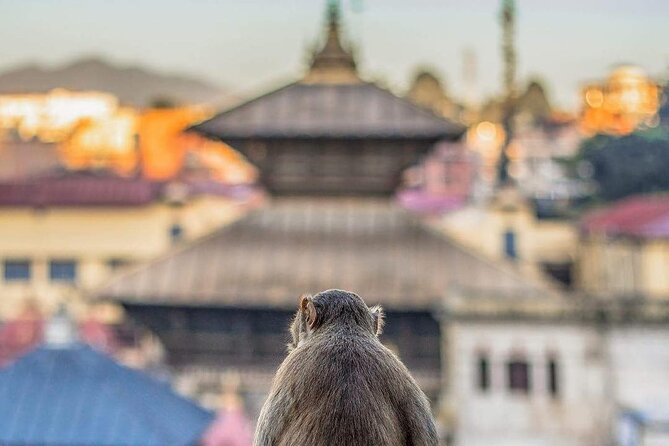
Next is Aryaghat crematoria, where Hindu last rites take place and where visitors can see how ceremonies are done. This is the emotional center of the tour. Your guide explains Shodasha Samskaras, the 16 rites of passage in Hindu life, and connects what you are seeing with the larger meaning.
I like that the explanation is not vague. When you know the terms and the idea of rites at each life stage, the experience becomes less like watching strangers and more like understanding a system. It is still solemn. It is still intense. But it becomes clearer.
Admission is not included for this segment either. Plan for a respectful mindset and be ready for a scene you cannot fully “skip.” This stop is central to what the tour is trying to teach.
Stop 3, Mrigasthali Deer Park: a short pause with Shiva’s story
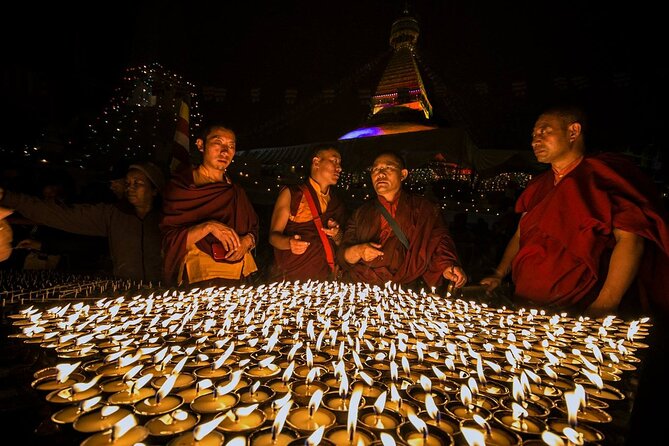
After Aryaghat, the tour shifts to something lighter in tone: Mrigasthali Deer Park. You get about 15 minutes, and admission is marked included.
Here, you hear the story of Lord Shiva’s journey to this place and how it got its name. The guide also helps you explore the area, so it feels like a breathing break inside a tour that otherwise moves through heavy themes.
If you tend to get emotionally worn out at religious sites, this is a good segment to reset. It is short, but it changes the pace.
Stop 4, Gorakhnath Mandir: stories of Guru Gorakhnath on the way to Boudha
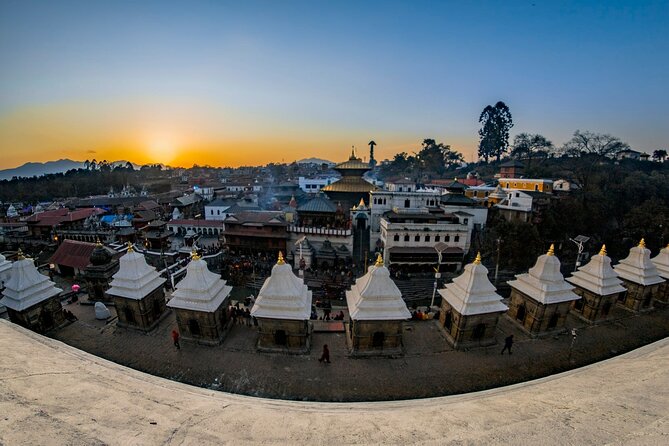
You then stop at Gorakhnath Mandir, with about 30 minutes here. Admission is included.
This part of the route is less about a single object and more about narrative. Your guide tells the story of Guru Gorakhnath and shares context as you head toward Boudhanath, passing by Guhyeshwari Temple along the telling.
A practical note: you get a rest here before the Boudha area. In a 3-hour tour, that break is useful. Sacred walking in Kathmandu can move faster than you expect, especially if you stop often for explanation.
Stop 5, Guhyeshwari Shaktipeeth: the Shaktipeeth concept
Then comes Guhyeshwari Shaktipeeth Temple, about 20 minutes to reach Boudhanath after. This stop itself is described with context about Satidevi and the idea of Shaktipeeth. Admission is free.
What I like about this middle section is how it bridges Hindu themes into the approach toward Boudhanath. It keeps the tour from feeling like two disconnected visits. Instead, it feels like a guided understanding of how belief systems move through space and story.
Stop 6, Boudhanath Stupa: Tibetan Buddhism basics without the confusion
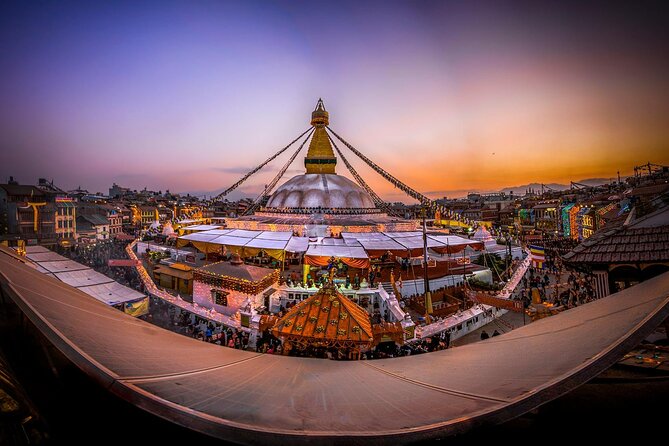
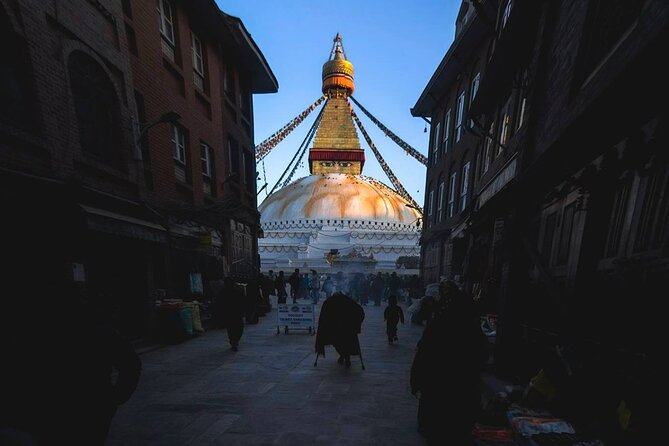
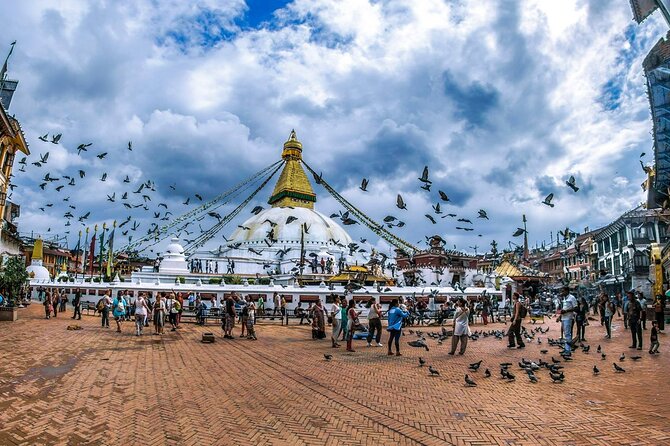
The main show at the far end is Boudhanath Stupa, described as the second largest stupa of this type in the world. It is famous for Tibetan Buddhism (Vajrayana Buddhism).
You get about 45 minutes here, and admission is not included. Your guide explains core basics in plain terms, including prayers flags, the idea of five elements, Four Noble Truths, and the eightfold path.
This is where the tour earns its keep for first-timers. The stupa is visually impressive, but the symbolism can feel mysterious if nobody explains it. With a guide, you start to see the stupa as a teaching tool, not just a monument.
Stop 7, Guru Lhakhang Monastery: Padmasambhava and the Dharma Chakra story
After Boudhanath, you visit Guru Lhakhang Monastery for about 10 minutes. Admission is free.
The guide talks about Guru Padmasambhava and Dharma Chakra Pariwartana. Even though time is short, the payoff is that you connect the big stupa with the kind of place where monks and practice-focused life takes shape.
Think of this stop as a quick “what Buddhism feels like on the ground” add-on. Not every tour bothers with it, and it helps the stupa topic feel more complete.
Stop 8, thanka art at the Boudha Stupa center and healing bowl basics
The last stop is a thank a center connected with the Boudha Stupa area, for about 15 minutes. Admission is included.
Here you learn about thangka art, the concept of mandala, and the basics about healing bowls. This is a nice way to end, because it shifts from ceremony to art and everyday practice themes. You leave with something visual you can remember later.
It also makes sense in a tour that covers two religions: the final segment connects Buddhist symbolism to something you can see clearly and understand without needing to read a book first.
After this, you end at Boudha Stupa Gate, where you can keep exploring.
What makes this tour work in real life
This is not a “drive-by photo stop” kind of tour. The route includes places where you can actually learn why people behave the way they do. At Pashupatinath and Aryaghat, the education is about rituals and rites of passage. At Boudhanath, the education is about teachings and symbolism you can see in everyday objects like flags and stupa structure.
And because the group is small, you can ask questions and get direct answers. That is the biggest difference between a guided loop and self-guided browsing.
The other thing I appreciate is balance. The itinerary moves from solemn to calm to artistic, without turning it into a theme park. If you are the type who likes religion as a lived system, not just a history lesson, this should click.
Who should book, and who might want to adjust expectations
This tour is a great fit if you want:
- A 3-hour overview of Hinduism and Buddhism in Kathmandu
- A clear explanation of ceremonies, including the 16 Samskaras context
- A quick route that pairs Pashupatinath with Boudhanath so you do not waste half a day figuring out logistics
You might think twice if you strongly prefer to avoid watching last rites activities. The Aryaghat stop is part of what makes the tour meaningful, and the description is explicit that you can see the last rites being done.
If you are traveling solo or in a couple and want a focused guide rather than a bus full of people, the max 5 group size is a real advantage.
Should you book this Kathmandu religious harmony tour?
Yes, I think it is worth booking if you want understanding, not just sightseeing. The mix of Hindu rites at Pashupatinath and Buddhism basics at Boudhanath is a strong pairing, and the short format means you still have time to explore the Boudha area on your own after you finish.
Do it if you like asking questions and getting your bearings fast. Just bring cash for the entrance fees and keep in mind that one stop is emotionally heavy by nature. If that works for you, this tour is one of the best ways to make Kathmandu’s religious life feel real in a few hours.
FAQ
What is the duration of the tour?
The tour lasts about 3 hours.
How many people are in the group?
The group is limited to a maximum of 5 travelers.
What language is the guide?
The tour includes an English speaking guide.
Where does the tour start and end?
It starts at Gaushala Bus Stop and ends at the Boudha Stupa Gate.
Are entrance fees included?
Entrance fees for Pashupatinath and Boudhanath are not included. You pay in cash at the entrance.
Which stops are included in the itinerary?
You visit Pashupatinath Temple, Aryaghat crematoria, Mrigasthali Deer Park, Gorakhnath Mandir Temple, Guhyeshwari Shaktipeeth Temple, Boudhanath Stupa, Guru Lhakhang Monastery, and a Boudha Stupa thanka center.
Which admissions are marked as included or free?
Mrigasthali Deer Park and Gorakhnath Mandir have admission included. Guhyeshwari Shaktipeeth and Guru Lhakhang Monastery are marked free. The thanka center admission is included. Pashupatinath, Aryaghat, and Boudhanath Stupa admissions are not included.
Is there a mobile ticket?
Yes, the tour includes a mobile ticket.
Is service animal access allowed?
Yes, service animals are allowed.
What is the cancellation window?
Free cancellation is available up to 24 hours in advance for a full refund. Canceling within 24 hours does not get a refund.
Latest additions near Kathmandu
- White Water River Rafting – 1 Day★ 4.3 · 3 reviews
- Traditional Momo Making Class★ 5.0 · 10 reviews
- Kathmandu to Pokhara Premium sofa bus ticket★ 4.0 · 17 reviews
- Ghorepani Poon Hill Trek★ 5.0 · 16 reviews
- Amazing 1 Day Trekking Experience in Kathmandu Nepal★ 5.0 · 24 reviews
- Ghorepani Poonhill Trek★ 5.0 · 5 reviews
- Walking tour of real Kathmandu through back streets.★ 5.0 · 3 reviews
- Wildlife Adventure in Chitwan Nepal★ 4.0 · 4 reviews
Temple & Stupa Tours, compared.
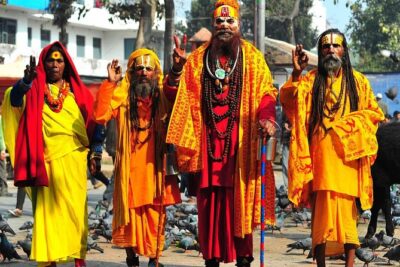
Kathmandu Spiritual Sites: Bodhnath & Pashupatinath Tour
Read our review →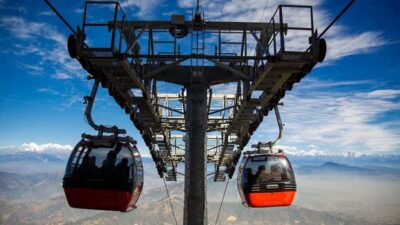
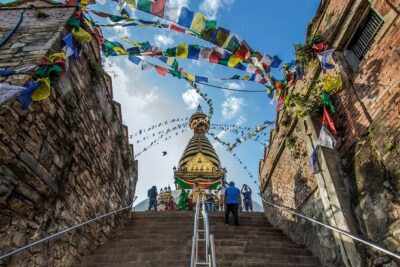
Monkey Temple – Swayambhunath Tour – Private/Small Group
Read our review →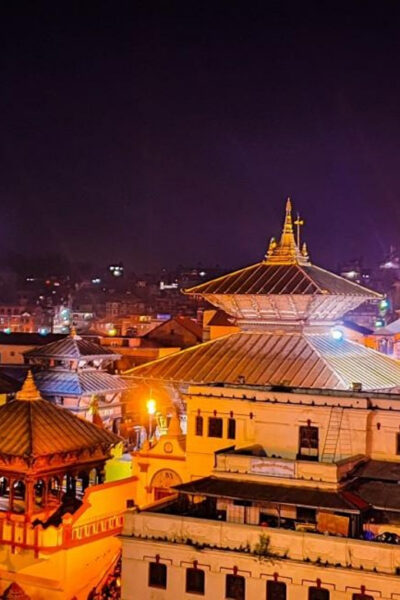
Chandragiri Cable Car & Monkey Temple Tour- Private/Group
Read our review →
Private Chandragiri Cable Car and The Monkey Temple Tour
Read our review →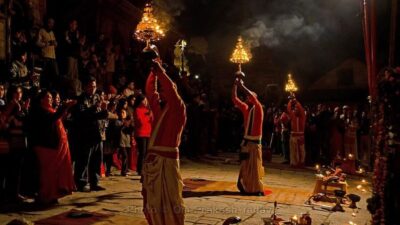
Pashupatinath Temple, Hindu Crematorium and Aarati in-depth Tour
Read our review →Browse the lists this tour appears in